Free to Face Our End: the Kerry Barkley Stories (Part 2 of 2)
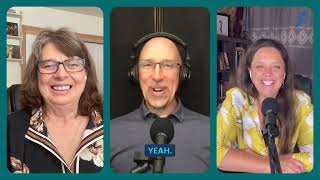
Carrie survived childhood abuse and found healing through the Freedom in Christ Ministry. She wrestles with forgiveness, lives with a serious heart condition that changed how she faces each day, and sees this podcast as the book she always wanted to write about trauma.
Chapters
Welcome, friends, to Stories of Freedom, a podcast about discovering and embracing who you are in Christ. On each episode, we'll visit with people who have overcome obstacles, gained freedom, and found abundant life in Christ. These conversations will highlight the goodness of God woven throughout the lives of His people and teach us as His children to appreciate that very same goodness in our own lives. We will journey together, growing to better understand how to live this life free and fruitful in Christ.
Amanda, we're going to need to do a disclaimer at the beginning of the podcast for anybody who's sensitive to these kinds of triggers and that children may not want to be in the room for some of this just because we want to be sensitive to our hearers.
Absolutely.
You are entering a conversation already in progress. Enjoy.
Why I might not have, you know, if life had been laid out in paragraphs, I might not have picked this one. But having been dealt it, I wouldn't have traded it for anything.
Amen.
I mean, I would not have traded it. There are some really hard moments that I wouldn't want to repeat, and I'm really glad they're behind me. And I'm hoping there's ones not as difficult in the future. But I've also had like some really wonderful, wonderful highs that, you know, people hear about those and they're just as like, wow, wow, as Right. They are like when they hear about the lows and they go, oh, you know, I love to share those too.
When you were talking a little earlier and Dan was talking and going through scripture, the scripture that came to my mind was in Philippians, Philippians 2. Paul's talking in 12. He says, dear friends, you have always followed my instructions when I was with you, and now that I'm away, it is even more important. Work hard to show the results of your salvation, obeying God with deep reverence and fear, for God is working in you, giving you the desire and the power to do what pleases him. Now we'll say, firstly, it says— I, I learned the verse because that's how my memory works, right? Like, I'm, I'm reading from New Living Translation here, but the way I learned it was to work out your salvation with fear and trembling, right? Not work for your salvation. That was a whole previous model that I lived under, right? But there is this sense that what, what y'all were talking about is this wrestling that we do. This is not a clean and easy process when we're talking about upsetting the rut thinking, laying down new pathways, being transformed. I think the word is transformed. That's a really big word. Like, it's not, you know, it's not like get cleaned up, right? No, you are— the whole thing is transformed, right? That it's different, it is remade, it is different, right? And, and that really happens in a lot of these things, especially— I'll say not only for, but especially for those who have been neglected and abused and forsaken in this life, right? Especially that you are willing or able to see yourself invited to wrestle through those things, you know. And now this is taking a real turn where we're, we're working out our salvation, but God is there like with Jacob in the rest. Like, he will let you get in, in there and push against him, and he'll, he'll offer you some resistance in those areas when you need to work out things with him. He will be the perfect partner to help you. He says, come come and reason, you know, come and, uh, what does he say, Dan? Come, let us reason together. Though your sins were like scarlet, they'll be white as snow, right? And, and here it's, it's inviting you that when we are working out our salvation in fear and trembling, or what it says here, work hard to show the results of your salvation, which is what I believe, right? Because we are, we are saved right? By grace through faith, right? That's what we're— that, that's what's happening here. That's the process that we're in. And so we're, we're working hard so that it— that we're putting in those place— those things into our life, right? For God is working. We're just trusting him. He's saying, this is what we believe. We're like, okay, well, I'll hold on to that. And then the world is crazy, so we're holding, right? And And it just says, look, it will be God doing this in you, right? You are in it with him. But also, guess what? God's in it with you. And that's what you were saying. But that doesn't, it's not this really prim and proper picture. That was an alliteration. I'm sure it's gonna sound really spitty when it gets to it. But God, it says, for God is working in you, giving you the desire and the power to do what pleases him, right? And we know that if the scripture says if we want to please God, we have to do two things. First, believe that he exists and that he is a rewarder of those who seek after him, right?
Yeah, yeah, yeah. I'm actually getting two pictures in my mind as you're talking about this. And one of them is that I, in junior high, 8th and 9th grade, I wrestled for a couple years. And, you know, it was, I had a metabolism from where I could eat anything and I stayed right on weight and my buddies were like, I'm gonna kill you. And I'm like, can I eat your lunch? And, you know, but there was this, when I would get to the mat, I had to step into the circle and go toward, you know, my opponent in the wrestling match. Part of what we've been talking about is sometimes we can feel like God is our opponent. But he is not. He, although he is saying, "Hey, you wanna wrestle?" And you can't wrestle without being in close contact with the other that you're wrestling. And I always knew this is going to tax me to my limit. In fact, so much so that I can remember, like, the whole, the crowd, the sound in the gym. As soon as I stepped over that paint line on the mat, everything else faded and the focus got there. So that I could wrestle. But the other picture that comes to mind is that a buddy of mine who I've known for 50 years, even though we live, you know, 600 miles from where we both grew up, a mile from each other, he lives within about an hour of us here in Knoxville, hour and a half. And he's always loved to ride and he's been a mechanic and a tow truck driver. And so when he's bought four-wheelers or now the Polaris Razor side-by-side, sides. You know, he's like, he makes sure that there's a seat for me. What a good friend. But some part of what we intentionally did in those machines is we would go toward the mud and we would get into those ruts and see, can this machine get me through this mud? And it was spraying mud everywhere, including on us at times, and wrestling. I was no longer wrestling in my own power or strength. I was in the Razor. I was in the machine that had so much more power and traction and ability than I do and could climb through and over and around things that I could never have, you know, conquered on my own, so to speak. And so that's like that Romans 8:1-2. There's no condemnation for us. We're in Christ. The power of the Spirit has overcome the power of sin and death. And we can, because salvation means we're in Christ, we can wrestle with God. And even though mud may be flying everywhere, he will get us through to the other side. I don't know if those pictures make sense, but those are just what was coming to mind as they were talking.
I think they prove that you're a pastor because man, can you tie it up.
It was good.
I was in it. It was perfect. I love I love thought pictures.
I love that.
So that's good business. Go ahead.
Just one other scripture that was coming to mind. Again, this is about God's character, and he's the one who invites us to wrestle with him, to work these things out, to be transformed by the renewing of our mind. Psalm 45 is a wedding psalm and talks about the character of the groom. Right? And scripture tells us that we're the bridegroom, right? Christ is the groom. We're going to be presented to him as his bride in Revelation 19. And so there's that picture, but Psalm 45 talks about the characteristics, the attributes of the bridegroom, and it's reiterated in Hebrews chapter 1. And it It says this, your throne, oh God, will last forever and ever, and righteousness will be the scepter of your kingdom. You have loved righteousness and hated wickedness. Therefore God, your God, has set you above your companions by anointing you with the oil of joy.
Amen.
Right? And for those who have been abused by somebody who was supposed to represent the character of God, ugh. God says, that's not who I am. I love righteousness. In fact, I hate the wicked things that were done to you. And his character will pull us through, uh, when we trust him, uh, and take him at his word.
So I really appreciate, um, your, your candor, your openness, uh, Carrie. I mean, we're friends in real life, and so I know that to be part and parcel to who you are, and, and I love that. Um, I think it's especially interesting And, and I think probably very valuable, this conversation in its space and time. As the nation is going through, we have seen so many things aired, secret, terrible, terrible things, uh, opened finally, the vaults. Yeah, to some of these, um, Yeah, to some of this wickedness opened and laid before man. And what may get lost in there is the real people who are affected, um, by all of this horror. There are people, there are real, there are real live people Um, that, that, that they're not just names on papers in court cases, because I have court cases where my name is just on paper and I'm just, right, like the victim. That's— there are real people living real lives. And, and you were also a real person. Living a real life, really needing Jesus?
Well, we all need Jesus. Well, I mean, it doesn't matter, you know, what, where you come from or what you've been through. We all need Jesus. And like, um, the people that have helped me the most are the ones that are the least like me. Really, seriously, it's been amazing to me that the people I have helped the most are the most like me, but the people that have helped me the most are the people that are least like me. And I think what that is, is in order for me to stabilize. I needed to know what normal looked like. I had no idea. I mean, when you are surrounded by what I was surrounded by, I was so deep into it, I had no idea what normal, like, responses were. And so a lot of the people that have helped me the most are just normal people that didn't have any of this. And they would, they would be just horrified when I would tell them things. And they're like, are you kidding? And I think, why do people always ask me if I'm kidding? I mean, One of my favorite scriptures was the one in, I think it's 2 Corinthians. I always never know whether it's the first or the second. I think it's like 11:31 that, you know, God the Father of Jesus, who is always worthy to be praised, and I am paraphrasing here. I am not you guys. I do not do as well with the addresses, but it's, you know, knows that I am not lying. I mean, I just wanna have that on my forehead because some of the stories that are true to my life too, verbativeness is, um, they're just so weird. They're so far-fetched. They're so like when you don't know how the dynamics of these things develop like a snowball to a snowman, they just seem like, can one person really have that much? And the answer is yes, I know. I have. I mean, yes.
And so that takes us further in our questioning. Then could you speak to, um, to those people, whether abused or not, who need Jesus, about what it looked like for you, you know, in that wrestling, to move from that point to, to invite the Lord in. Um, take us in our timeline through some of that and into where we find you now.
Okay, well, um, as I was, you know, going through stuff, I, I would, um Join small groups. I would join different things the church offered, uh, take all the classes they offered, read all the books and listen to— I just really, really took it in. And, um, I think naturally what comes out of that is you, you want to share, you want to help, you want to, and you start to see what you're good at and what you're not good at. And like some things you just know you're not meant to do. Okay. You're just not, I mean, And some you are, and I found that I had such compassion for people and such a heart for people, but I also, I'm so, um, boy, I don't know what the word is, but I'm very committed to changing things and letting people know that there is abuse out there. There is pain out there and that we need to be patient with people, that we need to disciple people, that it's not enough that we We just, um, lead people to the Lord or we just, you know, that, and, and I've, I've seen some churches that they just, you know, they want numbers and they don't, and it, that didn't work for me. I wanted to be a place where there's room for the broken. And, um, I loved being able to be a part of that. And when Freedom in Christ came along and I, I mean, I, I really, in all honesty, I joined Freedom in Christ as in the material and stuff as, as self-help. I mean, I really did not see myself as somebody that would utilize this. In fact, at the time CFMU was in existence, and I was like, wait a minute, they got like a self-help school. Wow, it's a curriculum for self-help, right? And I start reading this material. And I'm thinking, well, when are we going to get into the one-on-one? This is about, you know, having it at your church and, you know, having a unit. And I'm thinking, As far as I know, I'm the only one here that does this. I don't know about that. And then it's like, you know, you got to get your pastor. And I'm like, I don't know if my pastor even knows I like this stuff. And so I went, that's how I kind of started talking to my pastor. And she's like, yeah, I think this would be great. I'm like, oh, okay. I mean, I could see teaching. I was already teaching. I was already doing Freedom in Christ studies in my home and having small groups. And I'm trying it out on my nephew and my niece. And I can remember, you know, some of these kids, you know, okay. We basically work with adults. So I'm, I'm going to go, I'm going through CFMU. So I'm going to try teaching it to see if there's something I can really do. So I have some of my adult women friends and I have my like 13-year-old nephew and my best friend's 14-year-old granddaughter. So I want to see, you know, get some different views on my teaching and what have you. So they're in there. And so one of the questions I just loved was, uh, what do you say to someone who says they, I don't believe in, in, in God and, and, you know, this teaching and the 4 children, good luck. I thought that was the funniest answer from a kid, you know, and, and then, um, my nephew, who's my nephew, who I adore and I love, after we went through the steps and I said, you know, do you have any thoughts? And he said, yeah, my head's never been this quiet in my whole life. It was like, this is someone I'm close to. This is someone I didn't even know I had that issue. And I thought, oh, this is such good material. This is so good. I thought, well, maybe I'm meant to teach this.
Mm.
You know, so, you know, sometimes God leads you. I call them happy accidents. I did not join CFMU to become a Community Freedom Ministry Associate. I joined CFMU because it was like a curriculum of self-help and I really needed all the help I could get. Self was in great need of help. And so You know, and then it was like, wow, this is great. And I told my pastor, well, they want me, you know, to consider doing this. She says, yeah, I'm all for it. We'll help you in any way we can. I'm like, really? Okay. You know, and so it was just wonderful. And my church is so supportive of it, whereas other people, you know, do not have that right out the gate. I've always liked smaller groups than real large groups. And that was good. And then the North Central region, the prayer, I was asked to be the prayer thing. I thought, I think I could handle that, you know, because I like to pray a lot and I like, I'm always praying for people anyhow. And so that worked good. And then we were going to do the practicum. And so they said, do you want to be an E3 leader? I said, yeah, I'll try that. And that worked really great. I had a good time with that. And I thought, this is really fun. And then, um, one of my highlights in, um, Freedom in Christ was making Dan laugh. Because he's just this really straight stalwart guy and he's like, I'm like, I'm just, you know, he's the nice package and I am the dump truck. And okay. It's like, oh, and I was doing the talk on stronghold busting at the practicum and I was talking about the bookmarks and I said, you know, and there's always that person that you're telling them they can, I can't, they can't. And I held up the bookmark, you know, the 20 cans of success. I said, but now they can. And he giggled and that made my day. That just made my day. And so, I just started giving back a bit, and I found out how good that feels because people will come to you and they'll say, that really helps, something you say, something you use. And all of a sudden, I started getting this feedback when I would share something from my past in small doses, not like today where I'm really letting it out, but I would just say, well, I had something similar when I was a kid. And they're like, you? And all of a sudden, people are looking at me like, I'm a pretty package. And I'm like, wait a minute, wait a minute. I'm the dump truck. And they're like, you, you had, you were abused as a kid. And I'm like, you mean I'm not wearing the neon bulletin board that said victim, victim, victim. You know, I'm, I'm this messed up, screwed up, can't function in society, you know, too many surgeries, screwball. And it was like, I'm an, I'm like able to sit with normal people and they don't know that I'm a freak show anymore. I'm like part of God's family and can have conversations. And like, I had a birthday party on Saturday and I had like a huge RSVP list and people were there and somebody said something. I said, well, I really wasn't expecting people to show up. And they all cracked up because that is more my rut thinking is like, well, I'll invite 20 and, you know, 5 will show. And they, you know, I had this and they all laughed because that's I've, my plumb line is I still have to get out of the rut all the time because I'm still seeing myself as, well, am I normal? Am I okay? Am I? And I'm like, I don't have to. And I still almost every day have something that I have to say, hey, that's not what God says. Oh, God says, you know, God says I'm okay. God loves me. And I'll even say that to my family. I'll just roll their eyes because my sister or kids will say, Carrie, and I'll be like, doesn't matter. God loves me. I can't use that on this. He does not love when you do that. And I'm like, all right, you know, but anyway, so I mean, it's like that kind of thing. And then like, um, I'll, I'll see things, you know, you come from a dysfunctional family when you, when there's abuse like that in the home, there's no way that everybody else is nice and normal. They all are struggling with something, even if they aren't a part of the abuse. There's no way it doesn't happen in a vacuum, right? It's like my mother will tell you she had a wonderful family except for me. Um, it took her a long time to say, you know what, maybe there were some problems there. It did. It did. Uh, one thing I want to say that I think is really, really important too is that God is so good at redeeming things that all I would read statistically when I was deep in worldly advice on going through abuse and what I went through, all the worldly material talked about how the mother and the daughter in a situation like mine would never be able to heal. And that broke my heart because I loved my mother. And even though she was my mother and she didn't protect me and she left me very vulnerable and she actually fed into it by blaming me for things that were— in reality, I was hiding to protect her and I shouldn't have had to. She was the mother. Right. Right. But I was doing things to protect her and to protect the family and to get her food money. And yet now, now that it's out, I'm the bad guy because I ruined the life of our family. Right. I loved my mother very much. And I believed she didn't know. And I now, I believe other, you know, like she should have known she was still my mother, she was still responsible. I have a more mature, full picture. But when I was young like that, and it broke my heart that my mother and I would never have a relationship because I loved her and she was my mom. And it said, well, you'll all grow this, you'll come to realize what a horrible person she was as a mother and how she failed you and this and that. And you won't want anything to do with her. And I thought, No, I don't want to be that person. God allows room for all that healing. My mother and I had a wonderful relationship. He healed both of us. And we did go through a time where I think we would have liked to killed each other. We said things that were not churchly words, and we made each other cry terribly about things. We had to clear some air on things. It was not an easy thing, but neither was going through what we went through where there was always that blame and dissension. Okay. The healing process at least was going forward. God redeemed it to the point that we had a wonderful relationship at the end. Was there areas that weren't going to be perfect? Always. But we had a wonderful relationship. I love my mom very much. She loved me. There was total forgiveness. I have total forgiveness for everyone in my family. I forgive my father. I pray that somewhere before the end of his life that he was able to find Jesus and come clean for all he did. And that whatever happened to him that made him do wicked things, I hope somewhere there was redemption for that. I truly do. I have no desire for him to go to where his actions would have sent him. I don't. I don't. I feel bad for him. I think it's an evil person and evil things. I think that's sad. I think that anyone, because we're all, we're created in the image of God and that's terrible that any of us would go that far from it.
So, yeah, well, and I mean, the fact of the matter is, like you said, we're all created in God's image. And scripture also says we're all born dead in sin, right? And captive to the enemy of our souls who came to steal and kill and destroy and wants to do that. And he, you know, your dad fed into that, unfortunately. But again, it's powerful to hear that what you're saying is there's redemption.
Yes.
Even available for him as well as you. And I'm so glad you brought up the word forgiveness because I was thinking that in terms of when you were saying this good word that people need to hear that those relationships with mom who didn't protect me, didn't turn a blind eye, you know, etc., etc. That, that can be healed too because of forgiveness, when we, when we forgive. And so I just wanted to ask you a little bit— I'm so glad you've said that— but I just want to ask you, what, how did you walk through that process of forgiveness so that you could walk in freedom? And what would you say to those who have legitimate right to be angry at the wrongs done to them? Why should they forgive?
Well, I think you have to understand forgiveness. I think there's a lot of misunderstanding about forgiveness. I think a lot of people think that when you forgive someone, it's like saying what they did is okay. And what was done to me was not okay. It will never be okay to do what was done to me and the so many things done to so many others. So when you're forgiving someone, you are not saying that what they did was okay. You're not saying that you deserved it or, you know, what have you. It's not that at all. And I think that's the first thing is to what is forgiveness. And secondly, I think sometimes when we don't want to forgive, it's because we don't want to suffer the consequences of someone else's mistakes. And the fact is, if it's one of those situations, you're going to. Nothing will make it where I do not suffer the consequences of the abuse. I will suffer them. Okay? So I'm either going to suffer them in the bitterness and the hatred of unforgiveness, or I'm going to suffer them in the freedom to move on. And—
amen.
What a good word. And forgiveness is about letting go of that hatred and that anger. And that hatred and anger that we have when we're in unforgiveness isn't hurting the other person. And I think that's what unforgiveness is, is you're in so much pain for what they did to you. You somehow want to undo what they did to you and you can't, you cannot undo what was done. And so you have to accept that. You have to accept what was done was done. And you can't undo it and all your anger and all your hatred can't change that. So you're either going to keep hurting your own self because that's all unforgiveness is. It's like you are carrying the baton of what was done to you and now you're hurting yourself. And so what forgiveness is, is saying, okay, I am done with this. What you did to me, it was wrong and it was painful and has consequences, but I am going to let it go. I'm going to understand that you're human and that you make mistakes. And I am going to forgive you for that. And I'm not going to hold it against you. I'm not going to rub it in your face like, you know, it's dog dirt. I'm not going to do any of that. I'm, I'm, and, and I think also too that you got to understand with forgiveness that it's not giving the person a license to continue to abuse you.
Right. Amen.
You're not saying, okay, I'll be your doormat. If you want to hit me, you want to— Where were everything Yeah, no, you're saying it's perfectly fine to say, okay, I forgive you for past abuse, but I'm not giving you a license to do it anymore. You ever touch me like that again, I will do it.
And I sometimes talk about how Jesus did not subject himself to the abuse of the spiritual leaders of his day and the crucifixion by the Roman authorities until it was the Father's appointed time for him to take our sin on himself. There were times where, like when his brother said, "Why don't you go down to the festival?" He's like, "Ah, it's not my time." And he went a couple days later, right? Or he hid himself in the shadows of the temple, or they were gonna, his own hometown, they were gonna toss him off the cliff. And it says he walked right through their midst. And so he never, Jesus never subjected himself to abuse. You know, until it was, and again, I wanna be careful of how I say this, and I'm not sure I can perfectly in the context of what we're saying, but Jesus came to bear the punishment for our sin. And he can bear the punishment. He's big enough. He's perfect enough to bear the punishment for someone, for the sin of even somebody like your dad, if your dad were to turn to him and repent and trust him for salvation, for paying for his sin. But again, the people we're talking to, every one of us grows up in this broken world.
Amen.
And we learn to think in ways that don't line up with the truth of God's character and what he's accomplished in Christ and how we can walk in freedom in spite of the ways of this world. Imperfect parents. I mean, I'm an imperfect dad, and there are things that I've apologized to my kids for. And even just the other day, you know, I said something, "Hey, I'm doing some research for my dissertation, and I wanted to say I'm sorry for the access we allowed you to have to smartphones as teenagers. I see now how how damaging that could have been to you. And so allowing things into our kids' lives that is harmful to them, right? It was my job to protect them, and I fell down on that count. Anyway, I digress, but that whole idea of like that Hebrews 1 passage, God is the one who hates wickedness. Can we trust him to handle it. You know, just like Peter said, Jesus entrusted himself to the one who judges justly. And in forgiveness, you were trusting that God is big enough to handle your dad. You're not gonna put up with any more abuse. You're gonna walk in freedom. You're gonna release that bitterness, and you're gonna walk in the joy of knowing Christ and the power he has to redeem. Carrie, you have such a powerful story. That's really good. We haven't even really gotten to the fact that what Amanda started with and what you started talking about was that you've had some health issues over the last few years where the doctors have said you may only have days to live. And you said a really powerful thing, and I just want you to share on this. You said that it's no different Facing your end is no different than facing each day when you're free in Christ. Help us understand what you mean by that. Like, can you talk about that?
Well, yeah. Well, you know, um, at first when you like hear, okay, you know, like what I was hearing was, um, yeah, I think you got a good year or two. Okay. Which, I mean, when you think about a year or two, that's not a long time. I'm not that old. And A year or two is kind of a small amount of time for a lot of people. Their kid wouldn't even get out of high school, something like that, right? And then I heard, well, we don't think you're going to have a heart attack and die immediately, but we really don't know. And I mean, there are days that when the heart is doing its thing, I'm thinking a year or two is generous. And I'm now literally within like a couple of days of the year mark. So if it were a year or two, I'm at least halfway through. Okay. And. If it's any time now, and there are days that I've thought, there was a time I was at a state fair with my family and the heart was doing such funky things. And I just like held my head and what have you. And they thought I fell asleep and I was so grateful that they thought I was sleeping so they wouldn't call an ambulance because what I was really trying to do was to get enough energy to breathe. I was like, I'm not sure I'm breathing anymore. Am I going to go unconscious? What's going to happen here? And like, well, Carrie's out cold. And I'm like, oh, thank God they think I'm asleep. And I'm thinking this, I can't even, I can't take a breath. Death. I'm not sure what's going on. Okay. I can't open my eyes. I'm that tired. I'm that weak. And so, I mean, like, I'm like, am I just gonna pass out and die here at State Fair? Okay. And you don't know. And you mean, well, the heart's going, like, it's gonna jump out of you, and then it's like, boom, like it's in your stomach. And I'm like, what is it doing? And when you're in a moment like that and you really don't know if you're going to die right then and there, those estimates of, you know, we don't know that you're gonna die, you got a year or two, They're very real. Other times when you're having a really great day and you feel good, you're thinking, oh, they're nuts. I got 5 years. Okay. But you don't know. So you're living with this, you don't know, and you have to start doing things like you gotta get your will together and you gotta be thinking about like, how much junk am I going to leave them to clean up? And is there anything I need to say? Is there anything I need to undo? Well, after you get over the shock of that, because it is a shock and, and, you know, and then you do the, you know, you start grieving yourself with God. You start doing the bargaining and the anger and that kind of thing. But once you get past that window, you start living your life the way you should, the way we should be doing every day. And you start realizing it looks a lot like you handle any other crisis. How am I going to organize this? What's the priority? How am I going to deal with it? And then you kind of let up a little bit and you start living life again. Like it's not hanging over you. The Sword of Damascus is gone, but you do know it's there. And you start thinking, this is how I should have been living all along. And that is how you should be living. And when you're really having a good, you go to bed at night and you're like, okay, today I was above the 50% of doing it God's way. It's how you do live. It's like, okay. Yeah. No, I got to hold firm. I got to do this today. This is what God would want me to do. Or good morning, God. What are my marching orders? You know, instead of here's my agenda, God, please approve. You know, I mean, the way where, you know, as you start getting in and I thought, you know, it's really not not that different for me today than it was before I realized how sick I was. And the years that the worst part was trying to convince the doctors that they were wrong and that I knew better. And, you know, not having the medical know-how or the knowledge, those were horrible because I'm going to God every day going, am I nuts? Is something not wrong? Is something really wrong? What is this? Because They really thought it was my weight. I was, you know, a little heavier than I am now. And they're like, well, it must be your weight. It must be your posture. And I'm like, no, it's my heart. It's my heart. And I have very tricky heart things. And so they weren't getting EKGs to support that. They weren't getting the blood to support that at the time. And it wasn't until they did the weird heart cath where they go in through your neck when you're awake and they make you pedal a bicycle that they found that it was an already in heart failure, but it was a different type of heart failure than ejection fraction shows. So it's more popular now, which I don't know why heart failure would become more popular. I don't know that. Okay. But it's a more popular heart failure now, but it's called heart failure with preserved ejection fraction. And once they found that, then they started checking the heart out and they found out, you know, you have an arrhythmia. And meanwhile, they're giving me more and more oxygen at night. Because my sleep apnea is like going to take me out. And then they found out, you know, I've got coronary artery disease, and then I've got— it's the last— there's another one too. I've got, I've got a vascular disease with inoperative blockages. And so they now, once they found the first heart thing, they start— look, I've got pulmonary hypertension upon exertion. And so Some of them are not that big a deal, but when you start adding all of them together and some of them being severe, it, yeah, it's like, you know, um, it, it, it can be, you know, pretty alarming. And so I just started thinking, well, what's the priority here and what am I going to do? And, but I find that, you know, now it's sort of like, okay. And then you take the Christian element to it that I know where I'm going. I know what's next. I'm not afraid of that. I'm more afraid of leaving a mess behind, or like, I want to complete a few things. And so I'd like to get those done. I'm really happy I made it to today. I'm really happy about that. I'm glad I made it through my birthday party. So, I mean, those are like bonuses that you're like, yay, yay. But you know, it's like there really is no day that God couldn't come down and sit across the table and say, would you like to come with me now? And I'm like, mm-hmm. Ready. And there's also no time that I wouldn't like to stay another day. And if there's something I could do, I would do. Okay. So it's just a sense of contentment. It's a sense of, um, you know, this is good and this is how we should be all along is like, you know, if today were the last day, how, how would I want to do it? And so I don't see it as that different than how it should be. And yet it sometimes takes a shakeup to do that. No. Yeah.
And even Paul said, you know, I desire to depart and be with Christ. And yet he leaves me to remain for your benefit, right? You have a family, you have a church, you have friends, you have things you want to do that you feel like God's called you to do, and you're going to be faithful to do those until he comes to get you. You know, one of the things too that I, I, um, want to ask you just by virtue of a few things that I've been talking to people about recently, you know, some friends that are sitting at the bedside of a loved one who's on hospice and, um, interacting with a family recently who lost a child. Um, what do you say to those who are grieving? The loss of a loved one, you know, as one who has been close to death yourself a few times?
Well, I don't know if it's true for everybody, but for me, um, I'm, I'm kind of looking forward to it. And, and what I mean by that is, for me, this has been a hard life. I mean, I, I can't deny that. I mean, I think that would be unrealistic to say it's It's been a breeze. It's been a worthwhile life and I've loved it, okay? And I want to pass, okay? But I'm looking so forward to being with Jesus. I am looking so forward to the people that have gone before me. And I believe in my heart and soul that for me, the better place to be is past this body that I have now. I look forward to pain-free. In fact, I can make myself cry by just reading the passage that I won't have any more pain or any more tears because I can't remember what that's like. I've had 42 surgeries in the last 45 years, or 46 years now, because I just had another landmark birthday. So in the last 46 years, I've had 42 surgeries. So if you do the math, that's almost a surgery a year, and some of those were pretty big. And so I don't know what like any space of time would be without interruption, without pain, without, you know, work and life. And I'm— I can't wait to see what that's like. And, and, and he says, no eyes have seen, no ears know what he, the Father, has planned for us. And it's like, I know how beautiful this world is. I know how good it can be. I mean, you just look at leaves, look at snow, look at rain, look at a creek. I mean, if you've been anywhere other than your own backyard, you know how beautiful the world is. And we can see that, we can appreciate that. So what is it going to be like if we can't even imagine it?
Okay.
So knowing that waits, that's not a bad thing. And I also believe that once we're done with this, we're not gonna hurt the way we do here. So for us, the person passing, there's nothing bad. So it's for you guys left behind that all the pain and everything is. And I think that if you had the opportunity, like, let's say you were my brother and I passed and you had the opportunity to bring me back and you did, I'd deck you. I mean, that's all I can say is it's like, it'd be like, seriously? You just couldn't hang in there the last few years of your life and wait it out? You know, really? I mean, this is a small season of what, 80 years? And then for eternity we get this and you're gonna drag me back? Really? Seriously? So, I mean, I don't know if that's the right answer to tell somebody who's lost a kid, but That's kind of how I feel about it being me going. Um, I know how painful it can be for— because I'm losing a brother. I have a brother that is struggling with, um, uh, lung cancer for sure, and highly suspected, um, prostate cancer. Now it looks like it's in the lymph nodes and things. And so to me, it's a terrible loss. This is my best bud. I'm very, very close to him, and it's hard to see that, you know, it's getting harder for him and that these things are going on. And I know he has accepted Christ. I know where he's going, but he is not really, you know, walking the walk, living the walk. I think I always say that for some of us who came from our family and people like that before, you know, they always say, you know them by your fruits. And I hate when Christians say that because it's like, I got news for you. Before anybody ever saw any of my fruit, God and I were playing in the dirt for years because there was so much in that dirt. Before anything could show, you know, that had to be done, just God and I in the Bible and in the back alleys. And then maybe there was a little stub for a bit. But so I don't always think that, you know, you got the fruit on the tree the next week. And so—
Well, like the parable of the sower says, you know, the gospel's the seed. And you mentioned earlier, mine was buried pretty deep in that mud, right?
Right, right.
And it took a while to grow, yeah.
Yeah. And, you know, and discipleship is a key. You know, if you, if you're in a place where you get salvation and people immediately are able to tap in and you're eager and you get salvation or you have a church background where you, you know, kind of know some of the stories. I mean, when I got salvation and I right away gave up, you know, drinking as in a heavy drinking concern, dirty jokes, which was, I had a memory that was like a Rolodex and I could just, you know, I'd start telling nurse jokes and I'd get to the last one about trucks. I'd tell truck jokes. I just, I could keep people cracked up for hours and I gave up all that stuff the minute I got saved. I still smoked, but I gave up like the drinking stuff and I was sitting at a table probably about, well, 5 or 6 days after I had, you know, accepted salvation and this woman I worked with in the Army said, have you seen a burning bush? And I said, no, where? She's like, oh God. And I was the chaplain's assistant and I still didn't know the reference.
Okay.
So it's like, you know, there was some work to do. Do in the dirt before the little green bud, yet less the tree with the fruit. But so I know I might lose him before I go. And I also know that my younger sister is dealing with the thought of both of us. And so, I mean, there's some real pain there. And so my heart bleeds. Don't get me wrong. My heart bleeds for emotionally how big a burden that loss is. But I think that you have to hang on to the bigger picture. And we have to, you know, yes, cry the tears, feel the anger, bargain with God, hang on to the memory, even a few tokens that, you know, share the memory back. Let the healing be natural. It's okay to cry. Just like let the healing of anything, abuse, anything, be natural. Cry to God, cry the frustration. Why? Why? You know, the anger, you know, God knows you're feeling. You don't have to hide. You don't have to run. But also on the other note, try to, as the healing comes, try to put some joy in there too, because because you know that person is seeing things and hearing things that you can't even imagine. And if you try to pull them back, they're gonna deck you.
They're gonna deck you, yeah. Well, and I think you're describing that tension, right? And again, this is for losing a loved one who knows the Lord. And we know is with Jesus. We can rejoice that we'll see them again, that they are free of pain and fear and sorrow, and yet we miss them terribly.
Oh, terribly.
While here on earth during the rest of our time. And it should motivate us to pray for and witness to those who don't know the Lord because we recognize that Jesus says, You know, that he is the only way to the Father. He's the only way to that heavenly dwelling that he is creating. And so we want to encourage people to trust Christ no matter what they've been through. And just to pull things back together, maybe, I mean, that you entered into Freedom in Christ as a self-help program, right? But It was discipleship according to the truth of God's Word, helping you stand by the strength of the Holy Spirit, taking your thoughts captive, being obedient, and, and walking this journey of life and allowing God to grow you in the process. And he, through that, has made you a leader to others to help them get to know Christ. And that's really what we're about is we want to talk about and help people and help pastors and their churches develop leaders in their local church body to be discipling others no matter their background, whether typical, quote unquote typical, in the sense of whatever country people are in, because actually people listen to us all around the world.
[Speaker:TAMMY] Right, right.
But whether typical or horrendous, as you've described, God is able to redeem and bring someone to salvation, to maturity, to the point of bearing fruit in the lives of others. And so, so our role really is to help train leaders in churches to walk this journey of discipleship so that they can walk in freedom. Freedom and be fruitful so that others can enjoy that freedom as well. Amanda, anything you want to say or ask to wrap us up?
Yeah, a little bit. I'm kind of wondering here as we draw, you know, toward the end of the funnel, right? The small end of the funnel. So we're funneling back out here. Do you feel like you have unfinished business?
I did. I did. In fact, it's really interesting because just this morning it kind of got finished. It's kind of interesting to me. When I was a little girl in the closet, I would write stories and, um, stories I would not have wanted my parents to see. But I knew, I've known since I was very little, I wanted to be a writer and I wanted to write a book. I wanted to someday write a book that would help the world, change the world. I wanted to change the world so that little kids like me wouldn't, wouldn't hurt like that. And I always have wanted to do that. And I've always felt I wasn't a good enough writer or I didn't understand it enough. And then I thought, well, someday I'll do it. Someday I'll do it. And I've, I've always been like a writer, like on the side. And then I was a technical writer by trade for a while. But like, I've written stories and, um, published a couple of like novels that weren't really Christian kind of things. And at different points in my life I wrote or gave it up or what have you. But I've always had that in the back of my mind that someday I would do it. And then when I became a Christian, I thought, well, wait until God gives me enough of a victory that I can write about the victory too. Okay. Instead of just the points of it. Well, then as the years have gone by, I've come to realize that so much more is being understood about trauma. And it's so interesting to me that like how it was handled in the '60s. And I had, I was a foster parent for a little bit. So I learned a lot about that. And so I've come to understand the dynamics of abuse from just, you know, a factual point as well as like the Christian aspect of it. So I thought, well, I'm going to have to bring that into it. So now it's a lot more research than I planned. So I've never written that book. And so when a couple of years ago I started getting sick, I thought, well, I'm probably not going to write the book. Well, then when I found out what it was and thought, well, I still have a year or two and God can do amazing things in, you know, 6 weeks. I can write this book. Well, then I started accumulating massive amounts of bulk on writing this book. So I always thought, oh, I gotta get this done. And then I started questioning, well, did I want to write the book or did God think I had to write this book? You know? And so then I went through this, well, God, do you want me to write the book or don't you? Right? Because I'm going to need the energy to do it and I don't have it. You know, And then, you know, you asked if I'd like to be a guest on the podcast. And I spent a long time thinking about whether I wanted to or not and praying. And finally I said, well, God, would you like me to? And right away it was like, yeah. And I'm like, oh, okay, I'm going to talk about— am I going to have to talk about abuse? You know? And then Amanda said, well, you know, I was kind of thinking like to face the end. I thought, oh, worse, I got to talk about dying. Everybody loves that topic, right? And then you got to get We can't better friends. This is boundary. What kind of negative subjects can you bring aboard? You know? And so anyway, so I was, you know, thinking, and all of a sudden, you know, I'm praying on all this the whole time, you know, right? And one day, after I had said yes, I would do it, I was praying and it was like this really sweet thought came is, what if the podcast is your book? And I was like, what? And I thought about that and I thought, you know, that little kid in the closet 60 years ago, 58 years ago, went to knowing, hey, I want to do a podcast and share with the world or whoever God, you know, to me, you go through stages, you know, when you're not a Christian, you want to write a book, you want to make a million, you want an Academy Award, you want all these worldly things to acknowledge that, you know, you're the world's greatest writer and you're reaching millions of people. The more you grow in Christ, the more you want it to be what Christ can do with it. And we all know that Christ is, you know, able to take one life and change the world. Okay. Okay, my world has changed because I was changed. Okay, my nieces and nephews who I've influenced have not suffered the abuse that our generation did. They will not raise their children the way we were raised or the way they were raised. They will even improve on that because as they see us improve over the years of their childhood, they will improve even more. And so I'm very proud to have become the person I am, and this is all due to Christ, not me, but I was a willing participant. Well, I wasn't always willing, but I was a participant. Okay. And, you know, so, um, I want that to be something that I acknowledge that as a young person wanting to write this book, I wanted the money. I wanted the fame and fortune. Now I just want it to be that God did this for me. He redeemed this life. And I don't want to die and nobody know what God is capable of doing in my life. Not that my life is all that great because there's millions of people like me that had a life that God redeemed. But each story is unique. And I have found through working through all these other women and some men at church that were abused that they need to hear that. And I needed to hear it from all the people I've heard it from. What if I'm the person somebody else needs to hear it from? I mean, yes, God will find somebody else to say it to them. I'm not worried that, oh, that person's screwed now because I died and didn't tell them. Oops, sorry. But, you know, it's that we need to do that. And so I thought, I gotta get this book done. But now when I heard that sweet What If It's the Podcast, I thought, oh, you know, if I were growing up today and I was, I'd be looking for a podcast. I wouldn't be looking for some $24.95 book to read this thick. And that's chapter 1. Okay. So I'm thinking, hmm. What if this is my book? So I've been praying about, is this my book? Is this my book? And I was thinking about, in case you hit me with the, what's your favorite scripture and why, that it's Psalm 138a, 8a, 138a, and it's the King James Version. And it was always, the Lord will perfect that which concerneth me, because it was the first scripture I memorized. Because to me, what it meant as a new Christian is God will give, you know, perfect what concerneth me. Me, meaning God will do what I need him to do that I want him to do because it'll make it perfect for me, which of course is not accurate at all. Okay. But it's how I took it when I was a brand new, you know, 27-second Christian and great, he's going to make my world perfect, which is just what I need. But I always loved that version of it. But whenever you look it up later in any other version, it's God will fulfill the purpose. And I've always felt felt somewhere in me that my purpose was he redeemed this life, he redeemed this story, and I would like to share that. And I have just done that. And so this morning, as I'm brushing my teeth, I'm thinking every time I heard that God will fulfill that purpose, I'm thinking, no, I like the King James Version. I like where he would perfect what concerns me because he does. Because when you're concerned about something, God perfects it for the good of the kingdom. Not always the way you thought it would be, not always what you would have but he always perfects everything that concerns you for the good of the kingdom, always. So it still holds in the King James Version, the Lord will perfect that which concerneth me. Okay. But now today, realizing that this could be my book and that I may not have to write that book, which by the way, I literally took now 4 small bins of books that I'm so sick of staring at about trauma and abuse and put them in the garage and I don't have to look at them just in case this is my book. Book, I don't have to look at them and I don't have to read them, research them, and dig up all that dirt to try to find the one or two lines I would need in the book. So they're already out in the garage. So as I'm brushing my teeth today and I'm thinking, what if this really is my book? And I'm thinking, the Lord will fulfill my purpose. Amen. And I thought, it's just as good now in every other version too. So yes, that is the kind of thing that I would point. So, so yeah, so I'm thinking this might be the book and he can use it to reach one person or however many he wants. It's available now. And by living long enough to do this, I, uh, so I guess that's what I would like to say is that I hope this is able to be used, that there's enough material and good enough that you can use it and that it's able to reach somebody. And that would make me feel very good that somebody got something out of this because I know how helpful, all the people in my life. He's brought very good people into my life and they've made a difference. And I am grateful because I have benefited from that. I've had a very good life and I, I have loved my life and took me 50 years to say I loved my life, but I do. And it's been great. And I've had some bonus years. And thank you for the opportunity because it's great that you guys put the effort in and that you have this available and that you're able to have a, you know, slice of different lives that you can put out there and reach people with because this is what people are looking for today is the podcast. That's the way people get reached. And this is such a good ministry, just not even the personal life aspect, the ministry aspect. I love this ministry. Look, okay, I'll show you. I got the bookmark. See, bookmark. And see, you might think you can't, but today you can.
I'll say, I know Dan's going to close this out, but you should know, not thus saith the the Lord, right? Don't hear me say, thus saith the Lord to you. What I am saying is, in my own prayers, and because we meet every Friday, right, for fellowship in our This Is Not a Class group, what came up for me was also, what if this is her book? Now, I'm not saying that thus saith the Lord it is. Is, but as a little sister to an older sister in Christ, right, who has been walking with me and letting me grow up in the midst of older Christian women, right, like more mature, I don't know if this is but it gave me the opportunity to get to play in making something real with my big sister, with the Lord, right? And my brother, of course. But like, genuinely, the Lord brought that to my attention, and that was the only reason really that gave me the audacity to come to you and say, hey, what do you think about this?
Ma, I'm really glad you did. Thank you. And thank you for telling me that. I'm glad you shared that with me. Thanks, Amanda. I appreciate that.
Yeah. Well, I'm so glad she did too. And I'm so glad that you listened to the Lord. You asked him, do you want me to do this? And you heard him say yes and you were obedient because Yeah, whether it's, well, you've shared your story, right? Which is what you're gonna do in your book. And whether it's you've challenged men to accurately represent the character of God, which means they need to get to know him. Whether it's you've challenged moms to, boy, trust the Lord for the strength to see the truth of what's going on so they can address things in their family, or whether it's encouraging those who have experienced tremendous abuse and trauma to trust that God will receive them and give them grace and mercy to help in their time of need when they come to him and trust him and take him at his word, or whether it's you've encouraged pastors and leaders and disciple-makers to not give up on anyone and trust that God can redeem any life.
Amen.
He is able and He will do it. And so thank you so much for encouraging and challenging so many people through sharing your story, Carrie. We greatly appreciate it, and we trust that God will use it for His glory and the good of His people. Example, because as we like to say, it is for freedom that Christ has set us free. Thank you for being a living example of that freedom.
Thank you for having me. Thank you very much. And thanks for all you guys do, because you guys do so much in Freedom in Christ, and you're absolutely pivotal in the organization. And I adore you both. So thank you so much. Be blessed.
Thank you. Thank you for being with us All right, guys, we'll see you later.
Bye. Thank you. Bye-bye.
Thank you for listening to this part of a much more in-depth conversation. Continue on with us in the next episode. Thanks for listening to this episode of Stories of Freedom. If these conversations have blessed you and you want to partner in the work that we're doing, we would love that. Freedom in Christ is a donor-based ministry, and so we need people to feel led by the Lord to join us in the work He has us doing. Could that be you? Go to ficm.org/give to see and find out.
More from Neil

FREED TO FLOURISH TOGETHER - ESSENTIAL READING FOR CHURCH AND CHRISTIAN LEADERS

*A Kind Rewind* Freed to Flourish Together: Growing a Healthy Church in Freedom and Unity




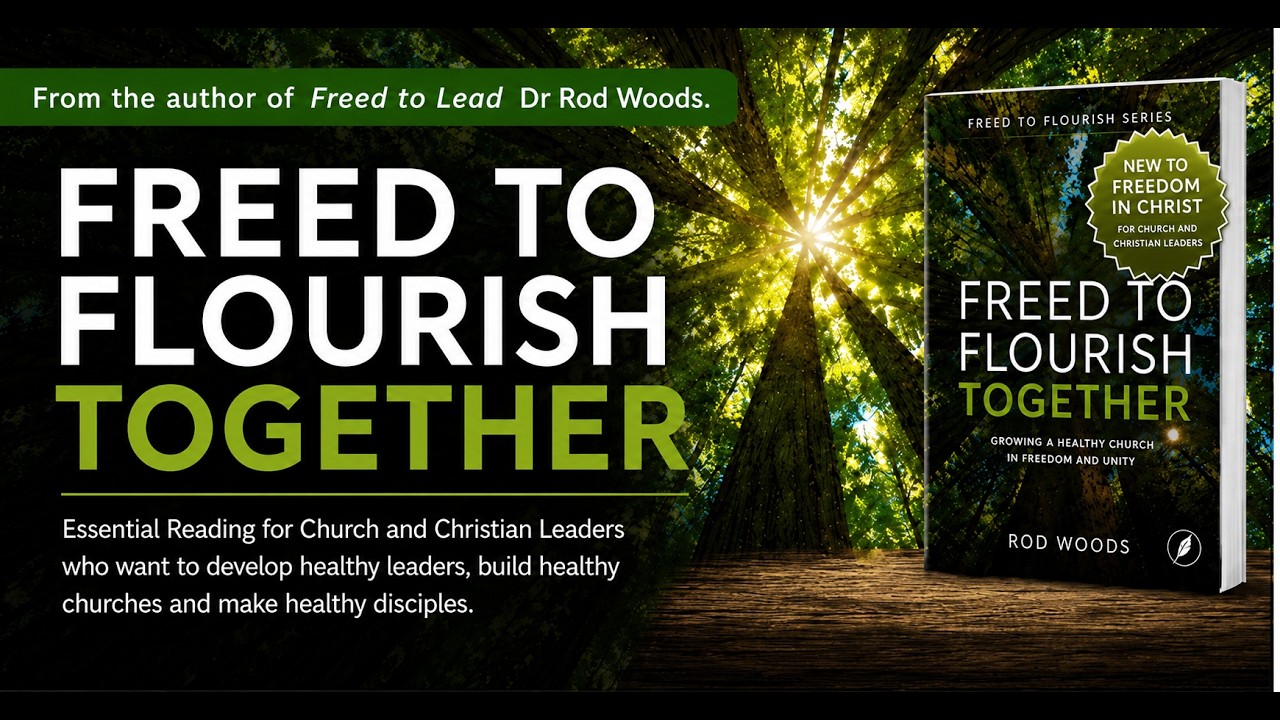
NEW from Dr Rod Woods comes Freed to Flourish Together - for church and Christian leaders
