Freedom for the Everyday Average Joe: the Dawson Grover Stories
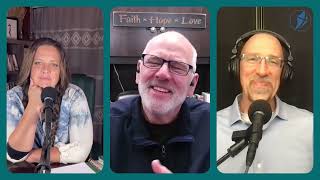
Dawson Grover, a pastor's son from northern Minnesota, spent decades trapped in performance-based Christianity until a mentor introduced him to Neil T. Anderson's The Bondage Breaker and the Freedom in Christ conference. He discovered that his identity as God's child, not his works, was the key to freedom in his marriage, parenting, and ministry.
Chapters
Welcome, friends, to Stories of Freedom, a podcast about discovering and embracing who you are in Christ. On each episode, we'll visit with people who have overcome obstacles, gained freedom, and found abundant life in Christ. These conversations will highlight the goodness of God woven throughout the lives of His people and teach us as His children to appreciate that very same goodness in our own lives. We will journey together, growing to better understand how to live this life free and fruitful in Christ. This is a multi-part episode.
Enjoy.
Dan! Hey, boss man. Welcome to it, right? We're here. Welcome, Dawson. Welcome. Um, Dan's gonna pray for us. Here's how it kind of goes, bro. Dan's gonna pray for us. We're gonna sit before the Lord just like in a Steps appointment. We're gonna offer ourselves to him, and then we're in conversation with each other. We're just gonna flesh out what he brings up. We're genuinely interested to spend time with you hearing your stories and find a lot of beauty in how the Lord orchestrates and opens up the conversation. You won't have to get to any end point, right? We'll start with that, right? So when come in after the prayer, Dan will welcome— he'll welcome you to the show. He'll welcome— he'll welcome our audience to the show, right? And, and then probably he'll ask you your end point, right? So we're not driving anywhere. We start with the end point, and then our job is to flesh that out, is to hear from the Lord, ask questions, and and help you open up, uh, your story. And the Lord, the Lord does really good with that because we're actually curious and involved and invested. And we love you, dude.
Thank you.
And, uh, so we want to, we want to help highlight whatever the Lord is, is got going on here.
We'll see what the Lord does.
Yeah, yeah, it's super exciting. So with that, if y'all are ready I say, I mean, I say we just throw it in there.
Yeah.
Sounds good.
Okay, boss.
You're on.
Yeah.
Let's pray and then I'll introduce you and then I'll ask you what you hope people will take away from your story and get out of your story. So yeah, let's pray. Okay. Uh, Father, even as we just heard Amanda say, it's sort of like a steps appointment. We do desire to just sit before you. And really have You as a significant, the most significant part of this conversation. Amen. Even as so many of those prayers begin, would You reveal to our minds the things that You want us to say? And Lord, it's not a test and it's not a pass/fail.
Amen.
It's Dawson's story, and so Lord, Help us just as, as we are already, but just enhance our curiosity and our question asking. Lord, give him, uh, just bring to mind those remembrances that you want him to recount and share, and we'll trust you for all the results. We do pray that you'd fill us by your Spirit, that we may even even through the podcast, through the video and audio, uh, be light shining, uh, for you, bringing you glory and pointing other people to Jesus. It's in Jesus' name that we submit to you and we resist the devil, and we command him to flee from us and from all this equipment. We consecrate ourselves to you and pray and dedicate all of this equipment and the connections between us to you for your purposes and your use. So Lord, yeah, we thank you for all this. We thank you for Dawson and Karen. We pray ahead toward this week that you'd keep them healthy, safe as they drive, and you give us a wonderful few days together in two different settings, both of which just reflect your glory and majesty and power as we enjoy your creation. And one another. And Lord, we pray you'll bless Amanda, her son's graduation, and all the events leading up to that. What a joy-filled time. Uh, Lord, we love you. We pray all this in Jesus' name.
Amen. Amen. Amen.
That was beautiful. All right, bro, it's to you.
All righty.
Yeah.
Okay. Well, Dawson Grover, welcome to Stories of Freedom. It is great to have you with us today.
Amen. It's good to be here with you. I'm excited about just our time together.
Mm-hmm. Yeah, and we really do want to just hear your story, how you've grown in the Lord, how Freedom in Christ has impacted you, your life, your ministry, your family. And so if you were to like we, like we were just talking about, start with the end in mind. What do you hope people take away from your story?
You know, as I would have been thinking about that whole process and what is the end here? And we actually talked about it earlier, but put it in a phrase like this: freedom for the average guy or person. Sometimes we don't see that. That the average Christian going to church, you know, growing up in a Christian home and everything. Is there issues? Yes. Is there freedom? Yes. Is there freedom? Is there growth in our freedom? Yes. And so average, you know, just growth for the average Christian and freedom in our Christian life.
How did you get to that point? Like, just give us, because I know you've been in ministry for years and help our audience to know a little bit about how you got there. But why don't we, if I don't do this, Amanda's gonna, she's gonna call me out. Tell us about you a little bit and your growing up years. When was that? Where was that? What was life like for you growing up?
Oh man. Let's get to some of that nitty gritty.
I just love this. It just started. It just started. And I'm just over here being such a good girl, writing my notes. I was taking notes. Dawson, you said freedom for the average guy. And I wrote everyday average Joe freedom.
And because when we had talked about it.
I mean, I didn't invite you thinking, hey, I know all I need to know about Dawson's story, let's have him on to tell this particular story. I, I just— we just knew in prayer it was going to be Dawson and, and that it would fall potentially Father's Day month. Like, there were some things I thought, but when you and I talked during your sound check, Dawson, and, and you explained to me what you thought your testimony was, yeah, I thought it was so strong. So you should know, guys, I'm blessing y'all and this conversation. I think the Lord has a lot of really good treasure in here, especially because I know the, the months that you're coming after in the show. We've got some really thick, heavy slogs— necessary, necessary conversations that we as freedom seekers and speakers should be talking about, right? It is, it is good and right that we had spent this time where the Lord has had us. But also, just as we're starting, this is good and right. Like, you— whatever the Lord is sending from you, with you, Dawson, you should know, I think it's going to be a good word delivered in a right season. So I want to bless you both as men, as fathers, um, to, to really be receptive to however. I've got no binds on you, Dan, though you did good. You did good because we do want a starting point. We want to locate you in time and space because that'll tell us something in your story too.
Good? Well, yeah, that's great. I mean, I grew up in northern Minnesota for my elementary years, okay? And my dad, I grew up as a a PK, preacher's kid, basically. Okay. Small churches, rural Minnesota and small churches. And I'll even, I'll tell you what, I'll even start out with my, my unique name. Okay. So those that do not know this, Dawson, I got my name Dawson Grover long before Dawson Creek ever came along. All right. The show. All right.
I was growing up in the '90s. I appreciate this. I think about Dawson's Creek every time we're on a meeting. No lie.
What is wrong with me? I have the blessing of being named after Dawson Trotman. And for those that do not know Dawson Trotman, Dawson Trotman was the founder of Navigator's Nav Press, missionary to many sailors and servicemen. And my father knew him as a young man and impacted by the Navigators. And so after my father, after our family was coming along, I have 3 older sisters and I was the son that came along 5 years later. So he said, it's Dawson. So I'm just fortunate. I just love that. Fortunate to have a very unique name and it's been there and there's a lot of significance to it too. And for me, knowing Dawson Trotman's story and listening and reading his book, Doss, it's been intriguing like that. So that is really the beginning, the beginning. And so, but grew up in a family, pastor's kid, dad was a lot of times a bivocational pastor and things like that. We grew up on a small farm. We had a small farm of 6 dairy cows and in and out of that. I have 3 sisters and they are actually 10, 9, and 5 years older than I am. So yes, they will let me know that I am the baby of the family. And I proudly wear that badge. You know, there's just, you might as well just honor it and wear it. And so, but Yeah, so we grew up in basically northern Minnesota until my high school years and then moved down to the Twin Cities. And so just really in that time, I was thankful that I grew up in a Christian home and was very fortunate, I think, with that. Was there a lot of things going on? Always. But I guess God really protected me in many ways all the way through my high school years that I never took an act, a time of rebellion. Did I test some things? Yes. But I never walked away from God and said, "I'm done with God," or anything like that, and just have really stayed plugged into the church. Met my wife. Our first date was junior high prom. Okay.
That is so cute.
And, um, and so we, we dated for 2 and a half years after that and, and got married right out of high school. So this, this fall will actually be our 50th wedding anniversary. So, and we have 2 children. Um, and, uh, uh, our Oldest is Kelly, and our son a couple of years later was Peter. And so, and out of that, we have 5 grandchildren. And one of the blessings that I, it is a blessing. It's just, I've just been so fortunate. And sometimes I look back at this and I go, I have no idea how this happened. Okay. And both of my kids are walking with the Lord.
Amen.
Not that we have not had our issues and struggles within different things, but they are both walking with the Lord, and I feel just blessed with that. And so the other part of that is I accepted Christ at 5 years old. I know it. I remember how, and my dad leading me to Christ, talking about communion. Just that smidgen, I just remember saying, yes, I want to be a follower of Christ at that age. If you ask me a lot about my childhood, I'll go, yeah, I have no clue. So it must have been good. So anyway, but that's a quick introduction of my early years, I mean, and who we are and where we came from.
So what was it at 5 years old that you said, hey, I want to trust Jesus? And what'd you say to your parents?
This, this is kind of, this is kind of unique. And I think, you know, you know, at 5 years old, you don't know a lot what's going on. Right. And we had communion at church that night. Now, this is a small, I mean, it was Solway Log Chapel. Quote-unquote log chapel. And it was literally a log church, okay? And, but for some reason, I couldn't take it. And I go, what? Tell me about this. I remember just asking that question. And when Dad explained what communion was, I says, I want to be a follower of Jesus. And again, at 5 years old, you're pretty simple-minded. And, but that, and I, for many years, I could not remember that. Okay. But there was a point in time, and maybe we'll get to that later on, the fact that God just opened that up to me and helped me remember that point in time. Amen. So yeah, and that was just a unique understanding of it. And again, simple-minded, simple, Yep, I want to be a follower of Jesus. Yeah.
Do you remember anything about how your dad led you through that time? You know, as we talked about, this is coming out in June, the month of Father's Day, and so we'll be talking about dad stuff inevitably throughout the whole podcast, you and I being dads and grandpas.
Missed opportunity, I think, if we don't.
Well, and Amanda, of course, you know, putting this together with the Lord, and so it works, but It just makes me think of that too. Do you remember any of how your dad responded or walked you through it?
I mean, the first part about it, he just talked, if I recollect, and is that he talked about Jesus dying on the cross for our sins, you know, and his body, and then how the blood, how the juice represented his, the blood, which gives us life. And just as simple as that. And that he gives us eternal life, and those that believe in him will have eternal life. And it was a simple yes. Okay. A simple yes. And I guess I keep coming back to that because I believe at that very, very same thing, the Spirit of God was indwelt with me, even though I did not know that. Okay. And, um, and so it was very simple like that. And I, and I guess the fortunate thing about that is both of my children did the same at a very young age. And I can't remember their ages when they did that, but they both committed at a young age. And I'm just thankful for that. I, that's just a God-given thing.
I love that. Um, one of the things that makes me think or wonder about is in having— you say that the Lord reminded you. I'm very interested in where this conversation goes, but it makes me wonder what we wonder, I think, about children who make young professions of faith. And so I just want to ask the question, did that making a young profession of faith, did that have any consequences for you about wondering whether you were actually saved or not? Did that lead to, or did it, because it was so young and the yes was so very simple and pure, did it just lead you to this like internal knowledge that, oh no, I already decided I'm with the Lord, the Lord is mine, I'm his, you know? Could you take that and run with it?
There it was. I have to say, as I look back over it, there was very, if any, seldom doubts about my salvation. That's cool. And did I struggle? Big time. But in that whole scenario, and then the time period that I grew up into, there was also a lot of works-based, not salvation, but sanctification. And that's where the confusion came in. My salvation was secure. My salvation was secure, but could I— and here's where we'll go into some of this— is that could the sanctification process and becoming more like Christ and being that person was Obey the law. Do what's right. You know, and you don't dance, you don't drink, and you don't smoke. I mean, that was there. And, and I, I will say that that's one of the things we fought with and that I fought with later on in life was the legalism that we grew up in. I mean, Christian home, yes. And, and things like that. But there was a legalism in there. So, so it wasn't the doubt of my salvation. But, um, can I be that good Christian that I need to be? And so that was the challenge, uh, as things came out. So it became a performance type of life, but you didn't know anything different, right?
Because it's, I mean, that's just, I mean, it's the, the water and the fish, right? Water and the fish. Like you're, you're, you're in it. Can you really see it? And so, uh, yeah, that's so good, dude. Thanks for that.
Yeah. Yeah. And that's. Such the story of the average Christian, right? Your average Joe of, and that's what our world teaches us is that our acceptance, our security, our significance is based on our performance, right? And that the way we get in good with anyone, much less God, is through performance and good works and obedience and following those rules. Well, to back up just a little bit though, Did you want to respond to that, Dawson?
Sorry. No, I just really agree with that. That is really true. Obey, do what's right, be the good person, and religion is what it is.
Yeah, and so your trust in Christ for salvation was genuine. You didn't question that, but then how to stay in his good graces, so to speak, was that works-based, and we do want to come back to that, but I want to stay in that time period. A little bit first. And as a child, as a teen, what did you learn from your dad that you really appreciate? You look back, you appreciate, you're thankful for, helped shape and mold who you are as a man.
I think one of the things is that he really, you know, in his teaching, Okay. And things he tried to stay true to the word of God. I mean, his teaching was simple. I mean, his model of discipleship, okay, was, hey, if you want to be discipled, come to church on Sunday morning and I'll teach you. You know? I mean, he was an expository preacher, teacher, and really laid some of those things in those outlines there. And that was, you know, it was the simplicity of that. And so he really taught us and we understood that the Word of God is the Word of God and it is true and listen to it and read it and know it and those types and that process. And so I think that was, and he was a worker. He worked hard.
I figured that was one of them with being bivocational, being a pastor, being a farmer. Yeah, that can be a lot.
Yeah. Yeah. And so it's learning that working, you know, that balance in there. And I often joke sometimes with my siblings and that because my mom's side of the family, you know, it was very interesting too. They were hard workers. They were farmers, okay? Northwestern Minnesota and all this kind of stuff. And my dad's philosophy was this. He says, you know what? We're getting a good— we're doing really good on this project today. We might get this done. We might get this field hayed. We might whatever. Let's keep going. And you know what? Maybe we can get on to the next project. Okay. That was, that was my dad's philosophy. My mother's side of the family was this, was that, hey, we are doing a good job today. We're really getting this done. And if we work a little extra harder, we can finish this project and let's go fishing. So I'm going, I need to transfer to the other side here.
For the fishing.
Where's the fishing?
I'm going to the fishing.
Great. So needless to say, needless to say, my cousins are great fishers, fishers, fishermen. Yeah, that was good. My cousins are really good fishermen and I struggle with it. But no, that's one of the things is just You know, the Word of God is key, and growing up and working hard.
And so, mm-hmm, good. But were there any things that, without going into detail, you had to grapple with in terms of getting to know your Heavenly Father and saying, you know, you're not like I learned you were growing up? You know, whether that was from dad or teachers or community leaders? What were some characteristics of our Heavenly Father that you had to kind of relearn?
Well, mercy, grace, unconditional love. You know, I mean, this is where the religion— and again, as far as You know, as much as you look at it and say, how did God work in that? Is that this is, this, that was kind of the culture at our time, the church culture. That's what they were taught. I mean, if I go back to my grandfather, my dad's dad, you can see the process of legalism coming through. Did they do great things? They did great things. I mean, they led a lot of people to Christ, and there's deeper stories back than that in there. But the process that the church culture in that day, I think, brought out was the legalistic mindset of religion. And that was the battle for me. That was the battle for me. And, um, is I, and I was processing there, do I share this now or not? Okay. And I'll just share it now. And, and what part of the story that came to brought me to freedom in Christ and understanding was when I was pastoring my very first church and I did not go back to school until the age of 30.
Okay.
And And then I was in a very small country rural church. Okay. 50 on a Sunday. Hallelujah. Praise God. We got a new number, you know. Amen. And, um, and I was there for about a year and a half and things were starting to happen. I mean, very difficult stuff was happening. I mean, I ended up finding out that there's a greater spiritual battle. You know, it's, it's, it's more than the world and the flesh. Okay.
Right.
And I called my dad up and I said, Dad, this is what's going on. People are asking me to cast out demons out of their house. And there's people that are struggling with a lot of spiritual things. And, and I said, well, how, what do I do here? Cause nobody taught me this. And he goes, what are you doing to stir that all up? And I said, um, teaching the gospel. Wow. And so, and that was literally part of that where, you know, you got that I was raised, the hard part was you got the world and the flesh, you don't have to worry about the devil.
Hmm.
Ooh. And that was the circle, okay, the circle in which we grew up in. What I want to say is that went beyond just my dad or my family. That was the circle of people that we were in.
Boy, I do want to come back to that because that's so key, and I know it's impacted your life and ministry since then. How did that strike you when he said that? And then I want to go back to early marriage and that 18 to 30 before you were in it and how did performance-based, you know, work impact marriage and kids. But when your dad said, what are you doing to stir that up? How did that strike you? How did it impact you?
I just kind of, I remember kind of laughing at it. I'm going, you've got to be kidding me. Because in the meantime, God had also taught—
How is this your fault? What did you do wrong?
That's right. I'm just teaching the gospel, Dad.
Other people are having demonic things happen and somehow it's you.
Well, and there's kind of a circle there with that. Okay.
That's what makes it funnier. Keep going.
And so part of that whole thing, God at that time had put me around some people, some more charismatic people, and also he had brought into my life a key mentor that was also, in many respects, was a friend of my dad's and my family for years. And he came into my life and And so I was able to talk with him about this. And that was kind of the slow introduction to the fact is, is that as him and I talked and, and he was a pastor also, and, and he goes, man, you got this spiritual war stuff going on. I am learning a ton about it. And that's when I got introduced to, you need to read this book called The Bondage Breaker. Oh. And so that's when that started introduced. But I really realized that, no, this stuff is real. There's stuff going on here because I mean, I was dealing with things, people out of every religion. I actually had a gal in our congregation that was out of Hells Angels and somebody that had tried every religion possible. Um, uh, there was so much sexual abuse up in that community and that kind of stuff. It was, it was hard. And, and all of a sudden we started seeing this erupting and people looking for answers.
Yeah.
Uh, uh, how old were you? About what time was this, this mentor and these conversations?
That was in my early 30s.
Early 30s.
Good. Yeah. Yeah. Yeah.
Was that the early to mid '90s?
Um, yep. Yep. Early to mid '90s about, you know, I started, um, I went back to school at 80 in '88 and finished out in '90. And started pastoring actually before I finished school in '89. So yeah.
That's awesome. Yeah. And part of what strikes me about that statement, what are you doing to stir this up, is almost that mentality, that workspace mentality lends itself to the thinking that if I'm working hard but not everything's going right, I must be at fault. Right? There must be— I must be to blame for some reason, right? But, and that's what not factoring in the devil, uh, I remember reading that back in the mid-'90s myself in Victory Over the Darkness and The Bondage Breaker is if we only think about the world and the flesh, then either God or us is to blame, right? And if we discount the devil, um, Again, we're not saying, well, the devil made me do it, because he can't make us do anything. But if we believe his lies, if we give in to his temptations and accusations, it's going to impact our relationships, how we submit to God, our intimacy with him, because we're going to— if we believe lies about God, it just impacts all of that. So Yeah, I want to back up a little bit and I want to come back to that and then see, because I know that got you then involved with Neil T. Anderson directly, Freedom in Christ Ministries, and so I'm going to get there, but let's back up to that. You said you and Karen got married right out of high school, so what, 18, 19 years old? Yeah. 50-year anniversary coming up. That's awesome. Congratulations. Amazing. And, but how did that works-based mentality, uh, show itself in your marriage and in your parenting, uh, in those early years?
Oh man. I think here's where I'm going to go with that. And first, I want to go back a little further and into my elementary high school years. Because I think what is key here is how the enemy began a foundational lie. And that lie, I even, there's that lie that is, and I really believe that it's come to this point where the time that sometimes there's a foundational lie that the enemy just boom, Just, I mean, I don't care how long you've walked in your freedom or whatever, he's going to bring that back up again, you know?
And so one is coming to my mind right now. You're talking about that. I bet in our listeners there will be one coming to their mind too.
Yeah. And, and, and my foundational lie was this, is that, um, you will never know enough. You're not smart enough. I mean, and that was built into the, the whole process of my, my education because the school, the elementary school that I went to was called a lab school. It was a laboratory school. In other words, it was an experimental place. And so they never taught me phonetics. They taught me sight reading and all this. So I struggled with reading all the time. And it was penetrated into me that you will never know enough. You'll never have enough knowledge. Okay. And so that lie kept going in and I, and to, to, to just jump a few years, I was always in a special ed reading course. Always. And this is why I think God has a sense of humor because somebody like me going into ministry and what do you do for your life? You read, okay? You know, what do you do?
And out loud too. Not even secretly to yourself, you know, like in the closet, like practicing, right? But no, you've got to do it out loud in front of everybody.
Yeah. And in the early days of ministry, I didn't have Bible reading programs to tell me if I'm reading that name right or not.
That's right.
But But, but anyway, so, and, and what did it was actually in 9th grade, I went into a, a special ed reading class. Okay. That the, the instructor went, Dawson, you're doing quite well today. You're up to the 7th grade level. And I just, I just looked at her and said, I'm done. Thanks a lot. I mean, even there, you weren't, you know, you weren't measuring up, you know? And I, I, I said, I'm done. I walked out. And I said, I'll never return to one of those classes again. Never, never. And, and so I, I walked out and my, my go-to in high school was sports. Okay. I was liked, I was popular. And the fact is, is that I was one of the top hockey players in the, in the school. And that was my out. That was Yeah, that was, that was where I got. But that's also how God worked in that there was a teacher that saw that I was struggling and she went and said, you know what, he should be doing better than that. And she came to me and she says, give me one year, Dawson, I'll teach you phonetics. Give me one year. And I said, no. I said no. And because I was done being, you know, I didn't want to be in that place again where you, you know, you're going to be put there. And through the working of God and things, he put a little bit of pressure on me because the gal, the teacher that was working on me also was a cheerleading coach, which also knew somebody that knew me. Okay. And so between the two of them, you know, they got me to go through it and it helped me tremendously. You know, so anyway, she got one of her, you know, the friend was a cheerleader and, and, and we were kind of becoming friends at that time and ended up getting married too. So, and so, yeah, so, so God worked through that and, and, and really just took that process and, and helped me become a better reader in that. But still, that lie was there. And it kept, and it kept because then when I went into college right out of high school, I flunked out of my first semester. I just, I couldn't handle it and, and things like that. And so flunked out and, and went into Ended up going into the National Guard for 6 years and taking that route and just finding work.
Right. That's all. Yeah. Isn't that amazing though, that no matter how we perform or how much we learn, it doesn't overcome the lie, right? Is that, and that's that, that's that proverbial carrot on a stick, right? That, that the horse is pursuing that carrot on a stick. Um, You know, and that's what drives him. Well, that's what the world does to us and what Satan does to us is, if you just try a little harder, do a little more, perform a little better, maybe you'll be able to reach that and undo the lie. And yet it doesn't solve the lie, but that's where we get into, you know, renouncing the lies of the enemy and then being transformed by the renewing of our mind, specifically choosing to believe the truth of what God says about us in terms of how he designed us, the purposes he has for us, right? And those are more significant than our academic achievements. Yeah. So you go into the National Guard, you're married. How long were you married before you had kids?
Um, we're, it was, we were only married a couple of years before we had kids. And, uh, our oldest came along, Kelly. And, um, uh, and then a couple of years after that, Peter came along and we're, we're, I actually had been managing a warehouse. I was, um, wasn't making a lot of money. And then when the kids came along, I went and got this job at a at UPS and was there and it was, it was a good job and everything, but still very felt very unfulfilled, you know, and things. And, and, and so some of that, you know, in that, in that time and in those days started coming out a little bit with the performance thing. And not being satisfied with my work.
Okay.
Mm-hmm. And, and kind of that entrepreneur entrepreneurial, you know, in my background too. Okay. And so, because with that, I, um, we just kind of kept pressing on, but there was some hard times and, uh, with that performance kind of concept and, and just things that, um, You can't quite do things good enough in many different ways and forms. And so Karen and I went back and forth with that a lot of times. I mean, part of the joke is that in that we have today is that if we were moving something or whatnot, okay, and I got it in the back of the pickup truck or whatever, you know, I would strap it down and she would walk out and she would go, is it going to stay there? You know, really? Yeah, I think it's going to stay there. All right. Until something else falls out, you know. But anyway, you know, so those types of things would bring tension to us.
Because that question, which she just is concerned that, hey, it's tied down. We can be— I can ride along in confidence that nothing's going to fly out or fall down. But for you, that tapped into not good enough, not smart enough, not able to perform up to X, Y, and Z. How did you respond to that? Like, what did you say back? Or did it shut you down? Did it make you kind of come back at her with a retort? How did that look?
Well, it depends on the day.
Yeah.
There would be retorts sometimes. Sometimes I would shut down, but this is where the other, the other, where the process started to come in. And it was before that too, but that began to expose some of my anger. You know, that was, that was building within me. And there was anger as a child too. You know, I knew that as I look back, there was, there was some anger there, um, with illegalism and in the performance type of thing. And so sometimes we would do that, you know, until we had a really good, probably good, one of those real gentle conversations about the whole thing, which I'm being real sarcastic there.
We didn't clock it. I mean, it just went straight over our heads.
Straight over. And we did. We finally really had talked that through and worked that through. And did it still trigger at times? Yes, it did. You know, but, um, yeah, so that came into it and it also, you know, um, we, we became very strict with our kids too, very strict. And, you know, um, so now we, we were beginning to recognize, you know, this is carrying on to the next generation. Yeah, so it was there.
Yeah, so not only the you recognizing things coming out of you that didn't necessarily, you know, maybe they were at a higher level than what the situation or the comment warranted, right? And you're going, okay, there's more in there that needs to be addressed or coming out toward the kids. And honestly, it makes me think about how we talk about stronghold busters and in our Freedom in Christ course, Session 8 of Renewing Our Mind, is that how do we recognize one? Well, we often will look for, is there something that I want to stop doing but I can't seem to stop doing it? Or is there something I know I should be doing that I can't seem to to start. Yeah. And so, so as you're going through that early marriage years, parenting years, you're seeing these things surface. And I know I've, I've talked about the passage before, but, uh, Mark chapter 7, verse 21, 22, 23, where Jesus is saying it's not what goes into a person that makes them unclean, but what comes out of the heart, because it's from the heart that the the thoughts, the words, the actions flow. And so, you know, as a dad, I had to, and as a husband, I had to start looking at, all right, what's coming out of my heart? What are my words and actions toward my wife and kids revealing about my heart? Yeah. Um, you know, and I had to resist the temptation to blame them. Like, well, if they hadn't done this, well, that gives, you know, for people or, you know, for guys, we'll talk since it's Father's Day month and we're talking guy to guy, it's for us guys, it's easy to say, well, if they hadn't done that, I wouldn't have reacted that way. Well, that's actually giving away personal responsibility and ownership of thoughts and responses. Giving that power to somebody else. And nobody actually can make you do those things. No. You know, and so we have to accept that responsibility and not blame others. So that all starts coming to the surface for you. You start seeing the spiritual battle in church, and you read that you're referred to The Bondage Breaker. Well, tell us about that. How did God open your eyes? What did you learn? How did that change you as you were doing some of that study?
Well, as the typical story goes, okay, and as the average person goes, is that the whole concept is I received the book The Bondage Breaker, and I did what every person did.
You put it on the shelf.
I put it on my desk and my shelf. I did. You know, I just, I set it there, you know, and, and, and here's, here's the, here's the incredible thing about it is I'm pastoring away. I'm preaching. I'm doing the best that I can do. And all this stuff is coming up. And one day I look and there's that, there's that book. And I go, I need to read that book. And so looked at my calendar and I go, hmm, I got some time today. And this is true. I read that book in one day. Hmm. It was like engulfing scripture. I mean, and part of the things that I really appreciated about the writings of Neil and what he did was, I mean, everything was supported by scripture. And so I'm looking at, I'm just reading that and going, yep, that's what that says. Yep, that's what that says. And of course, you know, you're supposed to read Victory Over first, but why do that? Let's get right to the meat of it. And The Bondage Breaker, which began to help me understand there's a spiritual battle going on. And that battle is for my mind. Okay. And, um, and so that started, started things churning a little bit. And so I called my mentor up and, and, um, I said, I said, uh, this, this is incredible. This is absolutely good. He says, great. He says, you need to go to the conference that's coming to Minnesota. And it was like in 2 weeks or something like that. Okay. And, and, and he says, I'm, I'm, I'm paying for it and you're staying with me because he was in the cities. All right. I said, okay. And, and when did that conference start? Remember those first days? Sunday through Saturday. I mean, that was an all-week conference. And so I went, I went and, and so that was my kind of my introduction to Freedom in Christ. Okay. And so I'm going, because I had, I knew there was situations and here was my mindset as I went to that conference is these people need help. Jesus is the answer, but I don't know how to get them there. I knew Christ was the answer, but what is this? I've got this salvation, but I don't know how to help people get out of this stuff. You know, and so I'm not looking at myself because I don't have that background. I don't have those things that have happened to me. Okay. And, and, and I'm explaining truth to them, but it's like hitting a brick wall. I mean, it is hitting a brick wall. And so I went to that conference and, uh, I was, I was attending that conference and about halfway through that conference that week, I got this, I call it the tap on the shoulder because I got a tap on the shoulder and it was God. And it was saying, you're not here for the people.
You're here for you. Come on. Come on.
Uh-huh. And that began a long journey. And I say that it began a long journey because I believe I got my freedom, but the maturity in my freedom, God had to do a lot of digging. Amen. Okay. And it was through that conference. It was through that conference that, remember at the end of that conference, you know, I learned my identity, I saw my identity, and there's a couple things that had happened in there that are very interesting with this is because I'm not one of those guys that wants to go up and speak to the speaker, you know, I'm going, I don't got any great questions to ask you, all right? But I did have a question for him, okay? Because I was pastoring small churches, but I was also, you know, in a small church, you are the pastor, you are the youth pastor, you are the counseling pastor, you are everything, right? And I was doing a lot of work with youth, and I was also in the small community we are in, I was becoming the networker of all the youth groups, okay? And bringing them together and working with another church in that. And so I did go, I got to go to Neil and I got to ask him a question. I says, Neil, I, when I finally got to him, I says, where is your youth material? Where's your youth material? And he says, go out and see Dave Parker, you know, at that time was there because Dave wrote, as you see, the Stomping Out the Darkness and the Bonnie's Rigor Youth Edition with Neil. And so I went up to Dave and I said, Dave, where's the youth material? And he says, well, tell me a little bit about yourself, what you're doing and whatnot. And it was at that time, it was at that time that I didn't still have a lot of understanding of my freedom. Okay. And, but I knew that God was doing something here. And he says, I am working on it. I'm developing it. Stay in touch. And part of it with that, that's, you know, and that's what we started to do. And so we got to the end of that conference that week and I went through the Steps to Freedom. And God, I mean, there was some surrendering, there was some confession of things and continuous. And when I got done that evening, you know, going through a group Steps to Freedom, okay, I mean, this was This is not your— this is going through the Steps to Freedom with 1,000 other people in the place.
All right.
I mean, the old way they did that. And I got done and we went home with my mentor and I looked at him and I said, there's more. And I said, you're taking me through the steps tonight. I wasn't. I wasn't waiting, okay? And so we sat down for another couple hours and there was a, you know, the most significant thing at that night was when we got to step 7 and step 7, you know, acquiescence versus blessing or curses, right? You know, acquiescence, a great word, right? Does anybody know what it means? No, but we figured it out. And as we looked at step 7, curses versus blessings today, and we got to a point in the prayer of declaration where I stand against any curses against you and your ministry. He stopped me and he said, you, your ministry, and your family. And we just prayed through that and just sensed that there were some things that God was breaking at that point. At that point. And so that was my first experience with the Steps to Freedom. And I'm going, okay, I feel like I was, I was, there was freedom, there was victory, but yet God had some deeper work to do. God had some deeper work to do.
Yeah, and we talk about that freedom is the bridge to maturity, right? And freedom is something that we can step into right away because it's been secured by the finished work of Christ, and we, we receive it. Maturity requires, requires our participation, our growth over time. And so, but What did you see, because as a husband, a dad, a pastor, you're a leader of others. So for you, you went into that conference thinking, how's this gonna help me lead other people, right? And maybe do it better, you know, that workspace mentality. But halfway through, God said, hey, I want you and me to do some work. Well, so you engaged in that. Praise God, you heard him speak to you. He's so personal. He continues to do that to this day, and we see it happen all around the world. Um, what difference did that make in your marriage, in your family, and in your church and your pastoring?
It— here's, here's the thing, is that it wasn't a snap difference. Okay. There was a process that God had taken me through. And part of that process was starting to change the language about who I am.
Hmm.
Come on. My identity is absolutely key. And learning that identity and keep going over that. I am God's child. And And the thing about that is, is that how is that done? That's done by grace. Okay. Not only now is my salvation by grace, but my sanctification is by grace.
Amen.
Come on. And that began the turning point. Okay. Now, there was still some of that anger that was still there. I mean, we didn't get to the deepness of that anger right there. And actually, I had to process through one of the things that I had a professor in school and I was caught between a rock and a hard place in this particular situation because the professor was teaching something. I'm going, this is not right. This is not right. And, and so I started to push against it a little bit. Well, I'm 30 years old. Okay. I'm, I'm not a teenager or freshman, you know, coming out of there. And, and I'm going, I've got some experience behind me. And, and we started to clash. We started to clash. And this is a small school. I'm not going to, you know, name it or anything like that. It was a small school. And I had history in this school. My grandfather was a founder and prayed under a tree to start that school. My father was a teacher and worked at the camp, you know, for many years. And I wasn't going to go back there, but I ended up going back there. God put me back there. And so this became a great concern because of the theological path that this professor was going. And And so there became this tension that I had even there. And so that was going on. Now, at the same time, okay, I'm in touch with Dave Park. Where's the you stuff? Why? Because, you know, I'm pastoring, I'm kind of working with the school. And getting ready to step out. I'm learning this identity, but there's a burning in my heart. All right. So I'm starting to teach it to the youth groups. And all of a sudden I find myself in a situation where I am the keynote speaker for 5 junior high camps that summer. So that we had a little rotation put up. And I'm going, okay, what am I going to— I'm going to teach this stuff.
Good.
Yeah.
I want to teach this stuff. And so Dave Park and I kind of kept going back and forth. All right. And here's part of this very interesting aspect of this is we kept going back and forth. With this. And I did this for 2 years. And on the 2nd year, he goes, what in the world do you do? Who are you with? And I told him what I, you know, I was with this organization and kind of representing this college and going out and doing this. But this is what I teach and this is what I'm burning on my heart. And he said, well, why don't you just join us?
Right.
And so that was like in January. And so it was 9 months later that I actually did end up on staff with Freedmen's Christ for the first time in '96. Okay. And so, but part of that was Dawson teaching this over and over again. Okay. Learning it very well. Learning it. And, and Not only that, God continuing to drive it into my heart. Amen. Amen. And so, and this is not a timeframe, you know, we're kind of moving, jumping over, but you, Dan, you asked, how did it affect my marriage in that? I learned to forgive from the heart. Amen. And one day Karen came to me literally and said, why do you get so angry? Okay. And this is a few years after living in that, right? Okay. Living and knowing who I am and understanding freedom and teaching freedom. God bringing me to another level of dealing with anger that was within me. And just processing. And I go back to that professor. And because here's one of the awesome things I said. Grace is true because him and I had a clash. And because I was, you know, I'm just going to put that there was a clash. And even at my exit interview from the college, he told me that I'm commanded to love you, but I don't like you. Okay. Awesome. Him and I are kind of like this and in a reality. And my dad was on the board at the school at the same time, you know, so there was a lot of conflict going on. And I was also in the process of joining Freedom in Christ. He called Freedom in Christ and said, don't hire him. He's angry. Here's what Freedom in Christ did. Dawson, we only heard that story. Why don't you go back and do what you can do to reconcile with him and let us know what's going on? Freedom in Christ was giving me grace and not just believing, you know, penetrating that. And so I did. I went back to him and we reconciled the best we could. Is it perfect reconciliation? No, because we still had our differences. But we were able to move on with that. And so God taught me that forgiveness. And as God continued to teach me that forgiveness, it brought me to the point of a very key day of when I sat my kids down and I said, I've been angry. I've been legalistic. And I'm asking you, to forgive me. Wow. And here you will see the difference in my two wonderful kids. My daughter goes, makes all the sense in the world. You know, now I understand, you know, like that is. So we had a great conversation and my son didn't say a thing. My son did not say a thing. And so I think he was in his junior year because in his senior year he went to a class, a PSEO, post-secondary education, you know, in high school. And he had this psychology class and he came back and he goes, Dad, can I write a paper about our family and what you did? And I said, yeah, just change the names to protect the guilty. Okay, please.
Or to protect the redeemed.
And he wrote a very accurate paper, very good. And I can't remember it all now, but I believe that was a significant day in the life of our family. You know, me being able to say, uh, I'm your dad and I screwed up, you know, and I was a legalist and I, and I've been angry. And so I think, you know, that was huge for our kids. Amen.
Amen. Just listening to you, um, just listening to you as a wife and a mother and, and imagining the effect of that relation, you know, that kind of conversation. Huge, huge. I mean, Dawson, you've hit on some really big things, and I'm not an everyday average Joe boy, right? But like, there are things that I listen to, I see my own life, I see my own dads, I see my— like, I see my own husband or my own sons, right, in some of this stuff. And, and, and so I just have to thank you because it's a It's already such a beautiful story. And, and, uh, but I want to touch on— I, I don't even know how out of our timeline, Lord, it takes us, but you've talked about some huge life-changing things that some people never have the average everyday courage to do. Okay, uh, apologizing to your kids being found, allowing yourself to be seen and found in your family, in the situations, uh, being caught. That sense that if I've done something, I don't need to be caught. I'll, I'll show myself, right? I can be held accountable in these relationships with my children and my, and my wife, right? Because, because it's coming from you. But for me, but for me as a spouse, to my husband. I, I'm safe enough here. These are my real people. Yeah, like, these are my real people. I can be found here and, and allow myself to be held accountable. And the redemption— I mean, I just feel like so many things— the redemption that is possible, that is then made available, is then accessible or possible in the in the family system, dude. Yeah, this is a Superman courage. I mean, I, I don't say that lightly. This is where real things happen, right? Where real life-changing, generation-changing things happen in conversations like this. So it's no small thing. Thank you for, for these stories.
Yeah, go ahead, Dawson. Then I want to, yeah, I want to, yeah, it's in some of it.
I just have to say it was just God moving because amen, amen, in and of myself. And the thing that I was learning that in within that whole time and, and, um, yes, is in that process. Okay. You know, there wasn't a great sin that I was caught in. Okay. Or anything like that. I mean, sin is sin, believe me. Right. Right. The bitterness is sin. Okay. And walking away from that. But, you know, and I think one of the things that God was— I was studying out and I want to make sure I I read it. I should, 99 times out of 10, I can quote this, but in the whole—
Where are you going, Doss?
I'll pull it up. Psalms 51. Beautiful. The Lord, and you know, David being exposed here, right? Okay. I was studying this passage. And it says, for you will not delight in sacrifices, or I will give it. You will not be pleased with burnt offerings. The sacrifices of God are a broken spirit and a broken and contrite heart. Oh God, you will not despise. And it was in that time period I looked and, and, and I'm going and I studied that out. Contrite, broken, broken into pieces and fragile. And I remember going on a walk and saying, "Lord, I know what that means intellectually, but I don't know what it means to live it." That was dangerous. That was dangerous. But it was a dangerous path and a prayer that I'll never regret. And, and so, and that's where we were at at that time, and that's where I was at. And God took us down a path.
So was it dangerous because he taught you what it looked like to be broken?
Yeah.
So we may need to go there in a minute, but, uh, we will.
We—
whenever you're ready, we will go there.
All right. Well, I, I—
Thank you for listening to this part of a much more in-depth conversation. Continue on with us in the next episode. Thanks for listening to this episode of Stories of Freedom. If these conversations have blessed you and you want to partner in the work that we're doing, we would love that. Freedom in Christ is a donor-based ministry, and so we We need people to feel led by the Lord to join us in the work He has us doing. Could that be you? Go to ficm.org/give to see and find out.
More from Neil

FREED TO FLOURISH TOGETHER - ESSENTIAL READING FOR CHURCH AND CHRISTIAN LEADERS

*A Kind Rewind* Freed to Flourish Together: Growing a Healthy Church in Freedom and Unity




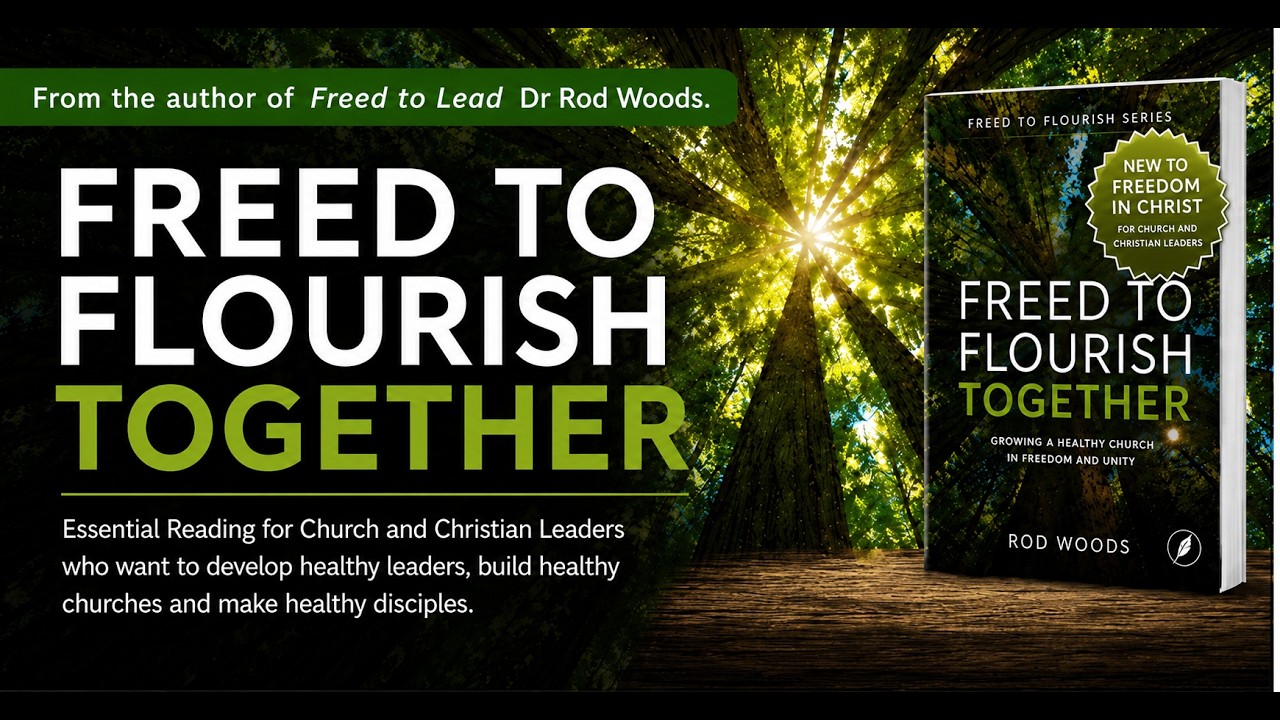
NEW from Dr Rod Woods comes Freed to Flourish Together - for church and Christian leaders
