Mother: Discipler, Generational Freedom Fighter -- The Kimberly Byrd Stories

In this episode of the Stories of Freedom podcast, host Amanda (joined by co‑host Todd) interviews her mother, Kim Byrd, a Texas‑based disciple‑maker who leads women through Victory Over the Darkness and Bondage Breaker studies. The conversation weaves Kim’s personal history—growing up in a hard‑working, Baptist‑rooted family in South Texas, the pressures of being the firstborn son, early marriage, divorce, and multiple business and personal losses (including a house fire, Hurricane Harvey, and the death of her father)—with her spiritual journey from a pragmatic, performance‑driven Christianity to a deeper, grace‑filled relationship with Christ. Kim recounts pivotal moments such as a revival led by her grandfather, the transformative Grace Course (part of the Freedom in Christ curriculum), and the role of anxiety‑focused resources like Free to Lead. She also shares how generational patterns of “starting at zero” shaped her desire to mentor women, the impact of her daughter Amanda’s struggles, and the ways God’s tenderness reshaped her identity, security, and approach to discipleship. The episode highlights themes of generational faith, the cost of performance, the healing power of grace, and the practical outworking of freedom in Christ through ministry, foster care, and personal testimony.
Chapters
Welcome, friends, to Stories of Freedom, a podcast about discovering and embracing who you are in Christ. On each episode, we'll visit with people who have overcome obstacles, gained freedom, and found abundant life in Christ. These conversations will highlight the goodness of God woven throughout the lives of His people and teach us as His children to appreciate that very same goodness in our own lives. We will journey together, growing to better understand how to live this life free and fruitful in Christ.
All right. Ready for me to pray?
I am, for sure.
Awesome. All right, let's do it. Oh, Father, we do come before you and we thank you that we are all in your family. And that because of you, we are brother and sisters in Christ, and we rejoice in that. Lord, we count on your presence. We do ask for your filling. Give us clarity of thought. Lord, there's no pressure. This is just Kim's story. It's her life. And as we've talked about before, we just want to share your goodness as evidenced in and through your work in her life. We thank you for her. We pray you'll bless, bless Kim, Forrest, and the whole family. We pray for this time now. We consecrate ourselves and all this equipment to you. In Jesus' name, we submit ourselves to you and stand against the schemes of the enemy to steal or kill or destroy or in any way distract from what we're trying to record, um, today. We desire to point people to you, Jesus, uh, for their own healing. Um, and so, Father, um, would you glorify yourself in and through our conversation? Uh, we thank you for the fun we're going to have, for the truth that will be spoken, and, uh, for the work that you want to do through us. Lord, we can't orchestrate any of it, but we can stand amazed at you and how you apply our experiences, our questions, our thoughts to the hearts and minds of your children. And so we need you and ask you to do that both now and next month when this hits the airwaves. Amen. Yeah, Lord, we just submit ourselves to you for your purposes, for your glory, by your Spirit, to lift up your Son Jesus and point people to the truth in your Word. Yeah, we just ask all that in Jesus' name. Amen.
Amen.
Amen. Amen.
Amen. You ready?
I am. I'm ready.
That was good.
Okay.
I got tissues, got tissues at the ready.
Yeah, I listened to Carrie's part 1 today.
Yeah, it was good stuff, right? Yeah.
Wow. Made me tear up and I did the interview.
Mandy and I were talking about that this morning and I asked her how you held up and she said beautifully. You held up beautifully.
Yeah, yep. I, I thought I was, I was right proud of you because these aren't, these aren't easy discussions. And potentially we'll get into discussions today that are likewise not easy. Um, I think that when I was preparing for Carrie's, at some point in the conversation you go on and she starts talking about the terrible things that she went through, and then you stop and you say, hey Amanda, you know, we might need to add a trigger warning. Well, I just cut that. It was so perfectly right. I just cut that and used that as the trigger warning. But also, I did research just language. How would we simply be nice to our people and just say, hey, some of the content in here will be hard to hear, but it is necessary that we talk about these things, not only as human beings, men and women, but specifically and earnestly as the church. And now I don't want to take away from that, but there's no way to pretend that in this story there, that I don't already know a little bit of what we might get into, right? And so I just feel really honored to get the opportunity to have real and impactful conversations. Yeah. And there's a lot of ways to do that, and so, yay.
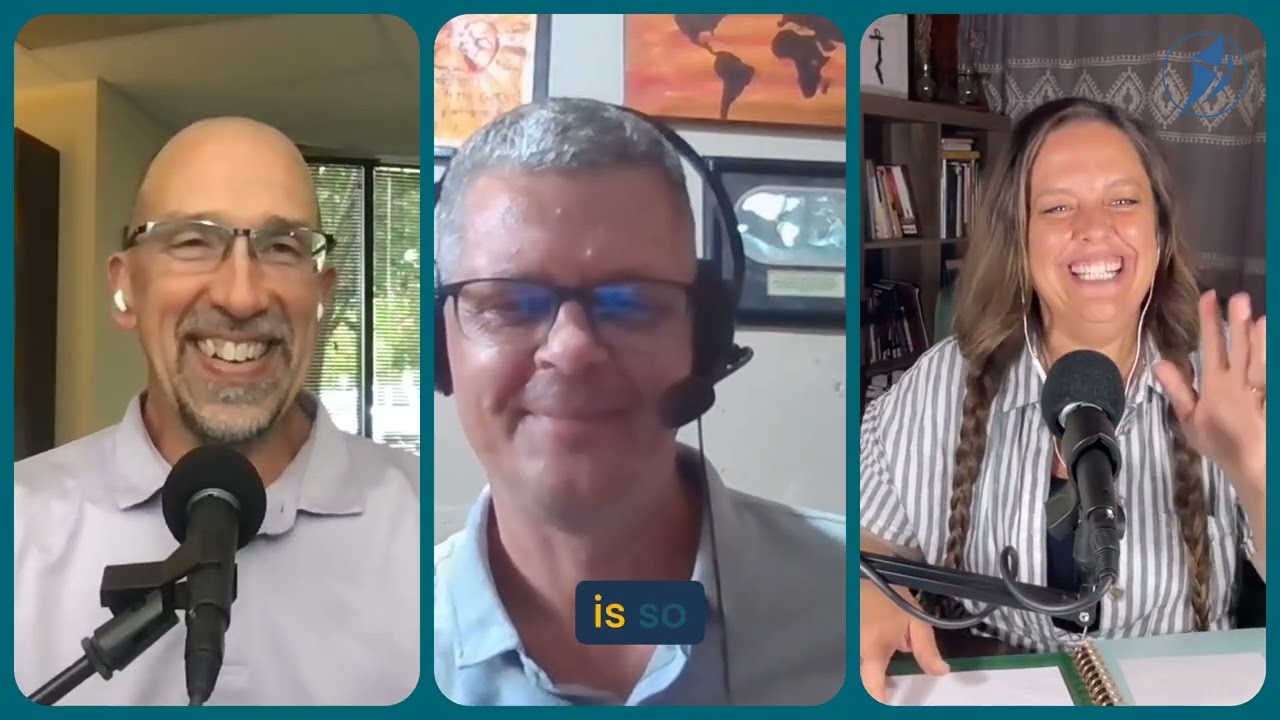
[Speaker:TODD] Well, how about if I, yeah, make the introduction, we'll jump on in. Well, it is a joy and a pleasure for us to have Kim Byrd with us on Stories of Freedom today. Kim, I understand you lead women through Victory Over the Darkness bondage breaker studies and see God working in lives. You live in Texas. And happened to be interviewed by your daughter today. So Kim, welcome to Stories of Freedom.
Yes, this is exciting for me. This is very exciting. And I can remember last year when Manda came to me all excited and said, Mom, I've got you scheduled. And I said, great, when? And it was like, in 18 months. Oh, okay, that's, that's great, that's great, that's great. And finally it rolled around.
Here we are.
Well, it wasn't like an order of importance kind of thing. I'm just gonna throw that out there. I sort of thought it was. What you should think is even 18 months ago the Lord was putting your name in my heart and prayers. Look at that, what a devoted daughter.
That's right.
That's right. Oh, I can't wait to spin it this week. You know, like today.
That's hilarious. He never misses a chance to humble me.
Yeah, well, and there are times where Amanda's going through the schedule and who she wants to have on the calendar and who she's praying through, which I so appreciate that just the prayerful consideration for who to have on the podcast. And I'm like, Amanda, I'm just trying to make it through this week. Like, you're already planning 2027. Amen. That's great.
That's great. Oh my.
So you're not alone.
Some of us are meant for horizon thinking.
Yes.
That's right.
That's a good way to put it. That's good.
That's a generous to myself way to put it, I'd say.
Yeah.
Yeah. Yeah. Which we've already joked about. We didn't invite you on to have the podcast be all about Amanda again.
Seriously, come on, come on. Please stop, everybody.
We do understand that she will come up a time or two in you telling your story. We look forward to that.
I thought we were just going to get together and all only talk about her sister.
Oh, good. That'll make Sarah happy. Little shout out to Sarah so she wasn't forgotten. She didn't think we did something without her.
That's right. We'll just need her written permission to use the content. But as we get started, Kim, what do you hope people take away from your story today? What are one or two main points that you want people to hear?
That the Lord is so, so tender with your heart, that you can trust him, that he will not misuse, and he's not a bully, and he doesn't "poof." And that was huge for me. That was huge for me to learn. So that I think people would be, we would be able to let go of so many things so much faster if we recognize that, how just, how tender he is.
Well, there's, I'm sure, stories behind that and why that was so important for you. And, well, I can see you're crying beautifully, by the way.
Thank you. I'll let my sister know.
Yes, her prayers.
That's important. Those things are important.
How ugly or pretty you cry.
Yeah, it is.
Yeah. Because we're past the point of thinking that I won't. Right.
And cry.
You know, you just sort of embrace it and go with what you got.
Yeah, that's awesome. That's awesome.
Well, Amanda knows a lot more than I do, so I'll just ask a few of these starter questions because I really don't know.
Okay.
Where did you grow up? And some of what we wanna pull out, of course, is some of your background that creates the setting for why that truth of the Lord is so tender with your heart. I love how you said that. And that if we knew that and trusted that, that we would bring more things to Him more quickly and receive the grace and mercy that He's so ready to give. But so where did you grow up and what was growing up like for you?
I grew up in South Texas. My parents were self-employed. We lived sort of out in the country, had horses. Just, you know, a great family life, had worked hard. My parents worked very, very hard, but they really loved the Lord. My grandfather was a pastor, a Baptist preacher, and my mother and father in my growing-up years were super devoted to the Lord. We had we had wholesale nurseries, wholesale greenhouses, big, lots of acres under cover. And I can still remember as a young girl, I think I was riding my bike through the greenhouses, and Daddy was there with the elders from our church, and they were praying over some of the crops. There was a fungus that hit or something, and he called and had them pray. So there were lots of things we didn't get right, but one of the things that we did get right is that the Lord was very practical, you know, that he would meet you in practical ways. I can remember, as a lady, hands-on vans, you know, where they would be able to do what they needed to do, and we couldn't afford to have them fixed, you know. So the Lord was very, very practical. For me growing up. So that part wasn't ever a stretch. One of the things, though, and I don't know, because we went from sort of a Baptist faith and moved into a charismatic faith, and I don't know if it was typical to the time or typical to the charismatic movement.
What time is this? You say, you say, you know, I was born in '60s, so probably '70s.
You know, '70s. I would have graduated high school in '80. So that's where we're at. But one of the big things that it seemed like is it seemed like every generation was discovering the Lord anew. We weren't— so my grandparents were very grounded, but then it was like my mother and father had to find their own way. In their Christian walk. And then, you know, we were the kids, and so we would catch on eventually, and we would start our own walk. But it— one of the things that became apparent when I started walking a little closer with the Lord, and Amanda and I started having discussion, is that we're— every generation is starting off at zero. You know, every generation is starting off at the ground floor. And, and what would it be like if we built generation upon generation? And I think now, now, this is not that long ago that I'm talking about this conversation. But that's when we actively started praying that through our family, the Lord would shine more and more light, that each successive generation would walk in more light than the generation Amen. And we got really intentional with that. And a lot of that comes from the way that I was raised, that, that we, we were, we were all just starting over. And so you'd hit a point and then you passed away. But the people, the people you're leaving behind are, are still floundering and they're not finding their way. And so that has been, been exciting. But I was raised in a Christian home, good, good people. We worked, work was valued very high, it was very performance-oriented, very, very much. And not only that, but I was the firstborn boy. And so I had a lot of responsibility. And, and And so, you know, there were good parts of that because I honestly grew up thinking that there was nothing I couldn't do. I was pretty sure that I could operate on somebody if I had a book that explained it well enough. I, you know, so I was raised with this, you know, of course I can do that. Of course I can do that. Which The Lord and I've had to have a lot of conversations about. Just a lot of conversations about. But you know, so those parts in looking back were super detrimental, especially with my children, were very detrimental because I just followed in those footsteps. And that was definitely the priority. The family business was was the biggest priority. Now, I can say that it kept us close and it provided what it needed to do, but there were ways that we got it way wrong.
Sure.
Way, way wrong.
Sure. Well, describe for our audience watching or listening, what do you mean by you were the firstborn boy? I'm having a— I'm imagining that it's tied to that expectation that you perform and do things, right? But tell us a little bit more about that because were you the firstborn in the family?
I'm the firstborn in the family. I do have a brother, but he's 18 years younger than I am. So the expectations were way different when he was being raised. But yeah, it was— I I, I, it was just assumed that I would come along beside. Now, there were ways in which, in my particular case, there were ways that expectations were put on me that were very unhealthy. I had a, uh, my mother, who I love dearly, that lives with us was not able to handle a whole lot. And so there were a lot of things, just a lot of— that was just the dynamics. And then, as I got older, everything became my responsibility. So when business failed through decisions that I had, I was like in my early 20s, I had no part in making. I was the one that was, that needed to fix it. And I was the one that, you know, that had to contact everybody. And I was the one, if my father got sick, I was the one that had to go to hospitals and fly him through, you know, just things like that, that you would have expected somebody else to be called on. And, but that was just an assumption. It was just an assumption that was made that I was going to take care of it. And I thought it was fine. I didn't know any, you know, any different. So you just go through and you think that that's a normal way. And what's worse is you raise your kids the same way. And see, Amanda was the firstborn. And so there were expectations, you know, put on Amanda. That were right in line. Now, there were ways that Manda was protected because of my childhood. There is this love that a daughter has for a father that causes them to make ridiculous sacrifices and do unhealthy things. It just does. And I really, because I was raised that way and I recognize that. And so I, but I can remember with both the girls, you're going to have to tell him, talking about their dad, you're going to have to tell him no. Tell him no, don't do that. Don't, no, don't, that's not good. Don't do that. Now, I don't know how, you know, because those pulls are strong. And we were super dysfunctional a lot of ways. So I don't know, you know, I don't know. But I can remember having that thought, oh man, don't do what I did there. Don't sacrifice yourself the way I did there. And so, yeah, I can remember that.
I think that it's interesting because I think that this is the first time I've ever heard those words come out of your mouth. That you were the oldest boy in your family. But I know that, that words like unto those have come out of my mouth about myself when I look back on who or how, you know, I saw my positioning. I would have said that I was my father's oldest son, right? And, um, because of being the one that just toughed it out. He was the one who called, right? Like, you were the one that was tapped, and you were the one who needed to always come up to speed. You needed to be able and willing at any time to be brought up to speed and to move from there. Here's what we're doing. And because, you know, and, and so I, I think that we know enough about human science and how our psychology now to know that, uh, much of that performance— I had no problem with because I was trying to earn my worth anyway, right? Like, here was a great vehicle, and then, uh, for getting people to love me and do things like— to— I can't remember ever, even though I look back and can see what you're talking about, this parentification of the children. Like, the children are as responsible for the, the quality of the life as the adults, and it was only in adulthood with my own children that I realized that's a ridiculous thought.
Yeah.
Why was I at 7 years old thinking this much was my respon— that I would have— I look at my own kids and I'm like, ain't no way, right? Like, so like, and I look back and I think about myself, but it felt like that. That's how it felt. And when you could be trusted to do greater and more, like, that's when you got the payoff, right, dude? I like— and so I, I— that's interesting to me that you say that, because in the Steps process, in, in our Steps process, I actually went through that, um, process, and I renounced that. Yes, that thought that I was my father's oldest son, because it's not true. You know, like it's just untrue. Anyway, so it's all mixed, but Dan, pull it in.
Yeah, and I wanna, I mean, you just said that it's not true that you both were your father's eldest sons because you're clearly women. You're Amanda's mom. Amanda is a mom. Our culture is confused about those things today, but we are not. And, but there's an expectation that was placed on you as the oldest, as the firstborn. That from what I'm hearing you say, you should not have been placed on you at the age it was placed on each of you. But Kim, since we're interviewing you—
Love it.
I'm gonna bring it back to this. And Amanda, of course, you know, fill in any gaps here. But Kim, what did that do to your heart as a as a woman, as a female, the expectations that were on you that you were extremely capable and able to fulfill to a point. It's not a question of capability or ability of a woman to do that. But what is, what was the impact on you as a woman and how might you desire that it had been different, if that question makes sense. I'm just trying to—
'Cause I was also raised when the women's movement was getting, was really up and going. And so equal rights, so I bit into it hook, line, and sinker. And it wasn't that I questioned my sexuality. It was not that at all. It was— it bred in me this independence, this, um, I, you know, I can do as good, maybe better than, you know, and what I was seeing, um, because when we hit that point to where my dad was sort things were going downhill. So he was relegating all his responsibility. And so you're sort of picking up pieces, you're starting businesses that are bigger than the ones that were closed down. And you're, you know, so it really bred in me this independence and not just business-wise, in sexuality, in every area of my life, there was almost this, "I can do it better. I can do it better." And it was definitely a, "Females are stronger. Females are stronger." And even now in our family, this many years later, it's still very strong matriarch. And, and, and so, and you're, you're, you know, you're having a lot of conversations with the Lord to pull that into submission, to, to cause it to, to look, um, the way the Lord intended. You're, you're— but let me tell you, it was, it was a minute or two before submission was something that actually sounded good. It was, it was a little while. It was a little while. And, and you don't recognize the protection that the Lord has in the, the, the places, the ways He's created you. And so you don't recognize what He meant for protection I thought was smothering. And so there was a lot of that, but yet churched enough to have all the right answers. But I knew what my heart was, you know, I knew what was going on in my heart and my head, but still churched enough to know that these are the roles and this is the way we're going to, you know, we're going to do this. But seriously questioning a lot of that. So, so a lot of it was the way I was raised, and then the times that I was raised in also really fed into that.
Uh, I'm interested— you're talking about the Lord and, uh, churched enough to know the difference. I'm— I would like it if you could take us back and, and clean up the timeline a little bit for us. You were, you were raised in, you know, um, like your early years, you're talking about it being Baptist kind of raising and then moving into more charismatic and a very, a very practical kind of hands-on kind of faith. And so tell us and, and our listeners what it was like for you to come to Jesus, come to know that you needed him. You know, some people talk about being like front row Baptist or whatever, like they were born on the pew. So did you— is your experience that you always knew Jesus, kind of like you were always aware of him, or did you have this time that you were like, no, Jesus, I need to meet him, here's this, here's how that looked? What was that like for you?
Um, I, I can still remember being very young. I want to say 6, 7, 5, 6, 7, around in there. I know it was before third grade because of where we were living at the time. But I can remember coming under conviction and walking the aisle and giving my heart to Christ. I can remember that. I can also very vividly remember being in my bed and reading— I don't know, this is really going to date me— reading Hal Lindsey's Late Great Planet Earth. And thinking, oh my gosh, the rapture is going to come and I'm going to be left. And I can remember getting up out of my bed and kneeling at the foot of my bed and saying, oh Lord, if I didn't do it right the first time, you need to know that, you know, that I'm serious. As, as— and, and that, that part never left. And then we went into we were— we got involved in a more elder-led, um, I want to say— I don't even know that charismatic is the right word— definitely Spirit-filled, um, uh, body, um, with some fantastic believers. And it was nurturing and all of the things that you would want want the body of Christ to be. It was just— I can remember growing up in it, and it was just fantastic. It was just absolutely fantastic. There was something, because I was in probably early high school, there was something that hurt. There was some kind of church hurt. There was a split. And my dad never recovered after that. He got angry, he got hurt, and he never, um, he never came back from that. He was not able to forgive. He was not able to move on. I have the, um, I have the luxury of now attending, in my adult years, now attending the same, with the same body that, that I did when I was in junior high and high school. And so that's been a really beautiful thing that, that the Lord has done that restoration. So it was during that time that, that I met Amanda's biological father. And, and Amanda was born. By that time, we were not living for the Lord at all. Amanda was born. We were so young. We got married 4 days after I turned 18, and he wasn't much older. And we had to wait those 4 days because my dad wouldn't sign the papers. And so, and just a great guy. He and Amanda have a great relationship. Now, we were just young and foolish, selfish, so selfish, so selfish. And, and then, you know, it was years later, I think Amanda was around, what, 4 or 5, I think, when Forrest and I got married. And we just celebrated 40 years this past year. So So, but yeah, that was sort of how that worked out. And then I never, there was never a time in, there was never a time in all my wild running that somebody else would have known I was a child of God. But there was never a time during my wild running that I didn't know I was a child of God. And, you know, and I am so thankful for the ways that he protected me. You know, hindsight, oh my word. Some of the, anyway, yeah, he was very good to me, very good to me. So that sort of puts it together.
Yeah. Well, and I wanna, I mean, you, said you weren't living for the Lord. You were married very young, had Amanda, got a divorce, remarried a few years later. What brought you back into— well, man, you may have to cut this because I'm fumbling over my words. I know you love keeping notes.
They're my favorite things.
I was just I just sit here going secretly like this.
Ah, yes. I'm at her mercy, as you can see. So, but what brought you to the point of saying, you know, Jesus, I need you, I need you more than what I've been relying on you for? Maybe what, how did you get introduced to Freedom in Christ? Where was that along that path? Tell us a little bit about how you got from you know, early to mid-20s, married for the second time, not living for the Lord, to where you are today, discipling women. Give us a little broad-sweeping overview of that.
Okay. I had said before that my grandfather was a pastor. He was retired by the time Forrest and I were married, but he was going to preach a fill in for a pastor, preach a revival. He was going to do something in, in a tiny little town that, that was near us. And Forrest really liked my grandfather, and so he wanted to go. We were going to go hear him preach. And so we drove up there, uh, was mother and Forrest and I, and we drove up there. And Grandpa— I don't know if it's all pastors of of that age and stuff. He could make himself— when he was behind a pulpit, he sounded just like Billy Graham, just like Billy Graham. Anyway, so, and was very hellfire, brimstone, all of that. So we're sitting there and we're listening, and Forrest gets furious because he's being convicted, but he doesn't know what that is. And so he thought I called Grandpa and told on And so he is just, he is just living. So we're leaving the little country church and Forrest is making a beeline because he is angry. He is making a beeline and Grandpa catches him at the door and said, "Son, I think you and I need to have a talk." And Forrest's thing was, "I think we do too." And so he said, "Well, we're going to go have lunch over here," you know. And so we went over there. And Forrest was still furious. And my grandfather said, "Well, let's go talk," and led him to the Lord. And he was radically, radically changed. Radically changed. That's when I sort of had to come around and admit to a man that I had been married to for 7 years that had no idea that I had the background that I had. And say, "Ah, okay. Yeah, this is great. This is great." You know, I really—
Guess what? I'm a Christian too.
Now we can be Christians together. It was so bad. It was so bad. And anyway, so that's sort of how all of that happened. And you wish it— you just You know, sometimes you think about your story and you think, well, maybe if I shaved a little here and if I did a little here, maybe I'd sound better. But there's no, there's no making that any better than it is. So, so that's how that happened. And, and the Lord did a, a, a big work in him and a big work in me. Now, Because we are— I mean, he comes from a self-employed background. I come from a self-employed background. So because that is our background, then church was all about working. It was all about all you could do, you know, it was. And just do as much as you can all the time. That's how it's going to work. And that's really how we tackled church. And so it was in '12. So all of that would have been maybe '92, probably around in there, right? I think is where it was. Okay. So in '12, '10 to '12 is when I went— I was introduced to Freedom in Christ. And I went through my practicum. And Dainelle and Tom were my coaches at my practicum. When my practicum— so back in the day, I guess they lasted like 3 days. And it was— we had, for my practicum, it was a very international group. And there was a woman from Libya and— no, Lebanon and South Africa, we had a couple from Canada. It was, it was just a phenomenal group of people. But on that particular year is when they rolled out the Grace Course. And we were like the first ones. So we went through the practicum, and then we could stay for an extra 3 or 4 days. And Rich took us all through the Grace Course. And My practicum was phenomenal, but the Grace Course wrecked me because it came against every way I had been taught that that's how you were supposed to be. All of my people-pleasing, all of my legalism, all of my— I mean, the Grace Course wrecked me. It wrecked me. And I was— that was something. That was something for me. So I went home and learned to please people and do legalism in a more grace-based way. So, so, but I learned to do it more gracefully than what I was doing it before. And so, you know, through a series of events— father having strokes, things happening— Forrest and I, by that time, we had bought 90 acres up the country and had, had opened a really large nursery up there. Uh, we, um, also the, the girls were, uh, about grown at this time.
Yeah, this was mid-late '90s. Yeah, mid-'90s. I was a freshman in high school in '95. We would have brought the property up, uh, around Gonzales, Texas around that time.
Yeah. Um, yeah, so we went through all of that and we Forrest and I were very blessed financially and had a big home, and we started doing foster care, and we had 9 children that lived with us, and I thought life was wonderful, and it was. It was. And then it wasn't. And then it wasn't. And so I want to say less than 6 months through a series of events, I lost my dad. We lost our business. We lost the kids. We lost our home. We lost our property. And it was just a lot of loss. Loss. It was just a lot of loss. And that's when I started— maybe not immediately, but that's really when I started learning about the Lord in a whole other way, a whole other way. It just, it was just a hard— I think maybe not initially because I was in such shock. But yeah, yeah, because we had still— well, this would have been before I went through the Grace Course or any of that is when this happened. So it was after that, that I went through the Grace Course still hanging on to trying to do church and do things the way I was brought up. And, and then we had some, we had some years of rebuilding. And then I'll be darned if we didn't go through and lose another business. And Harvey took the house. And there was just a lot more loss. And it was during that time, that second loss that things, things for me really, really started to change. Um, my relationship with the Lord really started to change.
And, um, so what I mean, again, that's a lot of loss. And then a couple times, yeah, a lot of loss. Harvey, uh, was a hurricane.
I'm— yes, I'm right? Yes.
If I'm remembering correctly. What kept you from getting angry? Well, and maybe you were angry at the Lord, but what kept you from getting bitter against the Lord and holding him at arm's length? Like you mentioned getting to know him better and getting closer to him even through that. Tell us a little bit more about that.
To tell you the honest truth, Dan, I think it was wrong thinking. Wrong thinking, because I don't know that I was ever— I don't know if this is something I was taught or something I caught, but I think it was something I caught because I don't remember direct teachings. But in my mind, I had it that if I was doing things right, life would look good. Life would be good. I would be blessed. I would be blessed. And I never I, you know, if you had ever asked me, was I part of the, you know, at that time we were calling it Name It, Claim It, if I was, the answer would have been no, no. But the way I was living, what happened was this intense questioning, not necessarily of the Lord, but this questioning God, what am I doing wrong? If you would just show me, if you— I would correct it. I would correct it.
That every hardship was displeasure.
Yeah, and that went on for, oh, a long time, it seemed like. Just the— we had We had started a house church, and it was, it was thriving. And, and the Lord was blessing. And, and we started the house church because the Lord had just— I don't, I don't know that it was a vision, but he had just given me this a wonderful idea. And I, you know, even down who to talk to, and there were respected members in the body that we were going to, and we met on Saturday nights because we were drawing a group of people that would not come to a church. And so on the second law, When we're shutting down businesses and all of that, we're shutting down ministries and we're shutting down house church and we're leaving— we're just leaving people sort of— it felt like just leaving them high and dry. And, um, and so you're going through and you're thinking, I must not have heard right. And I don't know how many times I told the Lord, I guess I didn't, I guess that wasn't you, I guess I didn't hear right. And I can remember at that time when all of that stuff was happening, at that time I was working, we had shut down our business and I was running some crews doing some vacation rentals, about an hour and a half. It was, it was about an hour there. And Manda and I would talk a lot during that. Well, we still talk a lot, but my drive's shorter now. We were talking a lot about in that time. And so things that were coming up that we were actively talking to the Lord about during that time, were The Silence of God, Dark Night of the Soul, What It Looks Like to Follow When You're Not Hearing. Just ways to— ways to follow when everything that you've done before, you're— it's all different. And then, you know, you've— you're learning— you're, you're learning how to walk in areas where you're not really the one that got us there, but you're the one that's having to figure out what to do now that you're there. And, and so, so that when we, when we go through the steps, when we're talking to people about forgiveness and we're talking to them about we're going to, we're going to live with the consequences of another person's sin, you know, and you have a choice how you're going to do it. And that choice is hard. That's hard. And especially when you're not seeing an end to all of the things that brought you there. And so you're constantly having to make that choice. You know, it's not like— I mean, I wish I had been spiritual enough for it to be a once and done, but it wasn't. It wasn't. It was It was over and over again. And what happens is you find yourself— you find yourself so— you find yourself praying really silly prayers like, God, you and I both know I'm not the problem here. You're doing something. Or, you know, or you're Prayers have turned into this huge tavling condition, huge spell on everybody. And then there is still this streak in me that was, you know, dealing with, yeah, it's not going to be fair, Kim. It's just not, you know, it's just not. "Am I still going to be enough? Am I still enough? And, you know, will I still meet you?" And so it just, it was so confrontational to me, so confrontational between the Lord and I. And I had known him long enough to know his character, but I couldn't— there were things that were just It was hard for me to reconcile. And that was a long, long journey. It seemed like forever, forever trying to work those things out.
And yeah, is that when you began to experience God's tenderness toward you when you were being very raw and honest with him?
Yeah, yeah. But I don't even think then— I think there had been so much hurt that even then I was so guarded, so guarded. And I, uh, and I still wanted what I wanted, you know. I just still did. There are ways you think that life is going to turn out. There are just— and turning loose of that, whatever that is, is— it's such a leap. It's such a leap. I can tell you though, before before this, this huge struggle started. When I came home from my practicum, I started not running classes or anything like that. And back then, you know, we had just come out with the Grace Course. We have Victory and we have Bondage Breaker, and that's really all, all we had. And I started taking ladies through Victory Over the Darkness, a chapter a week. There were times, Dan, that I was meeting with 8 to 10 women a week in 8 to 10 different places in that book. And those truths, I was going through them over and over and over. Again, over again. And I, you know, in hindsight, you just see the Lord preparing you for something you didn't even know was coming. You know, you just didn't. And just so, so gracious, so gracious. So, So yeah, that's when it started, is when you're just learning about the character of God. And then when, you know, I'm telling you that Mandy and I are— once the law started again and you're seeing everything upended again, you know, so it was really cool because then we sort of for a moment, we're moving from Neil T. Anderson, who was so wonderful about seating me in who I am in Christ, my identity. And then we sort of dip over into Tozer through all of this.
Oh, yeah. And we got in a Tozer-heavy season.
Yeah, we did have a Tozer-heavy season, who seats us so wonderfully in who God is, you know, in the character of God. And so, so he's just doing all of these things to, to bring about this, this picture of him that I had just never had. I had never had. And, and I, you know, in, in hindsight, it, it, it wasn't it wasn't only the lies I believed. A lot of it was the lies I recounted to myself. You know, the lies I'm telling myself. The spin that you have to put on things in order to be able to digest it or to make it to where it doesn't seem as bad or to a lot of things we do to guard our hearts. You know, we're just trying to guard our hearts because the hurt is just so much. And so you find yourself keeping people at a distance, you know.
Well, and one of the things that makes me think is that your ability to perform was one of the things that you leaned on for your significance, security, your acceptance, right? Even before God, much less with people.
Yes.
And going through all of that loss, losing two homes, losing businesses, losing a church that you had planted in your home, losing so many things, relationships, the foster kids, all of those things. Your ability to perform was removed. Not necessarily your ability, but the performance of things was removed at a time. How did God use that to shape and mold you? When he knocks those props out from under us, how did he use that to shape and mold you?
One of my biggest struggles was security, was learning for him to be my security, because while I always would have told you that everything came from God, you know, that you knew the right church answers. Yes, yes. I have always been blessed. We had always made a really decent living. And, and so we were always just able to make things happen. And Forrest was no longer in a position to be able to do that. I was, I was not able to, to, to figure out how things were going to work out. And so there were lots of conversations with the Lord, going over the security part of the bookmark over and over and over again, just over again. And I can, I can remember, you know, just going, you know, going to work and crying. Everything, everything seemed like like it was bigger than it was because, because the person and circumstances and things that you had always leaned on for your security, they were no longer able to perform and provide. And so you found yourself, at least at first, trying to hyper-control situations, you know, to just make yourself crazy, make yourself crazy trying to control people, control situations, trying to, to keep everything really tight and make sure none of the balls dropped and nothing, nothing happened. and, um, and then just— I can remember, I don't— sometime during all of this, it would have been whenever Manda was doing all the Free to Lead courses with Craig. It would have been right around that or somewhere after. And I, I'm talking to her and I am just a blubbering mess, which was not not that unusual for me at the time. And I can remember, "Mother, that sounds just like anxiety. Haven't you read about that in Free to Lead? You need to go to chapter such and such and you need to read this." "Yes. Oh, yes. Yes." And she was exactly right. She was exactly right.
I'm so helpful. I'm so helpful. I say it with such a helpful way.
With that perfect delivery.
I am.
I am. I just want to tell everybody, anxiety is handled so beautifully in that resource. It is handled so beautifully. So then conversations started changing to— we started learning more about being kind to yourself, you know, getting out and taking walks, what it looks like to, you know, begin to let go. And, and so those were, those were big game changers, big game changers. But, but in the midst of that, you know, we were, we were faced with COVID And so when that happens, because that's after Harvey, we've already relocated and all of that. And when that happens, it was right around that time, thank goodness, that the Lord started calling me back into teaching. And I was able to get back in the truths and begin to work through some of the things. And I— one of the first Transform Hubs that I led had a— well, all the ladies turned into dear, dear friends, but had one in particular whose education and her work— she is a caseworker with addiction, addiction, addiction. And, and during that time, she asked me if I wanted to start meeting with her for some codependency, you know, living with addiction, things like that. And in fact, she was on the podcast. It's Maida. Maida. So I'm in Central Time. Maida's in Pacific Time. For over 2 years, Maida woke up at 7 AM on her Saturday off and met with me for 2 hours every week for, I know it was at least 2 years, and that the Lord just had so much provision for me, so much provision. And that taught me, I never, I never look at a class or look at meeting people that I don't wonder how our paths are going to cross again later. You know, how the Lord is going to use this relationship later, what the Lord is going to do with this relationship later, because I've seen him do it, you know, I've seen him do it. So yeah, yeah, that was cool.
Well, one of the things, I mean, a lot of things in there, but you've also fast-forwarded. So the last we'd heard about Amanda, she was a baby.
Yes.
And then she kept growing.
Mm-hmm.
And then all of a sudden she's leading Freed to Lead classes with Craig.
Yes.
But somewhere in there, My understanding is that, you know, just like she said, "Hey, you need to read this, Mom." You know, these chapters on anxiety, which you're right, "Free to Lead" handles those well and talks about how anxiety hides itself, disguises itself, and yeah, wonderful chapters in there. But so now she's saying, "Mom, I think you need to read this." But at one point you said, "Hey, Amanda." I think you should read this.
Yeah.
Tell us a little bit about that. You as a mom, and this will be, this podcast will be played during May, Mother's Day month, Lord willing. And you as a mom saw your daughter struggling and you said, I think this Freedom in Christ material could be a huge help. Can you tell us about that a little bit?
There are parts of Manda's story that are just fascinating and that just really stick out with me. One was her coming to Corpus and seeing us, seeing me and her sister. I can remember us going, I can still remember where we went to lunch at. And I was for certain because Amanda had been in a little bit of a dark place. And I really thought because I had been praying for her, and I really thought she was coming to Corpus to tell me that she was committing herself to the Lord. But no, that was not the purpose of this visit. In fact, she was coming to tell me that she didn't even know that she was going to stay married and that things were going downhill very quickly. And I can remember as a mom, and then I think she took off and went and saw a friend in Rockport, and I went home and had serious conversations with the Lord that sounded like, hey, This is not what I was talking about at all. We, we, we are so far away on how this is all going to work out. And then the Lord came through. And the whole time, the whole time, being the Christian mom of the family, I'm yelling at God. The whole time Amanda's off playing in Rockport. Her husband has called a friend and they're actually home praying for their marriage. Yes, yes, that's the way that happened. And so, so when they decided to turn towards the Lord, to commit themselves and turn towards the Lord, Amanda started coming up to, to see me a lot. And, and they were— we were seeing much more of one another. And that's when I said, hey, I think you could, I think you could use this. Then I, I believe I took Amanda through her steps, which we never recommend. Never.
Yes. Yes. Like, I feel like every— there should be like clauses that go out there like, don't do what we do. Oh, do what we say.
Oh, yeah.
I like—
definitely don't do We do it our way.
Oh my God. But yeah, definitely not the ones to follow. But the truth is, yeah, I had been walking through long times of darkness and Mother had already been through her Freedom in Christ training. And in that weekend that she's talking about, the Lord is— she's talking about it from her end that she's praying that this is not what you agreed on and that I was supposed to be coming down to give my life to Jesus. But that's actually what happened. In that time, in that very weekend. He radically saves, you know, not in salvation eternal way, but my very life. Yes, my very life, my children's life, my marriage, my situation. Like, he radically comes in with truth that when agreed upon and walked in, changed the course of all the rest of these years. And then they haven't been perfect, but they have been in a direction. And that direction has been pointed to him. And that was, was really at the core of, of, you know, everything. I'm so taken with the fact that the Lord chose the redemption to be in the family. It was my own mother. It was my own mother. He let it be my own mother. And, and he, and he let my own pride not stand in the way of being reconciled through those routes, those avenues and pathways. And it was true that my mom took me through my First Steps appointment. And I thought, because we have a— we, you know, we talk in Carrie's— last month we hosted Carrie Barkley's stories, and we talk in hers about how her testimony is grand and sweeping in scope, hope, right? In devastation, sheer devastation, and triumphal redemption, right? Like, it goes in that. And such could be said for some of the territory that my family has walked together through. And for the Lord to see fit to let it be my mom who was part of that, and then gave me an example and a partner for being able, as quick as I could see it, to turn around and start that that, that own prayer work and, and, uh, intersecting in my own children's life. And the, the, the— if, if there's any good part of mothering in me at this stage, obviously that is the Lord. But then second to that is absolutely my mother, because whatever mothering I had or didn't have, or, you know, whatever our family got right, caught or taught right, like She remains my chief discipler today, today, and that has now gone on with us for 12 years. I want to say at least, at least 12 years between now and that time that she's talking about. And then to think about how much more room potentially the Lord has had in his redemption of our family, our whole family, because we were both in that work at the same time together. And so those are remarkable things to me. Thank you for listening to this part of a much more in-depth conversation. Continue on with us in the next episode. Thanks for listening to this episode of Stories of Freedom. If these conversations have blessed you and you want to partner in the work that we're doing, we would love that. Freedom in Christ is a donor-based ministry, and so we need people to feel led by the Lord to join us in the work he has us doing. Could that be you? Go to ficm.org/give to see and find out.
More from Neil

FREED TO FLOURISH TOGETHER - ESSENTIAL READING FOR CHURCH AND CHRISTIAN LEADERS

*A Kind Rewind* Freed to Flourish Together: Growing a Healthy Church in Freedom and Unity




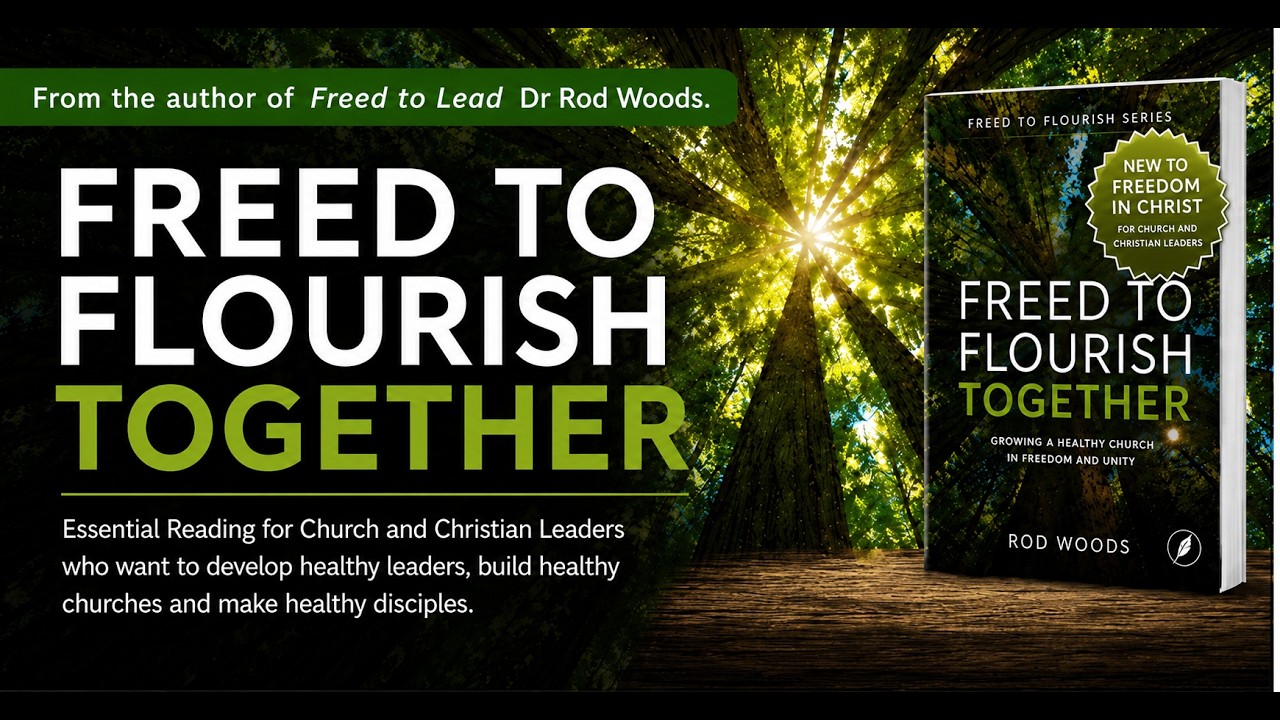
NEW from Dr Rod Woods comes Freed to Flourish Together - for church and Christian leaders
