Imaginable – Productivity Book Group

Raymond Sidney-Smith hosts a book club discussion of Jane McGonigal's Imaginable, exploring frameworks like episodic future thinking and WOOP to build resilience. The group examines speculative scenarios from cashless societies to asteroid impacts, then connects futurist exercises to concrete productivity practices like tracking change signals and using Notion.
Chapters
Welcome everyone to Productivity Book Group. I'm your host and facilitator, Ray Sidney-Smith. Thank you for joining us in the conversation or listening in on Productivity Book Group's discussion of Imaginable: How to See the Future Coming and Feel Ready for Anything, Even Things That Seem Impossible Today by Jane McGonigal. So for those of you who do not know who Jane McGonigal is, she is the author of several books. She is a game design researcher, and a game designer. She works at the Game Research and Development section or program within the Institute for the Future, which is a nonprofit think tank that studies emerging technologies. She's also, as I said before, a bestselling author. She has written Reality is Broken as well as the book Superbetter. A little bit about the book, the book Imaginable is and argues that imagination is a powerful tool that we can use to shape our future. And the book draws on latest research in psychology and neuroscience to show how we can train our minds to think about the future in more creative and positive ways. She uses various techniques that she espouses in the book to help us do that. And just on a personal kind of reflection on this, I chose this book because I thought it was really interesting to think about your own time management and your own personal productivity through the lens of being able to forecast work, just output generally. Many times we are spent thinking about the past and present and a very limited amount thinking about the future, or at least a limited timeline in the future. We're thinking about the next week or the next month or the next year. And this book actually brings us out on a much further timeline that allows us to be able to kind of do that reverse planning in a much broader sense. And I thought that was a really interesting way for us to kind of think about our own personal productivity. I want to bound our conversation here to the book, but in relation to how we're thinking about our own personal lives and our own productive worlds from that perspective, since we are Productivity Book Group. So let's kick into the conversation with initial thoughts. What did you initially think about the book? What did you think about the way in which McGonigal kind of presented the concept of imaginable and this whole idea of future thinking? Dr. Buck, you want to kick us off?
I, yeah, I, I thought, you know, it, it was very, very interesting. Um, a lot to unpack in the book, you know, just, just really a lot. I think the, the biggest thing that stuck out to me as far as, um, kind of a stake in the ground going forward is the idea of the future being 10 years from now as as a general rule. And, you know, she, she used examples like, you know, roughly 10 years from the iPhone being released to it being ubiquitous and, you know, a few other similar, similar things in there. So that, that idea of 10 years from now, and I've often heard the quote that, you know, people underestimate— people overestimate how much they can get done in a year and underestimate what they can do in 10 years. So there again, that, that 10 years is kind of a magical number that we go to. You know, so, so many interesting scenarios that I know we'll talk about over this next hour. So, you know, I really didn't know anything about the book before I got into it, didn't know what to expect, but It kept my interest.
Good. And on the heels of the Every Decade, it's funny because when we read— his name is escaping me now— Dan Pink. When we read Dan Pink's book, When, and he talked about the idea that in human lifespan, every decade, right near the end of every decade of our lives, marks a point where we will do things. When we're just about to turn 20, when we're just about to turn 30, we're just about to turn 40. Run that marathon.
Yeah. Yeah.
Right, exactly. And so it lends to this whole notion that about a decade is about how long we will think about the future in that sense. So it's also a nice little bookend for me in terms of remembering that archetype of like, okay, what's happening in a decade? What's happening in that time span? And thinking about my life in those bulks of time. So Vera, did you have any thoughts? What was your reflections on kind of the book as a whole?
Uh, the book as a whole, I have no thoughts. I haven't finished it yet, but I had to jump in. Um, I'm about a tenth of the way through, and I agree with— I think it was your characterization that she does a great job at making the whole subject positive. It's a positive look at the future. It's not the, the Chicken Little, sky is falling, um, let's be prepared for every eventuality. But I think she's doing a great job as far as I've read to take us through exercises and be prepared. So I've shared earlier that I've mentioned this already to several people and I find myself struggling to explain what a futurist is because I also didn't know what that was. But the two folks that I've talked to are interested and they're going to pick it up. So I might finish it with them as well. But I think she does a great job.
Yeah, fantastic. And so the book itself is archityped or constructed in 3 parts: Unstick Your Mind, Think the Unthinkable, and Imagine the Unimaginable. And what she's doing here is she's trying to present a 3-part kind of scenario where you are building upon knowledge that she's sharing with you and then the skills in the exercises that she's providing to help you build both resilience to change, but also how to then start thinking about forecasting in a way that helps you really kind of embed it into your everyday life in a lot of ways. And so she gives you these, these tools to be able to do that. And of course, of course, the, the first kind of tool she talks about is this kind of concept of episodic future thinking, right? And it's the ability to imagine ourselves in future situations. And she really argues that EFT, episodic future thinking, can help us to prepare for challenges, set goals, and boost our overall resilience, whether that be grit or determination or commitment in the face of change. And again, a lot of the things that she talks about in the book are difficult forms of change that are going to happen in some way, shape, or form. We're going to have these kinds of large-scale global changes that she talks about, and even if they're national changes, they're still large changes for us on an individual level. And it gives us an opportunity to think through and create that level of personal resilience to it. Whether or not we're going to do anything different, we will respond to it in the face of it as opposed to just emotionally reacting to it and therefore having, I think, less efficacious outcomes. We want to be able to like she uses the global pandemic of the COVID-19 pandemic to kind of as one particular example. And folks who ran through a study about a global pandemic before the COVID-19 pandemic were more resilient to the changes. They had less negative emotional responses. And it just goes to show that we can all do better by kind of thinking this through. It also reminds me of Gail Oettingen's work on WOOP and the whole idea of— it is Gail Oettingen, right? I'm pretty sure. But W-O-O-P and the whole WOOP strategy of being able to think about obstacles within the process of developing a goal. Because thinking about obstacles helps us to be able to create resilience to the commitments we're making. And so it's really an important piece of that. So let's start with the idea of, of episodic future thinking. Frank, what did you think about Jane McGonigal's perspective on really thinking through and putting yourself in scenarios? Because then she uses that concept quite a bit in the book. What were your thoughts on, on kind of her positioning of episodic future thinking and, and that whole, whole space?
Yeah, and when I started the book, you know, I'm, you know, when you're a futurist, well, how do you know You know, how do we know how much on point she is? You know, it'll be years before we go, yeah, boy, this book, yeah, or no, she was so far off the mark. So I, I guess I came into it with, you know, a little bit of skepticism. You know, how does she know? How do any of us know? Um, you know, almost like the fortune teller you go to, you know, and we But, you know, to me, just the whole idea of keeping an open mind that the future is going to be different. We don't know how. We don't know when. And even though the future, you know, we were talking in terms of 10 years, you know, if we think back to 2020, the future was Next week. Yep, we were living in one world, and then all of a sudden we were living in a totally different one. Uh, so, you know, that idea of the future being 10 years from now— who, who knows when one event could make the future right now? And so if, if we're ready for that, you know, we've— if we've read something like this and we're ready for that instant change, change that comes to us all, we're a little bit better able to cope. Yeah.
So from my perspective, I always look at it from— so in a lot of my work, because I am working usually with business owners and executives, they're asking me to do some level of forecasting for them. And so I have been for almost 20 years now really I spend a lot of time paying attention to the factors that allow me to predict what's going to happen in the future within my industry and within the industries of my clients. And so it's not that far-fetched for me to see how— I call them forecasters because I think futurist makes it sound a little hokey. But it is forecasting. And we can forecast things, right? So just like the weather, the nearer you are to the actual weather event, the more data you have, and therefore, the better you can forecast, right? So the closer you are to it, the better view you have of the situation. So the further out you have, the less or the more broad the understanding of the circumstances. And yet, there are certain things, like for example, my area of specialty is in technology. I can forecast pretty closely what's going to happen in technology because I'm paying attention to indicators that tell us what's happening in that space. And so I'm consistently looking at particular markets, particular industries, and particular players in those markets to pay attention to what they're doing. And those give us those clues. And McGonigal really gives us a sense of that in her own way. And in her practice, she really talks about the idea of one, paying attention to those clues, those things that are happening around us, but more or less being able to create simulations. She's not talking about necessarily mind wandering, but a purposeful using your executive function to create scenarios whereby you are being placed into, uh, uh, different potential variations of the future. And, uh, that gives you an opportunity to play those things out. I once read a study, and I, I don't, uh, recall the specific specifics of it, but it was all about, uh, mental practice and the fact that if you took a basketball player and, uh, sat them in a chair they were not moving, but they were practicing the various drills toward playing a game, some kind of basketball game, that they actually developed the same skills just by thinking through the various drills that they were doing. It's kind of like that, but in a different sense, right? You're thinking through various future outcomes. Mind you, we already do that, right? We already do that as humans. We are consistently practicing that. Those of us with anxiety disorders, we do that a lot more. So we're a little overactive in terms of our abilities to go ahead and do that kind of future thinking and forecasting, many times to, you know, unfortunately detrimental effects. But I thought that was useful for us in the sense that many times with our own, like, our own projects, like we create goals, we only think about the one unique goal that will lead us to an outcome instead of thinking about all of the other potential outcomes that could happen. You could be planning a project where you are, say, writing a paper or writing a research paper. But you could also contemplate a scenario where you don't write that research paper, but instead you produce a documentary film about your research based on the subject. So you don't end up producing— you choose a different format. What does that mean for you? Is it useful information that presenting it in a different format like video as opposed to or documentary film as opposed to a research report? Yeah, I think there is some value to that or thinking, what if I were to just do this all as like a tweet thread or an X thread? I don't know what you call it anymore. So what if you were going to do this as micro posts on a platform? The idea of doing it in that sense would be a very different exercise and would take a different amount of time to make that happen. And thinking through those different variations of just literally the format of the outcome can help you understand what it's going to look like for you to be able to produce that project. So I thought that generally, and certainly in the first 3 chapters, really helped me think about it and also thinking about that timeline again, going back to kind of like, okay, what does a half decade look like? What is 10 years look like? And, and then that's given me actually an opportunity to look back, backward, and look at my past and say, how good was I at forecasting the next 10 years when I was 20 and 30 and 40 and so on and so forth? And, uh, and, and I think those are skills that will hone over time thanks to this kind of material of thinking, thinking it through. So moving right along to the— so she talks about time travel, and then she talks about playing with future scenarios. What were some of the future scenarios that kind of stood out for you, or perhaps kind of piqued your interest? And we could talk about some of those, and we could talk about some of the exercises as well that she talks about, because some of those things are really interesting.
One that really stuck, stuck out for me was the cashless society. You know, where, where it would all be and the opportunities that that might open. One, I can see, you know, how we, you know, I've seen things go from there was a little sticker on every item in the store because the cashier had to punch that number in. Y'all remember that? And people said, you know, what's this little thing on this? Oh, that's called a barcode. 'in the future we won't do this anymore. We'll just scan.' And I'm thinking, 'Oh, oh, no way, man.' Okay, well, we're there. And now, and now we've moved from that to now we're scanning our own stuff. You know, the cashier's not doing it, we're doing it. I can very well foresee that we don't do any of that anymore. Here's our buggy, and we roll it through what looks like a metal detector, and it just scans everything, including our own ID, and says it's this much money and takes it right out of our bank. And furthermore, since it knows who I am and it knows who Ray is and it knows who Kira is, right now, if I buy a jar of peanut butter and Ray's right behind me and he buys that same brand of peanut butter, charges both the same thing. You know, it scans the barcode. And the barcode says, boop. Now, in Pennsylvania, you may pay a different price than here. But if we're in the same store, same day, but in the future, it may charge me one price and Ray another price. And if I'm a mother on, you know, sort of government assistance, the price it charges me for diapers and baby food might be very much cheaper than the middle-class mother. Whereas if I buy beer and wine, it charges me the regular price. So a lot of variables there where people could be treated differently depending on their income, depending on their circumstances. It talked about with that scenario, you wouldn't pay taxes, you know, it would just be sucked out. You know, they know what you made. And they would just suck the appropriate amount out of your, you know, so yeah, that one, that one kind of stuck out to me as something interesting.
Well, you touch a really interesting point because Amazon already does this in several beta stores on the West Coast. I believe they have Amazon Fresh stores. Notably, they are pulling them out. They're actually deprecating the self checkout model where this stuff is happening. But they're using vision technology. They're scanning people. Obviously, you have your phone on you or something like that that they know that you are this particular Amazon customer. So it's technology that is capable and will probably exist in the future on a larger scale as we get more sophisticated around these items. So it makes a lot of sense. I mean, in the self-checkout, you're putting those items down the conveyor belt. And I'm guessing it's taking its weight and general size or shape to identify the product. Plus you've just scanned it on the SKU, you've scanned it so it knows what it should look like. We've got a lot of data about ourselves. There's obviously, as McGonigal noted in the book, there's some privacy implications and there's some data security implications around all of these things. But she wasn't really getting into those pieces as much as she was. She actually, interestingly enough, wades into some political waters because she's talking about future things where like universal basic income or, direct cash payments to individuals that some people on different sides of political perspectives might disagree with or agree with. But she's, she's more or less saying, no, this is just, this is the future, right? Like she's forecasting. She's not telling you whether it's right or wrong. She's telling you that this is going to happen and you need to be prepared for that. And I think, again, going like, narrowing the focus for our conversation down to our own productive lives, when we're thinking about it from that perspective, it's really helpful to know that somehow your life is going to change. And so therefore, your work and life projects that you're planning also need to take those things into account. And that doesn't mean you change something immediately today, but it does give you a perspective on how to think about things in a metered, thoughtful fashion moving out into that future. I love the idea of her talking about, ridiculous ideas, right? And kind of thinking through those ridiculous ideas and giving yourself the opportunity to think. I think it's lateral thinking, right? Coming back, going to the idea of lateral thinking, Dr. De Bono's work in Six Thinking Hats and so on and so forth. And the idea here is that we need to have more creative thinking in the way in which we think about the outcomes that we're planning in our lives. Many times we think of things as being very linear, very much like We're going to do one thing, then the next thing, then the next thing to come to some very preplanned outcome. And for knowledge workers that no longer create widgets, physical things that are outcomes in our world, we are frequently demotivated by that fact. We are demotivated by the fact that we are not producing something that we can hold and appreciate as a physical work product that we created. If we're capable of thinking more creatively about these things, we engage a little bit more with the work that we're doing. And I think that we feel more satisfaction, more ultimately, you know, eudaimonia, right? Real contentment with the work that we're doing if we're thinking about it in these creative fashions. Because maybe there is something that we can create physically out of, you know, maybe I was talking to a client recently about the fact that, you know, each project that they do ends with nothing, right? They, they kind of just do the project and it's— these, these are huge successes for the organization, for my client, wonderful, except there's no physical anything, right? You just like on to the next project and all of a sudden you feel like you're on a, you know, a hamster wheel. And so I said, okay, well, it's time that you produce something, right? And, and so it turns out that this particular client produces a, a report And the report is a digital report. And I said, you've got to print that sucker. You've got to print it and you've got to mail it to every one of your colleagues and stakeholders. Make it something of a pomp and circumstance. And this is not just like a marketing thing. There is that aspect of it. But there's also really something powerful about being able to hold that thing and know you did it, right? And then to have a group of them on your shelf where you can see every year we published 4 or 5 reports over the course of the year, and it really covers the history of what we did in a physical sense. So you can kind of see the history, but you can also feel the momentum of the next report you're going to produce and the value that you're providing and all of those kinds of things. So something as simple as that can be really helpful for you to future, you know, future think, forecast in essence, the projects you're going to do by thinking about the physicality of the work that we're doing. Because many times we don't have it. We just lack that sense of accomplishment in a way. If all we're doing is sending an email with an invoice and saying, all right, we're done, on to the next thing, you know, it just doesn't feel the same. And I can understand that. But she talks here, and I'm just going to quote very quickly. So she has rule number 4 in her imagination training section of the Be Ridiculous first chapter. And she says, quote, be playful as you brainstorm ways that anything could be different in the future. Entertain any possibility, no matter how absurd it is, how absurd it seems at first. Keep in mind that future possibilities that seem unthinkable or impossible today are the ones that will be the hardest to adapt to. So we need more time to prepare. To build this skill, this skill, play Stump the Futurist. Make a list of things that you believe you cannot, will not change in the next decade. Then look for evidence that these far-fetched possibilities could really happen or may, in fact, already be happening today. This game will improve your ability to take in information that challenges your assumptions and will stretch your mind to new dimensions, end quote. And this is to your point, Frank, about the grocery store analogy, right? This is something that you don't think you're going to move from cash to people using checks, to people then using debit and credit cards, to now people just tapping their phones on things as well. So we've seen a remarkable change in just payment. At point-of-sale systems, we've seen people change the way in which they just scan products in grocery stores. And we're seeing a revolution in e-commerce, right? People are not even going to grocery stores nowadays. I hate to admit it, but I spend a lot of money, on e-commerce, uh, not even going physically to a grocery store, you know, where I literally just click a few buttons on a screen and groceries just show up, uh, from my mobile phone. It's like my mobile phone is my mom, you know, and I'm just like, hey mom, I want a sandwich. Uh, and it appears, it shows up on my doorstep, you know. So we've gone through these things where very far-fetched ideas are becoming reality, uh, through our capabilities of technology., and it's not just technology that's going to change our worlds. There are many different factors that are, that are coming up in that sense. So, oh, so I'll, I'll dovetail this into my next piece, which is that I am a big fan of astrophysics and astronomy generally. And so the asteroid scenario of, you know, if there's an asteroid kind of hurtling toward the planet kind of situation, how do you deal with it? That was definitely a scenario that I enjoyed, not not for the catastrophe of it, but for the mental exercise of thinking through, like, what is it? What should we be thinking about when we're thinking about the idea that, you know, we could have a catastrophic event like that happen on planet Earth? And we've already had it happen. So it's not like it's some, you know, out of left field circumstance. We don't pay attention to enough of the night sky to watch every, you know, impact on the planet anyway today. And we are obviously looking for the biggest items that are coming at us and that kind of thing. But if we have a likelihood of a catastrophic event, even in the 5% range, that's still, you know, like, that's pretty— we should be paying attention to it as a species. And I always think about this, which is what are the things that are— and again, bringing this down to my individual level— what are the things that will impact my family and friends and colleagues that will force me, that will be a forcing function really for me to want to collaborate with them, to feel a closer bond to them, and so on and so forth. And we can typically think about major life events, births, deaths. My little nephew is being baptized next weekend. And so we're coming together as a family. Family for that event. And those kinds of events are the things that are galvanizing, right? And so catastrophes, right, of all kinds tend to galvanize a family, right? Unless they tear the family apart because that type of catastrophe is one that does that. But typically, those things are ones that kind of galvanize the bonds between families. And I'm always thinking about those things. Like, how can you create something that's maybe not a catastrophe but something with as large an impact? So like my mom's retirement or I have a niece who's coming of age to like, let's do a Disney trip. And so those kinds of things that are going to be things that are milestones, we'll all remember it. We'll have an experience together and really enjoy ourselves. Remarkably what the asteroid forecast scenario brought to mind for me was like, how do I think about major life events as an opportunity to think about a project that's gonna happen? My parents are gonna die someday, right? And so, what can we do to honor their lives before that happens, right? And so, that means paying attention to their health. You don't want to do like, memorial too early. But you also don't want to do it before they die, right? You want to have a great event for them before that happens. So there's a little bit of forecasting that needs to be put into place. And you start thinking about those things. How can you make this an indelible thing? My parents are now still young and healthy enough that they have young grandchildren and we can travel. So we should do something as a family while everyone is healthy, not divorced, you know, all of those things. They're still willing to get together and do those things. And so I just— my recommendation to you all is to think while you can do it, think about what you can do in the context of your own lives where this kind of forecasting, whether it's a catastrophe or a joyful event, one of those major life events, maybe the last time you have an opportunity to experience that kind of collaboration, that kind of joy with your family. It could be a work event. It could be with friends. Think through those things. Your next Friendsgiving may be the last time, right? And so you just never know. So you might as well make it great, right? Make it something of importance. So that's what it kind of triggered for me. What other scenarios jumped out at you?
Anyone can throw out a scenario. Oh, let's see. Well, the one early in the book. What was it where the government gives everybody $2,000. But then you have to take $1,000 of that and give it away somehow. And How do you make the decisions and what are the implications for society and so forth?
I thought that would seem— Yeah, it was an interesting contrast to the kind of cashless society because as a fan of Star Trek, I believe in like a no currency society, one in which we no longer need the, you know, the whole envisioned concept of the United Federation of Planets, right, is that there is an equity in the universe, let's call it that, at least in the known universe. And this group of beings has chosen to not have to worry about need, right? Everybody has their needs met. And the idea of us getting closer to that, anything like $2,000 direct cash payments to people, but enforcing that half of it be given to someone else for a good reason, is always going to warm my heart. I mean, I think that that forces us to have a sense of other not being wrong or bad. We tend to other people in society mostly as a protective mechanism. You're not a part of my family, so I'm going to take care of my family before I take care of you. That's a natural instinct. But we, as a species, hopefully evolved beyond that and understand that helping others beyond our family and friends and our direct community benefits all of us. Rising tide lifts all ships. And I think that scenario kind of puts us in that perspective. And I think there's really value, a real value to it.
Ray, can I jump in on your Star Trek references?
Of course. You're going to derail us on Star Trek, but that's OK.
In talking about ridiculous ideas and exploring, I'm rewatching the original series, and it's, you know, it was as relevant in the '80s and '90s. But I love seeing again the reminder of handheld communicators that can connect you to far distances and a computer that talks back to you that you can just speak to and it'll provide you all the information you need. So these ridiculous ideas, and especially in science fiction, are— it's just wonderful to follow. And I wonder if that's a part of our episodic future thinking.
Absolutely. And I think that, again, the reason I am a fan of science fiction comes down to my love of technology, but also because it helps me better forecast. If you look at most science fiction today, starting with probably my history is probably with Jules Verne and understanding the technology of that era all the way through, you know, Vernor Vinge and William Gibson and even in today's science fiction authors. If anybody hasn't read The Bobiverse, they should. And so science fiction is really, really fascinating. And it helps us to explore a lot of the ways in which the future will come. And science fiction authors are just throwing paint at the wall, right? They're coming up with different scenarios. Any one of them can be true. And like the Star Trek communicator, it's basically the— I'm sure that that's the— progenitor of the idea of the iPhone, right? Or the mobile phone generally, even as a category, is the idea that you would have this thing that was able to communicate with others. And so we first had walkie-talkies, I suppose. And the walkie-talkies then became our cellular phones. And now we have these mobile devices that are basically computers in our pocket that we talk to. And so it's real fascinating to watch the future become reality. In so many ways. And I'm still expecting my flying car.
But I was thinking the same thing. You know, the Jetsons, you know, that cartoon for kids and how much of it has come true. Yeah, I remember as a kid, you know, the telephones where you're actually looking at a screen and you're seeing the other person as you're talking to them. I'm going, wow, that's— and well, what are we doing right this second? You have the same, that exact same thing. But just like you said, the flying cars— no, no. As when it comes to cars, we're, we're closer to the Model T Ford than we are to the flying cars. So how much some things have changed, and then in comparison, how little other things have changed. And you don't know what, what those are going to be. You know, 10 years from now, what's going to have changed beyond our wildest imaginations? And what did we think would change that is exactly the same as it is now? You know, will we go to the doctor and we'll walk through a scanner that will tell us exactly what's wrong with us? Or will we sit down and someone takes our blood pressure and listens to our heart and that kind of thing? Exactly like they're doing now, exactly like they did 20 years ago.
You know, who knows? Right. And we have to also think that the, the way in which we adopt and adapt to technology or to any change really comes in the face of how humans deal with change, right? Which is that we avoid it. We are very resistant to change generally. Unless that change is an immediate convenience, right? We see that as an immediate convenience. And if the change itself is just part of the environment. So we'll naturally adapt to a change. If a hallway curves, we're going to continue walking down the hallway. If the hallway was straight before, it wouldn't have made any difference. We're going to follow the hallway because there is no other way, right? We're path of least resistance creatures. And so they've talked about replacing toothbrushing with chewing gum or potentially sprinkling a chemical onto your food, and you would just eat the food, and the enzymes that you put onto the food would obviously clean your mouth in some way, shape, or form. So there's ways in which a lot of our lives will change just by virtue of us understanding our own biology better, our own psychology better, and then, of course, the technological pieces, medical other kinds of electronics technology and so on and so forth. I will say though that the reason that we have had, I think, a dampening of a lot of technology is that battery technology hasn't grown up, hasn't evolved in probably about 100 years. The batteries we're using today, they're different makeups of chemicals. They are putting more batteries into things, so they're aggregating the numbers of batteries into spaces. If you look at your on average EV today, it's the same battery technology. They just have either flattened it or they put a bunch of batteries together into blocks. It's the same battery technology. And until we figure that piece out, we're really limited in the way in which we can move to, say, a flying car. Because, you know, flying a vehicle requires a heck of a lot more energy to take, you know, a physical body off the ground. And it's also going to cause a whole bunch of noise and all kinds of other types of pollution. So those things have to be overcome. There are flying vehicles. I mean, we've had hovercrafts, which technically are flying vehicles, for many years. But the next step is really a piece of figuring out the battery technology and then this autonomous, you know, censoring issue, right? Really true Level 4 driving where you have full autonomy for the vehicle to be able to fly around and do its own thing. Thing. But I think we'll get there. You know what I mean? It may not be in my lifetime, but we will certainly get there in terms of that capability. I wanted to kind of jump into some of these pieces here. She has just some of the rules here just really stand out to me, and I think they're really worth mentioning and discussing. So we touched on this very lightly earlier, but she talks about looking for clues. She calls them signals of change and looking for real-life examples in the world of those kinds of signals of change or clues can be really helpful for you to both spark curiosity, she talks about, but also being able to forecast in some way, shape, or form. And she says it helps you— she calls it a quote unquote sixth sense that can be developed for noticing these kinds of clues. And those will help to inspire you to take action. Again, thinking about my own world and productivity, thinking about like, oh, you know what, during my weekly review as a GTDer, I'm doing my weekly review, noticing how I'm using tools or noticing that a tool has come onto the market and whether or not I'm willing to use that tool. Those are frequently clues for me as to whether or not I'm going to be more or less productive about something and can be really helpful. So I just always think about that. Like, I just recently started using Notion, put out a calendar. So I started using Notion Calendar, even though I don't use Notion that much. I'm using the Notion Calendar product. And it has been remarkably nice. It's just a nice calendar interface. It's, you know, whatever. It's got some limitations to it. But it's a separate application. And it ingests my Google Calendar. Which I use Google Calendar for both work and personal. So it's great because it has both calendars in there. I'm able to see everything and it has scheduling capabilities so I can share availability. And it does it in a really, really nice way, which is that it, it gives you this like language that says, hey, here's all of the opportunities where we can meet. It like writes it out. It gives you like a little script. You clip, you clip a little snippet of text. It says, would you like to meet for an hour on any of these dates? And it lists them all. It says, hey, just let me know which one of these works, or you can click on this link and select one, and then it'll automate the whole process and send you a calendar invitation from me and so on and so forth. And what I've been doing is I've been sending that out to folks because now they could just hit reply and say, oh yeah, Tuesday at 2 PM will work for me. And then I will click on the link and I will put their name and email address in the form as though it were them. And then I'm done. It's automatically scheduled it because I've already done all the work to make that happen. So whether they, whether they respond old fashioned or use the link and click on it and fill it out themselves, both end up with the same result, which is that I've saved myself a lot of time and energy going back and forth with them. And them creating that little snippet was, was like the value for me because you don't want to create a, an imbalance saying like, I'm more important than you. So you have to use my calendar link with certain people, right? Because you might have parity with them. They may be superior to you in some way, shape, or form. They may be an authority figure, any number of situations where you don't want to be like, use my calendar link. It can feel like a power move or a power play. And so this, this gives both options, right? It says, no, here goes the things you could just hit reply and I will take care of the rest of it, but it's still saving me time. And, or you can click on the link and take care of it yourself. And so I found that to be really, really useful. But again, it's one of those things where I'm always, always looking for those changes. I'm always looking for things that are going to help optimize my calendar scheduling. They're going to optimize my interactions and interfaces with outside folks from my system, external parties. And I think it's really helpful to always have that kind of eye on what's changing or moving around in the system in that sense.
You're going to say something, Frank? No, no. I would just kind of affirming what you were saying.
All right, I'm going to move on to future forces because so she has clues and then she has this thing, rule number 7, and she says choose your future forces. And so this is a little bit different than signals for change. And I'm just going to quote here because it makes sense just to, just to read exactly what, what McGonigal says here. So quote, make a list of the external forces beyond your control that are most likely to affect your life and your friends' and family's lives in the next 10 years. Include things that you— that make you excited for the future and things that make you worry. Use this list to keep an eye on the bigger picture. Be willing to acknowledge the reality of growing risks, even when they make you uncomfortable. Keep updating your knowledge of future forces so you can be prepared to help at least one person in your life or community should a hypothetical future risk become a real crisis, end quote. And so I like this whole notion of being able to both look for clues for change, but also look for future forces and make a plan. Again, this is going back to that whole WOOP strategy of like, OK, what are the potentialities? And then planning for that. So WOOP is wish, outcome, obstacle, plan. And looking at those particular obstacles really helps you on the future focuses piece. And I like the fact that she is using this to kind of pull out, to kind of zoom out on your life in a way, to look at hypotheticals on kind of a larger scale. And then of course thinking through how can you just help one person in your world? And that makes it much more practical, much more useful in that sense because it just it helps you lean into the problem-solving skills that you have, the creative skills that you have in that regard. Then finally, I'm going to touch on rule number 8. She talks about practicing hard empathy. And hard empathy, again, I'm going to quote here because she's just going to do it better than me. So quoting here from rule number 8, practice hard empathy. Uh, quote, fill in the gaps of your own lived experience with the stories and realities of other people whose lives are almost unimaginably different from yours. Envision your own life circumstances changing to be more like theirs, as vividly and realistically as you can. How would you feel in this alternate reality? What would you do? What kind of help would you want? This habit helps you increase your circle of natural empathy and feel more connected to others. It also improves your ability to imagine change of any kind. So I'm going to end quote there. The reason this comes to mind is that I, for many years, talked about the idea of using personas or masks or hats, however you kind of want to think about it, accepting the concept of the Six Thinking Hats, not those hats, but the idea of— and that could— that's possibly also one of them, but The idea here is that if you want to practice at a high level, if you want to perform at a high level of something, and we're always toggling between those two personas that I've talked about before, performer and scientist. We're either doing the thing or we are experimenting about the thing. We're toggling between these perform— When we're performing, we have to think about sometimes that we presently are not our best selves. To do that performance. But if I were, say, wanted to be a ballet dancer, well, I'm not a great ballet dancer. I can assure you of that. But if I put myself in the persona of Baryshnikov, right, and I say, what would Baryshnikov do in this circumstance? I'm in way better perspective, right? Because I've seen him perform. I've seen his work. And I'm going to just put myself into a better mindset better performance state in doing any ballet by thinking of myself as that person. And it doesn't have to be someone that you know. It doesn't have to be someone that is even real. You can fictionalize this, right? So there are folks out there who love Marvel characters. I happen to love Spock. So if you are in those kinds of environments, you can use this concept for all kinds of— things on a very, very micro level, individual level. And that empathy, that idea of thinking, okay, like GTD practice, you could say, well, what would David Allen do in this circumstance? Would he be clarifying his inbox? Would he be trying to empty his inbox right now? Or would he be engaging? Would he be trying to get into action because there are things that he planned in discretionary time? And would he be working off of his lists right now. If there are people that you admire, and whether you know them or don't, right? Like, what would my mom do in this circumstance? Or what would my friend do who's really good at this thing? We're capable of being able to tap into that empathic quality, that empathetic quality of ourselves, and think through what they would do. And then it allows us to be able to then step into that role and actually perform better. Sometimes perform at all, right? Because sometimes it's about motivation, turning thought into action, and us being able to say, you know what, I wouldn't do this. But if I were David Allen, I'd just start throwing things against the wall, right? And figuring out what to do. I'd brainstorm, I'd mind map, I'd do something, and I would get into action. Okay, great. Let me just do that. Just 5 minutes, right? And that gives us the opportunity to play the role put on that persona and perform better by virtue of doing that. I think the heart empathy concept is a little different, but it definitely reminds— it just brings that up for me, and I think that it's really useful. It's a useful tool in so many ways. All right. What are some of the other scenarios that come up for you before we close out? What are some of the other scenarios that may have piqued your interest, uh, throughout the book, and then we can start, uh, closing out.
Let's see, there was the one sort of the, the whole keeping the species going, uh, scenario, um, of what was it we were facing, a sperm shortage or something like that?
What wasn't that the scenario in the, in the book? Um, sperm count was, was reducing across the global population, and so they were, you know, Collecting it from people.
So, you know, interesting. And of course, you know, the whole thing of, you know, in vitro fertilization and, you know, just so much that's happened in a generation or so that separate, you know, everything from the past as far as reproduction, keeping the species going to, you know, where might it be? You know, and we would, we would read the few of those futuristic novels in high school, you know, Brave New World, etc. And how close are we to some of that? How much closer are we than we thought we would ever be?
And if that's true, then what does the future hold? Unfortunately, all those novels in high school were dystopian novels. They were about the future, but they were about terrible futures. Your point is well made though. I will say that the one that really spoke to me, and again, it's grounded in a negative scenario, which is that the amount of habitable parts of the planet are shrinking and we're doing it to ourselves. That makes it even more frustrating. But the reality is that as it shrinks, we're going to have to welcome more and more populations from around the planet into our existing cities and our existing spaces that are left over. And we need to be able to figure out how to do that. And that's something that's of unique interest to me. And so I've been— so this is future simulation number 2, which is the welcome party. I thought it was just really fascinating thinking through how that all works. You know, when you get not just a million people migrating on the planet a year, but then you have a billion people who have to do mass migration. And therefore, they're in essence refugees coming to your country, coming to your city, coming to your neighborhood. That's a really big issue to tackle both, you know, from many different angles, political, you know, just governmental and societal in general. But taking it down to the level of individual productivity, I live in an area that has a lot of universities. And so we have lots of new students that come in and out. And very infrequently do we have new, I consider kind of like lifelong residents, like people who are moving in because they're moving in not for like the semester or the year and then moving out, but like people who are, who are all them regular. I don't know how to, how to, how to term it, but basically non-student residents. And, and I think about this welcome platform, this whole idea of the welcome party and thinking, oh, you know what? I don't think there's anybody in the neighborhood that's really doing that in my neighborhood. And it would be really nice to create a mechanism whereby we welcome people into the neighborhood, not just people in our condominium complex, but people who are just in this generalized neighborhood. It's a fairly small neighborhood and we're segregated from the rest of the other neighborhoods by virtue of a fairly large boulevard. I was like, you know what, we should do something. I should get some of the neighbors together to welcome people when they do move in because if they're going to be around a while, you want to have good neighbors. Good fences make good neighbors too, but you want to also give them a pie and just welcome them to the neighborhood and get them to know that if there is a problem that they can make a phone call. That could be a conflict, like, hey, you're parking on my lawn kind of situation. And it could be like, hey, I'm having a party next week. We're going to be a little loud, just letting you know. And you're invited. Come on over and have a good time also. So all of those kinds of things are things that we can do. And there are little ways in which we can prepare ourselves for that larger future, uh, but they're, they're practical projects that you can take on. And so I, I like, I like looking at these very large issues and thinking like, what is it that I can do in my own life today that will help me grow and expand or whatever? So just that came up as well. So any final thoughts as we come to the close of our discussion on Imaginable?
You know, I enjoyed the book. Um, kind of a thick book. Once you get past about 220 pages, I'm going, my goodness, how long is it going to take to read this? But, um, I think well worth it, you know, thought-provoking. It'll be interesting to see 10 years from now how relevant the book turned out to be.
Yeah, I agree. I think this is one of those books Oh, go ahead, Kira.
Oh, I was just going to request then that Ray picks this for 10 years from today. 10 years. And we revisit together. I enjoyed Super Better by Jane, and I've liked this so far.
So I will finish this for sure. Fantastic. Fantastic. Well, this brings us to the end of our book discussion. On Imaginable: How to See the Future Coming and Feel Ready for Anything, Even Things That Seem Impossible Today by Jane McGonigal. And just so that everybody knows, the next productivity book reading selection to be discussed in June is going to be— this will be June 26, 2024. So June 6, we'll be discussing Solving the Procrastination Puzzle: A Concise Guide Strategies for Change. This is by Dr. Timothy Pychyl, who's a noted researcher in the area of procrastination. And so I had to say the other day, I said that he's not a master procrastinator, he studies procrastination. So there's a difference. But yeah, so the book will be Solving the Procrastination Puzzle. If you go to productivitybookgroup.org/upcomingbooks, if you're not inside Personal Productivity Club, you'll see links to it. You can go ahead and click it and get it there. Otherwise, if you're inside Personal Productivity Club, I'll be posting the event inside the club. So you'll all be able to go ahead and access the details for June 26th at noon Eastern. Before we close out, I have a few comments and announcements before you go. We host quarterly live discussions of personal productivity books, just like the one we discussed. Of course, you're invited. Simply head over to productivitybookgroup.org. Click on upcoming books and you'll see the full details of those pages. It has all the dates for the year, Google Calendar to subscribe to, and that actually works with any calendar. You can put that link into whatever calendar software you use. There on productivitybookgroup.org, you'll also find all of our past book discussions and they are under episodes. So in case you can't find it in your podcast app of choice, if you go into episodes on the website, you'll be able to go back and listen to them there. Directions on how to subscribe or follow for free. The podcast is there on the website also. And so you can follow it in Apple Podcasts and all the various other podcast apps out there. Finally, we have, and I've mentioned this, a digital community within Personal Productivity Club. So if you go to productivitybookgroup.org/community, you can go ahead and join our community. It's free. You could do— use the web version, or you can download the Android or iOS apps. They have links to them inside of the platform, and you can go ahead and interact. So it doesn't matter what books you're reading in the personal productivity space, you can talk about them there inside of the Productivity Book Group channel within Personal Productivity Club. And so hope to see you there. And with that, thanks everyone for listening and joining in with us for this conversation here on Productivity Book Group. I'm Ray Sidney-Smith. Here's to your productive life.
More from Raymond








The Checklist Manifesto by Atul Gawande MD Productivity Book Group Made by Headliner

First Things First by Covey Merrill and Merrill Productivity Book Group Made by Headliner

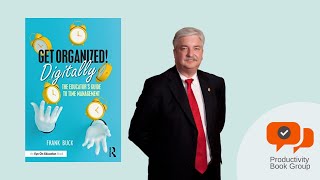
A Conversation with Dr. Frank Buck about his new book, Get Organized Digitally