The Checklist Manifesto by Atul Gawande MD Productivity Book Group Made by Headliner

In this 2023 Productivity Book Group episode, host Ray Sidney‑Smith leads a conversation with Dr. Buck and Elena about Atul Gawande’s The Checklist Manifesto. The discussion opens with a brief overview of Gawande’s background (surgeon, author, Harvard professor) and the book’s premise: simple checklists can tame the overwhelming complexity of modern work across fields such as medicine, aviation, government, and finance. Participants share personal experiences—Dr. Buck recalling his junior‑high band‑concert planning, Elena describing her long‑standing use of checklists, and Ray reflecting on his own habit of over‑complicating lists. The group repeatedly emphasizes the need for simplicity, warning that overly long or detailed lists cause decision fatigue and reduce compliance. They explore the two core checklist formats Gawande describes—do‑confirm (verification after a task) and redo (step‑by‑step execution)—and extend the taxonomy to procedural, outcome‑oriented, and grocery‑style lists. Real‑world stories from the book are highlighted, notably the 1935 plane crash that sparked aviation checklists and the 2009 “Miracle on the Hudson” (Sully) emergency landing, illustrating how checklists saved lives under stress. The conversation then shifts to practical tooling: Ray describes using Remember the Milk, sendrecurring.com, IFTTT, Trello, Notion, and ChatGPT to generate, schedule, and display checklists, stressing the importance of timing (showing a list only when needed) and visual clutter reduction. Participants discuss checklist design tactics—nesting, front‑end debriefing, project post‑mortems, and using templates from Google—while warning against blind reliance on AI‑generated medical checklists. Motivation, perfectionism, and stress are identified as barriers to adoption; the group notes that positive stress (eustress) can trigger useful list creation. Finally, they talk about turning checklists into routines, making them reflexive, and using them for team accountability and future‑proofing of projects. The episode ends with consensus that checklists are a low‑cost, high‑impact tool for any repeatable activity.
Chapters
Welcome everybody to Productivity Book Group. I'm your host and facilitator, Ray Sidney-Smith. Thanks for listening in on Productivity Book Group's discussion of The Checklist Manifesto: How to Get Things Right. I'm going to just give a little preamble about the author and then about the book, and then we'll get into the conversation. So the author is Atul Gawande. He is the author of 4 bestselling books: Being Mortal, my favorite of his 4, Being Mortal, Complications, Better, and then of course, the book we're discussing today, The Checklist Manifesto. He's also a surgeon at Brigham and Women's Hospital in Boston. He's a staff writer for The New Yorker since 1998, and a professor at Harvard Medical School and the Harvard School of Public Health as well. He is co-founder and chairman of Lifebox, a global nonprofit implementing systems and technologies to reduce surgical deaths globally. Lives in Massachusetts, of course. And about the book, uh, this is from the Amazon description, and it says Dr. Atul Gawande shows what the simple idea of the checklist reveals about the complexity of our lives, how we deal with it. The modern world has given us stupendous know-how, yet avoidable failures continue to plague us in healthcare, government, the law, the financial industry, in almost every realm of organized activity. And the reason is simple: the volume and complexity of knowledge today has exceeded our ability as individuals to properly deliver it to people consistently, correctly, safely. We train longer, specialize more, use ever-advancing technologies, and still we fail. Atul Gawande makes a compelling argument that we can do better using the simplest of methods: the checklist. Now, there's more to the preamble to the book, but I'm going to cut us off there to start the conversation. And just open it up to, uh, your initial impressions of The Checklist Manifesto. If you've read it before, if this is a second or third reading, or for me, umpteenth reading, and what did you think about The Checklist Manifesto by Dr. Gawande? Who wants to kick us off? Dr. Buck, go for it.
I'll, I'll jump in. I, I think this is one of the hallmark time management books. Um, I read it first, gosh, over 10 years ago, and I'm just going, yes, yes, yes, because there are so many things that we do again and again and again. My background's in education. I started off as a junior high band director, so you wouldn't believe how many little bitty things that go into planning a junior high band concert, you know, including arranging for a janitor to unlock the to doors and lock them back. Imagine we show up and the place is locked. All these little things. But once you get them nailed down, next time we do a concert, it's the same list. So once you've captured it once— so my gracious, for a guy to write a book that says, hey, we need to be doing this with, you know, air pilots do a great job of it, we need to be doing the same thing with surgeons, um, And so we have, we don't have to do all this rethinking. So I just think it's an amazing—
I'll kind of jump in. I have not, this was my first reading of the book and I hadn't really heard much about it, although I feel like since I've read it now, I'm hearing a lot of things about it in like some of my different circles. But when I first, you know, saw what it was about, I was like, well, this sounds interesting. I also, I'm not gonna lie, I definitely was like, well, what really more could I learn about checklists? Like I've already been an avid checklist user. You know, I can't— in my head I thought, I can't be that complicated. I think really what he sums up is it's not that complicated. But, you know, really the power in uncomplicating things, especially from a systems standpoint, you know, and especially with people, multiple people working on things, it definitely inspired me to take a look at— I'm not working in a lot of systems right now. I'm kind of flying more solo. But I— my background is in education as well, and gosh, there was a lot of room for checklists at that point in my life, and I really saw the power of those working. So now I'm definitely inspired to figure out what else I can automate in that way and remove some of that planning process from unnecessarily.
This book always, uh, kind of interests me because it is a book about policy. It's not a book about checklists so much, but it is actually, um, it's like a message to, to the healthcare industry in a lot of ways, right? It's actually categorized in the medicine section of, you know, uh, of the, of the library, right? And yet at the same time, it has become this productivity, notable productivity title because of its message around the importance and veracity of using something as simple as the checklist. And he tells this through story. And, and then he gives us kind of some very interesting pieces at the back end of the book, which I think are the most interesting pieces. But like a book like Nudge by Cass Sunstein and Richard Thaler, where this is more, you know, Nudge is— Nudge the book is about how we implement this on a policy level as governmental agencies and as NGOs and so forth to be able to affect larger kind of macro societal change. A book like Checklist Manifestos kind of fits in that space, except at the same time, it is giving the individual agency to affect this very basic concept that we can track and maintain our lives through very basic mechanisms. The thing that really interests me, and this is kind of my first question for you all, is as you make your way through the book, of course, the very simple concept of, say, a paper checklist, you know, just writing down items one by one and itemizing the things that one needs to do, certainly those things that need to be done repetitiously, as you were talking about, Dr. Buck, you know, the repeating items are one thing, But the way we manifest it today, do you think it's become more complicated because of the fact that we have hundreds of applications available to us and hundreds of ways in which we can manifest a checklist? Or do you feel like the principles are enduring? And if we adhere to the concept of the, of the primary checklist, that we'll have kind of like an easier way to create it, if that makes any sense?
Yeah, I think we've got to stick with the principle. And the more things that we have going on in our lives, I think the more we've got to have something like that. And it talks so much about that. The checklist, it has to be simple. If it's not simple, we, we won't do it. And that's something I find myself We do what's easy. So, you know, step 1, do this. Step 2, do this. Step 3, do this. Chefs are doing it all the time with recipes and boiling it down to, to where you and I can take a recipe we have never seen before and make it successfully the first time. We just follow the steps. And with something like flying a plane, Gosh, there's so many steps and there's so many different scenarios. So when this goes wrong, what do we do? Here's the checklist for it. And so now my entire world becomes that little checklist. Block the rest of the world away and my full attention is on that little checklist for solving that problem.
Sorry, I couldn't get unmuted there. I agree. I think it's a lot about the principle, but there is that potential for overcomplicating it, right, with the tools and techniques and I know I find myself spinning outta control a little bit when the checklist is just too complicated. Um, and when there's stuff on there that doesn't need to be on there, like it's not super relevant at the time. Um, that is definitely kind of a trigger for me that I need to reevaluate the list itself. Um, and the simple ones work. I'm, one of my most utilized checklists is like what I do on the weekends to prep for the week. And it's so simple. It's literally, you know, I'm just as much into productivity and kind of encapsulating it all, but this fridge checklist is like as simple as it gets. And that's one thing that never fails me because I know what's on there. I need reminded of it and I can cross it off. It's just really simple. So I think that simplicity as key is huge.
I think a checklist is a tool like any other. And so if you use the tool, then you're going to have greater success. Now, there are all kinds of reasons why you wouldn't use the tool. And those— there are issues around motivation and avoidance and perfectionism, and so on and so forth. And I think that simple, I think, sometimes comes down to as simple as needed, but no simpler. And I think that sometimes becomes a concern for a lot of people with checklists. Something that was noted near the end of the book always kind of interests me, which is the the amount of work that goes into some of these more important checklists, like in aerospace and in the hospital environment, where, you know, pre-surgery checklists have to note not the exact thing that's being done, but the general course of the things that need to be done, kind of the outcomes that need to be achieved in that kind of environment. People are less likely to do the thing if you have 59 checklist items and each little thing needs to be checked off versus saying, okay, we need to make sure we've scrubbed our hands, made sure we have clean hands, clean gloves, those kinds of things. I don't know what's on the checklist, but, you know, making sure that the right things are done pre-surgery, that the outcomes are the things that you're kind of itemizing as opposed to, you know, pull out soap. You know, maybe, you know, pulling soap out of the drawer or the closet is a little bit too simple and therefore people will potentially glaze over it or it's just fatigue, right? Decision fatigue, having to go through so many different items on the list become difficult. So, you know, you have to kind of decide as you both have noted so far, there's like the, the checklist for the right type of checklist for the right type of occasion. And he talks a little bit about the different types of checklists that are available. And I think that's really important for us all to kind of keep in mind is, all right, well, depending upon the checklist, there might be something like a grocery checklist where I need to just list a bunch of items. And as long as I get all those items, I'm done. Or there's a list where it's procedural, and I need to make sure that I get through those particular items. And/or outcomes, right? Which is more goal orientation. I know how to do the things that are necessary. I don't need to worry about the individual actions being taken. Like, you know, if you're on a spaceship and you're taking off, you probably need a checklist that tells every step. Press the green button, press the red button, press the blue button, that kind of thing. So the spaceship doesn't blow up before it even takes off the ground, right? But if you just know, hey, I've got to call Susan and make sure that she has the right outcome from this particular project, that could be an outcomes-based checklist where, you know, you got, you have to verify outcomes with all stakeholders, right? And then, you know, that means I've got to call Susan, I've got to call Bill, I've got to call Jerry, whatever. So it's, it's interesting to kind of think through those pieces of the checklist. What were your thoughts in regard to like the way in which did, to kind of ask it better, as you were reading through the book, What were some of the ways in which you thought maybe your checklists could be better in your own world?
I know for me, some of my checklists, I think at heart I always knew that simple was necessary, right? But I just have that like personality trait to overcomplicate things. So a couple of my checklists have an item on them that is actually opens up to its own checklist, right? So it's like a checklist nested within a checklist. Um, so there is a little resistance there for me because my, I think my brain, the other part of my brain knows that I'm like trying to trick myself, right? Like I, I'm acting like my checklist is simple and it shouldn't take that long. It's just, you know, 1, 2, 3, 4, 5, but you know, item 4 opens up into 15 things to do. So sometimes I find myself like hitting that wall of resistance. Like my brain is saying, I know what you're trying to do here. And so. I'm not doing any of it, right? So I definitely felt like connection with that piece of, you know, when he talked about some elements of surgery prep or in the medical field where they would end up cutting things out because they knew people typically did those things or they weren't the high-ticket items that were really the most non-negotiable for preventing, you know, illness and mishap in surgery. So that kind of was a reality check for me.
I think it definitely is a balance between how detailed does it have to be? Like, Ray, you were saying, you know, sanitize your hands. Okay, well, we don't need to say open the cabinet, take out the soap, open the box of soap, you know, sanitize your hands. It's fine for people that have sanitized their hands a lot now. Or some people who maybe aren't, if it's a situation where they're not familiar with the facility and they don't know where the soap is, you know, get the soap, it's located so-and-so and so-and-so. And maybe if there's a trick to opening the package. And, you know, we have some of those scenarios, especially when someone's new to the job, somebody is new to that particular location. You know, it's an experienced teacher. It's a teacher who's new to that school. We're going to need instructions that are a little bit different than the teacher who's been there for 5 years.
I think that for me, I have for many years overcomplicated my checklists and they work. I mean, it's worked for me, you know what I mean? But they are definitely overcomplicated. And as I was reading through this time, I thought this is, this is the year to simplify some of these pieces. So for me, I have been utilizing the, the function of emailing checklists into, since I use Remember the Milk for my task management, it has the allow, uh, the ability for you to bulk import by email. So I have scheduled emails that send out repeat items and those basically populate my task list. And I've been mixing that with recurring tasks and then mixing that with subtasks that are inside of those particular recurring tasks. And I have realized over time that the, even though it's all automated, the way in which it's being created is important to me, especially as it like shows up in the system. And so I think I'm going to go to an all email-based system where they email in and then populate as individual tasks for myself. And I think that will probably clean up. I just don't want to see it in the system unless I need to see it. And so seeing those recurring tasks that are, you know, coming up in time is clutter. It's visual clutter for me. And so I only want it to show up when it's ready to be seen. And you know, like many tools, remember the milk has a smart list function so you can filter those things out until they're ready to be seen and so on and so forth. But just path of least resistance is to create them as these recurring emails that, that send. I use a tool called sendrecurring.com. It's very, very simple. It's a very easy tool. You just set up the email and it sends it on a schedule, right? So you just tell it when to send. You can do this with, with other follow-up, you know, email tools like, you know, followup.cc and other platforms that do that kind of thing. But I just happen to use, remember the milk for that, sendrecurring.com for that purpose. It's a very, very, like, this feels like it was built in the '90s, but it wasn't. But it's a very simple tool and it just works. And I think those are the kinds of things where the way in which you manifest your checklist, depending upon you know, in the, in the Checklist Manifesto, he talks about the two common checklist types, which is do-confirm and redo, right? So the do-confirm is where team members are performing things, you know, that's an experiential, you know, type task. And then the checklist is basically confirming that things were being done. He shows that in the, in the surgical setting. And then of course, there's the redo checklist, that he talks about, which is people carrying out tasks and are checking them off as they're doing them, a la the recipe that Dr. Buck was talking about earlier. So these are for emergency procedures. You know, you're on the rocket ship and, you know, the alarm bells go off. You need to make sure that you're following the procedures because you're not doing emergency procedures every day. And so that's kind of the redo. I tend to think about this in a much more complicated, complex way because, you know, I just don't see everything fitting into just do, confirm, or redo. There are, there are many other types of checklists, but I think the two common formats that he talks about are helpful for us to bulk together. And so, so yeah, so that's kind of my, my current journey is to simplify the way in which recurring checklists are being created or recurring tasks are showing up in my to-do lists. And, and I think there are probably some other minor changes that I will make to my checklists. Like, not everything belongs in a list format. I think more things belong in my Trello board where I can actually see them in where they live in the course of a project. And so having things show up in more of a Kanban-style perspective is helpful for me. And I feel like some projects are just worthy for me of being in that Kanban board style. So like event planning, for example, I don't like them in a linear, you know, vertical format. I would rather them in the horizontal Kanban style. And so just exhuming all of those and putting them into the, into the Trello board is going to be a little bit more useful for me instead of a traditional checklist. What about the stories in the book? What stories stood out for you in The Checklist Manifesto? Did any of the stories stand out for you?
Well, the 1935 plane crash, for one thing, where they realized that an airplane is just too much for one person, that we've got to have the instructions for various situations. And it's just too complex to keep in our head. And so I think that really sort of kicked things off.
I really was kind of interested in, a little bit taken aback in a good way, by the like details of the story of the pilot Sully landing the plane. And obviously I knew the news story, of course, but like I liked how he shared about what that looked like in real time and how powerful the use of the checklist was in such a monumental success, just breaking that down in real time and was powerful as a reminder of really the true power that a checklist can have as a tool to depend upon. And when you know what to do, you know what to do, right? And even in a time of high stress, you can— if you know where to find the list and you know how to go through that process, it can really be a huge help when your mind is not necessarily in a great place.
Uh-huh.
Yeah. And it, it talked about that they went through like the checklist to restart engines and try to do that. And then let's go through the checklist for the ditching procedure. And that flight attendants were going through their checklist with the passengers so that in, in that emergency situation they're not having to dream up, oh my gosh, what do we do? That's already been decided. Grab the list and start at the top and just go through the list.
Yeah, I found myself kind of bored a bit with the healthcare analogies, and he's a surgeon, so it makes a lot of sense. And his, his nonprofit focuses on reducing deaths in surgery, so it totally makes sense. But when, when he started using the aviation, you know, stories and whatnot, it really helped to like give me a little bit of balance there. And I really enjoyed the Sully Sullenberger story. You know, he's flying an Airbus A320 with his co-pilot and just that whole story was very compelling and it illuminates for you the real importance of, you know, not just when it's life or death. I mean, that obviously was a life or death circumstance and a lot of lucky as well as, you know, following procedure based on those checklists by both the copilot and the pilot, uh, helped land that plane that day. But the, the non— I just think about all of it's like death by a thousand cuts. The fact that so many people don't use their checklists throughout the day causes so many hiccups, like little small things that just end up causing so much more, uh, you know, it's like it's catastrophe on a very slow moving basis, right? It's like you're just watching, uh, an accident in slow motion because So many people go throughout their day just fumbling through. And, you know, like, I think of a routine. A routine is basically a checklist for how you manifest the day until you go from, you know, chaotically, organically, let's say organically going throughout your morning to then mechanically doing so where you have manifested things. And then it becomes learned reflex, right? It becomes an acquired reflex where you are naturally doing things that are more efficient for you throughout the day.. But it, I really believe that it starts with a checklist, right? And then you, you go through these movements and what's good about a routine that's in a fungible format, in a, in a moldable format is that you can say, okay, I'm gonna brush my teeth, then I'm gonna hop in the shower and then I'm gonna do X, Y, and Z. And then you get to the next few days and you're like, you know what, actually it'd be better if I showered first and then I got outta the shower and then I did X, Y, and Z and then I brushed my teeth, right? Like it, there are ways in which you can figure out how those things can move around and be more efficient as well as more effective. Because you might say, oh, well, you know what, actually I eat my breakfast and I got to brush my teeth a second time. I might as well eat my breakfast and then brush my teeth and then I've only had to do it once, right? So like there are ways in which we can get around those pieces for effectiveness and then we can say, okay, now we lock it in place. We've got a good routine checklist. Now let's do them until they're learned reflex, until I do them on, on an almost automatic basis. And I think that we tend to, we tend to think that somehow if we just keep doing it, it's going to be great. But it's, it's that, I don't know, there's some, there's a dopamine kick. There's a, there's a little bit of benefit of being able to have it, see it physically, you know, whether it's digital or otherwise and checking it off and feeling that, that, you know, you're in control of the situation, you're commanding your own world. And I think that's important for us to kind of realize as well.
And when we make that list, when we consciously say, I'm doing— we do this first, this second, this third, what we tend to cut out is those things that we have just sort of been doing by habit, and we do them because that's what we've always done. And when you stop and think about, well, why are you doing that thing. Well, it turned out that 5 years ago there was a good reason for it, you know. And thinking, thinking with my own dogs, you know, that, that we gave this little extra taste of something because this dog was having a problem eating foods. Okay, well, we'll give them this little something or other. And now that dog's been gone for 5 years, but we still give the dogs that little something or other. Because we're in the habit of doing it. But then when we stop and go, here's the check now, why are we doing that? Oh well, the reason for it is no longer there. Then we start to refine those lists and cut out some of the steps, make it more, make it easier to do, make it quicker to do, make it more refined, make it more meaningful, and make it shareable. Then here's my day, here You know, here's how I end my day. Ray, you know, you were talking about automating some things. I have an If This Then That applet that sends me, well, it emails to Remember the Milk at 7:00 PM. Bam, a task is going to appear at the top of Remember the Milk that tells me how to wind down my day, to make sure that email is empty, that my Evernote inbox is empty. That I've looked at the little widgets that tell me these are the notes that you have changed in Evernote today. Here's your chance to take one more look at them to see if you need to do something about them. Just this little list. I don't want to see that list all day long. I want at 7 o'clock, I want to see it. And it's 7 o'clock. I want to interact with it. I don't want to see it on the list all day long, not even right at the bottom. And so, you know, seeing those lists when you need to see them and setting up the technology so that you see what you see when you need to see it and the rest of the world is hidden away.
That's really important to underscore that fact that, you know, you seeing that, that item on your list all day fatigues you. It is a decision to have to look at it, process it.
And see the background and then you wind up not doing it. You know, it's like the thing that you tape to the wall so that you won't forget it. And it just becomes part of the decor. You know, 4 years from now, that reminder that there's a sale that starts Thursday is still taped.
So, Mike, I'm curious, how do you decide what needs a checklist today? How do you, how do you determine what needs a checklist if you have already been an ardent checklister, you know, you know, list maker. How do you determine today what needs a checklist and what doesn't?
I think when there's any stress, when there's any stress involved with, oh, am I going to remember to do this or that? I think that's the time to make the list and put that in the system.
I think anything that I want to happen in a similar way the next time, is worth the checklist. I, I just think, you know, even if it's not the exactly same way, the checklist gives you the opportunity to evaluate each item when it comes. Like, I, some of the power for me with the list is choosing if it needs it that day. Like, I know I have some things on my weekend checklist that don't always need it. Like, I refill our soap dispensers, and, and do they really need it every week? No, it's probably about every 2 weeks they need it. But, you know, if I'm out of town that week, that weekend, I just don't worry about it because I know I will revisit it when I'm next week looking at my list. And so it gives you that opportunity to quickly say yes or no to something. So sometimes even if it needs to be more flexible in that regard, it still serves me really well not having to generate in my head what needs done.
And similarly, Elena, I like to As I'm working my way through a project that I know I'm gonna do again is I like to have a separate little checklist that I create. That's what I'm doing as I'm doing the project. And then sometimes I will just, you know, the project is just too harried for me to think through at that time. And so I will then come back afterward and do a project debrief and say, okay, this project's gonna happen again in the future or something like it's gonna happen again in the future. Let me go through and take down all the things that we did so that I can manifest what, what is the, what's the, not the ideal, but the realistic things that we're going to do next time around to make that project better. And it's happened in many, many areas of my life over the years of just being, okay, let's, let's look at what's going to, what happened, what could make, could have made it better, not just what happened in the project and what we want to repeat, but The things that, that we're going to do in the future to make the project run more smoothly, you know, those are the things that are really important because if we already did some of those things, it's kind of like the do confirm, you know, if we've already done a lot of those things really well, that's great. We need that on the checklist. But more importantly, if we did some things poorly, we need to know how to shore up the, the poor parts so that we can actually perform better in the future. And that really has helped me in so many ways is like just thinking through, you know what, our communications here weren't really good between team members. What can we do in the future? Oh, okay, let's do more milestone meetings between— in this portion of the, of the project so that we're touching base with each other more often and therefore we're not getting bogged down in is so-and-so doing that or am I doing that? You know, that kind of confusion over who's doing what tasks. So I really love doing project debriefing. And I also think that, as you said, Dr. Buck, about like stress, it's, for me, it's like not just stress, but eustress, which is positive stress. If there's a positive stress circumstance, I like to think through what the positive stress circumstances are going to be first to build checklists. Only because if you think about it from like the the doom and gloom, like negative stuff, like what happens if I die, right? Like you're much less likely to deal with your mortality than you are about like your, the next holiday party you're going to host, right? So practice building checklists on the positive side and then you can kind of gently ease yourself into maybe some of the more negative things. But I think that having a checklist for many of those circumstances are helpful. The other is like, use Google. You know, Google has just a multitude of checklist templates. And so just basically going there and searching for a type of template and going out there and seeing what templates are out there. And then you can, you can kind of pull from the various checklists, the ones that work for you and the ones that don't.
And of course, now ChatGPT.
Yeah. Yeah, so you can actually actually use this for planning a party. Yeah. Yes, exactly, exactly. Just remember that ChatGPT is making stuff up, so don't ask it to make a checklist for a heart surgery. Yeah, it may just make it up. But yes, it's a remarkable technology, and if it has that data in the database, then yeah, it's going to be able to create a checklist for you. Yeah. Yeah. But yeah, so I think that searching for things and a little bit of human ingenuity and human purview here is important, is to look through those checklists and make sure, just like a travel checklist, you may have multiples of those travel checklists, right? If you're going on a 1-day trip, it's not going to be the same if you're going to take a 20-day trip, you know, overseas. So, you know, making sure that you know how many checklists you need as well for that particular circumstance.
And building in the time on the front end, I think one thing that I do differently from most people is doing more work on the front end. So many times somebody gets through a project and goes, whew, done with that. Don't have to think about that for another year. And I'm going, I will be doing that in another year while this is fresh on my mind and some things didn't go quite right. Let me get this nailed down right now so I can kind of throw that bait out into the, out into the ocean and reel it back in a year from now. And my future self goes, great, thank you so much for what you did last year so that it's a piece of cake now, or for the next person who comes into that position or handles that project. I've been the easiest person in the world to follow because, well, Frank, what did you— it's all written down. It's all there. Well, how did you do such a thing? It's right there. And they just have to work the list. Just work the list.
It's there. That's such a good point. I feel like so many seeds of checklists end up being the documentation or, you know what I mean? It may not appear in a checklist initially. More of a log, a documentation, a record-keeping process of something. Now I even find myself since reading this book, like sometimes I like writing things with my hand, you know, the old-fashioned way. So sometimes I'll feel compelled to just take a piece of paper and kind of lesson plan for a group I'm about to lead or whatever. And lately I've been saying, no, Elena, go ahead and just type it right into Notion and keep track of it there because you know you're not going to want to transfer it in there. And you know, you're going to want to look back at that as kind of the basis of a future checklist when you return to it. So definitely that record keeping and kind of using that as a seed for those future checklists is such a nice kindness to your future self.
Yeah, I'll note that it is for anybody who's listening who doesn't really— who can't relate. It is a struggle. Right? Sometimes with that concept though, I know that after I finished a large project, if I don't have the accountability to the team, then the, like, you've just given all of this energy, emotional and mental energy to this project and you're like, ah, thank goodness I'm done. You know? And so you just want to kind of put it behind you and you know it's coming up a year from now or 6 months from now or 2 years from now and you're going to have to do it again. But there is that sense of like, ah, I could put that away and just step away from it for a while. But know there is a struggle there and you gotta kind of get off the struggle bus and focus on, you know, really doing that work because it will benefit you in the future and make it fun, make it paired with a reward afterward, you know, and that way you can kind of get to that point where you're like, okay, yeah, I just finished this big project. This is gonna happen again. I'm gonna plan, you know, this next big annual report that I have to write. Now so that next year it's kind of, you know, set up for success or greater success than it already has been. But I know that it can be difficult at that time. So I just want you to know that we understand it can be difficult when you, when you come off of, you know, expending all of that energy and so on and so forth. All right. So any other thoughts, questions, feelings about the Checklist Manifesto?
We've hit it pretty hard. I It's definitely a book I would recommend to anybody. We're all living in this world where there's a lot to do and there's a lot that's going to come around again and again and again, and there's no need to rethink everything.
Yeah, totally agree. It's inspiring to take inventory of things a little bit and see what I am recreating the wheel on unnecessarily, for sure.
Yeah, I think that The Checklist Manifesto is, of course, a, it's a book that helps to illuminate the importance and power of tracking just generally. And that's not just down to the things that need to be done, but also the things that have been done. I find that having checklists and ad hoc tracking on those checklists help me at the end of the day, recognize what I've done. So it's a little bit of almost like logging, but it's like when an ad hoc task comes up, I write it down and then I check it off to know that at the end of the day, I've done that thing because you can sometimes get through a day and realize or feel, you could feel like, oh, I didn't get anything done. But if you actually track those things and show what you've gotten done, it kind of helps fill in the gaps. And, and so just keep that in mind that, that checklists can also be a way of logging what you're doing as much as it is, um, keeping track of the things that you, that you have pre-flighted, that you have, that you plan to do. You can also track what you have done as well along the way. And that, uh, for some people, like I don't have a problem manifesting that in a, in a time tracking tool, uh, but some people would rather do that just in one tool, right? So you have your task manager and you're tracking what you are doing along with what you have planned to do. So keep that in mind that you can potentially, you know, I hate the analogy of killing two birds with one stone, but doing two things at once is basically the point, you know, with that one tool. So keep that in mind. And of course, you know, the Checklist Manifesto has had some criticism associated with it in the sense that, you know, it doesn't really teach you how to manifest a checklist, right? It gives some general thoughts there, mostly at the end of the book. So this is not necessarily a book that's going to teach you how to create a checklist. As the title notes, it is a manifesto. It is not a how-to guide. So, you know, you do need to do some, some research here. But if you have ever felt like you're not someone who has, who has leaned into the checklist, this maybe is a little bit of motivation, a little bit of oomph to get you into that space and mindset. And so for that, I can appreciate the book in that way. But you do need to figure out how to manifest a checklist and kind of figuring those pieces out. So if you have any questions, feel free to join us in Productivity Book Group and in the community group, and we could discuss checklists and how you manifest them. I'm sure we all have opinions on how to manifest a good checklist. So that'll be that. All right, well, thank you all for joining me here for this discussion. I have a few comments before we close out and then we can go ahead and wrap up. First and foremost, we host quarterly live book discussions and those are just like the ones we just discussed. You are invited. You simply head over to productivitybookgroup.org on the upcoming books page. You'll find all the details. Uh, it has all the dates for the year. It has a handy Google Calendar that you can subscribe to and that Google Calendar, uh, We'll give you a link if you're— if you don't use Google Calendar, you can subscribe from any of your preferred Apple, Outlook, or otherwise calendars. Just grab the web URL link, you can go ahead and subscribe to it in whatever calendar software you use, and those will put the events automatically into your calendar for future reference. Also on productivitybookgroup.org, you'll find all of our past book discussions. We've done summary review episodes. We have some author interviews up under episodes. So just click on the episodes tab and you'll see all of those there. Sometimes they don't show up in the Productivity Book Group podcast directory listings because, you know, some listings only hold X number of podcast episodes. So, but you'll find all of the episodes there on the website at productivitybookgroup.org. If you want to subscribe to Productivity Book Group as a podcast, you can go ahead and do that in your favorite podcast app. And of course, directions are there on the website. Finally, we have a digital community that we run for personal productivity called Personal Productivity Club, where we run a productivity book group, group for books that we're reading and discussing. So if you'd like to go ahead and join us, you can access it on the web. You can also install iOS or Android apps in order to join as well. But if you go to productivitybookgroup.org/community, you'll be taken to the landing page to go ahead and sign up and join the community, and that will automatically invite you into the Productivity Book Group channel, group, whatever it's called, so that you can go ahead and, you know, discuss any productivity books that you might be reading, or of course, the books that we're discussing on each quarter. So hope to see you there. And with that, thanks everyone for listening and discussing here on Productivity Book Group. I'm Ray Sidney-Smith, and here's Super Productive Life.
More from Raymond









First Things First by Covey Merrill and Merrill Productivity Book Group Made by Headliner

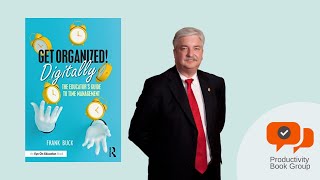
A Conversation with Dr. Frank Buck about his new book, Get Organized Digitally