The Psychology of Procrastination by Hayden Finch PhD

In this recorded Productivity Book Group session, host Raymond Sidney‑Smith leads a conversation with participants Frank Buck, Michelle, and others about Hayden Finch’s book The Psychology of Procrastination: Understand Your Habits, Find Motivation, and Get Things Done. The discussion begins with a brief biography of Dr. Finch and an outline of the book’s two‑part structure – Part 1 covering the psychology of procrastination and Part 2 offering practical techniques. Participants share personal reflections, noting how the book demystifies procrastination, distinguishes active (deliberate, pressure‑driven) from passive (unintentional) procrastination, and reframes it as a habit rather than laziness. The group explores core causes such as fear of failure, impulsivity, and emotional overload, and examines the author’s evidence‑based strategies: externalizing tasks, using GTD‑style “next‑action” capture, the Eisenhower/Merrill‑Covey matrix, chunking, divide‑and‑conquer, building momentum (flywheel analogy), emotional regulation, and developing resilience through “healthy conflict” and grit. Throughout, the facilitators stress the importance of psychological safety, awareness, and systematic habit redesign. The conversation concludes with each participant recommending the book for lay readers and highlighting actionable take‑aways they plan to try, such as immediate task capture, prioritization frameworks, and incremental “persistent start” habits.
Chapters
Welcome to Productivity Book Group. I'm your host and facilitator, Ray Sidney-Smith. Thanks for listening in on Productivity Book Group's discussion of The Psychology of Procrastination: Understand Your Habits, Find Motivation, and Get Things Done by Hayden Finch, PhD. A little bit about the author. In the description from Amazon, it reads, part Lisa Ling, part Reese Witherspoon, and part Mary Poppins, Hayden Finch is a licensed clinical psychologist, behavior change expert, and dessert enthusiast originally hailing from North Carolina. Duke and Nebraska educated, she is a go-getter with a passion for translating research into practical coping skills. Uh, Dr. Finch treats clients at her Center for High Functioning Anxiety and is the CEO and founder of the educational platform Master Your Mental Health. Her goal is to equip people with the skills to master mental health, discover self-acceptance, and find meaning in a busy life through research-based strategies. Prior to launching her own businesses, she had adventures working with incarcerated juveniles, uh, veterans, and individuals who had been found not responsible for crimes by reason of insanity. In her personal life, Dr. Finch is a waterslide enthusiast— didn't know that was a thing— a musical theater aficionado, and an ice cream connoisseur. All right, on to the book about the psychology of procrastination. Again, I'm reading just a snippet from the Amazon description here. Understand your procrastination and break through to productivity. Many different factors can trigger procrastination. The good news is you're not lazy or undisciplined, and you can achieve real productivity. Discover the the psychological factors that drive your procrastination habits and unlock the secrets to overcoming them. With this research-based approach, you can learn to stop procrastinating, finish projects, and accomplish your goals. Begin by unpacking the common thought processes and emotional roadblocks that trap you in cycles of problematic behavior. Apply that awareness to each step of getting things done, not the methodology, using practical evidence-based techniques that address the root causes of procrastination and time management problems. When you are empowered to work along with your brain rather than against it, you'll be able to take control and create lasting change. And so with that, let's get into the conversation and start with your general— I'd like to start with just general reflections on the book itself. And I'll start with just a quick outline of the, of the book itself. So in the table of contents, the book itself is structured in two parts. The book is structured as Part 1, the psychology of procrastination. Part 2 is using psychology to overcome procrastination. So the first part is really kind of educational and underpinning. The second part is really the practical techniques that she talks about in this sense. Chapter 1 is Understanding Procrastination. Chapter 2, The Cycle of Procrastination. Chapter 3, When Other Issues Are in the Mix. And then we go on to Part 2 with Chapter 4, Overcoming Procrastination. Chapter 5, Prioritize. Chapter 6, Find Motivation. Chapter 7, Get Started. Chapter 8, Focus. Chapter 9, Overcome Avoidance. Chapter 10, Follow Through. Chapter 11, Finish What You Started. And then her conclusion that she titles Keep Working at It. She has some resources at the end of the book as well, which are really worth checking out. So on to our initial thoughts. I'll start with you, Frank. Dr. Buck, what were your initial thoughts about this particular book?
Of course, I've read a lot on this subject. I actually read this book in one sitting. It was that easy to read. It was that engaging. I felt like the author, one, she really put me at ease just by saying we all procrastinate, but we're not all procrastinators. You know, that we don't have to label the person that, and we're kind of all in this same boat together. And even though I call myself a very productive person, I actually see myself in some of the things that she's talking about, especially as far as procrastinating on purpose. You know, I'm going to put off these tasks until this particular day when I have more time or I have more information or I want to get these other things done first. So I, I thought it was very practical and would really speak to a wide range of people.
Who else wants to jump in with initial thoughts and feelings about the book? What were your initial impressions? You're muted.
This is Raymond. I'll jump in. Oh, Michelle. I'm sorry.
And then Michelle, you were muted, Michelle. So Raymond, go for it. Go for it.
Thanks for doing this. I'm jumping on because I am very interested in the book and I read some of the book. I didn't get to complete the book because I'm having an absolute crazy month at work and I've been spending a lot of time being crazy, procrastinating. At work. So the book is— I have a little bit of the way through it, and I'm finding it very interesting. And what I really appreciate is just the kind of down-to-earth approach to the writing, making us kind of all feel that we all do this, and some to great extent, some not so much. But it just kind of made me feel not so alone in the world of, oh my gosh, why am I beating my head against the wall all the time? Why can't I just get my mojo going and get these things that I know I must do done? And so I just wanted to put that out there. And I look forward to reading the rest of the book to find out how I might be able to do those things and to listening to you, of course.
To not label myself, but I am one who procrastinates a fair amount, and I've just pretty much done it all my life. So I got through the part, the very first part of the book, basically the first half, and could identify with almost all the characteristics that she described, and some more than others. And, and it was really helpful to me to to understand where some of the procrastination was coming from, you know, that it wasn't that I was a lazy person, but there were like emotional issues or stress or just not sure how to handle that, or that's uncomfortable with some of the avoidance of things. So, in that respect, it really helped me to understand my own personality and characteristics around procrastinating and, and why I would, would choose to procrastinate in certain situations.
I love the fact that you talk about it as being a choice, right? Because for a lot of folks it's not, because they're unaware of the fact that they're doing it, right? They can't label the activity. And once you surface it to awareness, you become, you know, what you, what you know you can control. And so it's, it's that level of awareness, which is the next stage of it, feeling that pressure is one thing. The bypass valve is then to figure out how to deal with it so that you actually can get and become productive, get into that flywheel approach of the ebb and flow of movement, creating momentum and then driving that momentum so that you feel that continual motion. It's funny because an object in motion stays in motion. Is that Newtonian physics, I suppose? The idea here is that you want to be able to create that in your own productivity system. And your point is very well taken that you— and Dr. Finch's point is really well taken, which is that you are not lazy or broken or whatever it might be that many people who procrastinate feel. It's the fact that you have systems in place and those systems need to be dismantled and remantled in a way that works for you. It's the structure and the support system. It's the environment. It is those pieces of habitual behaviors tied together that need to be looked at. You know, you were going to say, Michelle.
Well, and I agree because at first there were certain parts or certain, certain activities I do that I didn't even notice, you know. And then once I read, started reading her book, I started noticing that my first instinct is to, okay, I'll deal with that later instead of taking 30 seconds and take that piece of paper I just opened in the mail and put it in the filing cabinet rather than in the inbox. Right. I mean, so I mean, just even the littlest things, it started to make me aware, whereas as like you mentioned, Ray, I, I may not have noticed before, before reading the book.
And I think across the board, something that really stands out in the book as well as just in general understanding of how to overcome procrastination is the idea that the, the unknown begets fear, right? And fear is at the root cause of many of the issues, you know, as I frequently kind of talk about the Four Horsemen of the Productivity Apocalypse, right? Indecision, overwhelm, distraction, and procrastination and indecision. So what are the four? I'm forgetting my own four, right? Distraction, overwhelm, indecision, and procrastination. And so, you know, when we approach these kinds of situations, we are frequently held back by these limitations because what we don't know becomes the boogeyman, right? And so I frequently say to folks, you know, you get a piece of mail, open it immediately. I don't care if you're afraid of the bill, you're afraid of the letter that's going to ask you to go take your kids to the next party and now you have to go put that on the calendar and make all those other issues. Knowing is better than not knowing. And it's just okay for you to be able to take those things to heart. Open the email and counter to David Allen in Getting Things Done, I don't care if you open the email and close it again. Open the email, make sure you know what's in it because now at least you know. You know, setting the email aside and saying like, oh, I'll look at it later. I don't really want to deal with it now, really is the first line to procrastinating, right? It's just a, it's a slippery slope down that, down that path. And we can, we can really countermand that whole approach by approaching everything with, no, it's better for me to know than not know. That, that helps abate fear and that creates a safe space for you. Right. And, and I can't, more highly kind of note the importance of psychological safety, right? Us feeling safe in our space allows us to take risk, right? It's the opposite. People tend to think, well, I'll take risk out of fear, but most often than not, healthy risk is taken out of feeling safe. And we know that from lots of the psychological research. So we want to basically want to know that we're in a place where we can take calculated risk, right? We're not jumping off a bridge without a safety harness. That's not a calculated risk. That's a death wish. We are taking calculated risks by making sure that we're stepping into waters that we're more aware of than less. So we all just have to approach this in a perspective that works for us. And it's really difficult sometimes because we don't know what we don't know when it comes to this. And I felt like just my own initial thoughts about the book. One is that it's written for a layperson, a lay reader, which is fantastic. I really appreciated Dr. Finch's approach to this. Hayden, you know, gives some level of the research, kind of, you know, some of the underlying research so that you can look it up. It's not for a psychologist, right? If you are also a clinical psychologist, this is not going to be a book for you. This is going to be a book that you would recommend to your clients, not a book that you're going to feel, you know, like, oh, this is good academic reading, right? And to some extent, I will say that when I opened the book, I had not known about this book until, you know, we decided to make this one of the reading selections. And I sat down somewhat thinking it was going to be that. And then I opened it up and I was like, oh, oh, this is for normies, right? This is for someone, just anyone can read this, which is totally great, right? That's fantastic. It just, I wasn't expecting it because the title is written, The Psychology of Procrastination by Dr. Hayden Finch. So I was just expecting a little bit more psychological research and whatnot, but it was really fun. Just so you know, As I was reading the book, Dr. Finch has done her work. Everything that she talks about is founded in really solid research. And so I felt good about that. It may not have been presented in the way that I would, but, you know, I'm just a different person, so that's fine. I think that it was approachable. I felt like the material was really helpful. And part 2, I thought was really— it was kind of nice how she put and laid out the book in a way that was like, here goes a strategy, let's explain it. Here goes, you know, here goes a strategy and let's explain it. And I like that kind of approach in a lot of those books. It reminds me of What is it? What was the, um, Miss Minimalist, The Joy of Minimalism? Frank, help me out. What was the book that we, we described? And she goes through that 10-step process, remember? But I can't— just a book in the back matter. You can go back in the discussion.
We've talked about so many, the title escapes me as well. But for right now, I thought exactly the same thing about this title. You know, when I saw The Psychology of, I thought it was going to be a much deeper You know, book for, I guess, psychologists. Do you think a better title, a different title, would have been better? Would have been more appealing to the person for whom it's obviously written? Yeah, for the layman, just the average Joe on the street.
I'll open that up to everybody else. I don't know. I don't know. Yeah, I thought the subtitle kind of gave it away and the length of the book, right? It's really a short book. Yeah.— I read it and I saw the length of the book and I thought, well, she's just going to do like a really short treatise on this is what I thought. And then I looked at the length of the book and the title of the book and I was like, yeah, that can't be, right? Especially in the table of contents, right? So table of contents makes it pretty clear that it was going to be something more for a lay reader. So I wasn't too shocked once I opened it. But I would agree with you. She could have potentially shopped around a different title and that would probably open it up to a larger audience.
Why We Procrastinate, you know, or—
Maybe it'll be Edition 2. She'll come out with a different title. Yeah. All right. So let's move on to the definition of procrastination. And she defines procrastination fairly specifically. And I was curious from you all whether or not you agree or disagree with the definition and/or just kind of thoughts around the definition here. And so she defines procrastination kind of in its inverse and then defines it positively or affirmatively. She says procrastination isn't just about delaying a task or decision. It's about delaying it without a good reason. She then goes on to talk about the idea of active and passive procrastination, which again, just to kind of give us all a level playing field, she says passive procrastination is probably what you picture when you hear the word procrastinate. This is when you mean to get started on something, but just keep putting it off. If you find yourself repeatedly and honestly thinking, I'll do it right after I finish this other thing, then you might be engaging in passive procrastination. And then flipping forward, she says active procrastination is much more deliberate. This is when you intentionally make a decision to procrastinate, often because you believe you work better under pressure, which is the perennial problem that I hear from folks. Pierce Steel is another academic researcher who has written a book on procrastination, and he really talks about that kind of misnomer. And so for anybody listening, for all of you here in the live call, that is completely bunk. You will not do better work under pressure at the last minute. Really, you are much, much better off working consistently and methodically by doing some planning up front and some front work, and then doing a little bit of work along the path, and then, and then finishing and completing that work, probably in a little bit higher level, deep level concentration near the end of the project timeline. But that that little bit of work at the beginning of the project that helps you plan and put in the infrastructure piece, and then that consistent work product throughout the centerpiece, those are the hallmarks of great creative work. And by creative work, I don't mean painting a painting necessarily, right? All of work, all generative work is creative, right? Whether you're problem solving or otherwise, that work really does require you to do some heavy lifting, and that takes time. That means you have to dwell on ideas. You have to quote-unquote sleep on it. It's a real thing, right? We, we, we take a problem, our unconscious mind, our default mode network, uh, then processes those problems and starts to give us, uh, interrelated patterns that give us the ability to go ahead and create, generate, uh, solutions. Uh, we can't do that if we don't give it enough time. So if you procrastinate till the, to the deadline, the day before the deadline, you're like, woohoo, I'm gonna do this all because I'm better at, at it when, when I'm under pressure. Uh, what ultimately happens is you come up with far fewer ideas and you haven't thought those ideas through. That is, your conscious mind may think it has thought those ideas through, but your unconscious mind has not had time to process. It just takes much more time in that default mode network to come up with those ideas. And then they snap into existence, right? We tend to think about this as being a very long amount of time, but the reality is that default mode network just needs its own time to process. And then once it has an idea, it's an instant when it surfaces to the conscious mind, but it really takes time in the background to be able to do that work. So, do you agree with the definition of procrastination, right? And do you feel more active or passive procrastination in your own world?
I'll jump in. And I'm looking at procrastinate that it comes from the Latin pro, in favor of, crastinus, or whatever, meaning tomorrow. So, but I see myself as an active procrastinator at times. And Ray, I understand what you're saying about, you know, I do my best work under pressure. And for me, it's not that, but sometimes doing things close to the event, you know, maybe reading the book close to the event, because if I read the book 2 months ago, I forget a lot of what I read. If I read close to the event, it's still fresh on my mind. I'm thinking about it and there's kind of a good flow. Another thing for those of you who work with other people, you know, you get busy on a project, you do a lot of work on it, and then the person says, Frank, I've kind of changed my mind about this and this and this. You go, well, you know, that just cost me a whole day's worth of work. So it's like, let me wait. And make sure that, that, you know, that this workshop is really going to materialize. So this project is really going to go forward and the other people there, give them a chance to give me all their input and then I can get to work and get it done.
You bring up some really great points. One is there's a double-edged sword as it relates to procrastination. And so there is procrastination on one side of the sword. On the other side is the effective delay for efficiency, for retention and then recall, as you talked about, right? That's a whole issue. Now that's of course counter to the idea of comprehension and then the ability, comprehension storage and comprehension, right? So the ability to take something in, you take reading for example, in this particular example, I read the book now, I store that, right? And I comprehend the book as I'm reading it and storing it. Now your comprehension grows as you dwell on the subject at hand, right? Which is why people sometimes reread a page or reread a sentence because they didn't quite understand it or something like that. But the more time you have to be there with the material, the more likely you understand it and connect it to patterns that you already have, latticework that's already in the mind. So, you know, there's kind of that— there's two sides to that, right? I wouldn't consider that necessarily procrastination in my mind though, and I think that Dr. Finch very much thinks it is. And then There is the fact that you have to deal with other people who procrastinate. You know, and also, I mean, in your example of a project where— and this happens quite frequently with me, right? I have my staff work on something, and then I change my mind. And I'm like, we're going in a different direction with this thing. And I have to remember that they've done work. And now I'm shifting their work. And I'm honoring the fact that they did do this work. And it's not It's not unimportant that they did the work, but now I need them to do more work in a different direction. Right? And we've all been there. I've certainly had clients change things at the very last minute and you're like, "What? Can we not do this?" So I totally feel the same thing and I try not to do that to people, but it happens where you're like, "Oh, you know what? This project is just not where I want it to go. We need to change." And so the idea of procrastinating to the end doesn't necessarily always help though, right? Because you could be in that position and by not having done that that other pre-work and gone down that path, you may not be able to say to them, well, if we go down this path that I was already on, these are the benefits, these are the consequences. And if we change, then this may be perhaps how the benefits and consequences will change also. So we have to kind of, uh, navigate that, those waters, uh, which is why I like to do just a little bit of pre-work and then trickle the work along the pathway toward the end and then ramp up again so that the center part is kind of a, a slow and steady burn. And then I am increasing the amount of work that I do at the end, you know, not because I was procrastinating, but because at that point I'm willing to give that energy to it. And if anything has changed, I've done what I could along the way, but now we're ready to really rock and roll. Right? So I totally get that. Any other agreement, disagreement with definition of procrastination and/or active and passive procrastination?
I'll jump in. It's Raymond. I kind of feel Well, so from my own personal experience, it's both. I find that I'm primarily passive to start, but then I do find myself running up against deadline where if I had done the work even a little bit along the way, I wouldn't then be stuck the day before or the morning of going, Oh my God, I totally forgot about X, even though you sent me 5 emails that I never opened because I have all these other emails that I've never opened. And now all of a sudden, I'm stuck in this active phase of, well, now I really need to kind of hunker down and do this. And I do think my work quality suffers by waiting until that last moment. So I think for myself, I find myself much more in a passive phase where let's take work email. Oh, here's 30 emails. Rather than go through each one in order, as some advocate, right? I pick and choose. Oh, well, this person, I know this is something that I can easily do. Simple response. I don't have to spend too much time thinking about it. Quick win. Boom. Meanwhile, the probably the more thoughtful, harder to do things, I end up putting off. And then they build. And then they inevitably get lost. In my inbox. And then all of a sudden, 3 weeks later, someone's like, well, you know, we, you know, I happen to work in the construction real estate business, and, uh, well, we can't get that elevator out to you because we haven't fabricated it yet because you never signed off on our contract. And now I've just pushed a project out by a bunch of weeks because I wasn't able to do the work in the beginning to just open up that email, like you had said earlier, Ray, about opening the email so at least you're not taking anything by surprise. And then all of a sudden now it's a hot-button thing and I have to really do something that may or may not be in the best interest of my company just to get this out. And so in that respect, I find that because I've put something off initially, it's really coming back to burn me at the end. And, uh, that it's, it's, it's, uh, it really hamstrings me in many respects. And then it also hamstrings the people who rely on me to be able to do things and get information out to them so that they can be successful. So I'm beating myself up a little bit here, but I think that, you know, this really can be problematic when it gets, uh, too deep and too serious.
Absolutely. Well, first and foremost, you're— this is not uncommon, right? Lots of people do this. And, and so, you know, one of the things that you might think about doing, right, and this is kind of the get, you know, getting started kind of perspective, or get started Chapter 7, you know, Dr. Pentfinch talks about this. I'm not sure if you got to that, that chapter yet. But, you know, something that you can do in that kind of getting started perspective is that, a la, say, GTD or other methodologies that talk about this idea of basically externalizing your, your work, and you have done that by putting those emails aside, right? You're kind of externalizing the work, but, but they're unknowns to you. It's unknown work. What we need to do is we need to, we need to basically not just capture that work and into a bucket, we also need to clarify it into a space and understand what it is, right? Clarity as it relates to the thing. And so opening the email and then and putting it into an objective space, right, where you can kind of look at them and determine what their value or priority is to you. Because you might determine, oh, you know what, I can actually sign off on this contract and send that along and move that project along. That's going to get it started, right? There may be other little things that kind of need to be dealt with, but they're niggling issues. And, you know, if I don't do it, whatever. But at least you're going to conquer the big bucket items that are going to potentially cause you or a company or family harm, right? So you can, you can kind of see how this is beneficial to you. And I'm only saying all of this as a mechanism to remind yourself consciously of the benefits of doing this kind of, of forward work, right? This kind of lead work as opposed to lag work. And the lead, the lead work is really important because it helps you on an unconscious level start to see the benefits of it, right? So if your brain does not see this as being beneficial to you, it will do the most efficient thing, which is to set it aside. And so on some level, what you're doing on a regular basis is the most efficient thing. You're not being lazy. Your brain is just basically like, whatever, I could do this later. It's not like the construction of whatever it is, the building or house or whatever, has nothing to do with the brain's operation. The brain cares about survival. It cares about being in homeostasis. And the more work it does, the more energy it takes from the body. The brain is a very, very power-intensive of Oregon. And so it's always trying to just reduce the amount of work it's doing, right? Like it's the, it is the ultimate efficiency hound. And so if you're, if you do not give it the reasons for it being beneficial to it, then it will set it aside. So you have to consciously think about, hey, you know what, the thought of this being done now is beneficial to me, to my organism, right? The human, human organism. And so I should actually do this now. Right. And by doing that, practicing that beneficial output outcome, desired outcome in the GTD language, you actually reinforce that your unconscious mind starts to dwell on that and say, oh, you know what, when Raymond says that he wants to do this stuff, it takes a little bit more energy, but long-term survival, it's actually beneficial to us because you start to build up those brain pathways that connect this doing to this benefit, and then you'll start to do it more. It seems kind of, you know, disconnected in some way, shape, or form, but they're very, very much related. How you think about things ultimately creates these neural pathways that allow you to basically increase the structure and the speed at which we make decisions to do things that are beneficial to us in a long-term planning perspective. So great points though, great points.
So Ray, I had a question for clarification. So when you— this is Michelle— so when you say externalize, are you saying, you know, I know you physically say, okay, put it in your your system, your productivity system, GTD in this case, but are you also saying to kind of detach the emotion involved with it too, to be objective about it? Yeah, so that when you're looking at it, then you can make a decision not from an emotional point, but from a productivity, or like you're saying, you know, what is the benefit to us?
Yeah, there are two, there are two pieces here. There are two layers. And I like people to manage these things in those two layers, right? This requires some practice of emotional regulation. But it's, I think, necessary, which is that we should be managing the external systems from an emotionless perspective, right? Or as emotionless as we can, right? I actually take quite, quite a bit of joy because I'm a planner. I like the idea of organizing my things, right? I like the idea of doing that. It brings me quite a bit of joy. Doing the things, not so much. But certainly, The organizing of the things is lots of fun. So I like making lists and putting them in the right places and really organizing them. So it's just a natural point of joy for me that there's an achievement level there. But I have to overcome that because then I also need to know that I have to do the things and get to the project completion, right? So there's a double-edged sword there as well. So the system management is what I'm talking about being logical and rational. Emotional, right? So use the example of I got to talk to dad about surgery, right? An emotional thing. He could die. He could, um, the surgery could not be successful, whatever. Any number of things can be wrong with the surgery. He could also have a great surgical experience and come out with a new liver, new whatever, new lung. I don't know, uh, whatever the story is, right? Um, I need to stack, track, and maintain dad's surgery conversation next to buy milk. Right? And I need to remember that that is an emotionless process. I am just, I'm objectively putting all of these things in a space because the next step is that I need to subjectively prioritize utilizing intuition, and that requires emotional regulation. Approaching the work is very different than stack tracking and maintaining the work. And what we tend to do is we go, you know, dad's surgery is, that conversation is going to be tough. He's a, he's a tough one. He's not He's not going to want to do it. He's going to blah, blah, blah. So I'll put this over here. And then, you know, these things are really easy, so I'm going to put them here. And what we end up doing is we're not managing from a perspective of strength and abundance and clarity, right? That, that, that place of rational, logical management. We're, we're, we're stack tracking and maintaining from a place of fear. And that ultimately creates more fear when we look at all of the lists and they're all mishmashed with things that are are either heavy laden with negative emotions and then laden with positive emotions on the other side. So we do all the easy little things, right? But we don't do any of the really difficult, you know, quote unquote difficult things that are really important for us to drive down. And we know that it's probably pretty easy to address it, right? We could, we could identify the next actions associated with it, which will make us much more likely to do that again in the GTD parlance. But if we take that out of GTD, we can still say, If we just look at it and we think logically and rationally, what is the next thing we can do? What's the next step we can do to really make this thing less onerous to us? Right. Which may be like, I need to go make— have just scheduled an appointment with, with dad for lunch. Like, let's just go have lunch. Right. And now I'm not worried about the conversation. I'm, I'm worried about scheduling lunch with dad. Right. Which is rather easy, right? I can, I could just call him up and be like, hey, lunch next Friday, favorite joint? Great, let's go over there, right? He loves this Irish pub and we're gonna go over to the Irish pub and we're gonna have some, you know, bangers and mash, right? Now it's gonna be a really easy thing for me to do. And now I'm sitting down with him and I know in the back of my mind we have to have this conversation, right? But then I got the second beer in him and now we can have the conversation, right? So we can, we start to strategize these things, but we usually don't think about the most practical way to get there. And that's what I'm talking about in terms of that logical, rational piece.
Does that make sense?
Yes. Yes.
Thank you for clarifying.
Absolutely. Frank? Yeah, I think, you know, you're absolutely right. You know, just thinking about it so often, the thing to get it moving is simple. You just got to put thought into what is that simple thing. Thing that's gonna get this going. And then, you know, the object at rest tends to stay at rest, and the object in motion tends to stay in motion. So once we get it in motion, then, you know, it, it sort of rolls along from there. So we're looking at a list of, you know, here's a difficult thing, a difficult thing, a difficult thing. Oh my gosh. But then we define the easy thing to get this one started started, and this one started, and then— and now we're looking at a list of easy things. Yep, let me make this phone call, let me send this email. I've just pushed 5 projects forward in a matter of a few minutes just because I figured out exactly what I wanted to do about this.
So moving right along in the book, there is a portion in the book that where she talks about fear of failure, and, uh, this is a, a common kind of element really of really all of us, right? We all have some level of fear of failure when it comes to taking on an onerous task and so on and so forth. Some folks who are more impulsive have actually a greater risk of fear of failure than not. And so this actually causes more problems because the impulsiveness causes us to procrastinate, right? So this is again like using Dr. Steele's work, not Dr. Finch here, but Dr. Steele has kind of researched this piece and, you know, doing meta-analyses has kind of understood this idea that most procrastination comes from impulse control. And the higher we are, higher impulsivity increases that functionality. And wouldn't you know it, impulsivity based on fear, right? So we use fear-based emotions, right? If we take kind of the binary of emotional existence being fear and or enjoy, you know, some kind of eudaimonic response, you know, positive affect as opposed to a negative affect or some kind of fear-based response. We have those two items, and there's an argument that that's not the binary, but for the purposes of our discussion, I'm going with it. And so we have this kind of fear-based response side, and we lean into that, and as impulsive people, we lean into that, and the impulses then create greater levels of procrastination. And so I really appreciated Dr. Finch's approach here and kind of talking about the idea of overcoming procrastination with, you know, all of these various mechanisms. I'm curious from your perspective, what are your thoughts on the fear of failure and how do you build resistance and resilience in the face of setbacks? Because over time, that's what builds, you know, resilience and grit. Uh, all of those kinds of things builds constitution and fortitude, uh, mentally and emotionally for you to be able to say, okay, this is a hard task. And instead of feeling setback and, and leaning into that intuition that, you know, tough things are gonna beget negative outcomes, that tough things beget positive outcomes. How do you build that? How, how do you feel like that would be useful to you in your life? Frank, as someone who considers himself fairly productive, how have you built resilience and how have you built grit in your own world?
Tim Ferriss, of course, which we all know from The 4-Hour Workweek. And so, I read his later book called A Tribe of Mentors. And there's a little sentence he uses in there that said, "What would this look like if it were easy?" And so when I'm facing something where it's like, oh my God, all right, what would this look like if it were easy? And that if— that when I truly have the answer, when I've got this thing figured out, it probably isn't easy. So if what I'm looking at is really— if I'm thinking, gosh, that's hard, I need to do more thinking that when I really have the answer, it's when it's, oh gosh, this is easy. You know, the next step is this phone call followed by this, followed by this, followed by this. So that's sort of it for me and trying to work ahead of deadlines so that when something's dropped on me, that it's not dropped on me when my plate is already totally full. You know, that I've got 24 hours to do 24 hours worth of work and everything's got to just work out perfectly because that's when somebody drops something else on you. It's going to take 6 hours to do. It's like, so, you know, building in that cushion so that you're not always bumping up against deadlines and you have a little bit more think time.
I agree. And so I love the idea of divide and conquer because that's really what you're talking about, right? Chunking down. Until you have the elemental thing that allows you to understand that you can do this, right? Because all of the things I do in my life really boil down to just a handful of verbs, right? They're, they're, they're, you know, basically verb and direct object, right? So these are transitive verbs. So I'm calling Susan, I am, you know, emailing Bob, right? Like I'm, I'm doing things, something to someone or something to something, right? I'm replacing the batteries. You know, like, there, these are all things that I can do. The emotional emotional component aside, right, is there. And I need to be able to understand the emotion and deal with that emotion. But I also need to remember that physically I can do this, right? Like, and I love my going to the gym because I start my day at the gym and it's a tough workout. And before we started recording, I was telling Dr. Buck about, you know, some gym injuries that, you know, just like, getting blisters or whatever. But I get through that workout in the morning and I recognize that I just, you know, threw 200 pounds over my head, you know, probably 15 to 20 times, right? And, and all of that stress and difficulty, I can do, I can physically do it, right? So emailing Susan and giving her a bit of bad news, I could do that, right? There, there's a, there's, there's that corporeal building of grit and resilience that I think a lot of people need to remember is that we can build this physical resistance, right? Like muscle develops by basically applying pain and pressure and stress to it, right? We're tearing the muscle and then the muscle grows back and grows stronger. And it's a soft tissue, right? It's a soft tissue in the body, muscle. And yet it's the thing that allows us to operate. It allows us to be able to move. Same thing with our gray matter, right? We have to kind of, we have to stress it, right, in order for it to grow. And that means that sometimes there's difficulty, but we have to embrace a healthy conflict attitude. And that's how I particularly think about it, is when I approach these things about fear of failure, I think, what's the conflict? And how do I approach this conflict healthfully? Right? Because the conflict could very much well be with me, right? But it doesn't have to be, you know, like internal conflict, which is I don't want to, I don't want to I don't want to disappoint that person or, you know, I don't want to do whatever. But if I approach it from a healthy conflict perspective, then it can be more useful. I will also note that Dr. Neil Fiore, the Navy psychologist, you know, he wrote the book The Now Habit and The Now Habit at Work. I would just skip the latter book and just read The Now Habit. But I love Dr. Fiore, but, you know, The Now Habit at Work is not really worth it in my book. And so, but The Now Habit really talks about this idea of persistent starting and just relating back to Chapter 7, I think it is, that talks about, you know, get started. I feel like that is a primary and just really fundamental skill for folks who procrastinate to really get into it, right? And again, I talked about that whole concept of like creating momentum and like the flywheel. That's like a good mental analogy for you, which is that if you just start pedaling pedaling, then the, the, the bike is moving and it's easier to keep pedaling than it is to get started. But getting started gets you into that momentum. And so persistent starting is that idea that to get across the finish line, all you have to do is just keep picking up the thing that you were going to do and keep doing it. Right. And so just getting started consistently on the actions toward the outcome is how things get across the finish line. And so I never think about completing a project. I just think about what's going to be the next step toward completion, right? Like just one step in front of the other. And that makes it a heck of a lot less anxiety-producing for me. Right. You know, I deal with anxiety and I'm always like, okay, what is the, what is the next thing that I can get started on that will move it in that direction? And you'll be surprised that once you get started, you're like, oh wow. You know, an hour, 2 hours into work and you're like, hey, I made some pretty significant progress here. That's great. Let me plant a flag in the sand and figure out the next time and place where I can get started. And I'm not worried about getting across the finish line because the work is going to take the time it takes. But at least I know where I'm, where I'm, I'm going. Plus we can start to track and kind of understand, at least I'm a data tracker, right? I'm a quantified selfer. So I like the idea of being able to say, okay, every time I do a project and I'm going to do like, say, I'm going to write out the description for a new course that I'm going to teach. I'm going to write it out. I'm going to track how much time it takes me to do that. That way the next time I can say, you know what, it's going to take me roughly about 3.5 hours to to get all of the things together for that. And then you, then you satisfy, uh, as well as determine whether or not you're gonna do it in the future. Right. And, uh, many of you know that I've, I've done the ProdPod, uh, podcast for many years and I had one outlier episode, 118, the last episode of the podcast currently, uh, you know, where it took me an exorbitant amount of time to write and record that episode. Uh, we're talking 8 to 12 hours of my life was dedicated to 2, uh, 2 minutes of audio. And I made the decision that it wasn't worth it anymore to do the podcast. It was the wrong decision and I'll go back to recording again. But all it took was that one time to really throw me off my game, you know, 118 episodes later. And it was that notion that, you know, I wasn't just getting started and understanding that, you know, I would put in a little bit of time into recording an episode, but there was a point where I got to episodes where it was just going to take a lot more time and potentially what I could have done is thought differently about the project, right? Maybe I wasn't trying to distill 12 hours of, of I watched documentaries, I read several books, you know, all of those kinds of things to boil it down into 2 minutes. Maybe it should have been a series of 4 to 8 episodes of 2 minutes each, which would have given me a little bit more leeway to not spend that much time with that material, right? So I tell you that little vignette to remember that reflection here helps us overcome procrastination also, because it's, it's through that process of reflection that I'm able to look back now and say, oh, that's why I'm procrastinating on putting out another episode. And in the future, I won't do that. Right? I'll know that if I'm going to put— if I'm going to dedicate ample hours to recording a ProdPod episode, then it's going to be several ProdPod episodes, right? I'm not going to just do one episode for 12, 20 hours of research. That's just crazy. Right? And so now I know what to do when I, when I get, get in that position again. And that really helps me because again, intuition, right? We're trying to use Past experience to inform our present decisions, which is the work of Dr. Gary Klein. And so we want to make sure that we're continually trusting our intuition, but also we're investing in our intuition, right? Our intuition needs to be consistently, you know, developed. And that means putting new and good information in, right? Good in, good out. Bad in, bad out, right? And so we need to recognize when I've made a poor decision, I need to also then recalibrate. And I made a poor decision by deciding that my episode was only going to be 2 minutes, and I could have easily I could have easily done 5 or 6 episodes, potentially even 8 episodes on just the topic of minimalism in that episode 118. But I leaned into minimalism and I said, "This episode is going to just be one episode and it's going to be 2 minutes," and that was the wrong choice. So we live and we learn in those ways. So I want to talk about what your key takeaways from the book are, and then we can kind of start to wind down this discussion. What, you know, thinking about the book's contents, what were the actionable steps or the actionable techniques that you heard in the book that really stood for you as being something that you'd like to try now today to get started toward a less procrastinating life?
Ray, I'll start. I mean, for me personally, there wasn't really anything that I was going to then, you know, start. But I did see some what I thought were some really good suggestions for, you know, someone who might be is not so well together, you know, who hasn't written productivity books and all this kind of stuff. And, and it's, it's kind of scattered yet where it does talk about like the, what they call the Eisenhower Matrix. I know you refer to it as the Merrill Covey Matrix, uh, to say, hey, you can—
and Rebecca Merrill worked with Dr. Covey to create that matrix. Uh, get on my soapbox, but it is the Merrill Covey Matrix.
Exactly.
Because, you know, Eisenhower sort of mentioned this but never really used it, but now everybody credits him with it. So hey, I guess here's the moral of the story: win yourself a world war and then all kind of accolades fall at you, whether they're earned or not. But, you know, it mentions that. It mentions, uh, ABC grouping. Uh, you know, it mentions doing the easy thing first, doing the hard things first. So it, it really lays out several different methods methods for going about accomplishing your tasks. And I think what we need is a straightforward, you know, a way to organize things, a system that we understand where we can put everything in the system and then work the system. And over time, life gets easier. Have a system, work the system, watch yourself become more successful.
Absolutely. I will, I will say that the, the material on focus being something that I'm very keen to research and understand better, you know, just how we manage attention, attending to things is our one of our primary functions in being productive personally. That chapter was really fun and interesting to me. I just finished reading Focus by Dr. Daniel Goleman, the person who kind of coined the term emotional intelligence for anybody's interest there. And so while he didn't do the underlying research, by the way, behind emotional intelligence, he popularized the term in his book. And he's since then obviously become a world expert on the subject. But, you know, whatever. Anyway, but I had just finished reading Focus by Dr. Daniel Goleman, which is for anybody who's looking for a lay book on the subject, that is not it. It is a well-researched, not academic tome, but definitely a deeper, more thoughtful work on the subject of focus. But I really enjoyed that from Dr. Finch's work. And yeah, it was just been a really, really good book. And so as we, as we come to a close, would you recommend the book? Did you, did you appreciate the book? Would you recommend the book? Frank, you want to get us started? I would.
And I would recommend it to a layman, to someone who's having the problem of procrastination, because I felt like it was a very understandable book, an easy book to read. Like, like we've talked about, you found it to be a short book. I, I was able to read it in one sitting. So yeah, definitely worth the investment of the time to read the book.
Fantastic. How about you, Raymond?
Yes, uh, for sure. And I'm, I'm very much looking forward to continuing it and finishing it. Uh, I, uh, I, I really appreciate the layman part of it. Not that I can't dive deep into academic tones, but I think sometimes because the nature of procrastination can be quite overwhelming and emotional, I think you need language that is not going to be so scary intellectually to kind of grab you and make you relate to it and say, oh, I see myself in what the author is putting forth here. And so from that perspective, I do— I am enjoying digging into what I've already dug into, the early part of the book, and I would recommend it to others who have similar—
find themselves in similar waters. Fantastic. Yeah, no, I think that makes a lot of sense, and I, I do a layperson's read very much often. And, you know, so definitely not, not something that I avoid because I do appreciate that, especially when I don't know the material to begin with. It's helpful to kind of like just have something that you can absorb and comprehend pretty quickly and easily. And then my nature is, of course, to then dig into more and more of the research underlying it. But not everybody needs to do that. And so answering the same question, yes, I would, I would recommend the book. I think this was a really good, approachable material for someone who is looking to get started in understanding why they procrastinate, the various reasons systemically for that happening, and then having approachable steps, you know, techniques and strategies that are provided by the author. And I would, I would just tell anybody who is going to read this to really look at the Part 2 and cherry-pick the strategies you're going to utilize based on— once you've kind of run through the book, go back into it and say, okay, Okay, this particular strategy matches me and I'm going to use that particular thing to do, right? So just make sure that you're applying the appropriate strategy to the problem, right? Which is, you know, the procrastination piece, right? Be hard on the problem, not on the person. And we want to make sure that we're applying the right strategy to the right problem there. And that really looks at the various techniques in Part 2. I'll close this out with this, just a quote from the book. Says, while we all want to avoid feeling uncomfortable feelings, procrastinators tend to feel uncomfortable feelings more strongly, are more impatient when tolerating discomfort, and have less practice coping effectively with discomfort. Those characteristics can perpetuate emotional avoidance and ultimately procrastination. End quote. And so that whole— that sentence for me, like, summits so much of what causes procrastination for us. And I I can just lean into the hope that we all can get just a little bit more comfortable with our discomfort, and that will allow us to procrastinate less in the ways that make us less productive. And so I want to thank you all for the conversation. This has been a lot of fun. And with that, we've reached the end of this book discussion for The Psychology of Procrastination: Understand Your Habits, Find Motivation, and Get Things Done by Hayden Finch, PhD. A few comments and announcements before we close out this episode. First, we host these live quarterly discussions of personal productivity and time management titles, just like the one we discussed here and now. And of course, you're invited. Simply head over to productivitybookgroup.org, you click on the upcoming books page, and you'll find the details for joining us. You'll, you'll go ahead and be, you know, let into the Personal Productivity Club in order to be able to find that information. Or you can go ahead and click on the embedded calendar. And that will have the dial-in information through Zoom, which is what we use to be able to connect. The upcoming books page has all the dates for the year, handy little Google Calendar you can subscribe to, and that'll automatically put the events in your calendar. You can use that Google Calendar link in any calendar application. So Outlook, Google Calendar, Apple Calendar, otherwise, you just, you can use that link in any of those software. And there on ProductivityBookGroup.org, you'll also find all the past discussions, our summary review episodes, and our author interviews under episodes. So in case it doesn't show up in your, in your podcast app, because many times they only show so many of the episodes. You can find all the episodes on the website so you can listen to that back matter there as well. We have a digital community called Personal Productivity Club that houses our Productivity Book Group group. And so you can join Productivity Book Group by going to productivitybookgroup.org/community. You'll be taken to a signup page. You'll sign up and that will automatically join Personal Productivity Club, the larger digital community, but then automatically add you you to the Productivity Book Group group itself as well. And then you can jump in, you know, RSVP to the events, you know, get in dialogue with other productivity book readers, suggest books, all of that fun stuff there inside the community. And so with that, thanks to everyone for listening here on Productivity Book Group. I'm Ray Sidney-Smith. Here's to your productive life.
More from Raymond








The Checklist Manifesto by Atul Gawande MD Productivity Book Group Made by Headliner

First Things First by Covey Merrill and Merrill Productivity Book Group Made by Headliner

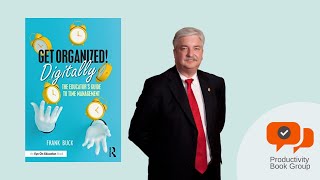
A Conversation with Dr. Frank Buck about his new book, Get Organized Digitally