The Shibumi Strategy by Matthew E. May – Productivity Book Group

Matthew E. May's Shibumi Strategy uses Japanese principles like kaizen and hansei to help people turn setbacks into growth. The book follows a man who loses his job and learns Zen-inspired practices: continuous improvement, reflection, and seeing crisis as opportunity. Key tools include post-task debriefs and journaling to close the gap between what should happen and what actually does.
Chapters
Welcome everybody to Productivity Book Group. I'm your host and facilitator, Ray Sidney-Smith. Thanks for joining in for this Productivity Book Group discussion of The Shibumi Strategy: A Powerful Way to Create Meaningful Change by Matthew E. May, originally published in 2010. So a little bit about the author, and this is coming from Amazon with a little bit of cleanup, and then a little bit about the book also from Amazon, just some excerpts from it so we can all be on kind of the same page as it relates to the book. So Matthew E. May leads the Lean Scale-Up program at Insight Partners, helping high-growth tech companies drive transformative change using lean principles. He's the co-author of What a Unicorn Knows and 5 other bestselling books, including our reading selection today, The Shibumi Strategy. He spent nearly a decade at Toyota, where he launched the University of Toyota, a corporate university dedicated to teaching, preserving, and expanding the Toyota Way. He's a sought-after speaker and advisor. His work has appeared in The New York Times and Harvard Business Review. He holds degrees from Wharton and Johns Hopkins and lives in Southern California. And about the book, about The Shibumi Strategy, a personal leadership fable on applying principles of Zen to work and life choices. The Shibumi Strategy is a little book about a big breakthrough. It tells the story of a hardworking family man who finds himself in crisis when his company closes. Through this struggle, through his struggle and guidance from unlikely sources, he learns subtle lessons in the form of personal Zen principles, coming to understand that it is often the involuntary challenge, the setbacks that harbor the power to transform. When approached as an opportunity, no easy task when simple survival is the first order of business, unforeseen trials can sometimes result in altogether new lease on life. End quote. So with that, let's get started with the conversation. Just general first impressions or first impressions coming out of reading The Shibumi Strategy?
I think everybody likes stories. So with this being presented as a fable or a story, it reminds me so much of the One Minute Manager series, The One Minute Manager Meets the Monkey, the whole thing. You have kind of the formula of here's a person with a problem, meets the guru, so to speak, gives them a strategy, and then life is better after implementing the strategy. So, you know, it kind of followed that nice little formula. I think it was enjoyable.
My impressions are, um, I appreciated the story and that it was very quick. I think it makes it a very quick read, so the story makes it read faster. It's a short book. I appreciate that it was, you know, it was a quick read for me. I think the fable method is probably not the best way for me to learn this type of information just because Yeah, I read it and I enjoyed it. But if you asked me what was it about, like what are the lessons? I'm not too sure I have them. I think your standard nonfiction self-help, for a better word, kind of book with diagrams helps me, you know, the visual and all that. So I'm not sure it was the best delivery method for me. I'm hoping you guys are going to help me. Digest it better because I'm a dialectic learner. So it's like talking about it's going to help. But yeah, I found it enjoyable. I mean, I didn't, you know, as a writer, I'm like editing it as I go, but that's, you know, me. And yeah, I thought the information is useful. I just don't know if I retained it as well. And the endnotes I thought were so truncated that like, I couldn't really digest it from that either. It was like, this is really quick, these little exercises. Um, but it kind of gave me vibes of The Way of the Peaceful Warrior. I don't know if you guys know that book. It had this like, you know, dropping the exposition type of, you know, thing where you meet somebody and then they tell you all the info dump everything, and then you meet another person and they info dump.
And I'd love the information from So I would probably agree with you in the sense that I felt as though it would have been nice to have vignettes followed by more exposition as we made our way throughout the book, kind of interleaving. And I still enjoyed and appreciated the kind of practices at the end, the kata at the end for folks to basically have as a set of summary or as an item at the end. And I'm probably— and realizing at this moment that I'm probably very similar, Linda, in the sense that I like story, I like the idea of story, but I also need— I need a very clear outline of what you're talking about and why you're telling me to do the things and what the things are that you're asking me to do. And otherwise, I enjoyed the story. You know, it is a, you know, there was a— it was just a very easygoing story, very much, you know, of its era, uh, you know, 2010 kind of book, um, probably maybe felt maybe late '90s in my mind, uh, but you know, like it was centered on a time in the late '90s even though it was written in 2010 or published in 2010 and written for a particular audience as well. Uh, so, you know, just, uh, you could tell that it was focused on a particular audience in that sense. And if you look at Matthew E. May's other books, they're all in that kind of entrepreneurship and leadership space. So it makes sense that those are those— that's where it would kind of go. I'll note some terminology so that we're all kind of on the same space or in the same place as it relates to these terms. And so of course, the Shibumi Strategy has Shibumi in it, and we have all of these Japanese terms. And so just a couple of them that we'll probably discuss throughout the course of our discussion for everybody's kind of edification. We have shibumi, which doesn't have a direct translation. So the general meaning is a state of effortless perfection, understated beauty, and quiet elegance. And this is really central to the book's concept that the goal of achieving meaningful change is through simplicity and mastery. How can we simplify? How can we become you know, highly skilled at something. And then, of course, that becomes the natural lead into kaizen. Kaizen, again, doesn't have a direct translation in English, but it means continuous improvement through small incremental steps. And so, of course, we talk about that practical strategy from the protagonist's perspective so that he's able to rebuild his life and achieve goals, emphasizing this kind of small incremental progress concept. There's a lot of other terms throughout the book that are, that are covered, but I will only cover one more. And then if we have time and need, we can discuss maybe some of the other terms. But the other is genchi genbutsu, if I'm pronouncing that correctly. But it's the, it's the underlying principle of the Toyota Way. It's a really big part of the Toyota Way philosophy. And the principle is about going to and directly observing a location and its conditions in order to understand and solve any problems faster and more effectively. So it literally translates to go and see for yourself. And so this whole Genshi Genbutsu concept is something that underlies the Shibumi strategy in a lot of ways. So just a little bit of terminology. So we're all on the same page there. And let's go back to kind of the Shibumi concept itself, based on its meaning, how do you feel like this would apply to your personal or professional life or to other people's personal professional lives? Like, how does this Shibumi strategy concept work?
To me, it, it reminded me of all the readings and on achieving a state of flow. You know, where you are, where things are effortless, you're focused, distractions are put aside. You know, and you're just able to make a lot of progress in a fairly short period of time, and it's easy. The idea of making it easy, making it enjoyable. It's effortless when you're in that state of flow. So that's, uh, it sort of harkened back to that sort of thing.
I struggle with this. Linda, go for it.
And then I was just gonna say, I feel like it's, it's that, but it's also extended. It feels like to me from like flow to us, you know, over here in the West, we're like, okay, I'm gonna get in a flow state and I'm gonna be creative or do my work or whatever it is that we're doing. But to me, this seems more like a lifestyle kind of feeling, like it's extended out beyond just, oh, I'm going to go use this tool and now I'm going to move on. It feels to me more like something that people embrace for their whole life, you know, like it's more overarching and holistic than flow. I think it's flow, but it's flow like kind of on steroids, you know, not just Yeah, so you can think about it from—
so, so I, I can't, I can't talk on Japanese culture because I don't know it as well, but from a Chinese cultural perspective, you know, in, in my family we think about things very differently. Uh, the Eastern philosophy around, say, kung fu— most people think of kung fu as a martial arts, punch, kicking, and blocking. But when you talk about good kung fu in a Chinese cultural perspective, most Chinese people, when they know Westerners talk to you about kung fu, they're talking about punch, kicking, and blocking. But Kung Fu in traditional Chinese culture is about living a good life. It is, it is a real holistic concept. And I think there's maybe a translation to what you're talking about here regarding kind of the Shibumi strategy, which is not about the individual moment of flow, but this macro perspective of creating flow generally in your life. And because, you know, when I, when I read this, I thought, I see this as effortful perfection, right? This is about giving a good effort to something on a continual basis and getting the results that you want, which I don't, I don't like anything that tells me everything's too easy and that once you set it in place, it's kind of like a flywheel and momentum will just carry you along. That's not how my life has ever been, and nor will it probably ever be. I love the effort. I love putting in the energy to something, even when I ignore it for periods of time or I procrastinate on something for a period of time. You know, those are the effort is what it's worth doing. You know, like if it's not, if it's not hard, why, why do it in a lot of ways for me? And so that was a little bit of a contradiction in the whole, whole concept for me in thinking it through. So I'm just really curious about how, how individuals actually would utilize the Shibumi concept, the Shibumi strategy in their real lives, because are we, are we trying to And, you know, in a lot of the conversation today, we're talking about like automating our lives into, you know, this ease of things. But in reality, is that, is that really what we want? You know, like I'm very big into automation, but I'm automating things away so that I can give effort in the ways in which I want to. I want to, I want to not have to deal with administrivia. I want to deal with the creation and the generation of things and, and providing value in the best possible ways without having to go in like you know, punch a bunch of buttons, uh, you know. And so it's like this toggling between the two of them. Does that make sense?
Is it, is it, is it semantics maybe? Because I feel like they're talking more about simplifying rather than making it effortless. Like, people using the word effortless as opposed to making something so simple that, that it actually works, that you're not overcomplicating it and you're not making it more difficult than it needs to be, or you're not just hanging out in the difficulty of something. You're not breaking it down. You're just, you know, to me, that sounds more like it than just like, oh, it's not going to take any effort. You're just, it's just going to happen without, you know, effortless is literally like without any effort, right? Or am I messing up that word? Yeah.
But so this, this comes down to my conflict over it, right? Which is that like, think about, I'm thinking about myself here. So forgive me in the, in the sense that this is a very narrow view of the, of the subject. But if I think about myself and like content creation, right? I want to create more public content and I have not been because there has been this constant social media diaspora that's been happening over the last several years. And I've just chosen to not get involved in that. And Frank knows this very well. And now that I am going into that world, I see— getting back into it, that is— I see myself having to do a bunch of administrivia, basically a lot of little tasks that are things that a computer could do. And it's very frustrating for me because it is not effortless to do what is very simple. I have information that I want to share with people, and to do that, I have to have, you know, 16 different social media accounts. I have to, you know, convert content between various different, you know, types of media, text, audio, video, image. And interactive content and all of that stuff that like underlies it underneath kind of the iceberg, right? The, the part that's not seen under the water is like, it's all kind of stupid stuff, right? But it's necessary, right? It's necessary. So there's a lot of effort to make all of that automated and work well so that the stuff above, which is really the substance of what I'm trying to share, is useful and valuable to people in a lot of ways. And so I think that's where I'm coming at it from is, is that I want want it to be less effort, not effortless. And I want the effort that I'm giving to be the things that are truly providing me fulfillment while also providing value, right? I want to generate really good stuff for folks and then have the little technology minions take care of the rest of that stuff. That's kind of the stuff that I just, I find annoying and mundane in a way that eats at my soul.
I mean, what I was thinking was that there's a translation issue. I mean, I would love to hear somebody who speaks Japanese actually try to translate it, because to me it seems like that's not what this is. Is totally— it's probably less effort, not effortless, is more appropriate. But it's, it's interesting. But what you're talking about, Ray, is not simple. I mean, if you think it would be simple sharing information with people, but sharing information with people on a large scale has always been a complex, uh, animal. I mean, you know, it used to be done by only certain people, and it's very, very complicated.
Um, yeah, and lots of—
I don't think it's a new thing.
Yeah, lots of little pieces and parts.
Yeah.
You could upload the video, but then, well, let's share that to Twitter and let's see. I know you got to have the images. It just takes on a life of its own.
But the complexity has always been there. If you were going to publish a book 50 years ago or make a movie or a television show, that complexity was built into all those mass— any kind of mass communication that you want to do, there's always been complexity. If you're going to do it like, you know, one-on-one, it's less complex. The group of people.
And I think that, I think that what you're talking about, Linda, is that in the past that was done by a team of probably hundreds of people.
Oh yeah.
Today, today it's myself and a small staff. Right. And so it's like, and in, in this work, you want to, you want to still do all the things, right? Like for example, on all of the social media platforms, you want to make sure that it's accessible, meaning that it has alt text so that for folks who have screen readers are able to still, you know, consume the content, you know, so it's like every little checkbox becomes kind of death by a thousand cuts to getting content out the door in an effective way. And I'll do it. I mean, I don't, I don't mind hard work and I don't even mind menial work when the work is meaningful. But I do know that technology can reduce that. Automation should be able to reduce that down to something that is a minimal amount of that kind of what I call administrivia, right? The little tiny things that I don't and shouldn't feel like I need to do, but has to be done.
Well, that's why content creators are so stressed out. I mean, you see these people have mental health issues. They get very stressed. They don't take vacations. They don't take time off. They don't have a staff, or maybe they have an editor if they're lucky. I mean, a lot of mid-level content creators who are, you know, have a lot of issues going on because they're doing what was done by hundreds, if not thousands on some things, you know?
Yeah. And you're having something that I've noticed, and I know we're a little off topic of the book, but something that I've noticed quite frequently. Yeah. Quite frequently online today is that creators are attacking other creators. And I do not want that in my world at all. You know, my goal is to support and to collaborate with people in our space, in the personal productivity and time management space. So, Anytime I see that, I get turned off almost immediately when I see other folks. I see this mostly in the fitness space. I watch a lot of YouTube fitness content, and I get really annoyed when you see these kinds of clickbaity attacks upon each other. And some of them are fake, right? Done to just get you to watch the video. And I don't particularly like that. Anyway, back on Shibumi. And so So let's, let's talk about some of the concepts, whether they be kaizen or, you know, kind of some of these resilience strategies, the whole idea of doing kind of a debriefing, the hanzai concept, which, which areas would you like to kind of move into and talk about regarding the Shibumi strategy?
Well, the, the, the Hunza, that after-action review, that, that kind of stood out to me because I would, you know, I was familiar with that idea from reading, you know, hey, in the military they have this thing that they have done, comes up in a lot of books. And, you know, just a real solid idea. Right after, right after you finish something. You know what worked? You know what was supposed to happen? What did happen? How are the two different? Rather than waiting a year from now or the next time we have to do that thing to go, well, how'd that go last time? Now, you know, handle it right afterwards. And so that you're basically starting the planning for next time. Right now while everything's fresh on your mind.
Yeah. So just so that we can put a fine point on this for folks who may not have read the book yet. So, so this whole concept of Hansei, Hansei is basically reflection or self-examination to improve oneself. And, and so we see the protagonist, Andy, kind of practicing Hansei to learn from his mistakes and adjust his actions accordingly. And as you noted, there is this whole concept of an AAR, or an after-action review that was developed by the US Army. And so when something is AAR'd, it is basically those 3 questions that you noted: what was supposed to happen, what actually happened, and why are there differences? And so thinking through those, you know, those 3 questions really helps you kind of understand how to improve. Again, in this kind of Shibumi concept, it's more about the incremental improvement that can be done. And then, of course, the book talks about keeping a journal of some kind so that you can kind of monitor and review your performance and satisfaction and understand these differences over time. Other thoughts, other, other aspects of the, of the book you wanted to discuss regarding maybe some of the terminology or some of the practices?
I just say what you were just talking about, I found very helpful. And the idea of doing it right away too, like you're done with this and you, you know, don't do like a review a month later or a week later or whatever. You're just literally, you know, putting that in and keeping track of that. I thought it was very effective, sounded very effective.
Yeah, that really stood out to me because, you know, the tendency for so many of us is, you know, we Gosh, finally got that done. All right, now I can move on to something else. This is sort of like tying a bow around it. This is the, this is the cleaning up the dishes right after dinner instead of letting them sit in the sink for 3 days because we're busy with something else. Um, and then if you do let them sit in the sink for 3 days, well, then there's all the crud you gotta scrape off of them. So it's, do I do the work now or do I do harder work later. And I think what we find just in living on planet Earth is when you go ahead and again tie the bow around it, you know, clean it, close the loops, uh, it makes your future self thanks you.
And also our memory is very fallible. I mean, you know, you're more likely to be accurate about what happened if you did it right after than if you wait time, which adds, like you said, the crud. And either we lose it or we add to it or we, you know, we don't really get a clear feeling of what happened.
Yeah, I think that something that was interesting in the book and talking about a fallible memory, I can't remember whether I read it in this book or read it about this book, but the, the whole notion that Hansai is something that is taught to children in Japanese culture, and whether they pass a test or fail a test, they still do this kind of memorialization of what went well, what didn't go well after a test or an exam or a project or something like that. And that is just part of their culture. It's part of their practice that they're taught this kind of debriefing, so to speak. And I found that to be really fascinating. And it's something that, I don't know, I've just always really adhered to myself. I like that. I like planning and I like reflecting. The doing part is, is the least favorite of mine. And I've had to work really hard to lean into the doing part. And, and I think that's probably what I really enjoy about coaching others is that I can watch them do and help them doing without actually having to put in the work. And And so I found that piece of the Honsai concept really appealing to me because it, it helps us all remember that recognizing what we're doing allows us to celebrate successes. It allows us to be able to understand how to overcome failures or mistakes for the future. And it's not about perfection ultimately, even though Shibumi has this word perfectionism, perfectionism, perfection in it, which of course for me in many ways, I, I, I, I bristle at the word perfection today because I know how pernicious it is for high achievers to hear perfection and to have a misunderstanding about what that really means. So I like the concept of excellence and I like the word excellence used in the definition around Shibumi, like having a standard of excellence, which is what I call it. I think it's is much more appropriate, right? Setting a standard of excellence means this is as good as I'm going to do it, right? And sometimes that means for some things, good enough is good enough. It got out the door and, and then sometimes you want it to have a polished finish, right? You want it to basically be really, really good and or great or beyond that. But excellence for me, or a standard of excellence, I think really works well for me in semantically over the word perfection. And, but I really like the idea of the, of just everyone taking the hint of just an ongoing reflection practice after they finish something, because we get harried and we get also, I think, stressed out. I think there's a lot of distress associated with what Frank was noting before, which is like you finish something, you run on to the next thing and run on to the next thing and you feel like you're on this rat race. And that's not appropriate for the human mind. You know, the human mind requires this level of stepping back and reflection. And when we do it that way, I think we're more productive. We may not get more outputs done, perhaps in the short term, but in the long term, we'll be far happier with the outputs that we do put out.
I find that without reflection, I make a lot of assumptions about what happened based on my own self-esteem and how I feel about myself at the moment. And so I'm not basing it on necessarily facts. I'm basing it on my, you know, my idea of what happened. And I think reflection kind of squashes that because you actually have to sit down and say what happened and write it out as facts as opposed to just these assumptions of like, you know, just for an example, like I didn't get anything done today, you know, kind of, you know, idea about yourself or whatever. And then you, but if you sit down and write down all the things that you did, and reflected on them, then you have evidence against that kind of feeling about yourself or whatever it is. So I find it useful in that way.
What other either concepts were in the book that you wanted, you want to discuss, or other maybe parts of the vignettes that were interesting to you that, that the protagonist kind of, you know, practiced throughout the book?
Well, I jotted in my notes about the struggle, that there must be a struggle, which sort of flies in the face of, you know, making it effortless, making it easy. You know, that somewhere along in there, it's not all easy. It can't be all easy. You don't want it to be all easy. Or there is— to me, the message was there's no growth.
So you're talking about that concept of kiki, the, the crisis? Is that what—
yeah, yeah, yeah. The, the word, uh, the Japanese word for crisis has danger and opportunity, uh, two, two sets of characters. One for danger, one for opportunity.
Yeah. And it's that idea of looking when there's danger to look for the opportunity.
Yes. I love the— there's always this— I don't know if it's mythological, but I'm pretty sure it's not, which is that Fred Rogers from Mr. Rogers' Neighborhood would always say that in a crisis that you should look to the helpers and the people who are out there doing the good good work of helping during a crisis. And I think about that analogously to this in a lot of ways, which is when I see a problem, I'm self-trained as a GTDer to think of everything as a project. And so that becomes a complex thing to overcome, to find a solution, and to not get emotionally dysregulated over that thing. And many times what I do is I think about that opportunity that Frank was mentioning, which is who, who's out there already solving this problem? And how can I look to them to find the solution, or at least a step in the, in the right direction? So that one, I'm not reinventing the wheel, right? I don't need to, I don't need to invent fire to be able to, you know, have a spark. And And then going through that process of then identifying whether something is more complex than it needs to be in order to find resolution to something. And what's the best method for me to be able to get to that solution? Because sometimes it is the longer road for me because I may need more reflection time. I may need more planning. I may need more communication or collaboration than others to get something done, whereas perhaps someone else might just bull in a china shop, fix it in another way. And, uh, and I'm just not that way. So, you know, I do like that concept of thinking immediately, like, who else is out there dealing with the same problem and/or dealing with it in— with effortless perfection, with shibumi?
Well, danger is really just not what we don't want. I mean, most of us don't. I mean, there are people who, like, thrill-seek and that kind of thing, but things that you consider a danger or a crisis is something you, you don't want. And so the, the good thing about it is that the other end of the stick of every crisis or danger is the solution or the opportunity or the thing that you do want. So when you're not sure what you want, those situations clarify it for you. They help you understand what you want by seeing what you don't. I don't want this. I know I want that. And now how can I How can I get that? What's the solution to getting that? As opposed to focusing on, you know, this terrible thing that's happening to me, you know, and being— and sitting in that, you know, it's a catalyst really for you to be able to say, okay, I don't want this, let me move towards that thing and plan how I can get there.
I'm just going to move us along to other of the terms in the book because there's just so many in here that are really good. So let's move along to Shoshin. And again, I apologize to anyone who's Japanese speaking and hearing me pronounce these things because I don't really know how they're pronounced. But so Shoshin, I think it's pronounced, translates to beginner's mind. And it talks about this concept of having an openness and eagerness and not having preconceived notions about something. And so I appreciated this concept and I like it, you know, in a lot of ways. I don't know that I always approach it from this perspective, you know, kind of the approaching it from a child's eyes, you know, kind of what can we absorb around a situation? How do we get fresh perspectives? And I think many times it's just a reminder, I think for me that many times I come at the situation and I think about my experiences and how that applies to fixing or approaching something. It's not even fixing something, it's just approaching something. But I'm bringing all of the baggage, you know, good and bad baggage, right? The old dusty, you know, worn suitcase along with the brand new fresh, you know, travel bag. And many times that colors your opinion about what and how to do something. And I think that if you can learn to set it aside and just look at it from that, you know, new lens perspective that perhaps you can do something different or better. Not that you can always get rid of your own experience, right? You can't get away from your, your brain in a lot of ways, but you can, you can see it through other people's eyes. And I like the idea of, and we've talked about this in the past, of kind of wearing whether you think about it as a hat, different colored glasses, you know, putting on a mask. But if you can fictionalize yourself as somebody else and look at it through their perspective. So like, think of myself as my 8-year-old self again versus my current age self, which is many, many years ago. And, and or thinking about yourself as someone else. Like if I were this particular superhero or this particular expert in my field, how would they look at this situation? Which I think really helps you start to think about it from a novel perspective, but sometimes a perspective that doesn't have the same constraints that you have placed on it on initial view. Any thoughts there? Agreement?
Disagreement? As somebody who approaches most things with bias, I think it's very, very helpful. I mean, it's, you know, it's hard not to, uh, carry your baggage with you and, you know, use whatever you've learned and whatever you've experienced to influence what's happening. But sometimes, you know, things are counterintuitive. Sometimes things are not what they seem. And so, yeah, I think it's really helpful to look at things with fresh eyes, then all that with it.
Yeah, when we can snap forward to the concept of ikigai in the book. And so the book does mention ikigai, uh, in kind of general translation, the concept is, uh, you know, one's reason for being. Uh, some people could call it a life purpose.. And so, you know, the, the whole notion there, of course, is helping to discover your, your reason for being through generally 4 questions that are asked in any particular ikigai exercise. You'll see this information in many different places, but it's like, what do you love? What are you good at? What does the world need? And what can you be paid for? And so obviously the remuneration piece of it, you know, kind of the money piece of it and the economic aspect is kind of maybe, I don't know if it's more modern or not. But those first 3 questions obviously are really, I think, if you take it as a Venn diagram, where those pieces overlap ultimately becomes your icky guy. And as someone who has thought quite a lot about this subject, I thought it was a really good, you know, brief introduction to it, even though it's a much more nuanced perspective, certainly from, I think, a traditional Japanese perspective. I'm giving you the more Western interpretation. But the idea here is that we can all determine a life purpose, and the life purpose does not need to be as overarching or all-encompassing as many people think. It also doesn't need to be economically connected. So you can have a life purpose or mission that lasts a year. It can last 6 months, you know, and or it can be about your entire life and encompass everything that you do and be filtered through that lens. And so, yeah, it just brought up a lot of those thoughts, I think, in mentioning it in the book.
But I think also adding that money piece, so to speak, that as you're finding your life purpose, that it also helps to hyzeck and align up with being able to pay the bills. I know people who have a life purpose and they wind up there laying on the couch in their parents' basement. But that's my— I'm following my life purpose. Well, you know, just to get by in the world, it does kind of need to line up with people being able to pay you something for something that you do.
So, you know, and I think, you know, knowing that having, you know, passion, mission, vocation, and profession are all not the same thing And so if you want to be— I think the typical trope is that, you know, you have this artist and the artist is a starving artist perspective. I don't abide by that, but we can use that analogy just for simplicity here. I think that what someone needs to do is to decouple having a job that pays the bills and then pursuing their passion, mission, and vocation separately so that their profession can feed that. And, you know, it's like if you have a corporate job, but you are in community theater and you do that because you love it and you want to express yourself artistically and creatively in that space, you're no longer a starving artist. You're a whole person, you know, and that's great. So I think that— I think the rationalization here that people in that position have to understand is that you don't get to exempt yourself from society because you have passion, mission, and vocation. I think that's important. It's great that the world needs you in that, in that sense. I think it's unfortunate that we don't support the arts more, but reality is reality. Okay. So like, let's not, let's not try to defy reality. Let's try to, you know, figure out how to make this sustainable for you. You want to be a full functioning member of society. And I don't think that's anybody necessarily listening to this podcast. But, you know, if you have folks in your life who are in that position, I think there's some, some peer coaching, peer conversations that can be had, as well as parenting and other kinds of mentorship that can be provided to help them decouple those things. I think people tend to think that you have to love your job and you have to love, you know, your profession, and you don't, right? You can work to pay the bills, and then you can, outside of work, go find passion, mission, and vocation.
I was just listening to Adam Savage yesterday or the day before, and he was talking just about this. Like, he knows people who have their thing they do, and then they have this job that they never talk about. You don't hear them talk about it. It is just going there to make money so they can do the thing they love to do. So it's just paying— it's just their patron so they can do their art with their work. And, um, but I find it interesting too because concept to me is very difficult when you have a Renaissance kind of personality where you don't have one passion that's like, this is the burning thing I want to do for my life. And, and, you know, you want to do a lot of different things and you want to, you know, you want to explore and do a lot of stuff. And I think that that's a difficult, like, little matrix to fill out when you don't have, like, one thing. You know, I think of, I always use Leonardo as the example because he just, you know, I mean, people call him an artist, but he wasn't an artist. He was an inventor and a whole lot of other things.
And, you know, I just, I think it's interesting that we have a very, I think, post-industrial revolution kind of idea about, you know, vocation and Yeah, I think that, I think that if you think of the archetypal Renaissance person, you know, Leonardo da Vinci comes, comes to mind, and he was accomplished in many different areas. And I think that if he were to do the ikigai exercise, certainly in the, in the forms that we've seen in Western society develop, he would have several, he would have multiple ikigai.
And I mean, a very broad definition. You know, we have very narrow definitions, and I think his definition You know, like thinking might be his definition, you know, which took place in different modalities, you know, in his journals, but also in his painting. And you know what I mean? He did different things while he was doing this, this thinking, which is what I think was going on probably. But I think it would have to be extremely broad because if you try to narrow it down to what people would consider a job or a payable, I don't know, people get paid to think, but They're very rare.
Yeah. So I kind of went through this experience myself. Right. And I work in multiple domains and I absolutely enjoy having the diversity of work that I do. And I have no intention of someone placing me into one of their little, you know, square pegs, you know, and I am just— I'm just round, you know, and I'm not going into the square peg. And so I, I think about having— perhaps it could be one more broad centralized concept. I tend to semantically be more, you know, individual about those. And so, yeah, my ikigai just happens to be multiple, I mean, or a multiplicity of them. And I find that to be really useful, especially as I was identifying my areas of responsibility and using older GTD lingo, but areas of focus and accountability. I would, I would outline all of those roles. And, and that's what allowed me to really figure out what is the purpose of each of these roles? And are they a vocation or are they a profession? Are they just here to make money or are they there because I care about this as a part of my purpose and mission? And, and that allowed me to kind of put them where they belonged and how much energy to provide in them and how much attention to worry about making mistakes or not. Right. There are certain things that I'm just never going to worry about in, in some categories or roles, and that I'm going to worry about a lot when it comes to those categories and roles. Like, does this thing make money? Right? And if it never makes money, is it, is it going to bother me? And in several categories, because they're, they're not—
sometimes the answer is no.
Yeah. I don't care.
It's a hobby. It's something you just like to do. You do this other thing that makes the money. So you can do what you want to, realizing it doesn't bring in any income.
It brings joy. Right, right. And yeah, so one thing that has to be certainly talked about here whenever we talk about the icky guy and decoupling profession and vocation is that for a lot of people, they have to deal with other people. And so your hobby that makes no money, right, and you may have this job that's doing really well, there is a conflict for are some partners, some family members, typically parents or otherwise, who can't ever figure that out, right? They were built in a particular or raised in a particular environment, and they see that even if you're paying the bills and doing what you need to do, they see that as a form of failure for you. And so you need to really buffer yourself against that and recognize ways in which to gently ease them into coming to terms with it. It really requires them to come to terms with it, not you, in a lot of ways. And it can really emotionally impact you and the work that you're doing. So if you love— like for me, I enjoy podcasting and I hear from, you know, a spouse or partner, husband or wife telling you every day that, you know, you're wasting your time doing that podcasting thing, right? Even though it brings you a lot of joy and, and, and connection and collaboration, you know, that's a very unsupportive place to be living in, in the long term, even if you've got a job and you're paying the bills and you're doing all that stuff, right? So just be mindful that there is this, you know, dark side to decoupling profession and vocation and this ikigai concept.
It reminds me of Mark Hamill saying his brother, the doctor, his dad said was the successful one in the family. Even though Mark Hamill's very famous and very rich and works a lot, his brother was a doctor, so he was the successful one in the family. And it's interesting because I think when you work, like if you have something you're passionate about, like I am a writer and writing for money is very different than writing for your own creativity or just expression, because writing for money is writing for most people, not always, but most people who write and make a living writing are not writing books and getting them published. They're writing for hire. They don't own the work. They don't decide what the work's going to be. They're just writing to fulfill someone else's brief. And that's a totally different apple than— it's not the same process. It's not even in the same realm. So I think you have to consider that and how much you're passionate about something can decide whether you want to make a living at it. Because if you're really passionate about it and you want to have ownership of it, making a living at it is less and less— the statistics are less and less that you're going to make a living doing it that way. Decide if you're willing to sacrifice it. Some things are just sacred and you want to enjoy them and you don't want to make a living at them. You just want them to be, you know, you want to have complete control over.
I think that for some, yeah, and I just would, I would, for anyone who is suffering through this circumstance, I would just lean into the concept of, of satisficing and not necessarily on the passion that you have toward the thing you want to do, like being a creative person is where we've been having this conversation, but this fills many different categories. And, but satisfying in, in the sense that it may not ever be the work that makes you money, right? And, and that's okay, right? So like finding the thing that will, so that you can feed yourself and family and also feed your hobby, passion, interest, uh, you know, is is just practical. It's just practical. And I think that not compromising on art, I think, is really important, but not to an extremist perspective. Right. So as you've probably heard me say many times, I would rather people be optimalists, not— You cut out for me, Ray. Did I cut off? Am I here? Okay. So I would rather people be optimalists, Maximalists or minimalists, both are extremist philosophies, right? And so, you know, if we started talking about communism and fascism and other things, people understand the extremism associated with those things. But then they say, oh, well, I'm a minimalist. And I'm like, well, that sounds extremist to me. So, and maybe you're not as extreme as some of the most extreme concepts of it, but really most of us are optimalists. We are hybridizing our views of the world for practicality. And so, like, I think the same thing when it comes to finding a purpose, whether that be a purpose for today, a purpose for the next year, a purpose for the next 10 years, or purpose of a lifetime. And you don't need any of those, but you can have any one of those. And I think that's the opportunity that you afforded to you by being alive and sentient. So I think it's really very lovely. Any final thoughts that you might have around The Shibumi Strategy and maybe any action points that you're going to take out of having read The Shibumi Strategy? What did you take away? What were your big takeaways from the book or the discussion?
Yeah, for me, it was the reminder of that after action, that little routine. And I think that's just a good Good little thing just to add into your life. You finish the project, whatever it is, do that analysis then. And I think I've been pretty good all along on that sort of thing, sort of tying up the loose ends, planning for how to do it better next time, and setting it up now rather than waiting for it to happen happen again.
I agree with Dr. Buck about that. That to me is a big takeaway, that reflection aspect. I think was really handy tool. Um, also the, um, oh, the crisis. The crisis, uh, you know, seeing opportunity in crisis, because I tend to be one of those people who gets into crisis and gets very stuck, and it's very nice to like You know, I mean, I recently had something really scary happen and I immediately started thinking about the positive in it. Like, okay, what does this tell me? What does this tell me about myself? What does this tell me about my situation? And let's focus on that and not, you know, try to pull yourself out of the shock and terror and all that and just, you know, focus very, you know, on what is the good of this, you know? Well, this tells me something about myself. This makes me feel better about myself and the world. So, you know, those two things I think were the biggest. But I thought, I think also they were the best illustrated as far as the fable went. I feel like they, they really, you know, you could, and some of the others I think were less clear to me at least. Like I said, it wasn't my best medium probably for picking up this kind of information.
Well, a lot of these concepts really overlapped. So like the concept of kintsugi, right, is kintsugi in the book really was the highlight for me in a lot of ways, even though it wasn't the primary dialogue in any of it. And so kintsugi itself is, you know, this idea of turning setbacks into opportunities for growth. And we can use a little bonsai, we can use a little bit of these other elements to kind of also understand it. But kintsugi itself is like a Japanese art form where people purposefully break, you know, porcelain or ceramics, and then they rebind it together using gold. And some of these pieces are just gorgeous. I was recently at the Carnegie Museum of Natural History, and I was— it's the Carnegie Museum of Art and Natural History, I think. But either way, and there were some kintsugi pieces there, and it was just gorgeous. And I don't understand the concept of— I guess I do understand the concept of purposely breaking it and re-putting it back together. You know, this idea of leaning into and embracing imperfection. And so that was something that, you know, even though it was a small part of the book, it definitely helped me understand more about facing setbacks, the idea of figuring out what broke or what went wrong, kind of that Honsai concept, and then identifying where the lessons learned are, where I can develop skills and the practicality of learning the skills of repairing things as opposed to just doing things, right? There is a natural skill to when things go wrong, how to fix those things, how to get back on track. And when you learn that skill of being able to learn how to get back on track, then falling off the wagon, so to speak, when we talk about it in the GTD perspective, becomes easier to get back on the wagon when you're really good at doing both of those things, right? If you're really good at falling off the wagon, then it should, it should be a, learned skill, kind of a Kintsugi-inspired skill to getting back on, on, on the bicycle. I like to use the analogy of a bicycle. So you fall off the GTD bicycle, you, you, uh, you know how to get back on. You got a little couple bumps and scrapes, but you learn how to go ahead and, uh, you know, hop back on and keep going and, uh, plan with that new understanding in mind. And so, you know, that was definitely a really good takeaway for me and probably at the right moment for me where I felt like I was, and have been not doing some things and now I want to do them again and being able to get back on the bike and feel good about that process. And so it feels a little, a little Kintsugi to me in that sense, if I'm using the word right. But either way, thank you all for joining me here in this conversation for The Shibumi Strategy by Matthew E. May. And now that we've reached the end of this book discussion about The Shibumi Strategy: A Powerful Way to Create Meaningful Change, Changed by Matthew E. May. I'm just going to let you all know that I will have to put out a notice some way, shape, or form. I will probably put this on the website as well as through social media, what our, our next discussion date is going to be. But either way, whatever date it's going to be, we are going to be reading and discussing Feel Good Productivity: How to Do More of What Matters to You by Ali Abdaal. So Feel Good Productivity: How to Do How to Do More of What Matters to You by Ali Abdaal will be our next reading selection. So go ahead and get that from the library. Go ahead and buy it online, however you want to do it. And then I will put some kind of notice out for you all regarding when we're going to actually discuss the book, but it'll either be between January and March. So I'll let you know when I know. A couple of other just items and announcements before we end out this call. We host these live discussions of personal productivity books. So you are invited to join us if you go over to productivitybookgroup.org. If you go ahead and click on the upcoming books page, you'll find out details to do so. You can also add it to your calendar. There's a Google Calendar that you can add and you can subscribe to that calendar in any of your applications— Outlook, Apple Calendar, Google Calendar, otherwise as well. We also have a community space where I publish all of these events. And inside of that community space, it's actually inside of the, the community that I, that I run called Personal Productivity Club. You can head over there by going to productivitybookgroup.org/community and you'll be able to join the community. It's free. And then you can discuss those things with others and you can access it through the web and through the Android and iOS apps as well. Also note, you have the ability to subscribe to the episodes via your podcast app of choice, whether that's Apple Podcasts or Pocket Casts or otherwise. So you can go ahead and find those instructions by clicking on the subscribe or follow tab on the website. If for some reason it's not in the feed, you can go to productivitybookgroup.org and you'll find all the past book discussions, any summary review episodes, author interviews under the episodes tab. And so they're all there as well. And so with that, I want to thank you for listening to this episode, to this discussion of Productivity Book Group, and have a great rest of the year. I'm Ray Sidney-Smith. I'm Will Smith. Here's to your productive life.
More from Raymond








The Checklist Manifesto by Atul Gawande MD Productivity Book Group Made by Headliner

First Things First by Covey Merrill and Merrill Productivity Book Group Made by Headliner

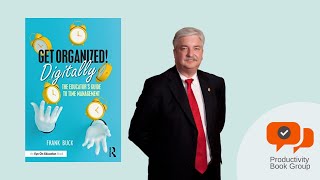
A Conversation with Dr. Frank Buck about his new book, Get Organized Digitally