Bringing your B2B community alive
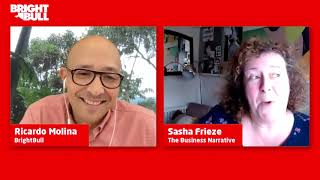
Ricardo Molina and Sacha Freese discuss how to activate B2B communities through engaged volunteers, distinctive visual branding, and authentic personal touches. They highlight using tools like Strava and casual video backdrops to build real connection in digital and hybrid events.
Chapters
Bringing that community alive, you essentially bring in the theme aspects that you've got. So before you would have had an understanding of what themes, what topics are being engaging within your community. Whether by the number of traffic, whether by the number of engagement, whatever metrics you use to understand how your community is engaging with that. But also we all know that within communities there are certain individuals that are like little characters within that community. Bring them with you on that journey because as you were highlighting, don't forget about the bubbles is amazing, passionate people around one thing. But more importantly, they're volunteers, they're volunteering their time. So essentially whatever community you have, even if it's a big professional community, B2B environment you're going to have, all these guys are engaging. That 1%, that 1% of engaged individuals should play an important role and enhance that role that they play and give them that platform so that they can then come alive as well. And then that way that's going to kind of bring in the rest of the audience to have that engagement. And I think some of those people are like engaging for me, I'm just using an example of the CREO group that we all belong to, Lee Gimpo, who is kind of one of these kind of. He participates a lot in all these discussions. He always write a lot of the stuff. I think there was one event where we all got together and he's just actually fun to watch, to listen to because it's just like wow, really, really energetic and that makes people happy. So bring in all those collaborators, bring in that, make sure that you capitalize on that 1% on the people that are engaged, all those guys around the theme and all that passion and bring in what you've established is the passion outside the themes around the community. Running is very pop. I know that like there's a big Strava group, for instance, with the events industry people. We're all kind of started posting this. So it's a big group of that music is actually an important one also when everyone for whatever reason decides to make it light hearted and they decide either to dress as they're in there like or they do a contest of backgrounds and that kind of livens up the environment that is going to be good. And I think that is such an important element because combining all those elements is crucial. One thing that I also wanted to highlight is color. Right. What I found amazing is that don't forget the bubbles being call it, you know, doctors. I'm not saying doctors are boring or anything like that, but it's it's very.
I wouldn't say that.
No, no, I wouldn't. No. Never, never, never know. I didn't want to say that. But it's just basically when you say, oh, membership, organization of practitioners doing certain things. So what I loved about this community aspect is that they use color on the website. They use color. Everything to me strike me as one of the key members that was live during the day. Have a really nice funky glasses. I love glasses. But it's just kind of changes that sort of environment. Even the color that you might put or that you decide to incorporate in your. Around this. I'm now looking at this zoom session that we're having and I'm just seeing you and me and a black screen around it. I'm like, how could you know, we need to bring more stuff into it. So I just really wanted to highlight those.
That's a really interesting point. Can I respond to that, Ricardo? Because I think, you know, the brand creative for a digital event, the visual identity is so important. You know, for an in person event, you know, we might be building stage sets and printing badges and you know, program guides and all sorts of things that actually, I mean the sustainability aspect of digital events is phenomenal. And so all of that is gone.
Right?
We don't have carpenters coming in and building a stage set. We're not printing lots of plastic stuff that's going to get ditched the next day. But we find that there is a huge amount of value in creating exactly, as you say, a really strong brand look and feel. And that's for a number of reasons. Of course, at the end of that delegate journey, the end of the lead time, when you come to the event, it looks like all the marketing and activity you saw. But also that is the immersive environment when you are bringing the brand to life. It's actually how it looks and feels. So what does that kind of hero image on the front page look like? What does the backdrop of the website look like? How do all the videos have that strong brand look and feel? There's a really interesting question about the video stage backdrops because you're right, zoom looks is black. And we are often working with clients where we'll create a video backdrop, you know, a stage backdrop and we'll design various different versions for one speaker and two speakers and slides in a speaker. But what's really important is that it, that it communicates that brand subtly but does not detract from the fact that what's really important is the speakers. But across the rest of the website, how the sessions and how the sponsor booths or other, you know, activities might look, that's phenomenally vital. And there's another.
Oh, yeah, go ahead session.
If I can just add one more thing, which is, you know, when you were talking about the Strava and everything, what I've re, You know, what have we all learned in the last year? I mean, like you, I've been doing this for longer than I care to admit, but, you know, decades. And so when I started out at Informa, you know, quite a long time ago now, you know, we thought of the delegates as, you know, these are insurance delegates. They are men in suits, these are finance delegates, These are men in suits and women in suits. We have this sense of our delegates and our market being other. And I think we've all felt this in recent years anyway. But I think the pandemic has really speeded this up, which is we want to speak to our participants as their authentic selves, not least because we've seen everybody in their home. In fact, here I am in my office, which no one ever used to see, but now everybody's seen it. And so speaking to people as their authentic selves, whether that is, you know, doing yoga sessions because that's what they really want or going for a run, or they love music. That's part of what makes it really engaging. All that stuff about who you might be at work is slightly stripped away. And you can. And that's what creates that emotional engagement that we've stripped away. The fact that I used to be an event professional who wore a suit when I was speaking at a conference, and now I'm Sacha Freese from the business narrative. And here I am in my home office, and you've all seen what it's like. And we want to take that really important emotional message and translate it into how we create our digital and hybrid events.
Yeah, Sasha, there's kind of three controversial aspects that we've talked about that I really, really want to hone in. Number one, most people are at this point in time struggling to foster engagement, connection within a live environment. Right. So it doesn't become death by everything. You've made a statement to me when we were having this chat. Whereas in fact, virtual is easier to foster that connection, to foster that engagement. And I really would like you to expand on that because I find that probably you're one of the first person that I've heard the comments saying, actually, it's easier. So tell us in one way that's Easier. I'm sure people today are going to value that. How is that easier? And why are lots of people, what are lots of people missing out? Where are they failing?
Look, I'm not sure it's about where people are failing, but I think, I would say in our experience, the complex digital and hybrid events that we've created respond to people's authentic selves and also to diverse, you know, to neurodiverse participants. So here's an example. I have a client who puts together, you know, who leads an incredible organization, puts together phenomenal events and they said to me, I really love all the fun of putting together the event, but actually when it gets to event day and I'm standing in that coffee hall and there's like a thousand people here, I actually feel a bit nervous. And I don't always love it. And I'm not the person who wants to go up to people and go, hello, I'm Sasha. Which I'm happy to do that. Thirty years of events, I'm always like introducing delegates. And so this client said to me, you know, obviously I did it, but I found it difficult. And what's interesting is that, you know, our in person events, you know, up until last year, increasingly respond to that Anyway, we'll have quiet rooms, we'll have closed captioning at live events because there's lots of different kinds of people. But this part is this client said to me, I actually really loved being in my home office and doing the speed networking and I. And I took more risks and I spoke to more people than I might have done at the in person event. And so the way in which I think it's easier to foster engagement is different kinds of people. So we've had feedback from people who've said, you know, I've got agoraphobia and I've actually not been able to go to this organisation's event for the last 10 years. I have loved it online. I can't thank you enough for the gift that you've given me. So I think opening up the event to a diversity of different kinds of people, the communication can be easier. Right. If I saw, I don't know, let's say Ros Oxley, I don't know if Ros Oxley, you know, a guru of the events industry who happened to be my first boss. So I would go up to her, but let's say I didn't know her, but I saw her at an event and I'm in my first job and I've been working for a couple of years. But what I'd really like to do is go up to Ros Oxley and say, hey, Ros, I'm so Sasha Fries. Nice to meet you. Am I going to do that in person? Some people might, but very many people won't. But I might. But I will send her a message on a digital event. I will click on her name and say, hey, Ros, nice to see you on this event. We did an event for a scientific community. One of the roundtables was around early career researchers. And so the big, big gurus who'd done the big stage presentations were sitting on something that looked like a Zoom call for 20 people. So there were or four gurus and a lot of early career researchers. And what was fascinating about that present, that session was that the younger researchers said, this is amazing. I would never have gone up to Janet Smith, who is on this roundtable now, and had a conversation with them. And even if I'd have been in a roundtable in person, I might have felt a little bit of reticence about reaching out. But there is something about doing this from the safety of my own home or office that has really fostered connections. And so in that particular roundtable, I saw a couple of these gurus saying, sure, get in touch with me. I'd love to know more about your research. Tell me what you're. So I think in that way that virtual engagement can be easier. And also the speed networking totally gives you the experience of the randomness of running into somebody by the bar and the coffee thing. And you can keep doing it, you know, every three minutes, however long you set it for, you know, so you can make very many connections.
More from Ricardo



Implementaciones de CRM - Medipiel: La omnicanalidad y mayor conexión con los departamentos



Implementaciones de CRM - La omnicanalidad y mayor conexión con los departamentos




