Building communities, rethinking B2B experiences for the post-pandemic era and more
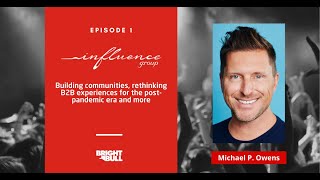
Michael Owens of Influence Group explains how the events company pivoted during the pandemic. Large virtual expos flopped, so they shifted to intimate roundtables of 10-12 people and curated sponsor participation. They're planning eight live events for fall while keeping digital programming active.
Questions this video answers
May 5, 2021.
About eight years ago (per Michael Owens in the interview).
March 1–3 (the last in-person event ran March 1 through March 3).
10–12 people per session.
Two-day virtual events, roughly three hours per day.
Chapters
Fat bottom girls. Probably it's not. Probably a kind of a proper. He's gonna put this one. Welcome, everybody. Welcome. Jp it's been a long time. Good to see you. Kevin, welcome. You're probably wondering what's that music is Mariachi Cinco de Mayo today. So we're going to celebrate with some tequila. Unfortunately, it's a little bit early for us, but we'll get in that spirit. Adam, good to see you here. Thank you. So we've just opened up the channels. We're waiting for a couple of minutes for people to join in and then we're gonna kick off the session. Thank you for your time. It's greatly appreciated. You're welcome to say hi in the chat panel. Let the rest of the other members know where you're logging in from. So where's my chat panel? Okie dokie. So we're listening to Queen in mariachi style recommendation from. From Michael. So let's just wait for another 30 seconds. So thank you everybody who's joined so far. We have started this online series of online community stories where I'm going to be interviewing and having honest chats with individuals that are one, in my opinion, through my research and through the work that I've done, doing a really good thing and which I hope is going to be inspiring for most of you. And I honestly think that I want to make sure that these are honest, candid, vulnerable conversations with when leaders that are in the same shoes as you are are doing something that is different, that is kind of trying to build strong communities. Okie dokie. So although I would like to continue listening to Son Mariachi, I much rather listen to Michael. So everybody, welcome to our online community stories. And I am very, very, very excited to welcome Michael Owens to the session. Michael, welcome.
How's it going, man?
How's everything?
I got my tequila.
Oh, you got your tequila?
Yeah. You said we were gonna be drinking this morning. That's the only reason I. That's the only reason why I agreed to do this, man. Come on, where's your bottle?
Okay, I'm gonna. A little bit early for us.
It's definitely a little too early. We should have scheduled this. I forgot that, you know, your audience is mostly in the uk. We could have done this in the afternoon if it was more US based and we really could have drank tequila. But maybe that's what's in my glass.
Oh, perfect. That's great. Excellent, Michael. So, Michael, welcome to our first episode of online community stories. I am really, really, really excited. So everybody I'm just going to give you a brief intro, but I'll let you introduce yourselves. Michael Owens is the CEO of the Influence Group, an organization that I have been following for many years. We have done some work together in the past and every kind of two, three months Michael and I have chats and understand about what's going on because Michael is an individual that I truly admire. I think he's a person that's an adventurepreneur as I call you, as I call them, that is constantly reviewing what's new, what's hot in the market. He's got a keen eye for detail, for making sure that things look fresh, sweet, nice and excellent. I really, really like the way that you present your business, the way that you present your brand. So I just really publicly wanted to congratulate you for that, Michael. I think the work that you've done over the years is amazing. So do you want to give us a brief intro on you, the story, how you started and then we could just delve into the session?
Sure, sure. Thanks Ricardo. And again, I've been a fan of the work that you've been doing and that's why we connected a long time ago. I am the co founder and managing partner. We don't use terms like CEO, we're pretty small flat organization. But we started about eight years ago and we produce what in the industry I guess is known as more of the hosted buyer format, live events. Well, that's what we did prior to the pandemic. Our niche is the built environment. We focus on all different building typologies from retail, restaurant, hospitality, healthcare, education. So we bring together buyers and sellers in those markets specifically around buildings, design, construction, real estate. So our format of events are three day experiential events that are, you know, very strong content. But of course the key driving factor are those connections bringing buyers and sellers together. So we've been, you know, had a really strong run up until the beginning of last year, but in that time we've actually reinvented our business. And of course, like a lot of people I guess that are listening right now, have found ways to engage our audience digitally. And I don't think I would have said this last year, but I think I would say now that we're definitely a stronger organization coming out of the pandemic than we were leading into it. And that's, you know, shocking and I'm pretty excited about where we're going now.
Good, Michael. So I guess that's kind of a very good start and I think Pretty much most of the majority, the majority of the kind of event organizers and majority of our community, of my community, people are engaged with, are organizing events traditional event format or exhibitions. Not so many have the one to one model. And so Michael, tell us a little bit about the situation when obviously you've organized series of events, 7, 8 per year. The pandemic hit of course, from my point of view, when I initially said, oh my God, if this is going to be affected, if this industry is going to be affected, the one to one model, people are going to be really in deep problems. So tell us about what happened, Michael, because the reason why I wanted to do what, what I wanted to highlight that is because you were kind of probably the first few individuals that started binging on online sessions, webinars, demos, everything, although you already were someone that was kind of very, very intrigued and inquisitive about new technology and everything to tell us what happened there and then what happened at that point.
Well, I mean, I'm not the only person here. I mean, I think that you can see, I think a lot of people in our industry joined the guild groups and the WhatsApp groups, really trying to figure out and understanding what can be done virtually or digitally. So like a lot of my peers out there, we basically dug into every platform out there, did a million demos, talked to as many people as possible. And to be honest, I never really engaged with the industry. You know, it's funny, we bring people together in our industries producing content and events, but I never spent a lot of time getting to know and connecting with people. So that was a, it was a great opportunity this past year to make a lot of great connections and learn and do that. And a testament to you, of course, you started running those roundtables last year, your Mastermind series. And we may have called our roundtable series that. I don't know, maybe I shouldn't admit that on tape. I don't know if, if you can sue me from Columbia to the States, I think I may be safe for a little bit on that one. But yeah, I mean, we basically tested out a lot of different things. Some things did not work, but I think that's the most important thing is that we really leaned in and we tried all different things. But back to your thing on the one on one format, that's the big, you know, that was the big thing. It's that it's, you know, if you're just a straight up conference organizer promoting content and you're taking marketing dollars, we are essentially most of the time dealing with heads of sales and national accounts. And those people pay us money to get in front of potential new business. So it's not as easy to deliver that digitally. And the only way to do that is to be really close to your audience. And we really, we were close to our audience and we thought we were closer. But I do think that in this past year, our team, everyone, and it's not just me, really leaned in, got closer to our audience. And because we were closer to our audience, we were able to figure out how to make things work digitally.
Okay, I think Michael, there's something really important. Many of the people that are actually at this point in time, live event organizers, they have to go into mitigation at the point where you have to tell your sponsors, we're going to go virtual, whatever that might be. At this point in time, everyone is now trying to see how they can tremendously add value to their audiences and to the sponsors in particular. With the one to one model, of course before with your live events, you booked your hotels, you invited people on your cost. So everyone attended. The end user attended free. So it was all about the sponsor. So the reason why I think this is going to be so valuable for the rest of the people out there is because you might have experienced ways in which you're going to be able to add value to your sponsors. We're going to talk about that a little bit later when there are some sponsors which are more suitable for the virtual model. Some aren't 100%. Yeah, but so it's interesting you say that you thought you were close to your audience, that you understood your audience well. But tell us a little bit more about it. How did you go about that and how did you got closer?
Well, I have to take it a step back. So you know, the history is myself and my partner Michael McCarthy and a number of people on our team have been working together for, you know, influence is eight years. But we worked together at a previous company we started and we've been in these markets for a very long time. So we do know our audience pretty well. You know, a lot of our sponsors and individuals that attend our events, you know, have become friends. So we're very, you know, close in the industries that we're in. So even if it's retail design and construction, healthcare design and construction, a lot of the sponsors overlap. So we are close to our audience. Even if we're only were doing one event per year. We did, we were doing content, you know, our blog was pretty active and Other things and we put out reports. But beyond that, you know, bringing people together, you know, physically or digitally, it was only physical. So last year when we, when it first, you know, when the pandemic first hit, luckily we were able to pull off only one event and literally it was on the eve, it was March 1st through the 3rd. And you know, then we realized that things were done. But we had an event in April that was supposed to take place. So like everybody else, we're like, can we move it online? Which we did. And we tried to do the one on one meeting format with pre scheduled meetings in advance and it was a disaster. It was a disaster mostly because the technology that we decided to use because it was a platform that was meant for live events that decided that they were going to layer virtual, it was half baked and that failed. But also in a live event, one on one meeting setting, you need to be there. You know, like there's, I don't want to say there's a gimmick, but there is. You know, you're giving people access to a venue for three days and stuff like that, they're there. You don't know if somebody's going to show up or not. And if you have a vendor on one end of that, you know, waiting on another end of a screen for a meeting and that doesn't take place, it's not, it's not a good feeling. So we quickly realized that the technology, at least from what we saw, was kind of half baked. But it wasn't just about the technology and trying to replicate what we, what we had done previously online. We went back and of course dug back into buyer Persona research. Right. We went out and typically it would be myself and the production team who would have those conversations, you know, our content team. But we unfortunately, like a lot of other companies, had to let go a good amount of our staff last, last April. And I'm not going to get into that, but as you can imagine, that was a very tough thing to do. But the team that we did keep, you know, our core team, we actually had them involved in actually reaching out and having those conversations and people in roles that were not traditionally doing that. And of course we gathered so much valuable information about what the customer actually wanted digitally, but also as a great opportunity for our team to even understand our audience better. So now it's like, you know, I speak to our people on our audience team, even in operations, and we're talking about getting back to live events, what we've been doing, and they're Just so more in tune with what our audience really, what their interests are. How do they want to be engaged by sponsors and salespeople? What do they want to do digitally versus in person? So I just feel that as an organization, we're a lot smarter about what our audience wants. And our audience now we're a lot closer to because we've been running these roundtables on a weekly basis to understand what their concerns are so we can spin off content really quickly. And they're looking to us as a resource. We're really helping them to be better in their careers, in their jobs. And really that's our. Why, like, that's what we serve, you know, that's the purpose that we serve. So I think that was a conversation. I think a lot of us eventual preneurs, as you like to say, had to realize is that, you know, we're not just. You either are an event company or you serve something. You serve a greater purpose, which is for us is to really connect and inform the industries that we serve. You know, it's not just through events.
Which is kind of very sometimes. And I was going to ask you, who do you refer to as your customer? Is that the vendor, the sponsor or the end user? Who's your customer?
So that's an interesting question, you know, if our sponsors are listening now, of course they're our customers, like they're our loyal customers. And without them we wouldn't be here. But I think they will all understand and respect that we always have to put the audience first, because if we don't put the audience first, they're not going to come. So the audience, of course, is the most important group that we need to focus on. And I think that's where some of the traditional event organizers, the trade shows, which is a dying thing we can get into that is that they're too focused on the legacy title sponsors and giving them their board. And that's why no one's going to show up to those things anymore. There was dying before that, but it's like a movie theater, you know, it's. Once people start realizing there's a better thing out there, there it's just going to be a stale thing of the past. And that's why that was our, you know, that was our motto. If you go on Influence group website right now, which unfortunately still needs to be updated to reflect our more diverse offerings, if you go to our event websites, it'll. It'll demonstrate that. But we say, like our tagline has always been the opposite of A trade show. And that resonates with everybody because no one ever goes to a trade show and walks away inspired or, you know, are feeling great. Yeah.
And Michael, I think I want to kind of touch a little bit more on the buyer Personas, because I know that everyone I speak to when I ask them the question, do you have a buy Personas? Do you have buyer Persona document? What do you. How far you've done? And the general answer is, yeah, we have the beginnings of that. We kind of have some of that. You did have some of that. Which we kind of did some work on that. Now, how it's. What does it really mean to properly have a buy Persona set up and you serve seven, eight different verticals? How much work is involved in that? Because I think that's something that many, many, many people in the industry do not pay enough attention to.
Yeah. So I'll give you credit for that. So. And for people tuning in, we started working with Ricardo. Well, let me tell the story. I mean, because this. This actually goes back into an audience and speaking to. To your tribe. Right. So I don't know when it was maybe five or six years ago, it went not too long after we actually started Influence Group. And I'm realizing that we needed to really shift direction on our marketing. And I was looking for ideas out there, and I stumbled upon something that you wrote on the Brightbull blog. And I read it and I forwarded to my partner, Mike, and we're like, oh, my God, this guy knows exactly the things that we've been talking about. And I read a few things more, and I. What did I do? I reached out to you. We had a call. Next thing you know, I met you in. In Boston at the inbound HubSpot conference. You somehow conned me into signing up with HubSpot. That's a conversation now. I'm joking. We're still on HubSpot. And it definitely. We wouldn't be where we are without it. But, you know, you were you at that point we started working with you. You got us on there, and we were pretty dismissive about the. We went through the exercise of doing the buyer Persona, but it didn't really click for me at that point because I felt that we knew our audience and things were going well, but especially now as we moved into digital and we had to go back and really understand that. Let's take one example. We're in the retail market. Retail is very diverse. We can have. And speaking to your UK audience, which I know is majority, you can Have Tesco, and then you can have the Boots alliance, and then you can have ExxonMobil and all these different ones that classify as retail. Those are totally different organizations. We had a lot of that kind of lumped together. So we really went down, not just by role, like head of real estate design, but we went by category. We really segmented our database and understood things and started our marketing and even creating specific things for those groups. We bring them together under one large umbrella. But when you get closer to them and give them things that they want that are really specific to their needs, we're just seeing a lot better engagement.
Right. So, Michael, what did you discover that you didn't? What was it that you discovered that you didn't, that you thought you knew, but you didn't know? I don't know if that made any sense, but is there anything particular and how did that influence what you are doing now digitally?
Well, last year, I mean, the one thing that we realized right away is that our audiences at least did not want to be sold to. So that was a tough thing to have to go back and explain to some of our sponsors, you know, that especially had signed up for a live event that they thought they were going to get in front of potential new business. So we had to change the conversation and say, look, it's not right now, but if you, you know, they're going to come down the line and be ready to buy again at some point. So we had to really change the model around. And not everybody was on board with that, but we did see a lot of our peers in the industry just kind of plow ahead with virtual events and, you know, virtual Expo halls and all this other stuff which they knew wasn't going to work. And, you know, we did try some of those things. We did do them. I'm not going to say that we didn't, but I think where we found success and where we kept going is that we're very open and honest with our, our sponsors and our audience that we were testing out new things. And it's kind of that, you know, that MVP model, that minimal, minimal viable product, is that you got to keep on test, you got to launch things, test them and keep on refining them. So what we landed on was, and this was based on the feedback that we got from our audience is that they're not really interested in showing up to a virtual event. They may tune in and check out the content probably on their own time. Especially when we were planning, we're having conversations in the summer for about where people were going to be last fall. So we put it out there, we promoted our sponsors, we got creative, had them create their own commercials and we tried to get them stage time, but not in a salesy way. But what really we found, what people really wanted was the ability to come together and really problem solve. So we went and found out the topics that were most important to our audiences. And we start our Mastermind series where each week we limit them to 10, 12 people. And we brought them together and where we realized at first was we said, all right, we can drop in a sponsor here and there. And that works sometimes if the sponsor could add value, if they're strategic. What we found out is that it doesn't work if it's somebody again that's looking for transactional, that's more product based. So we refined the product and we relaunched it and we only make it available to companies that we feel that can really bring something, not a salesperson, but can actually move the conversation along. And you know, we've been running, we just got our most recent survey results and it's been really favorable. And we've actually now been exposed to a lot of people that have never been to our live events. They're really excited to come back. So we're using that, these roundtables to, you know, of course engage people to want to come to the live event and obviously keep the community tighter. So.
So Michael, that must be a very hard pill to swallow when you, you live and then your growth comes as from your sponsors. So going into this sort of environment where you just basically probably are running predominantly these live events for, for the audience predominantly, not necessarily sponsored at some point in time. How long did that last and then how was that journey then?
Well, I'm sorry, can you. What do you mean?
How long were all of these sessions sponsored? Because when you said that you were thinking about bringing some of the sponsors, that means that probably you run some of these live sessions unsponsored or not sponsored.
Yeah, yeah, yeah. I mean, if it makes sense, we bring a sponsor in, but you know, it's not, that's not always the case. So I'll give a good example is we have a very strong our restaurant spaces audience. We bring together all the heads of design development from all the major restaurant chains. McDonald's, Chipotle, Taco Bell. We run, you know, for five weeks we were running weekly roundtables on the future of Drive Thrus. You know, there's some companies that are great fits that can help them out. But are really, you know, not that strategic. There are other ones that are. So we would drop in a sponsor, one of our strategic partners in there, and it's extremely valuable to the attendees. You know, if it's not going to add value to the conversation, we won't bring them in. But we of course have, you know, have a set of strategic sponsors that can add value and we brief them that it's not a sales opportunity, it's a thought leadership opportunity and it's more about moving the industry along.
I think that's kind of actually very, very interesting, Michael, because everyone now, the discussion around communities is about the value that you provide and how much can you stick with what your audience told you is what they want and how you can are going to figure things out. Because basically that happens when you're building communities. You might need to stick with it for three, six months. Churning content, putting value out of content. It's not about quantities, about the quality. We all know that. And that also reflects to sponsors. If it's a sponsor that is not really truly going to add that value, then you might as well have to not let him or them go, but just wait until there's the right opportunity to bring them along, right?
Oh, yeah. And look, I've been in this industry even prior to what we're doing now for 25 years and it takes a long, you know, it takes some, some ball sometimes to be able to tell a sponsor no. You know, and a lot of people don't do that. Especially in this past year, they're like, okay, let's do that. And I'm not going to say that sometimes we've made some, you know, some decisions that we regret looking back saying, you know, it's probably not the right thing for our audience. But I do believe coming out of this right now and you know, for, for our industry to, you know, especially to evolve that, that, that's really important. You really have to make sure that you're not taking the sponsor and running and putting them in front of the audience.
And by the way, I just really want to highlight something to the audience and whoever is listening or will be listening to this. It's not that Michael and the influence group decided to just then do roundtables and run with them. It's the fact that they have tried and tested pretty much every single option that they thought they had. Right? Am I right saying that, Michael?
Yeah. And we're doing webinars going back around.
360 again into deciding what the roundtables is. It's just basically Kevin was asking the question about beyond buyer seller meetings. Have you done anything peer to peer and beyond roundtables, enabling one to one peer meetings as part of communities you're building?
Yeah, so that's a good question. I mean peer to peer. I mean for example, this Friday we're running a roundtable for our higher education market which there's no vendors. It's just we're bringing universities together to talk about looking to the fall when office workers are coming back and how they can share things. So we're constantly just organizing things, bringing the audience together. Nothing to do with sponsors unless it makes sense for us to bring one in that can actually be useful or helpful. So we're doing another one next week where we have a sponsor that does AI and healthcare construction. We'll bring one of their technologists in there to talk to the group. But one to one meetings with peers? No, not necessarily. Unless someone's looking for a connection. I think the one thing that I would share about us and our model is we're very hands on our team. So the people that know us, whether it's attendees or our partners or sponsors, always reach out to us looking to make connections. Hey, do you know someone that does this and that? So I think that's something that's been part of our success is that our team is very hands on and we always make it known that look at us as a resource throughout the year where we can make connections. If you're looking obviously for a vendor, we want to be that person that can help them out. But also if you're looking for somebody that has experience working on a specific project again a lot of the stuff is construction and real estate base.
Yeah. And I think obviously let's move into or we have already moved into the area and the section, the what the your version of pivot, what it meant and now obviously you already said what it is and now how is that looking moving forward when we're getting into live events back in the fall and the autumn now what is now influence groups re. Rethought model for the post pandemic era.
Freak out because now we're trying to figure out what are we doing between digital. I mean that's the truth. And I see the question from Sean there like a planning hosting live events again. So we actually have eight events planned for this fall. So and that's our whole calendar which we used to have spread out across the year. So you know, next year you can do a webinar for me on burnout and alcoholism, you know, but no, but. So we do have eight events, but we're going to continue to do these roundtables. I think we're just going to continue to refine them. We're trying to, you know, we're not sure how often we're going to do them as live events get back and people do start getting more out, you know, just traveling again. And let's assume that here again in the States, I know things are different all over, but things are looking pretty positive for us right now based on the signups. And we've running regular surveys with our audience to kind of test how comfortable they feel about coming back to live events. But it's definitely a part. We're not going to go back and just go back to live events. No way. And we're investing now in our team to actually do a lot more digital stuff. So we're actually building out a little studio. We're going to launch a LinkedIn Live series that starts on the 16th, so a week from tomorrow. And we're pretty excited about that. And that's something that we're just doing just for the audience right now. We're going to try to figure out can we bring some sponsors in. But it's a 20 minute weekly show on LinkedIn for our restaurant audience where we. It's called Disrupt and we're going to interview some of the key disruptors in that market. And if that takes off, we're looking to do that in all the other markets and it's all just about showcasing kind of the true innovators in the spaces that we operate in.
So, Michael, I think it would be really interesting to kind of, if it's okay to outline your now your extended breadth of products or call it touch points with your community. So before you had your live events, amazing experiences, big names, amazing branding, amazing experience, high fives, chest bumps and all that stuff. Really good content. I think it's important to clarify. Michael has been one of those individuals that has always been committed to. If it's not really going to add value to his audiences, he's not going to write one blog a week. It has to be right, it has to be perfect. And I am witnessed. I've witnessed that before. So you had your content, your community, your blogs, your live events. How does that look like now? What's what you have, what is your. You call it your product offering in which you're having your touch points with the market and with your community. You're 365, essentially.
Yeah. That's a good question because I don't have the right answer for it. You know, our blogs has always been a thing where, you know, we put out written content. A lot of it prior to the pandemic was always okay. We would go into our live event. We actually would invest, I guess for people that are not familiar with what our live events are like, we do invest more than a traditional conference just from the staging, LED walls, a lot of lights, production wise, even if our events on average size are 250 people. So they're not large expos by any means, and that's by design, but they're high quality. And we would bring in of course some big name speakers, some entertainment. Our last event that we had, we had weezer performing for 300 people, Rivers Cuomo the lead singer doing acoustic set, and we had the CEO of Taco Bell. We have some pretty big names and it looks, we make it look sharp. So of course our bl. We then drip out that content with well produced videos. We put it up there, but that was mostly what our blog was. And then we do that for a few months after the event, kind of drip it out. And then of course leading up to the live event, we would write some original content. I don't know if we're going to do as much written content moving forward and I say that now and maybe I'll come back and regret saying that only because there's just a lot better people out there doing it. Right. You know, there's. I look at our restaurant industry, there's a lot of great news sources out there that break news and do really investigative journalism in there. So I think where we serve is really kind of connecting people and, and you know, we will put some stuff out here and there, but I think we're more leaning into the video content and connections, you know, just through our.
Roundtables, which by the way, to everyone in the audience, the fact that you're not putting a blog post or anything, that doesn't mean that a video or an interview like this or an interview, that's pretty damn good content, right?
Oh no, it is. And we're actually, and we're redoing all of our websites right now because like a lot of people, our websites are really built for live events. So we have, you know, we have an insight section. It's not called blog anymore, so we're calling it Insights, which will be a mix of written content and our video content. Yeah.
So I think for clarity purposes, you do still have the inside section. You obviously have your live event or you will have your live events in the fall, but you have now launched the Almost Live sessions, right?
Well, no, Almost Live was what we did in the fall. So our brands are retail spaces, health spaces, restaurant spaces. So we did restaurant spaces, Almost Live. So, you know, and we. It was a three day, you know, two day virtual event, three hours a day. And you know, it was what we did to bring the community together. I don't see us doing that again. Maybe, you know, if hopefully you don't have a reason to do that again. But we're kind of not really into the multi day or longer than one hour format.
So that was like the Almost Live was like almost your mitigation.
It definitely. Yeah, it was a mitigation thing, but it wasn't just that. So what we did was we worked with our companies and said, we're going to do the Almost Live. That was the content piece. So it taught. You know, we brought the key industry leaders together, we had presentations, some inspiring talks. We then ran. We had all of our sponsors create their own low budget commercials that we ran on the main screen instead of, you know, the virtual booth. So we tried to make it creative and fun. We then of course published the best commercials, like a Super Bowl. And we also then had our roundtable series that went with that as well. So that gave the sponsors ability to be part of the conversation. And we also did a number of webinars and we're still doing.
More from Ricardo



Implementaciones de CRM - Medipiel: La omnicanalidad y mayor conexión con los departamentos



Implementaciones de CRM - La omnicanalidad y mayor conexión con los departamentos




