Inbound Marketing Stories: Andrew Ferguson from BrainXchange
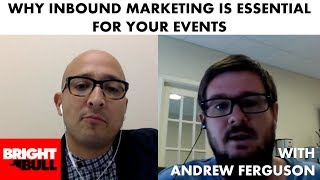
Conversation (YouTube interview) between Ricardo Molina (Brightbull) and Andrew Ferguson (co-founder, Brain Exchange) about Brain Exchange's decision to build the business on an inbound/content foundation. Key points: Brain Exchange is a small (≈5 people) boutique conference organizer running ~300–400 person enterprise-focused events. They began inbound about 12–18 months prior; invested heavily in CRM/marketing automation and content (paying more for those tools than office lease). They started with low-cost tools (JumpLead), later moved to Pardot (switched in January, saw results by February). Content creation is run in-house (Emily Friedman leads content). Building a content base takes time (≈6 months) before automation yields strong results; typical event-cycle metrics shared: ~200 inbound leads/week, ~15–20 qualified leads, close rate ~5–10% of qualified leads. Social (LinkedIn) is essential for niche B2B targeting. ROI is hard to attribute precisely, but inbound materially improves sponsor retention and pricing power.
Questions this video answers
About five people.
Approximately 300–400 attendees (intimate to mid-size).
About 12 to 18 months.
Tried JumpLead initially, trialed Marketo (found it unsuitable), and adopted Pardot.
About six months of trial and error to build content; Pardot produced visible results within ~1 month after switch (switched in January, saw results by February).
Chapters
Thanks.
Hello everyone. This is Ricardo Molina from Brightbull and today we have our first series of inbound marketing stories and I am joined by Andrew Ferguson from Brain Exchange. How you doing Andrew?
Hey Ricardo, doing great. Thanks for having me on here.
That's good, that's good. So Andrew is the co founder of Brain Exchange and they have started their inbound journey probably about 12 to 18 months ago. And I wanted to bring you to bring him in, in this particular session because I think there's a lot of organizations out there that are considering thinking of doing inbound or content or starting somewhere. But it will be worth kind of hearing the stories not from my point of view, but hearing it from your point of view. So I just appreciate, and I'm sure the audience will appreciate your views and thoughts about it. So do you want to introduce yourself and see what you do and what Brain Exchange does and the areas that you guys cover and then we can just kind of crack on with the interview?
Yeah, sure. So I'm one of the co founders of Brain Exchange and we're a boutique conference organizer. We're a team of about five people now and we specialize in organizing more the intimate to the mid size, you know, three, three to 400 person conferences in the emerging technology space. So companies like Caterpillar, PepsiCo, Coca Cola, Fortune 100 companies that are looking to educate themselves on how to leverage emerging technologies to improve their operations. And we're a conference organizer and kind of bring together those folks to kind of provide them a platform to share knowledge and network with each other and educate themselves.
Excellent. So, and I think obviously Andrew, we've, we've connected probably about 18 months ago when you guys were looking at launching your company, I think it was, was it 18 months ago, wasn't it?
Probably, yeah, it was about it. Yeah. Maybe, maybe even a little bit longer, I'm not sure. But yeah, we, we, my, my other colleague Jeffrey Friedman, who's the CEO and original founder of our company, had been following your blog for, for a number of months before we kind of put together a business plan. So that was like there really wasn't any other resource to go to that had valuable information. There was kind of some other blogs out there, but there wasn't real tangible takeaways. I think you still really only have the only place to go.
Appreciate it, Andrew. So I think on that note, I guess the first conversation that we had at that point in time was you guys wanted to launch your business with a pure content background, with a pure content foundation and you wanted to go inbound from the word go. Can you tell us a little bit more? Why did you decide, why did you decide to do it that way? And what do you see as the benefits of doing it that way?
We've, we've worked for some of the larger, you know, conference houses out there and we saw like the, you know, it was like the same old traditional style, like blast out an email, hope for the best, not really tracking anything. Some of the organizations didn't even use Salesforce, let alone use, you know, marketing automation. Actually, both of the companies I worked for and Jeff actually worked for three different companies and none of them had active blogs. No content really outside of the event. It's just like set up the event, get the agenda, and the conferences were decent, but there was no content around it. So in terms of actually getting attendees, getting sponsors, you know, adding value to all of those folks, it, it really just was near impossible. It was like, you know, it's kind of like click and pray. Whereas content, you know, we, we know, you know, an ongoing stream of content, getting people engaged with what you have to say and kind of your unique differentiators, you know, leads to them registering for a conference. You know, we, we've gotten to the point where most of our registrations actually trickle in from our blog, from our marketing automation, whether it's a drip campaign or customized attendee campaign that we run as a cadence, almost all of our registrations come in that way. There's a little bit of hand holding, a couple phone calls here and there, but it's a huge difference from when you're just calling somebody blindly and trying to figure out what they're doing, how they're relevant for the conference, not really having an insight into what they've been reading, what they've been checking out and things like that. Whereas if you have the content, you can see what they're consuming.
That's kind of very true. And I think at that point in time you obviously had to make your decisions within your budgeting, etc, etc. So what do you see as being the business case for, let's call it creating a community, call it creating content, or using content to drive event registrations. What were the. Or what's the thought process behind it and what do you see as the big deciding factor that would make a co founder or CEO or an MD of an events business to decide to go and go ahead for it?
Yeah, well, I guess in terms of budgeting, the overhead as a conference organizer as a whole is very low. Just in general, if you're not part of a publication and you, you know, your overhead is really human capital. So it's largely a human capital business. So you need to invest in the right people and you need to invest in enabling those right people with the right technology and the right solutions to have a meaningful conference. And content goes along with that. If you don't have the right content, then you can't really get those insights that you would need to get the right attendees. Because anybody can just throw together an event, send out 40,000 emails and hope for the best. But then you're not going to get the right people to your conferences. There's going to be people upset. It's just not going to be a high quality event.
Right? And when you're looking at kind of potentially setting a high investment, because let's just be honest, investing in content and investing in it should be your largest.
Investment as a conference organizer, in my opinion. And that's what we believe here. Your biggest investment should 100% be and content and, you know, creating that funnel, because then you no longer need a, you know, all these big conference companies use these big delegate sales teams and they're just pounding the phones away. You can kind of cut out like at least 80% of that by having the proper inbound channels, you know, and then only having a handful of those folks kind of just calling the right people. There's a lot of wasted time that are taking a lot more resources than it would if you just made the investment, which is a significant investment. We pay more in CRM and marketing automation, almost double than what we do in our office lease. So that just goes to show, like how important it is for us.
Okay, So I think obviously from your point of view, you've seen the value of it and then you decided to do it from the word go. So in essence, if you are going to, let's just make this assumption that business organizations or any other colleagues at a conference for conference professionals, you speak to someone in the networking event or anything like that, and some other CEO or some counterpart says to you, what would be the three key things that you need to consider before jumping into this journey? What would you say?
I think the number one thing is you have to have the content. You know, there's no sense in having a marketing automation system or even putting together an inbound plan without content. You know, you got to get your, your blog going or what. However you're getting that content out there, you need to have that content and build a content plan. First and it needs to be consistent. You know, you don't want to lose people by doing one blog post and then not doing another. Like three months, until three months later, you're gonna, you're never gonna have a steady flow of people. So getting that content plan in places is the number one thing. And you know, maybe building a newsletter to kind of start getting subscriptions, some, something along those lines and then try to think about, okay, how can I take this information, this small, maybe newsletter list and kind of figure out the best plan, you know, the best way to kind of engage with those folks before you even think about a marketing automation. Because, you know, it's really not that powerful until you have that content and then you have that network of people to market to. I don't know if I. That's probably the number one. And then number two is I guess doing your homework. When you are ready to go to kind of like the marketing automation stage, whether it's Par Dot, Marketo, HubSpot, whatever it might be, is actually laying out a plan for your marketing automation. So your drip campaigns, how do you want those to work? What emails do you want? Which people do you get want, getting what emails at what time, what frequency? And there's a lot of trial and error. Definitely can't be scared to kind of try different things. And then number three, I guess is, you know, making sure that you have the person in house dedicated to it. You know, without the one person really dedicated to this, not working on 15 conferences at a time, but maybe really focusing on keeping these things organized and then managing the back end of the.
System, I think that's fine. So I think just to summarize is having the right content structure, right? Having the right content structure, knowing exactly how you're going to write that content. The, the other aspect was building your funnel and knowing exactly how you're going to, how is that going to work out at the top, middle, at the bottom of the funnel? Building drip campaigns and having the right person, right?
Yeah, absolutely.
And then I think, I think you've mentioned something very interesting which kind of is part of key of your story. So before making a decision on what platform you're going to be using, because you have to go through certain motions. But actually, is that possible? Do you think inbound marketing or content marketing can be done without a system, without a tool.
Without any tool? No, not really, I don't think. But there are cheap enough tools to get your feet wet like I used. I think it was called jump lead for about six Months, very inexpensive. And I could get a feel for how drip campaigns might work and at least see the reporting of all of our blog posts and kind of tracking, you know, like the movements of our visitors, seeing how they're consuming content, you know, getting a feel for that was essential to kind of building out our content plan. So having something, yeah, I think you can even do it for free to start, so you can just play around with it and just get your feet wet with how one of these systems works. I think that, like, if I had I not done that, I probably would have made a lot more mistakes. Right.
Because I think obviously you've. There's. There's obviously five key leaders in the industry which, you know, we've got content to share that. I'll probably share it in the notes about who they are. But then you. The initial decision that you have for going to jump as a jump lead, was it because of the budget, Was it because of financial. Because it was too expensive and the cost of onboarding or why did you decide to go for a cheaper version and not kind of because I think now you are on Parda.
Yeah, we're on Pardot now. I didn't want to like the, I guess the initial investment for one of those five major systems, you're talking 100 hours just to get set up your own kind of work and you're talking 10,000 plus commitment up front to kind of get, you know, get those price breaks that you need in terms of your contracting with them. You know, contracts are a nightmare with any of those companies. Right. And that's part. I included, even though we love the service. So I just wasn't gonna do that before. I just played around with everything and, and I was glad I did because I kind of narrowed it down to, you know, two of the two companies that I wanted to go with. The first one was Marketo, which was a complete disaster, but. And eventually landed with Pardot. And it was great.
Right. Just out of interest, why was it a disaster? And this is not kind of obviously, I don't know why. What do you think was a disaster?
Because I didn't have the capability like coding wise to. It wasn't simple setup. It was a pain in the butt to get the plugins for Salesforce to work. Well, it just a setup process and they have their own unique code that you have to use for landing pages, for emails. So it's almost like learning a whole new code code structure for setting up everything. So it was just, you know, it wasn't the Right solution for us being a small, nimble team and none of us are complete experts on web design and things like that, so we would have had to outsource all of that.
I see. That's kind of interesting to learn because I think there are some other solutions which kind of provide a better answer. But the conversation on this particular interview is not about solutions. It's not about everything. It's just about you as an individual, you as the owner of an event business, and how are you going to be able to get those delegates through the door? So 18 months down the line, after doing content, after doing inbound, after building the funnel, what are your learnings and how fast do you think from your experience you can start getting results from it? So I guess it's probably two questions. How fast do you think getting this engine up and running, if you're doing it yourself is going to take you and then what will be your three learnings as a secondary question on that follow up?
Well, once you have the content set up like that, you know, we saw instant results. Like just to give you an example, we switched over to Pardot in January. We had results by February, but we already had content in place. So we had things to use in our kind of cadence emails and our drip campaigns. So we had all that content ready to go. It's just with Pardot, we could, we could do the automation in a way that we were able to instantly see results. You know, we were getting delegate registrations immediately and a significant ROI difference over just personalized reaching out, you know, individually, like calling, emailing, you know, the normal kind of sales cycle without a marketing automation system. We were achieving that on crazy scale, you know, like tens of thousands of people at a time versus, you know, what, what can one salesperson do in a week? You know, maybe, you know, three, 400 touch points per week, something like that. Right. Automation system set up. Right. You're talking, you know, very targeted. Same, same kind of process to the masses.
Right, right. And just kind of. Andrew, on, on that specific note, so obviously this is not about. Part of, this is not about the systems. But like, what I'm really trying to kind of aim to share with the rest of the community is how long before Pardo, obviously you kicked off with jump lead or with your previous system, but setting this content campaign, how long do you think it took you before you created the content and started putting it.
Yeah, at least six months for us anyways. That's. I mean, there was a lot of things we didn't really know where to begin when we started, you know, we're just going based off of our research and our experience working for other conference companies and what we thought best. So a lot of trial, you need at least six months trial and error.
And then to decide of that. And again, once you, once you went onto your new system that you already had that content that you could repurpose and start doing all, all the things and just. Do you, do you, did you do the content yourself or you've hired? I mean, there's.
Because we do everything internally, ourselves, outside of like website styling, you know, front end and back end design, everything we do in house.
So, so managing your inbound process, writing.
Yeah, everything.
Your inbound process. You. Is you another member of the team, I guess, creating the content? And is there anyone else?
Yes, my colleague, Emily Friedman. She kind of heads up all the content and marketing. So she creates all the content and then I, I, along with, you know, all of us kind of have a hand in everything. You know, we always, you know, very open office, kind of discussing ideas out loud. But she definitely creates all the content. She's the one kind of heads down right into the industry and becoming that expert per se in the industry. You know, almost similar to like what a conference producer would do, but more from a marketing perspective.
I see that was the point because a lot of, a lot of the, A lot of the event professionals, the question is always, should the producer write the content or should the marketing write the content? What would you, what would be your answer to that?
That really depends on the person, the individual and what their capabilities are and what their expertises are. But I think it's a collaboration for sure. You know, a marketer is going to write in a different way than a producer will. But in terms of, you know, how a conference company works, I think it's important for everyone on the team to have done and know how to do every role, from delegate sales to sponsorships to producing to marketing. Everyone has to have at least the, you know, the capability to do the basics of everything. So I guess that the easiest answer to that is you got to be set up right from the ground up as a company. In my opinion, you can't have a successful delegate salesperson that doesn't understand other components of a conference.
Right, right, right, right.
You can make it work, but then you're just going to stay being a transactional company.
So what, I guess, I guess in your specific case, Emily, she's not a producer. She is just the, she's a content. She could Produce this content that with the main aim to engage your community. Is that right?
Exactly. But you know, in, in her onboarding when we first started the company, Jeff and I trained her on all aspects of every role in a complex company. So, you know, I think that's, that's probably a huge gap for, for a larger company to overcome because they're hiring producers, they're hiring salespeople, training them as that one position. So I think that's where kind of the issue comes in. Like, I'm just thinking about one of my, the companies I worked for before. It would be impossible to implement something like this because of the structure of the company. Right. You know, you would have to, you know, go back and kind of retrain everybody.
So in a way, again, that's kind of what normally tends to happen with organizations that are larger. They always think, okay, where is the responsibility? Should we give the responsibility to producers? Should we give the responsibility to the marketeer? And I think some of the arguments, certainly from what I've seen is exactly as you've mentioned it.
Yeah, it's a problem.
You have to restructure it. And what I always say is you have to have one person writing content that's period. They have to stop producing, they have to stop doing the 20 conferences that they have to market. They have to produce that specific content. They need to have an idea of marketing, they need to have an understanding of the buyer of who's going to attend the event and then work in conjunction, which ultimately means hiring an extra person or shifting roles internally, which I guess that's kind of what you and I understand. What's the roadblocks?
Yeah, no, that's definitely the roadblock for the bigger companies, which is weird because we're a small organization. If we can afford to, you know, afford a salary and everything that go, you know, all the overhead that goes along with having only a writer, you know, that's, that's Emily's full, full time job is writing. If we can afford it. That's, that's ridiculous that a bigger company couldn't afford it.
Right, right. So, and I think I am conscious of the time and I'm respectful of it. So what I guess the ultimate question, just two questions which I hope are not unfair on you, but what, what would you say? What is the roi? What is the return on investment on inbound and what is the return on investment on writing content? And this is content that is not about your conference. It's content that is written to engage your individuals. What is the roi. And how would you measure that? And in your case, how you measure.
It, it's really difficult to measure. I don't care what tool you have in place. It's very difficult to know exactly what that person's first touch point was, because they could have read something on somebody else's website and then ended up on your website. So the true ROI really is something that you, I guess you can't. It's important. You know, we calculate in our reports where everybody comes from, from what we can track. But we also, in the back of our minds, we realize there's a number of different touch points that add value to the campaign that you might not necessarily have control over tracking. So it's tough to give, like, exact metrics, really, just focusing more on the overall ROI of an event versus the overall ROI of an event. If we didn't have these things in place. I see. And there's. It's. It's not even comparison. As a small, very flexible company, we. We wouldn't be able to survive without a, you know, structure like this.
Right, right. Do you. But I mean, do you use, like, for instance, do you use. You measure the number of leads that you generate on a monthly basis or anything?
You know, we go even more narrow than that. You know, total numbers don't mean anything. It's only the right people that matter to us. So when we're in an event cycle, you know, let's say starting six months out from an event, leading all the way leading up to the event, we'll average about 200 inbound leads per week. And, you know, out of those, there's maybe 15 or 20 true leads. And then out of those 15 or 20 true leads, you're gonna, you know, close maybe 5 to 10% of those.
Right.
So, you know, if you're getting a handful of delegates a week, you know, you're. You're getting a good kind of, you know, audience at that point. I don't have this specific metrics right in front of me right now. Maybe I'm not prepared.
It's not the intention.
We definitely track all that. I just don't weigh a lot of. I don't make too many decisions strictly based on that, I guess. All right.
On those specific metrics, and I guess it's because of the size of your team. You're already communicating. You already know exactly. And obviously you are very submerged in the whole process. So you are, I guess you know exactly what's happening. And I guess the final one, Andrew, before I let you go Is so the traditional events professional, the traditional leader normally kind of says, social media does not work, content does not work. That's a whole lot of rubbish. What, what, what's your view on that?
That's ridiculous. And, and that train of thought is why I'm able to charge double and triple what some of these other companies are in, both attendance fees and sponsorship fees. Because I can offer on, on a unique group that only has their buyers, you know, strictly, you know, kind of targeted for, for our sponsors, you know, customers. We can put a featured post on there, and that allows me to charge a couple extra thousand dollars on a sponsorship and that's something tangible that they can see a result on. You know, without any of this in place, I don't, I don't have anything to show my sponsors. Just like, did you have a good time at the event? Okay, great. We're going to increase it 10% next year. Whereas now I can go back to them and be like, well, this blog post did this. This did this. This did this. So are these things you want to keep doing, you know, and actually show them the results? You know, there's, there's no more, like, question about whether it was valuable or not. It was, it's right there in front of them. So you don't have that, that churn of having to get new sponsors every conference, you know, instead of, I think most of the bigger conferences try to try to get 50% of their sponsors back every year. You know, this will enable you to keep 80, 90% of them because if you have the right sponsor, there's no. And all of these things in place. There's no way to, to not provide value.
That's good. And what about social media?
Does it work 100%? We wouldn't, we wouldn't survive without social media. We, you know, LinkedIn alone, you know, we're doing very niche, very targeted conference right now, you know, focusing on the enterprise use of wearables. And we wouldn't be able to identify these folks without social media. You can Google all you want, you cannot find these people. You can't buy a list, you can't do anything. You have to, you know, hand pick and get in front of them through LinkedIn. Whether it's a posting, whether it's a group, you wouldn't be able to survive without LinkedIn for a B2B conference. In terms of maintaining the price points that we have and quality, that's good.
Well, I think, Andrew, that's a lot of information and I do really, really appreciate your input on it. Just actually a specific disclaimer. I mean, Andrew is not one of my clients yet. We just have a good relationship. And then we've had a lot of these sort of conversations over the phone over the months. And then I thought that since that's what inspired me starting these inbound marketing stories just to get the word out and to have people like you sharing the stories with other events professionals. Because I think one of the biggest aspects that I think I am always highlighting to the events professionally is that is that you have to start somewhere. You have to start soon. Because by the time you start having your results, by the time you're going to start, it's going to be almost a year and you better get going because people like you at this point in time are like a new organization, flexible. You have at this point in time, 18 months advantage in the learning curve that other people have. So. And I think it's an aspect of, and I don't know if you agree with me, that is an aspect of working towards getting the results that you really want first as opposed to waiting until you have the resources in terms of staff or team because you're constantly hiring and things are kind of very unpredictable when you kind of expect on human capital. Would you agree with that?
100%.
100%.
There's no excuse, zero excuse for any company in the world to not think about this and start implementing right away.
Yeah. So thank you very much, Andrew. I'm going to put all your websites link on the notes for this post and I really, really appreciate your time and yeah. Till we speak again.
No problem. Sounds good. Have a good one.
Ricardo. It's okay.
More from Ricardo



Implementaciones de CRM - Medipiel: La omnicanalidad y mayor conexión con los departamentos



Implementaciones de CRM - La omnicanalidad y mayor conexión con los departamentos




