Inbound Marketing Stories: Kelvin Newman from Rough Agenda
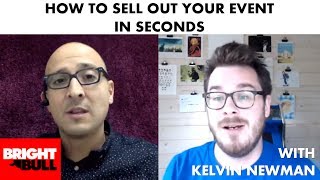
Interview with Kelvin Newman, founder/MD of Rough Agenda and organizer of Brighton SEO. He recounts how a grassroots meetup in a pub scaled into a twice-yearly two-day conference (Brighton SEO) that now attracts ~3,500 attendees and sells free tickets rapidly (recent free release sold out in ~13 minutes). Rough Agenda runs a freemium-style model: most tickets are free (about 500 paid tickets for premium/training at £50–70), revenue splits roughly between ticketing and sponsorship, and the business emphasizes product quality, scarcity, community ownership, personal email tone, social (Twitter) and remarketing. Technology/tools mentioned: Eventbrite for ticketing, Mailchimp for email, Google Analytics, WordPress site, Google Forms/Docs for operations. Main growth drivers: strong product (quality programming), scarcity, community involvement (private Facebook group, meetups), personalized email marketing, cross-posting/guest content, and lightweight tech stack.
Questions this video answers
Twice a year (two events per year).
About 3,500 attendees (Brighton Centre venue).
Free tickets sold out in just over 13 minutes (previous smaller release noted sold out in 60 seconds at 1,700 capacity).
Two-day event; roughly 500 paid tickets (VIP/training) priced around £50–£70.
Chapters
Okay, welcome everybody. Welcome to the inbound marketing story sessions from brightpub. Today we have Kelvin Newman from Brighton SEO and the company that owns that organ. That event is called Rough Agenda. So Kelvin, I'll probably let you introduce yourself and you tell us a little bit about the story about you, who you are, what you do, and then we can kind of crack on with it.
Yeah, yeah, definitely. Yep. So, yeah, as you said, my name is Kelvin Newman. I'm the founder and managing director of an organization called Rough Agenda. We're an events business that specialize in events for the digital marketing industry. Now, as a company, we've kind of got one main event. There's a couple of other ones that we organize as well, but the most exciting and largest scale of those is one called Brighton SEO. And Brighton SEO takes place twice a year. The Brighton Centre is our current venue attended by three and a half thousand people from all over the uk, all over Europe, all of whom are interested in learning more about the process of search engine optimization. So how businesses and organizations can do better on the search engines to get more traffic to their website. And you know, it's kind of a marketing discipline that's kind of got quite a performance and sort of measurement led marketing discipline and it's kind of got an interesting story. So it started out as a couple of dozen people meeting in an upstairs room of a pub. We have room for about 20 and a few more than that showed up. So we booked a bigger venue that had room for 100 and 120 people showed up and we just kept increasing the size of the venue over time. So we've been at the venue called the Brighton Dome for a number of years and last April we were there with our 1700 attendees. Tickets sold out in 60 seconds. So at that point we doubled the size. So we moved in September, so just over a month ago to the Brighton center and that held three and a half thousand people. And again, it's an interesting business model which I think might have some kind of connections when we start to talk about how we've marketed that. But so yeah, the free tickets to that event sold out in just over 13 minutes. And yeah, it did very, very well. Trended on Twitter when we released the tickets, when we hosted the event as well.
Sorry, Kelvin, I think we've, I don't know if it was me, but I think we've lost about 15 seconds of, or 10 seconds of your voice of what you've said last. Okay, do you mind repeating that?
Yeah, yeah. Can you hear me? All okay, now just say, is that all right?
I can hear you now.
Fantastic. Well, yeah, I'll do that intro again. So yeah, my name is Kelvin Newman, I'm a SEO by trade. So I've worked in the industry of getting businesses to do better on Google and the other search engines. And it's kind of a mixture of digital marketing, pr, web development and all of those kind of things combined. And yeah, arrange an event called Brighton SEO. So that takes place twice a year, most recent one, three and a half thousand attendees. It's a two day event. Some of the tickets are paid for, some of the tickets are free, but the free element and those free tickets when released and 3500 went in 13 minutes. And yeah, it's kind of growing from a few people meeting an upstairs room with a pub, a couple of dozen people, to this kind of very large scale event where the most recent one we did in September is potentially, depending how you define it, probably the biggest search marketing conference in the world, which is kind of huge really. And it started from quite humble beginnings. And I suppose what may be interesting in the context of the conversation we're going to have today is those tickets sell out very, very quickly. We trend on Twitter when we release the tickets, when we host the event. And yeah, it's kind of a very interesting business model and kind of, you know, our marketing is a big part of why we've been successful as an event, I think.
Excellent. So I think, you know, that's the reason why I've been excited to speak to you about that specific session. Because it's like the marketing nirvana for an MD or a CEO of an event business. How can we have a massive event that gets sold out in such a short period of time? So I guess let's kind of start with the, with the very beginning, which is, okay, how does an event that starts with a gathering in a pub becomes the biggest SEO event in the uk? And was it intended to become that way or did you follow a specific process?
How did it happen? Yeah, my background isn't in event management. I've been involved in events like particularly university and stuff like that. I was involved in student radio, music and gigs and DJing events and stuff like that. Certainly kind of had an interest in events prior to that and certainly before going to university. Was quite interested in actually becoming an event manager, but ended up becoming a digital marketing manager. And the event has, it's kind of a mixture. So initially there was no intention of kind of becoming a, you know, a regular event the story kind of goes that actually was a few people who met in a pub. We had, well, one of the things is that we had a hashtag for, we had a website, you know, we had a, you know, hashtag before we had a business. You know, it was kind of like a hashtag that people used who worked in, you know, in SEO in Brighton to talk about kind of what they did and talk about kind of going out to the pub. So yeah, the, you know, pre Brighton SEO, there was kind of events where people would get together who did the job that we do and kind of, you know, meet after work and have a bit of a chat. We kind of, you know, that first event was entirely around, well, how do we get these group of people together and you know, spend more time in the pub? To be brutally honest, in that very first event and you know, we quickly found over time that, you know, the talks that we were doing, the events that we were programming were quite popular. So that became a sort of like a side project in my current job, you know, in the job I had at the time and eventually became kind of a full time business. And certainly we've, we've got ambitions and we had ambitions to continue to grow, but it wasn't kind of like, I think a lot of events sort of jump in at a very high level and kind of go, here's what we want to achieve. Whereas we kind of tested the ground quite a bit early on and actually, although perhaps not by intention, kind of found a bit of a formula that worked and then scaled that formula up rather than kind of jumping straight in with where we would have been. And I think if at that point in time, if someone said to me, you know, host an event for three and a half thousand SEOs before we'd done the first event, we would have approached it in a very different way if indeed I would have even thought that that was possible for us to do.
Oh, of course. And then obviously you talked about the aspect of let's call it a social gathering. And I guess at that point in time, I assume you didn't charge for all the attendees. I guess you drunk a lot of beer. Was that sponsored at that time? And then from what point in time that social gathering and when you say it became a business, how long did that.
Well, I think probably after the third or fourth one, it started to become reasonably serious. The third. You know, actually when there's like 25 people meeting in a pub, it's not actually a huge outlay. Right. Kind of like it's a big round for someone to buy, but it's, you know, not an impossible one to do. So initially it was kind of very much kind of a couple hundred quid here and there. I'm certainly not bearing in mind that the time that was involved, but certainly kind of the costs were quite low. And quite quickly it became apparent that, okay, there's people who are interested in supporting the event. And when it was kind of very small scale like that, it was literally a case of asking friends who ran businesses who were attendees or, you know, kind of were interested in the space, have you got a few hundred quid that you could spare to put behind a bar or to. To hire this venue that we've got? And yeah, and then kind of from there when, okay, there's obviously, you know, once you're starting to, you know, I think the point in time when we got like 300 people along for a full day event with a couple of sponsors, all of whom had put in a couple of grand each, you know, it then became apparent that, okay, there's obviously something here and, you know, we were quite keen to adapt that. Still, most our tickets are free. So, you know, of the three and a half thousand attendees we would get on the day, probably about 500 of those are paid for, varying from like 50 to 70 quid for kind of our VIP versions of the free ticket to other people who paid for training. That's more like 500.
Okay, so that's kind of an interesting story because as you said, most of them are free and some individuals pay. And you've talked about earlier about the people that are like a formula or the model that fits it. Are you, are you able to share a little bit about, at a high level what that model is or what that formula is that you think it works?
Yeah, we're kind of. The business is kind of fairly, you know, not unusual, kind of, you know, 50%, you know, gross margin, you know, 20 net kind of model. You know, that's kind of where. Where we are in the business model. And the revenue itself is 50, 50 split. It varies over time roughly between a kind of 50 ticket sales, 50% sponsorship, and, you know, kind of probably margin wise, we probably make a bit more from the, you know, the training, ticket sales part of it, which is kind of like the day one, but certainly the kind of the two work together. And we've often kind of thought of it as almost like a freemium business, you know, like Spotify or, you know, Skype, you know, any of those types of business where there's an element of the proposition of the product that works very, very well for free, which can be funded by sponsorship, and then an additional element that's funded in a kind of more transactional way. And kind of actually a big part of our marketing has been is that kind of like, you know, it's very easy for us to get the people to come in as the free attendees, and then we kind of build trust, build credibility, that they're then able to kind of invest further down the line in different types of tickets or different types of kind of involvement in the event.
I see that that's kind of pretty. Pretty interesting because a lot of organizations right now are the concept of freemium, and whether they want it or not, they might intend to charge at the very beginning, and they don't charge because obviously they need to fulfill sponsorship needs and everything. So on the aspect of. I guess, very interested on that part. Now let's just kind of talk a little bit more now on the aspects of marketing that. Of marketing that event. And how does. How does one. Or how would the marketing director of an event that wants to grow it, or what would you say are, like, the tips and the ways in which you've managed to create a marketing strategy or a plan or a following community, however you want to call it, to just attract that level and actually be sold out. And how does that work? How did you get there?
Yeah, so, yeah, I mean, I think we talked a lot there that maybe might initially not seem about marketing batch. I think it is because, you know, and it's a lot of it's to do with product. So I think, you know, kind of, if you talk about, like, you know, well, I'm a big iPhone and, you know, all those kind of users, big fan of them. Why they. What. How does their marketing work? Well, their marketing works because they've got a product that they're confident in. So I think that's not to be underestimated. But certainly there's a lot that we've done around the marketing, you know, kind of the. The tactical marketing that I think work quite well. You know, we rely heavily on email, but we do it in some relatively interesting ways. So they're kind of far more offered. They don't. We try and make them look like a real email, you know, like for an ideal intention for me, is like, it not look like a marketing email. You know, we will occasionally do something more conventional, but it's sent from me right from my real email address. It's not A no reply kind of, you know, generic company who's nobody. So we try and make the event seem like personally authored. Do you know what I mean? That there's kind of a person behind this. And I think that's good in terms of. Because it can be interesting when things are challenging around the event and is very closely associated with one person. But I don't mean that's a bad idea. So we do a lot of email marketing, again, about frequency, again about kind of having a tone of voice that's distinct, original and relevant to our audience. So we're quite irreverent. You know, we kind of accept that we're kind of, you know, playing a bit with a format. We do things like, you know, put pss and kind of hide messages in our emails and all that sort of stuff. So that was very, very. Well, social is huge for us, particularly Twitter. You know, like I said, we had a hashtag before we had an event. You know, there's things like we keep a consistent hashtag. People are using it throughout the year to talk about the event. It's very, very important for us as well. But kind of we do things like scarcity. So, you know, an event we were at recently, we're talking about this. I think, you know, so many events have no scarcity, right? So you know that as a attendee or as a sponsor, that the later you leave it, you're always going to get a ticket, you're always going to get a stand, you're always going to get a sponsor and actually in many cases you might get it cheaper, right? So, you know, like my kind of advice that often if I'm going to pay for event, I wait until a week beforehand and go, you know, any tickets left? And of course there's tickets left. Is that any deal that you can do? Of course there's a deal that they're going to do because they're desperate to get a couple more people through the door to make them break even or hit the profit target that they're going to do. Whereas ours is quite different, right? Tickets are sold out, right? We hold a few back. You know, there's tickets that are available, but you know, there's, there's points where there are genuine people who are amazing brands, amazing attendees who would love to have at the event. We have to say no, right? Because we just don't have the space. But that's good, right? Because that no means that next time they definitely want to be there, right? That, you know, it's, you know, there's there's a, there's a. And that also really helps with this perception of like a free event. Free event. People would think, well, I'm not paying for it, therefore it's going to be rubbish. I'll go because it's useful, I'll see my friends, I'll learn a bit. But it has no value. The reason it's free is because I couldn't charge for it. We could and we do, but it's free. And, but because it's scarce, you feel like you're getting something that's, that's hard to get hold of. And I think so much you look at a lot of successful businesses and successful products that are marketed, they're scarce or hard to get hold of initially. That allows them to kind of build a story. And you talk about the fact that you got a ticket or when other people missed out or you got that product or you queued up for it. It's all part of that same story.
I have to say I really love the tone of voice of your emails, the way your websites look, the way that tongue in cheek and, and again, obviously you're targeting developers, you're targeting marketers, you're targeting the creative types and that resonates a lot. But I really think that's kind of a key differentiator that you guys have, which I love, by the way. So let's just kind of touch a little bit on that. So you just. Basically everybody your community is expecting that Brighton SEO is going to take place at two specific key dates. You say, okay, registrations are open two hours, whatever amount of time tickets are sold out. So what that means sold out is that free places that are the free places are no longer available. So if someone has, touching on that aspect that you've said no to someone, how do you, I guess, do you really mean no to someone? Or do they.
Or can they usually some way that they can pay their way in. So it's either they could buy a VIP ticket, but even in some cases those are sold out. So we've had situations where our paid for tickets are sold out and that's because there is a number there and they sell out, but kind of certainly there's a situation whereby some of the tickets are sold out. They're still a way in there, but we're not huge fans of this kind of a couple of days before the event, begging desperately to get additional people to attend. Even if I think it's, you know, much, if you think you could get a thousand people there Book a venue for 750. Right. I just, you know, like you might lose a bit of revenue that first time round or you lose a bit of margin the first time round, but I think next time you'll be so good. Right. Because you might have had 100 people who couldn't attend. Now suddenly they're actually going to book earlier because, you know, so much of, you know, this has been a learning curve for me as an event organizer is how key cash flow is. So getting people to book early is kind of getting sponsors to confirm early again. And that's another one. We've sold out exhibition stands on occasion. Right. That's not a bad outcome for us. Right. Because when you're trying to tie someone down, they'll do it sooner, which is always good and always helpful from a business cash flow perspective as well.
Okay, so that's kind of an interesting scenario. So people expect you, you have a Twitter following, it's massive following. So everyone's having those conversations there. So keeping that Twitter community engaged as part of one of your tactics or what you've used email marketing, again, that's fundamental. Okay, so this is the situation. So if you, it sounds like when the event goes live, you get, you get basically sold out. So does that mean your email marketing decreases or is it free? Sign up, post sign up, how does that work? Do you.
But it's almost important that you have phases our marketing. So there's the big like. So actually I'll talk you through how what we're planning now, right. So we've just been out of the event. We're a month on from the event now. So we've got our next event and because of how they fall and we're twice a year, there's actually a bigger gap this time. So we've got a bit more breathing space.
Okay.
But this Friday we're announcing the speaker lineup and the dates. The dates are already on the website. But like most people haven't checked the website since we've updated the dates. So we'll do a big push on email and social about. Here's what the dates, here's who the speakers are and here are when you get tickets. And we've got month then and that is kind of one of our key periods. So we're doing all of the social media stuff like we're talking regularly about when the release date is. You know, we'll send out a number of emails kind of talking about here's what's going to happen, here's how you get the Tickets, you know, last time they sold out, all of that sort of stuff. But we'll do things around remarketing as well. Not a lot of people always realize that you can have adverts that only appear for people who've already been to your website and you can choose what you want to pay from, from a couple of pennies up to a couple of quid. So like, you know, we're not spending ridiculous money on this. It might be like, I don't know, 25 quid a week or 100 quid a week. And then people have been to our website are getting display adverts reminding them that this is the ticket release date, we're doing all of that type of stuff and then we'll have the big release. Hopefully Touchwood will have a sell out again in a relatively quick period of time. And then we then go on to the push of selling the additional tickets, the paid for tickets which for us, the training ones. Now again in that process we capture quite a bit of information about the people who've attended for the free ones. So we can then upsell them to the, or cross sell, depending on how you define it, those other ones. So we're asking questions, how senior are you? You know what, which of these topics of training are you most interested in? And that helps us kind of tailor that as we're going on there as well. But again, around this remarketing, around this ability to kind of go, if someone's looked at my training course on advanced paid search or advanced Google Analytics or beginners SEO or all of these, we run 20 different courses today beforehand. We want to try and go, how do we get them over the line? Because they've already come, we've already got them there. A lot of our emails, actually, to be honest, we could send an email out to the whole group about, okay, here's our great new course that we're running. And they won't have necessarily an immediate impact on that course, but it will remind people to book. So a lot of what we're doing is often sending emails that aren't necessarily hugely promotional. It's just about that kind of nudge, oh blimey, I forgot to book that. And that, you know, a lot of our email marketing after the ticket release is about that kind of, how do we give people that reminder that, oh blimey, that's coming up quickly, I need to get my ticket for that, for the pay form.
That's interesting. And do you use. And how about. Because obviously everyone is talking about it so you're giving people nudges that they need to do. So the model is you've got a free place, but then you have this call it workshops, call it training, call it whatever it is where people then will then can register and pay to attend that and get the real value from that one to one or however you want to call it. And I think the aspect of when you say remarketing, that's very, very fundamental. I think that's game changing actually for the events industry and it's allowing event organizer to now be in many places without having to spend a lot of money. So I think that's kind of a really cool tool, right?
Especially those with an editorial proposition. We've not really got that right. We're predominantly an event. We do a few webinars, we do a few works. We've got a blog which we're developing and we do a podcast of recordings of previous, you know, previous talks at the show. But we're nothing like many of the media businesses who will have been listening today or kind of, you know, or be reading your blog who have already this great editorial opportunity and like. So at the very least you've got them coming through to your website. Then you might be doing things like, I don't know, like a banner advert on your, you know, editorial site about the conference that's coming up. But, you know, it's a great editorial, like, what are you doing with the speakers in the run up to the event to talk about the themes that they're interested in? So even if it's just a kind of, you know, it's not necessarily about that speaker pitching their talk. It's like, well, actually if you can, I don't know, in our space, it might well be people are really interested in machine learning at the moment. So if I've got a number of talks about machine learning, if I can raise that as a topic that people are interested in, my whole event becomes more interesting. And I think editorial publishers, there's a lot more they could do there. Like, if you have a theme around your event, don't just necessarily always be pitching the event. It's like, how do you pitch the problem that your event is solving? So the more that you can make people interested in learning about that topic, the greater chance you've got to do that. And again, if you start to go, okay, well, we've got this area of our site where we talk about oil and gas in, I don't know, in a particular place. You can, in your remarketing go, okay, well, who's visited that section of our website and then show them adverts about those sessions that you're running. This kind of like email newsletter where you're sharing your news articles. You can go, well, who clicked on the news article about that, you know, theme, that topic and then you know who they are. So you either could remarket to them and send adverts about that or send just that group of people who just clicked on that one. You know, it might be 150 people who clicked on that one link, but you know that 150 people are really interested in that topic. And if you've got a session about.
That, of course tell them about it. Of course you kill two bears with one stone. So in essence, and actually Kelvin, you've mentioned. So you, you predominantly run your events, you have the podcast and share your content, but you've said you don't have a blog, that you basically do. You do content marketing to attract attendees, and that wasn't clear.
Yeah, well, we do elements of that. Certainly less so than we should would be fair to say, and certainly less so than a content publisher would do. But we do tap into existing communities elsewhere. So I do a lot of guest posting, I contribute to a number of different websites. I talk a lot of events myself, which is effectively content marketing for our event as well. But partially we don't because we do very well with the other stuff. So we've got this word of mouth going on. But certainly it's kind of like that would be our, you know, we do do content marketing, but certainly nowhere near as well as we could. But I, but you know, it is one that like the bits, we do do have a big reward. So it's that kind of, you know, that would be, you know, it's a big opportunity for us as a business is to become that publisher as well. But, but there are very good publishers already in our space. So to some extent actually for us, is it better for me to spend a lot of time writing for our website or is it better to go to a website that already has quite a big audience already and then in the process demonstrate that hopefully I know a bit about the topic. They see that I'm the organizer of this event. Next time when they see our emails from us, maybe they're a bit more likely to open them.
Yeah, and I think that's kind of very, very valid because this is what happens. A traditional commercial event organizers has conference producers or show producers just trying to put this whole thing together. They don't necessarily, are not necessarily that active on social media. They're not that active on writing blogs. Because I see obviously you are the, you're the face of Brightness CEO, you're the face of rough agenda and you're everywhere, so to speak. You write blogs. I think that's kind of a key part that a lot of organizers miss is having writing blogs where the audiences are and engaging all these kind of online communities where there's no need to build one if you can leverage someone else's, but you have to make the effort.
Yeah, yeah. Another one that kind of came to me as we were talking there is that another thing we do that I don't think is super common but has worked very well for us is that because of the nature, we're kind of this grassroots led, you know, we started these people meeting up and you know, that's a big part of what we do. We asked the audience, our community. So we've got a private Facebook group of the people who've paid for tickets and kind of, that's one of the perks, is that we kind of go, as well as your free ticket, you get access to this group where you can help us decide the future of the event. And you know, some of that, you know, that has some appeal to people but has a lot of value for me. Right. Because I've got a Facebook group where I can go and you know, I've got questions coming up right now. So we're planning on doing some live events related, you know, like online, like sort of webinar type stuff. And I've got a question that's going to go in the group tomorrow. It's like, when you're watching these videos, do you prefer a hangout? Do you prefer Facebook Live? Do you prefer, you know, Periscope or you know, a Go to meeting one? We're going to ask that and the audience, our community, you know, they're involved in that. They feel more bought in, they, you know, purchase it. But I've got like, it's the answers to my questions. Exactly.
They're going to shave the problem.
Yeah, we did on Twitter as well. It's this kind of, you know, there's so much of event management is making decisions and I'm terrible at making decisions. So if I can lean on the community to help me make those decisions. And in the process, I'm also pitching our event in a not super subtle way, but we're talking about that we want to improve it, we want to make it better, which is different. From some of our competitors who are a bit sort of, here's how we do it, take it or leave it. So that's good for us as well. But then everybody who answers that question, even if we don't go off and implement exactly what they said, has felt a bit more bought in. Right. So it becomes a little bit more of a, you know, when someone puts a meeting on the same day as the event, they say no, because actually this is, you know, they own part of it, you know that it's part of, you know, that community. And, you know, I like to pretend that this is kind of huge, clever strategy we've got. Just know that's how it's happened. But this community is so key to our event that if that went away, if they had no say or they didn't feel they, you know, were part of this event, we would just be another conference, right? And we'd probably go out of business eventually, because there's not that love there. And I think I've seen this life cycle of events across various different sectors, and the ones that have the most longevity is where the audience is bought into them, that it's like their event as much as the event organizer. And I say this flippantly a lot of the time, but I genuinely reckon if I got hit by a car tomorrow and we decided the business decided we were never going to host a Brighton SEO again, there'd still be meetups in Brighton on April and September. Regardless of that, it would happen because, you know, people get the value beyond what it is that we do. And I think if you get to that sort of situation, that's never a bad product and marketing situation to be in.
I think that's very, very valuable. And I think obviously the key aspects that have, that I'm taking with this conversation are that is one that is key to have the aspects of scarcity. Second, that is key to be engaged with those communities or engaged with that audience, wherever it is. It sounds to me that based on what you've mentioned, that it's. It's just since it's started to grow, people have that ownership. They're shaping the agendas, they're shaping all the conversations. They are on Twitter, they follow you and they follow the conversations in there. They are on Facebook, of course, and they are basically reading everything that is related to digital marketing because you are present in all these different websites, different blogs that happen. And I think it's very interesting learning for the traditional commercial event organizers. You are actually doing and you've grown Your event through doing what the commercial organizers don't do and because they don't have the time. Whereas you probably investing that time in all these aspects and then you're having this result. But it requires time, right?
Yeah, I mean, obviously, I mean, what helps us is that, you know, that I would be an attendee of the event if I didn't organize it, you know, which I think is sometimes a challenge. I've seen some organizations where people are tasked with, you know, organizing one. The job I feel most sort of empathy and sorry for is the people who've got a kind of program, an oil and gas event one day, a financial services event the following day, you know, following month, and then do it again for a different country, you know, after that. And that's very hard because, you know, you're just moving and doing all of these things. So, you know, it helps that we're in the space and kind of, you know, concentrated on that. But then it's just about kind of finding the space within the business models to allow for that kind of involvement in the space and be prepared to put some stuff in that isn't necessarily immediately commercial. That, you know, there's kind of. There's conversations that you want to hear. There's, you know, things that are occurring that kind of might not immediately have a commercial value, but you are able to commercialize down the line. And that's the challenge is that. And we've been through, like I talk here and tell this amazing story of how successful we've been. We had a year where we did absolutely terrible because we launched so many events. We launched 13 different conferences, all of them sort of variations. We did a measurement one, we still do. We did an affiliate one, an email one, content marketing one. All of the events did quite well, but none of them did as well as the SEO event because we a didn't have the time to genuinely invest in that community in the way that we should do. And because we were on such a frequent schedule of the number of events that we were doing is we never gave it the love, right? Never gave it the lead in, never gave it the kind of attention that it required. And I think it's easy for me to say that as kind of like a person who runs three or four events a year, that it's very easy to say to do that. And I know that a lot of business models wouldn't allow for that narrow number, but we run it on a very lean team. There's me, full time, couple of freelancers and contractors who work two or three days a week. And we make it work. Right. So I think sometimes the scale of the team is so much that you have to run a large number of events. Right. There's large number of events, you actually have less. You know, it's kind of a vicious circle sometimes.
Yeah. And I think, and just kind of. To start summarizing, I think that the interesting aspect with what you've just highlighted is traditional event organizer exhibitions. They have this big overhead and they have to run a certain number of events and everything. And the time they wanted to innovate, it requires to almost deconstruct their existing models in order to build it again. And what I'm encountering with everyone that I've been speaking in this series, it's very interesting businesses. And they just started from scratch. They started from zero, and they start building things up as they went along and adapting to it. It's not necessarily trying to use an old model. And how can we innovate an old model? Because by the simple fact that's old and that success is just, I guess, organic and feeling, I guess, jumping on that wave.
And it's very possible to innovate. And I mean, I think it's much easier to. It's much harder to change an existing event. But the value that people who run and I think, you know, traditional events is maybe a bit of a kind of, you know, you know, events that have a longer on in their life cycle or more mature. What they've got though, is they've got an. Or they've got a mailing list of lots and lots of people are interested in events. They've got kind of a community of people who might not all feel that they're always part of the event, but certainly there's a core group there who will do. Maybe it's about trying smaller things related to it. Right. And I think that sometimes, you know, I've seen actually, you know, I've been to a couple events recently, and they had elements of their program, elements of their event that were incredibly original, incredibly, you know, imaginative and inventive, far more so than any of the things that we do. But they were lost in this huge event that was occurring where the focus of that event was different. So, like, I see it a lot in exhibitions like trade shows and like really interesting programming going on, but it's tucked away in a corner where it's only got 30 people who can attend that talk because they need to like get 20 stages in and get 700 exhibitors, whereas that Been a freestanding event, they probably could have charged for that, or even if they didn't charge for it, kind of split it out a bit and kind of go, okay, well, here's an event and try a few of those things out. Do virtual events like we're doing here and see what the response is. And sometimes that might be, you know, as an event organizer, trying to give people a bit of a plate play. Budgets. Maybe not the right word to use, but kind of go, okay, you've got 10 months of a year. We've got you fully planned what we're going to do. Here's two months a year and a small budget. And your challenge is make a return on that with something that you would like to do that wouldn't do it. Because my impression is that the people who organize these larger. They know, right? They know what needs to be done. It's not like I'm kind of coming along with kind of crazy ideas. Listen to your customers. That's like not, you know, everybody knows that. But the frameworks and parameters don't allow for them to do that quite the way they'd like. So creating some white space, some opportunity, some time to do that is helpful if you can do.
I think that's absolutely everyone in the event industry and especially marketeers, digital marketers, they know exactly what they need to do. It's just probably they just don't have the time. So I guess a message for all the CEOs and all the MDs out there there is just allow. I mean, I love that what you say, allow your team, especially marketeers, to have that white space to think and to innovate, to allow those brain cells to come out and let them shine. I think there's kind of two final questions, Kelvin, and thank you very much for your time, actually, so far.
Thanks for having me.
What does GROW mean to you and to rough agenda? What does grow mean to you? And then how are you aiming to achieve growth? And then the last one is, what. What would you say as a digital marketeer and in events, what would you say is the technology toolkit that perhaps you use?
So you won't be able to see this, because I've got the camera here, but there's one behind me. I've got. So I've got my. In my office here, the cabin at the bottom of my garden where I work most, I've got my Sonic the Hedgehog machine. And behind that I've got a picture that is. Oh, what's the guy's name? It's Gaping Void. Gaping Void is the name of the website. It's Hugh McLeod, I believe he's got. It's just one of his pictures. He does a variety of them. But what is growth is an outcome, not a strategy, right? So I think that. And it's a bit buzzwordy, right, but it's this kind of thing that growth happens when you're successful, but aiming to be successful, you know, aiming to grow isn't going to allow you to achieve that. Right. So the best way an event can grow is by being a better event rather than trying to grow. So it's like, how do you make your speaks better? How do you make your sponsors are happier? How do you make that it's a better user experience for them. So that's kind of my round grow there. That's kind of related in terms of tool sets. I'm on the ticketing side. I'm a big advocate of Eventbrite. I know there's other solutions out there who probably do it better and do it cheaper, but I'm so embedded with Eventbrite in terms of, you know, our business would not have existed were it not for Eventbrite. So that's kind of, you know, key for us. We use mailchimp for our mail. We use Google Analytics a lot. We, you know, you know, and I'm kind of really interested in technology stacks. It's kind of. That's one of the things that I often talk about and kind of when I'm talking about events and, and my experience is there isn't a. There isn't good, there isn't good and bad marketing software and technology. It's just good and bad fits of marketing technology. And it's kind of like what would work for my business works very, very well with the scale and type of challenges that we've got. What another business would have, you know, that scale and challenges would be different. So therefore the technology they would need would be different. But, you know, try these things out. You know, there's, you know, like we use, you know, even things like, you know, we use Google forms. That's one I think, like, actually, probably my most practical piece of advice I give to event organizers is I've seen the way you send in an Excel spreadsheet, then you bring it back and each speaker and each sponsor does a different form. Instead of sending a generic form that populates a spreadsheet that everyone in the business has access to, stuff like that, it's kind of like, yeah, no brainer. Once you do that it's kind of. We did it the different way. We did that kind of I compiled the spreadsheet or add the whiteboard where I was writing what people were doing and the contracts were in the folder. Once you discover that you can do all this stuff in Google Docs, it's kind of really powerful. So there's a hundred. We could do two and a half hours on that technology about finding the best mix for you. And often cheap technology is better than expensive technology. The expensive technology has often got all these features, but you probably only use 20% of them. So just get the one that's 20% of the functionality and free or cheap.
Yeah, I think from experience as well, the expensive, the very expensive technology is that technology. It's expensive because it has to be. Again, going back to clunky systems and things that have been existing for a long time is most times expensive because it has to adapt, integrate with all these sorts of stuff that it's just probably not even useful. And when you start from scratch, you realize that there's a lot of tools out there that are very easy to.
Our website is WordPress, which is free. It's a theme that's 70 quid. A couple of tweaks to it. It's Mailchimp, which, yeah, now we spend a lot of money on because our mailing list is big. But when you start off the first thousand to three, you know, eventbrite, if you don't sell the tickets, you don't pay for it. You know, it's never been easier to start a business online and it's never been easier to start an event business. But what I would say is there are a lot of solutions that do a lot of things, but we don't need 50% of what they do. So therefore, let's go with a cheaper option and use a mixture of tools rather than one that does everything well.
There you have it, Kelvin. Thank you very much. Kelvin Newman, a digital entrepreneur, digital marketeer. Having an amazing set of events that are doing very, very well. If you are in marketing, which I know that most of people here on this blog are in marketing. Check. Rough agenda. Check. Brighton SEO. They have a lot of really interesting other events. I think they have one on email marketing, which I think is very. And everyone in events wants to know about how to do email marketing. So check that out. And I think it's an amazing story to hear. And for all the people out there from the traditional event organizers that belong to larger organizations, I think the key message here is just devote that time. And I know you might be short of time, but try to either give your staff time to think, to innovate, to do all the things that, like, they already know, they don't really need anything else or more training on it. They already know. They just need brain space to resurface that. And Kelvin is kind of a testament of that. So, Kelvin, thank you very much.
Thanks so much for having me. And I hope everyone's found that hopefully interesting in a few bits that they might be able to go away and use next time on the next project they're working on.
Cool, thank you.
More from Ricardo



Implementaciones de CRM - Medipiel: La omnicanalidad y mayor conexión con los departamentos



Implementaciones de CRM - La omnicanalidad y mayor conexión con los departamentos




