[Interview] Ashley Friedlein - Successful B2B Online Communities’ DNA
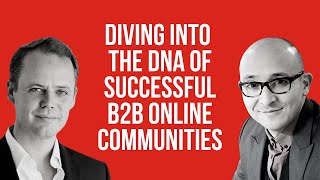
Ashley Friedlein on building B2B online communities: start small and focused, aim for 120 to 300 members, expect about 10% to actively contribute. Put a founder or CEO visibly in charge alongside community managers, and nudge quieter members to share. Small niche communities can charge for memberships or sponsorships based on attention and goodwill, not raw size.
Chapters
Ashley, this is, as I said earlier on, an amazing. An amazing opportunity for me, selfishly, and I know for some members of the. Of the audience that are here today, we've known of you and we've known of E Consultancy for a very long time, admiring the work that has been done there for. For the many years. I wanted to start kind of trying to take this back a little bit, back to the E consultancy days when you came up with this amazing idea. And the element that I really wanted to ask you specifically, which is going to open up to the rest of the question that I have today, is if you were going to start a consultancy or that online community in the way that you thought about it then today after the pandemic, what would you have done differently today? And I think that's for the benefit of the audience as well. They're going to find this extremely valuable.
Gosh. Well, I mean, it was. I started it as a sort of hobby really, alongside my day job back in the late 90s. This was. So it wasn't really ever started out with the idea of it being a business, you know, it was actually three years after launching it that it became a business. And even then it was. I just had two angel investors, so it was really very small and it grew actually quite slowly, you know, over time. So I think it's one of those. That's kind of that phrase that, you know, most overnight successes are 10 years in the making or something like that. But so it took a while to grow. You didn't have any kind of venture capital or anything like that. So looking at that now, you'd say that was sort of bootstrapped, really, kind of over time and built slowly, organically over time. And I think that was fine then because actually what we were doing was so new and so early that we didn't really have any competition. If I was doing it again now, then obviously digital and the various digital media are much more mainstream. I think there's more competition, more noise. So I'd probably, as kind of, I'm doing with Guild, I guess, want to do it slightly bigger, slightly faster, slightly more global. And of course, you know, the part of the point of Guild is it's mobile first. So, you know, with E consultancy, mobile basically didn't exist. Social media didn't exist in the kind of mid to late 90s. So again, the sort of tactics and tools I suppose that I would use and the kind of financial gearing I think would be different. But a lot of the. I suppose the sort of approach and the ethos. And obviously we'll talk. Talk more about kind of building communities. I don't think would necessarily be. Would really be that different. A lot of the, I don't know, philosophy or the motivations, you know, lots of talk about purpose and values and things. Now mission statements would be quite similar. Just the, just this sort of. The tactics might be. And tools might be a bit different.
Okay, so, Ashley, so you were talking about. So you started, as you said, slow and it kind of what started to build. So did you have any basis of. In terms of an audience or do you have anything that's because many people. And again, take it into. If into account the answer on the post, many of the audience right now are looking at building and growing it. So did you start very, very small and start building it? And again at the time, no digital, no nothing. How did you start building that audience at that point in time?
Yeah, I mean, we had say it was pre social media, as in pre LinkedIn and Twitter and things like that. We obviously were focusing on B2B, professional rather than consumer here. But there were web forums, you know, bulletin boards, discussion forums, and there were email lists. So, you know, and the very origins of the Internet really, after its military incarnation were, you know, academic, largely communities sharing information. So it sort of started really with communities. But I think the thing was that, and I still think this is quite an interesting point is that I think some people, they like big numbers or success equals big numbers. You know, so it's lots of followers and lots of members. And I've got 14,612 people in my LinkedIn group. Isn't that great? And I've never really bought into that. I mean, I put this. And specifically, again, talking about B2B, where usually, you know, it's about value rather than volume. It's about quality rather than quantity. In most industries, there's actually a fairly small number of very influential, more powerful people. And there is a sort of structure and a hierarchy. So if you can start with quality and not kind of chase numbers too quickly, and if you maintain quality, it feels a bit slow and kind of painful. But I think that's the way to do it because it keeps quality and then quality kind of attracts quality and good quality polices itself better and things. So. So I guess, you know, in that sense it's. And it starts to. And if it's good, it starts to spread organically as well. And then, you know, good people are happy then to refer or recommend their friends because they know that It's a quality space and it's worthwhile and valuable. So I think that this is. People worry sometimes too much maybe about their communities or groups being too small, whereas I would worry about the quality rather than the quantity. So with E consultancy, I mean, I was working in agency, I had some contacts and some clients. But it started off, you know, very small but highly engaged. And we used to meet up actually as well, just in pubs and things. So it was not just digital, it was physical as well. And you know, particularly then it was like a sort of underground weirdo movement digital at that time. And I think again, strong communities are often formed in adversity or where they feel that they need to defend themselves against something. So. Or they have they got some strange thing that they feel a kinship around, but which other people maybe, you know, think is a bit unusual. So. And that was true of digital in the late 90s. Obviously now it's not the case. So again, often, you know, I think, you know, and obviously coronavirus at the moment, you know, that there are opportunities to create strong emotional bonds and ties in communities at either times of adversity or sort of shared experiences. And that digital, early days of digital was definitely felt like that.
I think that's kind of you touching upon a very, very big question that people in the industry, and I'm Talking about industry, B2B media and events, which represents the majority of the audience that we have here, we have about 40% media, 40% events, and the rest will be B2B organization, which is, okay, I have my event, I run my event, whatever size that is, or my portfolio events that is. And they always think about the size. And I just want to kind of to delve a little bit more into that. The size, the niche versus big we could see back in the day and some of the organizations that have kind of these big communities. You know, someone that I admire, Sift Group has amazing committees from a very long time, iqpc, you guys, and everything. And I guess we don't really know how it all started, but our view as audiences that they're big. They have 9, 10, 10, 20, you know, e consultancy group to 200,000 at some point. So right now everyone is always thinking, okay, what is the right size, big or small? And everyone thinks that they should be big. So what is your view? And essentially you are running a, you're an expert in communities and you're running a tool that runs communities, right? So you have a little bit of context. So what is the best size? What is the Best group. And if you need to kind of bring up any of the graphics, please give me a nudge. But how. What makes sense? Is it better big or small?
Well, I mean, you know, the easy answer is it does depend a little bit. And again, I think in B2C it is different because you can have very large communities where everyone's sort of, you know, like giffgaff and things. Customer support type communities can work quite well. In B2B, I think that can be a little harder because often there's, you know, more senior people, more junior people, there's buyers and sellers. And so there are sort of dynamics at play which can know. Mean that often you need smaller, I think, peer groups where it's. And often there's more domain expertise in B2B, you know, some specialist topic area which those people are super excited about. But. But then there are not many of them, you know, so. So yeah, generally. And in fact, if you. Yeah, maybe if you got that slide I sent you showing the various concentric circles and I'd be interested to see, obviously will get feedback on this and I assume we'll be sharing these. In fact, I can post them into the professional community leaders thing later. Yeah, that's the one. That's it. Yeah, there. So, because we get asked this quite a lot and it's something we think about for Gil as well, which obviously is mobile. And I don't think you want to be in a. The equivalent of a WhatsApp group with 14,000 people. You know, it's quite an intimate personal experience. It probably shouldn't be too big, but. But, you know, we. We have a guy, Professor Robin Dunbar, who's on our advisory board and he's famous for the Dunbar number, which is about 150, which is the maximum number of people you can. Any human can really know. It's a limitation of our brain that's not changing very quickly. So if you kind of map that, there's a link there. We did a post about professional networking, but I think it applies to communities too, where you have these kind of. They actually goes up in multiples of sort of five actually. And this is based on his. This is science in evolutionary anthropology and how human networks work and form and tribes, how they've worked through history and, you know, Amish communities, army units, they all break down into certain quite predictable patterns, actually. So I would say that, you know, three to five people, five to 15, very hard to make a B2B community out of that because it's too small. That's a kind of individual experience. We find that the groups, networks and communities in B2B tend to be between 15 and 1500, which might sound like quite a big range. And different sorts of community suit different use cases within that. But for example, the average group size on Guild at the Moment is about 120, which is spookily close to the Dunbar number. I think if you go above 1500 A, you go out of the sphere that any human can actually remember even a name, let alone how they kind of connected with someone. And that's use that to me is marketing. I mean, so that can still be. That's your sort of touch points, you know, sphere of influence or this nice phrase I like from Lisa Reichelt. She talked about ambient intimacy. So it's sort of like there and you have a presence. But that's what me, you know, things like LinkedIn and Twitter and a lot of feel like that now. But you can't, you don't really know the people. You don't really have a personal kind of connection with them. So personally, it feels to me like these B2B communities work well in that 50 to a thousand, you know, and a lot of them between, you know, 150 to 300, that works well. And also because which I saw, you know, on your other slides, there are these surprisingly consistent, you know, rules or things around how many people are actually active or engaged in a community which is, you know, any 10% ish, may be actively contributing. And that's true whether that's an event, whether it's skilled, whether it's linked with any of this thing. It's just, it's just the way certain people are more talkative than others and things. So if you only have 10%, let's say contributing to a group, if you've only. If you've got 50 people, that might only be five people. It doesn't mean the others aren't getting value, but it just might feel a little bit empty. And so there is, you know, sometimes you need a certain quorum, a certain number of people in order to get enough of this sort of chatty motivator types for it to feel like it's got a natural momentum and life of its own.
Yeah, because I think that's in the minds of the eventrepreneur and media organizer. They'll probably thinking, okay, their idea is to have yes, a community of engaged individual. They want big numbers, obviously, because big numbers sponsors the people that are going to ultimately fund that community, which we might touch on that a Little bit later they want big numbers but at the end of the day they're thinking about the business. Okay, so we're running a business here. So how can I run and make money out of a community that is about 200 or the community that is 1000? What are my sponsors going to say? What are my sponsors going to want to do? And then I think it is a fair question and what would you say and I think we're touching a little bit again perhaps on where is the value or the monetization of an element of a community that is let's say 200. I just want to give an example. I am a member of the CREO Group and many members of the people that I see on these lists as members of the CREO group and we all gained tremendous amount of value out of that. It's not a massive community, it's a community about 600. But how does the for the eventual know that has financial elements in their mind and that is probably at a stage where it's thinking about digital pivots. Okay, you know, where am I going to get my revenues? How does a small community would be monetized and where would it be? The return on investment on that? Do you need to run 10 of those within your vertical or how would that, how would that work?
Well I mean there's, there's lots of different ways that it can work but I mean interestingly that that CREO Group we started that partly just because you, I mean my wearing my E consultancy hat. We still run a lot of events. We had our festival of marketing event last week which was, you know that's about 3,000 odd people over the course of a week. So fairly sizable over a million revenue event. So I kind of slightly speak still as an event organizer and we had to pivot quickly and we wanted to learn. So actually I think some of these communities are the best way. If you can tap into experts or peers of yours going through the same challenges that is a really effective and efficient way to get answers to your problems. A lot of this stuff, you can't really Google it. I mean you try Googling some of the questions that come up. It's just there isn't a. Even the information isn't there or isn't public or Google actually isn't very good as an answers engine still often. So you know I just genuinely interested in the content and wanted to help and we wanted to get users into the product in this case in guild to give feedback. But interestingly what you know we have actually won quite a few customers off the back of that CREO group just because they've gone, all right, I kind of see how this thing works now and we can use it for our event and stuff. So it wasn't really meant that way. But to answer your question, it's, you know, again with some of the slides, I talked about this idea of community based marketing. But if you can use these, even a small community, if you've got 200 senior people who are prospects of yours and they're getting value from you, you know, you've just got, you've got access to their attention in any shape or form and they believe you can help them. That's massively powerful because it's, it's incredibly hard to get hold of these people otherwise and to build any kind of trust because they're being sold to all the time. So I think, you know, just purely as a mark, as a high end marketing prospecting thing, it can kind of work obviously for membership or subscription type models where you might have a broader group, bigger group for certain tiers of members, but for your most senior members who look at all of say Gartners and Forrester, who we compete with a bit with E consultancy, but they charge an awful lot of money to their CIOs and things. And really what they're paying for is the community is getting to go to the CIO summit or getting to hang out with their peers. There's a certain degree of status vanity even in there. But so if you can bring together those people, you can just charge them for it. I mean there's Procurement Leaders are similar in Procurement Data Leaders is another one. Procurement Leaders was bought by a business called World 50, which has just bought another business called G100. And these, I don't even might get the figures wrong, but they charge something like 100 grand a year to individuals to belong to. And really all they do is bring them together to meet. No content, No, I mean, not kind of proper events, no suppliers. It's just a sort of, you know, private intimate space so you can just directly charge for it, you know. And then sponsors is the other thing. I mean, I don't think in terms of, you know, there are some sponsors who are. They sell like enterprise software. If you take an example where, you know, the sale value or the lifetime value of a customer is hundreds of thousands, if not millions or tens of millions. So they can, like Salesforce is a customer of ours, for example, they can afford to spend an awful, awful lot on really, really Looking after prospects, even flying them to Dreamforce and putting them up for a week. And you know, it's. And so again, that kind of, if you have a sponsor who understands that game and isn't, yes, they want sales, but it's not like a mass market, it's another mass thing. It's a highly experiential, high touch kind of experience. And they're prepared to put their senior people, not the sort of more junior SalesPeople, but their CEO, their product people in with a group of prospects or customers. And they know how to behave. Not just crass selling, but proper networking. They really, really love that. I mean, I mean, you know, in e consultancy, I still think, you know, one of our best or one of the formats I like best is in events was called Digital Green. But it's essentially lots of roundtables and its biggest, I think we had 40 simultaneous roundtables going on all on different topics. With 10 and the model, you know, you'd have 10 clients, they're essentially peers talking about their problems and we'd only ever allow one sponsor to sit at the table. But they got to listen in on the conversation, they got to show their expertise where they could. And they met 30 people across the course of a day. Only 30, but it was massively successful for them. And so if you, and this is not uncommon obviously in events, but if you transpose that into a digital, like an online community we're talking about, why can't the same thing be true? Why can't you have a smallish space with a sponsor who's knowledgeable and helpful, adds value and wins big business that way?
Yeah, and I think actually you touched upon something that I have always evangelized, but more often than not right now I kind of fly the flag of that is the return on investment of an online community requires a change of mindset because. And then there are two communities. Top of the funnel, bottom of the funnel, right. Where you have more awareness, numbers tend to be bigger, tends to be more broadcasty, sharing a lot of content. Bottom of the funnel, probably customer communities or in the context of an event industry, people that have attended an event and they will be a bit more niche depending on the size of the event generally. But the biggest pain that every leader right now and every marketeer is facing today is attention. Everyone complains, there's a lot of noise. So the biggest return on investment an online community can provide and you highlighted that, is attention. You're going to have the attention of a CEO of a very senior individual. That is probably a member of this community of 50, that is a member of this community of 200. But you've got their attention because they're interested, they're asking questions and they know that they're going to get the answer to those questions. So for me, when I kind of talk to other individuals that, when I'm, when I'm kind of talking about, you know, the value of communities is attention, that's the return on investment. To me it amazes me like how much access, I mean being a member of some communities and being a vendor in one of those communities and, and thankfully I welcome these communities because I understand the value of that attention, of that participation and that leadership. So I think that is an element that I wanted to highlight is the return on investment is not the transactional element. Okay, you Mr. Sponsor, you're going to be a member of this community and I can get you X number of people is more. I can get you the attention or you can get the attention of certain individuals in here that wouldn't give you your attention any other way.
I think. Yeah, well just to add to that, you're right, the attention. But even more powerful than that, I think in the strongest communities you have their goodwill, you have their reciprocity is a massive thing. So if they feel that they're getting value, they receive value, they're much more likely to want to give value. So not only will you have their attention but they'll want to help. So and that might even be by becoming a customer or by helping or you know, I have where again with a sponsor model where you've got the kind of buy side or client side and great community. I've seen this with the consultancy and seeing it in guild a bit where they, they will contact the sponsor knowing full well because he's seen if you are smart enough, they know how the game plays in order to help you out almost and go okay, look, I'll get in contact with them because they care fundamentally. I mean there's a thing about community. In any local community you will need people not just to pay attention but to care. And that you know, means building trust. It means say building goodwill. It doesn't, it takes time but that's immensely powerful. So that then if you ask is anyone, you know, want to do our survey or take part in our research or we're looking for an awards charge or we're looking for some keynote speakers, can you suggest there's a million or one things they actually put the time in to give you an Answer because you've given them value via the community. So I think so, yeah. You're building a kind of a well of goodwill and it is a give and take thing. You can't just take all the time and you can't give all the time otherwise you wouldn't get any return on investment back. But I think people have a strange sense of that kind of give and take a bit. Yeah.
And then I just wanted to. There are so many things in my head and like the ways in this conversation go and then we slightly touched upon and I just for the benefit of the audience that are here, I just wanted to make sure that there is a clear understanding there's a community on top of the funnel and there's a community that's awareness. Pretty much what we have been seeing over the last 10 years where there's a lot of articles, content, thought leadership is probably almost one directional. But now the big mega trend, big megatrend and correct me if I'm kind of talking nonsense, is around smaller niche again to all those kind of smaller and more intimate because to share for those of you that don't know that.
And.
This particular slide about the, this slide about the engagement, the engagement levels in communities and this has been kind of gathered by friends in the industry, clients that we work with and everything what we've seen is generally about is about 10% engagement rate. So whether you have a community of a thousand people, 10,000 people, about 100 are going to be the ones that are going to be literally kind of doing that. So to me it proves the point and is the business case for smaller and niche. And then again always a sponsor will be interested. This isn't the most senior level individual. The event organizer or the media publisher want to be just kind of talking to senior level individuals. So that kind of proves a point towards smaller and niche communities. And I want to touch on an aspect Ashley that has been asked in the panel, in the chat panel by Faye who she runs a big portfolio of events in Dubai for DMG which is how. Let's just suppose we now have our community and big mistake that everyone makes. Let's set up a community, let's get the technology, let's get everything, let's put all our database there. Off you go. And then Faye was asking how do you get to the chatty people? How do you get and how do you foster their engagement? And I think the particular question is more around, okay, the role of community manager and how do you get to foster that communication, that engagement?
Well, I mean to say, I would just reiterate the point that I think sometimes people panic if there isn't a lot going on, that they think that success equals a lot of activity, which is, can be true. But I'd say if it's, if it's not good quality activity, that's worse than no activity at all. Because. And sometimes I think you just have to be a little bit strong. It's a bit like, I don't know, sitting at a round table just to draw the event parallel and you ask a question. Actually the things do often is just to wait and it feels painful and then slowly someone will talk and then everyone else will feel comfortable and they'll chip in and things. If you just keep banging on to feel the silence, you're actually going to kind of put people off a bit. So I'd. Not necessarily, it's not necessarily a bad sign if there's not lots going on. In fact, it could be a bad sign if too much is going on because everyone, you know, everyone always complains, quite understanding, they're overwhelmed with stuff, they want relevancy, it's too noisy. And you know, part of this trend, as you say, which, you know, even Zuckerberg at Facebook recognizes, is that we've had a toxic overload of saturated with staff communication, including, you know, community social media. And we're trying to kind of retrench back into more private spaces, more curated, more filtered things. See, I wouldn't worry. I mean, but then, yeah, there's a whole, in order to get that right kind of engagement then. And again there are all sorts of things you can do. I mean, first is, I mean, you mentioned Ricardo, community manager. And maybe one of the things we can talk about is the role of the host or community leader. I prefer, I'm not sure what all the terminology is. I prefer the terminology community leader. My concern with community manager is it sounds a bit junior and a bit operational. And I think one of the problems in some of these B2B communities is that the person who's kind of fronting it, I think needs to be ideally quite knowledgeable about the main space, ideally quite senior and ideally well connected and respected as far as possible within that sphere. And the reason for that is just because it shows it signals kind of seriousness, it signals respect to the members. And again, if you draw an event parallel, if you had an event, invited your people along and then you said, and you know, and to welcome you to the event and stand on stage and greet you, we've got our Marketing exec, you're like, what the hell is going on? I mean, surely it's the founder or the CEO that should be up there welcoming us. And I don't understand why people think that's different in an online community so often. I think, I mean, you need community managers and particularly sort of big ones who do a lot of operational and admin and moderation and onboarding and all this sort of stuff, but the sort of leader, figurehead, person, I think if the CEO or founder or someone, the editor in chief order isn't prepared to do it, I'd question whether you should do it in the first place because to me that shows that they don't really care about it. You know, if you're going, let's do community, oh, we've bought some tech, there we go, there's your community people get on with it. It's like inviting people to an event and then just sort of leaving them to get on with it and hope it's all fine. And it isn't, you know. So yes, I think, you know, getting the right kind of community leader, there's all sorts of best. But, you know, welcoming people personally, calling them out, you know, certainly when you're starting to get something going and again, to, you know, make a parallel with a real world event, you know, you know, she was saying, how do we find the chatty ones? I would. They don't need finding because they're that, you know, often the challenge is suppressing them, not actually finding necessarily they're too chatty. That's a different problem. I think the more interesting challenge is how do you get the quiet ones to speak up? Because again, in my experience, I've run loads and loads of round tables, which is usually 10 to 12 people. As a good moderator or host, you're trying to draw out the quiet ones because often they're sitting there quiet because they introvert or whatever and then you finally get them to talk and they've got all the answers. I mean, they're the what? They've been sitting there all along going, why haven't you said anything? Because you know all this. So in the real world, you have to literally ask them, say, you know, oh, Ricardo, you haven't said anything yet. What do you think about this? And the similar in the digital world, you know, you sometimes you have to, whether it's direct message, you email, you find out what you say, like, I know that you know a lot about this subject and you're not saying anything. Do you mind contributing or, you know, so it does, you know, it takes a bit of work and a bit of kind of prodding, but then to get it going. But then hopefully say people start to go, oh, okay, this is good. And I can chip in and it makes me feel good and I can contribute and I'm getting something out and it kind of, you get that feeling where it just feels like a supportive and valuable community. Yeah.
And I think to touch on that element, Faye is, she was asking, should it be staged at first. And I think from our perspective, from what we've seen and from what we generally do is yes, to a certain extent. Because then you have the community leader or the community manager that understands the audience probably has already built certain connection with the members of that community, understands the context. So I wouldn't say necessarily staged because staged sounds like fake, but I would say it is pre planned. So the community leader and then the community owner needs to have a content plan. The community leader needs to be researching, needs to be reading and needs to be thinking in the, put themselves in the picture and the shoes of the people that that community have. And thinking, okay, this might be useful for Faye. So I'm going to put that more on the, on the, on the community later on. Oh, Genevieve, whatever it is, is going to be very interesting about it. So it's kind of serving that. So it's not stage, it's a content plan because you need to drive, need to foster that engagement. But I think there's another big important element which is doing direct communication. Sometimes you might have a discussion going live and then you might go separately, hey, would you rather contribute to this? I mean, that digital nudge, as you said that when you're into digital. Okay, listen, for instance, John, you haven't said anything. There's this discussion here. You have so much to add.
Can you do it?
And that's kind of the way in which you also start encouraging that, by the way, Ashley, because when I first came across some of the communities and I was like, what is actually running this? And to me it's like, how the hell do you do that? Where do you find the time? And I think I want to touch on that because let's accept it. You're a leader in your industry, you're a thought leader in your industry, highly respected, extremely busy, yet you find time to participate in these communities, to write your content, to write your blogs and all that sort of stuff. So for those there that are thinking, okay, now I get it, I need to hire someone that's an expert or I need to kind of build relationship with someone that is a leader. Do I need to hire them? What kind of thing should I do? Obviously that content plan. Now, how much time does it require to run?
More from Ricardo



Implementaciones de CRM - Medipiel: La omnicanalidad y mayor conexión con los departamentos



Implementaciones de CRM - La omnicanalidad y mayor conexión con los departamentos




