(Interview) Sasha Frieze - Bringing Your Community Alive Through Virtual
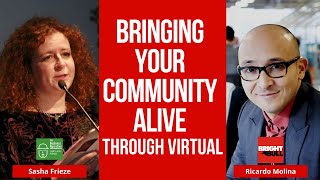
An interview (host Ricardo Molina, guest Sasha Frieze) about transitioning from in-person to virtual and hybrid events. Sasha describes reimagining events as TV-like productions (shorter curated content, stings/trailers, strong MCs), practical production changes (minute-by-minute schedules, tech checks, chat moderation), and strategies to foster community and sponsor value in digital formats. Case examples include 'Don't Forget The Bubbles' (DFTB) and lessons on inclusivity, global reach, and balancing live vs. pre-recorded content.
Chapters
For those of you that don't know Sasha, I'd just like to give a little bit of more introduction about Sascha. You know, we have known each other for a very long time. We've been in the events industry for many years. Sasha has produced potentially thousands of physical events throughout her career. And as all of us in this environment last year has allowed us to ignite a lot of innovation, to get involved in a lot of various different things that are generally outside the normal things that we generally do. And Sasha has now, through the business narrative, which is the business that she runs, has run potentially dozens of virtual events and very successful virtual events of all sizes. And the really, really interesting part that I'm really wanting to delve into is how you're going to bring those communities alive. Because we all know that's a challenge. We all know how difficult it is to bring someone into the virtual environment. Try to build engagement, try to build everything. So without further ado, let's just get started, Sasha, and let's just kind of give us a little bit of a background. Obviously thousands of events, physical events. Now you're moving into the virtual space, Sasha, and helping companies make the most of it. What's happened? Tell us a little bit about how that transition went and then we go into what we're here to discuss.
Oh, sure, sure. Thanks, Ricardo. I mean, it's been quite a year for pretty much all of us in the events industry. People have had different experiences. I think in a way, you know, I'm lucky, you know, together with my team at the business narrative. We are, you know, experienced conference event professionals, very much B2B space, but also, you know, we are geeks and gamers and creatives. And so, you know, taking the challenge last March and saying, hey, you know, do we want to face, well, what at the time we thought might be a few months, you know, a period of time of, you know, no in person events. We very quickly took a look at the online platforms that were available. We did an analysis actually of around 50 platforms on our long list. We brought it down to about a dozen on the short list. And there's a couple of key platforms that we work with that were really well for kind of content led events. And I think the change for us has been about bringing all that in person event experience, which everybody has, but kind of melding that with a kind of creativity because our approach is it's not about recreating the event, it's about reimagining your event for a digital, virtual or hybrid Space and what that means. And so we've expanded our team. You know, we had, you know, core event professionals who we still have, and that is the heart and soul of all the events that everyone here is doing. But we've now brought in, you know, TV producers, video directors, animators, CSS coders, you know, all kinds of different people. So that what we create now is more akin to sort of really engaging, immersive TV programs than events. You know, it's somewhere in that overlap between a kind of live event that we all know and love and, and a TV show that kind of really grabs people.
Exactly.
So it's been quite a journey.
And so to ease us in the discussion we were talking about yesterday about the language of a live event versus the language of a digital event. And I really like the people present here to do for us to be on the same page. So what are the different languages or the two languages of one of the two events that like you were saying.
Look, I think it's a really interesting question. You want to take the nuts and bolts of what you know and love, but you have to build a huge amount of extra layers of activity around it. You know, I think there's some, I mean, there's so many different pieces to this. There's something of an emotional contract in a way with the participants. So there's that piece around, you know, right at the beginning somebody said about one of the events we put on for a client, huh? It's just Zoom and Crisps. Why should I even pay for it? And I think, you know, first of all, I don't think any of the events that we've put on quite have that Zoom and Crisps experience. And as the world has moved on a year later, you know, we're all developing and growing. But I think what's really important is to think about that emotional contract you have with your delegate, your participant, your sponsor, your stakeholder, and how that's changed. So in the days of an in person event, there was the excitement of buying a ticket and booking a plane. You know, let's say we are going to the Union of Conference Organizers event in Amsterdam. I book my ticket, then I might WhatsApp you and say, hey, Ricardo, are you coming? Let's go out for dinner. You know, what are you doing? And there's part of an excitement in the run up to the event. That lead time, which for us is about marketing and promotion and selling tickets for participants, is about building that excitement. And I think part of, part of the language of digital events is really making sure that you reimagine that experience for the participants and the stakeholders so that you're still creating that magic. Because we're still convening people around a core subject matter. We might not be bringing people together in a physical place, but we're absolutely bringing people together in a space and time. And so you want to still sprinkle some of that event magic fairy dust. You know, you don't want it to feel. You know, sometimes clients come to us and they say, look, we used to do a three day event and we've done a survey of our delegates and they haven't got more than half an hour a day. So we're going to do like four weeks of half an hour a day. And so that answers the content question. Your delegates are right, they're very busy and so they've only got half an hour a day. If you say to them, how much time have you got? And so they will get content, they will be able to go on and watch your webinar style thing. So it's straight content and a little bit of Q and A and that's great. Are they getting connection? Are they getting community? And so for those of us who are creating, you know, those events that really convene people and the people who are here today are people who want to bring their communities together. And so those kind of events which are really about bringing people together, it doesn't matter if it's not in a physical place is the bottom line. In fact, there are very many advantages of not being in a physical place. I mean, when I look at the things that we've done with our clients over the last year, you know, the global reach is phenomenal. We've had clients with, you know, the British Society for Immunologists, which after all is the British Society for Immunologists, had participants from over 30 countries at their event. You know, other clients have happened. You know, the ODI, the Open Data Institute, have participants from over 70 countries. And so opening up that, that global reach, both in terms of participants, which changes the diversity of the conversation, but also in terms of the speakers.
Yeah, yeah. And I think, and I think this is kind of a very good opportunity for us to highlight when we. The discussion. The way I want to take this discussion today is through the three key pillars of bringing that engagement alive. So number one is content, which you've already highlighted, the community and the connection. So let's just start with that piece of the content and we have a predisposition because obviously we're about online communities. And we're about how when something already exists, call it through a blog, through gated content, through whatever sort of membership your community, and for all terms and purposes. So we're all aligned with. We all know that the definition of community is very wide. Depending on the eye of the beholder of whoever runs the organization, they will perceive and view community in a different way. Ultimately, generalizing, we're going to talk about the community that you have is a community that gets together around a topic, a theme, an area, whether it's membership organization, publishing company, event organization, etc. And they have been existing rightly, wrongly, badly, goodly, whatever in a place like that. So how. Let's think about how do you start, Sasha, building on that existing engagement that exists within that community, because that is going to lead into everything. And so for everyone here, I want to kind of question or dig deep with Sasha on the specific examples that we. That we've seen on really exciting communities that are doing this greatly. So how do you build on that engagement, Sasha, on the content element?
So, in terms of content, I think there's quite a few different pieces to that. First of all, you've got to think about curating your content differently. When a client comes to us and says, we do lots of work with, we're about events with purpose. So our events are very much, very often for think tanks, associations, nonprofits. And so that might be an event, you know, that you have every year. And so people sometimes come to us and they go, well, we've got our event. We just want to, like, put it on zoom. We just want to put it on the Internet. And actually we say to people, let's go back to the beginning. Let's rethink the purpose of the event. Let's work through what the event narrative is and what we're trying to achieve, and let's build that back into a program and content that works for digital. You know, the days of being at an event where somebody speaks, you know, for 45 minutes, I don't know if that's ever happening again, but it certainly is very unlikely to happen on the Internet. And actually, what's really interesting is that we've all been in those event halls where, you know, somebody gets up to speak and it's a little bit too long, and you suddenly see everybody kind of there on their mobile phone because they've lost interest. Now, you know what you see at the back end of. I mean, we quite often use hopping, you know, but at the back end of your Platform. When you're looking at the analytics, you can see the equivalent of people going on their pH, they're dropping off. So you want to build that engagement with the content. What does that mean? You want to curate it tighter, sharper, shorter and make sure it's really engaging. You want to have a good proportion of it live, ideally, and we can talk about that a little bit later on. You want people to be able to engage with it in lots of different ways. So whether that's about really great Q and A. And we very often put systems in place where, you know, the teams inside our clients are helping curate those questions and they're going straight to the kind of back of house teams so that the speakers are getting it immediately. Because what makes the event really real is you know exactly what you were doing. Ricardo, you're like, hey, Charlie, how are you? Nice to see you. And I see Charlie's got a really interesting question that already feels live. And that's the difference. And you can have that engagement. One of the things that we see that really is a massive difference from in person events is the chat. When you signpost your delegates and participants well around the platform and encourage them to engage, you can get phenomenal chat going. So many platforms have that chat box to the right of the stage. And so if you start off and signpost it, well, that can go crazy. I mean, we had one event for a client which actually when we downloaded it at the end, it was a one day event for 50 pages of chat. And that chat was people saying, and this is one of the things which I think is almost better about digital events than in person events, which is, you know, if I'm in fact, one of my clients said this to me about, we did an event in September, which we postponed it from March. It was going to be on March 17th. March 17th. We were like, you know what? We're not bringing those 180 people together at the RSA because that's how big the RSA is. We did it in September, 1500 people, because there are no limits to a digital event. And so that was the event with the 50 pages of chat. And what the client said to me, which was so interesting, he said to me, what I love about this, which is better than the in person event, is that I can actually see the conversation going on in people's head. They're like, this is a really interesting presentation. I just read an article in the Economist about this and someone else is like, oh, yeah, we're doing a research project on this we're looking for collaborators and so you can have conversations actually with everybody. Whereas in an in person event, I might sit next to you and have a great chat, but I might not totally.
I think that's kind of where people get too stuck into that same idea. Like exactly. When you're in a live environment, there is a session about certain topics. How do you know you can just overly judge it by looking at people's faces. If they're engaged or not, they're probably thinking about something else. The same thing happens with digital, et cetera. And then I think the key part of bringing that element life is that you remember that you have a chat panel, remember that you have, yes, you might have your presentation going, but remember that there's also some other stuff going on outside that session in that presentation. And I think that's kind of one of the key things of the way you bring that alive is again, spark that exciting conversation within the Q and A. It doesn't really matter what's happening while the conversation is happening. Right?
So that's completely fine that it's happening while the conversation. We are all people with continuous partial attention anyway. And so of course we have that at digital events. So I think you're completely right. I think that sparking the conversation, but also signposting people around the platform and.
What'S possible, because that's the excitement thing and that's what you guys do very, very well. And I want the audience to understand. So, for instance, Sasha, so we've seen, number one is if you want to make it exciting, bringing it alive, make it more like tv. So there are technology bits that we can, you can pop up messages and on screen, which you guys do also very well, you can, you can spot that live and then tell us exactly how you go about that, getting all that's happening.
So, I mean, before I talk about the kind of full engagement piece, let's just talk a little bit about what making it like TV means. Because I think, you know, we've all got used to like seeing 10 people on a screen and that's great. But actually what's really engaging is kind of short, sharp, engaging, fun videos that signpost you. So we create, you know, for our bigger events, we might create a dozen or a couple of dozen video assets that we are using all the way through the event. You know, so we'll have a sting, which isn't really a spinning logo. In fact, I'd very much like it not to be a spinning logo, but some kind of creative, almost a Palette cleanser that we might use between different presentations. We will have a kind of video messaging animation during the breaks to signpost people. Have you updated your profile? Have you checked out the speed networking? Depending on what your arrangement is with sponsors, there's a couple of sponsor sessions you might want to go and see. For longer events, we'll make trailer heads where we'll effectively make an ad for the big keynote happening later on. But that ad might be like a little TV ad with little bits of their bio and little bits of video and animation. And so that's what makes it exciting and what's really interesting for us that, you know, everybody here has had a running order for a live event. But our production schedules for our digital and hybrid events, they look like TV production schedules. They are minute by minute. You know, 1001, play the Sting, you know, 10:02, you know, MC welcomes people. So I think that's one part of it. I think another thing about that that makes it really engaging and brings the community together is having a really strong mc. And so for an in person event, you know, many of us are used to having a chair who might be the editor of the magazine or one of your journalists. And sometimes those people are great front people. But actually we are increasingly working with broadcast journalists who really know how to grab people's attention and also they know how to respond to things changing. So for our live events, we always wrote scripts. In fact, there are times when I've written the script on the hoof when something's changed and taken on stage to somebody. But now we really work hard on our MC scripts because that MC is holding the space, is the exciting linchpin person. But they're signposting it. They're the person saying, you know, we're going to take a 20 minute break now. There's a couple of great things happening in the explore area and there's a brilliant roundtable. If you haven't met anybody yet, you want to go to speed networking, that's on the left hand side of your screen. We've got a little quiz going on and so we'll work with the MC on that script. Now that script is live, so we've got a back channel to the MC if something happens and let's face it, we're all in events. Things happen, things change, people get delayed. You know, I will be there in the digital ear of the MC saying, you know, the minister's been delayed by 10 minutes, so you're going to give people another 10 minutes in the Break and just go into the Google Doc because I've updated the script and it's changed and they're like, fine, no problem. And so working with somebody who's used to thinking on the hoof and responding live and having that energy really makes a huge difference.
Yeah. And actually, Sasha, I think this is very, very timely because Rupert is asking, do you often use cheap versions of autocue that you can now get from for your MCs?
So that's really interesting. There's a few different bits of technology so you can use autocue style technology. Having said that, when we're working with an mc, what we would rather do is that it's not verbatim, you know. Yes, an experienced journalist is going to make it sound not verbatim. So we'll actually do a couple of briefing meetings beforehand. We'll make sure that they meet the key people in advance so that they've got a little bit of a rapport with them. So if that helps somebody, we can totally do that. But I don't want them reading off the autocue. I want them to make it their own. And actually we'll usually complete the script two or three days ahead of the event so that they can truly make it their own.
Yeah, and I think that's kind of the important element. I think, Rupert, we're talking about making, making it live and making that kind of sense. You are allowed to divert, you're allowed to, you know, off the cuff, come up with things that are going to enable you to make that happen. So Sasha, so you were talking about the video. So the videos, you'd normally play them before a specific session. Perhaps when you arrive at the Call it lounge, call it at the. At the main platform, you play them after sessions. And again, when we're doing things more like tv then that to be clear for the audience as well, that will rely, number one, that you have people manning the chat, the chat. Some people have various chat areas. In fact, you might have in different pages because with the chat bots and everything, you might have various chat areas that you could add. So number one, you need to have more resource or more people devoted to managing these areas virtually. And also you need to bring in either the mc, bring in the video, bring in the other area at different stages. Right. We're highlighting TV production, like technology that would allow you to do that.
Right, sure. And that's why it's really important to have somebody who's got a little bit of broadcast TV experience because they used to running with a schedule because we might say to them, you know, change. Now we're just going to run our, you know, 999 video because something's happened. Although I have to say we've Never run on 999 video in over a year of digital events. And so yes, somebody who kind of gets that TV environment because the production is way more complex.
Okay, so let's talk about some controversial aspect or controversial issue. When we're talking about live and it being really live. When we've seen throughout all the discussions in all the various different groups within the virtual event, everyone says it's better to have pre recorded sessions because pre recorded sessions allow you to plan it, to fit it in. There might be various ways, but generally I'm overly generalizing. People would say the more you can have pre recorded, the better, the more predictable, the better you can plan. What is your view about in a live environment, how much of it could be, should be pre recorded versus really live?
Okay, look, it's a really good question and people feel differently about it. I know that there's a couple of clients watching today who we've had long conversations about what proportion, you know, to have pre recorded. So we're all in a new world, right? And we liked it with live events because we knew how it worked. And every speaker knows how to walk into the QE2 center and get a coffee and get mic'd up. And so, you know, there isn't the training issue, there isn't the kind of tech issue, there isn't the tech hesitancy issue for people on a new platform. And so there are absolutely times when I think pre records really help. You know, if you've got a really mega keynote who can't make the time, or they're a really mega person, but you know, they're in South America and it's 4 o' clock in the morning and they don't want to get up. Although I have had people in other time zones get up really early to be on event. So I think, you know, somebody who can't make make the time, somebody who, when you do the tech check. Because of course I don't have to tell people here we're tech checking all the kind of 200 speakers on every event. When we do the tech check, if it transpires that even when we get them, you know, a dongle and a headset actually the tech just isn't substantial enough for it to work on a live event, then we might do a prerecord but they can pre record offline. But actually what's interesting about our pre records is that, you know, we're not always doing a pre record that looks like a zoom, so we might do that, but we also might send people into a studio so people might pre record in the studio, then we'll lightly edit it and within that studio we'll have at least two and with any luck three camera angles so that we can really create something quite vibrant and energetic. So different kinds of pre records and different elements of pre record quality. We might do a whole TV edit, top in, tail it with the branding or we might put in some different images or creative. So there are times when you need to pre record. I had a client come to me about six weeks ago and they said, look, we've got a six stream event and five streams of it are going to be pre recorded from our archive. And what's brilliant about digital events of course for all of us is that we are all creating phenomenal content that we can repurpose brilliantly. So we're going to have five streams of our prerecorded content from all the assets that we've created and we're going to do one stream of live and we'd love you to produce it. And I'm like that's brilliant because that's what we love doing. And they say to me, so we'd like to pre record it all three months before the event. And I'm like, how are we going to differentiate that from the pre recorded five streams of the pre existing material? And so we're all new to this, right? We all knew how it worked with live events but actually we are all feeling our ways for what it means for digital. And so it's a really big question. I have one client who loves the quality of the pre record and I see many people who say let's do a pre recorded session followed by a Q and A, a live Q and A. And I think that can work broadly speaking and I don't think it's useful to have rules in this field. But broadly speaking I'd look for a maximum 20 to 30% pre record. But, but there are times when that isn't right. But I'm very nervous of everything being pre recorded, not least, I mean I said to this client, what happens if something, you know, if we bring in 100 people and we pre record all this stuff on the 1st of July and then on the 6th of July something enormous happens in the union of conference organizers and like nothing, we've none of that content is relevant to the real world. So like everything, it's a balance. But I see people not wanting to take the risk. And what I would say is work with professionals who know how to manage the risk. Because what you will get is a really energetic, engaging live event.
Because I think the key aspect is bringing that presence. It's kind of like. And I think where the community comes alive and then if we involve the elements of online communities, however they existed. So generally within a community there's someone that is helping moderate the discussion. So someone pre event or pre live event someone is moderating the discussions. Probably there's the big leader of the organization who has a very special presence as well and a lot of gravitas within the community. And while you might have your aspects on pre recorded, the key element what is going to bring that community alive is having seen these people live, saying hello to everyone, being able to see, okay, I saw Rupert, I saw Charlie, I can see Sarah there, I can see Amanda. How you doing? It was great sending to you yesterday. So that's kind of little elements where you can bring it immediately. And I'd like you to share because when we were doing the process of this session, which kind of sparked my sales and I said definitely we need to talk about it. And I want to share this with. Link this with the communities. People love the. Don't forget about the bubbles. I'm linking this with because something that really kind of impressed me, number one was people in that, in that virtual event. People were laughing, people were like good smiles on their faces. We saw one of the big key leaders within the community live, but talking to someone, you know, nicely to the screen. But there's like that nice interaction and that is one of those communities that I admire that I think they are loved by its members. The virtual offering is very different to what happens offline through the online, let's call it sideways in the community. Tell us about that because I think they have a really interesting story to share or that's a really good case study on how to bring it alive. Tell us a little bit more about it because they do it very well.
Yeah. So dftb, don't forget the bubbles. A fabulous client of ours. So it's a grassroots pediatric emergency community that actually spans kind of Australia and New Zealand and right across the Europe, you know, really quite global. We were scheduled to do their London event for them last summer and they'd previously been in Australia and obviously the world changed and we had a conversation and we said you know what, let's do this digitally. And I think what's. I mean, they're a phenomenal community. Everyone's a volunteer. You know, some of the clients we work with, you know, they are professional associations or they are media owners. And everybody's kind of, you know, it's their job to do that. A phenomenal team of volunteers who so love what they do, which makes an enormous difference. You know, the quality of the content they curated was really phenomenal. And we helped them develop something that really came alive. We had some big conversations. It was a real learning point for us, actually. We had some big conversations going back to that point about, you know, should you do it over three weeks for an hour a day, about how long people would stay online? And we actually ended up doing. What was brilliant about this is that we created an event that spanned the kind of, you know, uk, Europe and Australia time zone. You know, so we started pretty early so that it kind of worked for everybody. And we went across 10 hours. And because we designed the content really well, when we look at the analytics, I'm such a data geek. I love this. So when you look at the analytics, you can see, actually it's really engaging. People are staying. So. So we had a series, I think we had about 10 chapters. And then in every break, we had, you know, chat rooms. So we called these corridor consults. And there's a great. There's a. There's fabulous creativity you can. You can bring to Corridor consult. Corridor consults. Because.
One thing that I want to highlight, that's a way in which you can get. Don't call it chat, call it differently. Corridor consoles create that spark among the attendees to see. What the hell is this? You see what I'm saying?
No, absolutely.
Yeah. Sorry to interrupt, but I just wanted to highlight that.
No, it's really true because I think it's something that speaks people's language. Oh, it's the corridor consort. Yeah, yeah, we totally get what you, you know, we totally get what that is. So, you know, what made that really engaging was a number of things. Phenomenal content, and that's their specialism. Like, they have a kind of science and story balance. So, you know, there's lots of evidence based on content and lots of new research, but they also balance that with phenomenal storytelling that really helps doctors, you know, become better at what they do. So there's a very human side to it. Whereas some of the events we do are quite, you know, purely science focused, it's got a phenomenal feeling of community so, you know, they created a number of kind of collaborative musical activities. So they made a Makaton video, which is actually linked in our. In our highlights video there, where they brought loads of people together and then they had, you know, various other kind of musical activities. And one of the things that I love about bringing communities together is thinking about what is it that that community loves doing? So phenomenal. I think there's quite a crossover between kind of doctors who are musicians or healthcare workers who are musicians. But that really gave it a sense of community. But actually we work with other clients where we say, what do your community love doing? And when we really dig deep, they say things like, you know what? Usually on the second and third day of the conference, everyone goes for a run in the morning because we've all been out on the lash last night. And I said, you know what, we can do this digitally. It doesn't matter that people aren't here. So what we're going to do is that when you get the joining instructions, you'll get a link to the Strava login or whatever it is, and then we build it into the script that the MC says, by the way, if you haven't already got the Strava login and you want to go for the run tomorrow morning, you know, and then our chat room people will be putting the links in the chat so that people can see it straight away. And so, you know, we've got an event where we're hoping that everybody's going to go for a run on the second day and they're going to do it in a kind of collaborative, slightly competitive way. And so it's about thinking what brings that community together. You know, the success of dftb, I think, was phenomenal content and, and, you know, like you said up front, convening people around a subject matter, whether you are a membership organization or a grassroots network or a media owner, you know, finding that core content that people really love, but also communicating it in a really innovative way makes a huge difference. Community activities. So people loved watching the videos and seeing the music and seeing their friends do stuff. The corridor consults were unbelievably lively. And actually when one of the things that is a challenge of digital events is that obviously in live events we all get phenomenal photography. My poor event photographer, who was a genius, has not been to an event for a year. But what we're making is great highlights videos because you want to have something to show your sponsors for the next event. And so we go do little Box pops, you know, and I'll just send my videographer into the speed networking and you know, they'll just say to people, hey, how are you finding the event? And if you look at that DFTB video, you know, the couple of people are saying, I just feel like I'm at an event, I've seen everybody I wanted to see. And there's one person I found it very moving who said, you know, it's been a tough year with COVID and I really feel like today has made me, it's turned me back into the doctor I used to be. And so what's amazing about that is that a well designed digital event, which, you know, like all events, if it feels seamless on the day, you know for sure that like 20 people spent a whole year organizing it. But those really slick digital events that give people that magic, that's what makes me get out of bed in the morning. Like watching that doctor say that was like, that's what we're doing it for.
Amazing. Yeah. And that's gonna help you get the feeling. So I really wanted to again, resurface a couple of things that I wanted to highlight. So bringing that community alive, you essentially bring in the theme aspects that you've got. So before you would have had an understanding of what themes, what topics are being engaging within your community, whether by the number of traffic, whether by the number of engagement, whatever metrics you use to understand how your community is engaging with that. But also we all know that within communities there are certain individuals that are like little characters within that community. Bring them with you on that journey. Because as you were highlighting, don't forget about the bubbles is amazing, passionate people around one thing. But more importantly, they're volunteers, they're volunteering their time. So essentially, whatever community you have, even if it's a big professional community, B2B environment, you're going to have, all these guys are engaging. That 1%, that 1% of engaged individuals should play an important role and enhance that role that they play and give them that platform so that they can then come alive as well. And then that way that's going to kind of bring in the rest of the audience to have that engagement. And I think some of those people are like engaging. For me, I'm just using an example of the Creo group that we all belong to. Lee Gimpo, who is kind of one of these kind of, he participates a lot in all discussions. He always write a lot of the stuff. And I think there was one event where we all got Together and he's just actually fun to watch, to listen to because it's just like wow. Really, really energetic and that makes people happy. So bringing all those collaborators, bringing that make sure that you capitalize on that 1% on the people that are engaged. All those guys around the theme and all that passion and bring in what you've established is the passion outside the themes around the. Around the community. Running is becoming is very popular. I know that like there's a big Strava group for instance with the events industry people we're all kind of started posting this. So it's a big group of that music is actually an important one also when everyone for whatever reason decides to make it light hearted and they decide either to dress as they're in there like or they do a contest of backgrounds that kind of livens up the environment that is going to be good. And I think that is such an important element because combining all those elements is crucial. One thing that I also wanted to highlight is color. Right. What I found amazing is that don't forget the bubbles being call it, you know, doctors. I'm not saying doctors are boring or anything like that but it's. It's very.
I wouldn't say that.
No, no, I wouldn't. No. Never, never, never know. I didn't want to say that. But it's basically when you say oh membership organization of practitioners doing certain things. So what I liked about this community aspect is that they use color on the website. They use color everything. To me strike me as one of the key members that was live during the day. Have a really nice funky glasses. I love glasses. But it just kind of changes that sort of environment. Even the color that you might put or that you decide to incorporate in your. Around this. I'm now looking at this zoom session that we're having and I'm just seeing you and me and a black screen around it. I'm like how could you know we need to bring more stuff into it. So I just really wanted to highlight those.
Really interesting point. Can I respond to that Ricardo? Because I think you know the brand creative for a digital event the visual identity is so important. You know, for an in person event, you know, we might be building stage sets and printing badges and you know, program guides and all sorts of things that actually, I mean the sustainability, you know, aspect of. Of digital events is phenomenal. And so all of that is gone. Right? We don't have carpenters coming in and building a stage set. We're not printing lots of plastic stuff that's going to get ditched the next day. But we find that there is a huge amount of value in creating exactly, as you say, a really strong brand look and feel. And that's for a number of reasons, of course. At the end of that delegate journey, the end of the lead time, when you come to the event, it looks like all the marketing and activity you saw, but also that is the immersive environment when you are bringing the brand to life. It's actually how it looks and feels. So what does that kind of hero image on the front page look like? What does the backdrop of the website look like? How do all the videos have that strong brand look and feel? There's a really interesting question about the video stage backdrops, because you're right, Zoom looks is black. And we are often working with clients where we'll create a video backdrop, you know, a stage backdrop, and we'll design various different versions for one speaker and two speakers and slides in a speaker. But what's really important is that it. That it communicates that brand subtly, but does not detract from the fact that what's really important is the speakers. But across the rest of the website, how the sessions and how the sponsor booths or other activities might look, that's phenomenally vital. And there's another.
Oh, yeah, go ahead.
If I can just add one more thing, which is when you were talking about the Strava and everything, what I've really. What have we all learned in the last year? I mean, like you, I've been doing this for longer than I care to admit, but, you know, decades. And so when I started out at Informa, you know, quite a long time ago now, you know, we thought of the delegates as, you know, these are insurance delegates. They are men in suits, these are finance delegates, these are men in suits, some women in suit. We have this sense of our delegates and our market being other. And I think we've all felt this in recent years anyway. But I think the pandemic has really speeded this up, which is we want to speak to our participants as their authentic selves, not least because we've seen everybody in their home. In fact, here I am in my office, which no one ever used to see, but now everybody's seen it. And so speaking to people as their authentic selves, whether that is, you know, doing yoga sessions because that's what they really want, or going for a run, or they love music, that's part of what makes it really engaging. All that stuff about who you might be at work is slightly stripped away. And that's what creates that emotional engagement that we've stripped away. The fact that I used to be an event professional who wore a suit when I was speaking at a conference, and now I'm Sasha Fries from the business narrative and here I am in my home office and you've all seen what it's like. And we want to take that really important emotional message and translate it into how we create our digital and hybrid events.
Yeah, Sasha, there's kind of three controversial aspects that we talked about it I really, really want to hone in. Number one, most people are at this point in time struggling to foster engagement, connection within a live environment. Right. So it doesn't become death by everything. You've made a statement to me when we were having this chat where he's in fact virtual is easier to foster that connection, to foster that engagement. And I really would like you to expand on that because I find that probably you're one of the first persons that I've heard the comments saying, actually it's easier. So tell us in one way that's easier. I'm sure people today are going to value that. How is that easier? And why are lots of people missing out? Where are they failing?
Look, I'm not sure it's about where people are failing, but I think I would say in our experience, you know, the complex digital and hybrid events that we've created respond to people's authentic selves and also to diverse, you know, to neurodiverse participants. So here's an example. I have a client who puts together, you know, who leads an incredible organization, puts together phenomenal events. And they said to me, I really love all the fun of putting together the event, but actually when it gets to event day and I'm standing in that coffee hall and there's like a thousand people here, I actually feel a bit nervous. And I don't always love it. And I'm not the person who wants to go up to people and go, hello, I'm Sasha. Which I'm happy to do that. Thirty years of events, I'm always like introducing delegates. And so this client said to me, you know, obviously I did it, but I found it difficult. And what's interesting is that, you know, our in person events, you know, up until last year, increasingly respond to that. Anyway, we'll have quiet rooms, we'll have closed captioning at live events because there's lots of different kinds of people. But this client said to me, I actually really loved being in my home office and doing the speed networking and I, and I took more risks and I spoke to more people than I might have done at the in person event. And so the way in which I think it's easier to foster engagement is different kinds of people. So we've had feedback from people who've said, you know, I've got agoraphobia and I've actually not been able to go to this organization's event for the last 10 years. I have loved it online. I can't thank you enough for the gift that you've given me. So I think opening up the event to a diversity of different kinds of people, the communication can be easier. Right. If I saw, I don't know, let's say Ros Oxley, I don't know if Ros Oxley is, you know, a guru of the events industry who happened to be my first boss. So I would go up to her. But let's say I didn't know her, but I saw her at an event and I'm in my first job and I've been working for a couple of years. But what I'd really like to do is go up to Ros Oxley and say, hey Ross, I'm Sacha Freeze. Nice to meet you. Am I going to do that in person? Some people might, but very many people won't. But I might. But I will send her a message on a digital event. I will click on her name and say, hey, Ros, nice to see you on this event. We did an event for a scientific community and one of the roundtables was around early career researchers. And so the big, big gurus who'd done the big stage presentations were sitting on something that looked like a zoom call for 20. So there were three or four gurus and a lot of early career researchers. And what was fascinating about that present that session was that the younger researchers said, this is amazing. I would never have gone up to Janet Smith, who is on this roundtable now, and had a conversation with them. And even if I'd have been in a roundtable in person, I might have felt a little bit of reticence reaching out. But there is something about doing this from the safety of my own home or office that has really fostered connections. And so in that particular roundtable, I saw a couple of these gurus saying, sure, get in touch with me. I'd love to know more about your research. Tell me what you're. So I think in that way that virtual engagement can be easier. And also the speed networking totally gives you the experience of the randomness of running into somebody by the bar and coffee thing. And you can keep doing it, you know, every three minutes or however long you set it for, you know, so you can make very many connections. I noticed a question. Sorry, Ricardo.
Yeah, you're talking about the questions about Maria. I was going to ask Maria Stavro, if you don't mind putting that thing in the question panel. And I think there's one aspect also, Sasha, that I think. So for me, the element of it's easier to foster connection. You're right. A lot of big percentage that we don't really know within the audiences that come to our events are introverts, don't have the mind. So we all think that everyone wants to network. Of course, sponsors want that, networking, sponsors want that connection. And I think now the tools that are available right now allow you to foster that connection because you have the community. You can mine certain questions, you can mine certain discussions beforehand and then bring them alive. Another, another. Thank you, Maria, for posting that. So one thing that I wanted to also hone in, because I think it's a big thing. So the on demand upfront promotion or the event that you do in virtual and marketing, that to be sold after we've talked about, you shouldn't do that. Right. I guess it's a personal opinion, I mean, not mine. We highlighted and I think that's there's a very reason for that. And I would like to ask the audience at this point in time, the poll, so that we can kind of touch on this very nicely. So I really want to ask everybody. So we're talking about the context of why you shouldn't or this is an idea or a concept, why you shouldn't promote the fact that there is an on demand version after the event if you specifically want to foster that connection in a live environment. So I'm going to ask you guys, I'm going to ask you guys two questions. Number one, have you signed up for video on demand content with a very serious intent to watch it? Tell me yes or no. And the next question is, have you watched it after? Yeah, please. I would love everyone to. We kind of know what the answers are going to be, but I think.
I don't know. I'm curious to know what the answer is going to be. Sadly, I can't vote, host. The panelists cannot vote, but I'm very curious to see what the answer is. I mean, can I. Whilst we're waiting for the response, can I start talking about this?
Yes, yes, I think, yeah. The answers I will be. And I'm being very predictive. I'm going to show them results very soon. But yes, let's just start talking about that.
So I think this is such a great question because I think, especially for those, you know, among us today who come from the commercial end of events, you know, it's another revenue stream which I completely get, you know, why wouldn't you have that whole extra revenue stream?
So that's the result.
Sorry, as I suspected. Okay, Absolutely. As I suspected. So here's the thing, which is this. Look, I know this. I signed up for an FT event that I really, really wanted to go to. And then I thought, but I've got the Video on Demand, so I'm not gonna go. And then it's still on my list, it's moving down my list and it may never get, you know, so if what we want from our events, I'm very happy to see that data because that is my sense of the world. But it's nice to see it as a data set. If what we want from our events is to convene community, there is a massive difference, community and connection around the content. There is an enormous difference between watching the Video on Demand later, which is great. That's the pure content, that's the webinar element. It's pure content, you know, you can learn from it. Great. All the extra pieces that are part of the event experience. And only when the event is live, right? Seeing the chat at the side, engaging with people, clicking on Ricardo's name, saying, hey, Ricardo, how you doing? Tell me what's going on. Going to the speed networking, going to the round tables and conversations that might be happening at the same time as the stage, you know, going into the explore area, checking out sponsors and partners and stakeholders, all of that stripped away. And so while I think, of course we want to give people that Video on Demand, my sense is if our primary purpose is to convene people around world, the community and the connections they're going to make through that live event which has that sense of presence, then I might, you know, having the small print that they'll get the Video on Demand afterwards, but I'm disinclined to sell it up front and I'm disinclined to sell it with an additional cost. Or I might email people afterwards and say, thanks so much for coming, if you want. Right. If I was a commercial player, I'd say, thanks so much for coming, hope you enjoyed it. And actually, if you want the Video on Demand, that'll be another 50, 100 million bananas. If I'm a nonprofit association, I might say thanks so much for coming. And the video on demand, I mean, you know, we top and tell. We take all the videos at the end of each day, top and tell them, lightly edit them, they're up on wherever somebody wants them, you know, in a few hours. So, you know, a nonprofit think tank might say, you know, the content's available for you who attended the event against this behind this, this paywall or free paywall, and actually will be available to everybody in three months time. But from my perspective, if the main purpose is to get people at the live event doing that engagement, totally. But I'm very curious to see what other people think about that.
Yeah, let us know in the chat panel. Guys, what do you think about this? Because I think this is a very, very important thing. By the way, I just really wanted to highlight. It's not about that doing that. That is not right. But the context of this conversation is about community, bringing that engagement alive in a live environment. How do you can spark that and then what can you do after with the community mind at heart? So it will be interesting to see. Now I just. Sascha, there was another element and I think we are just kind of running out of time. So I will encourage everyone. If you've got questions, please put them forward asap. And I'm going to ask Sasha. Another element that I think it's extremely important and a big pain point for virtual event organizers right now is the sponsors. How do you really give them what they want? And then there's a way. It's like, okay, one of the things that you've said is don't call the expo section or the exhibitor section. Expo exhibitor, session. Can you expand on that? Because I find it that fascinating.
Sure. I mean, the majority of our events have commercial sponsors, stakeholders, partners, you know, whether they're media owners or associations, nonprofits who have partnerships. And so very many of our events, the most highly trafficked areas of the event are the sponsor booths. So how do we make that work? I think there's a couple of ways. Selling sponsorship is hard. And I know that I have sole sponsorship. In fact, I don't know if I said this to you before, but one of the reasons that I think I might be really enjoying this is that I was doing virtual before it was a thing. So in 2007, I launched the Virtual Worlds Forum, which was when, like, Second Life was going to be, you know, the next big thing. And I sold to IBM and Vodafone to come on board of sponsors. So I know how hard it is to bring sponsors in. And every sponsor has been to a very poorly organized digital event where they were in their booth in the expo area and no one came to visit them and now they don't want to pay you 20,000 florins. And so that is a challenge. And there is an education issue in terms of working with sponsors around that. How do we make it work? First of all, we think that the sponsorship sell for those of us who have more of a commodity sale. Do you want the silver for 20k or the bronze for 10? I think that doesn't work quite so well. And it's more of a consultative sell. It's about really, really listening and working out what the sponsor wants to achieve and building a package around that. Then you want to. And there's another thing, which is many people don't want to have their sponsors on the main stage. And I get that, you know, nearly every event I work on, you know, there is editorial integrity around the quality of the content and you don't want sponsor or vendor sales pitches necessarily on that main stage. Having said that, that main stage thing is completely different with a digital event. So you can have your schedule and you might have your sponsor speaking from their booth or speaking from their roundtable and doing a session that you've curated with them to make sure it's not a sales pitch and that can show on the front page in the schedule. So it has as much visibility as whether it was on the main stage or not. And on many of the platforms by being, you know, somewhere that's not the main stage, you can get really great analytics about who's there so they can have great content conversations with a direct group of people, well managed. You know, if you've got somebody leading a workshop roundtable and then one of their colleagues is in the chat saying, oh, Sally, really interesting question. Can I answer that for you? So it's about creating a suite of experiences for those sponsors. To your point about, should you call it the Expo area? No. When the Expo area had the coffee and the really nice biscuits, we didn't mind that it was called the Expo area because we wanted the coffee and the really nice biscuits. But that's not true anymore. Or the beer. Why? Or the G and T. Boy, am I looking forward to, like going to an event and having a gnt. But that's not what we've got right now. And so what we want to do is work on the platform to signpost the areas to go to. So we often, you know, and it depends what the, what your event is about and what you want people to do in that expo area. But sometimes we call it, we call it a whole host of different things and it might have your commercial partner, sponsor stakeholders, but it also might be a place to be a landing zone for your own internal projects. So if you've got research projects or publications or other events you want to tell people about, that's the place to put those as well. And then to be constant and then also working really hard to onboard your sponsors and coach them around what sort of content to create and what to put in their booth and to coach them about how to engage with the content. They want somebody watching the main stage saying, oh, that's a really interesting point that you just made Ricardo. And actually if you check out our booth, you'll see that we've got a white paper about this or we just did a quiz about this, come check it out. So the sponsors might have to work a little bit harder, right? And certainly the equivalent version of the person who always stood behind the, sat behind their desk at the booth and didn't come out is going to have a poor experience. But those sponsors who will work with you and come out from behind the desk and, and create something really engaging, they can have a great time and they can get phenomenal analytics. Obviously you need to permission people in terms of gdpr. I saw that Ashley and Creo have put together a great paper around the GDPR element of sharing data with sponsors, which is really worth taking a look at. So providing you've done that, if you create really engaging sponsor co create engaging sponsor activities, they can get phenomenal permissioned data ready to go.
And I think the key aspect with the sponsors, how to give sponsors what they want is very clear. The organizer needs to do a lot of extra work with extra pair of hands managing all these really the audiences in various different directions. Number two, sponsors need to also do their homework. They also need to do the work. And then I think the common ground here is it's clear the event organizer needs to do a lot of onboarding pre event for all parties concerned, moderators, how you're going to bring the live, doing the script, doing all these things that are extremely important. But also everyone needs to contribute. We actually, and I'm sorry for everyone, we have actually run out of time and I apologize for that. So this is what I suggest. All of those of you guys that have attended, I probably need to Go and move on to your next meeting or anything like that. Thank you very much for your presence. If you're happy to stay for another five minutes, we just kind of have the closing thoughts there. Maria, you've had specific question. I think that question is very, very specific to probably Sasha, which I would probably would love Sasha to answer directly to you. Maria and I will pose that in the summary session. I just think for the benefit of the rest of the audience there are other things and then we'll basically all the questions we will answer post event in the summary, in the email that of course you're gonna receive tomorrow with the of course repurposed content, chop that up in a nice way. So I think I was. We just run out of time, Sasha, but I think there were aspects that I think I wanted to touch it more again and get the element of the sponsors and everything. So we'll probably might need to expand that in our summary blog that we'll do then.
I think.
One thing that you've said yesterday when everyone says when we go back, etc. The thing that I love is like number one, what you said is number one, we can't go back. We have to move forward, embrace all these activities and technology that comes along. And I think Maria, you've mentioned in one angle, I think in most cases it's not about technology essentially it's about building and showing that connection, a smile, seeing familiar faces, bringing something funny, just some of these things. And then remember that the event doesn't happen after the live environment takes place. That's why you have your community there to tap into it. Anything else that you want to say Sasha, for the benefit of the audience?
Sure. Thank you so much, Ricardo. I mean I think, you know, we've touched on so many things today, it's been brilliant. But I think you're right, you know, many of our clients get very caught up around the platform conversation, the technology conversation, the platform, you know, the platform is just a venue. It's everything you do with it. You know, you wouldn't, you know, hire King's Place because you've got an event for 410 people that fits in, you know, their large auditorium and then say, you know what, my brother in law is really good with his iPhone. So I'm not going to use the professional AV staff there. I'm just going to bring in my brother in law and actually my nephew will build a stage set to that technology point. It's all about, you know, we've got a four in fact, I Think you've just linked the information there in slide. So we've got this kind of four Ps model, platform, production, planning, people. It's about a whole suite of processes that go together to make that work. And I think the key thing about community is you want to give people that real sense of presence and connection and it's completely possible to do that with digital and hybrid as you say. I don't think there's any going back. We are moving forward. What have we learned in the last year? We can have way more diverse events. Many of our clients do program free places for lower middle income countries bringing in a diverse range of participants. Inclusivity which we've talked about. The calibre of speakers, speakers who won't come to New York for three days but will totally give you 45 minutes of their time, the breadth of the delegates and of course, you know, the slight dirty secret of the events industry, the sustainability. So there are many, many benefits of digital and hybrid events and I think that's really what we're taking forward.
Amazing. Sasha, thank you very much for your time. Thank you for your generosity with information. I know that for everyone there, if anyone wants to have a chat or connect with Sasha, we just put the information in the chat. Tomorrow you'll get how you are going to be able to connect with Sasha. If you already don't know her, I'm sure you do from our side. If any of you guys want to have a non selsie conversation and an interesting conversation like this one offline on how you can bring your communities alive. Any questions about community building, automation or anything like that, I love. I will very much enjoy having a chat with you or with any members of your team about this. We'll send you a link if you want to run an assessment. We'll do a free assessment for everyone that's interested in understanding what they can do with our community or what they should, how they should start it. I'm very happy to spend some time and brainstorming some ideas. Thank you very much for everyone. I am sorry I wasn't able to answer all the questions as everything that happens in our, in these conversations we just run out of time. We just need probably more essence. But guess what, that's why you should read our blog. You should read the summary of this session because we're going to put absolutely everything there. Thank you very much everybody. Good luck and I'll see you next time.
Bye. Thank you.
More from Ricardo



Implementaciones de CRM - Medipiel: La omnicanalidad y mayor conexión con los departamentos



Implementaciones de CRM - La omnicanalidad y mayor conexión con los departamentos




