[Interview] The Digital Pivot in B2B Events - What it really means? Julian Graves
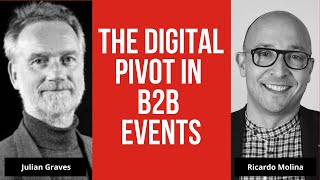
Julian Graves, chair at Collingwood Advisory, argues B2B event companies need a three-stage digital pivot: first mitigate risk by building digital inventory like webinars and podcasts, then habituate audiences to online formats, finally accelerate into always-on models that match buyers and sellers year-round.
Chapters
Here today we are however, having a very, very interesting discussion on how you can channel that thinking, how can business leader channel that thinking and arriving into something that will make really, really good sense for you. Okay, and then I think we're good. So let me just kind of give you a bit of introduction on who we have here with us today. So Julian Graves is the chairman Director of Scale Up Advisory of Collingwood Advisory. I know Julian personally for the last four years and is someone that I have really, I've had really, really interesting conversations about the events industry, technology, everything that there is to know and in this industry. And I've known of Julian for many, many months from when I started my career in the events business as someone that knows their stuff. And I have been following him for many years and he now is part of the Collywood advisory team with someone that I, with Piers Byrne that I really, really trust in the industry. So I am really, really excited about this interview today. I'm really, really excited about this conversation because I think it's really and highly topical. So Julian, welcome. Do you want to give a brief introduction to yourself before we kind of set the context?
Hi Ricardo. Firstly, thanks for asking me to join you this afternoon. Yeah, really, really excited about it and it looks like we've got, we've got a really good audience. So my background is events and media. Hate to say I've been in it for about 30 years and that's large scale events, trade shows to training businesses which I'm an investor in confexes print media and I've also dabbled with taking a B to C event brand into E commerce. So a pretty broad experience over a very long time. So I've been through a few crises and recessions, albeit not one like this exactly.
And I think no one, I think in the audience or in the industry has ever been through a pandemic. The situation today after four or five weeks in this pandemic, people are asking themselves when is this going to end? And many others are saying when things go back to normal. Although the big question is what does the new normal mean? Is a big, big question. But what some people have done, some organizers have done so far is some have done the pivot as we have seen. Other organizations and other individuals are questioning the value proposition. Our question is I kind of evaluate and taking the time to really think about what is it that they're going to do. Very interestingly, a subsector of those groups of individuals are thinking are we really an events business right after they're going through all this process, are we really part of the events industry? And then I think that's kind of what's leading into the very, very interesting conversation that we have here today, because it's about the value and the quality of what you deliver to your audiences is about, again, the business model and perhaps questioning that business model. And many are still unsure. Many are just doing what's supposed to be done, but they're still unsure. And I guess to enter the conversation, Gillian, what should they do? Those are still on the fence or have done something, what should they do? Or what does all that mean right now for someone in the events industry?
Oh, that's a couple of questions in there. Well, clearly times are uncertain, and I think there's a whole host of factors that are coming into play. One thing we can be certain about is that lockdowns will eventually be lifted. But I think it's going to be a very slow process and large gatherings are likely to be last out of the blocks. But also I think we've got to expect that client budgets and balance sheets have been badly affected. So the ability to attend and invest in events of any scale, I think is going to come under pressure, and not just in 2020, but I would urge people to be thinking into 2021 as well. And I think there's also then the propensity for risk, and that's both for corporates, companies and individuals. Will corporates want to protect themselves by not sending people to events? Will individuals be reluctant to go? Speaking personally for personal reasons, I'm probably not even going to be allowed to go to an event for at least the next six months. So when you factor that in, it's uncertain times for the events industry. And therefore, I don't think there's any argument that any event business should now be looking at digital pivot, and not just in the sense of running virtual events, but looking at how they can deliver value to their customers.
Right. And so you and I have been having these chats about the stages under which kind of organizations are now basically all this thing ticked off. So what's happened? So companies go into the stages, and this is a model that you guys have developed, a thinking process which is about mitigation, habituation and acceleration. Do you mind expanding a little bit more about what each of those kind of stages mean? And because I'm sure that many people. My idea is that many people that are here in this webinar today are going to be finding themselves in either one of those stages, likely still unsure but it'll be very interesting to hear your thoughts on that process.
Sure. Most events companies are likely to be. They're likely to be sitting on, on customers cash and they're sitting on that cash and have been unable to provide the service that they've promised. So there are a number of ways to deal with that. One is simply to hold on to that money, postpone an event or credit that money to a future event, and that will depend on individual terms and conditions. Or the alternative is to find other ways in which those liabilities that are effectively sitting on your balance sheet can be discharged. And that's where virtual comes in. So certainly from a sponsor and exhibitor point of view, you've been paid for to deliver a service which is going to deliver a number of different outcomes for your customers, whether that be thought leadership, brand building, lead generation. And there are all sorts of different ways that you can, that you can deliver exactly the same outcomes, but you're just going to have to not be able to do it in a live environment. So whilst running a virtual event is one option and we're working with a whole host of people who've done that and done it extremely successfully. I'll talk about some of those later. There's a whole raft of digital inventory that you can create that allows you to connect your sponsors and your exhibitors with your audience. So that's the mitigation part of it. In delivering that mitigation, you're also delivering value to your customers. You're effectively creating a whole raft of new inventory which can have considerable value. So assuming you execute extremely well, you're getting both your delegates, your visitors and your sponsors and exhibitors habituated to the value of digital experiences and digital content that you're providing. And in creating that value, then change the perception of your customers to not sure. Digital is really, for me, I'm not sure it will deliver on my objectives to one which is, wow, this digital stuff really, really works. Can we do more of it, Julian?
Sorry, Ricardo, I'm going to interject on that front. So just for clarity purposes, when you refer to inventory, we're referring to either a webinar, a digital connection, whatever. That's what you're referring to, right? Can you explain a little bit about what you define as the inventory that you're looking at in the mitigation stage? Sure.
I probably shouldn't say this because we're in the middle of a webinar, but I think in three months time the phrase death by webinar will become common Currency digital inventory can be anything from a TV show, a podcast, a blog, white papers, roundtables, one to one meetings. You can create any connection between audiences through a whole array of different means. What it means is that you don't have to simply virtualize what it was that you originally set out to create. And the key part of that is to go right back to the start and really understand who your customers are and really understand what their challenges are and their needs and their pain points and then think about the content that you can and should deliver that helps those people in those organizations to get that pain relief, to solve those challenges and to meet those needs and then match those with the outcomes that sponsors and exhibitors are trying to get. Whether that's lead generation and moving people from, I don't know, perhaps attending a webinar such as this, and they enter the top of your MQL funnel and then filtering them through and working with the sponsor and the exhibitor so that you end up with a smaller group of highly qualified and therefore highly valuable leads for, for a sponsor or an exhibitor that they might actually not have achieved in the live environment. And hence where we think there's enormous opportunity for certainly pure play events organizers to sort of change their business model really from one that is predicated on a specific specific date in a specific location surrounded by four walls, to one which is an always on business model meeting the needs of buy side and sell side continuously throughout the year.
Yeah, because I think what, what we've seen, right, these four weeks, all those that either have gone to, you know, virtualize what they're offering, they were supposed to deliver, they have had tremendous, tremendous amount of success. Right. And I don't know if it is because people probably or organizations have been used to running webinars, that then webinar is the next best option or a middle ground. But I think what you've highlighted, I think is very, very, very important is that it does not necessarily mean, and I want to reiterate because you've already mentioned it, it does not necessarily mean that you're going to have to run webinars, but that is going to have to be webinars. It doesn't necessarily mean that you have to kind of move everything online and then I think, or online now that digitalization and that's kind of why a lot of organizers get stuck in the vendor discussions as to, okay, how do I create a breakout room and everything? At the end of the day it's just kind of building that connection. And I Know, some of the event organizers are working on a one to one meetings. Basically that's what they deliver and there are multiple ways in which they can deliver that. And perhaps I think is important also for the audience to understand that you can deliver elements either at the top of the funnel or you can deliver leads at the very, very bottom of the funnel, which you don't really need. One is based around volume, the other one is around based on quality and the amount of money that one can charge for all that, it varies and I'm sure that you're going to talk about that towards the end. But I think it will be very, very important to distinguish because I think there's a lot of, there's a lot of sentiment out there that digital is not as profitable or how can someone just translate some revenue that they generated into the physical, into the digital. And I know that you guys have some aspects about the digital myths, but yeah, I just wanted to reiterate that.
For the better, just to go back to mitigation habituation piece. Just before I joined you, I was talking to a client. Absolutely. A live events business, Pure Play at conferences four weeks ago, had never run a webinar and were of the mind that our audience won't do webinars. They don't do digital. It's not for them, it's not for our sector. So we've worked with them for the last four weeks, not spoke to them for about 10 days because they've been really busy. So we just had a check in and the outcome has been they've gone to webinars, they've delivered a really, really high quality audience for their sponsors, that the result being that they've managed to mitigate all of the liabilities that they had sitting on their balance sheet and they've managed to do it in two weeks of proving to sponsors and indeed to the audience that they can deliver the same kind of value, but just using a different channel. That company is now in a completely different place where they're now seriously saying we're not going to run any of our Q4 postponed events. What we're going to do is we're going to push everything out into 2021, get back onto our original dateline, use a whole series of virtual and digital tools that they've now got at their disposal and they're now moving into acceleration mode where they're now winning and they're now, they're now moving into acceleration mode where they're now winning new business. So in a very short space of time clients that they've been trying to win.
More from Ricardo



Implementaciones de CRM - Medipiel: La omnicanalidad y mayor conexión con los departamentos



Implementaciones de CRM - La omnicanalidad y mayor conexión con los departamentos




