Online Community Stories: InspiredMinds - Building a community with real attitude and huge vision
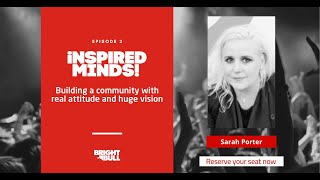
YouTube interview (June 17, 2021) featuring Sarah Porter, CEO/founder of Inspired Minds, in conversation with Ricardo Molina. Sarah recounts founding Inspired Minds after a personal crisis, building a global community (≈200,000 members across 167 countries) focused on using AI for good, launching flagship World Summit AI in Amsterdam (≈3,500 attendees), forming ADA AI (an 18-member interdisciplinary nonprofit board), campaigning for the Afghan girls robotics team, and diversifying revenue from events (60–70% pre-COVID) to subscriptions, training and bespoke projects. She describes tactics for community growth (ecosystem mapping, influencer engagement, a viral selfie campaign), use of data science for granular member profiles and matchmaking, hiring creative communicators (a slam poet) to craft messaging, and reported annual revenue (~$5.56M).
Chapters
Is able to hear the music in the background. This is kind of Sarah's favorite song, Rage against the Machines and very appropriate for the chat that we're going to have today with someone that I find extremely, extremely inspiring. Not only because she's managed to build a business that is kind of pretty strong in the course of five years, but also because she's got a very, very strong philosophy, a very strong why as to why she set out to do what she set out to do. So for me, it's a privilege to be having this conversation. As you know, I am always looking out for organizations that are doing something different in the events industry that are building communities, strong communities, and.
Are up.
For commercial gain, but more importantly, human gain and making sure that they're doing something for good. So thank you very much for joining and let's just kind of get started. Let me try to get this stop here and yes, welcome, welcome everybody. Episode 3 of Online Community Stories. Very excited to welcome Sarah Porter. She's the CEO of Inspired Minds, a really, really interesting organization working and with the philosophy of using AI for good. AI is a. It's kind of everyone always is a conversation in the pubs and saying, oh, imagine how. What would it happen if, if we go and do. Just give me a quick second if you hear. And I think my iPhones have moved too. Okay, I think we're fine. So what would happen if we. If AI is essentially used for the wrong reasons and. And then obviously conversations ensued. But Sarah was someone that kind of thought, I want to make sure that AI is used for good.
And.
And I am really, really excited to welcome Sarah today. Let me just kind of put this on and then now, Sarah, welcome. Do you want to introduce yourself and to the audience?
Yes. Firstly, thank you for putting Rage against the Machine on as my introduction music. That's a defining moment for me. I've walked out on stage to it once. But to be introduced on this is great. Thank you for that. Yes. So as you said, I'm the CEO and founder of Inspired Minds. We a global community working in emerging technology and artificial intelligence specifically to accelerate progress towards things like The United Nations SDGs and other big, lofty, lofty goals. And we're a community led business of 200,000 people now from 167 countries worldwide.
So that's amazing. That's amazing. So Sarah, obviously when I and you and I had previous conversations, the beginnings of Inspire Minds and your journey, it's pretty interesting. So let's just start there and let's just talk Us through. How did it all started five years ago? What happened? How did it come about? And specifically, as I said in some of the social channels that I was saying you wanted to start on AI. No database. Yeah, no. No experience in AI. So tell us about that.
Yeah, so I could, I could dress it up for the purpose of the audience and give you the clean version, but I'm going to give you the gnarly version which is I built. I've always been, I think, an entrepreneur at heart. I think I've always had the spirit of wanting to build and create things. I've always had a vivid imagination which I think you need as an entrepreneur. And many moons ago I started a business, well, say many moons ago, it was about 12, 15 years ago now, which was an incubator taking ideas and concepts on behalf of exhibition organizers, media organizations, spotting market opportunities and then creating launch products around those and kind of doing the dirty work, the kind of pre launch stuff and seeing if it would have traction and it wouldn't. So I built that business up for 10 years or so. I've always been in technology. So all of the products that I've ever run, I've launched things like technology for marketing, network, telecom, call center solutions, been involved with Money 2020 and so on. So I've always been involved with tech. But you're right, I'm not an AI expert per se. I've always served those markets. So I took a role in a corporate organization where I was looking at mergers and acquisitions and I fell out of that role quite badly. So it's fair to say that I did the kind of. I took something where I believed for two years of my life I could work in a corporate and I could do that effectively and I was going to be able to make substantial change there. And you know what? I just, I'm just unemployable. I mean, I think it's as simple as that. I belong in, in, in a situation where I'm creating my thing. So I came out of that and as a result I lost my home, my job, my partnership with my husband fell apart very, very quickly. I found myself in a situation where as a mum with three young children, everything that I knew, all of those, I think I can't remember who it is. It says this, I think it's a guy called Jim Rohn that says you have four or five pillars. Work, finance, health, home. And if one of those goes, you can survive. If two goes, you're a bit rocky. If three go, you're a Little bit screwed, you know, and for me, the majority of them pretty much went. And I found myself in a situation where I had a nervous breakdown. I lost everything. I had to completely and utterly reset everything that I thought about myself, my world and what I was going to do next.
Right.
So that's the starting point. So that's kind of where we begin. And it was a very hard time of my life, you know, I think, and I'm at the point now where I can talk about it in an honest way, but I did find myself in a situation where I questioned kind of everything that I really believed in fundamentally about business and myself and values and the world around me. And out of that, I really do firmly believe now that out of really traumatic situations where you're forced to put yourself into massive discomfort, where you redefine your thought processes about pretty much everything that, you know, that's where inspired minds came from. And hence the name. It was inspired in Latin, means to breathe life into. I wanted to do something that was building a community that would make substantial change in the world around us. And I wanted to do something that was going to utilize most of my skills in terms of building tech products. And when I say products, I mean summits, touch points, whatever else it may be, and then bring together people to create a movement to accelerate progress forward. So that was the very, very beginning. I went out to get funding when I decided what I wanted to do, which was to build this community around AI. And AI is a really interesting sector because it is disrupting so much and that's an exciting. I like disruption. I like working in something where you can. There's a reason why, but where you can see that there are ripples of change and people feel that they want to be part of that change, whether they're uncertain about it or whether they have a part to play in influencing it. So I said about launching that community and one of the first things that I do did is go out to get funding and investment for this fantastic idea that I had that was so excited about, rejuvenated and ready to face the world. And everybody just said, no, yeah, you know, I just went out to people and they were like, no, I'm sorry, this is. You've got no traction, you have no data, you don't actually have a product yet and we're not going to put money in. And I remember one person saying to me, you're a mum of three kids that's restarting out in life as a single mom. How the hell are you Going to manage to do this and all these different sort of things that were thrown at me. Yeah, pretty harsh stuff. And I probably spoke to about 100 to 200 people about getting seed investment. And in the end I sold my home, took the money from the sale of that home, backed myself, got some traction with what I was doing. And then two of those people that I originally visited actually invested and we went from there.
That's, that's, that's amazing.
Yeah.
Okay. So Sarah, I think when you conceived the idea and the concept of Inspire minds as a community, what, what was written in that? I don't know, post it, note in that mind. What, what was that definition of inspire minds as a community at the genesis, at the beginning?
So many things. I mean, so many things. And I tend to think in two different ways. So I think about it in terms of what were we doing for the market that we wanted to serve and what did I want to achieve? And those were two very different things. So I think in terms of emerging technology and technology and artificial intelligence, it is going to be, and it is game changing for society, for businesses, for economy, for pretty much the world around us. And it's a disruptor, it's a massive kind of catalyst for change, if you like. So the first thing that I wanted to do is build a community whereby we would bring together people that had commonalities between each other in terms of who they were within that community and the parts that they had to play, and then the disruptors. So the people that were going to potentially not want to be involved in the community, but had a role to play in it and had to be there. And that could be, for example, a head of government or a traditional head of education or somebody that was big tech organisers, for example. So we built, I built a kind of holistic view of this ecosystem on what I believed it should look like in terms of categories, segments, subsets, the commonalities and the differentiators between who I wanted to be in that ecosystem and then set about building it. And I very much saw Inspired minds as being the kind of connecting tissue between each of all of those. And that's how we then created moments in time, which translates as summits, products, media, articles, whatever else it is around that community. That was the vision.
I really like the fact that you call that you map the ecosystem and then you understand what are the connecting points. Some of those points are very obvious, some of those points are like lines. But I like the fact when you call it that you wanted to create Moments in time. Because I think that it's kind of fundamentally the areas and the things that are going to connect it. Of course, most of the people that are listening to these or that will be listening to this will have various moments in time represented in events and summits. They don't necessarily have those. All the moments in time that probably or opportunities that might exist. So you've mentioned there were like some products, some content and everything. What were these other moments in time in addition to the summits? Or were the summits the beginning and the key pillar of those connecting dots?
Yeah. So the first. I think the first thing that I had to do for myself as an entrepreneur who was absolutely riddled with fear at that point of what I was doing. I mean, paralyzed with fear is a fair thing to say. I'm terrified of. Is this gonna work? I think everybody, every. Every entrepreneur, I hope, faces this. I certainly faced it, which was. You have. I certainly had this sense of disbelief that what I was going to get, that I was trying to do, would it ever really come real? You know, and. And actually, even when it did become. Even when it did become real, I still, even now sometimes look at some of the stuff we've done and go, oh, was that us? Gosh, you know, that looks really good. So I think, I think the first thing was to set a definitive moment in time, which was going to be the World Summit AI, which we decided would take place in 18 months time. I wanted to do something very, very different with that, which would be to find a venue. We hired a disused gasworks in the middle of Amsterdam, which was this really cool, iconic building. I defined that I wanted that building to be iconic. So something. Everything that I set out to do from the start was about creating triggering emotions. So triggering in a kind of emotional contagion with what we were trying to do. And that was going to be through the experience that people had when they came to the summit in terms of the environment that they were in. And I can tell you how we did that in lots of different ways and then also building the kind of the connections in the community that I told you about. So the first thing was World Summit AI, that was due to happen in October in Amsterdam. And I set about assimilating a team around that and then launching the key people within the community as those emotional contagion actors, if you like, to spread the word and build the community and so on.
Okay, and how did you spoke those emotional contagion actors? Because that's fundamental when community building, right?
Yeah.
We, you know, in our link, I love the words you're using. In our kind of simple words, we're looking at who are the key players, who are these influencers, who are these media partners, or we call it the old school way. How do you go about finding these guys and how do you go about asking them to help with the cause?
Yeah, really interesting question. So, I mean, you can take it as very kind of most simplistic level, which is looking at artificial intelligence. Who are the, who are the pioneers and the change makers and the people that are going to make other people want to follow them. In its simplest form, you know, that could be the top professors or whoever it is. But I like to, I kind of think of it in much more granular detail in that. And for me, it was more about people that were going to seduce audiences, that were going to create a following based on their beliefs, be that radical, be it, you know, something that was going to make people stand up and listen very quickly. So the first thing that I did is I identify within the ecosystem who were the protagonists and who were the people that actually bashed heads against each other, and then why were they bashing heads? And what was the real connective issue between that and how do we create that friction, but in a positive way? So it's actioning change, if that makes sense. So, for example, if we had the big tech guys that in AI, you know, your Facebooks, your Google, your IBM, who are our customers and who we have a great relationship with, but equally we have the ethical AI professors who are talking about, hold on a second, you can't develop this tech because you need responsibility, you need this, that and the other. We would take some of those key people as pillar heads from each of those organizations and position them within our community. And then you would find that the subsets and the categories beneath them would start to follow. And the way that we did that in a very kind of simple way, is once people saw what we were trying to do was that holistic view, you know, we're not here actually to take a side. We're here to table all of your views together, bring you together in a collaborative way then, and people felt that they wanted to be a part of that movement, we then got people to use following tactics and triggers to get other people psychologically to see that they were involved. And that led to this kind of snowball of community building. And that was as simple as people taking a selfie of themselves in a really different way. And for people to see somebody that they hadn't ordinarily seen, like Professor Gary Marcus from New York University. All of his shots, you know, they're gray, they're black and white. He's always sitting like this, you know. And I was like, I don't want any of that. Yeah, I don't want you to do that. I want you to take a picture that means something to you, that tells a story about who you are in that picture, and then I want you to take it on your phone in a very real way and we're going to share it everywhere. And he was like, why the hell would you want to do that? I was like, just trust me, that's what we're going to do. And then people. And then it was this selfie by selfie campaign around that, and people started to follow and it kind of triggered this snowball effect in our community relatively quickly. And that's how we accumulated our data in the very early days and built the categories.
Okay, so let's just kind of then start looking about the areas of growing that community, because you've grown a community of 500 people to one that currently is 200,000 plus. Okay, that's a massive fit. So first of all, congratulations on that.
Thank you.
So the selfie by selfie. So you've started. Okay, I'm going to kind of get in contact with all the key players, all these kind of emotional contagion partners. Understand why is it that they. That there is certain friction. Let's just kind of cause a positive friction, constructive in the good sense. And I take it that you have started reaching out directly with each of these individuals, explaining your business proposition. Absolutely everything you do. So you let yourself this process, right?
Yes, of course, yeah. So I would quite literally sit in the early days, myself and my business partner Vidya, who's our chief content officer, and we would sit. You know, I was quite a boring person to be around then, it has to say, because I would just literally sit on Twitter, on LinkedIn, learning everything I could about the key people that I knew were the conduits to that successful ecosystem. And finding out what, what were that, what were they trying to achieve and what value would they bring to the ecosystem, but also what would make it valuable for them. And in its simplest form, that may just be that they had tweeted something that really pissed them off that was about an issue that they were facing that they really wanted to address. And the way that my mind would work with that is, okay, how can we solve that and how can we help them to solve that issue. And, and I think when you break down into a granular level that each of the individuals in your ecosystem and within your community, when you understand them at a granular level in terms of the very reasons why they're doing what they're doing and why that's important to them and what the impact of it is, then you can start to work on how to help them to do that. Because all of that achieves is as a collaborative effort, then is the change that you want to make. Because we're all pointed in the same direction with what we're trying to do with AI, even if some of that requires interdisciplinary friction.
And I think this is kind of an important thing because most organizers and most people out there, their approach is, okay, who are the influencers? Look at their numbers, look at what it is. But that's actually just basically very surfacey approach. And then one of the key pillars of building communities and building everything is just getting to know your customer, getting to know your audience. And what you are highlighting here is the fact that you've did a lot of social listening, you did a lot of reading, you did a lot of understanding what are the key discussion points, what is this person feeling very strongly about, what is this other organization feeling strongly about? And probably, I guess, building all that kind of idea and knowledge around your community which you will then subsequently kind of, I suppose you started creating it, getting them together at the event. So the selfie by selfie, is it the equivalent that like whenever someone says, hey, welcome, we're happy that Mr. SP is joining here, that's flat standard, everyone else does it. So was that selfie by selfie your viewer saying, we've got this guy involved, we've got this guy involved. So you've asked them to take those selfies, you've asked them to take those photos and then you took it upon yourself to do the amplification of that? Right. Or they, or they also did it themselves.
They did do it themselves as well. Some of them, some of them would actually post and do it because at the same time simultaneously, because we're not, we weren't doing this as an event organiser, we've never, we've always said that our events and our summits are vehicles that we use, they're mechanisms that we use and moments in time, as I say. But ultimately what we're about is bringing together a community of those interdisciplinary folk that can make, you know, substantial impact. So, so yeah, some of them would, would tweet them themselves, some of Them, we did on their behalf. We ran a selfie by selfie campaign that went semi viral. We got young people involved in that as well that, you know, wanted to aspire to see change and, and it kind of went from there, basically.
I mean, that's amazing. You highlighted, you highlighted in our previous conversations that you had like certain milestones within your community growth. So we're starting very small. And then the selfie by selfie generated like an increase probably around kind of 30,000 members of 3,000 people that kind of said, I mean, or I like to be part of this conversation was that how if you were going to be able to kind of think about key milestones in time within the last five years, what, what were they for you guys in your community?
Yeah, gosh, there's been some moments, I can tell you. So there's, I think the, the milestones for us. Well, there was a personal milestone for me, which is where I psychologically changed my view on what I was doing and realized that I wasn't going to back out of what I was doing, you know, and that, and that's just purely a kind of, you know, something that I needed to just get over. Basically this turning point when I realized I'd invested my money into the business. And then suddenly I was. I was so scared to move forward because I thought everybody would be looking at what I was doing. And I was so concerned about it. I was kind of crippled with anxiety about it almost. And I remember somebody saying to me, you need to go and bury your fear somewhere and get on with it. It was one of the who then became an eventual shareholder. That moment for me was a defining moment because after that I had realized that no matter what happened, I was never going to quit.
Right.
And that flipped the way the business started to operate because then I was like, oh my God, this is actually going to happen. And I need to take serious action very, very quickly because otherwise I'm going to have to lose an awful lot of various different things. So that was one of the defining moments as a business. The second was when we formed a group called ADA AI. And the ADA AI group sat alongside what we were doing as an ecosystem, as a not for profit, which was bringing together 18 interdisciplinary folk who were some of the biggest people in artificial intelligence and other areas that we thought were important. So, for example, philosophy and so on. And we had Professor Gary Marcus, Joanna Bryson, the World Economic Forum, the United nations join that board. And at the point when they joined that board, we were all sitting there as A team in utter disbelief. You know, it's like they're actually doing. And when that happened, we started to see very quickly that we kind of had, you need, you need, when you're building a community of something where you don't necessarily have the expertise in the area that you're talking about, you need a collective wisdom behind you, and you need to prove that. Collective wisdom. And sometimes it's not good enough to say that you understand it. You actually need proof of that. So that was our proof. You know, amazing. You know, I'm an entrepreneur. I know how to build a community. But also I'm backed by 18 of the most influential people in artificial intelligence and backed by them in terms of they follow our movement and they're a part of that. So join us. And that kind of changed. That was a game changer as well. And then the next was when we got an angel investor who came on board very early on, who saw what we were doing, wanted to be a part of it, had built ecosystems over Apple. He was the chief of, of staff there, and he put a little bit of money in and that was all it took for me to become one of the most confident entrepreneurs on the block. So I was like, hey, I raised a little bit of money and now actually we're backed and this is great. And it gave us that belief as an organization that somebody else shared our vision and we're willing to put money into it. And that, yeah, that's amazing. That's a milestone.
I would say that's amazing, Sarah, and I'm glad that you've made that mental shift. And then we're going to touch about that a little bit, because now you've become like this individual full of confidence that, you know, basically your social media, you're like very out there. You're very. You express, you tweet, you're constantly, you know, in the ecosystem. But I'm going to touch that in a little bit. But I wanted to discuss the aspect. So for anyone out there that is kind of an entrepreneur, probably that has events, and then you were going to say, okay, you run your event. On the first year you run your event, you've did all these kind of aspects. What would you say would be kind of again, that journey, when did it became 2,000 people, 2,200 thousand members, and was that calculated? Was that. And I don't want to use, I mean, I don't know. It's not accidental, it's just basically you've created a movement. When did it become like Something big or at what point it started to become something big?
Yeah, it's a really interesting question because it's grown now in a way that I could never have possibly imagined, because it's now subsets of communities. Like, for example, we have 22,000 clinicians who are in the. Because we've launched an AI and medical portfolio. For example, we have climate change pioneers. So it's become very interdisciplinary. So I think. I think the key points where after we ran our first summit, the World Summit AI we attracted, it was about three and a half thousand people came to that event. On the morning of that summit, me and my team, we did not have a clue if people were going to show up. I mean, I know that sounds crazy because you think they're going to come, right? But I remember, I mean, we were all having really, really vivid DRE dreams about walking into the Gas Howdah one, my partner, Vidya, was saying, but every time I wake up, I walk into the Gas Howdah and there's one person standing there. And I was like, I'm having the same dream. What does it mean? You know, like.
Right.
So, yes, yes, people have bought tickets, but actually our doubling point for the ticket sales for welcome AI were in the last two weeks before the event. Yeah. So in the last two weeks that we were like, okay, so in the morning when we turned up, the. The gas had. Was absolutely packed with people. And as a result, then kind of knew that we were, you know, that was the proof that we needed that people were following us and that it was something big. Within probably about two to three months after the first World Summit AI, it went really, really well. And a lot of things that we did, the word spread, and very, very quickly, we found that people started subscribing, and we went from 35,000, a data set of 35,000 to a data set of 116, 160, 118,000 people within three, four months. And that was mainly because of just word spreading about what we've done. People tweeting about it, people, you know, the type of speakers that we had were very influential. And it just went from there, really. I think the other significant points where we've seen big doubling in numbers is when we have tackled big causes as an organization, and we probably don't. We're not very good at this as an organization, and maybe this is something, Ricardo, I need your help with at some point. But what we don't do is really market our accomplishments as well as we should do. And that's a Problem. That's a problem I need to work out as a founder. But we probably don't tell people enough about the good stories around what we've done. And we campaigned against Donald Trump for the all girl Afghan robotics team. And it was. Yeah. And when that went across the Times and people saw that that was happening, that's when we saw another big substantial jump in community members. And then digital, the start of COVID which has been awful and a massive disruptor. We pivoted very quickly and we created new products within weeks and days and weeks because of the type of team that we had. And that's when it doubled up again up towards the kind of 200. We're on 220,000 people now because that's a different entity now. It's subscriptions of course.
So now that's the evolution of obviously starts with events. Obviously, as a key pillar of kind of the building blocks of the community after that big event, you kind of prove to yourself, prove to your audiences that it could happen. The way the events look are pretty impressive, pretty grand with the big screens and all that sort of stuff in a different location. So that's kind of doing things in a different way. So that's kind of fantastic. And then I think. So you're highlighting the fact that obviously I'm linking the value because all strong communities that have. That have really strong values. That's really strong beliefs. Then you said we you've big causes. Right. And then obviously there is not only the commercial goal but also the call it the greater good and the ADA AI and the all the kind of non for profit work that you do with the foundation. And then I think obviously, and chasing big courses and then again the digital but chosen chasing big causes is what has caused death threats for you, Sarah, Right?
Yes.
Tell me, tell me and tell us about how, how does that belief lead you to being threatened and how does that either is that boundary between, oh, you're invaded by fear and like, come on, bring it on. I'm gonna basically that's gonna be the field to do more. Tell us that about that.
Yeah, so the story behind that and what happened is. And some of it's a little bit sensitive so people have to read between the lines. But we, when we started the campaigning against Donald Trump, very publicly, what had happened is there was a team of young girls in Kabul who were trying to compete in the Washington D.C. robotics Competition and they were competing against Global north teams, teams from major cities around the world. But they had created their robot, they had to create a robot that would be entered into the competition from recycled bits and pieces from, you know, they were coming from a situation where they hadn't, you know, they weren't in a school and so on. And they had managed to gain a place in that Washington D.C. competition against all odds. And I remember thinking, you know, what an amazing story. Those girls, you know, I look up to them. This is fantastic. And they were aged between 12 and 14, 15. And they were then unfortunately told at the very last minute, well, last bit, about eight months before the competition that they were being banned from traveling under the Muslim travel ban that was implemented by Donald Trump. And I remember as an, as a team, I. I'm surrounded by feisty people in inspired minds because they have, we hire people that have a very strong. Why, a very strong passion for cause. And some of the people within the organization said, we can't let this happen. This is actually in our sector. This is robotics. It's AI. What the hell are we going to do about it? And I was like, well, I don't know, what should we do? We don't have any cash. What should we do? So we started a campaign, we literally started a social media campaign that said, and sometimes that's the beauty of being a small independent organization, because we were a little bit unbridled in the way that we could do that, because I was like, let's just try and see what happens. So we went out and said, actually, this is unacceptable. We're campaigning against that. And as a result, and the reasons we were campaigning against it were because it was what didn't embrace equality. There needed to be more women and girls in artificial intelligence, and this was a hindrance to that. If we were, you know, eliminating people before they even managed to get school age competitions, it was ridiculous. And people got behind that cause because it triggered so many emotions for people, and quite rightly so. And anger. And anger is a fantastic emotion for change if you can capture that and use it in a way that becomes that kind of emotional contagion that I told you I was talking about before. People were outraged, absolutely outraged, unfortunately, as a result of us campaigning. So the girl, we did get the visa overturned. The girls went to Washington.
Amazing. Amazing.
Yeah. But also we invited them to weld some AI and we got visas and a safe passage for them to come to Amsterdam. And they became champions of education for girls. And as a result, I started getting these death threats and messages, which were firstly just messages across social media that I had to stop what I was doing. Or my life was in danger. And then I got a delivery to my home, which was. Which was a casino chip that was a black casino chip. And then it just basically said, next time you're betting, we're betting on your life type thing. And it was. Yeah. So that's when the police got involved and it got very serious. And we had to kind of, you know, realize that what we were doing was going to cause substantial change. And because of that, it was going to cause substantial upset. And I think it was at that point that we decided as a business that this is exactly what we wanted to do. Yeah, it's like precisely therefore, what we wanted to do because, you know, in a world of uncertainty, we almost felt like we needed to be the people that were willing and able to stand up to some of that and be a voice for change. So, yeah, that's. That's kind of what we did. I mean, I'm not. I'm not saying that I didn't put a baseball bat under my belt. Not that I did much worrying about the. I got a little bit paranoid for a while, you know, but. But, yeah, I mean, we still get that. We still get, though. I still get the occasional threat and people. And people dislike sometimes intensely what we do because we are tackling big issues. And when you're tackling big issues and you're bringing to the forefront things that need to change, it triggers people's emotions because some people are going to be polar opposite because they're either frightened, they have fear about that change, or it's the uncertainty that they don't like. And when we're tackling big issues like we do, we now expect, you know, to get backlash. And we do get backlash. On social media, we get backlash sometimes from people. My response to that is always understand why we are getting that backlash. Understand why we are getting that issue. And when you understand where somebody's coming from and what the emotion is and why they're behaving that way, then actually it kind of diffuses any response that you have because you think, yeah, I get it. I know that you culturally or whatever reason, see this as something that is uncomfortable for you, and we understand, but we're going to continue with what we're doing because we think it's the right thing to do. So.
Well, congratulations, Sarah, because it must have taken. You know, I was just expecting when you were going to say, and that's when we, as a collective business, decided that generally the expected answer is we rather stay aside from that. But it was Actually very welcome. When you say, and we're going to. This is the right thing to do and we're going to push forward. So that, of course, I'm going to touch upon, I want to touch on the elements of social media and the role of a community leader, the business leader in social media. To fly the flag for big courses, to fly the flag of, to be the conduit of, Of. Of the industry, to be the voice of the industry in certain ways. And that is going to mean controversy and outspoken. So you are very, very prolific, very, very, like, active on social. Right. So LinkedIn. That's amazing. And I admire that from you, Sarah. That's amazing because that in what we do and in what we help organizations we advocate for, we need a strong voice that is visible, that it's out there constantly engaging, because that generates a lot of influence, that generates a lot of attraction. So tell me more about your role on social media and how important do you think this is or has been in the process of growing your community?
Yeah, it's interesting you say that because it's. That's again, slight of that imposter syndrome thing for me, because I'm thinking, is that me? Gosh, okay. Am I really that kind of thing? You know, I think that, as I said before, I've got very strong opinions within the organization. So inspired minds. We are a team of people that are very passionate about the cause and what we do. But sometimes I think there is too much. How should I put this? In a, In a, In a politically correct way. I think there's too much waffle and there's too much fluffing around and skirting around issues because of fear of corporate backlash from that. So. And if you're working in a corporate environment, and I've been in that situation where you can't post something on social media because it has to be this or it has to be that, and I understand that and I get that. I've worked in corporate environments. We don't have that. I can be unbridled on social media and I try and do that in an instructive, a constructive way. You know, I'm not one for heckling or anything like that, but I will, you know, tackle big issues and speak about them because that's what our organization stands for. And if I'm not prepared to do that, how can I expect a, my team to do it and then secondly, my community to get behind us with what we're doing? I want people to understand what inspired minds is about. And I Want us to understand that we have, yes, these commercial goals. We are a commercial organization. We build the world's largest summits in tech and cloud, you know, what, climate and medicine. But also we have this other part of us which is the underlying why of what we do, which is to not be afraid to tackle those big issues and speak out loud about it. And I think sometimes I do see it as my role to maybe represent some of the people within our organizations, within our community. So some of the people within our community that I know them so well, it comes back to that granular detail that you have about people that are within your ecosystem. I know that some of the professors that I've spoken to that are women that are. Or black women that are in large organizations or whatever else it is, are having a tough time with it, or I know that there are some people within our global south communities who desperately want to get their voices heard, who are very credible with what they do, and they're not. And that breakthrough is very, very difficult. That's our role at Inspired Minds is really sometimes to platform the right discussions that need to happen. And we have that unique holistic overview to enable us to do that. So I see Inspired Minds and particularly my role as a leader, to lead from the front and to do that. And I'm happy to say that I kind of lost inhibitions about that a while ago and now it's a little bit of, you know, it's. It is about what I'm doing and I get that you might be upset and it is what it is, you.
Know, and then I think what I value the most with the way that you behave on social media is the fact that, number one, shows that you're a genuine person. It shows that you strongly believe in the causes that you support. And there's definitely abundance of passion, tremendous amount of passion. And. And that again, it's contagious and. And I think just to link that from an overall strategic point of view that is needed to build a community. You need someone that's. That's just doing that. So. And I think that's kind of a big. A big part. So growing the community about is also important, like big causes and everything. And I think you have strong policies about inclusivity and, you know, gender neutral and all that, all those kind of key topics. And then you make a point of that to make sure that everyone feels safe in a safe environment, regardless of origin, gender, economic status. Tell us a little bit more about it because I know I have another question. I Had one question that's just come through that from Jason, which I would love, I would love to put to you, but let's just talk about that inclusivity aspect, which I think is important.
Yeah, it is, it's absolutely critical to what we're doing, particularly in tech. But also I think it comes back to this. So how do you create a, an ideal result? So an organization with impact that's going to make changes in that. So it's all very well us talking about the problems, but we know those problems exist. So from my point of view, it's very much about us saying in five years time, what is the image of the future? What does that look like? And not just from a visualization point of view, but what does the perfect world for tech look like? And that is one that is obviously inclusive. Everybody's involved in the creation of artificial intelligence, that women are at the ball table, blah blah, blah. Whatever else it may be. When I in my head see that image of what I want the future to look like, I visualize that in great detail. And then I re engineer and back cars back from that. The key things that need to change for that to happen. And then what I like to do is instead of being an organization that bangs on about we have diversity in our events or we have 36% of women and we have 40% female speakers, whatever it is, instead of doing that, I like to think that we position things as they should be. What I mean by that is we try very hard to create something that is inclusive of all, as if the change has already happened.
Right.
And it's that image of what we want it to be in five years. But we create that product now. And we were very, very specific about World Summit, AI and Intelligent Health and all the other brands that we have that they are, they're like the ideal version of the future. And we don't really harp on about it in terms of that's why we've done it. Whatever else, it is what it is. And that's egalitarianism, isn't it? And it's truest form really. It's kind of creating it as if it's already happened.
It's in the DNA, right?
Yeah, yeah. And I think, you know, that's not to say that people that campaign on specific causes, you know, with people calling out inequality and pointing out those individual cases is really important. Our aim is to create this kind of perfect view of what the future already looks like, as if it's there. And that's what we Try and do amazing.
Sarah, I think there's a question around again your community with regards to. So You've built your 200,000 audience, you have very successful events. So from the point of view of generating revenue. So you generate revenue through delegate tickets, event sponsorship, how else does InspireMind generate revenue outside those two items into the business?
Yeah, okay, which is a great question. So we, I'm completely transparent about the fact that as a business we now turn over around 5, 5.56 million a year. In terms of revenues, I would say probably about 60 to 70% of that traditionally came from our summits. So from delegate passes, from sponsorship, from partnerships and so on. That's changed due to Covid. And the rest of our revenues come from subscriptions, so subscriptions to our community. So we have Mothership, which is a platform, which is. I say platform, I don't like the word platform. I don't know why I use that. It's a, it's a community app. So it's bringing people together and it's things like articles and so on. It's professional learning. So we have a credited courses that people can take on AI and their CPT accredited and then we also take on individual projects. So for example, we will sometimes work on behalf of some of our partners like Microsoft or Novartis, whoever it is, to look at big diversity projects. How can we help set up global communities in Africa or Latam or India that become community hubs for AI. And those are some bespoke projects that we do that are kind of one off edition projects. And we've done quite a few of those in the past. Our revenue obviously with COVID as any organizer, our revenue streams have changed and it's been challenging. We've taken, I mean the great thing about digital is that the margins on digital are so much higher. So if you crack it, then it works very well. So we have seen obviously in the last two years, we haven't run any event physically since January 2020. All of our. And we run seven events a year now in all different geographic locations around the world. All of those have been online. We've run a series, we've run podcasts, webinars, and some of those are charged and some of those aren't.
Okay, well that's pretty interesting because that's a general trend across media organizations. I refer to them as they're no longer event organizers. They're now becoming like these media outlets or these kind of greater organizations that are predominantly looking at how they can start generating revenue outside events. And of course, subscription models is what's kind of becoming more important, especially for organizations. Especially because there's the digital aspect and the longevity of it and recurring revenue is what kind of organizations are going to want to understand. So we're running out of time, but I wanted to touch on the, on the aspect of you guys don't have a marketing department per se. Right. And you place a strong importance in the element of data and the data that you've gathered around the products, services and about your journey. And there is an important element because this is an area that is almost always not necessarily as key and top of mind for leaders and CEOs of organizations that are in this journey of community. You have taken the steps to hire a data scientist for your business and we're talking about a reciprocal system. And the data scientist is going to of course use AI to I guess cross pollinate, if that's the word that everyone uses. Or like if we go back to the very beginning where you said you have all these kind of networks or groups of people, you want to understand that. So you tell us more about that. Because I think the point is no marking department. Yes, probably you should have one. But again, I love the fact that it's just very different from what you normally would see in a standard version. And why is it important to hire a data scientist for your business?
Yeah, it's interesting, isn't it? Because I don't know how we've ended up with no marketing department. I don't know. I mean, as I said to you, we've hired, we've used marketing freelancers and marketing people. But it tends to be everybody's talking to our market consistently and our team. So whether that's our ambassadors or the people within our community or our agents or fans or whoever it is. So people are kind of semi almost doing that on a day to day basis anyway within our community. And we're all active from our content officer to myself on social media, as you pointed out, and so on. So I think marketing is an integral part of what we do, but it's a kind of part, it's interwoven between all of the disciplines and everybody's constantly doing it. That's probably not right. And that probably is part of the reason why when I said to you we need to get better at celebrating our achievements, you know, a marketing and a PR person would be able to do that for us. So that's something that we probably need to do and. Sorry, what was the second question? The second question was the.
Oh, why you should hire a data scientist and what is the role of that? Data scientist, essentially.
Yes. Yeah. And that again was an accident. So we came across this great girl who is a data science student. She was looking for some work and she said, you know, I'll come in, I would like, she's a student and I'd like to do some admin and bits and pieces and support what I'm doing. And then we were like, but you're a data scientist. And she was like, yeah, okay. And when we started to look, when we started to look at our data sets and what I have this vision in my mind of what I want to create within our community, which is probably like maybe a bit far fetched, but what I'd really like to do is create individual profiles with granular level detail about everything about our individual. So whether it's there, not just the fluffy stuff, not the job function, you know, what they're looking for in terms of I want to meet new people or whatever it is, I want to know the triggers for them that make this absolutely critical for them. And then once we've got that granular level detail around them, which we've already started to program and we did it as a point based system, so we started to look at asking, just asking questions of our community and building up on an individual basis. Some people are willing to give it voluntarily. Some people we, you know, we have to go to them and actually phone them and say, will you participate in this? And they've start, we've started to build those up. The data scientists then look at it. She's built a point based system around it and started to create this framework which looks at points of disruptors, categories and segments that of the people that should necessarily therefore meet, match, connect, help each other, be an introduction, whatever else it is. And she's actually now starting to build algorithms around that now. I guess you know that it's, it's not there yet and it's, it's not something that's in its kind of finished form as yet, but from our point of view it's giving us great insight about our individuals within the ecosystem. And what we want to do is. You said the reciprocal ecosystem it. To me it's very, very important that everybody that's in our community receives value and they receive value on it, you know, as, as much as. Yeah, as much as we can. And that's not a monetary value. What if sometimes it can be a number of different, different things? And that's why we're building it that way. So. And some of that is also positioned around. I don't know if you've ever heard of Lovemarks.
No.
Okay. I know we haven't got much time, so I'll be really quick. It's a really interesting thing to go and look at as a guy that I knew many years ago called Kevin Roberts, who was at Saatchi and Saatchi, my dad was in advertising. I happened to get introduced to him and he had this, really wrote this really interesting theory which is called Lovemarks, which is about. For a brand, brands are dying and you don't market a business on the basis of brand. You market a business on the basis of love and respect. And it sounds really fluffy and gooey, but actually when you really drill down from that and you understand what that means and what it means for people to resonate with an organization as a love mark and they do that because you're addressing needs both socially and psychologically and everything else, then you create a reciprocal ecosystem where people want to be a part of that and it's very difficult for them to leave that and want to because you're fulfilling what they need. So yeah, that's data science and love marks and why we don't have marketing.
No. And I think this is an important element. So you've touched on that, which I think is great. I love the fact. And then it's okay not to have a marketing department because guess what, everyone's doing markets and everyone's active on social. Everyone's speaking to their audience on a day to day basis. The love marks, while I wasn't aware of that concept of anything, it's very interesting. It is kind of a general common denominator in the series that like we have been doing, you know, last in our previous episode, we have a company called Lead Dev and then we, we've actually called the session a community truly loved by its members because they actually have us reciprocate to the community itself and obviously to the organization in amplifying the message and showing up and, and I'm saying it's now things are measured in love and respect. And then as long as you command the respect of your audience and they really truly respect you, they'll follow you, they'll help everything you ask of them, they will help you with it. I wanted to touch on the one last bit that I find fascinating. You guys have hired a poet into the business to help articulate the messages that you've got outside. That's fascinating and that's Very interesting. Tell us a little bit more about that and if anyone has questions, please send them through. We're running out of time. But like, I like, I like Sarah to expand on that because I think this is very interesting and everyone should hear about this.
It was really by chance. So it was Amanda Palmer, he's the musician. Posted something about supporting women during the pandemic, particularly artists and patreon artists. And one of those artists was a young lady called Megan beach who is, she's an absolute gigahertz brain person. She's an English Literature PhD at Cambridge University and is also an up and coming rising star in a thing called slam poetry. And I tried to be all cool at first and understand, oh, slam poetry. Oh, I know what that is. Had no idea. It's basically the art of telling stories through prose and poetry and doing it in a kind of rap kind of cool semi style. But it's what she really does is she brings to life stories and tells stories in a way that really gets people to sit up and listen. And she's joined us, she's joined our team, she's now working with us and she is rewriting the way that we talk to our community. We address big issues. She released a poem for us yesterday with a new tagline which is we, we all challenge mountains, but we are the summit. You know, so she's doing stuff that's just really cool around singing the song on behalf of our community members and what that. Yeah, yeah, so that's her. Her name's Megan Beach. So go check her out. So she's. She's awesome. Really awesome.
That is very, very interesting because I think again, what has shined across the whole, the whole kind of interview is that you have done things in a very different way. You've always wanted to create or leave a mark or leave something behind that just kind of continues and that is shown through your approach to using different venues to your approach of using different things. When you, when you're like kind of sharing information about your speakers, who's kind of getting involved, creating social campaigns, being very, very, very outspoken on social media and very present in social media, the same as your team and things just happen, come to you and then you basically evaluate and look at these opportunities and you go with it. You know, this is the thing with the data scientists, this is the thing with slam poets. And I think that is kind of pretty, pretty strong thing and, and that actually kind of shows kind of why Useara have grown this business into, into what it is today. From my part, I think thank you for taking part in this and for open up. Thank you for just doing something really good for for the world And I wish that most of the organizations that run communities in different industries find some inspiration in what you've done because that is what makes a real community kind of gel that's what makes a community grow. It's strong values, a strong why, doing things in a different way. And I do appreciate that. I'm really sorry for those that like probably post questions. We've just run out of time and I'm really respectful of Sarah's time and so until next time we invite you guys to join the next session which we have another three episodes of really, really, really interesting scenarios will tomorrow we'll send you the link to those if you want to connect with Sarah, find her on LinkedIn. I'm sure if you search for Sarah Porter on Google she's going to come up and but tomorrow I'll share the get in touch with her. Sarah, thank you very much. Thank you everybody.
Cheers.
Bye bye.
More from Ricardo



Implementaciones de CRM - Medipiel: La omnicanalidad y mayor conexión con los departamentos



Implementaciones de CRM - La omnicanalidad y mayor conexión con los departamentos




