Creating The Story For Marketing ft Nigel Benton | Industry Change Ep 15
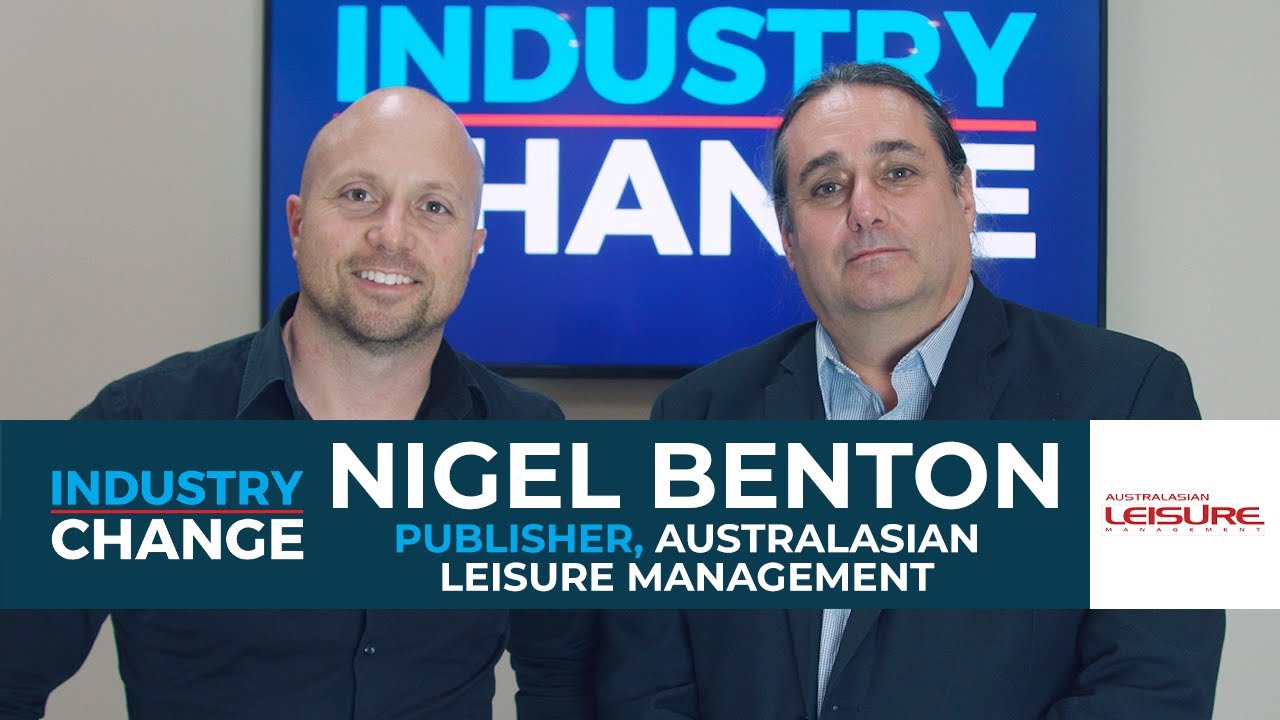
In this episode of Industry Change, host Richard Toutounji interviews Nigel Benton, publisher of Australasian Leisure Management, about content marketing within the B2B leisure sector. They discuss why print magazines remain strong for older decision‑makers, the importance of high‑quality, relevant stories, and how short news items work online while longer pieces thrive in print. Benton emphasizes that every leisure business—big or small—has compelling stories to share, from member success cases to celebrity visits, and that media outlets are eager for such content. He outlines a simple press‑release framework based on the five Ws (who, what, where, why, when) and shows how the same material can be repurposed as scripts for podcasts, videos, or social posts. The conversation also covers the blurring of sector boundaries (fitness, aquatic, climbing, yoga) and the explosion of consumer choice, noting that this diversification creates more storytelling opportunities. Finally, they stress the need for multi‑channel distribution, the competitive risk of staying silent, and provide practical steps for operators to get their stories out, including where to access the OzLeisure magazine.
Chapters
It really comes down to there being lots of great stories to tell, and it's sometimes people are so close to the coalface of what they do, they don't step back and realize they've got a great story to tell. Across the industry, there are just fantastic stories to tell.
Welcome back to Industry Change. My name is Richard Turtungi, founder of ComMarketing, and today we're talking all about content. I'm with Nigel Benton, publisher of Australasian Leisure Management. Welcome aboard.
Good afternoon, Richard.
Uh, good to have you aboard. Now, you've been in the space of publishing some amazing magazines for 20 years, and I think you can share a few secrets of your success, of how you've done this. And this is basically The leading magazine in the leisure management area there. How did you get aboard this? Because I mean, this is a B2B magazine. While digital is on the rise, your magazine is getting stronger and stronger. It's getting thicker, it's getting nicer. Beautiful advertising here, beautiful editorials in here. It's only getting stronger. What is the success of such a thing?
Well, success doesn't happen overnight, and it's not just down to one factor. But believe it or not, while people will tell you that newspapers are struggling, and they are, and consumer magazines are struggling, In the business-to-business space, publishing is thriving. People want to engage with good content, and the fundamental for us has always been about good quality content. Engaging with lengthy and informed content online, though, can be difficult. You know, we only stay engaged with things that we read online for a short period of time, which is why short bits of information, short news items work really well online. But longer and more informed pieces that we like to publish in the printed magazine work better in print. It's also that the demographic of people who make decisions on buying big items of equipment or on major projects tend to be older, and they tend to be people who've grown up with print and are still familiar and comfortable with print.
Because what we're talking about in these magazines, I mean, we're talking about decisions to, you know, for a leisure company, for swimming pools, for technology, and these are big, big items, big purchases.
They certainly are. The industry is a significant employer, plays a significant role economically. and in terms of people's social and community benefits as well. And I should say leisure, I always admit it, is a really poor word. It's just the best one there is that covers what people do in their out-of-home free time, whether they're going to fitness clubs, whether they're going to council-owned aquatic centres, whether they're going to children's play centres or climbing walls, whether they're choosing to go to sports events, participate in sport and recreation activities, go to entertainment activities, go on holidays to theme parks and national parks. It's all leisure. And as managers and professionals in the industry, We're delivering experiences that they enjoy, that they pay for, that are safe for those people in those spaces. And the individual consumer makes decisions on their activities across all those spaces on a daily or weekly or annual basis if it's things like holidays. So you— it, as I say, it's a poor word, but it's the best one there is that covers that.
Yeah, it may be. I don't know if it's a poor word. It covers so many things. And I think it's the outcome and the feeling that your magazine actually supplies and the advertisers in it, the information in it is exactly that. They're going direct to that consumer market and you're hitting that B2B market most importantly. What's been kind of the biggest change in, you know, the mediums now? I mean, we just caught up for lunch earlier and we're talking about podcasting, we're talking about videos. Are you, you know, where is the pivotal switch that you always have to look at? I mean, you've got a very big online presence as well. You put something like eight press releases out there every single day online. When you put mention someone's name, it goes straight into Google as well. Talk about that whole process of you know taking a print now we're on magazine. What's what's kind of sorry taking a magazine now we're on now we're online. What's what what does that world now consist of? Is that something that we've had to train train up how to do? We've had to get to more advertised across that sector. How does that now? Is it much harder now or easier?
It's funny. It's changing, but in many ways it's still the same. Because the fundamental of anything you read, whether it's online, in print, or anything you hear on the TV or on the radio, is content. Is good, well-presented, informative content that's relative— relevant, rather, to you. In our case, we're publishing content that is relevant and valuable, we hope, to people who are managing other people's free time. So that as managers, they can make informed and better decisions and more successful decisions. But it really just goes does come down to the key of there being good content, the fundamentals of your story, whether you're putting it as a press release, whether you're delivering it through a newspaper, whether you're putting it on TV, whether you're putting it as a podcast. It's always about content, engaging, good quality stories that promote what you do but are relevant to your readers and audiences.
Content is king in online marketing. We always teach content. Doesn't matter if the platform's Snapchat, Facebook, Instagram. At the end of the day, we have to produce content. And I'm loving hearing that from you because all we educate and teach before they— any of our clients touch online marketing is what, what are you going to actually give out? And that's, and that's quality content you're talking about. So it doesn't matter what medium you're talking about here, it's about what you're actually sending out to your audience.
It is, and it applies whether you're a large business or a small business. You're delivering a product, you're delivering a service that people are enjoying, that they're benefiting from. And the great thing about this industry is people achieve things by doing leisure activities. They improve their quality of life and they enjoy doing, you know, what leisure delivers. So as I said, whether large or small, there's a great story to tell. You know, we're not nuclear power, we're not tobacco. We've got a great story to tell about people having a great time and improving their quality of life. And whether large or small, you've got a story to tell about your service, your business, or your activity.
And this is great because a lot of our clients also struggle with, you know, what do I write about? And if we're talking to, for example, a fitness chain or a bunch of personal trainers, well, they can obviously write about the success or nutrition tips or fitness tips. You're writing about the success of businesses, um, in, in this particular industry. And what you're— what I'm hearing you're saying is that that's interesting for, uh, you know, the people that are purchasing possibly that product. And so that's a newsworthy product. And kind of explain that process. I mean, how do you know when you have a good story? I mean, you've been in business for 20 years running a bi-monthly magazine. great, amazing content. How do you know when it's a good story? How do you know in your business, what should I write about? What should I promote? I mean, I think every business spends so, so much of their, you know, hard-earned time making sure that, that, that it looks good online. But I mean, you're talking about a press release, which to a degree, it's like an article in a magazine, it's an article in a paper. That's probably much higher than an advertisement, would you say?
It really comes down to there being lots of great stories to tell. And sometimes people are so close to the coalface of what they do, they don't step back and realize they've got a great story to tell. Across the industry, there are just fantastic stories to tell. Now, I know a lot of your market are smaller fitness clubs and PTs and things like that. I guarantee pretty much everyone has got a great story to tell about the success of their business, which is the sort of thing we'd be interested in. But the sort of thing that their members or potential members would be interested in are things like how they've helped a member achieve a great great weight loss goal, or become part of a major event, a group of people being part of a Tough Mudder event or something such as that. How they've had a celebrity client in their facility or doing their programme. How their programme has been a business success for them. If it's a learn-to-swim school, how they've helped children attain swimming skills and life-saving skills which will benefit for the rest of their days. There's a huge amount of content that even the smallest operator in the business has got a lot of stuff to tell, through to the bigger chains where there's great stories to tell about remarkable business successes. And over recent years, we've seen the fitness sector grow hugely. Oh, yeah. Transforming itself as well. And therein, even for the big operators, there's great stories to tell as well. But I think it's really important that even the smallest operator, even the sole trader, doesn't think, well, that stuff's just for the big boys, because they've got a story to tell. And in this day and age as well, traditional news media outlets struggle. You know, we often hear about major organizations or even local newspapers declining in size, cutting journalists. They're desperate for content. They want content. And we've got, as an industry, fitness, leisure, recreation, has got some great story, uplifting stories to share that media is really, really keen to use.
Wow. So this is great because a small business Yeah, I think they've got some amazing journeys, amazing stories. People lost weight, heaps of people. They're training a celebrity, or they're training somebody who's been through such a journey, which is, which is very newsworthy. How do I guess, you know, if they're their own business, they're doing everything themselves, what is the fastest way to get that out? Is it, is it just putting pen to paper, or what should I say, like typing it up? How do they actually get that story? And what about if you know a writer? How would you overcome those obstacles?
Well, that's possibly hard. I always emphasize that people should just have a go. Even if you make mistakes or, you know, a year down the track you look back and think, I should have done that better, just get that out there and have a go. It's looking at media that you think is relevant to yourself. You look at whether it's local newspapers, radio stations, social media, or online, and thinking, seeing similar stories about other businesses or thinking that's a space you want to be in. So looking at where you would like to be, and then it's simply putting down your stories. There's a fundamental with press releases, they call it the 5 W's, and those are the things to start with: who, what, where, why, and when.
Who, what, where, why, and when.
And pretty much every story, you know, you can break it down and drill down, and that's the basis of the story. And depending on what media you choose to use, your press release that you put together can almost act like a script. You don't necessarily have to put it out through traditional media channels. I'd say it was a good idea to always do so, but you don't have to necessarily do it. If you're doing a videocast or something, use your press release that you put together as your script, as it were. It sets out the key things. Don't get bogged down in technical stuff. If you're writing about activity, don't grab research about activity levels falling in Australia. We all know that, and it's maybe something to put further down the release. The fundamentals though are those 5 W's of what you are doing.
So it's really just focusing on what you're actually doing and writing about it.
Yep.
It seems very simple.
We could pluck one out of the air for us 2 now. You know, Richard Toutounji and Nigel Benson, we're the who. What we're doing is doing a video podcast, a videocast on marketing skills. We're doing it in Sydney, that's the where. Why we're doing it, to inform people, and we're doing it today. That's the fundamentals of our 5 points of our press release, and you could take Anything you're doing as a business or activity, and using those types of principles, make it into a story that you can share with prospective potential customers, members, and people who'll be doing your activity.
Wow. I like that because, I mean, anybody can get a hold on it, anybody can do it. And you can actually put this on your blog, on your own website, right? It doesn't have to be on a third party?
No, no. Put it on your own. Put it out as far and wide as you can.
Okay.
Through as many media as you're familiar with and are able to put it out there. If you're using external media, some will use it, some won't. That's somewhat haphazard. But if you've got your own channels, your own Facebook page, if you've got images using through Instagram and the like, you may choose to do it through LinkedIn. It really depends on your media of choice. But get it out there far and wide. And don't worry that if it's been published once that you can't see it published again. Get it out there through multiple media. You'll often see the same story running in The Australian as runs on Channel 9. But it doesn't devalue the story from being getting out there because different people will read it and, you know, make use of it and absorb it in whatever way they choose.
Amazing value of content there. I think that's just absolutely huge. I think that's a, it's a, it's really a deal breaker, I think, for a lot of small fitness businesses in this space, because I really believe that once you have a press release out and it's in a magazine or it's online, wherever it is, it's written in a way where it's like, it's an authority, it's a fact. And it's, and we're running our businesses and we're doing such a great job of it. We're changing so many lives, yet 100%, we should put it out there. Otherwise, who's going to know about it?
Exactly. And it may well be, if you're not out there, your competitors are. So be mindful of that. And in this age of social media, somebody may already be commenting about your, your gym or activity. An example, I know it does affect a bigger operator, but Fitness First, which a few years ago did have a fairly challenging time over how it was perceived by many in the public and media over its charging, billing, and its policies in relation to when people exited the gym. There were Facebook pages out there that was— I think there was an I Hate Fitness First and there was an F... Fitness First page. They were out there whether they liked it or not. So be mindful that if you can control your message, and you're getting that out there to bigger audiences, you're combating what may be even negative perceptions or negative messages that are out there about your business. I'm not saying that's always going to happen, but be mindful that you should be making noise about your business because somebody else might already be doing that. Wave that flag. In a way you're not controlling.
Wave that flag. Let's talk a little bit about the leisure industry. You said it's probably not the best use of words, but it is covering quite a lot. How is it, I mean, maybe it's a pretty broad question, but how has it changed over the space of your time being here in 20 years? I mean, we just had the fitness show and the Phylex convention, and, you know, every time I go to the fitness show, there always seems to be something new and innovative. I mean, how is the, you know, and these could be products, but how has the overall leisure industry changed over the 20 years in your experience, in your view? 'Cause you're seeing everything, you're seeing every press release that comes out.
Yeah, we take an umbrella view and we cover a lot of sectors and we see what's going on in different sectors. Sometimes some will be expanding and some will be declining. A couple of things. One is this kind of the integration of things. Yeah. It can be very difficult to purely define what's a fitness activity, what's an aquatic activity, what's a sporting activity. You know, you'll have council-owned centres which now have fitness centres. You'll have trampoline centres that offer fitness classes. You have to see this huge overlap. And blurring of lines between sectors. But overall, it's just been an industry that has mushroomed and grown hugely over the last couple of decades. There are so many opportunities for Australians to participate in stuff that they enjoy and improves their quality of life. Remarkable investment, both the private sector and the public sector, in new areas of growth. And as you say, you see new trends coming out of the fitness show. Yeah. Some of which work, some of which you'll never hear of again. You know, some of which will apply as that particular part of the industry grows as well.
Wow. And I liked how you're talking about blurred of lines. I don't think maybe, I think all industries, I'm feeling that there's a lot of blurring lines in businesses and fitness businesses. And there's a lot of, you know, a specialized yoga studio or yoga studio in large facility. Like there's a lot of blurring lines there. How does, how do you see that progressing down the line? Especially when we're talking about leisure, like, is there, Is there going to be a way where that's going to be a problem? Do you think that's just the way it's going to move towards and we have to get used to it?
I guess it comes down to consumer choice. I mean, consumers now have a huge amount of choice as to what they will do. You know, say 10 or 15 years ago, they had a choice whether they go to a large big-box fitness club or a council-owned aquatic centre. But then we've had the explosion of 24/7 clubs over the last 5 to 10 years, and then the growth of studios alongside that. It gives people so many choices as to what they can do. Within that, people in one activity will look over their shoulder and see that there's another activity that's working that they may well introduce. I think we did a story yesterday on a bouldering centre, a climbing wall centre that's opened in Perth. Now, that's a sector that's really taking off. If you look around the place, Sydney, Melbourne, Melbourne's got one.
Yeah, there's a climbing wall that just opened up the road up here in Alexandria.
They're growing everywhere. sport climbing will be in the 2020 Olympics. Yeah. So there's a huge amount of growth in that area. But then you go into the individual climbing centres and you'll find they've got a fitness space in there. Or the one we were reporting on in Perth yesterday does yoga classes. So you've got this blurring, so people have a choice. It may well be to cater for different members of a family, or it may well be to offer a more holistic set of opportunities that people can do that becomes their space away from home where they'll go and climb, which is pretty, you know, energetic, also has huge mental benefits as well by some research we published as well. And then they can chill out and then get in touch with their inner self through their yoga as well. So it's that, it's that, that consumer choice, presumably for any of these centres. And this isn't picking the Perth centre. If something such as that doesn't work, well, they'll withdraw it, change it, move on to something else. But it's about looking at different opportunities and what consumers are wanting and when they leave their home and what they're doing with their out-of-home free time.
Very interesting. And I think it's nice to understand, you know, when you look past what's been happening, you can start to understand trends that are happening. And I think like, you know, going through your magazine, I get your magazine every time and every publication that comes out. And it's just interesting to see. I look at advertisements, I look at editorials, and you can start to put the pieces together. I believe what's going to happen in the future. And that's just by listening to what's around. I like it. And just finally, and I just want to really put it out there again for fitness operators and leisure operators, is that you're actually always looking for content. Is that right?
Exactly. We can never get enough content. Well, there's probably a limit on that. If we get 200 stories in a day, we'll probably be stretched. But there is no limit on the content that we would want. And actually there's no limit on the content that wider media would want as well. And that's why I do encourage people to, Share your story. You've got a great story to tell. It's not too scientific a process to get that story out there and do share it. It will have real benefits for your business.
I think that's a great point to finish on. I want to thank you for your time as well. And the best place to, you know, how do they get a copy of this magazine if they're a, you know, a B2B client, if they own a facility, a gym, how do they actually get ahold of this magazine?
Best thing to start in this day and age is to go to the website, www.ozleisure.com.au. The Oz is A-U-S leisure. And go from there. You'll see our news online. You'll be able to see how you can subscribe to the printed magazine as well.
Awesome. Thank you so much. Really appreciate your time. If you want to listen to this episode, just like we're talking about content, you can listen to this on iTunes or Stitcher. Just go to those platforms and make sure you subscribe. If you're on YouTube, simply subscribe to the channel here. If you want to engage in a conversation, go to Facebook and type in Crush Your Fitness Marketing, and you can engage in the content conversation happening at the moment in that group. Thanks so much. I'll see you next time on Industry Change.









