Getting Raw Ep #34 Petar Lackovic
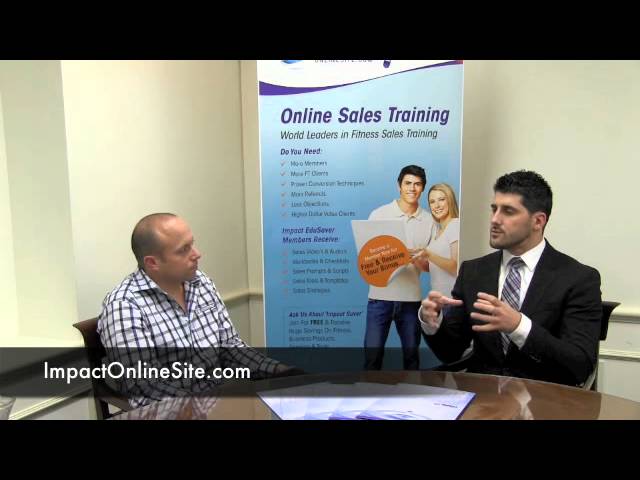
In this episode of Getting Warry, host Richard Mark Toutounji interviews Petar (Peter) Lackovic, co‑founder of Impact Training, a consultancy that helps health clubs and fitness studios improve sales and profitability. Petar recounts his accidental entry into the fitness world, rising from a teenage gym member to a sales manager and eventually a regional manager, crediting his early exposure to his father’s businesses. He explains Impact Training’s core philosophy: sell a tailored training plan rather than generic memberships or PT packages, positioning the offering as a solution to the client’s primary goal (often weight loss). The conversation covers how Impact customizes sales protocols to each club’s location, demographic, and staff structure, emphasizing the need for a unified sales‑marketing strategy backed by accurate data. Petar differentiates direct and indirect inquiries, showing how clubs often underestimate lead volume and misallocate marketing spend. He highlights common industry mistakes—relying on a single tactic, ignoring market positioning, and using pushy sales methods—and offers practical advice on systematizing successful sales behaviours, training teams, and leveraging both onsite coaching and an affordable online training platform (impactonlinesite.com). The interview ends with a call to action for fitness professionals to adopt Impact’s methodology to increase retention, average sale value, and staff satisfaction.
Chapters
Welcome to Getting Warry. It's Richard Mark Toutounji, and today I'm here with Peter Lakovic. How are you?
Good, Richard. How are you?
Pronunciation perfect, is it?
Spot on, mate. Perfect.
Excellent. Now, Peter is from Impact Training, one of the leaders in You know, sales for the fitness industry. Is that right of me to say?
Yeah, thanks for saying so. But yeah, pretty much. Our specialty is working on the business side of the fitness industry. Not so much, you know, personal training and all that kind of stuff in doing it, but actually the business side of it.
So you're not growing biceps and triceps?
Not the biceps and triceps, profit and loss statements.
We're talking about making their wallet a bit fatter.
That's the one, mate.
Yeah. Awesome. So tell me, I really want to get in this session and get you some— I guess get the audience some really good tips of how to make better sales, how to make more profit.
Yep.
But your story is a pretty cool one. Tell me about how you got into Impact, how it's come about, and why you guys are leaders now in sales.
I guess I started in the industry, I guess like most people out there, I love sport, always played sport as a youngster, so from the age of pretty much 4. I went to uni, did science and maths and phys ed, but phys ed is what kept me sane going through university, so it was always that sports type of stuff. Bought my first gym membership when I was 14, saved up all my pennies, and I think I paid about $140, and Mum and Dad paid Annual
membership?
It was a lifetime membership to a health club that went bust 3 months later. Any surprise I was dumb enough to buy a gym membership and a lifetime health club membership. So I was really upset because all my pocket money got all gone pretty much.
How were the days?
Yeah, that was the mid-'80s, early '80s to mid-'80s. So, but yeah, I got in the fitness industry by pure accident. A partner I was going out with at the time, she saw a job A salesperson rang me up and said— I was doing a bit of work for the Ministry of Sport and Recreation after uni. And she pretty much said to me, can you go check it out for me? And I said, well, you know what, why don't you just ask these questions? She said, oh, you'll ask better questions, can you go for me? So I pretty much went for a job interview for her, and they gave me the job. Okay. Before then, I was cleaning benches and picking up weights and dumbbells and doing a couple of programs here and there for people at the local gym down the road that I was a member of. Okay. Just helping out a mate of mine. And become a personal trainer by default. Right.
Before the heydays of personal training courses.
Well, you didn't need a course. If you looked fit, people would pay you money. And my first ever client I actually got as a personal trainer was when a client just come up to me and I was covering the desk for a mate of mine who was running the gym. And she came in for an assessment and a program. He wasn't there. So I did the assessment and the program for her. And she actually said to me, hey, after that, can we do some more one-on-one training together? I said, yeah, whenever you come in, if I'm here, I'll do a workout with you. Not knowing what she meant.
Right.
Long story short, she said, I want to train with you. How much do you charge? And I had no idea what they charged. So I said, have you done personal training before? She goes, about 6 months ago. I said, what'd they charge? She goes, they charged about $35 an hour. And I said, I'll charge the same. And that's how I got my first client. Awesome. And then I formally got into it when I went for that job interview for my partner at the time. And they ended up giving it to me. So that's how I got into more the sales side of it. And then I had a pretty good first week. I broke the sales record. My first week there. And then after 3 and a half weeks, they made me the sales manager. After 4 and a half weeks, I was managing the club.
Okay. So obviously you had sales born in your genetics, you think, or what?
I get it from my dad.
Okay.
My dad grew businesses. I worked in my dad's business since I was about 8. Child labor. There was no wages back then.
Oh wow.
Yeah, pretty much. You worked for free when you worked for a European family. So it was just child labor. I didn't start getting paid until I was about 14 or 15. But he always had businesses. I always worked with my dad. And I just— he always said one thing. Whatever you do, just be the best at it. If you work as a garbo, be the best at it because someone will see you and they'll promote you for it.
That's
great. So I just did what I thought was, you know, fitness industry is something where you talk to people, they give you money. It's a pretty good industry if you can help fix them, whatever they want fixed. You know, a great man once said, help people get what they want, you'll always get what you want. So that was always my mindset when someone came to the fitness industry. Help them get a training plan that's going to help them get a result. And then I sold lots of memberships and PT because of it.
So you focused more on the gym or the gym memberships or more personal trainers?
I did both because I was a personal trainer and I wanted to get clients. And then we, as the membership sales team, we fed the personal trainers as well. So I was very— and this is probably one of the biggest things why I think I was successful in the fitness industry was I never sold a gym membership. I never sold a PT pack. I sold a training plan. That was it. So someone would come in wanting a result. My headspace was Or you need to train once or twice a week on your own, once or twice a week with a trainer, but this is what you should do. And people just bought it. So I'd sell at least—
It's a very different mindset, isn't it? It's very different to what most people would be saying, okay, yeah, get your 10-pack. You're selling a training program. They're coming in for a prescription.
That's what I found out later after I did studies with human behavior, NLP, business studies. Once I did all that, I realized why I was successful at what I did. And why I got promoted really, really quickly. Because after that, I became an area manager, then I had a part of the business, and we had 15 health clubs. So, but what we did different was we sold training. We didn't sell memberships. We didn't sell PT packs. It was, what's the best training plan to help you get to where you want to be? And I've never felt like I was selling one day in my life. I was only ever helping people. And that creates and flows through the methodology we have at Impact Training, is that our methodology is about communication techniques, not about heavy, pushy sales techniques. Yeah. My experience is it just doesn't work that way. I was selling PT, $1,500 for 30 sessions back in the late '80s, early '90s. That's more than what some people charge today. To me, it means it's not about price. It's about what you deliver someone. That just works. That's kind of our philosophy right now, is packaging up a really easy way to get people to want the product. That's what we help fitness businesses do.
That's probably, I guess, the biggest trick, is Finding what they want and then selling what they need, I guess. It's a need and not a want.
I mean, what's the number one result most people want when they come to a health club? Weight loss.
Or toning.
How many health clubs out there have a weight loss program?
Probably not many.
But that's 85% of your market. It makes no sense. Or do they package it that way? Are the membership consultants told to sell it or train it that way? Probably not. Very good point. It's knowing the right thing because every business is different. We work with health clubs that have— we started with one that had 17 members. We do pre-sales. We have health clubs with 500 members, 1,000, 2,000, 5,000, and chains that have over 100,000. Everyone's different. So I guess what we're really good at is looking at your club, your studio, and knowing what's the best method for you guys to sell and get more clients on board. Every club is different. Every studio is different.
So everything's customized.
It has to be nowadays. The market you're located in, whether it's CBD, whether it's out west, whether you're local, whether you're suburban, whether you're a chain, whether you've got— you're surrounded by 24-hour clubs around you, whether you've got Fitness First up the road, whether you've got Genesis or Phoenix around the corner. It doesn't matter what type of business you have. You need to make sure it tailors to your demographic and your market, but also the infrastructure you have in your club. What type of staff do you have? Are they full-time? Are they casuals? Are they part-time? Do you have whoever's at reception does the personal training, does the sale, takes the inquiry? Yeah. set membership consultants. Every business is different. So what we're masters at is actually tailoring a protocol that suits your business. So
you basically can go into a location, go into a gym, and put the Impact Method in there and get them a program structured in that timeframe when you're there. Is that right?
Yeah, we work out what's the best plan of attack for your club. I've got a little club up in Queensland that I see on a regular basis, and they're multi-skilled. So whoever's at front desk will do the boxing class, will take you through the initial program, will answer the phone, will say hello, will say goodbye. It's not your typical receptionist who answers the phone, puts it through to a membership consultant, and they do the follow-up. So their protocol was very different. The methodologies that Impact have, we can implement the same, but the way we do it can be very, very different. And that's the tailoring part.
Excellent. And tell me a bit about, I guess, some results. I guess the negatives that you see in the industry, like, you know, what are the biggest mistakes you're seeing right now? And then what are the pluses that your clients— I mean, some good results that your clients are getting?
A lot of challenges that clubs are having right now is it's both sales and marketing. And sales and marketing have to talk to each other. You really have to have the right strategy in place. I've seen a lot of people say that, you know, referrals at point of sale don't work, or lead boxes don't work, or I hate doing outreach and doing all that kind of stuff. Where if you have the right strategy behind it, it works really, really well. The biggest mistake is to do one thing and think that one thing is going to work. You've got to have the right strategy in place, but you've got to know what is your market, and whatever you do, do that really, really well. Because what works at one club doesn't always work at another.
And how do you know what's actually going to work well? Is it trial and error?
You've got to look at how are you positioning yourself in the marketplace? How are you positioning yourself to your competitors? We had one club down south in Miranda Way where Fitness First opened. Literally, you walk out the front of this club, you take 3 steps left, and there's a set of stairs, and upstairs is Fitness First. So the landlord let them open a club up right up from this club that we'd been training for years. Now, they still had growth in the next 6 months, even though Fitness First had just opened upstairs from them.
Different market.
Well, you have to niche yourself. What do you do different? What do you do the same? And how do you make people understand that? It's how do you let everyone know how you do what you do compared to everyone else, and what do you do differently? And how do you deliver that? How do you package it up? B, apples against apples, well, the best club, the biggest club with the cheapest price with the most marketing is going to win. Pretty much. So it's about knowing if you're out there right now, what are you doing that's making yourself stand out? Does it suit the culture of the business and the people that you have? Does it suit that? For example, the club I was telling you about in Queensland. It didn't suit that people come in, they sit down, they do a big needs analysis, they sit down, they take them for a big tour of the club, they sit down, they do a price presentation and close them. It didn't suit the culture of the staff. It wasn't a big club, so the tour wasn't that fancy-schmancy. So it was actually more of a negative to do a tour that way.
Right.
So we had to change their whole sales process to suit what the trainers like because the salesperson were trainers. They were boxing coaches and they— we had a different approach there. Similar methodologies, but just implemented a different way. So know who you are and know what you're doing. And then you can have really, really massive success. I mean, we have a club in Perth that we've been training for nearly 10 years now.
I like that, continuing training for 10 years. That's probably a strategy right there, actually continuing to get results.
Well, that's what I mean. We'll only be in the business if we're helping get results. And 90% of all our clients, we do on an ongoing basis because just like a personal trainer, you can't have one PT session and look fantastic. They only get us back because we help keeping them grow their business, whether it's retention, increasing average dollar per sale, decreasing the lead per marketing cost. You get turnover of staff all the time. Most of the clubs we work with have a higher staff retention than all the other clubs. Because if your team are happy, successful, making money, they're going to stay. They won't look for other clubs out there. So it's a combination of a lot of things.
Very good tips there. If you could, I guess, for people that are getting just into sales, you mentioned before sales and marketing, you know, let's say they've got a limited budget, where do they put it? Do they put it in the marketing or do they put it in getting a sales team? Or do you have to get them to do the same thing?
Okay, magic question.
Is that a question everybody asks, isn't it?
They do, and everyone wants an answer to what's the little silver bullet. Yeah. And I think the first thing is you've got to have good data. Numbers don't lie. Numbers don't get emotional. They tell you the truth. And when you've got good data, you can make great decisions.
Right.
So you'll then know where are your leads coming from. For example, we had a club that said that we've been training for a while, we only get 4 or 5 inquiries a day. We need to spend more marketing. Now there's a direct inquiry and there's an indirect inquiry. A direct inquiry is, ring, ring, thanks for calling Richards Health Club, this is Peter. Hi, how much are memberships? Can I speak to someone about memberships? What's the price for a membership? Do you do casual workouts? So they're directly asking about memberships. Then you have indirect inquiries. People that ring up and say, do you have pump? What time do you open? What time do you close on the weekend? Do you guys have a crèche? Do you have a pool? Do you do Pilates?
Which most people would ask.
Yes, and most frontline reception Sure, we have a pump class on at 4:30 tonight. Thank you very much. They hang up.
See you later.
Now, that's what we call an indirect inquiry. Do we know if that person is a member or not? Yeah. And we did some phone shops and realized that almost for every minimum, on average, at least for one direct inquiry, you got an indirect inquiry. So they're actually getting 10 inquiries a day. They didn't know it. So we didn't have the right data to say, spend, we need more leads. They had the leads. They didn't know, one, how to capture them, two, how to convert them. Does that make sense? Yep. I saw another club and they said, yep, no, we close about 70% and 80% of our leads come from referrals.
Sure.
But they couldn't quantify that. So before we did anything, we did 2 weeks' worth of data first and realized that the figures were completely not what they thought they would be.
Just approximate figures.
Absolutely. Because people come in and they say, oh yeah, I saw the club because a friend of mine. But when you actually ask them where they found out, it actually wasn't a friend of theirs. Okay. It was something that motivated them to ask their friend to come in, but what caused them to first make that first inquiry was different. And the number of inquiries were completely different. So until we get good data, it's hard to say spend it on marketing, spend it on sales. But, you know, you can spend— I've spent thousands of dollars on a marketing campaign and it just didn't work.
Yeah.
You know, I remember my staff at my third club, Took the piss out of me because we used to do a marketing— I spent months creating a marketing plan. A friend of mine was a graphic designer. Another friend of mine was great at advertising and calligraphy and the right colors to use and all that kind of stuff. And I had a meeting with my guys and said, this marketing campaign this month is going to kill it. You sales guys are going to just be so inundated with— It's just going to come in. Oh, get ready. This phone's going to ring off the hook. And we didn't have internet back those days, so it was just all phone inquiries or walking
Yeah.
I think we got 4 inquiries a week. Seriously, it was the biggest dud. The Friday, 3 months later, we went out on a Friday, my son's birthday, and I got the local guy from the local paper rang me and said, Pete, we've got a— I can give you a half pager for like a business card size price. Yeah. But I've got to get it to me before 4 o'clock today.
Right.
I said, mate, I'm at the pub, I've had a few drinks. He goes, listen, if you get it to me in the next half an hour, I can give it to you for that. So I got a beer coaster, I created something just on the spur of the moment, gave it to one of my— rang the guys on the phone at the club and said, can you do this on a bit of paper and fax it through? Because faxes were still good back in those days. Fax it through to the editor at the local rag. We ran that campaign, my expectations were zero. Seriously, it was their best campaign that year.
So what was the difference?
I was drunk. And that's what they said, people advertising, we've got a marketing meeting, let's go to the local pub. You just don't know with marketing sometimes what's going to work. But if your team have a set process to follow, they've got a structure to follow, then you can only guarantee the appointments you make yourself. You can't guarantee a walk-in, you can't guarantee a web inquiry, you can't guarantee a phone-in. But if I'm generating my own leads and I have a sales process to follow where I know I'm going to convert 78% of them, you can guarantee that.
Got you.
If you were to throw money one way or another, I would say give me a business with a person with a good attitude and I'll teach them the skills to create their own leads and convert them than put a whole lot of money into marketing and hope they buy.
Hope it works.
If you've got good data, then you can make that best decision. So one, ask yourself, have I got good accurate data that is factual? Because then you can make good decisions from that.
That's a very good tip. Your knowledge is super. We could talk all day here really. But let's just finish it up and I guess I see this Impact Training Sales. For those who are, I guess, wanting to get started, and is this the best way to start? Because it's an online platform. Some solid tips. Talk about this for a little bit.
Okay. We've been training health clubs now since I think '94. I joined Steve at Impact in '98. We've been running the company together since then. And there's only 30 days in a month, so we train a lot of businesses and most of it's ongoing.
You're always on the road traveling.
My diary's booked out 12 months in advance. The first Tuesday of each month is your club, the second Wednesday of every month is that club, and we continually help these businesses regularly get good success. So we want to see—
You know what I love, by the way, about your style of training is that it's actually face-to-face. It's not— it's real stuff. It's real training. You're actually getting some real hands-on approach, which is great.
Clubs like the fact that we can work with your team one-on-one or as a group and do whatever we need to, see the business, rip it apart, and give you the tools to make it successful. And being on site, we can do that really, really powerfully.
Yeah.
And that's worked really, really well. But we're getting inundated with so many people saying, I need better help with my personal training studio. I've just become a personal trainer. I'm opening up my own club. I do indoor training. I've got a new health club I'm running. We're just going from that transition of multi-skilled staff to salespeople. And there's so many businesses out there right now. I mean, fitness industry is one of the fastest growing industries out there. To cater for that, and with technology nowadays, we started impactonlinesite.com.
Yeah.
And that's where you can jump online and get online sales training. Once a fortnight, you'll get one of our module notes. You'll get an audio that goes with it with a workbook. You'll get that each fortnight that your team or you can work through on a regular basis. Once a month, you'll get an industry expert interview so you can listen to other people, what they're doing, and pick their brain as well. And it's silly, it's less than $10 a week to do that, to have that online component. So now we're really promoting to the people, just do something. Just do something to get a systemized process going for your business to be successful.
And I think it's really important because I mean, you know, the business owners there, even those personal trainers getting into it, you know, wanting to create a much bigger business. Going from that, I guess, personal trainer doing everything himself to getting a team, that's where I guess they need to start training their team to be like them.
You need to duplicate yourself. Exactly. And when I started becoming an area manager and I had 2 clubs, 3 clubs, 4 clubs, 5 clubs, when I had 2 or 3, I was super successful. When we got to 5 or 6, a couple were struggling because I couldn't be everywhere. And that's when I realized I had to pull myself out, systemize what I did, realize why I was successful, then train it to everybody. And that's when we grew to a chain of 15. Yeah. So if you can systemize that, and doing some online stuff, it's easy. You can do 10, 15, 20 minutes at a time, learn something, use it, see the success, come back, listen to the audio, do the workbook, do a couple of your own role plays and practices, go and use it, and just build on it. Over a period of time, you'll get all the modules, and you can listen to them and just work through them, and eventually just get really good at what you do well. Trainers spend so much time educating themselves when it comes to human anatomy, physiology, energy systems, dietary plans. And that's all the stuff to change the body shape. But if you haven't got a body shape to change because you haven't sold or marketed well, then all those skills are pointless.
Very good point.
So that's the online stuff. It's snappy, it's easy, and it's something that we're going to grow on and that library is going to grow even further. But right now it's just a really simple process. It's really affordable so you can start doing something to get better at what you're doing.
Okay, we'll put the website down here anyway.
Impact Online site.
We'll put all the websites down and how to contact Peter and that sort of stuff. But thank you very much. My pleasure. It's a pleasure. Thank you so much.
Great to have you.
And, uh, we'll see you later. Thanks a lot, guys. Thank you.









