Getting Raw Ep #39 Jamie Hayes
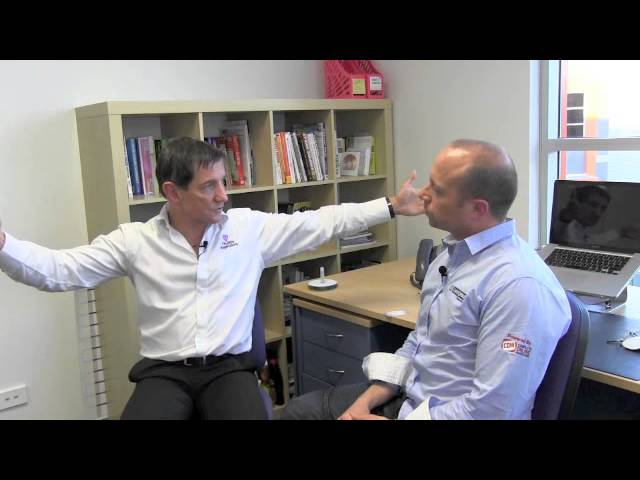
In this interview, host Mark Turtungi talks with Jamie Hayes, co‑founder of Healthy Inspirations, about his 40‑year journey in the fitness industry and the evolution from traditional gyms to a weight‑loss‑focused franchise model. Hayes explains how early fitness clubs ignored the primary member goal—weight loss—leading to the creation of Healthy Inspirations, a one‑stop solution that combines diet coaching, exercise, and high‑frequency support, primarily for women over 40. He details the franchising approach, emphasizing systematized marketing, sales, operations, and financial assistance, and stresses that franchisees must be passion‑driven and hands‑on. Hayes highlights Australia’s obesity crisis, arguing that dietary intervention, not exercise alone, is the key to sustainable weight loss, and introduces the new DietFlex program that offers personalized weight‑loss coaching outside traditional gyms. The conversation covers competitive positioning versus brands like Curves, the higher revenue per member achieved through weight‑loss outcomes, integration of medical referrals, and the importance of credibility. Hayes also shares personal leadership habits, his “why” philosophy, side projects on asthma‑nutrition, and reflections on his best and worst business decisions, underscoring the balance between growth and personal life.
Chapters
Welcome to Getting Warriors Fit. I'm Mark Turtungi. I'm here today with Jamie Hayes. Welcome.
Hey Richard, good to see you.
Good to see you. We're at the head office, Healthy Inspirations, here in— where are we? Brisbane. I've been traveling everywhere today. Tell me, you've got a really successful brand, a successful franchise. And I love talking to people that have been in the business for a while and actually have gone through the ups and downs. And I know you've got a few little different divisions as well I want to get to.
Yeah.
But tell me what— tell me your story, because I mean, you've got 28 franchises now and growing. Tell me how you got to this point.
Well, I think it started way back in the '70s getting into the fitness industry, and just which was really passion-driven, and suddenly deciding, you know, this is what I wanted to do. Through the '70s and '80s, opening clubs in the city. My first club in '81, then Ellen and I opened a club in '84 in Sydney. Then we had 5 clubs going. And as I got older, because I'm 59 now, about to turn 60, as I got older, our members got older and they became more interested in weight loss and more interested in health too.
Not just the fitness and the—
Absolutely.
The pushing out.
And so more and more, you know, they Wanted to lose weight. And I realized that we as an industry were failing them.
So I mean, the '70s, I mean, that was— I wasn't around the '70s, so you're gonna have to tell me what the '70s was like. But I'm assuming it was just like a lot of fitness, a lot of hardcore stuff, and not many people actually used the gym facilities back then.
Well, it was way before any courses, and we had sort of probably 3 movements. We had the bodybuilding industry and old Michael Hunt's Day Spa and all that sort of stuff. And then, but the bodybuilders took over and then they started running aerobics classes. The aerobics classes came from the States like the choreographed Jackie Sorensen type stuff. Sure, yep. And then, but in Australia, it seems to come from the calisthenics space from YMCA and places like that. And then they started to just become groundswell movements of putting exercise to music together, better choreographing. Then Ellen and myself and others started putting together courses for instructors. Yep. Teaching them how to run classes that were easy to follow. We both attended the first fitness leader courses in New South Wales, which were run by Gary Egger and Nigel Champion in—
The heyday, was that? What year was that?
1981. Ellen was the first registered fitness leader in New South Wales and I was the second.
Unbelievable.
Then I started lecturing for the fitness leader courses. I was the practitioner on putting the theory into practice in circuit training, strength training classes and things like that. Yep. And then we started opening clubs. And they were small. We had Aerobic City in Sydney for 14, 15 years and then personal fitness clubs called Body Express. And then we moved to Brisbane. But one of the The people that really influenced me greatly was a sales consultant that many people in Australia know, Casey Conrad.
Yes.
Because we would often dialogue and we became great mates and we would dialogue on the gap in the market because the number one reason people were joining fitness clubs was to lose weight.
Yeah.
They had other reasons, but if you ask any salesperson, what is the one box that gets ticked all the time, it is weight loss. But the fitness industry basically ignored weight loss. They said, look, we don't know anything about it. We don't know how to do it. Doesn't
make sense, does it?
It really doesn't. Well, and there's also, they said, well, we're not qualified to do it. And so, and sometimes they'd even do worse. They would promise weight loss through exercise. Actually, there's a saying we use that a carpenter with a hammer sees every problem as a nail. And they said, well, we will just flog them harder. We will sell them personal training for faster results. But the number one result they wanted was weight loss. But then you had the weight loss industry that did not do exercise. And we have learnt now that exercise is probably not a good way to lose weight. It is, you know, the effective way is with dietary intervention. But you will not keep it off without the exercise. So there was a gap in the market between the fitness industry that did not do diet And the diet industry that didn't do fitness, Casey Conrad put together Healthy Inspirations, which was a one-stop shop focused on women, primarily over 40, that put together the diet, the exercise, and the diet coaching, the high-frequency diet coaching to help people stick with it. And I'm proud to say that now we've helped over 8,000 women lose over 130,000 kilos.
Whoa, some big numbers there.
Yeah.
That's awesome. And so then that Healthy Inspirations brand grew from that moment, yeah?
Absolutely, because we opened our first franchise and then we started learning about this new business model because we knew something about fitness, but we didn't know anything about franchising. Where
the franchising— I mean, who's your mentors in the franchising? Where did that come from?
Well, firstly, franchising is a way of raising both financial capital and human capital. Look, we've all had the experience. We could— you could go into a restaurant, a hairdresser that you've never been to before. You look around and you say, I bet you that's the owner.
Yeah, 100%.
Yeah, a fitness club, the same thing. And so franchising adds that incentive, that owner-operator to work on it. And franchising delivers expert systems to potential business owners so they don't need to be an expert. You know, Michael Gerber wrote The E-Myth.
Yes.
Of course, you know, everybody should read that. And he says, you know, a business has expert systems, so you do not need to be an expert to run the business, but you need to run the systems. The people run the systems. The people run the systems. That is right. Yeah. And so franchising is all about creating systems that work. And we divide our systems up into marketing systems, sales systems, operational systems, which is the business helping people lose weight. And then financial assistance.
So the people you have aboard on your team, the franchisees, are they coming initially to— they love the concept of, you know, are they fitness before, or they just, I love that franchise business, I want to get involved in franchising, I just pick one off the shelf?
Well, it's a bit of a mixture, but we've learned— I mean, we've had our failures, and we've learned that if they're not passion-driven, For what we do, it's not gonna work.
So you gotta be passion-driven?
Absolutely, you've gotta be passion-driven. They've gotta be passionate about it.
So they've gotta be in the business with their hands, yeah?
Absolutely. And look, there are turnkey businesses that you can buy where you just invest in that business and leave it. Ours is very much a hands-on business where we want somebody that's passionate about helping women in their community lose weight.
I mean, are you getting the women that have actually lost the weight and say, this is great, I wanna share it more, and they get the franchise?
Oh, absolutely. We've got members who become staff members, staff members who become franchisees. And often that's a very successful path because they've proved it to themselves. They've actually become an expert because they've gone through the weight loss journey. As a matter of fact, I'm off-brand because I'm a male.
Yes, that's right. You're not teaching at your clubs, are you?
And, you know, even though— and look, here's a funny weight loss secret. I'm in reasonable shape, but I've got a BMI of 25.1, so technically I'm overweight.
That makes two of us.
Yeah.
So I guess this brand has grown in a lot of different ways. I mean, when I came in here, you're talking, you've got some nutritional things I want to talk about with personal trainers.
Yeah, sure.
Does it continue to keep growing? I mean, what is the next level for Health Inspirations? Is it going to continue to grow? I mean, what's the plan?
Well, firstly, the big picture is Australia has a problem. New Zealand has a problem. We are getting fatter.
Don't we have a problem worldwide? Don't
we? Well, of course. And even in third world countries, we have a problem. The Australians are getting fatter and fatter and fatter. We've just bought a brand new office here and we've got a new shopping centre down the road. And I'm horrified going to that shopping centre, seeing mums poisoning their kids. And these kids are being doomed to a life of obesity and Or obesity. And so Australia really has a problem. You know, not only do we need more healthy inspirations, we need more personal trainers, more dietitians, more weight loss coaches. Together, hopefully, we'll make a dent. But it needs lots of different types of options.
I really like the way you're thinking because we speak to a lot of personal trainers on Getting Raw, and we're always talking to personal trainers and gym owners, and I feel there's like sometimes a competitive nature, but you're all about making sure we get more people doing it and we get better results all around.
Absolutely, because we can self-destruct. We can just compete against each other and compete against each other. The statistics are that, you know, whereas firstly, if you're not overweight, you're in a minority group in Australia.
Yes.
So we know that in excess of 50% of Australian adults are overweight or obese. Yeah. And we know that it's only somewhere between 8% and 12% that are availing themselves of fitness clubs and personal training and stuff like that. So there is a huge big gap of people who are firstly overweight and not doing anything about it and overweight and not physically active. Now, I've had a real mind shift. I use that saying, a carpenter with a hammer sees every problem as a nail. And as a long-term fitness professional, I used to believe in my heart of hearts, if you need to lose weight, You needed to start an exercise program. And for kids, you know, we read it, overweight kids, they say, look, we need to get those kids out exercising. Sometimes overweight kids are being flogged. They don't have the energy to exercise. They don't even like it. I've actually had a complete 180-degree mind shift on that. If in your heart of heart you want to get Australia physically active, exercising, and kids physically active, and if you want to help them lose weight, Yeah. Getting them to be physically active is not the best path to getting them to lose weight. Getting them to change how they eat will help them lose weight and give them more energy. If you help them lose weight and get more energy, they're more likely to exercise. So for instance, kids out there in school who are overweight, if we can teach their mothers how to eat and cook and then teach their kids how to eat and cook, It's more likely those kids will be more successful losing weight and then they'll have more energy available to run around and it's more likely they'll become an exerciser for life without which they will not keep their weight off.
All comes back to the parents again.
Absolutely. So where I used to think that exercise was the path to weight control, I now know in my heart of hearts that it's dietary intervention. So the more people we can help lose weight, even if they're not ready to exercise yet, the more people we're going to get exercising.
But Jamie, we don't have that many programs out there that I think are targeting for diet. I mean, it's all about fitness, fitness, fitness, fitness, fitness, and then we talk about diet second.
Absolutely.
We're doing some big things— problems.
Well, and I know the whole fitness industry, you know, club owners, big club owners, small club owners have tried to make their clubs a healthier place. less intimidating, more inviting for older age groups and for overweight people and things like that. And let's give them credit where credit's due. Curves taught the whole fitness industry a big lesson that there was an untapped market of women who said, I don't feel comfortable, even despite your efforts to be comfortable, I don't feel comfortable going to your big thing because I feel like a dunce or I feel fat or you've got men, you've got mirrors, you know. They used to say, no men, no mirrors, no Lycra, no excuses, you know. And so, Curves taught us a big lesson. There's a big market out there, women who want to go to a place that they feel comfortable. And so, Healthy Inspiration really taps right into that, but we add the weight loss. But now what I'm recognizing, and that's why we've launched a new brand, DietFlex, which is weight loss coaching. Where there'll be a there's a lot of people now who want to go to a personal for a personalized approach to weight loss, not online but personalized. So there's nothing wrong with online. You know, if that's the way you lose weight, great. But we recognize there's a market for a personal weight loss coach that may not be located in the gym, so that people go to that personal weight loss coach, they start losing weight, then they become predisposed to exercising.
They do it around their own home, they're in their comfort zones.
So our DietFlex program is really going to be targeted to people, of course, in personal training studios and in gyms, but equally in pharmacies, in professional suites and things like that, even out of people's homes. They can develop their own weight loss coaching business and that can help people migrate towards exercise.
Well, you know, I think there's a massive, massive gap right there. People are not even getting into the club. I mean, we're talking about Fitness Australia and fitness in general. We're talking about people who are actually training in clubs or personal training, but the market that's actually not, that's massive.
It's huge. So my argument, most Australians are overweight. Help them lose weight, they'll be more likely to exercise. They'll be more comfortable to exercise, and they'll have the energy to exercise. 'Cause you see, what I've also learned is something called nutrient partitioning. That overweight people, they have this sort of filter when they're eating food. A lot of it, you know, being insulin resistant, goes straight to their fat cells. They actually don't have the— even though they've got all this stored energy, they actually don't have the energy to move around. Nutrient partitioning is stopping them having the energy for moving around. They don't feel like it. But if you can change the way their body handles calories, To move more towards using them than storing them, then they have more energy available.
Going back to franchising, you were talking about Curves. When people are looking at getting Healthy Inspirations, are they comparing it to Curves and Contours on the market? Oh, absolutely. Or are they seeing it as totally different things? How do you approach the difference when people are wanting to particularly get a franchise?
Well, it's simply this. The number one reason, you know, and Curves Contours and Healthy Inspirations are all small box businesses. All right. And you cannot have a small box business with low fees and low volume. It's almost a recipe for the franchisee imprisoning themselves. All right. And if they're targeting women over 40, the number one reason they join an establishment like that is not just to exercise but really in their heart of hearts whether they say it or not is to lose weight. And so if you don't help them lose weight, firstly you're going to suffer an attrition problem, you're going to have turnover and you're not going to get any referrals. You know, if somebody's going and exercising all day and they might be enthusiastic about that and good on them but not losing weight, they're Their friends aren't going to ask, gee, you look great. Where did you go? And so we value-add with the weight loss coaching and with the supportive products as well. And so our revenue per member is 2 or 3 times what the revenue per member is of a small box women's fitness club. And we encourage the, you know, most of our new customers come in as weight loss members, not fitness members. Got you. Because that's— and so they're paying more for the programming, for the personalized service and the weight loss coaching. They're paying more for weight loss supported products. And let me just tell you from the outset, at Healthy Inspirations and DietFlix, we teach women how to lose weight with real food, main meals that they can purchase from any supermarket in a family-friendly way. So they don't have to eat a separate meal for them and a separate meal for their kids and things like that. So it's a sustainable weight-loss price.
They can continue and keep it off most of the way.
That's right. But by having a higher revenue per member, helping them meet their goals— and we've got women who just want to lose 5 kilos, some 50 kilos, and we've had women lose 70 kilos, you know— it becomes really self-evident. You get referrals. We communicate with every member's doctor, so we get medical referrals as well. And then you've got a business that can really work for the franchisee.
Medical referrals are a big one for you guys?
Look, it's always a challenge because, and let's face it, doctors are used to referring to allied health professionals.
Yeah, of course.
Psychiatrists, physiotherapists, exercise physiologists, psychologists, podiatrists, approved Medicare providers. My son, Ryan, He's an exercise physiologist. He's got a Medicare provider number. And one of the first questions doctors ask us is, what are the qualifications of your people? And we— actually, my good friend Steve Jensen taught me, brag about known objections. And that is an objection, so we brag about it. And we say, well, doctor, we provide a low-cost lifestyle-based program with real food and high-frequency, 3 times a week coaching and a graded supervised exercise program for otherwise healthy but overweight women for just $29.95 per week. It's delivered by company-trained people, but we've got— our diet program is overseen by a registered practicing dietitian, Jill McGregor, and we have a screening process where we write to every client's doctor. Yeah. So that you get regular reports because if we had to send every otherwise healthy overweight person to a registered practicing dietitian, a psychologist, and an exercise physiologist, it'd be overkill. It'd be too expensive. Overpriced, yeah. Completely overpriced. On a community level, it would be inaccessible. It's just not possible. And so that's— and with that lifestyle-based program, we have helped over 8,000 women lose 130,000 kilos. Kilos. Many with regular visits to their doctors, their doctors take them off blood pressure medication, you know, had dramatic improvements in health along the way. You know, people with prediabetes, their symptoms have gone. So basically we've got to have that conversation with the doctor.
I would love to keep interviewing you, but we're running out of time. But what I want to know, I can see some great books here, I can see some marketing books. You're so passionate about the weight loss of Australia. Where do you spend your time every day? You know, how do you break this up? You know, you've got a successful franchise business here, you're passionate about the weight loss and coming up with new incentives and new programs. How do you manage it all? What do you do?
Well, firstly, you've got to ask yourself, what is your why? What do you want to achieve? And one of my favorite books is Start with Why by Simon Sinek. And, you know, what is your raison d'être? What gets you up in the morning? And I'm absolutely driven not only to make a difference out there in the community and I love the business mentoring of helping people get into business.
Yeah.
I love seeing employees grow. You know, we've got an online training program for employees and seeing them learn about sales and learn about marketing, you know, move from, you know, member to staff member to business owner.
Yeah.
That really does motivate me. But I'm also really interested in this area of weight management and also health maintenance and wellness. A week doesn't go by that we're not buying a new book and constantly listening to podcasts. I
love bookshops.
And, you know, one of the side— I mean, I've got a number of side projects because I'm very interested in asthma and nutrition, asthma-nutrition.com, to provide information for parents who want to help their child get Get stronger through good nutrition. We're helping host the Low Carb Down Under seminar series in Melbourne, Sydney, and Adelaide.
And we'll put some information about that, I think, on the screen too.
Yeah, great, thanks. And so, and these aren't money-making things. These are things just because we want to make a difference out there and we want to learn too. And if other personal trainers come along to those seminars and learn great tips about nutrition, that's fabulous.
Okay, just to finish off, I want your worst business decision you've made and the best business decision you've made, if there can be something like
that. Sure. Well, I think probably the best business decision I've made was marrying my wife. Happy wife, happy life. She manages all the finance, and you've got to look at your strengths and weaknesses. And so that— but that wasn't— not that that was a business decision. But we have been a great couple, Ellen and I, working couple. So I am very pleased with that and hopefully she is too. We have had some disastrous business decisions. I remember we did not know what we did not know and a bank manager said, yep, you can have the $300,000 and go out and open another Body Express Club at Westfield at Miranda and we blew $500,000.
Right.
I should have listened to Ellen at the time. She said, why don't we buy the house next door? But I said, no, let's go and expand. Let's put it in the business. And I've learned that more business doesn't necessarily mean more life. Does
it mean less life all the time?
Well, we've had times when we've had lots and lots of clubs and more and more this. But Ellen said, you're not spending time with your boys. And she was right and I was wrong. And so now we don't measure our success against, you know, Jets and Anytime. They're doing a great job, you know, good on them. And, you know, Sonia and Matt are doing a great job in the weight loss area and good on them. So, but we just run our own race. We want to be passionate doing our own thing.
I like that. Own race, own life, and you can manage it all and be comfortable and happy.
Absolutely.
It's been a pleasure. Really cool. We should do a second part to this because it's A man of wealth of information on, on passion about healthy living for Australians, also passionate about the marketing and the business side, which I really have a passion to as well. Hey Richard,
it's been a pleasure meeting you.
Thank you, thanks a lot. Cheers.
Okay, see ya.
Thanks guys, I'll see you next week.









