How Commercial Asset Finance Has Changed - Industry Change Ep 1
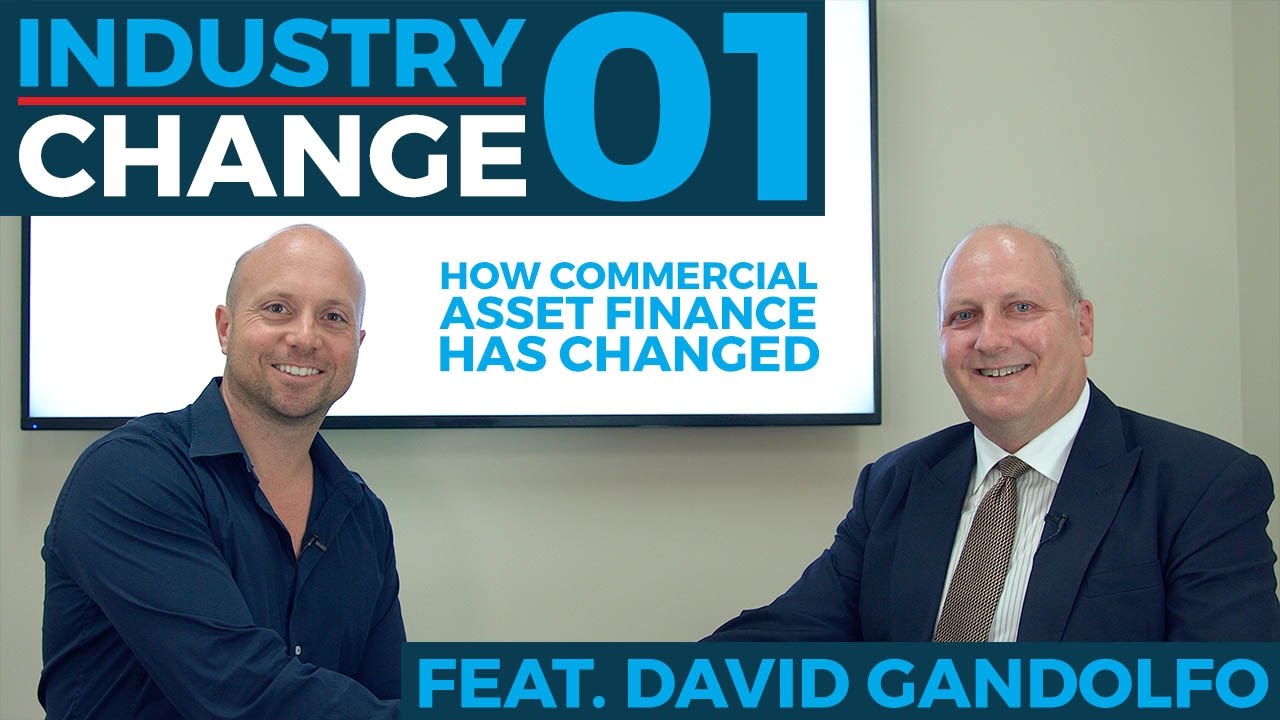
In this interview, host Richard Toutounji speaks with David, President of the Commercial Asset Finance Brokers Association of Australia (CAFPA), about the state and evolution of the commercial asset finance sector in Australia. David explains that the sector, worth about $100 billion in receivables and generating $40 billion of new business annually, is driven largely (≈60 %) by brokers who act as intermediaries between business owners and a range of lenders (banks, finance companies, fintechs, private equity). The conversation covers how brokers help small‑to‑medium enterprises access finance, the sector’s sensitivity to broader economic cycles (e.g., the mining boom, a shift from manufacturing to warehousing equipment), and the need to refinance assets when cash‑flow conditions change. David outlines CAFPA’s role in lobbying, monitoring technology and regulatory trends (e‑signatures, electronic ID, AML and privacy law changes), and maintaining high professional standards that exceed ASIC requirements. He describes the association’s strategy for anticipating change through engagement with government, participation in the ELFA conference in the US, and close relationships with lenders. Marketing and client acquisition are discussed: brokers still rely on three main sources – direct marketing (now supplemented by social media and online presence), point‑of‑sale financing, and referrals from accountants and other advisors. Trust and long‑term relationships are emphasized as the core differentiator from banks, especially as digital finance options proliferate. Education is highlighted as a priority: CAFPA runs scholarship programs to address gender imbalance, works with universities to raise awareness of asset finance as a career, and enforces a minimum education standard for members. The interview concludes with a brief plug for CAFPA’s website and contact details.
Chapters
Hello, welcome back. It's Richard Eternity and welcome to Industry Change powered by Com. And today I thought what a better opportunity than to really to talk about going deep into an industry. And today I've got the president of CAFPA. David, welcome.
G'day, Richard. How you going?
Good to meet you. And David, I'm really proud that you're on the show today because I think your industry has totally changed and continuing to change. And we're talking about finance, we're talking about assets. Explain to us what your industry does.
Okay, well, what I'll explain first, what the industry association does, of which I'm president. CAFPA stands for Commercial Asset Finance Brokers Association of Australia. which is a mouthful, as you say.
That's why I got you to explain it.
Yeah, perhaps it's better if I say that. Asset finance is the market where it's commercial, it's for business owners. We provide, our members provide finance for business owners to purchase or acquire plant, machinery, equipment, infrastructure, fittings, production equipment, trucks, transport, all that kind of equipment. So, and that market nationally in Australia is worth about $100 billion. in receivables at any given time, and about $40 billion a year of new business is written each year, and about 60% of that business is written by asset finance brokers.
Right.
So they're not our figures, they're independent figures. So it's a very significant part of the economy, and finance isn't actually just about money. Finance is about being an enabler. So asset finance is a means by which businesses get the machinery and equipment and assets that will help them to grow their businesses and then subsequently employ and prosper.
And I think the whole focus on growth, you know, we look at change, growth is really important for any change in any industry. Yeah. And having the backing to make sure that you can invest in more resources, more products, more service, more equipment to make sure you can actually get that done and deliver results for your
clients. Oh, absolutely. And access to finance is paramount, and there's a lot of You know, small to medium-sized businesses that don't always have good access to finance, and we try to be the intermediary or the enabler who can provide that.
Let's touch on that because we have a lot of small businesses that we work with, and when you said, you know, it's tough to get finance to some small businesses, it is tough to get finance to some small businesses. How does your industry overcome those things?
Well, what we are qualified and experienced in doing is being the conduit between the borrower and the bank, and it may not be a bank, it could be a finance company, it could be a fintech, It could be a second-tier lender, it could be private equity. But we— it's our job to know where to go. So if the borrower, the business owner, has a requirement of any sort, it's our job to know what the solution is to whatever their issue or their problem is. So, and we do that simply by our own experience and market expertise. And CAFR as an organisation— Yeah. Has a number of those lenders and banks as associate or affiliate members, and we engage very heavily at senior levels with all of them.
I really like that because, you know, when you're running a small to medium-sized business, the focus is obviously business, the focus is your clients, the focus is maintaining. And to achieve growth, yes, you do need to get finance at some stages of that growth, and the easier way to do that is the better. And you mentioned, you know, your organization is associated with affiliates. You mentioned before you're always lobbying, you're in the US, you're continually educating and making sure that your members have the best processes to go about and facilitate that.
Oh, absolutely. And that lobbying isn't just about processes, it's about making sure that there's correct regulation. And if there's any regulation that is about to be proposed, that it's going to benefit borrowers and benefit lenders. us without impeding the ability of businesses to access finance, but at the same time make sure that there are measures in place to protect business owners and borrowers from unscrupulous practices. And then we internally self-regulate, and we have a very high membership standard, which is a probity standard, education standard, qualification standard, which actually exceeds the ASIC standard for credit licensees. Is that right?
I'm really interested about change and how change has affected your industry and what you've had to do to overcome the change. And you mentioned, you know, it's big on assets. I'm assuming that the mining sort of boom would have affected lending and so forth. Can you talk about that, the change that you've had to go through?
Absolutely. We are— our industry is an exact reflection of what is going on in the marketplace. Sure. And it's an immediate reflection of what's going on in the marketplace. So as an industry, asset finance is a very, very good barometer of business confidence and business activity because we know straight away whether confidence is up or confidence is down. And even the morning after a federal budget, if there's a change like the instant asset write-off, we know whether it's been effective or not because our phones ring accordingly. And in terms of the types of assets that we finance, and I've been doing this for 30 years, Just as an example, we used to do a lot more as an industry, a lot more manufacturing equipment than we do now. Manufacturing in Australia has changed. We now do a lot more warehousing distribution equipment than we used to do because there's a lot more things that are imported. Certainly during the mining boom, there were members of our— and CAFA is an umbrella organisation that represents member asset finance broking firms. So I'm talking about the individual firms. Sure. But a lot of our firms, particularly in the West and in Northern Queensland, were run off their feet during the mining boom, financing plant and equipment for mining and secondary industries and supportive associated industries, even tradespeople and people who were working in those areas. Sure, yeah. But that's come off substantially. And those areas are now— in fact, there was a lot of refinancing of that equipment. A lot of it was funded on short-term, high cash flow sort of facilities. And a lot of people ran into issues with their banks on cash flow when the mining Been slowed down, and we were able to— a lot of our members were able to refinance a lot of their equipment because those businesses are still going, but they simply don't have the cash flow that they used to have.
Yeah, so everything's changed.
Yeah, I mean, it's not just our role to write the business, it's also our role to manage the business and to manage the expectations of the customer and make sure that they're able to adjust to any changes which impact on them as well.
Well, let's talk about that. I love to understand what's happening in the future, like everybody does. If we understand what the future is, we're probably very rich. And we can predict it. But I do believe as a president of an industry, you must have a system or some process to preempt change. What are your kind of secrets to understand when change is happening and how you're going to shift to make sure that you can stay ahead?
As an industry leader, I try to— and my board, we try to have as high a vantage point as we possibly can. So we engage with Canberra and we're actually quite involved in lobbying in Canberra on our own behalf, on behalf of our members. Yep. We, as you mentioned in your opening comments, we go to the US once a year to the ELFA conference, which is sort of like the Super Bowl of asset finance worldwide. And we see trends that are emerging there, and certainly if they emerge there, then they're going to come here. We keep an eye on technology. We engage very heavily with all of our financiers and partners.
Yep.
And so we we get a collective view or idea of what's going to happen going forward, and of course we have to adjust to that, and we have to provide the means by which our member firms can adjust to that as well. And that's whether that's— those can be industry changes like electronic signing of documents, electronic identification of customers, those sorts of things. They can be regulatory changes like changes to anti-money laundering laws, which we have to adjust
to.
Privacy laws, those sorts of things. And they could be external factors like outside of asset finance, perhaps changes in the fintech space.
Yes.
And whether or not they're a threat to us or not, or whether we work with them. As it turns out, we do. So those sorts of things. But you've got to be aware of all of those kinds of things.
I like that. I mean, you even mentioned electronic signatures, signing. We're talking about, and it's great, and I think that's where industries are, I think, is the missing link for its members is because there are some micro changes always happening in every industry. And if we miss out 1 or 2, 3, 4, 5, 6 smaller adjustments, the business looks totally different.
Yeah, that's absolutely right. And all of these things, a lot of these things happen over time.
Yes.
And individually they don't mean a lot, but in concert they mean a hell of a lot.
Yeah, it's a very good point. Very good point. We think the small stuff doesn't matter, but the small stuff does matter.
I'll tell you one thing though that perhaps differentiates us from dealing directly with the bank is that all of the brokers or broking firms are private businesses themselves. So they're small businesses. So I'm a business owner, and as a business owner, I've got a better understanding of how your business operates.
Yep.
Not saying anything against the bank, but one of the main differences between ourselves and perhaps the bank— and we get our funding from banks, I'm not knocking them— but your business banker has a broad range of knowledge of a, well, a broad range of products, but perhaps not the depth of knowledge of all of them. You know, we don't try to pretend to sell insurance or life insurance or financial planning or any of those sorts of things. Most of our members are wholly and solely focused on commercial asset finance, and that's been their career, and they've come out of banking and finance, and that is their area of expertise. And there's an awful lot of things that you need to know It's not just about car finance, that's 101. It's, you know, we do things where we're financing pieces of equipment that are on time payment plans coming out of Europe, where we've got to organise the shipping, the funding for deposits in foreign currencies, foreign currency hedge or hedging. We've got to get them here and make all the payments, transshipment payments along the way, all those sorts of things. We do all that sort of stuff, and that's highly specialised. So the range of things that we do on a day-to-day basis ranges from, you know, one-off motor vehicles, but most of our client relationships are relational, not just transactional.
Yes.
Being that most business owners have an ongoing requirement for, you know, transport, for argument's sake, the fleet is currently being turned over, and we've got to have facilities in place with a range of lenders so that the best rate that's out there is always available to them and the most appropriate facility. So there's a lot to it. And so we specialize and our members are able to offer a value-add which is far and beyond just being able to offer good finance rates.
I mean, I like that. It is about, I think, this day and age with so much, I think, competition and different things coming into the marketplace, the confusion sets in and it's like everything can look the same. But I really, you know, believe the future is also in micro-communities and micro-industries.
Yeah.
Because then you know what you're getting, you know the value, you know the research is put in before the decision is made and before what's on offer.
And even though the distribution changes quite a bit and there's a lot more availability of finance online, and there's some very quick finances available online, there's a core of business owners and operators who want to be able to talk to a person who they get to know, and, and that's what our role is.
Interesting. So we're going back, you know, we do a lot with marketing here at Comm, and we focus a lot heavily on on finding someone's business problem. If it's cash flow, it's staffing, if it's culture change. And then a lot of our toolkit comes down to marketing. And there are some industries that have been disrupted so much with technology, especially when they're going straight to consumers. But it sounds like to your industry, it's really about trust. And I don't think anything's changed here.
No, no.
Trust will always be here and trust is always in the future.
Absolutely, yeah. And longevity.
Longevity. And speaking of that, what is, you know, where, Is that where the best marketing sources are coming from your members? Is it through a trust, through a referral process, or is it through new technologies and social media?
On a day-to-day basis, most of our members would meet their clients or get new clients through 3 main sources, and this has been the same for eternity. Either direct marketing, and obviously that's changed. Instead of just picking up the phone, you know, there's obviously social media and there are means by which you can contact people online.
Social media, online marketing kind of thing.
Yeah, that kind of thing. So the platforms have changed, but the direct marketing as a source of business hasn't changed.
Perfect.
You know, and that includes the door knocking and the going.
Because I guess when people are knowing like what they need, they definitely will do those searches online, Google and so forth.
Yeah, that's right. So, you know, we've got to be online and have a— all of our members have got to have a marketing presence.
Yes.
And of course your phone won't ring if you don't have that. And then of course there's referral at the point of sale. We are financing machinery, equipment, motor vehicles, trucks, transport, etc. At the point of sale where those decisions to purchase are being made, we're often there. So, and of course, if you're selling a machine for, let's say for argument's sake, $500,000, we can convert that $500,000 capital expenditure to a, for argument's sake, $5,000 a month or $10,000 a month monthly cost. And so, and that as soon as you start to quantify the benefit that that machine or what it's going to save you or what it's going to make you against its monthly cost, then you can very quickly determine whether it's viable or not to go ahead and buy it.
Yeah.
So, and then of course you plan your business growth around that. So the point of sale is very important as well. So, and then the third source is professionals like accounting accountants and other corporate advisors. We get a lot of referral and we work in very closely— our members work in very closely with accountants and provide them with all of the documentation so they can— and sometimes we provide them with the interest amortization schedules and all the other documentation that they need to prepare their statements and annual returns.
I like that. And I think this whole process, even if it's social media, it's referrals, it all comes down to trust at the end of the day. Because they've got to trust that—
Trust and relationship.
Yeah, they're a CAFR member, they know what they're doing, they're backed by industry. And I really think that's where— I think personally that's where the future of marketing is going, is making sure that we have enough trust in somebody. They have the regulations, they have the qualifications, they're backed by industry, they're keeping updated with the trends.
But because of that, our industry is not very transient. People are in it for the long haul. So it's a career. It's not just something you sort of move into, out of sales into this, into something else. Asset finance, you need to know what you're doing. You simply would fail if you don't against a market that is highly qualified and highly capable.
I like that. One more question. I know you've got to run off to the airport shortly. No, that's all right. Let's talk about education and where do you see education? And you mentioned before there's a process around a very male dominant industry. And you're reeducating that. Can you go into a bit more detail on that for me?
Certainly. There's a couple of aspects to education which are really, really important, and I'll address the one, the first one that you just asked me there. Yes, our industry is primarily older, male-dominated, and it's funny when you go to the US and to other markets, it's exactly the same. So what we're trying to do is, is to fix that gender imbalance, and we're very, very proud of the scholarship programs that that we run through CAPPA, which are sponsored by our lenders, but which we organize.
Yep.
To get more females not just into the industry, but the females who are in the industry out of secondary roles into primary roles, so that they become business writers and brokers and owners of broking firms rather than working for broking firms. 'Cause they're there and they're very, very capable, but we wanna change that gender imbalance. We've also, the education piece puts us into, we're working on programs to go into universities and colleges and make graduates aware of this industry, this fabulous industry that no one's ever heard of. Everyone's heard of financial planning and mortgage broking and insurance and stockbroking, those sorts of things. Yeah. Very few people have heard of asset finance, but it's a big business. So we're trying to get a program into universities where we can get graduates or undergraduates interested in asset finance so they'll identify it as a career. So there's regeneration with our industry too. doing that. But also education is really, really important from our point of view to upskill our members and to make sure that the value proposition to customers and the advice that they're giving people and the products that they're arranging are highly appropriate. So education on a range of levels is extremely important. We also use— we have a minimum education standard within our membership. Yes. And quite deliberately, we over a period of years have been quite happy to drop off Anyone who doesn't want to maintain that because we want the baseline of the industry to be high and we're quite unashamed about that.
Now that's important and what we do at Comm here is once they've got the big business problems, I think education is the future. And if you cannot stay educated into the trends and the growth, that's where people start to look at, okay, who else is on the marketplace?
Oh yeah, now we work closely with the RTOs. training organisations, and we are— we have programs and diplomas which are appropriate for what we do, but we're also working on new programs and expanding those. Great. Yeah, yeah,
excellent. Very interesting. Thanks, David. Thanks for coming along to the Industry Chain Program.
Appreciate
that. And let us know about where can people— maybe just a plug for your website— where can people find your organisation?
Oh, very simple. It's cafba.com.au. That's the industry association. Then of course the list of CAFBA members Is there for anyone to look at. And the phone number is 13000 CAFPA.
13000 CAFPA?
Yeah, very easy.
Awesome. All right, thanks so much, David.
Thank you very much.









