How Kayla Itsines transformed her local Fitness Business into a Global Phenomenon | IC Ep 17
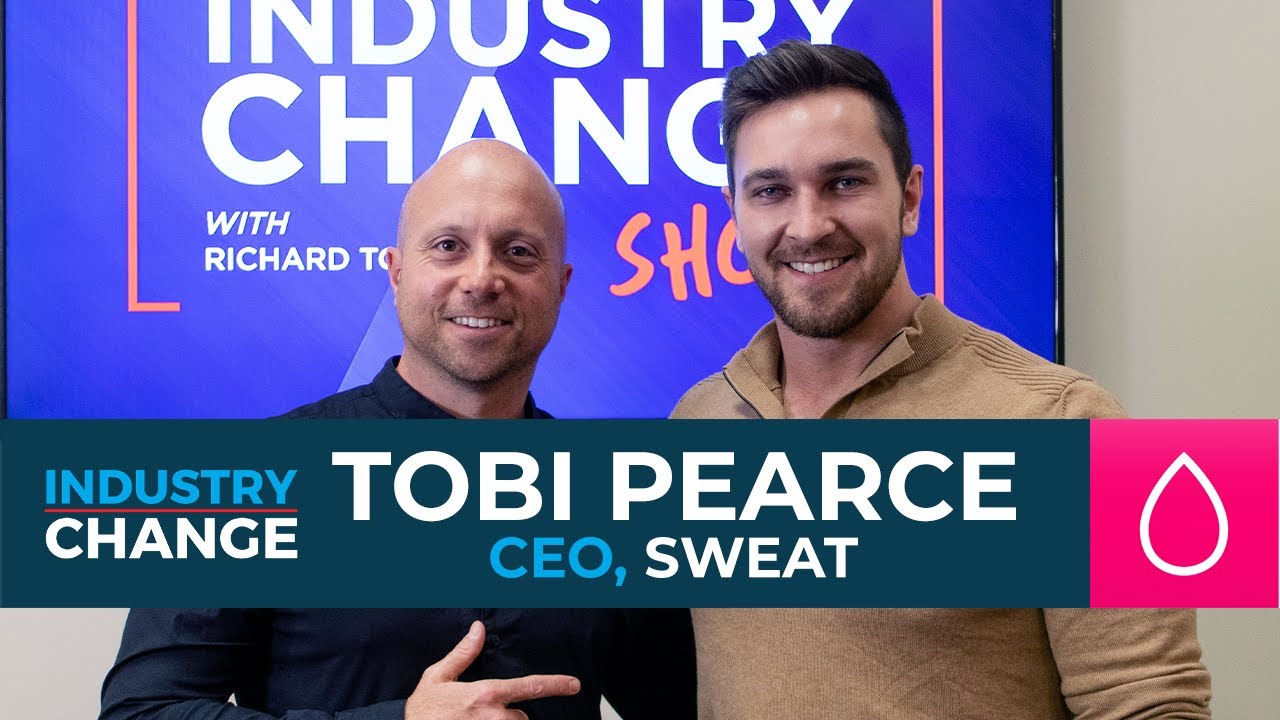
In this Industry Change interview, host Speaker A talks with Toby Pearce, co‑founder of the Sweat app and partner of fitness influencer Kayla Itsines. Toby recounts his journey from a university student and one‑on‑one personal trainer in 2011 to building a digital fitness empire. He explains how an early $70 BBG ebook (Bikini Body Guide) generated $75,000 on launch, how the product’s depth differentiated it from short‑form competitors, and why the transition to a subscription‑based app was driven by scalability, data collection, and internationalisation needs. The conversation covers the rapid Instagram growth (from 150k to over a million fans in a year) achieved through authentic video content and platform‑specific tactics, and why the brand deliberately avoids sponsorships to stay “influential” rather than an “influencer”. Toby distinguishes vanity metrics (likes, followers) from qualitative, emotion‑driven engagement, and outlines the brand’s global expansion to 155+ countries with localized content and lower price points. He shares his leadership philosophy – defining a clear vision (the “north star”) and acting as a “chief everything officer” – and his self‑directed learning approach, leveraging books, podcasts, and a network of experts rather than traditional mentors. The interview also touches on live stadium events, future growth ambitions to become the world’s biggest digital gym, and advice for personal trainers facing capacity limits, emphasizing customer‑centricity and digital solutions. Throughout, Toby emphasizes purposeful product development, adaptive marketing, and a mission‑driven culture.
Chapters
Welcome back to Industry Change. Here I am, and today we're talking all about fitness, we're talking all about the digital space and bringing it all together. And I really wanted to bring in a special guest today to talk about that. I think the number one guy in the space, Toby Pearce. Welcome to the show.
Thanks for having me, mate.
Thank you. For those who don't know, Toby, you might have heard of his fiancée, Kayla Itsenas, and she has an amazing following on Instagram, 10.5 million followers at this point in time. And the, the program that's really started it all was an ebook for about $70 and moved that into the BGG program. And from there, moving to a sweat app. So some impressive numbers I wanna share with you. We've got 30 million users on your platform, a few hundred thousand paying users, billions of impressions, $100 million revenue cracking, and 155 countries and counting, and a South Australian business, and you're in your early or mid-20s.
Yeah.
And I wanted to talk all about that. So welcome to the show. So let's start by understanding a bit more about yourself. You're a very hard man to get a hold of in regards to, you're never on the front, which I like, It means you're probably doing a really good job in the background. So tell me about your story.
Well, yeah, definitely, definitely working on it. And I think, yeah, I think obviously for me, like the priority early on was just to make sure that the business was doing as good as possible. And I guess, you know, the business's success, and I think even more importantly, the success of our consumers and the members of our platform is not predicated on anything to do with me other than my ability to run the business well. So yeah, my focus for early on and even still up until today is more about like, what value can I add to the platform and to our members? Not so much about how can I be out there and be in front of the camera.
And your background is a personal trainer, is that correct? You started off pretty young?
Yeah, so yeah, sort of after I got out of high school, I was at university doing a double degree in commerce and law, which I think, I didn't end up finishing because the business kind of took off really well. But I actually took up personal training 'cause I mean, I was really kind of passionate about lifting weights and health and fitness in general, but I really actually just wanted a flexible career, a flexible job in the meantime while kind of doing my degrees at university. And yes, I started out as a one-on-one personal trainer in 2011, end of 2011. Yeah, and then kind of did that up until middle of 2014 and then kind of was simultaneously running the online business early on as well.
And you met your fiancée Kayla in the early stages, is that right? Yeah.
2012. So we've been together for almost like 6 and a half years and we're engaged now.
Congratulations.
Thank you very much. So yeah, we actually had been together for a couple of years before we ever sort of started doing any business together. So it was kind of, I guess, almost a little accidental slash organic that we kind of ended up doing business together.
So 2011, 2012, when your personal training, personal training was a thing back then. I don't think it was like brand new. I started personal training in maybe 2000 and it was very new then. And so 2011, 2012, was there much need for an online program at that stage? Were people calling out for it? What kind of made you go down that way? 'Cause I'm assuming you were one-on-one personal training, is that right?
Yeah, yeah. So, well, I kind of did a bit of everything. So yeah, I started like really like right at the end of 2011 and then I pretty much started and then had a Christmas break, which was not necessarily the best time to start. But yeah, so I kind of, I did the one-on-one and then the small group training in a gym. And I went into a gym that had 16 other personal trainers. Wow. So it wasn't, it was kind of like a big box gym. It wasn't necessarily, you know, there wasn't exactly leads flying around jumping off the wall. Everybody had them already? Yeah, so it was kind of, it was an interesting learning curve for me there. 'Cause obviously like if you have another job, you kind of go to work, you do your hours, you get paid and you leave. But then when you're sort of like, oh, I could be in the gym for 16 hours today and not get paid once. So you start to learn how to make that work. But yeah, I went from that and then kind of did some consulting as well for some other large corporates. And then that kind of led me into bootcamps. Okay. So I ended up actually running like 2 franchises of my own bootcamp business out of Adelaide, which was kind of like where Kayla and I sort of started working together on that. But yeah, that was kind of like early on in the journey that was happening. With the, yeah, so with the digital stuff, you know, really interestingly, I didn't understand this properly at the time, but like I was, I had like my clients and they got to a point where probably about 6 months after I started, I was pretty much booked out. And when I mean booked out, I mean booked out from, you know, I would have Monday to Friday, I would have sessions from 6:00 AM until 10:00 PM.
Wow, so every hour?
Yeah, back to back except for when I would work out. Okay. And I would also do a couple of hours on Saturday and 4 hours on Sunday. So I was pretty hardcore booked out at that point and that kind of led me to, well, there was 2 things. So one, that's where the bootcamps came from 'cause I wanted to be able to train more people and have a lower price point. But also, how do I get my knowledge and education and learnings across to my customers without actually having to give them time because I don't actually have any more time. So that actually started with really, really like—
Okay, you had a problem.
Yeah, so these were kind of like, I developed a really premature set of ebooks, which was just a whole bunch of basic info that I kind of had and really, conventional fundamental educational principles for health and fitness. And then, yeah, and then when Kayla and I, we'd been working together in our bootcamps and people started to kind of request that—
And was it females and males or just females at that time?
Just women only. Okay, yeah. And so yeah, we had like a whole bunch of people on social media kind of been like, oh, like I wanna train like that and I wanna have those learnings and how do I get that? And so we kind of had a conversation about, well, you know, we could do bootcamps, bootcamp franchising has been successful nationally and internationally, but I think the concern was we didn't really have, there wasn't enough quality control.
Sure.
And so, you know, rather than kind of learn to tackle that problem, we're like, oh, well, like, let's just try this online thing and see if we can kind of, let's progress where we are now with the mini ebooks that we're doing and can we do a proper, like a bigger legit version? And yeah, so we did.
And at that time there, I mean, what kind of numbers were selling in this ebook before you, you know, obviously there was something happening there at that time, I'm
assuming? Yeah. Well, I think we had a, we probably had a little bit of a head start because we'd been using social media to drive leads to the boot camps. Yep. And as that audience grew, so did the desire for these products. So by the time we got around to launching, I think we probably like on Kayla's page would have generated about 150,000 fans. Wow. So we, when we actually launched the workout book, which was January the 4th of 2014, yeah, we did about $75,000 in the first day. Yep. But then obviously what happens is you kind of, the impulsive and the excited super fans buy and then obviously the traffic drops.
And how much was the ebook, just out of curiosity?
So at that point it was about $70 for the workouts. But with that, you got about, you know, a couple of hundred pages of educational information, 12 weeks worth of workouts, a glossary for every single exercise, basic like mechanics of exercise and weight loss and so on and so forth. So it wasn't like, it was probably the equivalent to like 3 or 4 books kind of in one.
So you put a lot of energy into this ebook, yeah?
Yeah, it was hundreds of pages long. So, and I think like, if I'm really honest, that was probably one of the really big differentiators early on. So like we were selling it at that point and we had some people who we didn't even really recognise as competitors then, but like who were doing the same but selling a 20 or 30-page ebook for $70 as well. So the customers are—
So it was interesting at that point then, obviously the competition or the competition at that point were very like front-end competition, short ebook, quick cash. You were already at the long game at that point.
Yeah, and so I think that's, and that's literally just in my nature. So from a business and from a life perspective, you know, kind of most of my decisions were always made about like, well, you know, if we wanted to get something out and get it out quick, then we would do this. But if we wanted this to be perfect or closer to perfect and really comprehensive and high quality, then it should be this. 'Cause inevitably, you know, I think most people in marketing and generally in business will probably agree that, you know, the best way to sell your product in high volume is to have a product that sells itself. Yeah, good point. Yeah, so I think like for us and like that was, you know, like what was working about our boot camps as well. It wasn't just that the workouts were good and that people liked them and that it got them results. Like, yes, that's all part of the package, but it was also kind of the like, well, these are our fundamental pillars of success in health and fitness and this is how weight loss works and this is why this is important and so on and so forth. And that's been a value that we've kind of held literally ever since the first day that, you know, I was a PT and Kayla was a PT, you know, 2 years before I was. So she's been doing it for coming up 10 years next year.
Yeah. And so in this point here, obviously we throw Instagram in and we throw Facebook in the works. I don't even know actually when Instagram came out, the year it came out. I'm sure you have that information, maybe?
Probably, I think 2011, 2012.
2011. And you were on it 2011, 2012, around that? Or was it 2013 or something like that?
Probably end of 2012, middle to end of 2012, I think. But at that point it was more of an image cataloging tool for us than it was actually a social media platform. I think, yeah, but we did quickly learn how it worked obviously.
And this is interesting because you already had the product out there before that. Then a new platform came and when you're talking about the product, you had a quality product out there, hundreds of pages. Then Instagram comes out, you're doing your before and after pictures. That's what I'm hearing a lot about where your success came from. Tell me about that process now. Like what was the jump when you went to Instagram or was there a jump at that point?
Well, I mean, like, yeah, it was such a different social media world, obviously, back then. Very different time, yeah. So I think, yeah, we kind of started and it was obviously like a bit of a slow burn, you know, getting to the first 50,000, 100,000 fans, it took a very, very long time. But it was more, yeah, once we had some fan base and we launched a quality product and we started to do some really basic like marketing strategies, we really went from, I can't remember exactly, but I think it would have been 150,000 fans to close on a million like in the first 12 months of actually doing that. And again, like that was, you know, by no means obviously was that accidental. Like it was very deliberate, but it was just that it turned out that the strategies that we were using and the approach that we were taking was just very, very different to what everyone else was kind of using.
And do you think a lot of like growth like that, what's that, about 10 times growth right there on Instagram, is it timing? Like if you can go do that right now with somebody else, would you have the same effect at this point or not?
Well, look, I mean, I definitely think like, you know, can you continually sustain that growth? Like obviously no. Yeah. You know, but like Kayla's still gaining millions of fans a year. Yep. Like she, you know, on Facebook she would've gone up by probably 6 or 7 million fans this year. You know, so I think, you know, is that 10x growth? Like no, obviously not. But then, but at that level, you know, like you're talking about really economics at that point. Like how many people are actually on the platform? Yeah. You know, and like, you're like, So for Kayla, her total addressable market in her top 10 countries on Facebook, for example, is 175 million women between the age of 16 and 44. So when you talk about the fact that she's probably got close on, I think from memory, close on 30 million fans or whatever on Facebook, that's pretty good penetration.
You're pretty much in there.
Yeah. So I think you're going to get deteriorating returns. But I think that in relation to the growth, the platform has changed and will continue to change, not dissimilar to any other platform. I think the nuance and prowess is kind of about how you adapt and pivot in those changes. So like, for example, when Instagram first came out, it was 100% exposure newsfeed, which basically meant that any piece of content you posted would appear in the newsfeed of any single follower because they didn't have algorithmic distribution of content that early on because the business just was not that developed and they didn't have the data science capabilities. A little bit specific, but—
I like it. I like the specifics.
But obviously further down the track, that obviously becomes a thing. So then you need to come up with different ways to engage users in a similar fashion, even though you're going to be fighting against a deteriorating engagement rate and deteriorating growth rates. So then, yeah, videos weren't available, then they became available, that became a thing, and then stories became available. And so there's all these different things. It's kind of how do you use and leverage each of those tools and opportunities to the best of your ability? I think a lot of people kind of look at those things fearfully, whereas we would look at them and say, well, that's just the next opportunity for growth.
That's great. Great mindset. I'm going to keep flicking through the tactical concept, I think, because we're in that world now. Let's talk about, you know, Instagram. We have a lot of Instagram famous, you know, there's Instagram famous everywhere at the moment, and you guys are doing something very different. You're very careful on what you post. You told me before that you take zero sponsors. Is that correct? Yeah. I'd love to know the angle on that and the type of content that you actually post. It's very different to the Instagram famous girls or guys out there that are really showing a lot of their body, that are just posting and posting, taking a lot of, I guess, influencers and taking opportunities there. Can you tell me why you're kind of against that whole concept?
Yeah, well, I mean, I think, yeah, so from a branding perspective, like, so to label, you know, like what it is. So like take Kayla, for example, you know, is our mission to make her an influencer? or is our mission to make her influential?
Right.
Yeah, and that's a, there is a key differentiation there. So an influencer is a type of business model basically, like they're leveraging their fan base to do collaboration endorsement deals to generate revenue, right? So our argument to that would be, you know, subject to one of the very few types that there is, out of all the different types of opportunities and deals, you know, this is my favourite tea or protein or clothing or whatever, right? How much value does that add to our customer? And like, and yeah, the response is typically zero because if I'm wearing this clothing, that does nothing for you. I mean, other than like, you might say, cool, I like that clothing and buy it, but that still actually added no value to you. Like you've acquired a new sports bra or new tights or whatever. You know, and like for us, a lot of what we do is always really kind of, you know, it was very customer-centric. It's like, well, what value does this give to the customer? You know, is it a tip? Is it a fact? Is it motivation, inspiration, aspiration? Like what different type of, you know, kind of value are we adding to the person? And, you know, promoting things doesn't do that.
Yep.
And I think as well, you know, I could go down this rabbit hole for a really long time, but I think as well, yeah, if you really, really want people to listen to what you say, you say less. And so it's kind of the, you know, the boy that cried wolf story. Yes. If you cry wolf all the time, you know, the one time when you actually cry wolf, then no one's gonna come, right? Yeah, and so from a promotions perspective, if you're constantly saying, this is my favorite and that is my favorite and this is my favorite and that is my favorite, like, you're just saturating your audience. And then eventually whatever actually is your favourite is no longer important. Sure. Yeah, so we would much rather be able to say like, this is the one thing and everyone really listened to that because we have the credibility rather than everything being my one thing.
Well, then you're starting to basically turn into an infomercial brand, right?
Yeah, yeah. And so like, I think for us, like we want the, we want to be influential, you know? So when we say things that people actually genuinely listen and that requires trust and credibility and, you know, and so on and so forth in consumers, which you just don't get If you're, yeah, one or the other.
So let's go touch on there. Like, so vanity marketing, I mean, what would you consider that then?
Yeah, so I think, well, there's a really interesting, yeah, there's a really, really interesting thing. Like, so from a content creation perspective, and I'll start really deep and I'll kind of come out, but from a content creation perspective, you very often say like, okay, as a marketer, like my job is to deliver to you, my manager, the absolute best stats. Right? And those stats should be, oh, like, how do I get more new fans? And how do I get more likes and more comments and more shares and so on and so forth?
Yeah, that makes sense.
They're fundamental KPIs for a content or social marketing, you know, employee of any business. But the thing that I would argue then is, but how are you bridging the gap from those metrics to business value? And so the reality is that, you know, business value is usually dictated by messaging and by brand. So, like, for example, if I'm, It's the crying wolf thing. If you're saying something 100 times over and then you say the one thing that you actually want to get across, but your audience doesn't engage with it, then it doesn't really matter, right? So, you know, the flow of that conversation between the employee and the manager, or the manager and the employee, should be, yes, of course I want you to get the best stats. They're vanity metrics because they make you look good and make me look good and whatever, right? Yeah. But the one thing that should always come before that is that it should be on brand, right? And so the conversation should not be, how do I get the absolute most likes and comments? It should be, based on what we are trying to say and get across to our customers from a branding perspective, within the realms of that, now how do I get the best engagement and performance? Because there's no point in, you know, I could post a whole bunch of really controversial, funny, cute dog playing in an apartment content and get heaps of likes and fans, but is that going to help me, is that going to help me sell software? Or is that going to help me sell fitness content? Like, no. Like, yes, there'll be some people within that audience who ultimately do like that stuff, Yep. but the penetration and the success of that as a campaigning strategy is not going to be anywhere near as high as 100,000 fans who love dogs versus 100,000 fans who are really engaged with fitness content and believe in your credibility as a trainer. Like they're 2 very different audiences. So I think, you know, while it's all well and good to focus on those vanity metrics, the likes, comments, shares, and fans and whatever, I think the more important thing is, you know, like how engaged are those people at an emotional level, like with your product and with your brand and with what it is that you're saying.
And that would be the one word you'd use, emotional, like get them emotional so you can then open the doors?
Yeah, I think so. Like, so the way we kind of refer to it internally at Sweat is is that we have 2 really different types of metrics on social. We have quantitative, so likes, fans, comments, growth and whatever, but then we have qualitative. And the qualitative kind of refers to like, well, emotionally, how does that content make somebody feel? And from a branding perspective, like, is that in alignment with our branding values and our brand messaging? So for example, one that anyone in the fitness space can relate to is like, rah, like get shredded abs in 4 weeks, right? Sure. I don't think there's many women in the world that would read that and say, oh, that just— I'm so motivated to work out now after being told that I can get abs in 4 weeks. I wasn't actually aware that getting abs in 4 weeks was my goal. You know, like most, most people, and especially women, really just want to work out to feel better. And they're like, yeah, sure. More often than not, um, if it's their first experience or they're less educated in fitness and health, they'll typically say like, oh, I just want to lose 5 kilos. Gotcha. Because they believe that that's That's the measure. But then the reality is that when they actually start training or whatever, like, yes, cool, they might still track their weight, but the thing that they actually value the most is how they feel. Yeah, it all really comes back to emotion. Like, why did you want to lose the 5 kilos in the first place? Yep. Because you don't feel comfortable for whatever reason, or you believe that society's impression of you is one that is not acceptable or whatever that way. So you say, oh well, you know, I don't feel— I feel bad this way, so I want to feel good, and I think that's what the world's telling me I should do. Whereas we would never ever do that. We would never ever say those things. Like, Sweat as an organisation would never ever use that language.
Yep.
It
makes sense. I mean, feeling, it's what we teach a lot about, a lot of our members. It's around feelings, about emotions. And I think you've done that very well from what I can see on the front end. That gets me to the next point. You know, when we look at innovation and we look at, you know, when you're saying, hey, can you consistently grow this way? You're really a visionary and you've gone now from Kayla and you've actually now opened up from Sweat with Kayla to Sweat. And can you let me know a little bit more of that? 'Cause you're in 155 countries and counting. I don't know how many countries there are, do you know?
I don't even know. All I know is that there's 155 or more.
So you're in 155, so you're a global, you know, a global app there. You know, what is the future now for Sweat and what does it look like now? I mean, I know 5 years we're talking about, but 5 years you've had such growth. I mean, maybe where's the next 5 years going for Sweat?
Yeah, so I think, you know, it's probably important to perhaps add some context, you know, to the history of the business. So we launched the BBG, the Bikini Body Guides with Kayla in 2014. In late 2015, we launched that content from the ebook but into an app called Sweat with Kayla. Then in 2017, in May of last year, we launched Sweat or we rebranded as Sweat. Yeah. The transition that has occurred has not by any means been accidental, and it was all really purpose-oriented. Yeah. So if we go back in time to early 2014, we launched the business, you know, we'd reached 10 million women online, you know, we were doing a pretty good job, and then these, you know, some of these really, really big, you know, like existential questions from an organisational perspective started to, you know, to pop up, and they were basically that, Yeah, okay, well, you know, but is every woman in the world ever gonna train just one way? Sure. And, you know, I think obviously the answer is definitely not.
Yeah, when they go through a cycle, depending on what they go through, they're gonna change a lot of things.
Yeah, so even, you know, a lot of women have children. Like you can't do high intensity training immediately after pregnancy. Like it's just not, it's not a reality. People have injuries, people have preferences, you know, people have capabilities, access or limited access, whatever, right? So there's a bunch of different stuff. With that kind of started the conversation about, okay, well, we need different types of content. You know, that probably means we need different people to be the, you know, to be the trainers and to distribute and create that content. There was also a conversation around, well, you know, PDFs are not really interactive, like ebooks are not interactive. Sure, yeah. We can't collect data on our users and therefore we can't improve the experience. So we would need to be in an app or software or whatever. In order to hold more content, we had to be really like platform-based. It had to be kind of, You know, hold content of a ubiquitous type almost in nature. And so, yeah, and then also it was like, oh, well that price point in typical English-speaking Western markets is probably okay. But then as soon as you go to internationalize and you look at other markets like that, that could potentially actually be quite a large portion of the medium socioeconomic demographics weekly wage. Yeah. So, okay, how do we accommodate all these things? And the answers kind of really, really presented themselves in some way. So the, yeah, we didn't wanna have an ebook because of internationalization. So we went to an app. With the app, we wanted people to be able to have a lower barrier to entry. So we were like, we'll reduce the price, but we'll make it a monthly fee. They can't withdraw the content effectively, so they pay for the access to it. Some people wanted to be able to try it without paying for it, so we'll give them a 7-day free trial. Some people wanted it in different languages, so we localised it to 8 languages. So all of these things started to happen, but the really big play there was obviously like, how do we get to Sweat? Like, how do we get from an ebook to an app and then from a single brand monopolistic content source to— And
that's what nobody I've seen in your of space has actually done. This is the big difference I'm seeing.
Yeah, and so I think for us like that, so, you know, if you look at it, if you zoom back and pause on time quickly, you say, oh, we went from, you know, BBG to Sweat with Kayla, which wasn't an accident because we'd already known that the business was gonna be called Sweat. And so that was the smoothest way of transitioning the brand from one person to a platform and from Kayla being probably the most well-known and influential women's personal trainer in the world, you know, to being a personal trainer within a platform. And so we had to, to take those steps to do the pivot. And, you know, I think, you know, fortunately that's been really successful and it worked out, but there was a lot of, yeah, there's a lot of behind the scenes thinking that kind of went into that and, you know, and how you differentiate from an individual or a personal brand to a platform's brand, you know, like, 'cause they're 2 different marketing methods.
Yeah, so you're still marketing with the individual though, right?
Is that correct? Correct, yeah.
And you've got that brand. Is there a future to get more or are we stopping at 3 or what's the future scene?
Definitely not stopping. Definitely got some stuff coming up very soon that will be pretty exciting. I think for our audience, but I think for us, you know, the simple way of putting that is like, how do we become, you know, how do we become the biggest digital gym in the world? How do we become, how do we find a way to provide value and assist women in their fitness journey regardless of where they're located, what point they're at in their fitness journey, what type of training they wanna do, you know, like all those things. How do we help every woman basically?
And that takes me to another point. I mentioned before like mentors and your visionary approach, you're 26, You've had massive growth and you're behind the scenes and really pushing this brand forward. Where do you get the visionary ideas from? Where do you get, do you have a mentor? Do you believe in mentors? Do you have a coach? Do you hang out in the digital space? Do you hang out in the fitness space? Where do you put your energy or what books stimulate you?
Yeah, so I think I kind of initially had the idea for Swazir Platform when I was 22 and was kind of already running a couple of businesses at the same time. But I think, you know, like really early on there wasn't necessarily really a good opportunity to have, you know, a mentor with the specific experience that, you know, I kind of needed. So like, of course, like I surrounded myself with smart people that were knowledgeable in certain areas, you know, and whether it be friends or even like my accountants and lawyers and whatever, just to learn some of that stuff. But I think early on it was pretty hard 'cause we were kind of really like on the forefront of a lot of stuff that was happening both in digital and in fitness and in technology and so on and so forth. Yeah. How do you find one person to do all of that is difficult, but I think also how do you find someone at all in South Australia in a space that we're not, in SA we have a lot of agricultural and real estate and building businesses. We don't necessarily have a lot of software and technology. Now that's definitely on the change and that's really great and exciting, but 4 years ago it wasn't necessarily that way. So I really spent like a lot of time kind of self-learning, read hundreds of books, hundreds of podcasts, thousands of different blogs and articles online. And that just, yeah, basically tried to put myself on a vertical learning trajectory. Now it's very different. Yeah, I'm really fortunate to be kind of very, very well networked in, you know, like in the spaces that we are as a company. So from the outside, people will probably say we're a health and fitness business. And of course, like we— It's the product you sell. Yeah, yeah, yeah. We have exercise scientists and nutrition scientists who work in our company. Like we have them as employees, but I think we would probably more so say that we're actually a software company and a subscription company and a media production business and so on and so forth. So I've got people in my life who I'd say have run tremendous software businesses who I learn from, people who are great on content and production and so on and so forth. And then obviously just people who are general business leaders who I've been able to learn from or who I aspire to be like.
So that drives me to the next question then. What is the why when somebody can self-learn like the way you've done? Really projected really fast. You know, what is that thing that keeps you up? What's the why for you that you can actually go and study yourself?
Well, I think it's probably, it's, yeah, I guess a why is probably a good question, but I think maybe, well, yeah, maybe there's a why, right? But like, I'd probably say when, not necessarily about when I should learn or what books I should read or whatever, it's more about like why not, like in some regards. So A lot of people kind of take the approach, they're like, oh, so-and-so said this is a great book, like I'll just go and read it. But we've all got limited time. Sure. You know, so my approach to learning was more about, um, okay cool, like we need to hire a project manager because I feel like we have all these problems, so let's read 3 books about project management so that when that person comes in I can communicate with them.
So you're going deep as you need something, you go deep, you figure it out, and then you move to the next thing.
Yeah, so it's solution-based learning. Like I'm learning this particular thing for that exact purpose. I'm not just reading random business books and random motivational books for the sake of it. As an individual, personally, I'm not really lacking any motivation. I'm not really lacking in those things. But when we started, when we first made the transition from being a typical kind of ecommerce business, which is not really software, into a software company, I'm like, oh crap, I don't actually know anything about software. Okay, so what's an API? And how do you write in these languages a program? And what's software architecture look like? Yeah. Yeah, I don't need a degree in computer science, but like having some kind of surface-level knowledge or slightly below surface-level knowledge is, is really like fundamental to the success of my role as a leader. Because effectively early on, you know, the way that I explain this to a lot of people is that early on in the business of any type, like the CEO or the general manager, the director, the owner, whatever is, is, yeah, let's just call them a CEO, they're really a chief everything officer.
Yes.
They're not really a chief executive officer. Yeah, so you do whatever the hell you need to do to keep the business moving forward. And so, you know, if that means I've gotta recruit a data scientist, recruit a data scientist. Okay. If you've gotta recruit a project manager or computer science or whatever, like, and you can't, like, how can you possibly hire and lead and manage someone in those areas if you don't even really know what they're doing? You know, so I think obviously there's a fine line between going too deep, you know, in a particular area of learning. But I just think like, it's almost like I'm obligated to have some idea about what they're doing because otherwise how can I lead them and how can I tell them what's a priority?
I love it. It makes perfect sense. And that kind of gets me on the question of leadership. In one word, how would you summarise leadership?
Probably defining where we're going. Like, it's not really one word, but it's defining the outcome.
So having that vision.
Yeah. It's just, well, northern star. There you go. So like, everyone in the organisation plays their part, but it's really, really important for people at an individual level in an organisation is to be able to say, today I did this. I am a copywriter or I work in PR or customer support or whatever. Today I did this and this thing contributes to that. And that is why I'm here. And that is where we are going. 'Cause I think otherwise, like no one wants to go to work and do pointless stuff. Yeah. Like there's a, if you feel like you're going to work every day and you're kind of doing the same thing over and over and over again and there's no value to it, then eventually you do it slower and slower and of lower quality, right? So there's a really cool, I'll probably kind of mess it up. There's a really cool example of this where they had, factory workers come in and construct a box, which would take 20 to 30 minutes or whatever. And then the person in front of them would smash it and destroy it. They'd be given another set and they'd do the box again. Yep. And basically what would happen is the performance of this group versus the standard group, these guys would be at a normal pace and a consistent pace, whereas these guys would continuously deteriorate and deteriorate and deteriorate. And then eventually obviously not want to do the job. Sure. Because there's no fulfillment and you don't know where you're going and why. So I think as a leader, like at any level in organization, is basically just about setting like, This is why, and that's where we're going.
And being very strong at that.
Yeah, and that's it. And that's definitely not something that I have been very good at. It's something that I'm really learning. But yeah, I think it's an important facet of any leader.
Well, I think it's a great journey to have because you're pretty much, as you said, you're learning, you're going deep, you're figuring out, and then you move to the next challenge. Yeah. Before I get into some tactical questions, gonna wrap up soon, let's talk about, just quickly go back, you do a lot of world tours and in 2015 you did a world tour. Just talk about that feeling 'cause you went from a digital, Yep. And then all of a sudden you got a stadium full of people. Just describe that feeling that when you went and had that opportunity straight away, what was that difference for you guys?
Yeah, so I think, yeah, I think part of running any business is obviously about emotional highs and lows, right? But also even within just the emotional highs, it's very different kind of highs, you know? So if you're, you know, you see your fans go up, oh, like another 10,000 new fans this week or another 1,000 new email subscribers or whatever, like, Cool, that's in the green. Yep. That's good. Like we're winning, great, right? But then if you show up to a stadium on the other side of the world and all of a sudden the 10,000 digits on your screen turn into thousands of people in a room, you're doing the workout and the product that you created, like that's a really different type of emotion. Yeah. It's really, it kind of, it's one of those ones that really punches you right in the chest, you know, that you definitely feel. And like, I think that was a really, I mean, we've been doing those year after year since 2015 and it never changes. Like it's a very, very surreal moment for us. I think it was just really, really fulfilling to see kind of, this is the product that we've built and all the time and energy we put into it. And people are actually using it. Like, you know, they're using it, right? But like when you—
But when you see them.
You see them, you see thousands of them kind of in a room doing it. Like, you know, we're doing millions and millions of workouts a year on our platform. But seeing that number is very different to seeing a few thousand people work out in one room together. And yeah, I don't think that'll ever kind of lose its feeling for me.
Amazing. I've got a few tactical questions. Just to wrap up, and the tactical questions are like, what is, if you could say there's one great Instagram hack or move, what would it be? Is it images? Is it videos? Is it hashtags? What do you think?
Oh, look, I mean, I definitely think videos are a really, really great way of, well, they're a really, really great way of engaging with your audience. But I think that the hack or the philosophy that we have is like, how do we create high enough quality content in a really, really, really rapid period of time. So it's all well and good to create like ultra, ultra high quality content, but the reality is that actually typically performs less strongly than kind of really off the fly. I mean, that's why you look at companies like Snapchat or even Stories on Instagram, because the authentic stuff works well. Okay. So I think, yeah, video content that's quite like authentic and, I mean, raw. I don't like the word raw, but we use the word raw. I think is a very, very good strategy.
Excellent. Well, you've had some massive growth and massive success. And I think what I love about this story is that I always love to interview the people behind the brands as well. And so I know Kayla is out there quite a lot as the face of your brand, but to me it's amazing how the engine works in behind the scenes and things like that. And just one last question, 'cause I know we could talk all day here. One last question in regards to, you know, If there's a PT and they're in that journey that they're maxed out hours like you were, you know, what's your advice for them? Is it continue the PT journey? Is it to crack it in the digital space? What would you say if you could look back?
I think, yeah, I think they're, you know, crack it in the digital space or keep going or whatever, they're almost the solutions. You know, I think for me, like I always, you gotta start with the problem before you have the solution, right? And so the, you know, the problem for me, like early on when I was a PT was basically about like, how do I, yeah, how do I either train more people or just provide a better service to the people that I have now. So I think, you know, to answer the question about what's the number one focus, like, really, I think it's just customer centricity. You know, I can't possibly sit here and say to everyone that, like, oh, like, cracking it in the digital world is just exactly what you should do. And I think that if everyone said that digital was the only way to go, then they probably don't necessarily fully understand everything. Sure. Because there's, you know, different types of business require different strategies to get different results. But the one thing that every single business on the planet shares is that if you satisfy your customer again and again and again in a really, really positive and value-adding way, Then more and more people will come and pay for it. You know, so start with that, solve the problems around that. And to be honest anyway, I think if you're a PT that's struggling to keep up with the amount of work that you got, you're already sitting on like a mountain of opportunity. So now you've just gotta find the ways to engage them differently.
Amazing. Do an amazing job from the start.
Yeah.
Well, thanks so much for your time. It's been amazing interview and I really appreciate it.
No, thanks for having me. Thank you. Cheers. Thanks, mate.
That's this episode of Industry Change. I'll see you next time.









