How To Cut Your Gym Marketing Budget In 2018 | Industry Change Ep 11 with Justin Tamsett
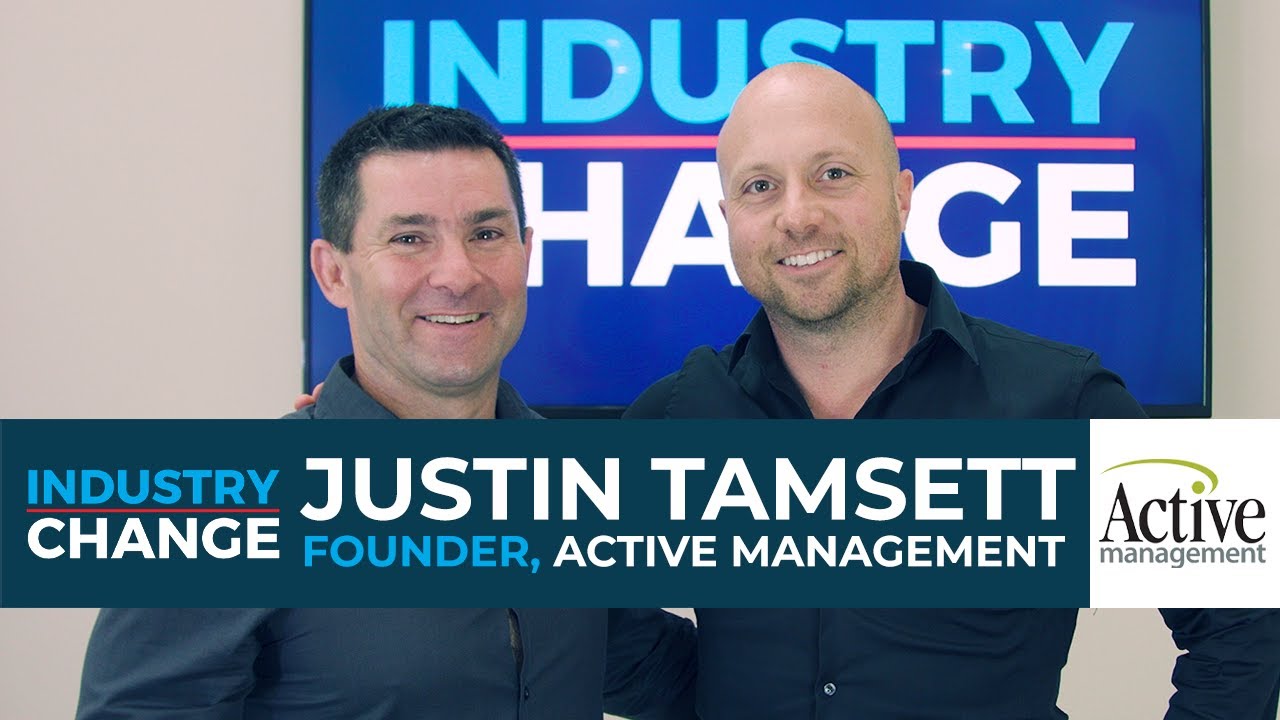
In this Industry Change podcast episode, host Richard Toutounji interviews veteran fitness business coach Justin Tamsett (JT) about the deeper purpose behind his work, the evolution of the gym industry, and practical strategies to reduce marketing spend while boosting member retention. JT explains that his personal ‘why’ is to lower global healthcare costs by getting more people active, a purpose that emerged after his daughter’s birth and the realization of an aging, increasingly sick population. He shares insights from visiting over 75 clubs worldwide, noting that members often struggle to stay active when traveling and that photographic proof keeps him accountable. The conversation highlights a core industry trend: despite many fads, the consistent drivers of results are treadmills, electronics, and strength training. JT argues that gyms must shift from treating members as “sleeping dogs” to actively encouraging workouts, because member results generate referrals, secondary revenue (personal training, merchandise), and lower marketing costs. He emphasizes a 12‑week onboarding process that blends virtual, phone, and in‑person touchpoints to integrate new members into a community, arguing that people join for content but stay for community. The discussion contrasts the old health‑club model (personal, community‑focused) with modern fitness centers that often lack community, and cites CrossFit as a successful community‑driven model. JT differentiates marketing (culture, philosophy) from advertising (tactics) and urges gyms to define their brand identity before launching campaigns. Finally, he reflects on the industry’s maturation, urging operators—both insiders and newcomers—to adopt best‑practice business mindsets from banks and e‑commerce to become hyper‑successful and profitable.
Chapters
But when you get clarity around why you do what you do, and don't give me the bullshit answer that it's passion, because there's a reason why you're passionate about it, and you've got to find that. And when I found that, I went, wow. And then I started sharing that. My business grew because people went, oh, I get why you do what you do. That's a nice reason. I'm happy to invest in being a client of yours.
Great. Hi, welcome to Industry Change. And today we're talking to a really special guest and we're talking all about fitness and wellness in today's episode. And today I've got somebody who's been in the game for nearly 30 years and I've got an industry legend who's been one of the first business coaches in the fitness industry. So I wanted to bring Justin Tamson aboard. Welcome.
G'day, Rich. How you going?
Good, thank you. Now, JT, JT also known for short, right? Where'd you get JT, by the way?
That came from a rugby union coach in about 1991. He started calling me JT and it just stuck.
Good, I like it. Everything's shortened and we're gonna talk a little bit about stuff online and things. And I think today we shorten a lot of things. So Justin Tams, JT. Now you run a company called Active Management. Yep. And you travel the world talking and presenting and teaching clubs and business owners how to run their business more successfully and retain their members. And I love your, maybe, mission statement that your company has, and it's all about reducing the cost of obesity around the globe. Tell me why that is your why for, what made you work around this mission?
Well, I think one of the interesting things about my career, someone asked me this just the other day, they said, so why did you get in the fitness industry? And the real reason I got in the fitness industry, because I was at uni studying to be a phys ed teacher. And when you're at uni, what do you do? You drink a lot. So it made no sense for me to work in a bar. So I decided to get a job in a gym. And it was literally just because I needed to get a job. Right. I had no passion. I had no interest in fitness. Obviously, I had an interest in sport because I was doing PE. But I was thinking I'd be a PE teacher because what a great life. PE teachers. But it was then that I decided, actually, I quite like what I'm doing. I like the impact that I'm having on people's lives. But it wasn't until 2008 that when my daughter was born that I realized that there were so many people in the world that are getting older and getting sicker. Yep. And I figured that with an aging, sickening population, then countries were going to spend bucketloads of money keeping them alive and/or healthy.
Yep.
So I decided, well, if that was the case, then Zoe wouldn't grow up in a world with opportunities that I had because governments would be spending money there and not spending money on giving opportunities to kids, entrepreneurs, or whatever. So that made me decide that my why was going to be to reduce the healthcare costs across the globe. by getting people moving more often, more active in quality fitness facilities or with fitness individuals.
Makes sense. And that's that number one, you know, I always find that you can have that number one feeling, it can kind of move a lot of mountains in where you're going.
What I find particularly interesting, Richard, and you know, if you're watching today, this is probably the first takeaway point, is that when you get clarity around why you do what you do, And don't give me the bullshit answer that it's passion, because there's a reason why you're passionate about it. Sure, sure. And you've got to find that. And when I found that, I went, wow. And then I started sharing that. My business grew because people went, oh, I get why you do what you do. That's a nice reason. I'm happy to invest in being a client of yours.
Great. So JT, it's been, it's been told to me that from your, maybe your socials, that you have worked in over You've worked out, sorry, in over 75 clubs, different clubs, this year alone in 2017. Tell me about that, because usually most people go to a gym and they work out and they might go travelling, they kind of maybe go to a hotel gym. You've been to 75 different gyms with photo proof as well.
Yeah. What'd
you learn?
Well, I guess the first thing I learnt was how hard it is for many of the people watching today, their clients, to stick with exercise when you're away.
Okay.
So the first thing that— and the reason why I do photographic evidence is that that holds me accountable to my tribe and people, friends. They go, oh, well, he's traveling, let's see where he's gonna train. So if I don't take a photo, it's like, well, you obviously didn't train while you're away. So for me, it's a really important component of keeping myself accountable to working out. The other side of things is from a business perspective. I go, and I can look at anyone in the eye with this and say, and sleep straight in bed at night, I pay for a casual visit on every club that I've been to.
Great.
So I go in not as Justin Tamsett, some sort of industry person. I go in as JT, a consumer who wants to work out in your club.
Great.
And so the reason I do that is I want to go in and get the true customer experience. that brand's promise, whatever the brand, whether that be a hotel, gym brand, or whatever it may be. I want to go in and get that true experience so then I can take that and work with that with my clients and say, this is what I learned from, from this brand.
Yeah, great insights. And I want to like go a little bit deeper on that. So over the space that you have been doing your, you know, your coaching and your business coaching in regards to clubs and health clubs, And I believe that's from 2005, is that correct? Yeah. You've been doing that for quite a while. And you've had your own clubs and bought them and sold them. So you've definitely got the experience there that you can give to others. What has been that one trend, could you say, in that period that you've seen either been the same trend or different trends happening in the place?
Oh, look, I'd say that the most common trend in the last 30 years in the industry Is treadmills, electronics, and strength training gets people results.
Right.
That's it. And I think sometimes as an industry we forget that our members or our clients, if they're not working out, they're not going to get results. When they don't get results, they're not going to tell their friends, and we're not going to get referrals, so we've got to spend more money on marketing, and it's kind of this spiral. And I think as an industry, we actually have got to take responsibility for getting people to work out more.
So that's the secret? You have to work out?
Well, actually, you've got to work out. You know, it's not— you don't lose weight, you don't get fit, you don't get healthy through osmosis of having a membership card in your pocket and it's seeping through your body. It doesn't work like that. And I think as an industry, What I'm seeing is more owners understanding that I actually want to have less what we call sleeping dogs than we used to have in the '90s and the early 2000s. So, you know, historically gyms have said, well, we want people not to work out because that's what we call profit.
Yep, yep.
But I'm seeing more and more facilities going, we actually want our members working out because they understand the formula. train, results, tell their friends, reduce the marketing spend. So for me, that's a really big one.
Okay.
And when they're trying to compete with the new players in the market, if we've not got people exercising, then that's when they start to go, oh, well, maybe I'll go somewhere else. Maybe I'll go and try something else. So it's an exciting time for the industry because I think we're at a crossroads where we go, I genuinely care about you as a person from a business perspective, and I want you to get the most out of your membership. And some gyms are moving that route really quickly.
Yep.
Others, glacial speed.
It's really interesting. I want to recap what you've said here. So what you're basically saying is one of the trends, and I don't know if you're predicting this will be the trend, but what I'm hearing from you is that to reduce marketing spend, to get your retention going is literally you've got to kind of care that your clients are working out and getting a result.
Totally. Well summed up. You summed what I set up in 10 minutes in 2 seconds. Exactly right.
And so when you do that, you're then getting back to your mission statement is to reduce global obesity and healthcare costs across the world as well. And so what can business owners do better in your experience to ensure that members are working out more? Like what is 1 or 2 or 3 tips that you can give a club owner what to do? Because it sounds simple, get them to work out more, but if you've come from that world where, yeah, you want some sleepers in there, it might be a new theory for people.
Totally. For me, it starts from the day the person joins.
Okay.
And so my number one tip, and we work with all our clients on this, is the onboarding process of a new client.
Okay.
And how you onboard that new member is absolutely critical. So you need to have steps in place, whether they be virtual steps, i.e., emails, or whether they be phone calls, or whether they be face-to-face, skin-to-skin, belly-to-belly in a club, or a combination of all 3, which is the ideal situation. And for me, an onboarding process would be around about 12 weeks.
Okay.
And it's not all about huffing and puffing in the gym.
Right.
I think one of our greatest weaknesses as an industry is we've focused on getting you hot and sweaty and having DOMS.
Yes, yes.
Rather than actually teaching you and changing your behavior to how to fit exercise into your life. And so if we are going to have our members working out in the clubs. And by the way, when members work out in the clubs, not only do they get results, but then they buy stuff— personal training.
Yes.
Waters, proteins. They also feel part of the community, so then they buy the merchandise. So you build this secondary revenue stream. So while you may have 80% of your members using the place, you've also got 80% of that 80% spending extra money. See how it comes together like an evil plan? That makes sense.
You've just got another income stream straight away.
Correct. But if they're not in the gym, you can't— they won't get results. They won't tell anyone, so you're not getting referrals, but you're also not going to sell anything.
Great.
So part of that onboarding process is to make sure that people feel part of the community. Feel part of the community. And the little saying that we have in our business is that people come for the content, but they stay for the community.
Yeah.
People come to the class or to the gym because of the equipment, but then they stay for the community. And I think this is a— some people may say this is a facetious view of the industry, but I try to simplify it. And that is this: in the '90s, we had health clubs. And so there weren't a lot of people that came to gyms, but there were health clubs. So when you came in, I knew your name. And then we went, let's commercialize what we've got. And as we commercialized, we went from health clubs to fitness centers. Centers where you did fitness. There was no community. You just came in, did your stuff, and left.
Sure. Yeah.
Then all of a sudden, someone came along called CrossFit. And people look at CrossFit and say, Oh, it's the intensity of the workout. People just wanted to do something different. I actually call bullshit on that.
Yep.
What they came along is they created a community. And people join CrossFit for the community. And Coach Glassman is on the record of saying, I want in every box around the world such a community that if Richard's car breaks down, I will go and pick him up to bring him to the box to work out.
Solid.
Now that doesn't happen in fitness centers. Yes. It does— it used to happen in health clubs. Yep. So I think we almost have to go back to the future and say, all right, let's get our shit together and let's go back and build this club. And so that onboarding process is about integrating the person into the community of a health club. So that I know what's expected, I know what I'm gonna get, and I'm gonna connect with other members, I'm gonna connect with the team. And this now becomes a safe place for me to come and work out where I can be my normal self. And that will in fact be beautiful because it becomes less intimidating for the person who's not fit.
I think that's so many, so many cross-pollinations that you've talked about here. And I know you do a lot of work in, you know, marketing leads and really making sure your clients are retained, but it sounds like everything will formulate from this? The reviews will happen, the leads will come through much easier, they'll stay in retention much longer just by this one method you're talking about.
Look, a magician should never say how he does his tricks. So because it's just you and me talking, and we know no one's watching, I'll just tell you. I do the marketing and the lead side of things because that's what gym owners want. And that's often the thing that would get me through the door. But once I start talking to them, I go, actually, we've got to pull this right back. And look at going back to why you do what you do, what's your philosophy, what you're trying to create here. And then, you know what? The leads will just happen. It's not a— like the marketing, it's not— I guess as an industry, we confuse marketing and advertising. Yes. So people will say, can you come in and help me with my marketing? But really it's, can you help me with my advertising? The marketing is what we're talking about. The marketing is what's the culture that we've got in the business? What's our philosophy?
Yeah, we do the exact same thing with people who want to come in for Facebook ads and websites. We have to ask them the question, who do you want to try attract, and what's your culture, and what's your brand? Because otherwise everybody could run the same advert on Facebook, they could run the same email campaign. We have access to every single free resource that are out there today, but we don't have access to— we just need to understand who that person we're trying to tap into and how can we connect them.
Let me ask you this question. I'll turn the table on the interview. Do you think if we look, if we put 10 different print ads or Facebook ads up on a wall and we pull the logo off, and they're 10 different brands, do you think you'd be able to identify the brand? Or you'd just go, oh, that could be one of 3 or 4 different brands?
Well, you should be able to identify the brand is the question.
Correct.
Can I identify the brand? I think there are much smarter clubs and businesses out there today doing that. So yeah. You know, it's not all negative. I think there's a lot of positive things, but I think the ones that are stagnant, they're gonna have the same offers, the same font, the same writing.
Probably the same stock image that they've got.
Same stock image they're getting from iStock for a dollar. So this is where, you know, I think, and this is where I think it's great to start to see more education come through, more advice around similar topics come through. So it is nice to have conversations like this to understand, well, this is the good, the good is arising to the top and you can be in that group. 'Cause it doesn't cost you actually, Doesn't sound like it costs you any extra money for this. I'm gonna ask you one more question because I think it's a big one. So let's say you're wanting to come into the fitness industry because as we know the fitness industry sometimes—
Come into the industry now?
Yeah, like brand new in the industry. They've seen the industry exploding and they're going, hey, I'm gonna—
Yeah, I'm not doing that.
You're not doing that?
Okay, but if—
If they were coming in, I want to open up a club or I want to be a personal trainer, where do you think, you know, I guess the question here is like Is it— can you have outsiders come and own a club, or do you think the best club owners are coming within the industry? Like, they've been a PT and they've kind of worked their way up. Because what I'm hearing here is you're talking about trends that are coming through— Barry's Bootcamps, things like that. Is it that business operators who know how to run successful businesses are coming in now and they're cleaning it up, or is it coming internally within the industry? What's the best way to maybe get in this street? Like, I'm just— If you're new to it?
I think the people that are in the industry and have grown up in the industry look at the industry and go, how can I be like the industry? And I'm passionate about the industry. For the people that are now investing in the industry, they're the outsiders and they're coming in and going, this is a business.
Yep.
And so we're gonna create a business here. And while I might like exercise, I'm not passionate about it. And I can see the value of it for everybody, but I'm gonna run this like a business. And so I believe that in 2018, '19, '20, '21, and moving forward, is that as an industry, we've actually— whether you are growing up in the industry or you're just coming in, we've got to take what we're doing off the kitchen table and go to the boardroom. Okay. We've got to make this a proper business. And so for me, the big businesses that are coming in, or the new people that are coming in, They're saying, as outsiders, we need to create an experience for people.
Yep.
Whereas the people in the industry are saying, we need to produce something, a workout that's technically sound. And there's a very big difference. So, for me, this is only my barometer. When I do a class, anywhere in the world, and I'm not an aerobic class but some sort of fitness class, because I have no coordination. When I do a class, if I don't look at my watch in that class, I've had an experience.
Right.
That's my barometer.
That's great.
Most of the time when I'm working out in Australia, I'm looking at my watch because the person that's teaching the class is not engaging with me. They're correcting me on my form. They're not— high-fiving me, they're not telling me that, they're saying, keep your back straight, don't put your knee over your toe. And it's like, you know, you're in the US, they don't care about that. Yeah. It's entertainment up here and down here is technique. In Australia, it's reversed. And that to me is where we need to flip it. We need to bring entertainment in. So I'll walk away and go, wow, that was fun, loved it. By the way, when I get back to the office, I'm gonna tell Rich that he should come down and have a workout with me because it's so much fun.
Totally makes sense. And I think just to finish up here, I think the other concept that you're telling people— and I always learned from what people are doing, not what people are saying. Yeah. And in this situation, I've seen you travel and I've seen you in every single gym around the world, and I'm looking at going, wow, this is a way that you can find the trend that's happening or see the trends that you don't want to happen, and you can start to figure out, well, how can I mix it between the technical side and the experience side, and how can I find that right balance for a lot of club owners. So I think you've done a really great job on that.
Oh, thank you.
Yeah. And congratulations on being a really— in the Australian fitness industry, a really big part of that, because as I said, you're coming up to 30 years and you've worked with a lot of different clubs. So it's nice to see a different perspective in this conversation that you're talking about.
I think as an industry, we are growing up and we're maturing. But I think we still look at each other and go, how can we be like you? And we've got to start as an industry growing up and saying, okay, this is what big banks are doing to look after their customer. This is what Amazon online is doing to look after their customer. This is what such and such and such and such are doing. And we need to learn from them and bring that information back into our business if we are going to go from that maturity to being Hyper successful and profitable.
Amazing. Thank you, JT. Now, this goes on podcast too, so if you just want to shout out your links as well, where people can find you too.
Oh my God. Just Google Justin Tamsett.
Just Google Justin Tamsett.
And there'll be plenty of links there that you can follow. There's nothing bad. There are no skeletons on that link. So you can do it in front of the kids. Just Google Justin Tamsett and you might, you'll probably end up at activemanagement.com.au.
activemanagement.com.au. You can check that out if you're a club owner, but thanks for coming on the show.
Pleasure.
Thank you, JT.
Great show.
Thanks for tuning in. To listen to this on iTunes, simply go to iTunes, search Industry Change, and you can find the episodes here. You can also search the episodes for YouTube if that's a preferred platform for you. Otherwise, you can go to my website, richardtoutounji.com, or you can also see it on commarketing.com.au. Thanks so much. I will see you next time on Industry Change.









