How to predict the winning horse | IC Episode 25 with Justin McDonnel
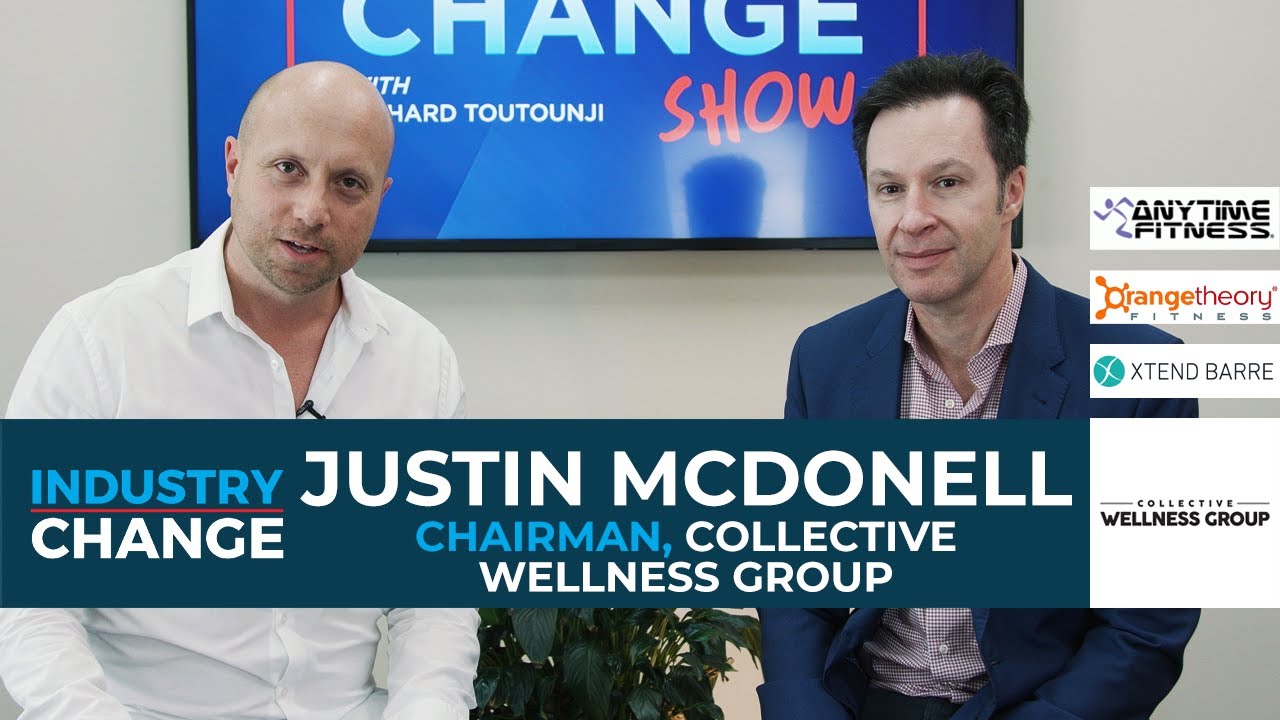
In this Industry Change interview, host Richard Toutounji talks with Justin McDonald, chairman of Collective Wellness Group (owner of Anytime Fitness, Orangetheory Fitness, and Xtend Barre) about how he identified and seized the 24‑hour gym opportunity in Australia in 2008 and grew it into a network of over 550 locations. Justin explains the dual perspective of operating in both the franchise and fitness industries, the importance of a strong brand, the shift from pure convenience to relationship‑focused services, and the metrics he tracks (leads, conversion rates, retention, wage percentages). He discusses the role of technology (key‑card access, digital platforms), the rise of boutique studios, and future trends such as boutique fitness, app‑based services, and market consolidation. The conversation also covers how he moved from hands‑on club operations to strategic leadership, the use of coaches and boards, daily discipline, planning cycles, and advice for entrepreneurs deciding between independent ownership and franchising. Key takeaways include the need for data‑driven decision‑making, hiring for skill gaps, focusing on customer experience, and maintaining a long‑term growth mindset.
Chapters
Welcome back to Industry Change. I am Richard Toutounji, and today I've got a very special guest. We're talking all about franchises, 24/7s, and how do you predict the winning horse? Justin, welcome. Welcome. Now this is Justin McDonald and he is the chairman of Collective Wellness Group, which house Anytime Fitness, Orangetheory Fitness, and Xtend Barre. So if you've seen these brands around, that's because Justin had an insight in 2008 and said, what can we bring to Australia? What's new? What's innovative? So I'm here to basically share your story and see how you all did it. Welcome to the show.
Thank you.
So in 2008, you spotted an opportunity And I would use the opportunity because we are speaking to a lot of business owners that love opportunities. In 2008, you saw the opportunity and you said, let's bring this 24-hour fitness solution to Australia. And for anybody else, it might've just been an ad in a magazine, but for you it was something a little bit deeper. Talk to me about the journey of yourself and especially Anytime Fitness. And then you got Orangetheory and XtendBear and it just rolls on and you merged a company called Collective Wellness Group. Tell me about that initial exciting when you tried to find that opportunity? What did it mean to you?
Yeah, I always grew up in health and fitness. So Dad was a professional-grade footballer and he had gyms when we were kids. So we used to get picked up from school and go to the gym and it was literally weights and aerobics back then. So always been—
Aerobic classes.
Aerobic classes. And you paid casually over the counter. There was none of this direct membership. So always been in the industry, wanted to grow and really looking at an URSA magazine, talked about Snap and Anytime Fitness. So they had about 700 and 500 locations open in the US and thought Fitness First are dominating the market, there must be something especially regionally that, regionally that can grow. So went and had a look at the Anytime Fitness concept, we liked it, we did meet with Snap as well, and then literally researched for about 9 months and literally gave it a go.
About 9 months after you met them you still were researching?
Yeah, so they were based in Minnesota, so we drove for about 9 hours to Chicago, right? And the joke in their office was we'd seen more of their clubs than what they had at that point. And what we found was they had really great equipment, they had good franchise network, and a bit of brand recognition. They didn't have a great design scheme or anything like that, so they just launched a new one and we thought, okay, let's give it a go regionally in New South Wales and then grow as fast as we can. So we kind of thought maybe 200, 300 locations. We're sitting over 500 now. And still growing.
And still growing. So when you have a goal of, okay, I'm gonna bring it back to get 200 to 300, I mean, even that in itself, how did you just, you know, did you pull that number out and you go, how are we gonna achieve? Where's the SMART goal in that theory? What happened?
As part of agreeing to bring it to Australia, they have a development schedule. So we had a development schedule to get to 350 locations in another 4 years from now. So we didn't know whether that was achievable. But we kind of went, let's give it a go. And we thought probably 200, 250 was realistic. At that point, we also had the franchise rights for New Zealand. So we thought between the 2 countries, it's achievable. And the difference is that we're in the franchise sector as well as the fitness industry. So we were pretty confident from a consumer point of view, they'd like the convenience of 24 hours, good quality equipment at an affordable price. We're not in the budget area. But really it was the franchise sector that we really gained traction. Our first franchisees were making money, successful, and that kind of snowballed into an effect from there.
I love what you said. There was— you were in 2 industries. You're in the franchise industry and the fitness industry. A lot of people that may have grown up in the fitness industry are always just in the fitness industry, doesn't matter what they do. You're seeing in 2 ways, franchise and fitness. Can you tell me the diff— the clear difference between the 2?
Franchise is a relationship where So buying all the systems, but they need to be then running it, and they're putting their own capital into it as well. So they're buying a system, if you like, in a box, and then able to scale it from that point of view. The good thing for us is we're the franchisor for Australia, so we get information and systems from the US pushed down to us.
Yep.
We localize and then support our franchisees from there. So we're not having to employ a lot of people. We've got 60 employees in Australia. We've got 60 people in our office for a network of 550 locations. So it's really the franchisees developing that, and then we support them from that point of view.
Amazing. And the people that are owning, you know, let's say Anytime Fitness for example, and you've got Orangetheory, people that are owning, are they more investors or are they more coming up just like yourself that have grown up in Lycra and going to the gym for $5? Are they coming in that world or are they coming investor world?
Early on it was entrepreneurial people. So our first franchisee was a So in pizza, you have to market all the time. So he was great at marketing from that point of view. Great. And then some of the early guys were industry people that seen a great opportunity and went forward. We weren't getting accountants and corporate people, whereas now it's an established brand, so we're getting those people that are looking at it as a business opportunity. So it's changed over, over the years. People now think it's a guaranteed thing, and when can I buy one? It's like, well, the time is now. territories are fairly full.
If
you want to buy one in Sydney, we say we're sold out.
Well,
yeah, we're still opening some locations in pockets, but they're to existing franchisees.
And we were talking before, just in regards to, you know, you are still growing. Is the whole fitness industry— I mean, we still see it on the rise. Is it on the rise in your world? And from your perspective and your desk, is it growing?
It is. We've been around for 11 years. I'm surprised it's still growing with the level of just 24-hour competitors and On top of other gyms. We monitor our enquiries, sales, and our member numbers every month, and they're going up, which kind of blows me away from that point of view. Our price point is also going up as well, so we're trying to be in that affordable price and offer the consumer something valuable.
Wow. Let's continue that story when, you know, when you were still trying to figure out if this was the right solution or not. What were the, I guess, the fears and the factors that you, you know, when you're doing that research period, What were you actually trying to figure out? Was it, would it pay back what you purchased it? Would it have the growth? What were some of the common early fears that you had that other businesses might also have too?
When we first heard about a 24-hour gym, we went, great, there's no people inside it. You just sign up online. And it wasn't quite that. So it wasn't quite as exciting, but we realized it was a really low staffing model. And the technology at that point just allowed to be like access to all the members and keycard access. So literally it was selling a membership, making sure the facility was great, and offering that to the consumer and they liked it. So it was really making sure the product worked at a consumer level and then looking at what was working in the US and go, okay, we think we can translate.
And what you just said there, a technology piece. So 2008, I think it was, or 2007. So at that point there, technology as in 24-hour swipe access, was that a new kind of concept or has it been around for a while? Well,
it's just with the internet coming in, it was like the camera access and the ability that when someone signs up to get their key to work the next day. So when we first started, there was a 30-day period where there was some technology pieces that needed to take place for it to have access to all the clubs around the world. So that's all been tightened up, but just as technology gets better, it's more internet-based. Yeah,
makes sense. So what I'm hearing here is that depending on the year, depending Depending on the opportunity, there's always new items that are happening to the marketplace. So technology, so internet. We're in 2020. Where is the opportunities, you think, in the industry? Because I mean, look, 24-hour facilities, I mean, everybody's got them now. Yeah. What's, what's the selling point at the moment? What's the selling point in the future?
I'll talk about the Anytime brand and then some other brands. So Anytime is moving from what we call a convenience model, which is keycard access, Swipe yourself in, really to a relationship component, which is where we want our franchisees to work with the members, whether it's remote coaching via our app or actually one-on-one coaching or PT. So really moving more to having a relationship with the customer versus selling them a keycard access. So that's where our brand is moving. We've launched a new design scheme which is facilitating that. It's much more modern and fresh. So we refresh our facilities every 5 years.
Yep.
So we don't, like back when we started Fitness First, it had been around probably for 10 years, the facilities looked worn out.
Yep.
We come along with a new shiny toy. So we don't want that to happen to us. Yep. So we're making sure that's really evolving. And then obviously the buzzword is boutique fitness or really that unique offering in a small footprint. If I look at Orangetheory Fitness, there's over 1,000 locations in the world. I call that more of a studio model.
Yep.
A boutique fitness is a, It's like a boutique hotel. There's not 1,000 of them. There's a couple of them that offer that personalized service.
So
I think there's a real opportunity to get boutique working that's based around maybe the founder or the key people.
So relationships. So that means then who you're selling them to, does that have to change obviously from investor to, if you're saying now relationships, the new theory, is that, does that affect who buys them?
We look at a lot of data as well, and our core customer is probably a 24-year-old male. Yeah. We believe they will still come, so we're not trying to alienate them. What we're trying to do is appeal to someone closer to my parents' age that might actually want to come when it's quieter in the day, but they, they need a bit more support or a bit more help. So we're trying to just broaden the appeal, and we believe those customers are probably stickier to our brand than someone who's coming just for equipment. There's a new shiny toy across the road and maybe they'll go to something a bit cheaper. So
yeah,
really just trying to broaden that.
Okay, that makes sense. Um, now Justin, you don't spend your time in operations now. Um, you don't manage the team of 60. You're basically— your role is a co-founder and chair on the Collective Wellness Group. And to me, for what you're telling me, that means you're forward-thinking, you're thinking about the future. And you're talking about before, like, where is the sweet spot in you personally and what you love to work on. My question to you is, you know, for everybody else that's going through maybe a startup, they're the personal trainer, they're the founder, they're the salesperson, they're the cleaner. How do you move from, you know, you had your own clubs, how do you move from that to then saying, I want to launch a whole array of clubs, or I want to just basically get a trainer in so I'm not doing everything? How do you just do that first step? What are some tactical ways that
you Well, I think early on we did absolutely everything. But what we were focused on, we had sales targets and it was, and for instance, it was selling territories. So every time a territory got sold, there was then this period to get the club open. So we just focused on selling a territory, getting it open. So I was, I'm not a property person. I was helped finding property and doing the operational side of the business. Yeah. So you learn quickly. And then literally once that keeps rolling, okay, I'm not a property expert. Let's get someone in who can do that better than myself. So literally just recruiting the people as you grow.
So you go out there and get it done and then you find the right people once you know what you need to do?
Yeah, but we're also already focused on, we needed milestones, we needed so many territories sold to enable a person to come in. So we would have clear targets of where we needed to go. It wasn't like, I think we want a few hundred members in the club. There was a definite number at that point. Okay, shit, I can't do everything now. So now I need to recruit. Someone. So really being strategic with who we hired. But generally it was stuff that we weren't as good at that we could hire someone better to do, and really looking at your strengths and pushing that forward.
And so, so in that, in that situation there, how did you know what to do? How do you know what to outsource? It's a bit of trial and error. Just trial and error?
Yeah. So we had our US parents, we looked at what they were doing. They were bigger than us, so we used to go back to Minnesota quite a lot. And it wasn't so much to get the product knowledge, it was also looking at how they were doing things and really looking for their problems and what they encountered and went, okay, well, let's not do that. Let's tweak it a little bit. And we had a really great support person, which was actually our coach who's still involved today. So I think she was very instrumental in making us successful.
So you're talking about coaches. Is that an item or a thing that you believe businesses, I mean, and that's probably the next question, how do you stay motivated? How did you say, okay, I want the 200, I want the 300, and you're driving towards that and you're moving everything towards that. A lot of people will get to that number of, well, they think they might be full, they've just paid their expenses and they're not pushing on. How do you actually push on to grow?
Well, we had a target of 350 territories. We got to 350 earlier than we expected and we did get a bit like, oh, we've done okay and what do we do now? And then we started to realize, okay, there's still opportunity to grow further. So we did some, research on the demographics and really looked at how else can we push it forward. And then we started looking at what other brands can we bring into the country as well? Okay, we know how to franchise, we know how to get units open.
And
that kind of opened up to more the Collective Wellness Group versus just Anytime Australia. So that was kind of a bit of boredom, if you like, as well.
Yeah. I like the boredom thing. So you're basically done with, you know, traveling or lying on the beach like the dream is, then you said, let's do something else. Is that kind of where it comes to
or what? It was a bit more of always pushing yourself further. The business had outgrown my skillset. I'm not great at managing a group of people. So it's kind of like we needed to put someone in to do that. The other shareholders were like thinking I was gonna burn out. So I was working stupid amount of hours. So it was kind of like, okay, let's chill out. Let's put someone in who can do the things I'm not great at and then step back a bit. And then really after that, it's okay, your head's a bit clearer as you can start looking for other opportunities. Yeah, yeah, for sure.
What's your number one skill set? Like, what's your uniqueness? What do you bring to that table?
Probably I'm not emotional, which is maybe not a skill set, but it's really, it's looking, I can look at things quite logical. I like to drive things by numbers and I'm quite good at when I'm traveling, looking at what's working and what's not working and trying to translate it. So I travel to the UK and Europe quite a bit and the US a lot. So you kind of go, what's happening in the marketplace?
So you're seeing what's happening and you're analyzing all that as your, Kind of in it.
And you're trying to localise it. Would that work in Australia? And what are the competition doing? So trying to piece it all together. And then we've got a board of, so we've got 3 other shareholders and an external board member as well. So we throw ideas out through that.
Great, so a good support team.
Yep.
Okay.
And they come up with great ideas as well.
So let's look at 2020. I mean, what are your predictions in the fitness industry in 2020? You've gone, we've gone through the Lycra, the non-direct debits, 24 hours, what do you think the future holds in 2020? Not just for franchises, but just generally in the fitness industry.
If you look to the US and probably London as well, it's all that boutique fitness. So it's lots more unique offerings coming through. So I think there's a lot of opportunity for independent operators to do that. Orangetheory is what I call a studio product. So we target sort of middle to high income areas. So we'll only go into certain markets. From that point of view. So I think definitely boutique fitness, all the fitness apps will continue to keep growing. There'll probably be a bit of a consolidation of those. There's a lot of them out there.
Yes, there is a lot.
But I think people generally in the community realize they've got to exercise or they've got to move their body.
And do you think that's because of the demand of like content that's getting out there and people talking about it? Why do you think they need to move their body more? Why do you think they now know that?
Well, I think the idea of just working all the time on the computer and having drive-through McDonald's is, people know that's not the way to go these days. So it's really that, they call it a balanced lifestyle, which whatever that means, but it's really getting the balance of if you don't move, you're not gonna be moving as you get older and everyone's living longer.
Yeah. Let's talk about specifically in our network, in our comm program, comm marketing, we have a lot of business owners, independents,
Yep.
We have a lot of, a lot of independents, more than franchises. My first question is like, if you can give me the independent versus franchise angle, like if there's a person there that's just driven, they want to make an impact, should they open up an independent or should they be looking at a franchise? What do you think?
If you're very honest—
Not being biased, obviously.
No, no, no, I'll give you, I'll just give you more the franchise side. But if I look at an independent, you have a lot more freedom. You can be very creative, you can have whatever website, whatever name you want. You can paint the colors, whatever you want. You can adapt and change quite quickly.
Yeah.
A franchise, you can't have your own website. You've got a certain name, you've got a certain, if it's Orangetheory, the workout is prescribed to you every day. You can't vary that. But what you can do is actually then just drive the business. So it depends if you, if your skills are to work hard and develop a team of people and you're not great at marketing or you're not great at, HR and all the boring shit out the back, maybe a franchise is good for you. Or if you've got a good network and a bit more entrepreneurial, maybe the independent business is the way to go.
So really looking at your skill set and where that skill set best fits. Do you have like independent kind of players coming into the franchise world and wanting to change the name and the logo around? Is that something that you get pitched to a bit?
Early on with Anytime, we did, we worked with some some independents to become Franchise Anytime guys. And probably after a couple of years, they kind of settled down to what, what they can do well and, and what— and leave us to build the brand. And they're still franchisees today, but there was that transition period of they still wanted to do their own thing. Yeah. And we're fairly lenient. We're not McDonald's, but you've got to do certain things a certain way. The customer wants a consistency of product. whether they go across, when they go across the network. You don't wanna walk into one McDonald's and it's selling something and the one down the road's selling something
different. Selling something different. In our program, in our Ninja Program, our first module is brand, second module's personality and credibility. Obviously, you know, I'm talking to the converted here, you've purchased a brand.
Yep.
Tell me about the importance of brand in the way that you see brand, obviously, with your empire in front of your eyes, where would you consider brand as part of a business?
I think brand's your positioning. So brand to be, it is a bit of your price as well. If you're talking of Mercedes, it gives you a certain image versus Kia. So it really positions you in the marketplace. People buy on brand, they really do. So, but as we know, as a fitness consumer, they're probably only 6 or 8 minutes is your direct consumer, unless people are driving, 'cause you're, but your key audience is there. So as long as your brand is penetrating in that market, that's probably all you need. I suppose the advantage with our brands is as people are moving around, they're naturally, hopefully, just coming to our facility or just transferring their membership. So I think there's value in brand at a higher level, but you can also build it locally and that can be great as well.
And let's talk about then, once you have that brand, the next part is knowing your numbers. And you said that that's a big skill. of yours is numbers, you're driven by numbers.
Yep.
And if there is a person that's created their brand, created their business in equity in that way, you know, what are the 3 or 4 or 5 key numbers that you believe every business operator should know? Doesn't matter if you're independent or franchised, what's those driving numbers that you wake up to every day?
Like the things we look at across the 3 brands, we look at it monthly at a board level, but the guys look at it closer, is literally how many inquiries are coming in. What are converting to a sale? And then looking at the funnel at the back as well. So what's that retention rate or attrition or whatever that you record as well? So really looking at the key drivers to the business.
So leads, conversions, and pretty much retention.
Yep. And then the studio brands, they do look at the wages percentage as well. So you can have 10 classes, but they're only working at 50% capacity. Well, you've got to get more people in there. classes as well. So you've got the wage component with those as well.
And so if you see leads are down in your business, what is the one or two things that you do at that point?
Everyone normally blames the marketing team, which is not always the case. But really looking at what's the offer, what are the ads we're doing, and then also are the clubs or studios doing anything at a unit level to activate in the community? And quite often they may not be doing that. They might not be doing their outreach because it was busy last month. Yeah. Or they're short-staffed as well. Okay. So it's really looking at that and really looking at the analytics on the digital platforms. Like, have the leads really dropped off or are they just not converting because of that offer?
Got you. And if there's a retention problem in the club, what are your go-tos? What happens at that point?
So when we took over Orangetheory, we did a lot of, we had a lot of things working, but the customer experience was not as great as we wanted. Yeah. So we actually headhunted and recruited someone for customer member experience. And the attrition rate has really dropped since we've had that.
Wow. And what were kind of the member experience items that they would do or they've done recently?
So really just touchpoints of getting the coach to really connect with the customer, making sure they're welcoming them into the studio, acknowledging their name, feeling that whole sense of community, getting them to rebook when they leave as well. The boutique fitness and studio market's really about getting them to come back. They're not locked into a contract. So it's like, If you're going to a restaurant and the food's crap, you're not going back. If the service is crap, you may not go back. So it's really about everything needs to be good when you're in there, as well as clean and all the basics.
Yeah, makes sense.
What's on top of that?
Okay, now Justin, I'm very impressed with the growth that you've had. You know, 2008, we're, what's that, 2020, so 12 years. You know, you're able to see what's happening in the future. I asked you just off camera, what were your, what are the things that are floating around your head? And you said you're very big on the 5-year planning.
Yeah.
You also said that you've got some tactics around your emails and your phone, your inbox. Can you maybe share some tactical things for a business owner to, you know, to be that next huge success? What is it for you? 'Cause I mean, it's the details that are important, the daily discipline. So maybe give me your— daily routine or daily discipline list, that'd be great.
And I think if you're a single operator, or we've got quite a few brands and staff, it needs to be different. So if you're working day to day in the business, it may be that you're in the business 4 days a week, but you take half a day or a day out that's actually just forward planning. We get financial reports 2 days after the end of month, and we, we do that so we know what's actually happened, but then we can react for the next month. A report coming back 3 months later what you've done, you can't change it. So really being disciplined on reporting. So we have structured—
So disciplined days once the end of the month, have some time to actually sit down, look at that.
Yeah, and then what are you doing? And we look at how we're tracking for the future. So if we want so many sales in a studio, or we need to have so many inquiries, then what are we doing to generate the inquiries? Just not focus on the end result. I do a lot of planning in my diary, so blocking out time to plan. forward plan. We do board meetings, which cause a bit of stress because you have to prepare everything, but it's really having that discipline to actually make sure you are meeting.
You are prepared.
Because quite often you go, I'm busy and I'll just keep pushing that off, and then it's 3 to 4 months and you haven't looked at it. Your leads are down or whatever. So, and it's also looking at customer feedback. We look at net promoter scores and what's the customer telling us as well. It's not just all P&L. That's the end result.
So, so your tips are really sitting down and planning some time to actually creatively think about the problems and the solutions.
And get people to help you if you're not great at something. Get, get a coach or get someone in to advise you or just help you. Don't do the books if you hate doing the P&Ls.
It's interesting, people will continue to do everything they hate.
Yep, don't do it.
To put them in some kind of misery.
That's right. Just do what you're good at.
Do what you're good at.
Yeah.
Excellent. Guys, I hope that's helped and really insight into Justin's brain, Justin's growth and where he's going. And Justin, if I can ask one more question, if you had your time over again and you had no Anytimes, you had no Xtendbears, you had no Orangetheories, and you had the knowledge that you have now, what would, you know, would there be a different path? What would you do? I had to throw this one at the end. No, I just wanted to make sure that you can get you off the track a little bit.
I'd definitely still be in the fitness industry. Okay. Probably running a single or a couple of locations. Yeah, definitely something passionate about the industry.
So stay passionate. Yep, definitely.
Amazing.
Thanks, Justin. Appreciate it. Guys, that's another episode of Industry Change. If you liked this one, just subscribe to our YouTube channel. You can check it out there. You can also listen to this on any good podcast subscriber such as Spotify or iTunes. Thanks so much. We'll see you next time on Industry Change.









