People Follow People - Industry Change Ep 6
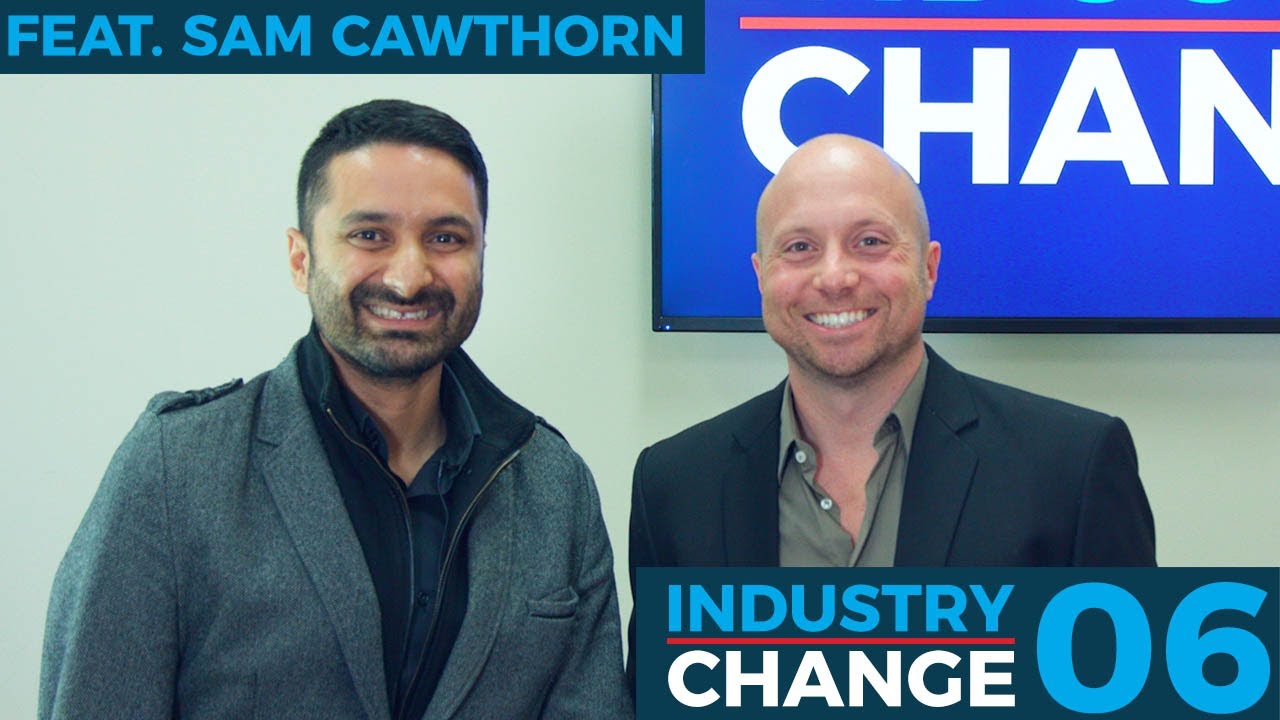
In this episode of Industry Change, host Richard Toutounji interviews Sam Cawthon, an international bestselling author, Young Australian of the Year, and founder of the Speakers Institute. Sam shares his personal journey from a life‑changing car accident that left him without an arm to becoming a high‑paid keynote speaker, illustrating how adversity can fuel a compelling public‑speaking career. The conversation pivots to the central premise that "people follow people" – the idea that authentic personal connection drives business success. Sam introduces his concept of "Story Showing" – moving away from traditional storytelling to actively demonstrating a narrative, which he argues creates stronger emotional impact. He breaks down speaking into two core components: content (what to say) and delivery (how to say it), emphasizing non‑verbal intelligence such as gestures, tone, and pauses. Sam describes the pinnacle of communication as "transcendence," an out‑of‑body experience that moves audiences and justifies premium speaking fees. The Speakers Institute curriculum teaches these principles, focusing on both message structure and performance. He identifies the main barrier for aspiring speakers as the fear of looking bad versus the desire to make a difference, using a fulcrum metaphor to shift focus. Sam also stresses the importance of "proximity is power" – surrounding oneself with supportive peers to build confidence. Looking ahead, he predicts video will remain king, with bite‑sized, one‑minute content becoming the norm, while live events will still hold value for experiential engagement. Sam announces his upcoming book, "Story Showing," which reframes narrative delivery for modern audiences. The episode concludes with practical advice for business owners: prioritize delivering value, move emotions, and remember that the story is ultimately about the customer, not the speaker.
Chapters
Welcome back to Industry Change. I'm Richard Turtungi, and today I have a very special guest, Sam Cawthon. Welcome.
Thank you very much for having me.
It's good to have you here, and I wanted to bring Sam on the show because I wanted to talk all It's all about speaking, talking, public speaking. What's story showing? What's storytelling? And Sam, you're an international bestselling author. You taught me a lot around speaking and talking and communicating, and I wanted to bring you on the show to talk just about that, to talk about, uh, to talk about how you actually communicate your message to the public. Now, just a bit of an introduction to Sam. Sam is an international bestselling author, a Young Australian of the Year. He's the CEO and founder of the Speakers Institute, which is basically a global phenomenon now with the Speakers Tribe. And I thought I want to really ask him some really questions around how do we actually communicate in our business to actually get a much better response rate, communication rate, and leads and sales into our business. So I thought I want to bring you on and really ask these questions.
Yeah, yeah, that's great.
My first question is going to be straight off the bat, and that's like everybody talks about public speaking. Public speaking is like the scariest thing to do. Uh, what are your thoughts on that? And I want to hear a bit more about your story then.
Yeah, look, it is scary for most people and that's particularly because you see all these eyes that are looking at us. But really what that means is that we are craving to feel accepted by everyone else. And it's not until such time as you can accept yourself when you can really start smashing an idea of getting a video out there or doing a keynote presentation on a large stage. And that's very much so my journey. You know, I was— I've been down in Tasmania, born and raised down there. And then in this job that I had as a futurist for the Australian government, Yep. I had a major car accident. It was my fault. I fell asleep when I was driving along. The police said it was a 206-kilometer head-on collision with a semi-trailer truck. As you can see, I lost my arm in the accident. Then I was on life support for a week, hospital for 5 months. And then in a wheelchair for an entire year. Doctors said I'll never be able to walk ever again. So look, it's a really cool story how not only did I overcome adversity, but I didn't go back into that same job. I was asked to tell my story at a local youth group, then at a school, and then before you knew it, here I am speaking in schools every day. I was charging $500 for a school. Yeah. And then before you know it, here I am, I won the Young Australian of the Year, as you said, and nowadays I can get up to $25,000 for a 1-hour keynote presentation.
That's an amazing story, and it's all from facing adversity right in the face and changing your thought patterns around that and changing your beliefs around that. Because I guess anybody in that situation, they can really go through a spiral effect in a negative aspect. You totally transformed that around.
Well, that's the thing. I believe everyone has a story, and the reason why we do what we do is because Something in our life, whether it was a moment, shifted our thinking to want to now go out and either develop a product, have services, or actually have a message. And that story about why we do what we do is absolutely imperative in the sales cycle. If we want to make more money, we need to know why we do what we do in order to get other people across the line to take out their wallet and buy our products, our services, and our message. So I think it's absolutely fundamental for us to learn how to tell our story and show why we do what we do.
And that's interesting because as business owners, we're always having to show people what we do and explain to people what we're doing. I guess my initial thought when I hear professional speaker, I automatically think, okay, he's a professional speaker on stage. I don't want to do that. Yeah, yeah, yeah. But, but, but the more that business owners are dealing with the upcoming video rise and Facebook Lives and all that kind of technology we have, more than ever they have to be confident at talking. Do you think there's a big shift now with I'm a professional speaker versus I'm great in my business? Is that, is that what you're hearing?
Yeah, look, for sure. Look, people follow people. That's the bottom line.
Okay.
And so if people follow people, then in order for me to follow you, I need to make sure that I like you. I need to make sure that I can connect and relate. To you. Now, if I can't find anything at all about you online, whether it's a video or your biography or even a photo, then I'm now thinking, how can I take out my wallet to a product where I can't really find that emotional connection? So people follow people. That's the bottom line. And so the more that we can build our profile and the more that we can actually get our personal why out there in the world and our message out in the world, then people aren't necessarily really going to buy our product. So that's why Communication and speaking is absolutely imperative. And it's quite interesting, I hear a lot, I don't want to be a professional speaker, but I want to get my message out there and I want to sell my product. It's like me saying, I really want to go to New York City, but I don't want to fly. I'd rather take a submarine. You know, speaking is a vehicle and is, period, the most powerful vehicle for you to get a message out there, for you to sell a product, a program, services, or a message.
As I mentioned at the start, we've known each other about 2 years now, and I believe that the skills and the teaching that you provided— I never wanted to be a professional speaker per se, but I definitely wanted to get my message out there to business owners and potential clients. And, and I really understand what you're saying is that if you can actually communicate more effectively, you're gonna make a business easier and systemized and working better for you because that trust factor. And that comes my next question. is that before we used to buy from company brands and big corporations. Now you're saying that we're hearing— I mean, we also say that you've got to get your own personal message out, but do you think that's the case also too for the future of speaking? Where do you see the future of speaking in small businesses happening?
Yeah, look, you know, we've now seen this huge popular movement called TED or TEDx, and nowadays everyone wants— everyone's got a message, everyone wants to get up on a TEDx stage. You also see these small business conferences or events, and we all want to get up on stage, and then we compare and say, oh look, I could have done a better job than them, or whatever it might be. But we all do need to realize that speaking is the greatest way in order for you to sell more product, in order for you to get your message out there, or in order for your services to boost, building your profile, and so on and so forth. So speaking is absolutely imperative. For all business success, whether it's in today's world or in tomorrow's world. Now, this speaking could be anything from onstage to also on video camera, which is really, really interesting. So we need to be able to communicate effectively. Now, 2 things on this. Whenever we communicate, we need to realize that it's not only just what we say, but it's also how we say it. And it's what I like to call our content and our methodology. Content is what we say. That's basically the formula on what we say. You know, how do we start? What's the middle? What's the end? And then how we say it. This is all around our nonverbal intelligence, from our pause, our tonality, all the way through to our gestures.
And I've just noticed that as he's been speaking, I've been seeing the hands move.
Or the hand. The
hand, sorry. And, and because I've sat in a lot of your events, I can see that, but it's natural for you, and do you think that, that's really the difference between a conversation and really someone that can present themselves well? Is that nonverbal?
Yeah, look, look, the bottom line is this, is that as a professional speaker, I've now spoken in 36 countries, you know, on stage to over 18,000 people. And not only that, I'm now getting paid $25,000 for a 1-hour keynote. Now that is not because I have more experience, not because I can— I'm an academic, which I'm not. It's not because I know what to say more. It's actually actually because that when people hear me speak, I emotionally move them. I connect with them. Not only do I inform them, persuade them, inspire them, but I also transform them. And the top tier of all communication is what we like to call transcendence. Transcendence is like an out-of-body experience. It's, you know, when we go to the movies or when you watch a great novel, Yeah. There's a sense of timelessness. An outstanding speaker will transcend our thinking, will make us so inspired in order for us to do something about it. That's why we get paid the big bucks, because I am in the business of emotion.
And you said that, and now I'm interested to see actually how do you, how do you do that? And I guess my next question is, you now, you founded the Speakers Institute. I'm assuming you're now teaching people actually how to do that. Is that right?
Yeah, look, that's exactly right. And our curriculum, it looks at 2 things. And just unpack what I said before, we now teach people what to say. So that's the formula, and that's everything from a TED Talk all the way through to writing a book, all the way through to a keynote presentation. So what to say, but also how to say it. And so these are 2 core fundamentals of our curriculum at Speakers Institute.
Where do you think the, the barrier lies for anybody that wants to get their message out and wants to speak? What's the barrier that people Okay,
I want you to imagine a fulcrum and lever. On one side you have to look good and avoid looking bad.
Okay.
And on the other side you have to make a difference. I believe the bottom line is this, is that everyone wants to make a difference. That's why we have a product, that's why we have a message, that's why we have services, because we want to make a difference, whether it's to our bank account balance, our wallet, or even if it is to make a difference out there in the world. But a lot of the time, you know what stops us? is because we want to look good and we want to avoid looking bad. And a lot of the time why we don't make those sales calls is because we don't want to look bad. We don't want to get a no. Right. The reason why we don't get up on stage and share our story and be vulnerable is because we're craving to feel accepted because we don't want to look bad and we want to look good all the time. So the more that we can shift our focus in that fulcrum and lever to instead of looking good and avoid looking bad, rather to make a difference, then and only then can that passion and that enthusiasm in your communication, in your speaking, can shine through.
Tell me, um, tell me like a great story that you have from someone that's actually gone through this transformation. Because, you know, people looking and say, hey, you can speak, you can talk, you communicate, but, but I'm looking to that business owner that started business and they, and they've been in it for 20 years and they're struggling to have that camera time to get out there, what is that message that you would kind of deliver? How are they going to find that?
Look, the first thing is this, is that you need to get over yourself. And what I mean by that, you know, we've all got phones and on that phone has a video camera. And so right now we can all do it really easily. But the biggest barrier is that, you know, you're worried about what people think. We're like, we need to realize that person that we see on that screen on our camera is what the world sees every single day when you walk past them on the street. So the only person that needs to get over yourself is you. And so the more that we can get over ourselves, then now we can literally have that phone in our pocket. We can do video live anytime at all you like. Like, I've done some video lives before, and these video lives have reached millions of people. Millions. Yep. And so it's now more about just Getting yourself out of the way and just realizing that people are there to give value. Well, should I say, people want to follow you if you give value. Right. So value is absolute key in any lot of videos.
I love it. And this is what we predominantly teach in all our marketing is getting videos, getting videos. And it's as soon as that camera comes up, people get scared. But then when they do it once or twice, they're good.
Yeah, look, you know, you've got to develop your 10,000 hours. For me, yes, get a really good coach, absolutely. Someone that's actually going to coach you all the way through, someone that's going to, you know, cheer you on. You know, a lot of the time I talk about proximity is power, so, you know, you are the average of your 5 closest friends. If you hang around with people that don't do videos and laugh at you doing videos, then they're not the type of people you need to hang out with. If you hang around with people that are cheering you on to say, get your video out, get your video out, get your video out, then clearly you want to get your video out.
I love this, and I want to pause here for a second. Proximity is power. I have been hanging in your presence for about 2 years and it's always in the back of my mind, proximity is power, proximity is power. And I think that, that really, I definitely seen that, especially anybody that you hang around, you start to realize that that's the habits you're forming. That's the habits you're forming. As you keep progressing through your business or your career or your life, you've got to always look around to who's, who's out there because then you can start to see, okay, what are my habits? Why am I acting this way? Why am I performing my business this way? I really, I really thank you for that proximity.
And we actually met in Costa Rica, didn't we?
We did, at a place called Awesomeness Fest, and it was proximity, right? It always comes down to proximity. Okay, I've got another question for you. Let's talk about, and I think we covered that, but the future of speaking and presenting. Do you think that's going to make it, now that the technology and cameras and virtual reality. I know you've dabbled into that a little bit. Talk about how— do you think that we're still going to have live events and speaking and that kind of stuff, or do you think everything's going to go to video now?
Yeah, look, video is always going to be king out there for sure, but yet at the same time, these events, we still want to go along. You know, just last week here in Sydney, there was a large event where they put 40,000 people in the room, just— and they're all gamers. And what they were doing, they were watching a whole heap of professional gamers play games but in the live stadium that it was here in Sydney. So live events are still going to be really needed because people want that essence and the experience and that atmosphere. But, you know, the bottom line is this, is that if you're not doing video now, then your business will not be in existence in the future. It's simple as that. Now with video, it needs to be in bite-sized chunks— short, sharp, straight to the point. You know, there was a reason why Twitter came in. 140 characters or less, you should be able to communicate every news article, every quote, every idea, every thought in 140 characters or less. I believe that that's exactly the same now with videos. Very soon, videos are going to— you're going to have to do your video a minute or less. That means that you need to communicate your message or an idea or a thought in a minute or less. And if you can't, then you don't know it well enough.
Great. Well, I'm going to hold you to that. So my next question is that you've got a new book coming out and it's called Story Showing. Is that correct?
Yes.
I'm really excited because that really fits into what we teach here at COMM. We teach all about getting your story out. So tell me why that's the title and what's that future now for that book?
The word storytelling is actually in the Oxford Dictionary as one word. I'm sick and tired of when people tell me what to do. My parents told me what to do. My teacher told me what to do. My boss tells me what to do. And nowadays we're now teaching other people, go and tell other people your story. For me, tell is very dictatorship and it's very head. I believe that the new way and how to stand out from the storytellers is actually by showing someone something. Is by showing them your story rather than telling them your story. Just tell me something, how does this land with you? If I say, let me tell you something, compared to saying, Let me show you something.
Totally different.
It lands totally different.
I'm ready to see.
Yeah, exactly right. So nowadays we need to be story showers rather than storytellers. So my latest book is actually called Story Showing.
And when's that come out?
It comes out in October 2017.
And I love that. I'm excited to see, to see that all come out and to make those top-selling lists. Now I'm going to leave you with, because we could talk all day, but I want to, I want to get one kind of one, one message out there, if it was one message and a business owner really wanted to get their business to the next level, what would they do? What is your advice? Great.
The number one thing you hear is, is that it's not about you, and it never has been about you because no one at all cares about you. And so even though we need to share our story, we need to make sure that this story lands well for the client, for the customer, to inspire them. So your story is no longer yours to own. Your story is there to inspire Other people, so always make sure that you're giving value. Always make sure that you are emotionally moving your client because you are in the business of emotion. But make sure that it's not about you, and it never ever has been about you. And it's really important to realize that people don't care about you.
I think that's a very strong point again because I think that's where everybody goes wrong. It's always about them. They're always wanting to talk, but it really is about. inspiring and adding value to that potential client or anybody really. Yep. Awesome. Thanks so much.
No problems at all.
It's been a pleasure.
Thank you very much for having me.
Thank you. And I know Sam's going to be, uh, at our upcoming 2-day Digital Marketing Business Summit. So look forward to, you know, really making sure that clients can walk away, members can walk away and go, wow, I'm so much more confident to now go and film. So I'm looking forward to that presentation.
Good stuff. I'm looking forward to it as well. Thanks, Sam. Thank you very much.
I'll see you next time on Industry Change. Thanks so much.









