Retention Strategies That Actually Work 😱
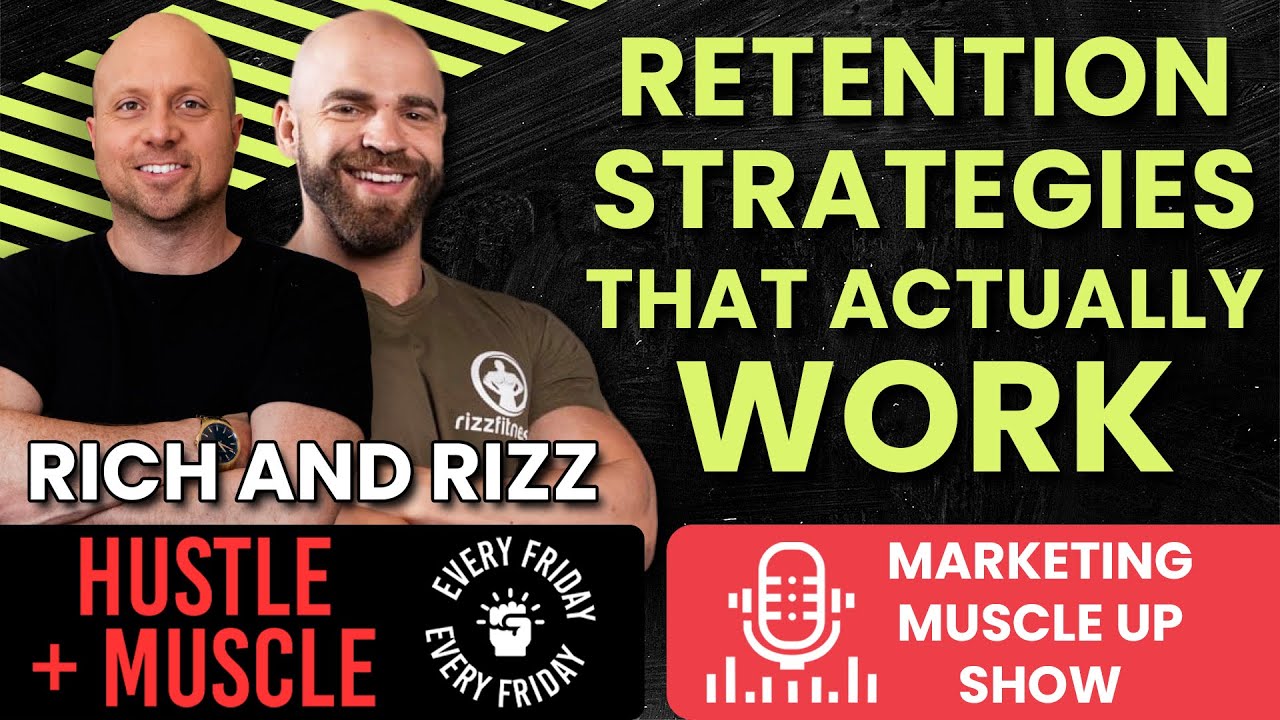
In this episode of the Hustle and Muscle Show, host Richard Toutounji (Rich) and co‑host Riz discuss practical ways fitness businesses can improve client retention and re‑engagement. They begin by reflecting on recent structural changes to Rich’s Com Marketing Ninjas program and the need for continual evolution in a competitive market. The conversation moves into the core challenge of client adherence, highlighting the use of tracking tools (PT Mind, MyFitnessPal) and the importance of setting realistic session frequencies to avoid over‑commitment. Both hosts stress the necessity of a formal re‑initiation process for lapsed clients – treating them like new prospects, re‑establishing value, and raising standards again. They explore how hard, honest conversations about performance gaps deepen trust and respect. Quarterly re‑measures, progress photos, and consistent check‑ins are presented as essential habits, though the hosts admit they sometimes drop the ball due to juggling multiple roles. The discussion also covers the significance of defining a clear client avatar and matching program intensity to that avatar, noting that not every client is a perfect fit. Competition is framed as both a motivator and a market insight tool; observing rivals sharpens standards and fuels improvement. Community and peer‑to‑peer interaction are identified as strong retention drivers, while the emotional impact of losing clients is examined, with both hosts acknowledging self‑criticism and the need to view departures as learning opportunities. Finally, they summarize actionable take‑aways: schedule regular re‑engagement outreach (every 3‑6 months), maintain belief in the product, conduct timely hard conversations, monitor drop‑off points, and stay focused on being the top provider for a well‑defined avatar while doing your own thing.
Chapters
That's what deepens a relationship and a respect because you know that that person's got your back and your best interests at heart. They're willing to have that hard conversation instead of, you're the best. Oh my God.
All right, guys. Welcome back to the Hustle and Muscle Show with Rich and Riz. I'm Rich and this is Riz.
Hello.
And if it's the first time you're hearing, I'm Rich. I have a company called Com Marketing. We help health and fitness businesses grow their business. And I met Riz about 2 years ago. He was my personal trainer and he helped me grow my body. And since then we've been hustling and muscling. And in this podcast, we'll talk about 2 things. We'll talk about your health and fitness business and your body and mind and And putting it all together. So if you want to find out a bit more about us, you can go to Riz Fitness or Com Marketing.
Yep.
Riz, how you doing this week?
Well, I feel really good. A lot— a nice sense of clarity. Really eager to get moving. Full of energy. Full of beans. Awesome. What about yourself, Rich?
Yeah, it's been good, Riz. We've been really changing. We've been restructuring our programs that we've been running for the last 7, 8 years. We've had a one of the longest marketing programs fitness has been running. It's called Com Marketing Ninjas. We developed about 7 years ago and we're making a massive structural change over the last 2 months, changing how we deliver it and how people can take aboard it. So we've been busy in that process and that's where we've been. So it's been good, been a good journey and we always want to keep evolving. just like everybody else needs to evolve their business. You don't evolve, you don't grow, you die. There's an old saying there is, you don't grow, you die. Market switches, market changes. So I did want to talk about that today.
Let's chew it through, brother. I feel like I'm there. You know what I mean?
Yeah. And there's a lot of changes happening in your place. You're in between a renovation, newly created business, but you've also done a renovation more cash to put into the studio. So you've done a nice renovation.
Mate, for the first time ever, and it's all thanks to KOM obviously, and this is no plug, it's just my loyalties lie where they are. You guys do a really good job. But for the first time this month, I was actually able to save money. Fucking sick. How crazy is that?
And pay yourself, Riz?
Yeah, the fuck out. Pay myself whatever I want to out of that. You know what I mean? Reliably now, which is good because I've got reliable income, something I haven't been able to say for a long time. But I've been able to work to that, so that's awesome. You know, the part of my brain goes, don't get comfortable, but it's great to be in that point where finally I can fucking, you know, actually put some money in my pocket. So, um, massive, massive win there for me. But yeah, I felt a little bit, um, I don't know, I feel like I needed a bit more of a kick up the ass. I feel like in 9 months I'd rather be a bit further on than what I am. Uh, and mind you, last year I'm making almost double than what I was this time last year. So I'm doing great things, but I feel like I, you know, need to reinitiate and reset some targets and go again. But I suppose it speaks to a bit of the adherence side of things. I think if you're in flow and you're doing, ticking all the boxes, that's great. And then look, I'm ticking the boxes. I'm doing my sticky content, social media posts. I'm doing all the business-related stuff. Yeah. But there's no driver in there. I'm not actively, um, trying to punch through and, uh, and grow and find stuff. And I'm at that stage where, like, you know, if you don't grow, you die. And I'm like, all right, if I gave it another 2 months, I reckon I'd be feeling pretty flat even if my numbers stayed the same with clients. I need to be pushing forward. So, um, I think adherence stuff needs to, uh—
Well, yeah, I mean, you're big on adherence. You know, when I was training with yourself, Riz, in your pods that you run, groups of 4,
Yep.
Um, your big thing was adherence. I remember our first session, you, you got out my phone, you downloaded, um, uh, PT Mind, you downloaded MyFitnessPal, MyFitnessPal, show me how to work it, like actually physically downloaded it. And I found that that got me plugged in to a degree, uh, versus saying, hey, go and do it. And then, um, your whole concept is, uh, tracking, you know, track your calories and, um, and, you know, train and know, you know, know what you're doing in that degree. And I always felt that I wanted to, that I had to turn up and I wanted to turn up and I got the results, right? In previous times when it's like, I'll just go to a gym and so forth, like I'll turn up, I feel all right, but lifting those little bit extra weight, you get the results. And I guess it's the goal setting, but it's also somebody guiding and pushing me. Um, I, I want to talk about— we can maybe ask each other this— that when somebody doesn't— as a, as a trainer, as a, as a trainer, you know, you have the best intents, uh, to get your clients results and they just don't. They make some good results at the start and then they like, you know, it's not hard, right? You eat less and you train more, you're gonna get good results, right? It's like in business, you don't do any posting, then you do posting, get good results.
Yeah, yeah, yeah. You're gonna get those quick wins because you've started.
Everybody's gonna cook it. But what happens after that period when clients, then you just don't see them around? They, they're not adhering to things. They're not doing what they initially got the results for in the first—
100%.
You've got a psychology background there. Is what— I mean, first of all, what, what goes in their mind? And second, how do you feel as a trainer? And then you sort of maybe see them at a gym or something like that. You don't know what happened to them. What are your thoughts on this?
Well, I mean, look, I had a client recently, I just saw her at a coffee shop. She was leading a gym in the local area called The Yard. She used to train with me in a small group PT. Look, cost is always a big one. She was paying $140 a week or something like that to train with me, and the other gym is $65 a week. So look, there's obviously that, but for some people it's not the value and that sort of thing. It gives me a bit of a— I mean, look, it's always horses for courses. So that in that way, it's attracting your right avatar is always really important. And having the right plan for your clients as well. Like for me, it's important now I know, don't overcommit my clients. So if I give them a too big of a, let's say, hey, look, you can do 3 sessions a week, sometimes that's too much for people. Sometimes 2 a week is good, 'cause then they feel like they've ticked the box. And if they miss a session, it's not the end of the world, or they can catch one up in the week or something like that. But I think having a system that works for people. So horses for courses is what I've found to be truly important. you're going to find the right horses for the right course if you've got your right avatar sort of picked out for yourself.
But what happens when they wear the right avatar, Chris, and then they just decided not to continue? They're just not buying into the model that got them the results in the first place for?
I think that's a tricky one, mate. I think reinitiating— I was actually going to suggest, we had a quick chat before this, I was actually going to suggest that I get reinitiated into comms. that I go through the exact same process, the exact same call, like I'm a virgin client, playing like I've never been seen, never been touched, Richard. And I think that would really help that reinitiation process because I think you do lose touch with how good the product is. I think, and it's just normal. It's like taking drugs. For example, you take a bunch of medication. Let's say you take antidepressants or let's say you take whatever it is that you take, Panadol. It stops working, but it's the same drug.
Yep.
Because you get used to it, and it's very human to get used to it. So then you've got to up your dose and you've got to do all these things. Um, but I think, I think a re-initiation process is really important. Sit down, make the person feel important again. Ah, fuck. All right. Yeah, sorry, you're not forgotten in the fray. We value you, we care about you. How do we re-initiate you? How do we keep you moving forward? Um, and I think that's where I dropped the ball many a time. And I think that's where I could pick up the ball because I see with this one client, Lisa, she's amazing. First 6 weeks she dropped 5 kilos. Then it was, hey, did you track your calories? Instead of me checking her physical calorie thing, right? And this is where I dropped the ball. Instead of me checking physically, because I'd get them to show me, yep, you're on point. Instead of doing that, I said— I trusted her, rookie mistake. Um, I said, hey, did you do it? Yeah, I did it. The next week, hey, did you do it? Yeah, I did it, but I'm at 106 kilos now. I don't really get it. All right, hey, did you do it? Yeah, yeah, my diet's been great. Rock on. 107, right? And so you get complacent, both sides get complacent. Well, and then I said, I re-engaged, I said, hey, you need to show me a full book of calories by Friday, all right? We can't have this anymore. We're not sleeping anymore. Full book of calories. We're not taking a backward step. If you do, that's fine, that's human, but we're re-initiating. Let's go again. Let's go. Keep the ball moving forward. I think those are my 2 best solutions. reinitiate somebody and set your standard back up higher where it was.
Yeah, I love that. I think the re-initiation, the re-engagement, you know, reselling the program to anybody, I think is a great concept. It's like the whole, you know, it's that retention process. And I think it's well and truly underutilized, I think, to new business owners.
And
when I say that, I went to a talk at Filex with Paul, uh, uh, Paul Retention, uh, King, just talking about, you know,
so his middle name isn't Retention? No. Okay, okay, okay, okay.
But I think it's on Face— it's on Facebook as Retention, I'll tell you.
Oh, fuck off.
Uh, but he's been doing this game and it was interesting because he had a, um, uh, I'll, I'll tell you his name.
Retention King? Nah. So he's—
no, sorry, sorry, sorry, sorry. He's called Mr. Retention. Paul Brown.
That's even worse.
Mr. Retention. He's known as the Retention Guy and, uh, He's been in the fitness industry for many, many years.
Okay.
And the analogy, he had a bottle of water and he, you know, basically, and he just put a hole in the bottom of it and poured more water in the top and it just kept leaking at the bottom. And it really, I think, you know, we teach marketing, we teach lead generation, but at the end of the day, when you're talking about ensuring that your clients remember Why you're good. Remember why they got the results. Reengage them. Reinitiate. I can't even say that word.
Reinitiate.
Reinitiate. Thank you. Reinitiate. That is a big key here that we're talking about. And I think, are we doing it well enough? Is everybody doing it well enough?
Is it? No. But the big question is, everybody? No. But I think that's where people drop the ball. And that's where I've been very self-critical. And everywhere you sign up to a new gym, how good is that? When you fucking sign up to a new gym, you're so excited. The air smells different that day. Fuck, you are on point. You feel great. Sign up to this new gym, all the equipment, my chest just— I got this new pump. Fuck, now you feel like you're Superman.
Yep, yep.
Then that starts to go real quick, real quick. And then those workouts, ah, they become harder. And then you start noticing shit. You start— how that guy's looking at me a bit fucking weird. He's got a fucking bone to pick. He's a bit of a— she's a bit of a wanker, whatever. The office lady spoke to me a bit wrong. And then your head starts to go down instead of getting reinitiated and getting, hey, welcome to the gym. You know, every morning for a gym, that's a reinitiation process for a gym. And then it should be a 6-monthly or monthly, you know, every quarterly, hey, how you doing? How are your goals? But that doesn't happen. And I think industry-wide that needs to get reassessed because I think That's where we lose a lot of people.
Yeah, I think it's a good point. This week I've been talking to every single one of our clients just to show them the new, the new process that we've got and re-engaging their minds about what the possibility is and what they can do. Because you look at anything, you go, you set a studio up and you go from 0 to 100, and you do that because you've got Facebook ads, new location, It's the biggest, it's the greatest, boom, something new. And then you get to this number, whatever the magic number is for you, and it's just like, goes straight line. But there is some thought around that. And even with business owners, there is that we all get to a stage that we're comfortable at. We're comfortable at a certain revenue level in our business. We're comfortable at a certain member number. They say that you only fill a room up to 80% capacity. Mentally, we can't get past that capacity. You only fill the trainer up to a certain level and then you've got to find a new trainer. So we have a thing inside us that there's always these limitations and all these lines, which is really interesting. So I think that's self-awareness as do you have these limitations that are happening that you'll reach a number and you can't get past that? I personally think everybody does. It's just— It's human nature. The other thing I want to chat about is when a client does decide to say, okay, let's say we weren't— they've had some great results and they do decide to go somewhere else. Let's say they go somewhere more expensive or cheaper and you see them, like you said, you mentioned a client you saw across the road. How should it make you feel as a business owner? Should it make you feel, hey, We did all that we could. There's abundance in the world. Awesome. Good for them that they keep training. Or do you feel, and I'm asking this question, or do we feel, hey, it's, did we do something wrong? Did we not continue showing them how they can continue getting results? Was it, did we smell bad? Did we not wear deodorant? Like, what are we thinking here?
I think you know in your heart you didn't do a good job. And I think that's what hurts.
Hmm.
I think you know in your heart that you probably dropped the ball on that one. I think you know in your heart that you just didn't give it that extra 10%, maybe that you could have. And that's why it stings. I think truly, if you know, like if I see— I saw her client that I fucking— she left because I wouldn't wear a mask, but I trained her, I looked after her. She was— she, she did half an hour a week for me and it was good. And I was answering all questions she had. I got Constantly reaching out to her, and then she fucking was COVID, and she left because she didn't wear a mask one morning. It was a one-on-one session in a 140 square meter facility. All of a sudden, she wanted me to wear a mask with no context and got really aggressive. I said no, and then it was ended there and then. And she said, "Look, cancel me straight down." I was happy to see her go. If I saw her gone, I don't care. Rude person. But I think when somebody leaves. and they're a good client, uh, I think it stings because you know you could have done better. And I think that's just— it's the one that got away. And I think you're gonna have that. You're gonna have that with relationships. You're gonna have that with friendships. You're gonna have, ah, fuck, I wish I was a bit better a friend of that person, or I wish I didn't do that one thing that really pissed them off. And I think just in your heart of hearts, you know you could do better. That's what I feel like it is for me.
Yeah.
Anyway, when I say I go, yeah, that's what it feels like. But I can't speak for everyone. What is it for you, Rich?
Um, Yeah, that's a great question. I think I always, I'm a kind of problem solver, so my mind doesn't go to like, it always goes to straight away, what, like, how can I solve it? How can I make it better? Like, I think that if I was to call up any client, I know I can get them. If they've left, I know I can get them back, generally speaking, or I know I can, I do, I continue to work with somebody who's maybe like just dropped off and been busy and I get them back where they need to be. So I think that I want to make sure that they are plugged in. So I go straight away, well, what do we do wrong? What do we do wrong? What do we do wrong? And sometimes to the degree that I will make huge changes just to ensure this one person is plugged in. And so I've always got to look at going, well, what can we do to fix up something? Or was it Simply, we were not the right fit for that person at that time. As somebody grows, as people grow, people change, people need different things, and you can't be everybody to everything.
No.
And that's a key point too. If you're everybody to everything, you've got a problem. So you've just got to narrow it up and say, is this client the right fit? Did they go through the right process? If they didn't and they are the right client, yeah, you've got a problem and I do want to fix it up and I'll work Whatever I need to do to get it fixed up. It bugs me. It bugs me a lot. Yeah, personally just eats me inside.
Yeah, yeah. I don't think it eats me. I think I just go, ah, okay, I need to work a bit better. Noted. Onto the next thing.
I like that.
Fix it, fix it with the next person. I think, I think I used to get pretty hung up on it. I used to get very, very hung up on it. Not pretty, very. Why? But you know, and I think now it's like, now as I've grown, I'm like, okay, That's that them not being around means I've not done something correct. But it means I just got somewhere that I've just got to keep looking at, got to keep trying to fix, plug holes. And I think inherently in business, you're always trying to do that. I'm always trying to plug holes. There's always things I'm trying to do better. And that just takes time. Sometimes when somebody leaves, they're just, you're not at the right stage of your business. They're not the right client and/or they were good enough for them to be attracted to you. I think, you know. Yeah. This person that left, we had know, we went out for drinks and it was like a— we had a good group of gals that were all training together and everyone was loving it. So, you know, it's, it's— there was good community, she was getting in good sessions, she was getting stronger, she was getting better body composition. But, you know, for all people, it's, it's, it's not what it— you know. Yeah, you only hope to increase your product's quality and then hope people come to that, I think. You know.
And I think that's all you can do because then you go down to a bad, bad rabbit hole. And yes, when you've been in the industry, it doesn't know, from our side, from a trainer side, like we know that people are involved in— the big problem out there in society at the moment is that there's a lot of choice. There's a lot of choice and there's probably too much. Yeah. There's a lot of confusion in the marketplace. And it— I just think that community is a big thing. Peer-to-peer, for us, peer-to-peer learning, I believe, is a huge thing. And I think the community is what keeps people around. And so if that person that may be leaving, maybe they're not a community kind of person and they've only been plugged into one thing, that means then the other elements of your service that you run is probably not as applicable to that particular person. So we all have that best client. They love the one-on-ones, they love the groups, They love the community, they turn up. Those people are great, right? But then there are, as a whole selection of people that are not those people.
The majority aren't those people, I find. You have 50% of people, like in my business, or 50% of people who love the business. And then I've got 50% who are like fucking diehard, you know, people that love the business show up, but then you've got 50% that'll be like, Riz, what's going on? What's happening? And they're in. I've got another product to sell, they're buying it, you know?
Yep. So I think the summary here is what you're saying is that you've got to do everything you can. I love the process of getting them back involved, starting from fresh, starting from scratch. I think that's something that we should all put in every quarter, every 6 months, every year or something like that.
Every quarter. I mean, I do remeasures and all that stuff every quarter, but even I drop the ball on that. If they're not wearing the appropriate clothes or I forget to measure them and I'll do it next week and it's just not good enough on my behalf. If I had another staff member and whatever, I have a measure-up day and I wouldn't do any training, I'd just do the measure-ups and I'd be there to measure them all up and I'd chill for the morning. That would be my job, you know, and the trainer would do the training. Um, but when you've got to juggle lots of hats, it's— you, you, you forget sometimes. So I do the measurements, but then I won't remind them to go, hey, you need to be fucking butt-ass naked and we need to do some progress photos. Yeah. You know, like, not butt-ass naked, but you know what I mean, you need to be in undies or whatever. Um, Yeah. So yeah, 100%. I try and do it, but even then you can still drop the ball there. So it's—
You still can drop the ball there. But at the same time too, there is the other side of it that it doesn't matter how consistent you are and how regular you are. At the end of the day, as human beings, we also like to be systemized, but we also like adventure. We like things that aren't different. That's the reason why people need our services. They say, I'm going to start a diet on Monday, and then they'll get on the alcohol, and then they'll clean up. Like, it's, it's a consistent thing that human beings are wired.
Yeah.
That we want, we want different things as well. So I think we also do have to understand that we are working in a service-based industry and we are working with human beings. Um, so I, I think overall we do need to know, have, have a selection that you, you can't win them all. Yeah. Do your best that you can physically possibly do, but knowing that some people just love a bit of change and switching and swapping, and it can be a good or it could be a bad thing as well. The other thing that I do want to pull up as well is that I get a little bit worried, Chris, when a client comes to us and they bag out other providers that they may have been to prior, that I know that they may be our competitors. Like every gym and every studio has a competitor. But I also know that, um, everybody who is a, um, in this space or in the fitness space, they, they're doing the best job they know how. And I know that, um, if they've, they've come and said, I've been to this person, this person, this, and nothing worked, Well, I kind of know that it's the person.
Well, I mean, if somebody came to me and was like, I mean, I went to such and such and they weren't that good, or something like if they went to F45, say,
yeah,
okay, fair enough, it's a different, it's a different service, not personal training. But I went to Vision Personal Training and that didn't work, that didn't work. Yeah, I'm gonna have some questions. Why didn't it work? Why did you change? You know, and most of the time those people aren't They're not your best clients for the most part, I find.
Yeah.
And you find the same thing?
No, they're not our best clients. No.
You said that with the sound of like—
because I know what I know, trauma
in your voice.
And if they're telling me another coaching provider, which, you know, I'm pretty much— I know most of the other providers out there.
Yeah, you do.
And, and, and, you know, and I know that they would would've done a decent enough service. Yeah, there might be some things that we don't, that we don't see alignment on. But when someone says, oh, I straight out did this, didn't work, well, that's a warning sign to say, hey, we've got to really figure out how this person is motivated, keep a really close eye on their results and make sure they get what they need out of the program and have a really clear, you know, point to get there.
Yeah.
Because otherwise you don't want to be that extra, another person they've tried. That's not for anybody. So you've just got to know who you're working with and know your audience and know your avatar. Listen, it's a really interesting subject, Riz, and I think it's something that everybody goes through. And as more competition is on the horizon, and we'll talk about competition for a second,
but
competition is not such a bad thing.
It's
great. It's a good thing. When I started personal training, Riz, I was 17 and a half. And when I said I'm a personal trainer, people would go, what the hell is that? And so the big problem that I had in the early days that I had to teach people what personal training was. Now everybody knows what personal training is, right? So you don't have to teach it. So you have more people that have been, you know, more people are talking about it, more people have tried it. So it means that you have a bigger market to market to that you don't have to explain what it is. So I'll ask you a question. Do you think competition is good? Or bad, Riz? What are your thoughts?
Excellent. Competition is great. I've got so much competition in the Shire, and it allows me to keep my, my sword sharp. Because the only gym that I see that's doing it, uh, uh, eventually better than me— once, you know, I've been there for 9 months, um, so I know I'm very early in the game, um, I'm just starting, and I'm one guy, uh— the only gym that I see is my direct competition in terms of how they're doing, uh, and the sheer amount of clients that they're gaining is The Yard. That's the only gym that I see that is, that is, it looks polished from start to finish. They've had a very congruent messaging. Their marketing's on point. Um, I did one of their sessions and it was like their, their follow-ups were non-existent. Um, and their admin stuff wasn't that great, but their stuff to entice me, uh, and their community, fantastic. Everybody loves going there. It's a place that's like you people go to be seen, uh, which is great for marketing. You know, if people want to be, I train at the Yard. Like, that's the only gym that I see and go, that's They're doing it right.
Shout out to the yard.
Shout out to the yard. But it's like, uh, iron sharpens iron, mate. Like, I see that and I go, fuck, all right, I gotta keep cranking. I gotta get better than them. I love competition.
Very good.
What about you?
Uh, yeah, you know what, competition is gonna be here. Um, do I love competition? Not really. Um, not really, because I just think that if we don't need it, great. But at the end of the day, I always go, is competition— so if you can figure out who your audience is, who your market is, what you deliver and how you deliver it, I don't think you— and I know it sounds like weird, I don't have competition, but I actually believe that if you really know who your market is and you're okay with that and you know that your market's not that person, not that person, not that person, you want to be the number one, you want to be number one in the space. for your avatar that you're trying to attract. I honestly believe that. And if— is there a number 2? Yep. In some industries, there will be number 2. Yes, in the fitness industry, there is number 2s. But, you know, you need to be top 1 to 2 in the game of your avatar and what you actually do. That's what I believe.
Well, I think it's admiration thing. It's more, maybe more than competition. It's an admiration thing. I respect— it's a respect thing, maybe. I respect the hustle. I respect the admiration. I think they're doing it right. That's where I— that's where I think I find some fuel. I go, fuck, they're doing it right. That's good. Yes, that means— that means I've got to keep pumping my standards up no matter what. I can't keep— I can't drop the ball. There's no— and I think for me it keeps a small little fire up under my ass of like, come on, big guy.
Yeah, these guys—
these guys aren't sleeping, even though they might be. I don't know what the fuck they're doing, but in my head it's that imaginary game of like, they're working when you're not, buddy. Let's go.
Yeah, so It's good. It keeps you alive, that's for sure. And if you're going to do the work, you might as well do an exceptional job of it. And I think that always stands the length of time. People understand that. The right clients will come to you especially. But listen, there's a good conversation. I think as a summary here, I do like getting back and re-engaging with those clients every quarter, every 6 months. Yeah, reminding them of the results, reminding them, yeah, what they're missing out on, reminding them they haven't come to a session. Um,
yeah, that too. The hard conversations matter too, mate.
They're the ones where you grow.
And I think that's why you mean you have a really good relationship. When we've, we've had— I've had times where I've been disengaged with comm, you've had times we disengaged with training. And it was like, I think those, those times where we fell out of love for either side or whatever and then had the hard conversation of, hey bro, you need to pick up your shit, Oh yeah, fuck, fuck. Sorry. And then we go, that's why, you know what, you're not ticking the boxes. And I'm sitting there going, oh Richard, you're right. And you're sitting there going, oh, it is, I haven't come to training. Fuck, you're right. That's what deepens a relationship and a respect, because you know that that person's got your back and your best interests at heart. They're willing to have the hard conversation instead of, you're the best, oh my God.
All right, uh, so team, uh, so as a recap, the keys to As you know, you're talking
re-engaging
clients, re-engaging clients, I think every 6, uh, 3 months, 6 months. Um, I think, I think also believing in your product, believing in your service, and having those hard conversations and saying, hey, are you plugged in or not? That's what you're paying for. How can we better serve you? How can we better serve you?
Yeah.
What do you need off us? That will always keep improving product. Don't leave those conversations too late.
Yes.
Know when to have them. Know when the points of drop-offs are. Yeah. And to help those drop-off points at those moments. I think you can learn a lot from that. You know, competition, taking your stride. Riz loves it.
Yeah.
If it doesn't have to be there, I don't love it, but I know it's there. So learn from it. And I always say, be the number one in your space. Yes. Don't, you know, know who's out there in the marketplace, but then, you know, turn them off.
Do your own thing.
Exactly. Do your own thing. You know what I mean? Don't sit in that zone too long. It'll kill you.
Yeah, love it.
All right, this is good. This is good. Spicy and hot. Love it. Just right, guys. Love to know what you think about this. Um, let us know, uh, hit us up on Instagram and, uh, go out there and make a difference. Uh, stand proud, stand tall, and, uh, get it happening. Thanks, guys.
Awesome. See you guys in the next one.
Peace, guys.









