S4 Ep 2: Stop Waiting For Leads To Fall In Your Lap: The New Way To Generate Leads In 2022
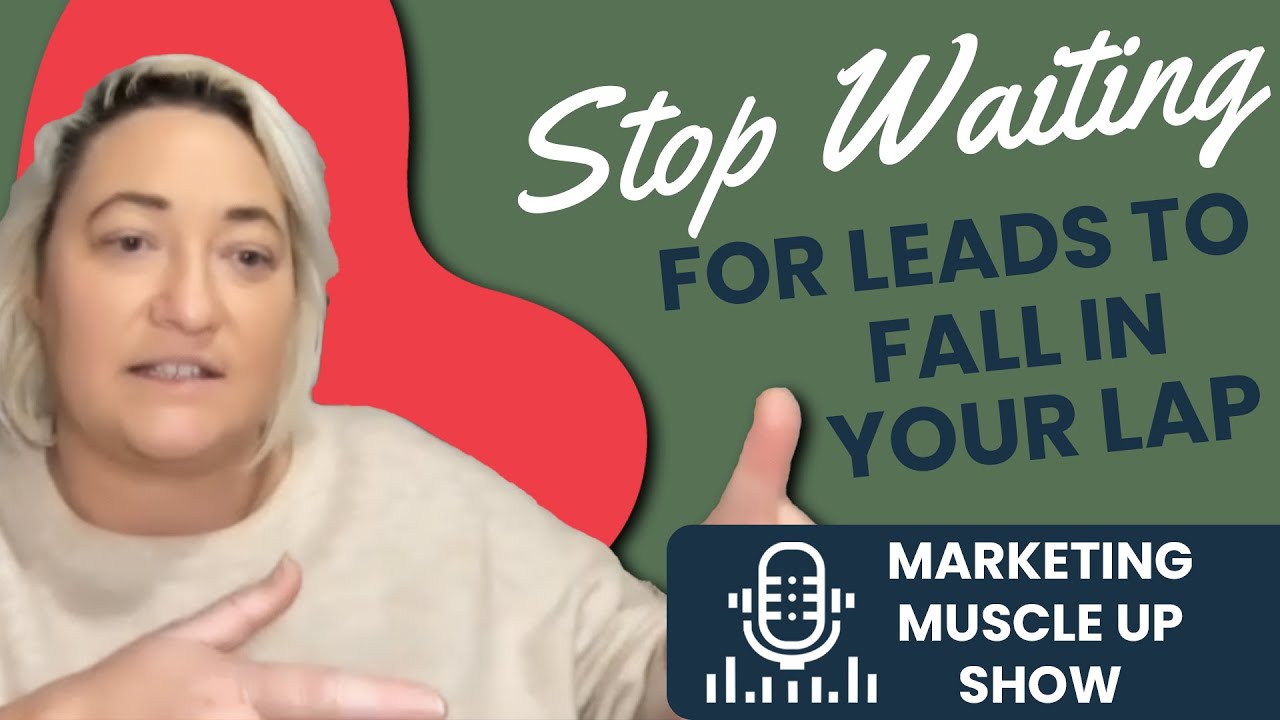
In this episode of the Marketing Muscle Up Podcast (Season 4, Episode 2), host (Speaker B) sits down with Ev Chapman, operations manager at ComMarketing, to discuss the current challenges and opportunities facing fitness‑industry entrepreneurs. They trace the evolution of fitness marketing from the early “gold rush” of simple Facebook cover‑page leads to today’s fragmented, high‑cost ad environment, emphasizing the need for a proactive, data‑driven approach. Ev shares insights gained from managing dozens of Facebook ad accounts, revealing patterns such as day‑of‑week lead fluctuations and the value of collective wisdom across clients. The conversation pivots to a mindset shift: fitness businesses must treat client acquisition as a measurable investment, calculating lifetime value (LTV) and being willing to spend 5‑10 % of that value on leads. They illustrate this with a case study of a studio owner who pays $45‑$50 per lead, converts 60‑70 % of them, and sees a healthy ROI. The core of the episode introduces two proprietary programs designed to help trainers transition from a “hobby” model to a sustainable business: the “Double to Half” club, which teaches semi‑private training models that can double income while halving hours, and the “Half a Mil Club,” aimed at scaling personal‑training businesses to $500 k+ in revenue. Ev explains how semi‑private sessions fill schedule gaps, increase per‑client revenue, and reduce burnout. They also discuss broader industry trends—rising client acquisition costs, the need to raise prices, and the risk of reverting to a hobbyist mindset if pricing and scaling are ignored. The episode concludes with a call to action for listeners to apply for these programs via commarketing.com.au, positioning the initiatives as life‑changing solutions for long‑term success in the fitness market.
Chapters
Just because you are heart-centered and you love helping people does not mean that you shouldn't actually charge for it as well.
Welcome back to the Marketing Muscle Up Podcast Show. Welcome back to season 4. We're in episode 2, and today I've got a new little segment. And it's with my operations manager, Ev Chapman. How you doing?
I'm great. How are you?
Very good. Like the background there. If you're watching on YouTube, we— if you're listening as an audio, sorry. If you want to watch on YouTube, you can check out Ev's glasses in the background there and all these funny things. It looks pretty cool.
The plants.
Yep.
Yep.
You change up your backgrounds a little bit, don't you, Ev?
I do, yeah. I am— well, now that we work from home, I have a few different spots that I can work from and have my background. So, yes.
Very cool. Team, if you haven't listened to yesterday's episode, we were talking all about how to stay driven, and I wanted to bring that episode into this. And I wanted to start off, if you haven't yet listened to Ev, she's been on a lot of other episodes in season 1, 2, and 3. And we talk a lot of different things about Facebook ads, Instagram. Ev's been with ComMarketing for around 7 years. You used to have your own agency, Ev, is that correct?
Yep, I did. It was about, yeah, about 8 years ago.
Building websites and branding.
Websites, marketing automation, emails. Yeah.
And, and, um, you've got a lot of skills in a lot of different— I call you a full-stack marketer.
Yes.
Full-stack marketer. I found it one time at a conference and I thought, oh, that's you, you're a full-stack marketer. Um, do everything across all fields. And, um, you know, marketing has definitely progressed, as we all know, in the fitness industry. Uh, before it was enough to do a Facebook cover, throw it on your Facebook page, and, um, The leads were just flowing. Or you just write something really simple on Facebook, like we call it a fast lead. Instead of getting a few responses, you get hundreds and hundreds of responses of people interested in your service and product. And they were good days. They were good days. Good times.
They were the glory days of marketing.
The gold rush. The gold rush.
I remember, I think I remember one of our live workshops, we had the yes method. Yes method. And you could just have people write yes. And I remember one guy walked out with hundreds of leads and we just thought, we are superstars.
Yeah. Leads turned and they said, oh, I've got these clients out of it. It was just great.
It's amazing.
There's all these new strategies that are coming aboard, but I thought in this segment, when we do more of a long-form segment, and we'll definitely get on and talk very tactical moves as well, but a long-form segment. I said yesterday in the podcast, if you haven't listened to that, listen to it. that what's the secret weapon of 2022 in marketing? What is that secret weapon? And the answer that I gave to everybody, so if you haven't listened to it, the answer I gave to everybody comes down to one thing. It's about how driven you are. How driven are you? How are you? How driven are you to find out the next play, to find out how to move things faster and more efficient, to keep going. And over the last 2 years, there's been a lot of things that should have worked but haven't worked.
Yeah.
However, some people are on the should have, would have train, I should say, still. And they're going, hey, when are we going to get back to 2020? And then some people are on, hey, what's happening in 2023, '25? Even conversations are popping up of Web 3.0, NFTs, and all that kind of world. And If you're hearing these kind of things and going, hey, I'm just a fitness business owner and I just want to get leads, we're not going to go down that path. But definitely we have to understand how do you stay driven in a marketplace that is congested, that is full of a lot of different ways to do things.
Hmm.
And I personally think one of the best ways and the most successful ways that we've had a lot of growth in our Com Marketing Ninja program is by kind of staying towards the top and understanding what's happening in everybody's businesses and then formulating an attack path based on a lot of same actions or non-actions happening. And so we can move relatively faster when we know, like for example, when you're in the back of all the Facebook ad accounts, you have a very good understanding. that when you're having coaching calls and if you lead a team of all our coaches and we're having these conversations. So I thought I want to bring you on and let's kind of get that behind the scenes conversation.
Yeah.
And I believe that's probably one of the most powerful conversations that anybody can have when you're like that fly on the wall, that, what is it like that, like you're hearing the conversations, but you're kind of in the room. It's Pretty empowering.
Yeah, it is. And, you know, we've, we have done Facebook ads for a long time. We, you know, we used to do it as a service, still have, you know, we still have people who come and do it. But there is something very interesting about being across multiple Facebook ad accounts. When you are one business and your ads are tanking, you just think, I'm crap at this. Like, I'm really bad. But when you actually manage a whole lot of accounts together, You realize that there's certain days that leads just don't come in all on the same day. Like Tuesday is very bad for leads. So if you're launching any ads on Tuesday, you're thinking, I need to switch these off, just wait till Wednesday. But you also then start to see these patterns and that comes from having an overview. And I think it's the same when we do coaching is that as soon as I hear something from one person, I'm hearing it from somebody else. And a lot of my coaching calls, I'm saying, Don't worry, everyone's feeling like that. Everyone's having a hard time this year getting leads in. Facebook ads really hard at the moment. Let's switch over to Google Ads. And so there's this collective wisdom that comes when you actually talk to a lot of people and have that, you know, we even have other friends who are, you know, maybe more on the inside in Facebook and they're kind of whispering to us. Yeah. So I think there is something very special about I kind of like, it's like taking the temperature. Like you take the temperature of what's happening and you can kind of gauge from there. And actually, it's really nice as a business owner to be told I'm not terrible at leads. Everything's happening at the same time.
This reminds me, many years ago, me and Joey were on the TV show Amazing Race Australia as a contestant. And I remember being stuck in an airport in Bali. We thought we're the only team at this airport, the only team that were behind, yet we were stressing out for a good half a day realizing that we were left behind and everybody was probably in Europe. And we're sitting there just feeling sorry for ourselves. It didn't have the overview of everybody else around us. We just had us and we didn't know anybody else. We didn't have any communication with outside. We didn't Instagram, you didn't have Facebook, you didn't have any phone numbers of people. And all of a sudden you get into your head and you go really silo and you get desperate and you get like anxiety builds up and you go, oh my gosh, it's just me. Everybody else has got these amazing ads, they're crushing it and everybody's got this. And then after a while, all the other teams started to roll in and we were actually in front.
We didn't
know. And it's exactly what this whole little segment's about here. It's like—
Yes.
You need to know when it's uncertainty in times like this, you need to take a check of what people are doing. And the problem is, the problem is that on Instagram and Facebook, you can't really trust what's being said because there's mostly lies and exaggerations.
It's not lies, it's marketing.
It's marketing. It's marketing. So, Ev—
It's a spin.
It's a good spin. And So if you are a studio owner, a personal trainer, a gym operator, um, these segments are going to be really good for you because we're going to give you what's happening in the marketplace. And we may not share names, we may share names, but it's going to help you to understand, you know, should I be worried or not, and should I adjust? So what has been happening in, um, what's been happening in the business this week with coaching calls? Um, what's something that's really interesting you want to bring to the forefront?
I think in general, what's very interesting is that across the board, people are struggling to get leads. Whether that is because, you know, a lot of our clients run Facebook ads, but I think in general, there's something happening in the air that is, that's a struggle. But I think that we have been in a great position where we haven't had to go and kind of hunt for leads. Leads have kind of come to us. And so what we're finding is kind of a shift where you can't just sit back and wait for leads. You actually have to go out and you have to have the conversations. We've been talking a lot about old school marketing. I actually talked to one of our clients last week about getting back into the shopping center just so that they could start to have conversations with people. And I think that's, that's a real shift. And it's a shift back to the more conversations you have with people, the more chance of leads and the more chance of opportunities.
Yep, totally. And this kind of comes back to— I've been inserting and reminding a lot of our clients to take note on the the calls and the return of calls that's happening.
Yeah.
Where in times like this, when the leads aren't flowing or they're a bit higher, more expensive than you've paid in the past, it means then you've got to put more effort into the leads and put more effort into the ads and the copy that you put in. Now we've got one client, he's crushing it in Facebook ads. And when I say crushing it, he's a studio owner. He's willing to spend $33, $45 per lead that comes through. And some might think, oh my gosh, I've got a budget of $20 a day. Is that why I'm not getting leads? Yep. But he's also willing, but he knows what his sales rate, like his conversion rate is. And it's close to something like 60%, 70% from a lead that comes through. It's a quality lead that comes through and he's willing to pay for that. Yep. Because he knows his brand equity and he knows how to convert that. And most importantly, he knows the price of a client. So what's the price of a client? And I urge everybody to do this as well. If you haven't yet done this in a while, basically it's really simple. You go, okay. And if I ask you a question, how long does a client stick around for? Most are going to say, oh, when I talk to the client, they'll definitely stick around for years.
Yeah. If you can talk to anyone, I think most people are going to convert them at a very high percentage rate.
So even if you're charging $50 a week, just go times 52, just as an average. I know people don't do that every single week. That's $2,600. Let's round it down, $2,500.
Yep.
So I always say, what are you willing to pay for a client? If somebody dropped the client on your doorstep tomorrow and the signature was all there and the deal was done for 12 months, what would you be willing to pay? Now, maybe in the past you could have said, oh, I'm only willing to pay a couple bucks, but we all know, you know, a client, $2,500, $2,000 client, we all know that it's worth a bit more than a few bucks this day and age. So it's kind of be number one, you've got to be understanding what are you willing to pay for a client. Ev, what do you think? What's, what's the average out there? What is someone willing to pay for a client?
On Facebook? No. Or just in general?
No, just in general. What do you think at the moment? What do you think?
I think most people are not willing to pay for clients.
Ah, there you go. There's the problem. Problem 101, most people are not willing to pay for a client.
Now this is— Yeah, like we get into our heads about it.
Now I just want to stop right there. This is the number one issue here. We are running a business, right? Brick and mortars. We spent $100,000 on beautiful machinery and equipment and all these things. Yet when I ask anybody the question, it's generally the answer I get off to Seb then, oh, well, do I have to? Yeah, you have to because somebody else is willing to. You can see one of our clients in our program willing to spend $45, $50 a lead because he knows he's going to convert that lead 50%, 60%. So in fact, that client has cost him about $120, which overall is around about 4% of a sale over a year. That's not including referrals. That's not including upgrades, anything like that. So the question is, are you willing to spend at least 5%, 10% on a client? And that's— I think this is one— I think this is a 101 understanding that things have changed here.
I think so. I think it's a mindset shift that we all have to make. From, you know, we have been in a real golden age of online marketing. Online marketing has been around for quite a while now. For the last 10 years, I would say, especially with Facebook, social media, all of that, we've been in a really wonderful space. But at the end of the day, marketing and lead generation is about who will spend the most. And whoever can afford to spend the most per lead is the one who is going to win.
Winner winner chicken dinner. Um, I've run a relocation site, as you know, relocating.com.au. And, um, I launched that when I launched, uh, Meet Your Personal Training Directory and remove lists. So remove lists, um, service providers, like you've got remove lists, you've got tradesmen's Funeral parlors, cosmetic surgeons—all that industry is willing to pay a lot more money for a lead than a personal trainer. Now, back in the day, a gym, a traditional gym charging someone nine dollars a week doesn't have that much money to pay for lead. But because we deal with studio owners, personal trainers, and when somebody is charging more than $50 a week, let's say you're getting up to $99 a week or $100 a week, right? Let's say you're getting $100 a week times 52, that's $5,200. If, you know, that life cycle over 12 months. Now, depending on your contract situation, that kind of stuff. But again, if I times that by 10%, that's $520. Now, if I go back to my relocating directories, cosmetic directories, funeral directories, I know what they were paying me personally for a lead. And what they were paying for a lead was around 10% to 20% of the average sale. Now, the average sale for that industry was anywhere between $3,000 to $15,000 to $20,000. Yeah. And that's what they're willing to pay because the competition is fierce. So I think this industry, Ev, is starting to Uh, it's starting to change in regards to that. We're not a $9 industry anymore, a $9 a week industry anymore, are we?
No. And I— that was in my head, is that, you know, if you are still charging, um, you know, rates like that, or even as a PT, um, you know, I think that we all, we all agree that it's a really important industry. It's changing people's lives. You literally are you know, really, you know, increasing the health of the nation and increasing the health of personal people. And so I think that you're worth it. You're worth it to put your prices up if you need to do that in order to be like— it's one of those catch-22s where you're like, well, if I put my prices up, will then people still want it? Like, will it still be as easy to get leads? Well, sometimes people are looking for something of value and something that they, you know, they want to put their money down and invest in their health. So yeah, if you need, if you need more marketing revenue or marketing money to invest, then it may be well to put your prices up.
Yes. Time to put the prices up. And we're on a mission too, just talking about prices, to And maybe this is a story for another day, but the big, the big focus here is that we want to keep people in the industry long term.
Yeah,
not short term.
Yep.
Now some people— and I think the past, this industry was about people coming in for a hobby, and, and that was, that was created back in the earlier days when aerobics, um, you know, people had a full-time job and they did aerobics in the afternoon to stay fit in the morning. And they'll do their classes, they'll get paid their fee, and they'll leave.
Yeah.
Yet we, we're not talking to group exercise instructors all the time. We are talking to, um, it could be group exercise instructors that own facilities. However, this is starting to turn into where it is a full-time, uh, role. So I, I also think that the industry is a little bit to blame, that we all think it's a hobby industry and it's a hobbyist industry, like making hobby planes or hobby cars. But in fact, it's a business. And in this business, our job is to get people healthy and fit. And that business is going to require you to charge something to stay in the industry long term. Yeah. And I guess we're always asking this question, well, if you're not prepared to take your prices up, are you prepared to stay in this industry long term? Is there an expiry date for your business if you don't make the next cut? And when I say the next cut, the next wave of change that's going to happen. We've all experienced change over 2 years, but there's going to be another change that happens down the line. This is not the end of the changes.
Yeah.
There's going to be more. So it may be time to go, hey, do I need to relook at how I look at my business and go, is it time that I take this business and say, yes, I'm changing people's lives, but at the same time too, if I don't turn it into a business, it will go back to being a hobby for me?
Yeah, I think so. And I think it will go back. Like there's only so long that you can you know, last on those, those prices that you're charging before either you start to resent it or you just can't sustain it that way. And I, and I think that we've just gone too long that way, you know, just kind of existing. And just because you are heart-centered and you love helping people does not mean that you shouldn't actually charge for it as well. And I think that's really why we then Ended up creating these 2 clubs of ours, the Double to Half and the $500K, because we really want to see people get paid what they're worth and be able to stay in the industry long-term and do something that they love.
Let's start off. Take us through the Double to Half. What does the Double to Half mean?
We've been helping people do this for like, I was thinking way back, One of our first clients, maybe like 4 or 5 years ago, where we said to her, she was, you know, single PT operator in a gym, one-on-one clients, full calendar, no other time. Like her time, like basically she's capped, but she's not really like, she's, it's still not enough. And so—
Yeah. Capped at the hours, the peak hours.
Yeah. Capped in hours. Yeah. So then we said, okay, well, why don't you move to kind of this semi-private model? And so she ended up having, I think, maybe 3 or 4 at that first iteration. And then maybe she went up to 5 or 6. And she was able to move all of that, like 80+ hours a week of training into 3. I think she did, she had like 2, like a 6 and a 7 AM in the morning. 3 or 4 people in it, 3 days a week. And she ended up then building up those semi-private sessions. And so her middle of the day was completely empty.
Yeah.
And she went from like full hours. So then that's what we're saying. It's like, you know, like, but then she also doubled her income and then had room to grow and then have room to scale that. So she basically doubled her income and halved her hours. And that's really where Where this whole thing came from, right?
Yeah. It transforms the way you look at things because there's only a certain— it's one of the things that we spoke yesterday, to lose the drive and to lose your passion for the industry, it means that you'll get burnt out. Generally speaking, working early mornings and late evenings and split shifts in the day, lunchtime, it generally will burn you
out.
Unless you're Elon Musk, you'll be burnt out. It does take a toll.
It takes its toll. Yeah.
It takes a toll. And then you lose family stuff. You have family problems there because you can't go there, you can't go there. There's so many things that can happen from this. And sooner or later, you just chuck it out and go, ah, couldn't be built, deal with it. I'll just go get a job. And generally, it's a job outside that you love and then it gets back in the cycle again.
Yeah. And it's a job that Um, probably pays more for less hours that you're doing.
Yes, yes. Your hourly rate is done dramatically down because you've got to do multiple hours. And so that's the Double Half Club, and, uh, that's something that's, that's really working well. We've got a program called the PT Growth Accelerator. Um, it's run by 2 of our amazing coaches that have actually done that, actually physically did it firsthand.
Yeah.
And, um, I think that's the one of the success of that program. They, you know, follow 12 modules and then Um, actually, you know, ask questions. And, and the biggest question we get asked is, I don't know if I can take up my rates. I don't know if I can make the switch. And, and, uh, when people do, it just, it transforms them totally.
It absolutely does. I've— it's, it's amazing to see how it transforms a personal trainer. But I think there's also a real gap in the industry for it, for this semi-private personal trainer. that is not necessarily like your boutique studio, 30+ people in a class. There's people who, you know, maybe need a little extra attention, but they can't afford full PT rates. And I think there's, there's not that many around. And if you can really get in there and, and really make that your, uh, kind of your thing, I think you, you know, you can really win in that area.
Totally. So if you are a personal trainer and you want to figure out how to stay in this industry long term, not short-term, my recommendation is to jump on our website, commarketing.com.au. You can apply for that program and we can get you all the details and get you in there. It's the most important thing. Get you in there. Change things.
Life-changing.
Totally life-changing.
Yeah.
We might chat next time about our other pro— our other—
Yes.
Our other— what am I trying to say? The other
Club
initiative. Club.
Yes, we call it the club, the Half a Mil Club.
Yeah, the Half a Mil Club. We might talk about the next time, but if you are a personal trainer, guys, jump into this. Um, you know, thank you for the insights, Ev, in regards to what's happening behind the doors in com marketing, what's happening behind the doors in our clients. And, um, again, if you are— if this is the first time listening, uh, welcome. So good to have you here. If you want to listen to any other episodes Jump in and you can— there's 3 extra, 3 seasons you can check out. This episode 122, and there's so many different ways to start, you know, taking action and start getting driven again or re-innovating what you do, most importantly, because we are in a season for that. If you haven't yet done it, haven't yet seen it, you've got to get in there and And make it work for you in this new zone.
Yep.
Awesome. Thanks, Ev. Good to have you here.
Thank you. Good to be back. Season 4.
Season 4. It's all happening here. It's the season of being driven. Let's get the work done. Let's rip in, team. I'll catch you next time on the Marketing Muscle Up podcast show.









