S4 Ep 8: Branding Is More Than A Logo...How To Brand a Fast Growing Fitness Business With Jack Lee
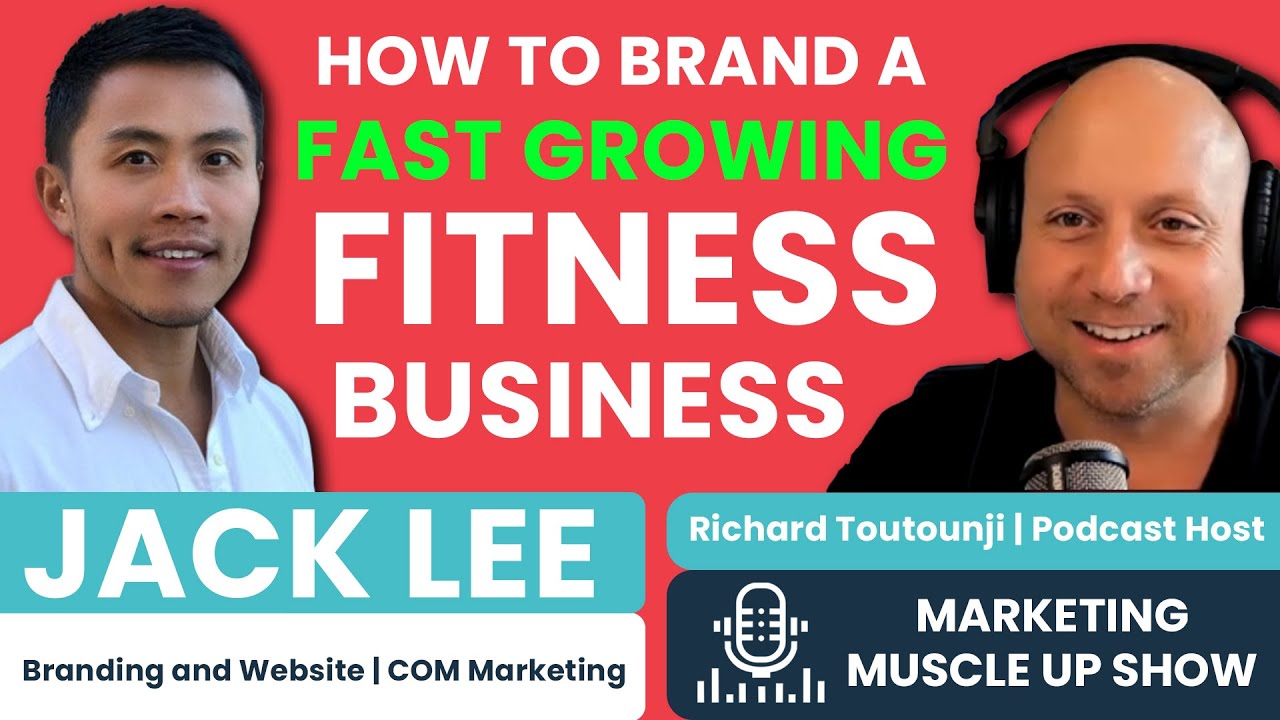
In this episode of the Marketing Muscle Up Podcast, host Richard Toutounji interviews veteran designer and brand‑builder Jack Lee about the deeper meaning of branding for health‑and‑fitness businesses. They argue that brand is far more than a logo; it is a personality, a set of relationships, and a source of competitive advantage that cannot be copied. Using examples such as Nike vs. Lululemon and the pricing model of F45, they illustrate how brand positioning, price point, and perceived value intertwine. Jack explains why DIY tools like Canva, Fiverr, and Wix can work for a brand’s early stage but become limiting as a business matures, emphasizing the need for a cohesive brand style guide to keep visual assets consistent. They dive into practical website improvements—clear call‑to‑action buttons, mobile‑friendliness, ongoing testing, seasonal content updates, and SEO—recommending the Rank Math plugin for WordPress. Jack shares his personal creative routine (cold shower, Wim Hof breathing, visualization) and sources of inspiration (Pinterest, Behance, archiving screenshots). He cites brands he admires—Apple, Monaco Magazine, Aesop—and recounts his experience designing over 50 websites and thousands of logos. Throughout, Richard stresses that strong brand equity drives higher client value, staff retention, and business resale potential, making branding the single most defensible asset for fitness entrepreneurs.
Chapters
What are your top 3 ways to improve a current website that's possibly underperforming? What are some adjustments that you could tell your web developer to go in action straight away? Welcome back to the Marketing Muscle Up Podcast Show. I'm your host, Richard Toutounji, and in these episodes we talk all about how to grow your health and fitness studio, personal training business, gym. And we do that through a whole different array. Now, in one of our programs, our Com Marketing Ninja program, one of our first modules is this concept called brand. And I know brand is, you know, a lot of people, like we all buy from brands. You're probably wearing branded clothes, shoes. You got some Nikes on and there's brand everywhere that goes around us. But for some reason, And I know the reason because I think what's happened is, you know, before kind of— I like the golden era on Facebook where we could easily put something up and put a lead form up, for example, and all of a sudden we've got these leads. But the market's changing, it's shifting. It's— I call it the new age of marketing again. And I want to highlight something that's been probably by by far the one thing that you cannot compete on ever and nobody can beat you on. There's no competition in this. And that is a thing called brand equity, owning your brand, owning that concept of what you are unique about. So I thought I'd bring on the best person for this job, Jack Lee. Jack's going to join us in this podcast episode. And Jack usually sits at the back, and Jack has created many amazing brands, especially in the health and fitness space. Jack's been as part of the comm team for a few years now, and it's a pleasure having him. And he's had so many years of experience in this game. Welcome, Jack. How are you?
I'm good, thank you, Richard.
Very good. Now, Jack, our conversations are usually about, you know, websites and logos and all those kind of things. Really tactical. And I wanted to pull you out because you have been creating for many, many years, well before Canva started. Isn't that right, Jack?
Yeah. 18 years, over 18 years I've been a designer. So yeah, it's been a long time.
It has been a long time. If you're watching this, if you're listening to this on audio, we do have a YouTube version if you do want to check that out. Jack does not look a day past 21. So there's something to do with the work that you do, and that's creating amazing brands for people and especially all of our clients at ComMarketing as well. So Jack, take me back to the question of what brand means to you as a branding expert.
Well, I guess branding is— some people think branding is the logo, but it really is not, right? The brand is bigger than just a visual identity. The brand, I always like to treat a brand like a person.
Yep.
So think about you're playing a SimCity. You're trying to, you know, the game SimCity, trying to create this person, that this person, what is gonna— what this person's gonna wear, the personality, the attitude, the way this person communicates, and this person, you know, The friends that he or she hangs out with, you know, that's really important. That's all kind of part of the brand. So, you know, so I guess if you think of it as a person, the brand, you know, for example, KOM, for you guys, associate, you know, partnership with other like-minded businesses, for example. So, you know, there's all the friends that you hang out with. So that really shapes who you are as a brand or what your brand is. So, you know, So I guess you kind of have to really focus in on, you know, how you're gonna speak to, you know, your customers, the tone of voice you should be, you know, using when speaking to customers. And, you know, branding, as in like branding identity, you know, the logo and the look and feel, the color, I guess it would be kind of like, you know, the way you dress, the way you come across. That's, you know, it's all part of the— I think that's really important to kind of think about it as a—
As a whole entity. And it is interesting because I think a lot of people go, oh, I've got a logo, I'm good, my brand's done. You're talking about who you're hanging around, who you're partnering
with. Yes.
That's right. And that's really interesting. That's an interesting concept there. So it really comes down to, I mean, especially let's say a smaller operator, so a solo operator, they may have a logo, but a big part of their brand is themself. I mean, how does How do they navigate that if they don't— people are judging what shirt we're wearing? Is that what you're saying,
Jack? Well, we are constantly being judged all the time, right? People will judge you on your logo or on the things that you put out on social media, for example. People will, you know, if you don't communicate the right way, if your logo or the colors don't, you know, communicate to your right target audience, you know, yeah, it's probably not very good. So yeah, you need to really figure out, identify who you're trying to attract. So identify your target audience, what kind of personality they are, and, you know, what kind of the style or, you know, what will appeal to them. At the end, you want to sell stuff to them. So—
Interesting concept. So it's like walking into your favorite store, let's say retail store. I think you're wearing a Nike shirt there, Jack, maybe. I'm not sure.
No, that's a Lululemon.
Oh, Lululemon. I apologize, Lululemon. That's why it looked way better, the Lululemon than the Nike.
It fits well, Jack.
It fits well.
Yeah. They brand themselves very well, right? So, you know.
Well, yeah. I mean, they brand themselves totally different to Nike, for example, don't they? Jack, and when I walk into a Lululemon store, you feel something like calmness, and you always feel healthier just walking in there, right? Yeah.
And basically, like, take all my money.
Take all my money. Exactly right. Exactly. Just take our money. Where Nike's a bit more fitnessy, isn't it? It's a bit more like, let's crush something. Let's do something strong.
And the price point makes a difference. Nike has been more affordable for I guess, a younger generation, like younger kids as well, right? Or teenagers up to 20s, because I don't think teens can really afford Lululemon. They don't want to pay $80 for a pair of shorts.
Well, I mean, you think Nike's expensive, then you go Lululemon, you go, ah, Nike's cheap, isn't it? Yeah. So you're right. They're attracting a different audience. And that's a very interesting point you talk about, Jack, price point even. You know what I mean? So when you're charging at a higher price point, you've got more premium customers. Is that the summary of that?
Would you say? I guess it's very different. What you need to figure out what your strategy is, right? There's, you know, that's why F45 charges a little bit more because they, you know, they know people will commit to it. They'll keep coming back because they're paying a little more. But some people might not want to pay that much money. So it's, it's, there's some marketing though. So it's really, you got to figure out. What your tactic is.
Very interesting. Very, very interesting. And I think it's so true. Like I walked into Lululemon probably 10 years ago and I just walked out and I go, this, who would pay such a thing for a shirt?
Yeah. But because they're pricing higher, so they're trying to attract a different income bracket people, right? It's almost like going to Louis Vuitton, you know, like—
Exactly.
not many people can afford it, but they want to be associated with it.
Yeah. Very interesting. Brand association. I get this is super interesting. So let's talk about then the basics. We go to a website, we go to a logo. Over the years, Jack, there's plenty of websites out there. One of them, we won't mention names, like fiverr.com, for example. For $5, you can go and get yourself a logo designed. And the market's gone flat over the years. You've got things like Wix websites. We've got Canva for designs. I mean, I personally see there's a little bit of— I think it's a good thing, but I also see a lot of problems with this where we are thinking that it's almost like a super unfit person's never walked into a gym. Just because the gym's 24 hours, we can go and we understand how to get in the best shape of our life. And I'm seeing this a lot more with people because we've got these sites, but their branding doesn't look any better because they can design themselves. What's happening in this space at the moment, Jack?
Well, really, I think there is definitely a place for Canva, Fiverr, Wix, all these platforms because If you're just starting out, you probably don't have a lot of money. So you wanna, you know, usually you wanna do everything yourself. So you really need to figure out, you know, your business, you know, where you are at. At the start, yeah, you know, you wanna test out the water, try, you know, go and get a logo design that is really cheap. You know, just get it started. That's totally fine. But when you are into your business, maybe 2 or 3 years, it's starting to get traction. You know, you know that you know it's doing it's kind of steady now. So you probably want to invest to kind of to make sure your brand is consistent. You want to get someone you know, or you know, maybe you're you've been working for so long you kind of know how to work around it. But if you if you're not very good at design or very not very creative, you probably should really hire someone to kind of figure out to give you a clearer direction where it should be going. You know, making sure all your branding for visual branding is consistent. Making sure your website is, you know, like functioning correctly, you know, mobile friendly and all those kind of stuff. So yeah, at the start, if you're new, if you're just starting out, yeah, that's, you know, why not? But if you have the budget, definitely, you know, if you have the budget—
Because if you don't know how to design and you do something, it's not going to be on brand that you're talking about.
It's almost like when I first started out, I didn't know anything about Xero, how to reconcile my accounts and stuff. But then I've learned, but then now I'm into my business a couple of years now, I'm like, oh, who's got time for this boring shit? I'm sorry. So you outsource the things that you don't want to do.
Yes. So yeah, instead of spending hours and hours trying to figure out, does this look good or not? And if you've got the time, it's like anything, get the expertise. So it reflects well in what you're trying to get to. Because I always, Jack, I always say to a, let's say for a personal trainer, I go, what's a client worth to you, Mr. Personal Trainer? And let's say you're charging $80 a session and you do 2 of those sessions, that's $160 a week. You times that, let's say, by 52 weeks, that's like $8,320. So I mean, To me, I look at it and going, well, is the brand and design on par? Are you gonna— so it's not what you're saving. Sometimes it's what it's costing you. Is it costing you an $8,000 client because your logo or because you used a stock image or because you thought you could just quickly do that? That's what we're talking about here, right? We're talking about loss of business.
And I guess, yeah. And you can keep And I guess it's more like you can keep building your business or you want to build a brand as well. A brand, you know, like brand attracts loyalty and stuff. But if you just keep working on business, you don't need, you know, like you can keep getting word of mouth from clients, you know, you don't need, you know, if you're busy enough, some people don't even bother, you know, trying to work on their brand. But if you really want to build a brand, that you can sell off in the future, or a brand that builds brand loyalty and you want to sell merchandise and stuff, then you probably need to focus on these kind of things like branding elements, like branding identity, branding. Yeah.
Yeah. Super interesting because again, it's like even Facebook, We can launch a lead ad straight away without going to a brand. But again, with the amount of competition that's against us, I always say that brand is the only thing that you can't— the only thing that you can't— somebody can't copy you on that. Like, I mean, they can get close to it, but if you have brand loyalty, you look at the Lululemon example and the Nike example, like people do ripoffs all the time. But it's not the same, is it?
No.
So Jack, a bit of a curveball question for you. I know you enjoy those ones. I love working with you, Jack, too, because it's, you know, you're a creator, but you understand what a business owner needs as well. And that's a really key element there because you can either have design And they go super creative, but the question is, does creative sell? So it's finding that mix. And I guess my curveball question is like, how do you be creative when you're just simply not a creative person? Do you have any strategies that you do? I mean, do you hype yourself up in the morning and go, hey, let's design? Is it like writer's block? Like, do you have to be in a state to create?
I have my whole morning routine, actually.
I'll meditate.
Don't tell us this yet.
Tell us that morning routine yet.
I have cold shower. I do my Wim Hof breathing, you know, all those kinds of stuff. But and I do visualization, tell myself, yes, I'm gonna be creative today.
But
to be honest, you know, like I think I do quite a bit of self-development. You know, I I'm I you know I do like ongoing learning for you know just doing small courses for like design courses, branding courses online. Sometimes I need to step out. Look, sometimes if you work with me, sometimes you're like, oh, how come it's taking a while? Because sometimes to be creative, I need to actually— well, for everyone, they need to step away from what they're currently working on and then come back and then tweak it. Because, you know, a job can be taking maybe like 4 or 5 hours, but then none of us will work 4 or 5 hours on this project. Yeah. like all at once because, you know, there's not— you're not gonna be creative for that long because, you know, like, and then because sometimes you have to step away and then come back and then realize, okay, this needs to— I need to tweak this to make this look better, or, you know, like different ideas. And yeah.
Okay, so I'm glad you said that. It's not just me that just goes, hey, I've gotta— I've gotta get out, I can't do this. And you come back the next day and it's like everything's a bit fresher, right?
Yeah, and then it really depends on your mindset. So I usually do my creative work in the morning because I feel like, you know, a bit more energetic kind of thing. And just stay creative. I kind of, you know, go on Pinterest a lot. Pinterest is probably the one that I go to.
Oh yeah.
Some ideas, or Behance is pretty good as well. So yeah, just, you know, and constantly, you know, archive, you know, finding pictures that you like, archiving away, and then, you know, That's how I do it.
Yeah, great. I've been doing that a lot. Things I like on, if I'm searching through Facebook, Instagram, I just like take screenshots on my phone and I go, oh, that's a good idea. And then it's so much easier after that, right? It gets that out. Well, that's a really good hack.
Yeah. But also like sometimes, I know for small business a lot, they go on Pinterest, they find something they like, and then all of a sudden they're trying to recreate Trying to copy it, but then you know you need to be careful because you're trying to copy, but you need to really know your branding well. You don't want to you know go off your branding identity and then completely because just because you find something that you like, so you gotta be careful. You know you can adopt some graphic elements that you know they incorporate to your existing branding, but you don't want to just go veer off a completely different direction.
Yeah, very interesting.
The copy and paste scenario. Yeah, and I think that's the problem with Canva is because. Canva offers a lot of different templates for people to use. And then all of a sudden, all right, I'm gonna do a social post. And then all of a sudden, I see something that I really like as a template, but it's completely different visual than what your branding is. So people just kind of create that and then put it out there. And then, you know, your audience will not make an association with your brand. So you just gotta be careful with that.
What worked really well for us, Jack, when you rebranded our He said, Richard, do you want to go totally different or very similar? I said, oh, I might just go similar. Well,
you started from, let's go completely different, and I knew you will come back to that refresh.
Yeah, just a little refresh. But what you did really powerful for us and what you do for our clients too is that you gave them a guideline. So, you know, things that we could take and use on Canva. And like it could be a color theme or it could be certain pictures that we should be using or certain like blobs or sort of little graphics that you create. And that's really powerful. So then you can, you know, the boundaries and you don't have to recreate all the time. I think that's super powerful for businesses that don't have that.
So with every branding, you should be getting a branding style guide, right? So it's basically a rule book what you should be. Doing with your brand. So the color palettes, the font you should be using, any associated graphics. And, you know, like some of the branding guidelines can be like a Bible, can be really big, you know. Like even like how to, you know, the font size, you know, like all the lead-ins and kernings. But, you know, if you're a small business, just keep it a little bit simpler. I think that, yeah.
Yeah. Great advice. All right. Another curveball question for you, Jack. What's the best brands that you really love? Like what's, you know, where does your— I know you talked about that before, but what's a brand that you really admire?
Well, go with the obvious one, maybe Apple. Apple is a really good brand.
Apple,
yeah. Yeah. They do things really clean. They communicate with the audience really well. And, you know, like their website is very mobile friendly as well. So, you know, like making your site really mobile-friendly and very— what's the word— very interactive as well. I think they've done that very well. Yeah. And Monaco Magazine is like another good one that I buy because I love magazines still because, you know, like the feel of the paper and, you know, Monaco is a Canadian magazine, I think. Yeah. And they've developed their brand so well. They even sell merchandise and they have a big following. Another one's Aesop, you know, the skincare range. Aesop is, you know, their brand.
Yeah, I like that brand. Oh, it's almost like sometimes in the store when they get the free tasters, like, oh, that's good.
Yeah, you go in, it's like the interior is amazing. And, you know, like everybody would have a Aesop hand wash these days, and so many other companies copy the bottle, the design. So clearly they've done it right.
Got a great job. Yeah, very interesting. I love the way you look at brands. And I think this is an easy step for anybody who's trying to figure out what their brand is. I did that when I was building my studio and my Zoom studio. And I went around Westfield and I just looked around at all the stores and how they were designed and What do they use, wood or TVs? And you get a lot of great ideas because they're spending a lot of money on their brand and especially the setup of their brand. All right, Jack, I know you built a lot of websites. You built a lot, a lot of websites. How many websites do you think you've built, Jack? Kind of rough stab in the dark there. What do you think?
Oh, I don't know. Over 50, I think. Over 50. Yeah, definitely.
Over 50 what, thousand?
No, 50 websites, I reckon. Well, maybe a little bit more. I can't actually remember.
Over 18 years, Jack. Over 18 years talking about how many websites.
Yeah, but I didn't really start building websites from the very start. Remember, I'm actually trained as a designer, and not many designers actually build websites. I actually self-taught myself to build websites later on. So I kind of had— it's almost like you hire an architect, but this architect So be a builder. So it's kind of hard. So the better
question is, how many logos have you designed,
Jack? Too many.
50,000.
I don't even like designing logos, to be honest. It takes so long trying to design a logo. Yeah. And people don't appreciate it. People are, you know—
Yeah. People don't appreciate the time. I always appreciate Jack, the designer here, because he could get the logos done. Takes a bit of time, but They get it done right the first time. Let's talk about websites. So Jack, what are your top 3 ways to improve a current website that's possibly underperforming? You know, what are some adjustments that you could tell your web developer to go on action straight away?
Well, the most important part is to have a call to action button that's really obvious. If you want people to land on your website, You want them to— if you want to sell something to them or you want them to inquire, make sure that people can inquire through, you know, the call to action button is obvious enough for them to go, all right, I'm interested. Where do I get in contact with you? So, you know, that's really important. And making sure it's mobile-friendly because some, you know, these days, I think they're saying, you know, Majority of people use mobile to shop.
It's definitely well and truly past the 50% mark.
Yeah, but still conversion happens on desktop though because people still prefer to buy things on desktop. They'll do their research on mobile. So yeah, so I'll probably, I'll really focus on mobile and really, you know, really test, you know, testing is really important. Making sure you show your target audience, you know, your website to see how they feel and really test it out for a month to see how the user, you know, what that user experience is like and then keep optimizing that. You know, like some people think, okay, website is done now and then that's it. They never do any more updates. I feel like, you know, it's an ongoing thing. It's kind of like owning a house. Housework never stops, right? So, you know, you need to, I feel like Making a seasonal update is always really good for your websites just so it's fresh content, you know, every season. And, you know, adding lots of resources, blogs, or something like that. It's really good to just, you know, all these kinds of stuff is really good for SEO and, you know, just to generate more traffic.
Yeah, love it. So click contact button and It sounds easy, but there's a lot of websites that just don't do that. They actually forget about that basic skill that people will just go there and get the details. Mobile responsive, super important. And especially too, that's a good idea when you are designing a website, the designer will send it back to you and you have a look at it on desktop, you have a look on your nice 27-inch Apple Mac, but then you actually forgot to look at it on the mobile side as well. And it's like a total another experience. So don't forget to check that, that's for sure. And the last point there is ensuring that it's friendly, it ranks and it can rank and so forth. What's the best app for SEO, Jack?
Well, yeah, I use an app called— well, I use a plugin. Well, if you're using the WordPress site, that is. I use a plugin called Rank Math. So it's—
Rank Math.
Yeah. A lot of people use Yoast plugin, but I think Rank Math is a better plugin. So what it does is it's free. I mean, you can do a paid one as well. So what it does, it will calculate a score for each page out of 100. And then you can go into each of your pages and then put in the, you know, it will give you suggestions of the meta tag you should be putting in, the keywords you should put in. put it in and then they give you a rank that obviously the higher out of 100 it is, the better the page is going to rank, you know, better. So, you know, that I think, yeah, I think Rank Math is a really good plugin.
Yeah, great. I haven't heard that one before. I'm going to check that out.
I think that's what I put on your site though. So—
Ah, Rank Math. Great. I'm glad you've got the best stuff on our site though, Jack. That's the way. Good to hear. Good to hear. Well, this has been super informative. Love your work, Jack. This is very good. And as you know, I'm a massive believer in brand, Jack, brand personality. Brand doesn't— it's not just the logo. I'm obsessed with this because there's just competition everywhere, changes all the time, but there's one thing that you can never beat and it's brand. Nobody can beat you in that. And if you build it well and you create a great tribe of people, you have a lot of— they have a lot more options of what you can do in your business. You can sell it for more money. I've sold businesses just on the brand. You can sell it for more money. You can charge more to people. You can retain staff better. And, you know, just those items alone are so valuable to keep building that concept. A lot of people are in this game for a long time, and I just, I hate when people walk away with nothing and they haven't built up any kind of brand equity. It's just themselves, themselves, themselves. And so it's definitely something to think about if you are a solo owner here and you don't have a brand. Maybe in 2022, this is one of the secrets to start marketing a little bit better, is to build a solid brand equity Logos, branding guidelines, and start working. Start working this properly because by far even even Facebook ads, Jack, much cheaper with brand equity in there. Conversions are better once people know their brand. So yeah, anything else you want you wanted to add, Jack, before we wrap up?
No, that's pretty much it.
Amazing. Well, guys, if you want to see more of Jack's amazing work, you can check out some of the sites he's done on comcreative.com. I put a link in there. You've worked for probably the most, you know, probably the major fitness brands in Australia, I would say, Jack. Yeah. You've been—
Yeah.
Worked for a lot of them, right?
A lot of them. Yeah. All the like Fylex, Fitness Network, Institute of Fitness. What a big— yeah. Yeah. A few of them.
Yeah. Everybody knows Jack. So guys, thank you for listening to this episode about all about brand. Jack Lee, you can check out some of his work on comcreative.co. He's in our com marketing community, and if you have, if you are in that community, you've designed something from Jack. Give this episode a like. Give Jack a bit of love, and you know tag this episode and say, "Hey, this is my designer," and that's going to really help to help the next person to start making this industry better and start charging more when we when we do things the right way instead of the quick way. Thanks, team. I'll catch you next time on the Marketing Muscle Up podcast show. Bye for now.









