Sales is not a Dirty Word - Industry Change Episode 7
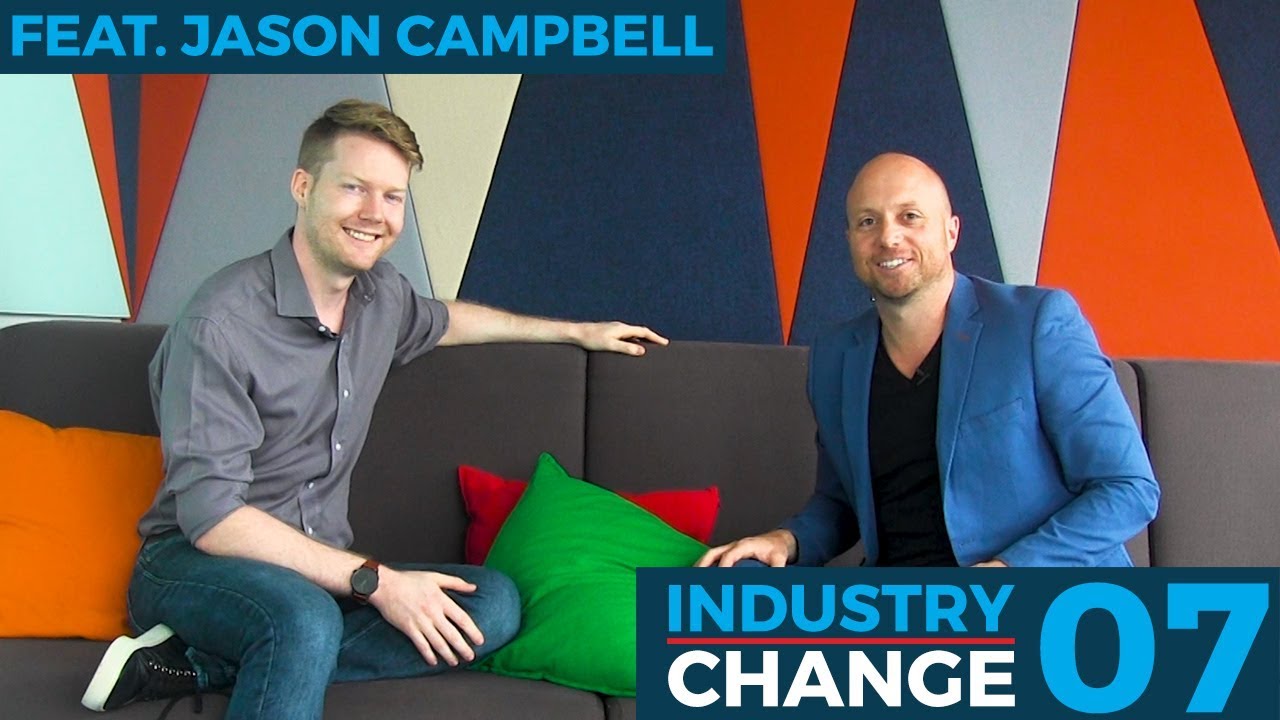
In this Industry Change interview, host Richard Toutounji sits with Jason Campbell, VP of Events and co‑host at Mindvalley, to explore how sales can be reframed as a positive, ethical practice rather than a manipulative tactic. The conversation begins with an overview of Mindvalley’s mission to "push humanity forward" through education, identifying four major gaps in traditional schooling—mind, body, spirituality, and impact—and describing how the company fills these gaps via online courses and large‑scale events like A‑Fest. Campbell emphasizes that reaching a billion lives requires massive sales and marketing effort, citing substantial ad spend on platforms such as Google and Facebook, and arguing that even “organic” growth is a form of sales strategy. He then introduces his core philosophy: sales is an "energy exchange" between two conscious beings, and when the energy given exceeds the energy taken, the transaction becomes an act of love and care. He outlines the "three loves"—love for oneself, love for the product, and love for the customer—as essential for ethical selling, warning that pride, guilt, or shame corrupt the process. Campbell advises fixing or aligning with the product before selling, being transparent, and maintaining reputation in an era where reviews and online scrutiny can quickly damage a brand. The interview concludes with practical tips for salespeople, a promotion of Mindvalley’s new membership platform (mindvalleyacademy.com) that includes a "sell with love" training, and an invitation for listeners to explore further resources.
Chapters
Welcome back to Industry Change. And today here I'm in Malaysia and I've got a really special guest today for you guys, Jason Campbell. Welcome.
Hi, thanks.
Well, I'm in your office so we'll reverse that. And the reason why I wanted to bring Jason on the show is because we're in a company called Mindvalley. And their mission is pushing humanity forward through education. And I really thought that I wanted to touch on the topic of really sales and I know that Jason, you do a whole heap of different roles in this place.
Yeah.
So I thought you'd be the best one to really dig deep to figure out, you know, the new process of sales and I love the concept that you teach around sales and love the concept that Mindvalley does with education. And so I wanted to like Let's just place the viewers where we're at and what Mindvalley is first of all, and then we might go a bit deeper into your bit of specialty there.
Sure. Well, you know, before I even get into the specifics of me, I mean, pushing humanity forward, every time we say that as a company, people go like, well, we still don't know what you do as a company. So the best way we define it is we're a company that recognized that there's a gap in education. Like most people who went through the traditional schooling system say, hey, something didn't feel right. I went to college, I went to university, but I didn't really learn how to live an extraordinary life. Like typically it'll be a focus on skills, et cetera. And what we noticed is there are 4 major gaps in education. The first one was no training about the mind. And so Mindvalley actually went— actually started with doing a lot of training around meditation, visualization, understanding that the mind is a powerful tool that you should train and you should master, because once you do that, it facilitates a lot more aspects within your life to move towards the other 3 gaps. Yeah. The second one being the body. I know a lot of people that watch this show are in the health, wellness niche, you know, nutrition, you know, fitness. There's a lot of change in that industry, a lot of new information, coming out. And so we're actually trying to make sure people are aware of the latest information so that they can live their lives with the full capabilities that this body provides. And so we bring that kind of education as well. One aspect of learning that's mostly neglected in today's age, if you are not very much involved in a religious practice, is spirituality. A lot of people are questioning what is their spiritual identity, what's the purpose of life. And so we're bringing a lot of new models to awareness for people that maybe want to complement their religion, maybe want to replace what their beliefs are around their own religion. So we bring a lot of spiritual teachings. You're talking chakras, meridians, energy work. It's things that you're starting to see surface more and more, and we want to bring more awareness to that. What is the reason we're on this space, right? Yeah. And the final space is the one I'm personally most passionate about, which is impact. And I choose the word impact because everybody does something on this planet through their work, through building businesses, as a freelancer, as a volunteer, but we all are put on this earth to make it a better place for the next generation. And we call that impact. And so we want to bring the types of training so people have that kind of success mindset, understand the skills that are required to do better at whatever it is that you do. So Mindvalley recognized those 4 gaps and we partner with the best teachers in the world to bring these kinds of education through online and offline means. Offline being events such as A-Fest, which I know you've had a chance to attend.
Yep, definitely. Been to events in different places around the world, and it's always around the world, different exotic locations.
Yep, we take like 300 to 400 extraordinary people to really see if we take some influence together, teach them these 4 gaps, and make sure that they're well-equipped to go make ripple effects around the world because they all have ranges of influence. So we do that through offline events. And one of the things we've actually done really well at Mindvalley to bring these teachers, bring this education, is we're actually extremely good at selling and marketing these concepts. And, you know, I, I don't say this lightly, and I say this enthusiastically, because if you want to make an impact in the world, your ability to market and sell whatever it is that you do is going to be critical to the level of impact that you will make.
Let's talk about that. Before we do so, can we just quickly reframe about when Mindvalley was started? Let's talk about the founder just quickly, just so we can reframe our audience as well and the mission to why start this forum.
Vishen Lakhiani is the founder of Mindvalley and he's my boss, an incredible man. What he has in mind right now is to push humanity forward, impact a billion lives. Impact a billion lives. A billion. And you know, some people might say, well, that's a crazy goal, but fact is communication channels are becoming more and more scalable. The ways that you can reach people is becoming easier and easier, and I feel that in the next 10 years that will not be an extraordinary feat. But if we can do it and bring the right kind of methodologies and the right kind of training for the people, it will make the world a better place.
And then I want to go back into the sales process, because when you're impacting a billion lives, automatically I think things already start to shift when you say that. Yeah. I'm impacting a billion lives, and then we talk about sales. Now, impact a billion lives, there's obviously different ways to do that. One of the ways is to make sure your education pieces come to those people, I'm assuming.
Yes.
And, and how you do that is you have to be great at impacting those people with your message.
Yes.
And that has to be done through sales. Yes. Is that correct?
Yes. And I mean, if you look at the industry that's trying to educate people, your choices, if you look back like let's say 50 years from now, Your choices were you go through the traditional education models, or you might be someone that goes into seminars, you might be reading a book. You know, they're very transactional pieces, and it wasn't, it wasn't as easy to reach the masses as it was when the big wave of the internet happened. And so when the internet happened, like, you used to have to go one-to-one to sell, to influence, you had to get people in a physical room. Now with the birth of the internet, you're seeing that information can reach around the world so much quicker. and you have these amazing platforms to get audience attention. I mean, attention is hard to get, but if you're able to understand that your message needs to be promoted— and this is the biggest thing that gives me power working here at Mindvalley— is the fact that I understand that every time I put in that extra effort into the sales and marketing, that's an extra person that I can impact with a positive education model to bring into my life.
That's a really great way to look at it. If I put that extra energy in, I'm gonna be impacting more people.
Exactly. So I will not hesitate. I mean, that's why I go to Google and we run AdWords. I mean, We're running budgets that would scare probably most of the audience here. We partner with Google, we're one of their biggest advertisers here in Southeast Asia. Same with Facebook, we run sponsored ads, we advertise like crazy, and people are like, well, why do you focus so much on advertising? Well, if you want to get to a billion, guess what? You need to make sure that people know that you exist.
That's such a good point because I think that, you know, possibly the market thinks that because you're going to hit those numbers and you want to make those sales it's organically going to come. But you're not saying that. You're saying I'm going out there and I'm screaming the loudest through all the platforms that are going to reach a billion people.
Absolutely. And you know, even if you say you're going to do it organic, well, guess what? That is a sales strategy. If you say you're going to go organic, well, guess what? Your sales strategy is I'm going to provide as much value upfront through content, and that will naturally get people to understand that I do provide value. So guess what? If you do have a paid offer, then they'll naturally want to take that next step. Great. So it's just another sales strategy.
Yeah, it's a really great insight there to understand that, you know, to reach out to people, it costs money. I want to talk about— you did a great talk at one of the Awesomeness Fest events, and these Awesomeness Fest events, just to recap, are events to bring entrepreneurs and business owners together to really collaborate, kind of that wave of the future.
Yep. So what I did is— this was actually in Croatia back in 2015, and I got on stage, and what happens is you have all these extraordinary people in the room, and guess what? Even the people that have million-dollar businesses, a lot of them still have a big hesitation when it comes to sales. It's just, it's this thing that's become taboo, and guess what? It's the salesperson's fault. There's too many salespeople that—
So what you're saying is salespeople have killed the industry, yeah?
They have.
I've heard that saying with marketers. Marketers kill every single process that comes.
Everything that comes out will be good until marketers start playing with it. But guess what? It's just that Let's say you have a whole, like, 1,000 salespeople, right? It only takes 5 or 1% of them that actually decide to cross the line and do the bad things to rotten it for everyone else. So I say that because guess what? People that have businesses still have that negative feeling or that negative association with sales. Oh, sales, that's manipulative. Oh, sales, that's something, it's like a necessary evil to be able to continue my business and get people on board. And I think that's like the worst premise you could ever have around sales because I'm a salesperson and like, I said I wear many hats. I'm one of the co-hosts here at Mindvalley, and I also am the VP for events. So one of the biggest things I do is ensure that I can fill up the rooms such as A-Fest, etc. And to me, my premise around sales is it's actually a bit more of a— call it a spiritual, or some people even use the word woo-woo way to describe it. And I'm pretty sure no salespeople's ever defined it this way.
No, I haven't heard any salespeople define it this way.
So look at this, guys. If you want to have— if you want to, you know, remove a rule, which is like a bullshit rule that sales is evil, right? And you want to position a premise that's very empowering, right? Here's how I define sales. Sales is an energy exchange between 2 conscious human beings, or actually, take away the human beings, 2 conscious beings.
Yup.
That's an important difference, I'll tell you in a minute. When the amount of energy that you give is more than what you ask in return, selling becomes the great— the act of greatest love and care. So I'm gonna repeat that. Sales is an energy exchange between 2 conscious beings. When the sum of the energy that you provide is more than what you ask in return, then it becomes the act of greatest love and care. And there's a few key points that I want to break down while we do this. First off, I do call it conscious beings because guess what? Sometimes you want to train a dog to do certain actions, and that's a conscious being. And that interaction you're gonna have with them is gonna be an energy exchange. They are conscious. You're gonna try to use the tactics necessary to maybe potty train a dog.
Yep.
And the fact is, that's a sales process as well. Now, the thing is, is I call it energy. I don't use money, I don't use product, I call it energy. And energy is the sum of everything. You're talking about time, you're talking about money, you're talking about the product or service that was put together required the time and the money, the materials. All of that is energy. And the final one that I add on top of that layer of energy is actually emotion. And that emotion is actually Probably the most important part because here's the thing, the majority of people that operate in a sales perspective typically might be operating from an energy level that is— maybe it's guilt, maybe it's shame, and you know these people that come into a sales interaction and they're hesitant, like they don't even want to sell you, they're kind of hesitant and you'll feel it, you'll feel that.
Do you find those people are sometimes salespeople or are they the owners of the Business possibly in trying to sell.
That second one. Salespeople typically will be operating from one that might— that actually is much more dangerous. I call it pride. So some people that are very good at sales are in love with themselves, and they're in love with the process of selling. And what happens is they start operating from a pride energy level, and that's the most destructive type of sale. That's your 1 to 5% that ruins it for everyone else. And so what happens when you operate from pride is you don't have love for one of the most critical parts of the sale, which is love for your Yes, that's
great
points. And so at the end of the talk, I do say that if you want to be a great salesperson, a type of salesperson that makes the world a better place for every single transaction that you make, you need the 3 loves. The love for yourself, and that's the one that, you know, a lot of people have limiting beliefs around sales because they don't even have love for themselves. And so when they feel that they're making an exchange, they're selling something and collecting a commission for it, they don't feel they deserve it.
Right.
So when they feel they don't deserve it, well, guess what? Every sales interaction Eats them away. Like, they feel like, oh, this was wrong. And then every time you do that, the person you're interacting with feels it.
Because they're not loving themselves?
Right. So if you're not even loving yourself, you're gonna hesitate on every sales scenario. And now, if what you're selling, which is the second love, the love for your product, if what you're selling is truly something that makes humanity a better place, you're selling something that is gonna get people to have results with their body, or it's some nutrition plan that will actually get the results, give more energy, longer life to people, How could you not do everything possible to make sure that people understand what it's going to do for them?
Yeah, that's a really great point because I mean we have a lot of health, wellness, and kind of lifestyle people on our channels and our interaction. They're delivering the greatest products and services that you can actually deliver to longevity of life.
What a selfish person that doesn't want to sell it. Think about that. If you truly have a product that's amazing, and I'll say I hope All of you are, because when I talk about product, I say there's two schools of thoughts. If you're not in love with your product, there's one school of thought that says fake it till you make it. I don't like that one. Yep. I say instead fix your product.
Fix your product.
Fix your product.
Back to basics.
It's easy. Okay. If you're not selling something you're absolutely proud of, take the time to fix your product because every sale you'll make will make the world a worse place.
Yeah, I think that's a really great point to to really resonate there is fix. Don't fake it till you make it, right? And then, and then that love will come out of that product.
You got it. Now, once you know you have the love for the product, how dare you not sell it? How dare you keep that knowledge to yourself? How dare you prevent people from understanding the value that you provide to them? Especially because if the energy exchange you're doing, which I'm saying you are charging something, putting in the resources, the energy, and what you're charging for that from that person's time, that person's money, is less than what you're giving them, you're basically creating energy for every transaction more. You're making the world abundant. You're making renewable energy here because you're saying, listen, it's $100, but let's say the real value, like the true value of what it gives, is $300, but you're charging $100. Then every time you make a sale, you're making the world a better place.
What about, you know, we flip that and some viewers are going, well, okay, that sounds great, but I don't— I'm working for somebody. I don't love their product. product, what do I do?
You need to seriously go have a conversation with that CEO. If there is truly something that you don't feel right about what's being sold, you need to have a serious conversation with the CEO, and you need to say, listen, I am full-on for selling this product or service if it's the right kind of product or service. If you feel the marketing is disaligned, it is your job to be kind of an internal whistleblower to make sure your CEO understands how you feel. And guess what? If you recognize that the CEO or the founder, whoever's the manager you have that conversation with, And they say, ah, don't worry about it, just go out there and sell it. Do you want to be part of an organization like that?
So starting to make sure you do have alignment in what you're doing.
Absolutely. And guess what? I mean, this is a sensitive topic. We've actually talked about this where it's like, if you're a salesperson, are you responsible and accountable for every sale that you make? The fact is there's a piece of you that goes into every sale.
Sure.
And I call that the emotion again. And you know, we talked about the shame and the guilt and I'm not proud of every single sale I've made in my life. I'm not. I mean, in my early 20s, you're a little ignorant. I was that proud salesperson. I've went through that. And, you know, I look back and I had this process where I started selling to people, and these were coaching packages for real estate education. And after I did a couple, you know, my CEO came to me, he's like, that's great, you just closed $200,000 in sales. And I'm like, this, this, this is not cool. Like, I did— like, guess what? I'm the one who bridged the gap. When the value that I gave was actually less than what I asked, what bridged that gap was my emotional strain. And I had to get like I got out of that.
So these are really good points. So so what you're saying really is is for longevity now that I guess you're saying the internet the internet's pretty much flattened everything. Oh yeah. We have all these everybody has the same opportunities now.
Yep.
The one that's going to spend the more and there's going to the company is going to be more successful. successful, the ones that have that bigger vision, that want to reach those people, that are willing to market their product and then be able to sell their product with integrity and with love.
Yes.
Not just pushing, pushing, pushing.
Well, there's a— I believe it's Ryan Deiss that talked about this. He said, whoever spends the most to acquire the customer wins the game. And that's a very solid marketing methodology, and I do agree with that. But here's the thing, whoever spends the most to acquire the customer will win the transaction. The difference with the internet is as much as you have now much more power to reach everybody, everybody has much more power to reach everyone else that's ever been touched by your business. That's what's flattening the marketplace. So when you do make that sale where you're like, you know what, I'm gonna crank up the price, I'll crank up the perceived value, which is easy to do. Yes. If you wanna just make a couple bucks, get out, you can. But guess what? You will feel horrible and it's not worth it. Today, if you start doing that, it'll be really quick when these people start talking and they know how to connect on channels that you're not even fully aware of. That message will go out quicker than ever, and at the end of the day, why would you even want to operate that kind of place?
And that's the whole referral marketing, that's the whole organic— it just starts to leak.
Transparency is going both ways. Like, you're gonna see that anything that you do is gonna be under the microscope a little more, and every transaction you make, people will have a voice on where they're gonna go have that conversation with other people considering that purchase. I guess you call it the zero— I forget the term Google called it— the zero point of purchase where it's like before you make any purchase, people Google things.
People Google everything,
right? And if you took advantage of me through a sales process, it's not going to be long and it's quite easy for me to go on any kind of forum and ensure that your keyword, your product is tagged with terrible.
I really think that's a I think that's a key point there because even if people are struggling with this concept of loving their product and getting it out there, I think you got to go back and say, well, actually, have I got a bad rep? Have I got a bad name? If I continue to go down this way with the review sites out there today and the way that literally overnight you can be shut down with these kind of reviews, maybe it's time to actually make an adjustment here.
Absolutely. And it's— the trends are just going to keep going. It's going to be Sure. More and more visible every time you decide to act unethical.
So basically, you know, it's really— you can't get a business or a transaction or a sale going unless you really believe and truly invest everything into this brand. Yeah. Because you can't fake the market.
No, you can't. Well, hey, let's be 100% honest here for people listening going like, you know what, I've faked some stuff and I got away with it. Sure, good for you. You know you made a few bucks, but every time you're going to go to bed, you're going to realize that every time you make those sales, it doesn't feel right. And this is the position that I found myself in, and I just realized like you see all these people that are like really high positions that are doing sales. You see these depression levels. Why do you think that is? When people are like hotshot salesperson and they realize that every time they make a sale, it makes the world a worse place. You're seeing people hit depression. You're seeing all these like. Conflicts with their own personality. Like, well, I'm doing a good thing, but no, they're taking advantage of people. If you want to have a good night's sleep and a great life, start doing things that are good for the world.
Amazing. We could talk all day, I think. This is really great stuff. Let's leave one or two questions. So let's talk directly to the salesperson now that doesn't own their own business. What's the kind of one tip that you'd leave with them and say, hey, this is what you can do to improve your Yeah,
to me it goes back to the 3 loves. That's the one I always bring it back. It's like, guys, if you're having issues with selling, it's because you have your own doubts of not feeling like you're good enough of a salesperson, you're not good enough of a person. They say the resistance of the sale is always in the mind of the seller, not the buyer. Mm. So you gotta start with yourself. Love yourself, you deserve this, okay? Now, second one is the love for the product. We talked about this. Make sure that what you're selling you truly believe in, and I'm talking about the true value And whatever you're doing to ensure that the perceived value is very close and slightly above the actual value, you're gonna start seeing that you can actually make transactions and be profitable doing it. Right. If not, fix the product or adjust the price. And third is love the customer. And like every single transaction you're doing, like imagine you're transacting with people you truly love and care about. You're just gonna see that every time you make the sale, you'll have a smile on your face, and that'll make you such a better salesperson. It'll take away all these limiting beliefs you have around sales. And understand that, guys, guess what? Every time I do a sale, I am making the world a better place because I'm delivering this amazing value and what I'm asking in return is even less.
Amazing. Thanks so much. Now, let's— where can people go now, the next stage, if they want to continue that process? Is there a lot of stuff on Mindvalley around sales?
Yeah, well, what we're doing right now is we're building this membership area where we actually have a ton of training and your training is included in there. So this membership, you can start for $1. If you just go to mindvalleyacademy.com, look for Consciousness Engineering Mindvalley membership, there's a $1 trial, there's over 50 hours of content. And what it is, is all the ways that you can reprogram your beliefs and see what systems and habits you can bring into your life to live extraordinarily. So if you guys want to check that out, you'll see some training on how to do that.
Great, I think that's a great point. You know, we're going back to actually just thinking about your own internal, and then your actual sales skills will shine much brighter. Yeah,
I actually have a particular training in there that talks about how to sell with love where I go even more deep in the subject.
And that's your training?
It is my training.
Amazing, check that out. Thanks so much.
It was a pleasure, Richard. Thank you.
I'll see you guys next time on Industry Change.









