The Evolution of Sales - Industry Change Episode 10
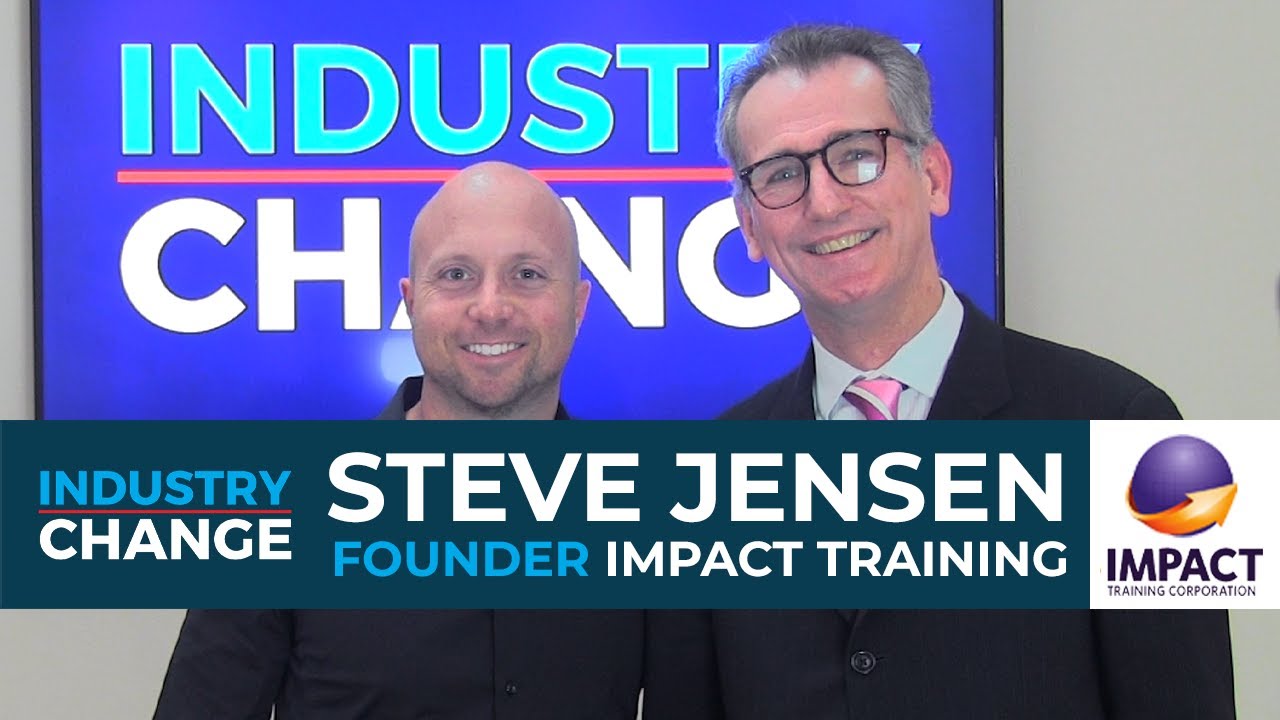
In this interview, fitness‑industry veteran Steve Jensen shares the evolution of his sales philosophy, which he calls "inspirational selling" and a "reverse marketing" model. He argues that modern sales must start by creating value and demonstrating unique selling points (USPs) before a prospect even steps through the door, shifting the focus from hard‑selling to helping. Jensen explains his brain‑based framework – the red (neocortex) logical brain versus the green (limbic) emotional brain – and how sales conversations should activate the green brain to drive decisions. He outlines concrete conversational tools such as the TEA strategy, teaching softener, loaded questions, the 4 Ws, assumptive and recommendation closes, and the importance of pre‑qualifying with a single compelling trigger. Jensen also recounts his early innovations in payment models (Bankcard, direct‑debit/Fitness Pays) that anticipated industry trends, and he stresses the need for sales and marketing to be tightly integrated, leveraging digital channels, webinars, and authority‑building content. Finally, he discusses the role of personality, noting that any sales style can succeed if it combines charisma, listening, and genuine care.
Chapters
Give them something that creates value that says, hey, these people aren't trying to sell me, they're trying to help me. And that has to be done at the beginning. It's— I call it a reverse marketing model. Yeah. And it's called sales and marketing. Well, we've got to sell them on our USPs and why we're different before they turn up.
Welcome back to Industry Change. I'm Richard Detergen. Today I've got a really special guest, Steve Jensen. Welcome along.
Hey, good day. How you going?
Yeah, good. Thanks, Steve. Now, Steve, you're not shy to the game of sales and marketing communication. You've actually been in the industry for 30 years. You've had some numerous awards in that time. You've been in the Lifetime Hall of Fame in the fitness industry, and you predominantly work in the space of sales and communication. That's right. And I wanted to bring you along the show today because if we're talking all around getting leads and acquiring leads, I just thought there's nobody else better to talk to you. Well, actually, Dr. J is the nickname, isn't it?
That's right. Yes, it's a stage name. So I go around and fix businesses, so to speak, but we always have a lot of fun.
Yeah. And then it's like making sure that we can actually close a sale. So, so maybe you can tell me a little bit more about what you actually do. to really help businesses I know over the last 30 years really improving their bottom line pretty much.
Yeah, look, it came from, let's say, running my own chain of clubs. And before that, I was actually in corporate. But it grew quite quickly. And we created a system based on not just a sales model, but it was more communication. And people bought from us. And we didn't think it was much of a sales process. But when I analyzed it, when I did all the training afterwards, we— I then systemized the model. And then when you systemize something, it becomes easier to do. And people bought effortlessly.
So versus— what you're saying there is that people generally had sales as like a bulldog sales approach and you actually did something slightly different.
Yeah, back in the early days when we started my first clubs and then it grew quite considerably, we didn't— we were in fitness, or we were in leisure or whatever the case may be. We didn't want to sell anything. However, we put a process into place where people bought from us. And we had tons of success. And I said, well, I like going through and finding little processes and what worked. So I then put it down on paper and said, well, this is what we do differently. And it was quite different. And then I— when I sold the business and then opened Impact Training Corporation, we then put it out to the world.
And you had Impact Training Corporation for about 22 years? That's right, yeah. You've been in the business for 30 years. So what does Impact Training Now currently do?
We specialize in helping people have a lifestyle through their business. You know,
I like this word. I think lifestyle in the business is— I don't know if it's a keyword right now, but it's definitely a word that when people open a business, they do want to revolve it around their lifestyle. Some people.
There's not much in business more sales won't fix. The challenge is how do we make the money? And if it's all about the money, it's a bit of a challenge. And what we do is we go in there, we find out what is unique about their business to be able to then say, hey, let's inspire people to buy so we created the inspirational selling model. Yeah. So when people presented their product or services, it inspired people to buy. So you didn't have to go in there and do these, you know, fancy closing techniques. By the way, we've got all the gambits under the world we can teach you if you muck it up. So you do need to be able to have gambits to be able to, let's say, reposition your conversation. See, selling is nothing but helping people make a good decision and they should give you the money and say, thank you, I can't wait to have that product or service. It shouldn't be massive amounts of follow-up. I believe we really only have one chance to actually make it happen. So if we muck it up, you maybe get a second chance with tons of follow-up. But you need to inspire people to buy and be unique and show how you're different.
So you're saying that people should buy on that first go if it's presented correctly?
Correct. If you use the triggers, an inspirational selling model is so different where we use communication models. And it allows people to— let's give you an example. If you came in to ask me to lose weight.
Yep.
And it was just to get something for free and it's all about the price. Unless I focus on the price and give you something that's really inexpensive, you're more than likely have to go away and think about it. That means it triggers a red brain model.
Sure.
If I inspire you and get you excited about the possibility and you like and trust me by way of actually saying that I'm a little bit different, We do it differently to the competitors in a nice way. It'll turn on the limbic brain. That's where all decisions are made and that means that you'll make a decision to move forward and be happy about it. If I have you thinking about it and having your logical brain, your neocortex triggered, the problem here is that the people will go away and think about it until they sit down with someone that can inspire them. So you've only really got one chance and the brain goes through lots of different conversations when you're speaking to it.
Let's speak more about this brain, the green side of the brain. Can you go into a bit more detail to that?
Yeah, look, there's lots of wonderful things about the brain. It's simple and it's quite complex. There's the— firstly, we're sitting here right now. We are looking at each other but we're slightly on an angle. There's a thing called the reptilian brain. And if we're actually sitting there straight, it actually conjures up processes of fear. And actually anxiety. People actually do presentations this way.
Just direct.
Direct. This is your fight or flight model. Okay. So that brain needs to be turned off. So we're sitting here having a good time. Second thing is, if I talk about all of your, let's say, all of your features, your time, your price. Well, by the way, that's important if it's important to you. So I can make sure I give you all those things, but that means that the red brain which is the neocortex, is triggered. The red brain is on, the green brain is off, which is the limbic brain. Guess what? All decisions are made in the green brain. Right. So if I'm talking to you about all the red brain stuff—
Yes.
Times, prices, classes, whatever.
Yep.
You're going to say, I've got to go away and think about it, because no decisions are made there. However, if I inspire you and get you excited and say, wow, that's so different, and I tell you that we're different and I prove it, That will make you excited and it will inspire you. Instantly the red brain is turned off, the green brain is turned on. And let me make it really clear, that's where all decisions are made. So if I could teach you how to do that with words and adjectives and body language models and have that person feeling comfortable and they're not being sold to, I'm here. See, we've got to go away from selling to helping. Hmm. And inspiring you and making sure that you're inspired to take action, not to spend money. Spending money is just an outcome at the end.
Yep. So it seems like that sales is predominantly all around mindset. Is that, is that something you'd agree with?
Yes, I do. I think that we, as an industry, so to speak, we need to teach people to think differently. Where we come unstuck is where we get stuck in our old way. Have you ever heard this? Oh, I've done that before. Or, oh, I know that. See, the enemy of learning is knowing. So we need to say, okay, I respect what you know, but let's pretend you know nothing just for a little while and let's teach you something that will really make a difference to you and your business. And by the way, it's not just you, your business, it's you. We need to get the person engaged to want to do it for themselves, not for just for the business.
And how, how is those processes done? Like, let's just say, for example, we have An inquiry that comes through, and we're a business owner and we love, let's keep in the fitness industry, we're talking about this, and we love, you know, getting people in shape. What are the processes that you take? Give me an example, like I wanna lose weight, I've made that initial phone call. So you're basically saying get them excited instead of selling the benefits.
Okay, let's go right back to why they actually inquired. Back in the olden days, we used to say, hey, come in for a week for free, or, Hey, come and have this fantastic class. Now, red brain. If it's significantly different or it's close or it's convenient, and by the way, the holy grail, just by the way, the holy grail of closing is convenience. Because it's got to be convenient. We're all time poor.
Sure.
But I think it comes right back down to why do they turn up. Firstly, in the olden days, we used to get them in for free and have a trial. Now you've got to prove that you are an expert before they turn up and you are unique. So by the time you turn up, the person says, wow, this was unique. It sounds different. And by the way, you have to tell them you're unique. You say something unique about our business or we do it differently and then tell them.
That's interesting because even telling them that you're unique, I think is a challenge for a lot of people who don't say they're unique. They think, okay, I'm a fitness club or I do this. You should know that I'm unique.
And you're spot on. You're absolutely correct because what happens is We think the consumer is really clever and we do these wonderful marketing campaigns. Yes. But we do not tell them we do things differently. You need to say that because they will think everyone else does it the same way. We do it differently. We are unique. We are the first. By the way, creating a USP, everyone says they know what a USP is, but the only way to use a USP is to define it. We are the first. We are the only. We are the biggest. We are the smallest. We do things differently. Get the person excited about that so when they turn up, Your job is to create rapport.
Yep.
Not massive rapport like the olden days. It's enough rapport to be able to then teach you something you don't know that will inspire you to say, well, I can't get that anywhere else. And by the way, tell them, by the way, we're the first and only business that does that. How good is that?
That's great. I remember my first fitness studio I purchased back in 2000. It was a small boutique fitness studio, like a one-on-one kind of training session. Session. And, uh, the, the only, like, the main unique difference we had that we sold to our clients was that when you come in, we're gonna know your name and we're gonna give you a towel and we're gonna fill your water up.
Okay.
And that was the unique selling that we did. It was like, wow. And people go, that wasn't unique. But we actually told them that was it. And then we actually converted clients just from that, those simple things that really cost nothing.
Perception's reality. And, uh, with the USPs, and it's a, it's an old However, creating some authority in the market before you do it is critical. There's a process that we designed a few years ago for telephone work. It's called the TEA strategy. Let's say you wanted to lose the weight like you said before.
Yep.
You say, I want to lose weight, and say, oh yes, we can lose weight, and all that sort of jazz. The challenge is everyone else says they'll lose weight.
Sure.
I then need to teach you something that you don't know. And you use a process, it's called a teaching softener. It says, you might not know, or I found this out the other day. And what you then do is you then teach them something that they don't know. Then you say, the benefit to you is so that you can. And they'll go, yippee! Then you ask the question, is the so that you can, the thing I just taught you, is that important to you to have that service or outcome? Sure. They'll obviously say yes. It's called a loaded question. And you'll say, ah, and it's quite casual. I said, I tend to agree. I mean, I'd love to know from your perspective why you— here it is— why you think it's so important. See, in sales, we keep telling people it's important you do this, you're important to do that, and people don't go bombarded and they just nod their head and they don't know. In inspirational selling, we get you to sell yourself. Hmm. So we say, well, why do you think it's so important, mate? And then you tell me. Then I'll just be a little bit tongue-in-cheek and then say, okay, what would happen if you didn't have that unique selling point? They'll go, wow, well, is that an option? They'll say no. Well, guess what? We're the only guys that do it that way. We're the first, we're the only, A, B, and C. How good's that? Well, I've got your back on it. Let's make it happen. See, that's a— that's called a trigger point. Let's make it happen. He'll nod his head. You've now done a pre-close.
It sounds to me, if we break it all down, that you literally just have to ask the one question that's the biggest Trigger or pain or satisfaction that person wants.
Correct. Before we do all that teaching stuff, we've got to find a compelling argument. We use a process called the 4 W's, which allows the— it's a conversation. It's what, where, why, when, how. In between—
What, where, why, when, how.
What's your priority? By the way, in the olden days, we say what was their priority. It's changed now. We need to find out what's their first and second and sometimes their third.
Yep.
When they talk about their third, they've already made the decision to purchase your product or service. Once we found out the compelling reason, we teach them something they do not know and say, we are the solution. I am here to help. I am not here to sell. Then when I present, then I will prove it.
Yes.
When they come back, I will do a simple price presentation. By the way, price presentations are done so poorly and explanation demonstrations are done poorly too. But the price presentation needs to be sequenced. Because it is so red brain, it needs to be Turned into a green brain.
How do you turn into a green brain?
So what you do is you do your— you have an assumptive close.
Right.
I'm an expert. We use the doctor-patient scenario.
Sure.
If you're sick, you go and show you what we're gonna do. And then you come back and then I'll test close. Is there anything you need to know before we get you fixed? We'll grab a seat and we'll show you how to get you fixed, not how to get you started. Is that the word that gets you started in the fitness industry or the leisure industry? Get you started, started, started. No, no, no, no, no. Get you back into first grade and have an awesome trip to Cancun. Sit down, the price presentation needs to be sequenced. Depending on what your services are, you write down the numbers once. 1, 2, at the bottom if you have a secondary spend, always assumed. And then from what I've told you, these are the couple of ways we can do it. My recommendation is this. So we get you back into first grade and have an awesome trip to Cancun. It's a recommendation close based on the feeling that you're going to have, not what you're going to buy.
I like that. Recommendation close. As anybody would go into a doctor, this is the recommendation.
Correct. And this is— and by the way, would anyone say, I'm not taking these tablets to get fixed? They'll say, no, I've got to think about it. I'll go shop around. They don't do that.
It comes back from being— it comes back to being an expert. Correct. Okay. So now we're on that topic. You've been in the game for 30 years, over 30 years, and you would've seen a lot of different styles of selling. And in this show, I love to talk a lot about the innovation of different industries. Yep. And so when we touch here on this innovate— this industry, you know, sales and execution and communication, what, you know, take me back at a time when you had to actually overcome certain thing. And I wanna pick your brain. You gave me a story before about that when you were in the clubs, And they started to sell 12-month memberships. And obviously there would have been a pain where it's just slicing costs, slicing costs, slicing costs. How have you gone from that to where we are today? I mean, where was that innovation piece for you? I know you've got a story around that.
Look, it was many, many years ago. I was just a young buck with lots of these wonderful places we used to hang out all day, and it was called a gym. However, we had a challenge. industry started to become, let us say, competitive. Other clubs started to open because we opened some of the first clubs in Australia. What happened was we had— everyone had a 12-month membership. 6 months and 3 months. We very quickly found out that—
Yeah, but the best is 12.
Yeah. And 3 months had a terrible renewal rate. So we said, oh no, we are only going to sell 12. And then other people came into the marketplace. They used to do things like buy 6 months, get 6 months free and 12 months, 12 months free. And we are getting bombarded. by competitors. We had very large clubs and so forth but they were all newer. Sure. So I had to find something that was new. So I said, well, there was a thing called Bankcard. A lot of the people out there probably don't even know what a Bankcard is. It was the first credit card in Australia. And it had terribly high interest rate. However, you could get a $2,000 limit quite easily. So I went to my bank and I said, oh, and no one had one. So I said, I'd love to see how this Bankcard thing works. I said, well, could I be an agent for you, so to speak? And they said, what do you mean? I said, well, a lot of our people want to buy a $600 product, but they'd love to pay it off. Why don't we just put it on the credit card? They said, perfect. So I took these things into the gym.
Right.
You couldn't pay for the membership. I wasn't going to drop the price. I said, how about we just work out a payment plan? In other words, I don't take the risk. They signed up for bank card. I did the zip zip machine.
Yep.
We used to have a zip zip machine.
The thing that they process.
And we used to Pack it up into our banking and off it went and everyone got approved. And they went, wow, this is great, because they then paid the bank and I got my money. That then needed to change because they rung me up and said, oh look, you know, why don't you put it on periodical payment? Hmm. Well, that means that they had to go to the bank and I met a gentleman called Steve Pacio and he was out in Kalgoorlie. He actually had a provider number. I said, what's that? He said, that's where you just sign a piece of paper and it's called a direct debit.
Right.
I said, I have no idea what that is. So I had this conversation with him. I said, gee, this would be awesome for our fitness industry. So I said, let's create a product. It was called Fitness Pays. It was exclusive for Impact Training. So I went on a bit of a pilgrimage and I went to, it was Fitness New South Wales at the time. And I said, oh, I think this is the way the fitness industry is going to go. We are going to go direct debit. By the way, this is a long time ago. People said, gee whiz, no one is going to give people's credit card details or bank details. I said, I think they will. We then created the company and we were the first to put that into place. It has evolved now that you would not even dream of opening up a business without it because we have to be— Sure. We need to evolve. One of the things I have been very fortunate about because when Impact Training went global, I saw lots of things all around the world and Australia leads the way in many ways in lots of business parts of the fitness industry. And a lot of businesses didn't even have direct debit.
Yep.
But one of the things that I've been fortunate to be able to do is to be able to see what the trends are going to be. And we're in the same position right now.
What's— and I love this trend because you've always got to predict trends, I think. You've really gotta predict it. As they're coming, you don't wanna be on the bleeding edge, you do wanna be on the leading edge. How do you predict trends like that? I mean, look, that direct debit example, when we think about that now, yeah, that's normal, but when you go back and you think, hey, that's brand new, like, what is happening now that we have to predict? And especially when we're dealing with clients and they've got, and— I guess my second question, we've got so much communication, we've got information overload, we've got emails, we've got internet. How do we have to predict and how do we have to deliver this service to our client when they can literally just go to Google and they can decide for themselves? How do you overcome this now?
It's a very good question. With the digital age come upon us, and it's just, it hasn't just come upon us, it's actually jumped on top of us.
Sure, definitely.
Everyone's talking about it and other businesses have grasped it much faster. I believe the whole model has shifted at least 180 degrees. No longer, I don't believe you can just send out an EDM, you are going to get a result. You got your salespeople, they are sure they have got to be good on the phone. But I believe it is really important that you have an authority out in the market. You have got to pick your unique selling point. Yes. You now need to make sure that the consumer will have so much to pick from, like you said. Once they see yours, stuff. You've got to be significantly different and have a unique component where they are convinced that you're the place to go to. In the olden days, you say, come and try us for free and then we'll convince you when you're here. They need to be convinced before they turn up. So having a webinar, for instance— Yeah. To prove your USPs would be smart. Or having a video that just is so different that creates massive value. Give some stuff away. Give them a checklist. Give them something that creates value that says, Hey, these people aren't trying to sell me, they're trying to help me. And that has to be done at the beginning. I call it a reverse marketing model. And it's called sales and marketing. Well, we've got to sell them on our USPs and why we're different before they turn up. And once they turn up, you need to prove it and then get them to say it so it's true. Then the close should be easy. And we can do this via the internet very, very well. Sure. So much so that I believe you should have an expert, having a source, Short webinar, teach them about weight loss, teach them about building, and teach them things that they don't know, and tell them that you're unique before, and then get them to opt in.
So, so, so we're still needing sales, like let's say salespeople in an organization, but they're not, let's say, a 30-year-old salesperson. They've got to understand that, well, that organization has to be giving the value before the sales gets on the phone, really. Would that be a fair comment?
Yeah, value is critical. And using technology to our advantage, it used to be quite scary, but it becomes, if you get an expert, and that's one of the reasons that we got together. Your expertise in this area in platforming and creating the funnels, and people talk about it all the time, but they just don't know how to do it. Our clients need you to help them set those things up because, and we also use a, People to write the prompts. The words are really important as well. So what you're going to put on a video live needs to be—
The actual titles and the copy.
Yes, critical.
So sales now is so much into marketing. It's marketing and sales together. Correct. And I hear a lot now, especially in the marketing world, it's like this human-to-human interaction and we've got to go back to talking to people and the sales team has to talk to the marketing team. The marketing team have to talk to the sales team because now, like you're saying, they're all so interlinked, aren't they?
It's communication models. And interesting, I work with some fantastic businesses like Les Mills and so on, and they have a very large marketing team, but the sales team now talk to each other. They have to be on the same page. They need to be talking the same language where we then inspire people to make the inquiry, then the salesperson then proves what inspired them is true. And then the close is simple. Look, some people will call. We've got to do a very good job on the telephone. If someone walks in, we've got to be able to have the communication skills. They'll always be there. And by the way, I was just at the convention this year. It was interesting. Everyone said, oh, there's been such a huge focus on marketing and trying to create leads. We've lost the art of communication. And, you know, that's something we specialized in and still do. And it's interesting. Now we combine the two together. So I believe it's changed. We still need to have those soft skills, but we also need to have the, let's say, the technical skills of sales, but it needs to be presented in a helping way.
It's kind of like we're going back, isn't it really? Like, we went through it, we went through a process that, yep, it's always that touchpoint. We didn't have internet, we didn't have communication. Then we had internet and it's like everybody's going, hey, just buy online and send an email out and you're just making the sales, right? And you had all these people that are just selling stuff online like that. Now it's going back. Just yesterday, I was, uh, I was— I had to go into Harvey Norman to print up some print, uh, to print some things just last minute. And, um, I've been looking around for a printer for— I haven't really had the desire to buy one, but I've been looking around and I was just very, very lazy looking around. So up the road here we have Officeworks, and I don't mean to use names here, but Officeworks up the road. I walk in there a few times, look at them, there's never anybody to talk to, right? It's just like warehouse, right? And I never go to Harvey Norman, but I went to Harvey Norman on a Sunday and it must have been half-yearly sales. And all of a sudden, this person is an expert on printers, believe it or not.
Yeah, I love that.
And they're just talking to you about all the different printers. And it's like, this guy is actually helping me and he's actually explaining the different papers and the different inks. And it's like, it was such a nice— it was so nice just to convey and have a conversation with somebody And I ended up purchasing the printer because of the conversation. And I got asked 3 or 4 times while I was in the store, do you need help with anything? And yet, I used to go to Officeworks quite a lot because it was just so close, but you could never talk to anybody. No. And so you're literally buying from the marketing. But I found that I was buying from marketing and that sales component of an expert in the store. That's what, that's what I'm hearing, what, what that, what that new industry is like. Well, what we should be going back to.
Loud and clear. When I first started in the fitness industry, we used to wear our tank tops and all the girls used to wear their, you know, their leotards and stuff like that. And it was, it was like, wow, this is incredible. However, love it or hate it, we're all in good shape.
Yep.
We all trained hard. The reason we're in the industry was because we love to train.
Sure.
It wasn't because I want to be a salesperson or I wanted to be a manager. We were training. People were inspired by all the things that we did wrongly, but we got a result. What happened was the evolution was into a business where lots of people got involved, but they weren't inspirational as far as what they ate or what they did as far as the training is concerned. And sure, they had lots of success. But now the consumers become a lot, let's say, more savvy. They want to work with someone that's an expert, that knows what they're talking about, teaching them things that they don't know. Sure. And then say, by the way, we're the only guys that do it. They want to. I don't want to work with someone that's not an expert. Wouldn't want to go to a doctor that wasn't an expert. Our industry is exactly the same. And exactly what you did. You spoke to that gentleman. I did the same thing with a printer as well, matter of fact. And I went to Bing Lee after office work. So, and this person really knew his stuff. He said, you should buy this one. It's a better this and because of this and the inks are better. I went, wow, yeah, let's take it. And he talked me for a good 20 minutes.
Yeah, no, no, it was just never a sale. It was just such a smooth process. It was a full green brain process coming through. Yeah,
it was. The outcome was the close, but he didn't close me because I bought it.
Yeah, but he closed me anyway. Great. No, I love it, love it. Do you think— last question— do you think that it comes down to a person who's naturally an extrovert? Do you think it's easier Is it easier to sell or not? Or both styles can do it?
That's a great question. Look, it's always good to chat with someone that's a good chatterbox, but there's a red flag there.
Right.
The drivers, let's say the Ds or the Is, everyone say they're great salespeople. Sometimes the enemy of inspiring is not listening. And somebody that has some S in them or someone that has some C in them and so forth, That's a good listener.
Yes.
Who can take action, has a passion and a sense of humor, is equally as good.
Great.
So anyone can do it. They've just got to want it, but they've got to have charisma. They've got a little bit of charisma and they have to have a caring. People buy people and the experience you create. And—
I like that. Some great tips. So anybody can do sales. Sales, and anybody can close a sale.
Yes, just got to make sure we link the values together.
Thanks a lot, Steve. Appreciate your time.
My pleasure.
Thank you.
It's been fun.
I'll see you next time on Industry Change.









