The Rise Of The Socialprenuer - Industry Change Episode 3
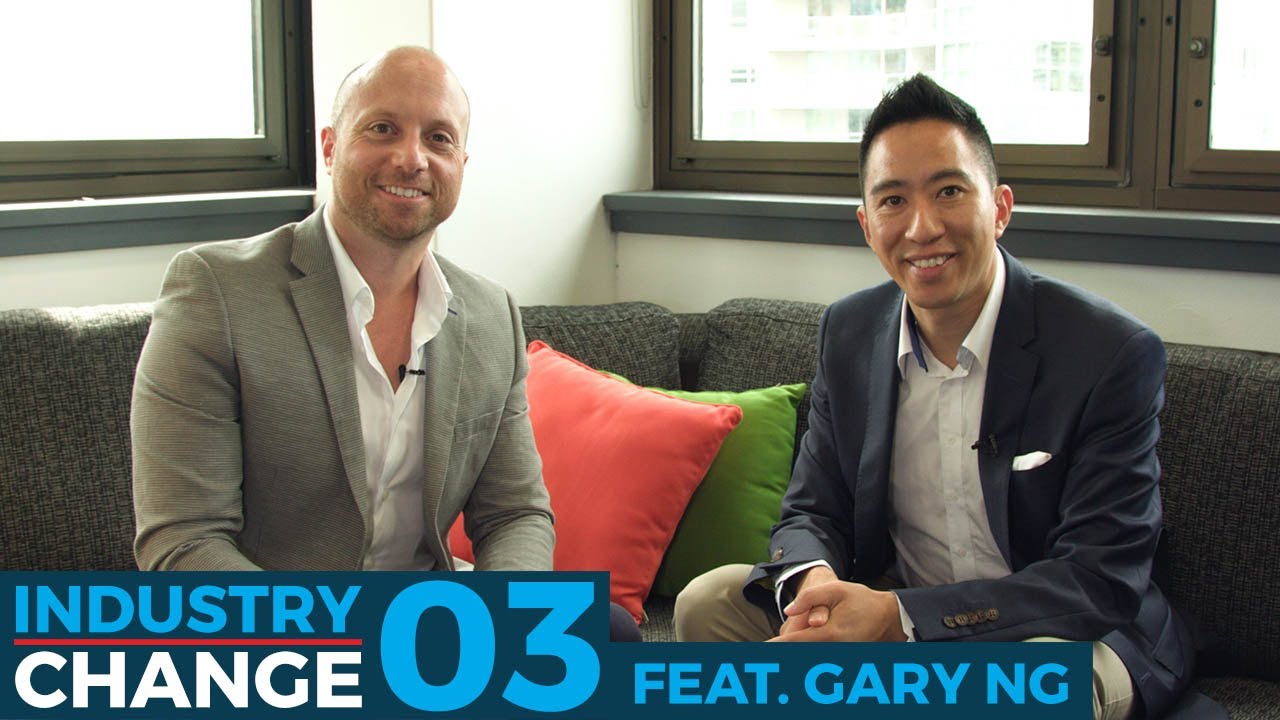
In this Industry Change interview, host Richard Toutounji talks with Gary Ng, Chief Vision Officer (CVO) of his digital‑marketing firm, about the evolution from a traditional agency owner to a "socialpreneur" focused on a massive, purpose‑driven vision. Ng explains his early motivation to escape high Australian tax rates, build wealth quickly, and achieve his first "bucket of gold" before age 30. After reaching that financial milestone, he shifted focus from profit to happiness, success, and fun for clients, his team, and his personal circle. He defines the CVO role as casting a long‑term, people‑centric vision – ultimately to serve 500 million people – and describes how reverse‑engineering that vision creates opportunities. Ng stresses the need for dedicated thinking time, the power of mentors (notably Tony Robbins and Peter Diamandis), and staying ahead of rapid technological change by surrounding oneself with knowledgeable networks. He also advises small‑team business owners to deliberately define company culture and vision before the organization self‑shapes. The conversation blends personal anecdotes, strategic frameworks, and practical advice for entrepreneurs seeking purpose‑driven growth.
Chapters
Welcome back to Industry Change. My name is Richard Toutounji, and today I wanted to bring someone on the show that we could talk all about, like, what's next, what's next in business. And I've got Gary Ng. Welcome.
Hey, thanks for having me.
Thanks for having me in your office, Gary. And actually, when we say in your office, you're really never here, and I wanted to actually touch on that point with our listeners. So Gary, you're a CVO. Talk about what a CVO is.
So I'm the Chief Vision Officer for my company. So what does the Chief Visionary Officer do? It just basically casts the vision of where we're going in the organization, and the day-to-day running of the business, you leave it to your CEO, your Chief Executive Officer, and And the general manager to run the business.
And this is great because we talk to a lot of small to medium businesses. Now, the theory of actually not being in your office at all, not having a desk, not having a role at all, zero, is probably a lot of fear and probably guilt and how do I do that to a lot of people that are possibly watching. And I kind of want to pre-frame this a little bit to say that, hey, you haven't just decided that you're not turning up. You actually have a company, you have a business, you have it working. You've been in business for over like 20 years, is that right?
Yeah, 18 years.
Yeah, 18 years in business in the digital marketing business, and you're doing other enterprises and businesses now. So it's kind of like you've got a business that's working, but, but you found something else outside that, and that's called the socialpreneur side of you. And that's the side I want to talk a little bit more about. Can you tell me about a little bit of your background first so we can actually realize that you're running a business and It's on a system and then you're going out to get the vision. Tell me about your background first.
Yeah, so I guess I started the business straight out of uni. I studied economics and marketing and I thought, you know what, I could work in a marketing ad agency for a few years, get some experience, eventually start up my own business. And why business in particular? Because man, when I first came to Australia, the highest tax bracket as an employee was 49.5%, so you get taxed half of your income. Yeah, it's crazy. Like that's not the quickest way to accumulate wealth. And to me, like I came from Hong Kong. I've seen a lot of people that have money and not that they don't have a lot of money as well. And so to me, like making money was a game, was a choice. And especially in my era, like the Generation X is a lot of like tech boom. A lot of people in their twenties are making their money really quickly. So I knew it could be done.
You saw it.
Yeah, yeah, it's real. So, and the way to get there definitely wasn't an employee. And so for me, like, don't get me wrong, like, there's a lot of people doing great things in serving the community and what they do. But for me, like, my art and my passion is how to make money as a game and how to get there as quickly as possible. So at the time, Tech was booming, so I started a web-related business. Yep. And that kind of grew from there, like since like 18 years ago. But my original goal was like to make my first bucket of gold. Most people say that in every single book you read, your first bucket of gold is always going to be your most difficult to make.
The first million, hardest million to make, right?
Exactly. And once you make it, even if you lose it all, You can, you've got the skills, you've got the mindset, you've got the contacts to make it all over again. Sure. So that was the aim. It wasn't so much about what am I gonna do with $1 million. I'm not a very materialistic person. And eventually, like, I got there, like, before I was 30. And from that point onwards, I started to think, what's next in life? And yeah, I could make another million here and there, but At the end of the day, I started to think about what's really, really important. What if I make an extra $10,000 this week, but my client's saying that, Gary, you've ripped us off. What if we make another $10,000 this week in sacrificing my own health, my relationship, my me time?
Where a lot of business owners go and do that.
Yeah, so where does it end? The money will only get you incremental amounts of utility or happiness. So I started thinking like, what's really, really important to me? And at the same time, like, we have a company vision as well, which is we wanna be the best marketing agency and every single business that focus on growing their business, they'll think about us. Yeah, well, that sounds great in theory, 'cause I model off like a lot of the big companies on how to create a proper vision statement.
Yep.
But at the end of the day, like, Richard, which is the biggest marketing company in Australia? I don't know. And who cares? That's what— that was the point that, you know what, I've got this vision that nobody cares about. I don't care about.
Yep.
So what do I really care about? I really care about whether my clients are happy.
Okay.
Whether they're successful, whether I'm having fun, our team is having fun. And not just our client, when I dig a bit deeper, Whether the people I surround myself with, that I care about, are they happy? Are they successful? Are they having fun? And success doesn't have to be just like monetary terms. Like, are they succeeding in whatever areas of life? And then when I have to rewire back to where that came from, because I wasn't happy, I wasn't successful when I was growing up, and I wasn't having fun. So when I was able to reverse that trend for myself, like, underlying that became my mission. And my vision in terms of helping a lot of people. So when you talk about what is the role of the Chief Visionary Officer, when that became clear that our vision wasn't so much that we want to be the best marketing agency, Sure. And then, well, you've got a vision. Well, what is the actual goal that is tangible? Tangible goal is I want to be able to serve 500 million people with this vision of happiness, success, and fun. And knowing that, I needed to expand and reinvent myself to be something much greater beyond that.
Interesting. So you had a bigger— so you took yourself back to what's really important and then you work back from there and to go out to a different— well, to go out possibly to the same marketplace with a different vision that actually people want, not just what you want.
Yeah, exactly. And most people get stuck on what they do. As an example, when back Back in a long time ago, there was one of the major railway companies that transport goods and stuff. When the motor vehicle was invented, there was an opportunity for them to move into that market. But they said that, well, we are a train company, we're not a motor vehicle company. So where someone else saw that, well, they are a transportation company. And so that company took the opportunity and moved into that market, and the train company, they went out of business. Yeah. So you need to think about what is it that you're really doing that you're wanting to serve. Because for all we know, whatever that you do, especially with technological change these days, is changing ever so faster than before. What you do, it could get completely wiped out. If you say I create motor vehicles, well, what if it's all self-driving? Or maybe we don't even be on motor vehicles anymore.
Okay, so it's an interesting point you make. Because you're now talking about going to the highest vision that you can imagine, what serves the most amount of people. You're saying 5 million people, is that correct?
500 million.
Sorry, sorry, I take that back. 500 million, right? So I'm very— speaking very small. How do you reach 500 million people with success and happiness? And then it rewires the entire purpose that you're put here for. And it's really interesting, that thought. Because I don't know how people are getting to that thought process. And I know you've had a lot of, a lot of thinking around that process and how you develop that. And it kind of takes me in 2 parts here. One, you have to see a bit of a change, what's happening. You said the technology is going to boom. We don't know if we've got industries in 5 years. It could just totally change. So there's one concept there. And the other concept is, well, how do you actually create a vision that you can't see? How do you get to that place?
How do we create a vision we can't see? I guess most people, they get stuck on how do I, how do I do this? How do I do that? If you start with the how in mind, yeah, you may move a few steps, but you're never gonna reach your potential. For anybody that have a baby, they've never had a baby before. Oh man, I don't know how I'm gonna change the nappies. I don't know what I'm gonna teach them when they're 3 years old and, and having a little Tiff with their brother or sister or cousin, you just have faith that you're gonna be able to work it out. You just have the certainty that it's been done before. If other people can do it, surely I can do it too. So, but if you start with the vision of where you wanna go and reverse engineer it, opportunities are there.
Where do you— when you create this vision, do you think you have to be at a place of like, there's no point creating this vision when you're like super stressed in the middle of your day. How do you get to the point where your mind is actually clear and you can craft the perfect vision? What do you need to get to that place?
Yeah, that's a great question. And I would say that one of the keys is just allowing yourself some thinking time. A lot of people have scheduled in their diary to meet with person A, person B, and do this and do that, go to the gym, eat breakfast, but they don't have thinking time. What if you can just allow yourself some thinking time, whether sitting by the ocean or just sitting in a quiet room, Or maybe just reflecting on your inner self, what's really important to you. To think, well, you know what, if I'm on my deathbed, what would I want my life to be? What is it? What is the difference? How do I want people to remember me by? Is it, oh man, I run accounting practices and I've helped 56 clients? Or is it like I'm a painter? Who is the person you want people to remember you by?
Right. So the vision is not what job you do or not what business you have, it's who are you as a person and what is that purpose of your life pretty much. And the vehicle can be many things.
Yeah, exactly. It doesn't have to be like 500 million people, even if it's just 5 people. Like for me, like the 500 million is not like, hey, I want to be big and better. Like for me, it's just somehow it just came to me from above. Like, and I'm not a religious person, but One day I was in a hospital for two weeks, and suddenly like, hey, this makes sense. And I don't overthink or how do I do that? It just it makes sense. I don't really care when I hit 500 million people, but that vision opportunities start to arise. It's almost like you you you may see one of your friends buy a new car. You've never noticed that model before, but once your friend got it, you said, wow, I see everywhere now, right? Same thing, like. When before I had this vision, there was opportunity to make a big shift in different areas. I never really paid attention to it. So say for example, like Tony Robbins invited me to work with his organization with the workplace culture and how to make it like happier, joyful, and more in alignment to achieve the corporate goals. Yep. And Tony, he fed 100 million people last year in America. And like, he's a great friend and a good mentor of mine. But by helping him, that's 100 million people. But if I didn't have that clarity of 500 million people, that's the one that I want to help, I wouldn't be so focused on the right goal.
Very interesting. So you'll never know. So nobody's ever going to know if the right opportunity is like right under their nose unless they have a vision and not a micro vision we're talking about, a vision. Because as you said, things will change, industries will change, but the vision is like way stronger than a business or a job.
Yeah, and most people, they focus on the time on focusing on what they want as the vision. I don't wanna have to be living from paycheck to paycheck. I don't wanna be like losing client. Or maybe they focus on, maybe I just wanna grow the business by 5%, 10%, and that's probably what they're gonna get.
You've done a lot of coaching, consulting, and work with Tony Robbins. Can you go into the power of maybe a mentor and what you've got out of it personally and professionally?
Yeah, awesome. One time that when I came across my first mentor, I started to realize, wow, like these are people that not only you're learning from the theory of how to do certain things, but they're actually there to coach you on that particular situation. What is the best way? And these are people that have been there, done that in the exact same situation. Most people that is not as experienced in business, Or haven't succeeded at a certain level think that every single situation is unique. But once you've been doing numerous business and have a track record of success, it all falls in the same patterns.
Yep.
And, and the mentor can help you of what the road ahead of you, what's coming before you even get there.
I love it. There's really, really great insights there. We could talk all day, but I want to kind of I want to get your take on a few things and one of the things is the future. We kind of mentioned it before but as a leader in anything, you have to predict the future to a degree. Like, you know, you did a very successful job on predicting the future of tech. You got in at the right time, one of the first in the game in Australia. So how do you predict the future that— and especially the future is changing so much, how do you actually see the future?
Well, I've studied from this guy, Peter Diamandis. He's a the person that created the first commercial spacecraft that carries people, that got investment from Richard Branson. So he and Ray Kurzweil started this company called Singularity University. And these are the sharpest guys out there, Mark Zuckerberg, the guys from Google, Microsoft, they all invest in this university. Basically predict the technological trend is going up like this. Right now we're at the end of the hockey stick curve, about to really explode. And so what you come to know of how we operate our life and how businesses run is going to completely change. It's going to completely change, and you just need to embrace and be ready for it. Winter is coming, or the storm is coming. Some people go and get a surfboard and the snowboard and go and enjoy, and other people go in there in fear. But if you're ready for what's coming and anticipate it, and anticipate with excitement of how you can take advantage of it, That's my best recommendation. Other people make a whole ton of money when the whole stock market is going down, where other people is in fear. Oh man, like the market is going down, the world is going to end. So just be prepared for it. Surround yourself with people and knowledge and wisdom of people that know more than you what is there about to come.
I love it. And this whole conversation's all been about you don't have to kind of invent everything. You've just got to have contacts and networks and talk to people and Have mentors, and the answers are going to be coming, right?
Well, I'm Chinese. I'm good at pirating and copying people's stuff. So that's why I'm not the smartest guy, but I just learn from other people that smarter than me.
Perfect. I love it. Okay. We'll finish up. What do you think if you could give one piece of advice, the best thing for let's say a business owner that's maybe got three or four or five staff, right? What what what advice would you give them when they're in their business, working the hours, doing the hustling, doing the grinding? What advice would you give them at this point?
When you have 3 to 5 staff, I would say that you're moving to the tipping point that your team is about to grow and you need to define what is the culture of your company. If you don't define your culture and your vision, what this company is about, it will define by itself. And you don't want it to, to, to, to be self-designed to something that you don't want. So once you design what it is, you're going to start attracting the right people into your organization, and those people will help you build your empire.
Love it. What a great response. Thanks so much, Gary.
Thank you for having me.
Thanks so much. We'll see you next time on Industry Change.









