Elaine Ray Bagley Interviews 2025
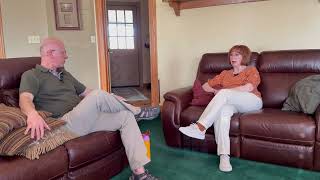
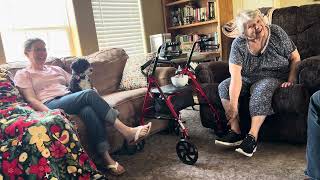
Rob Bagley interviews his mother Elaine Ray Bagley about her life in Southern Utah, her grandparents Sims Flood Rey and Nellie Ellsworth, and her marriage to Errol Carl Bagley at BYU. She recalls her grandmother's death in a car accident, summers in Pine, and sewing from second grade onward.
Chapters
Now I should be looking at the camera, shouldn't I?
We'll just have a conversation.
Okay.
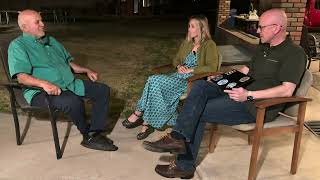
So this is my mom, Elaine Ray Bagley. I'm Rob Bagley. And it is the first day of 2025. Wanted to get a little of your history in regards to. to where you lived growing up, like where were you born, what houses did you live in, and a little bit about that.
I was born at Mesa General Hospital, which is down on Main. It's now turned into a university.
Oh, the Benedict University or something?
That was the old Mesa General Hospital, and every time Mom would have a baby, we'd go over by the windows and get to see her through the window.
Is the building torn down and they just built it on top? No, it's the same building.
It's the built— the red brick building is still there. They used it. They used the outside of it anyway. We lived at 31 East First Street, right one street back from Main, and we had this great old Southern Utah-type home with a big cement porch with brick around the edges. And as a child, it seemed like a really big porch. I don't know if it really was, but—
Is the house still there, or is it—
No, the house is gone. They built a very successful law office in our place. And we had 3 little houses behind our house that we rented. And one that was a little bigger than the others. So we always had interesting people that were part of our lives because we had a really big backyard.
So your, your parents had rental properties the whole time you were growing up.
Right. My grandmother, Grandma Ray, was a real entrepreneur-ish.
Really?
Person. She was a very businesslike person.
And the Reys are— who are we talking about?
Well, Grandpa Rey was raised in the colonies.
Okay, so this is the polygamy family. So the John Alexander Rey, like that, that line of Reys. And what was his name?
Sims Flood Rey. And he married Nellie Ellsworth.
Nellie Ellsworth.
So we're related to lots of people because Ellsworth is a very big family.
Okay. So these are not the people from Missouri.
No, this is my dad's family.
These are people from the colonies. From the colonies.
The colonies were all on my dad's side.
Okay. So Nellie Ellsworth, who married Sims Flood Ray, she was an entrepreneur.
She was very, very business-minded. Kind of entrepreneur, business-minded. Very business-oriented. Yes. Grandpa was a really good hard worker. But she pretty much ran the show as to kind of what they were going to do and stuff like that. And Grandpa was pretty clever himself because it was during the Depression and nobody could get work. You know, they'd have— you've seen them on screen where everybody's lined up to get a job and they say, you, you, you, you, and 90% of them have to go home. And he had gone out to get a job working on the roads, and he didn't get picked. But he went to the work site and started working anyway, and the guy says, you weren't picked. And he says, I have to have something to do. And he just went every day and worked until the guy, you know, you're good. And also he says, we can do this better. He brought his horse and dad rode the horse and Grandpa manned the big board or whatever, a planer, to smooth the gravel or dirt or whatever. And so they were happy that he was hard worker and also improving the process, about fixing what needed to be fixed. So he was, he was good with that. And they always had— I mean, they had good times and bad times because it was during the Depression. And they moved from Wickenburg out to Chandler, in Mesa. They kind of—
were you alive?
I was not alive at that point. This is, you know, back in the Depression times. Well, real soon I was, you know, I was born in '44 and the Depression was in the '40s.
Or I think it was '29 started. And—
oh, okay.
Yeah. Okay. So this is Sims Flood and Nellie Ellsworth and grandpa, our— your dad, that family is what we're talking about right now.
Right. And also it's good to mention that, you know, the Ephraim Hanks?
Yeah.
We are related to Ephraim Hanks. I'm not sure where the Hanks line comes in from, but fairly soon in our genealogy we link into the Hanks. And he was a relative of grandpa's and ours. And so he was a man of faith. We had roots from the beginning. There were very few that didn't follow in the gospel. They were good, solid people. Grandmother was very, very good at listening to the Spirit.
Nellie?
Nellie. Grandma Nellie. She was warned many times of things she should do and not do, and somebody else's card gets stolen because it was right next to hers, and she had made some special or locked it or something. Anyway, she was really good, and she prayed always that her trials would be small. You know, he can give her as many as she wanted, but she—
I think lots of trials, but I'd like them in the small sense. Right.
And she had a lot of faith. And until Norman died, you know, there weren't any big traumas.
How did Norman die?
He was just put in the bishopric and he got sick immediately with his lungs were just full. He couldn't breathe. And I think he had asthma, which was— Grandpa had asthma. And I had—
Did Sims Flood?
Sims Flood had asthma. And I think Norman had some asthma, and so they first just thought it was a cold, but so it took them a few weeks to figure out what was going wrong. And everybody was praying for him because he was really sick. And Muriel, his wife, had 9 children. The oldest was about 12, and she had been praying and praying for Norman to get well. And she says, well, if you need him more than I do, then take him. And he died very soon thereafter. And she was sorry that she told the Lord that because she, she just felt like she needed him more. Dad and Oakley took care of Norman's family until she could get educated and become a realtor and handle you know, earning some money on her own, but they were very good about taking care of family members.
How old were they and where was she in the, um—
Well, he was the youngest.
Dad was?
Norman was.
Norman was the youngest.
Norman was the youngest. And so, uh, he would have been, you know, 15 years older or something like that. Maybe, maybe 18 years older.
Okay. So Dad and Oakley were more established in their career at that point. Right. Right. So they—
Not that they— not that we ever felt like, you know, there was lots of money, but they just knew the priorities.
Yeah.
And they always bought Grandma and Grandpa's cars and made sure that they were taking care of them. It was never discussed, hardly ever. So I don't really know, but Grandma and Grandpa had rentals at their house. Where we'll go see tomorrow, or today. They had a rental in the basement and a rental around the back of the house over by the temple. So they always had that income, and I don't know about Social Security or any of that stuff, whether they were on it or not, but probably they were. Been around for a long time. But whatever they needed, Oakley and Dad took care of. They would go to the summer in Pine every year. They were the Grandma and Grandpa Ray.
Okay.
Always, they had a little trailer house kind of connected to a little room, a tiny room. So it was just a little—
So like a trailer you pull behind, that kind of?
That kind of a trailer. And then— And then a little room connected to it, so it was a bigger space than a small trailer. And we'd go over there and play card games. Grandma was a great card game player. Rook. Nobody was allowed to have face cards back then. That was evil because people used them to gamble. Of course, the cards weren't evil, but they just, the church didn't look highly on having those in their home, in your home. And so we didn't ever have face cards in our home.
But she'd like to play Rook and she was good at it.
Rook and Uno and any of those kind of games. But she was a, I mean, they played cards several times a week, you know, with whatever grandkids wanted to play. And they were the only one that had a car. They had a car up in Pine and they'd go into town and get the mail and if they needed some milk or something. But the two mothers that had 11 children each living up there next door didn't have a car. Didn't have a car. And on the weekends, Oakley and Dad would come up and bring all the groceries. They'd get whatever groceries we needed because the store up there, if they even had a grocery store, it was very limited.
A little market, little tiny.
Yeah, they probably had a tiny market that was connected to the post office, I think. But they brought the groceries up on the weekends and we spent several years every summer in Pine. And then as kids started to get— too many of them started getting older, it was hard because of the jobs and stuff like that. So it wasn't as much, we didn't go as much later on.
Was that fun?
Oh, it was great fun. I would go up there and sew. I would, we chopped down.
From what age were you?
I was 11 when I went up there the first time.
And you were sewing at 11 or?
Oh yeah. I was sewing out of second grade, whatever, however old you are in second grade. That was when I started. Sewing. I think I made my first skirt in the second grade. And every year I would look at what I'd made the year before and I'd just be embarrassed because I'd gotten better. And that was last year's was, didn't look as good. And I've been sewing for so many years that I've made every, every mistake 2 or 3 times. So I can fix things really well. And I have found out that every time whether me or somebody that brought me a problem, that when I finished fixing something that needed fixing, it was always better than had the problem not happened. So I didn't really key into it that that was a real gift of mine, but my Aunt Maxine said, oh, you know, that's why I bring you all my stuff, because you always your brain goes to the answer, not to the problem. So I thought, yeah, that really is true, but I hadn't really recognized it for myself. But I am definitely a fix-it person. When something bad happens, my mind really does go to fix it, which has been a great blessing. We lived until I was in second grade down on 31st Street, and then we moved out to 730 East University.
Okay, so about this east but over on University.
On University.
Okay.
On University.
Is that the house the Murdochs lived in later?
Mm-hmm.
Okay.
We had a 3-bedroom home and eventually 11 kids. I think probably Rob was on his way out of the home by the time John was born. But it was pretty tight space. The 3 oldest girls were in one bedroom. There was a little room behind a garage that Rob was in, and then eventually Stephen was in.
And that's one of the 3 bedrooms?
No, that was a bonus.
That was a makeshift?
We eventually— it was first just a bonus room, small room, and then eventually we filled in the garage to be like a family TV room. And there was also another bedroom added at that point. And so then Janelle and I moved out to that room. And I think Joanne might have moved out. I think she slept on a rollaway bed out in the family room. 'Cause I remember every night, she was an old movie buff, and as I was headed to my room to go to bed, she'd say, "Oh, you gotta see this, The Little Women," or whatever it was. She was always really into the good stories, and I was always into, "Go to bed." By the end of the day, I was tired, and so I didn't get hung up. Now I do get hung up on it. I stay up too late watching movies. But I was really good about going to bed when I was younger. We had kind of a sewing room, baby room was the other bedroom. Mom and Dad had a room, the girls had a room, and then the sewing room, baby room. We had beds in closets on top of cedar chests, you know, just a pad, and that was somebody's bed. And we had a bed, like a twin bed, maybe it was a double bed, but I think it was probably a twin bed and a baby crib, always. In the sewing room, and then Mother would try to sometimes use it as a sewing room, but it was pretty tight quarters. And we had one bathroom.
And the other room was bunk beds or what?
No, Janelle and I slept in a double bed, probably. It wasn't queen. We slept in a double bed and Joanne had a twin.
What about the boys?
The boys were younger, and so they were mostly in the sewing room until Janelle and Joanna and I moved out. And then the older girls moved over.
Robert was here.
Robert was gone when we moved out there and Stephen was out there. So Stephen was out in the boy room and it was, uh, all the girls, Melody, Margie, Sydney, Julie were probably Well, Julie was probably in the baby room for a while until, you know, as we left home, they'd kind of rotate into the bigger girls' outside. But finally, we took our laundry room and turned it into a vanity, makeup, you know, do your hair, wash your face, and put an extra bathroom, just a potty room, just a separate little potty room. Which was way needed with that many people. You know, there were 13 of us trying to use one bathroom. And we had a shower in that room.
So like a half bath kind of?
Well, there was a toilet room and a shower, and then there was this big counter with a sink. So it was a full, full bathroom. The counter was like, seemed really long. It was probably 4 feet, might have been 5. It was probably 5 feet because there were so many girls wanting to be there to comb their hair. And I used to do hair when I went through beauty school. I had customers come and that's where I did their hair, is in that little space. We had a fence in the front yard because university was busy back then. Not busy like it is now, but we thought we were kind of out in the country because there weren't a lot of homes out here, and we had this big piece of property, and most of the homes across the street weren't here, and there were a few on the next—
with your parents and that.
Look up there and see, is that a helicopter? Oh, you can't see it now. Has it started? Yeah. Oh. You can see. We had a garage that we turned into a family room and it had 2 bedrooms on the end. And also had a storeroom in the back of it that was super scary to go get milk because the extra fridge was out there.
Okay.
And I was— it was like saddling the horse. It was probably even worse. I'd go out there because it was dark. There was no light to turn on. And it was just this junky kind of storeroom, and you were sure somebody was out there that was going to attack you. And I remember just trying to control my mind that I am brave, I am— everything's fine, and, and then running back to the house.
Okay, so you were in this house on, on University, and you'd added on to it a little bit. You went away to college. They built the, the house next door on 706 or whatever, East Third Street.
710. No, 730 is what they're at.
730 East Third Street. And even though Grandpa was successful at this point, he built a, a modest outside house, very, very plain.
Yeah, he never ever wanted any poorer person than himself to feel like they were beneath him.
He never wanted to appear pretentious, right?
Ever. I mean, he was so, so conservative in that way that when I bought, with Mom while he was hunting, a beautiful dinette set, like a scratch and dent, a scratch and dent from Levitt's, I bought the chairs, didn't even It wasn't a set. We put them together, but the chairs were really pretty. They were solid wood with little kind of—
I think I remember though. They had those two. Yeah. So kind of a heavy—
We still have them. Richard has them up in Pine.
Kind of like a throne chair. Right.
They were.
They were kind of like a throne chair. She had made these gorgeous brocaded red drapes for her dining room, and it just, it was perfect for her dining room. And since Mother had never had anything but In our family room down at the other end of the street, our couches in our family area were like benches out of a school bus with metal legs and metal arms and naugahyde. I mean, it was not— and the table was a giant slab door that we'd built. Grandpa had built a bench. On the backside and the side. But we did not have any fancy furniture. And when Dad came home from hunting, he just, he kind of had a fit. He did not want—
She'd bought this fancy dining set.
He did not want somebody to come in and see this royal looking—
Oh yeah, these royal chairs.
Royal looking chairs with red brocaded drapes. And you know, that was just that was really against his code of—
his brand.
His brand. And so he wanted not to—
it wasn't the cost of the things.
No, because we got them for a scratchy pant.
It was the fact that they looked fancy.
Right.
That he was going to be embarrassed. He was going to be embarrassed like he's putting on airs and I'm rich.
I think the table was $60 and the chairs were 40, maybe 50, and they would normally have been a $300 chair.
So he's mostly, he was just concerned about looking too fancy.
Right. He didn't want to look like he was putting on a show. And so mom came over and says, I think we have to take it all back. And I says, no, you're not, mom. You deserve some nice furniture. This is your final home and you're going to keep them. They're not out of the budget. They're just pretty. And I'm not going to let you take him back. You just are not going to. You just hang tough and it'll be fine. He'll get over it. And he did eventually.
That reminds me of a story of you talking about Patsy Bagley, about Jerry also being very penny-pinching, kind of frugal, and something about, hey, you deserve to have heat in your house or some women's lib attitude you've been pushing around your Yeah, she, she would run out of firewood.
He'd be off somewhere and she'd be cold in this little cabin. And so I really told her that that was unacceptable and you get a heater in here. She had little kids. It was cold. It was Wyoming. Anyway, they, they kept the furniture. We still have it in the family. Dad's family had good times, bad times. They sold houses and rented houses, and Grandma was a very business person.
So this is the Reys from the Mexican colonies, polygamy. This is Sims Flood Rey and Nellie Ellsworth that we're talking about. And you told me that Nellie just kind of had an entrepreneurial mind for business.
Yes, she was very business And Sims was a hard worker.
And so she'd kind of be the strategy of the business and he'd be the labor, the work of it.
And during the Depression, when they'd pick 2 or 3 men out of a line of 15 to work, he didn't get picked once. And so he went to work anyway. And the guy says, "Hey, we didn't pick you." And he says, "I'm just gonna work anyway." Gotta do something. And so, and he was a really good worker.
So then eventually he just got hired.
So eventually he got hired, but not only that, is they were doing roads and he brought his horse that my dad rode, drove, and he was just little. He was just a little kid, you know, maybe 9 or 10. He drove the horse and Grandpa Sims put the leveler, a big board, to plane the road, to plane the road, and saved a lot of time because they were just hand hand doing it with a shovel. So they, they were really glad that they had hired him because he became, and he got more money because he was doing it.
So was he normally kind of a process improver or problem solver or?
Obviously, to some degree. I don't, that was the story that I knew of.
What about Nellie? Was she?
Nellie would have been—
I feel like you told somebody was sort of like a problem solver.
Nellie would have been a problem solver. She was extremely positive. She had a lot of faith, and she listened to the spirit. She was reminded of different things that would give her safety and things to avoid, and she was very, very good at listening to the spirit, and she always had wonderful spiritual stories to tell to us. And Grandma—
How much did she influence your mom's spirituality? Do you think?
I do not know, other than she would have had to have been. I think they were pretty staunch in her family.
Betty?
Uh-huh. But when she came down here as an 18-year-old girl, she was helped in her cooking skills by Grandma. She taught mom to brown the roast if you want good gravy and brown the gravy down so that it's really rich. So we're some of the best gravy makers in town because of those little tips that Grandma Ray gave. Grandma Ray was a nurse.
I didn't know that.
She was a nurse. And during the epidemics where the Spanish flu and whatever. So many people died that she quit being a nurse. She couldn't take seeing so many children die. It was just destroying her. So she quit being a nurse. It was just too hard on her. And it made her very aware of— she always prayed all her life that her trials would be small, that she could handle them. And she was very lucky, and she always would tell us stories that where they were saved from something or another. Somebody she envisioned.
I mean, you kind of have a— I've heard your philosophy about trials. And was that something that was talked about of like that you're going to get trials in life and it's part of the plan?
That was one of my mother's best skills. Which I did not know that I picked up on and did to my own children until my mother-in-law told me. She told Julie and Christine when I went there one summer, they said, "Mom just says that you're just the best teacher and that she just loves how you are with your kids." And you know, I was only just doing what my mom did. It wasn't anything so that I even thought about.
So I don't know why I'm getting emotional about this.
Grandma was very—
so Nellie was a good teacher of faith and, and very good, the gospel and trusting God. And one way or another, that may have influenced Betty. If she didn't get it from her side of the family, she would have also seen it from, from Nellie's side.
Right.
And then she, your mom was good at doing the same thing about teaching faith and trusting God and things are gonna work out.
You know, it's like when, I don't know whether it was you, it was probably somebody, well, when the kids would come up from the basement and say, do I have to go to church? I don't wanna go to church. I say, no, you don't have to go to church. You get to, but if you don't want to go to church, do you wanna be without his help? Getting safely to school? Do you want Jerem, who's in a dangerous place, to be safe on his mission? Do you want help with your test this week? You decide whether you want to go to church or not. You get blessings when you're obedient that you may not get when you're not. That was just the form of teaching, is there are consequences to every action, and we can make life— I pray constantly that I will learn what I need to learn so it doesn't have to be jammed down my throat.
That's what I'm talking about, that I've heard your whole life is like, I want to try to learn the life lessons that I'm supposed to learn without God needing to give me a trial to learn them.
And I think that came from Grandma Ray.
Okay, like Nellie Ray.
And also, it's fun to know that Edmund Ellsworth was the first handcart captain, and he was a cousin to Grandma.
A cousin?
Or first or second cousin.
I think it's direct line, um, grandparent kind of something.
But yeah, anyway, that was kind of cool. Wait a minute, Edmund Ellsworth was the first captain. Hanks was the healer.
Yeah.
Hanks was the one who—
Yeah, Edmund is our direct ancestor.
Right.
And Hanks might be a cousin or something.
Hanks was going back and forth on those treks with people.
Yeah.
He just kind of ride in on a horse. And, and Martin and Nelly, and he, he'd healed dozens of people. Yeah, I mean, he was a man of faith when he went to rescue them.
Let's stick on our ancestors for— I mean, he's kind of adjacent, but I want to hear a little bit more about, um, because Grandma and Grandpa, we're getting a little bit close out on time. So, um, Sims and Nelly, um, had a a place on— what's the street over by the temple?
Uh, I think it's First Street.
Is it First Street? And that house is still there.
First Place.
First Place. And they had, um, two little apartments in the back, and but they also rented their basement and—
right—
the back part of their house. So like, being in the rental slash landlord business is a long tradition in this.
It's a long tradition. When we lived on I think, did I already? Probably did, yeah.
About?
About our rentals on First Street.
I don't know if you did since we started the camera over.
Well, but that would have been before we got out here with the beds, so I think we got that. Okay.
So, and Nellie was entrepreneur, we talked about that kind of mindset and—
And it was important that she, they spent the summers in Pine with us every year.
Okay, so they had a little camper.
They had a little camper.
They built a lean-to kind of thing.
Oakley and Dad built a little, a little sitting room. The camper was probably their bedroom area.
And they had a car and the two other mothers up there didn't have a car. A lot of kids.
A lot of kids. Both mothers had 11 children. And both mothers meaning Janet and my mother.
Okay, Betty and Janet both had 11 children.
And so that was a lot of kids. To take out of the hot summer.
Oh yeah.
It was wonderful. And the kids would just run the creek and just run free.
Yeah.
I mean, it was just wonderful. Uh, I was 11 when we went.
To Pine?
To Pine.
And, uh, you were already sewing your own clothes.
I was sewing my own clothes. And so I did a lot of sewing. I didn't run the creek as much as the kids did, but, uh, we even fished out of the creek and mom would fry up these little miniature fish and they were so good. They were delicious. What was I going to say about—
Pine or Nellie and Sims or—
Nellie had— all the kids came over on Sundays.
To?
To her house over there by the temple. I think probably we just had dessert, but we may have had some meals and then as the families bigger. I mean, she didn't— she had a tiny place. It was a tiny home, and we spent a lot of time out on the porch and playing hide-and-go-seek in their yards and stuff like that. And not— there was just half of as many kids as later. But she was a grandma that you went and visited when you came home from college. You went over and checked in on your grandma and told her what was going on. Thank you so much. Anyway, um, so it was very interesting to visit with. You did it because you thought you were supposed to, or just because you were anxious to update her, or, um, I don't remember feeling compelled, but you know, she might have said, I want to hear what's going on, or something, and so I would have gone. I, I don't remember. I just know that, that people would be going in and out of her house, her grandkids.
Okay.
So she was a grandma that, that was interesting.
Interested?
Or interesting?
Interested and interested.
Okay.
Both. In fact, when my, one of the important stories is when I went to BYU, I went there thinking that I would meet my husband in Utah or somewhere. And I expected to know him because I had been praying for like 4 or 5 years that I would know my husband when I saw him. And so when I was going to be in a program, a BYU program, they had a bunch of us girls go to be dancers and they invited a bunch of guys to come and dance with us. And he went— when Errol walked through the door, he walked through just like Three Musketeers busting through these double doors, and they were all dark-haired, nice-looking boys, not as good-looking as Errol, however. And I knew I was going to marry him. I felt like a semi-truck kind of went over me.
It was a very, very powerful, specific, specific, not just like, oh, he's so cute, but just—
no, because I never swooned over movie stars or I just, that was not me. I mean, I would see if they were cute or not, but they didn't affect me. He did. And so I started praying that he'd be my partner. And then I said, well, no, I want him to want me to be his partner. And he was my partner.
Was it a pick thing or a sign thing?
Well, we were just mingling, you know, there's 12 people. And get a partner, and I was available. I don't remember the exact thing, but I didn't run over and grab his hand because that wasn't my way. I wanted to be picked, and somehow we were partners, and we did this dance that, you know, where the girl rolls in and the leg lift and up in the sky, and I mean, it was really romantic.
Was it a lesson?
That was one of the dances we were doing. It was kind of a love dance. We were going to be in a program.
Oh, in a program.
We learned two different dances. One of them was this kind of romantic dance and one of them was, um, oh, like the polka or something? Yeah, something like that. Very much like that. Anyway, so that's how we got to know each other. Now, of course, he didn't know at that point He liked me, and we invited our boyfriends over to dinner once for a little dinner party at our condominium or wherever we were living there. And Errol was not very talkative. It was hard to get him to really relax and talk a lot, but he dated probably 20 girls when he was at BYU his freshman year. So he was really making the rounds. I was the only girl he dated more than once. And we went to conference, we went to firesides, we went to some of the formals, you know, we went over to his brother's house. And so We dated. I was dating other boys, so it wasn't like exclusive at all. And it was very interesting, but not very emotionally satisfying. He was very aloof, and I didn't realize it, but probably part of the problem is he didn't hear me. Because he's deaf on the ear that I would sit next to in the car. And so I would start up a conversation and it would die. He wouldn't pick up on it or say anything and I'd feel foolish and stupid. And I'd start up a conversation and after about 3 times it's like, okay. So sometimes even though I felt strongly that I was going to marry him, I'd think I'm never going out with him again. It's just too stressful. I don't need this. But I'd see him from a distance and it would be like a glow around him. So the Lord was just trying to keep me remembering what was going on. And I wrote in a letter that I was dating Errol Carl Bagley and my mother knew that I was going to marry him. My grandmother knew that I was going to marry him. Nellie. Because they're intuitive, you know, to the spirit. And of course it didn't happen for 3 years because he still had his mission to go on. And I could have got married like 3 or 4 times while he was gone, but I never could shake the fact that I knew already who I was supposed to marry.
Interesting.
So that was fairly important in my life as far as listening to the spirit.
Yeah.
Oh, one of the important things is is that because he was difficult to date, when I was dating him, when he came home, I was emotionally in a relationship. And the emotional relationships are quite a bit more—
Hard to get out of?
Hard to get out of, satisfying, whatever. And I wasn't getting right, you know, I wasn't just—
Because the guy you were dating needed you and liked you. He needed me.
And he kind of wasn't letting go easy, even though I told him I didn't think it was gonna work or whatever. Anyway, and I'd have these feelings, somebody else is gonna get your husband, somebody else is gonna get your husband, somebody else is gonna get your husband. And then it started coming in, somebody else is gonna get your kids. That's when I heard.
So that's always what the Lord uses as his last resort to get your attention.
Yeah.
You want somebody else to raise your kids? Get your kids?
Yeah. Yeah. He knows that I was born a mother. And so the other big important story was about when my mom was killed. They were going to conference and they were taking a car up to Richard and Susan, a car that Errol had found for Richard. So my dad was driving that car. And I was gonna go because I had brothers and sisters going to BYU and I thought it would be fun. But I was kind of praying about it because I had 4 little kids. Yeah, 4 little kids. And it's always hard for me to leave my kids. But anyway, I was giving her a permit the day before. And I remember coming through the door. I went to the kitchen, which was over there. Around the corner from the hall, and I had this feeling of a crash, and the words kind of typed, "You don't need someone else to raise your kids," across my brain. And so I fixed mom this leftover sweet and sour pork that I'd made the night before, and I told her that I wasn't going to go and that this was why. And then that night I went next door to comb out her hair, And reminded her, be careful, because you don't know if your brain's just picking up whatever, until it's verified. I mean, I knew enough that I had told her I wasn't going to go. I wasn't taking any chances. And of course she was killed. And what the Lord informed me of during that period was why she needed to go was because of the understanding of her ability to love and draw people to her and to share the gospel. She was a magnet to the wounded, the weary, that, I mean, we always had someone that we were shepherding in our family, and dad and mom Dad was on a stake mission and they were always doing missionary work. And my job was to fix their hair after they got baptized. That was my part. But I remember feeling so completely, the understanding of where she was, what her job was, and that God let me know that he needed her was so profound. Found that I couldn't be sad. I mean, I cried for John and Julie and Dad, but I couldn't be sad for Mom, even though I was Mom's protector. I'm the one that gave her foot massages and fixed her hair and, and had Dad come over for dinner when she wasn't home, you know, because then she'd be in trouble because he liked meals. Anyway, and That part was good because I wasn't used to being dependent on her. I was her caregiver, and so it made it easier because— and I was embarrassed because I felt so comforted. Literally, I just was embarrassed because people would, you know, dozens of people would come up to you and they're so sorry for you and it's like, it's really okay, but it was when you totally understand what the word comforter means that you never knew could be that comforting. Anyway, those two stories with mom's death and Errol were probably the most profound Revelations of God. Revelations that— well, and there were other times when we were traveling. I remember one specifically. There was way out in the middle of nowhere, there was this car. Maybe you remember. And there were people—
Were you going from Wyoming or—
Here to Utah or something. And somebody was laying down and another person was, you know, and we thought, oh, we probably should stop and see if there's something we can do. And as soon as we thought that, we thought, no, we need to go on. And when we looked back, they got up and—
They were just scamming you.
Yeah, they were just going to trade cars or who knows, kill us. Who knows what they were going to do. But we felt like we had been spiritually guided and protected at that point. And I feel really strongly that if we do what we're supposed to do, that truthfully the trials will be easier. Like when we're all suffering at the end, when food is scarce and when all the bad stuff is going to happen, I truly don't feel like I'll be as hungry as other people because I have been obedient to that food request from our Heavenly Father. I mean, I may not be eating any more than anybody else, but I won't be hungry. And I also believe that if somebody were to attack me, I could warn them that I am protected by God and that they do this at their very life's risk. And that if I— then you better plan on killing me because you're going to die or I'm going to die. And I feel when I worked in the temple for 15 years, when I was giving those blessings, they are real, and I don't think the youth realize that you deny yourself a certain protection if you don't take it serious. I mean, you may not need the protection, but Heather, who should have died a couple of weeks later, a lady did the same thing and she did die. But, uh, Marjene's daughter-in-law, not Heather, Wendy, uh, Whitney. Whitney, yeah, Whitney. I mean, she fell 30 feet on rock and just mangled her body, but she is alive and well.
Okay, well, those are some great stories and testimonies, and I'm I was very moved to learn more about Nellie that I don't know.
She was quite a woman. Nellie was, she was quite a woman. And if you go in and read, Sydney has found wonderful stories of Grandma's sisters. I mean, just unbelievable stories of what they went through and their lives. And wow, these were These were strong people.
I remember when I got my patriarchal blessing when I was 14 or 15 or whatever. And the patriarch was blessing me that I've come from noble men and women who've served valiantly in the cause of truth and righteousness. And through your faithfulness, the same legacy will be passed on to your descendants. And I was like, I don't know what he's talking about. But the more you, the more I've learned about my ancestors, I'm like, wow, they were noble and valued.
They were. And the Culls were equal unto that. The Culls and the Papworths and the Bagleys, and they were good, good people.
What a blessing. Okay, I better stop there. Well, that was— Richard.
Richard. Richard Gray. Probably 9, 10, 11, I don't know. And I went out to the den, which was where we had a TV, and I walked in and I couldn't see across the room. There was so much smoke from— we don't know if we had a little heater or fireplace, I can't remember. But he is so keyed into it that he didn't know what was going on around him. And he's very— his reports for his practice detailed, like John, detailed, pages to describe what's going on with the patient, stuff like that. My cousin in the same office, his sister took care of the books, 3 sentences and they were gone. I mean, he was getting paid instantly. Richard, it'd take him so long to get the reports in, it was a month or two later, and he just, he wasn't, he was more concerned about the healing process the person, the real thing that was going on, not concerned about get paid, you know, do as quick as you can and just get the money. Very detailed. John, very cheap. John couldn't write. He would never have got through nursing school if we hadn't stepped in at finals with 3 or 4 of us were there getting his papers done and in and because he— it overwhelmed him because he was so detailed and it had to be right. It had to be just— he just couldn't really function well. Okay, but when the room was on fire, what was the end of that story? Well, we— there was— there were Levi's over a heater, like a space heater. Yeah. And then one night I woke up I— we had beds like this. Mine was down low and Janelle's was up high. I woke up in the middle of the night and there was fire, flames, just like a row of flames on her bed. And we got her blankets or what? Your blankets.
We were—
I was sleeping in Dad's sleeping bag, which we weren't really supposed to use his sleeping bag. And I took my sleeping bag, and while I was doing it, I think, oh, Dad's gonna kill me, you know, because I just took the sleeping bag and plopped it on the fire to put it out, which, you know, it's a perfect thing to do. But I just remember thinking, oh, Dad's gonna be so mad. Why was she— why didn't you have a candle on fire? She went to bed with a hair dryer on, like a—
over—
like a—
those, those over your head?
Probably. Yeah, that's what we had back then.
Probably one of those.
Good thing you're here now. See, I would have been with Bert, but—
Are you recording the rewind? Yeah, here we go.
Okay, I'm saying something.
My name is Richard.
My name is Maddie. My name is Savannah.
I'm Grandma Ray— Grandma Bagley. I remember when the twins were born, and I think Grandma Craig came the first week. Is that true?
Probably.
And it was my turn, and I came and I slept on your couch. And the babies were out. Where?
The only couch we had at the time was like a two-seater. It was like—
Well, I wasn't very big. Anyway, that's where I was. I was on the couch in your apartment. It wasn't that big. It wasn't that small. And the babies were in the room where I was. And my job was to keep Becky asleep as long as possible. And so when the baby started to stir at all, whoever it was, I'd just lay them on top of me and lay there like this. And pretty much sleep, but as soon as they'd even think they were going to wake up, I'd put them back to sleep with this padding. And they'd sleep really good when they were right on you because they're used to the heartbeat and the body heat. Body warmth, and I could give Becky at least an hour more by just patting her.
I was telling Seth and Debbie that, because I couldn't remember, I thought they got married the same year as I did, but they weren't because they were at the handcart reunion where Becky was pregnant with these girls, and they were just Courtney.
Seriously?
Seth and Debbie.
Oh, Seth and Debbie.
So they're 27, and so they've been married 27 years, not 30. Like, Becky and I will celebrate 30 this summer, and I thought Seth got married the same time as me, but we were doing the math, we're like, oh no, it was a couple years later.
Did you guys pull handguards?
Yeah. Oh, by the way, I I didn't know when Seth was— when Debbie was driving away, like literally minutes before they left the reunion, she said, oh, your daughters are so cute. I remember visiting you in Provo when they were like a month or two old, and they— Seth and Debbie were like newlyweds at that point. And she heard your names and she thought, oh, Savannah is such a pretty name. They named their daughter they have a Savannah Bagley too. I know, that was the first time I've ever heard that it wasn't just a coincidental— it was like they heard your name and thought, that's a great name.
I like— they named their own daughter Savannah. Yeah, and she's on a mission.
Yeah, I never heard that, that it wasn't just a coincidental Savannah, it was you, Savannah.
It was all your fault.
All right. All right, Mom, I feel like your sisters— this had to have been your sisters. Was it Sydney? Who was here pretty recently, Rob, in your house?
Um, was it Sydney?
Anyway, we were talking about your mother's death. What do you remember? And Dad, you can chime in too, in terms of The— and I think my question was more the aftermath of the, the 2 hours later, the 12 hours later, the 24 hours later.
The more important is the before.
Well, that you can tell that part of the story too, but I'm, I'm just— I don't know what happened, like The—
it wasn't pretty.
The— okay, what, what Ellsworth had to do, what John, all the— they had to get Julie somewhere.
Like, they had to get her cut out of the car first.
Yeah, all that.
Like, so do you want—
I don't know, I would love it if I knew where the accident site was as well.
We found it yesterday.
Yesterday?
Well, Well, I, I had known where it was.
Do you want it now?
I would love some kind of a marker.
Like, honestly, as you want to start like at the week before and then do the whole—
whatever you want. But I would love to know some kind of a marker that every time I drive by there, 126, this is it.
126, when between— just after 135 if you're going towards Kanab. Just after After 136 if you're coming out.
I thought it was 126.
I think it's 136 because remember we were doing the math and it was like closer to 40 and it ended up when we were there that it was 130, it was past 135.
Mile marker 135 from Page.
From Page it was past 136, from Mesa it's past 135, right in the kind of in between 135 and 136.
I think you've got that opposite, but we'll go with that.
No, that's still a mile range.
We were driving and when you said there it is and I agreed, then I looked at the mile marker and it was 136.
Okay, so one—
that would be somehow—
I mean, would mean 135-whatever miles or something there from the northern border of Arizona.
There's a road, and that's how I figured about where it was because the sign said 68 miles south. Canab, and my dad— it's the only road that— it was 26 miles out of Canab going this way, and it's—
you're going up a little hill and there's a little mountain kind of over here, and it's a little hill like that TV height. The road goes off to some farm or something. That's the only road anywhere, and when I found it, within weeks or something, I could still see—
are you talking afterwards? Yeah, contemporaneously.
Yes, 30 years ago. I can still see the skid marks where the car had gone across the line of traffic and hit the road. At the time seemed higher because when the road— when the car hit this road, he didn't hit the road, it stopped. The car stopped and the people flew through the windshield. Two of them did. Julie went down under the steering wheel.
It didn't hit the road, it hit the little mound. The girls ended up on top of the mound with broken jaws and arms and collarbones.
Anyway, we pretty much know where it is now.
I remember the first time I saw it, it was like if you were going slow, you could drive up there. It wasn't like you hit a mountain. It was like a little mound of dirt. Dirt. But when you're going 160 miles an hour or whatever, or 60 miles an hour, not 100, and you fall asleep and get off the road, then it doesn't do well. But I was thinking of going to Utah.
Okay, before you go to the spiritual story, I want to say one other thing. Okay. So when I, when Jean and I got married, We were driving back from our wedding to Provo. Um, we, uh, drive out past Page and there was a, like, a snowstorm in April, like coming down pretty heavy, and our windshield wipers were just sort of like freezing, right? So we couldn't drive because you know, like, I'm like with my hand trying to, you you know, see where we're going. So we turned around, we went to Page, we stayed the night in Page. Then the next day, the next day we stopped in Kanab to, at a, like a junkyard, to see if we could find a part to fix the wiper motors in case it snowed again or something. Then we stopped and the guy that, the guy that was running the pick and part, you know, junkyard place, um, he said, where are you guys coming from? And I said, we're coming from Mesa. And he said, um, and we're driving a Plymouth Valari, which is the car that Grandma died in. And he goes, oh, that's weird, like, I— you're coming from Mesa. There was a family, whatever, 30 years ago that was driving a car like your car from Mesa, Arizona, and, and crashed and, um, you know, the mother died, and I was a highway patrolman at the time, and I was the first one on the scene, and I said, that's my grandma.
I never heard this story.
I think I heard it once and I'd forgotten all about it.
Yep.
Yeah.
Okay, so back to you. You're gonna say, and I have the part from that car, and here's the windshield wiper.
Okay, this is, this is a testimony of the Lord is in the details, you know, the story, the talk that they gave, the Lord is in the details. My brother Richard was going to school at BYU, as was Melody's husband, and Sydney was probably there. I had a brother and two sisters at BYU, and it was conference time. And so I thought it would be fun to go because all my— they were going to go to David's and stay. And that was where we as a family—
David, who's that?
Uncle David.
That's where our summer vacations were my whole life. It was going and staying in the big white house with my cousins, my uncles. And they'd farm out all of our kids with other cousins that were kind of their age.
But I always got to stay at David's because I was the right age for the kids there.
So it was always fun to go. And I thought, oh, I'll just go to conference with them and see my brothers and sisters and have fun. I was pregnant with Jerem, and so I was kind of— it's hard, really hard for me to leave my kids, just really hard. I— Errol always liked to go to the movie, and it was hard for me just to go to the movie and leave them. So going for 2 or 3 days was this. So I was questioning in my mind and kind of praying about it and everything. And Richard needed a new car, my brother. Errol dreams where the car is. He sees the car, knows where to go to find it. So he finds the car. He go— when he wakes up, he goes to the car lot that he dreamed about, and there's the car. So they buy the car to take up to Richard. That's why my dad and John were in a different car. I'm giving mom a permanent. She had just been made Mother of the Year and had the celebration to honor her that the weekend before this, which I— we sang out, the grandkids sang out, was a big deal. Anyway, she'd been honored and she was taking two investigator convert, you know, newly baptized members of the church to conference. And they were in the same car as her.
Am I mixing stories? Were they Native American girls or was one of them?
No, one of them was. Yeah, one of them was their Indian placement girl.
Greta?
Greta. And so the day before, I'm giving mom a perm. And I've got her under the dryer, and I'm going to go to the kitchen and fix her some sweet and sour pork leftovers. I mean, I remember all these. When you have really good inspiration about an incident, it's, it's more clear than other incidents in your life. Anyway, so I rounded the corner to go into the kitchen, and I had this feeling of a crash and the words typed, "You don't need someone else to raise your kids." I mean, it was just a crash and the words. And I thought, "Hmm, not going." So I told Mom, and then that night when I went next door to comb out her hair, I reminded her, gave her a hug goodbye and said, "Mom, remember what I said. Be careful." Because you never know where your thoughts where they're coming from. You just obey them in case. And so when Oakley called and told Errol that she had been killed, Dad called Oakley. He couldn't call any of his kids. He just emotionally couldn't.
Oakley?
Ellsworth couldn't call?
He called— Dad called Oakley.
Ellsworth called Oakley.
And Oakley called Errol.
And Errol filled me in. The only thing I kept saying, you're kidding, you're kidding, you're kidding, you know, I mean, she's like disbelief, you're kidding. And yet it was, you know, kind of ridiculous because, you know, I'd been warned about a crash. But it wasn't for mom to feel or to not go. And also I had the extremely strong impressions from my Heavenly Father that I need her more than you. She had 60 grandkids to keep track of and go to different things and clean up after and babysit and gardening to do and feeding to do and laundry to do. And she was like Christ in her relationship with people. Everyone loved her to death. She just emitted love and just had so much charity, and he needed her for more important things than— and the same information also came to me: she's given all of you girls all that you need. Your grandkids and your kids will be fine without her. She gave you the tools to cover for her being gone. And it was— when you talk about the Comforter, until something similar to this happens to you, you have no idea that Comforter, who he is and what he does. I was embarrassed I was so comforted. Literally embarrassed because people were coming all the time with just such sorrow for us to have lost her.
Because she was an extraordinary person.
And it was like, I didn't feel, I knew she was exactly where she was supposed to be and that she was more important there. And she never seemed dead to me. She was simply on a mission.
I never saw her dead.
Dad didn't want her to be viewed because she didn't look very good.
There was no viewing.
What?
There was no viewing.
She was never dead to me.
She's on a mission.
She has touched base and told me things a couple of different times at different occasions. And inspiration for me comes with few words, big understanding.
Wow.
Everybody receives it differently, but that for me is— several people have had physical viewing visits from my mother. I never have, but she has spoke to me.
But, um, and when you say spoke, is it more kind of like boom? Like it's just like it's the whole thought?
It's kind of like the crash thing. And once it was like, didn't I do good? She just like, didn't I do good? I was sitting in church and Julie and Dave were singing, and what she said to me with didn't I do good was he was part of the deal, that Julie would have this wonderful husband. And they have beautiful voices, way above the normal, and they sang together a lot of times. And Mom was just so thrilled that Dave was going to take care of her little girl, because she was 16. She was driving the car. But it was like he was part of the deal.
Or at least when I got on the other side, I'm like, okay, hey, I came over here to help you, you gotta, you know.
Yeah. And another time when I came home from the hospital, I wasn't thinking about Mom at all. And I remember the place in the garage. We were parked in the far stall next to where John's apartment is. And I was getting out of the car, I was only halfway out of the car. And she said, "If you want to know what it was like when you were born, here she is," about Liesel. And so it was so fun for me to kind of observe Liesel as I was living with her. And I tried to think a lot of the time, how are we alike? I mean, she was an absolutely charming little girl. I couldn't know or see how we were alike. And through the years, you know, I was kind of— I remember the first time that it was like, oh wow, she was drawing paper dolls and dressing them and putting the same patterns on the people and little girls that I used to draw on their fabric. There I would make the fabric and they'd have little polka dots here and stripes here and little stars here. She was doing those exact same things on her coloring.
And I thought, well, that is just— it was kind of like a little, see, I told you kind of idea.
Not that it was any big deal at all, it wasn't. But then she, you know, she got older, she was the baby of the family. And so it was hard for me to relate because I was like, I wasn't the oldest, but I took the oldest role. Because my sister, the really intelligent one, was more like you girls, reading. That was the most important thing, is reading everything that, you know, she could get her hands on. And I was more aware of what's going on around me with my mother with babies, babies, babies, and the constant mess and confusion. And I was kind of the clean and clear person and the organized. I'd get all the kids clothes set the night before because to get to church with that many people, it was hard. And so I'd line up all what they were going to wear and their shoes cleaned. And just, you know, I was the oldest child in action, and Lisl was the baby for 6 years, you know. And the first time that