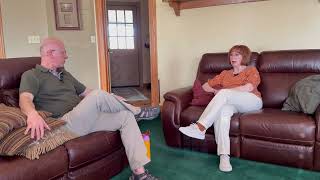
Errol Bagley Interview with Rob and Ashley Spring 2025
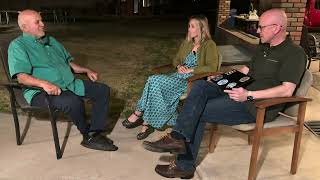
Errol Bagley talks about growing up in Etna, Wyoming, his close bond with sister Julie, and how his father's integrity shaped him. He chose painting contracting over ranching after his parents pushed him to do better, and credits his family's confidence and optimism with defining his life.
Chapters
Um, okay.
Errol Call. Errol Call Bagley.
That's me.
That's you.
I'm here.
Okay, uh, so can you describe your home and neighborhood where you grew up?
Our home was the, probably the newest and most modern home that was in Etna, Wyoming. And most well-kept. It was white clapboard with a green shuttered roof and shutters, Cape Cod style. It was mom's dream home. That she had looked in books and did this Cape Cod, one bathroom, small closets, 3 by 3 was a closet, even in the master bedroom. 3 bedrooms originally, eventually we added onto it.
How many kids were living in there at that time?
Eventually all of us were there probably, but Terry and Jerry pretty soon left. Neighbors across the street, church was a mile away, little store, little grocery, two little grocery stores, post office, and I went to school in a 4-room schoolhouse with 2 grades in each school.
And this is the home you were born in?
Mm-hmm.
And how long, how old were you before you left that home?
Well, eventually we bought a ranch that's underneath Palisades Dam now, and that was just a summer. We had a cabin down there with a big family room, a loft, No doors. There were no interior doors in the house.
Was that a money thing or why would you have no doors?
Well, it was just a summer house.
But still, why wouldn't somebody want a door?
We had two big closets and if you wanted to get dressed in private, you went in the closet and got dressed.
All right.
And came out. We had an outhouse. We did have running water inside. Never had a toilet inside.
And you said, did you have a water heater, you said?
We had a water heater and we had electricity there, but we just, we just stayed there in the summer because we couldn't get in there. It was snowed in in the winter.
Who in your family do you feel most attached to and why?
My sister Julie. She was 3 years older than me, but we My two brothers were old enough, Terry and Jerry were old enough that I was just a kid, you know. Me and Julie were the closest together, plus we liked the same stuff. We danced in high school. I danced with her in high school. She was a senior, I was probably a sophomore or freshman. I danced with her friends because they were good dancers. They were all older than me. I would wait up for her when she came home from a date and we'd talk about her date. That's fun. So, Julie and I were the closest.
Who did you first fall in love with?
Oh, I had 10 different girlfriends before I got to junior high.
That you would admit to and they would admit to? It was not like a crush, like you—
Yeah, it was a crush. It was a little crush, but you know, sometimes it only lasted 6 weeks or— and back in those days you could be going with somebody and never, never go anywhere. You were just— yeah. I had one girlfriend in high school, Patty Child, and we started together. We broke up several times. She was an A student. Straight-A student, great pianist, she was a cheerleader. She kind of reminds me of Elaine. She had stuff going for her and it didn't matter if you either keep up or get out of the way and get lost. And so we're still friends. To this day. But she was, I was reaching to be in her realm. Of course, I was the best looking guy in high school, but so she had something going there too. But anyway, she was my high school girlfriend.
That's great. What were your favorite subjects in school and why?
In college, it was economics. Favorite things in high school, I can't remember anything favorite. I was a B student. I got by and I did my, did my classes. I wasn't—
Why'd you like economics?
Made sense. The principles of economics make sense. And they were already in my head. It was like, okay, you're telling me something I already know. But it's nice to make sense of it. I mean, like chemistry or biology, you know, I didn't have any interest in that. But economics made sense.
It's real life.
Okay, hang on a second.
Are we triggering any dog barking?
Okay, what advice that your parents gave you has stuck with you in your life?
I think you can do better. 6 words. I went to, in college, I took ag econ, agronomy, and 'cause I didn't know why I was in college actually. I thought I might go back to the ranch. So I thought, well, I'll learn animal husbandry and stuff. And I graduated from college. And I liked the ranch. And I understood cattle. And I didn't have another plan. What happened to me was a default plan, which worked out really nice. But I ran it by my dad one time. I says, you know, been going to college, learning stuff. Thinking about how would it be if I came back to the ranch. He said, I think you can do better. That's all he said. Now, the era of the small farmer, dairyman, he was a trader. He bought and sold a lot of stuff. That was coming to an end. But I think more than that, he could see I wasn't a farmer. Even though I did well on the ranch, I think he could see that that's not for you. And so I just stumbled off into the dark and became a painting contractor, which was a good life. Low investment, come home at night, not worry about animals or anything, take a vacation, you know. Turned out way better.
When you say you were good on the ranch, what does that mean?
I could tell cattle. We had 200 cattle. Dad would say, go get the brindle-faced black bally or whatever. Now, I couldn't tell them as good as he could. But cows are different. They're all painted different. And I could, to some extent, I could recognize. We had a great life, mainly because we didn't milk cows. All of our neighbors milked cows. Cows, you milk them in the morning and you milk them at night. You milk them on the Fourth of July. You milk them on Sunday. When your wife has a baby, somebody milks the cows. We did milk cows. It was great. Big commitment.
Yeah. What— I had a friend who knew— she knew me, she knew Andrew. She had seen you on Instagram and kind of had heard about you. I think they were in the ward with you at one point. And she said, "There's something about your guys' family. It's like you don't remember hard times. You don't focus— like, I'm sure that you guys have hard things happen to you, but it doesn't seem like you remember or focus on them. And I've just— the people that I've met in your family all seem to have this thing." this kind of optimism. So what is some of the hardest things you've had to go through? Do you even remember them? Or why do you think—
Well, a phrase that should be banned from church, the pulpit and testimony meetings, is trials and tribulations. I think it's hilarious. Now, I guess people have had trials and tribulations, but it sounds worse than it is. We've had some challenges, but, and, you know, but we were raised with confidence and we were raised with faith. And when you have confidence and faith, bad stuff kind of rolls off because We're going to get through this. We know the end. Our team wins. So let's go.
Temporary. The bad times are temporary, right?
Yeah.
Yep. Hard things teach you something. So that's what we're here to do, right?
So you just follow up. So you feel like the The— what people would see as confidence and positivity or optimism is because of faith and some transmitted confidence? Like, where does the confidence come from?
My dad was confident. He could be out with manure up to his ankles talking to some farmer, or he could have walked into the courts of England and been equally at ease. And we know, we saw that. And Mom was not as showy in that, but she was successful and she did her thing, and we We grew up with confidence, and I think it's passed down to you guys. Betty Bagley used to call it cockiness. She'd say, "You Bagleys are cocky." But it was cocky confidence.
Interesting.
I'm grateful for it. I think we live a lot easier life than a lot of people who don't. Feel good about themselves. Is there anything you wish you would have done differently in your love life?
Quite a few things, but I don't think I would have done them. You have to grow up. Elaine and I pretty much live parallel lives. She's very definite in what she does and wants, and she does it. And I kind of learned that I wasn't going to get too involved because she was so strong in what she was going to do. So I just took my own path, and we kind of live parallel lives. We're closer now than we ever have been. 'Cause, you know, we're getting down to where it's just her and I.
When did that improve, or when did you start living less parallel lives?
Well, it's partly improved as her health has diminished, and I've kind of stepped up and I need to do more. I need to do the grocery shopping and run down to the pantry and get stuff. And also, men, I think, diminish in their confidence faster than women do. So I depend more on her. She does all the books now. She writes all the checks. She pays the tithing. I drive a bus and I manage the rentals, and I'm just happy to have her do that. And so we're both relying on each other in ways that we didn't earlier.
So that mutual interdependence brings closeness.
Yeah.
It's good. What, uh, looking back, what advice would you give your younger self, if any?
I would have been kinder to you children. Especially you, Rob, because you were first, and you were a little delicate. You were more sensitive than maybe Richard or Jerem. Jerem, I don't think was sensitive. Jerem just lived.
He might have been more sensitive than anything.
But I would have been more sensitive to my children and spent more one-on-one time. Now fortunately, you turned out pretty good in spite of my negligence, but that's what I would have done.
Do you have a song that when it comes on makes you want to sing? Singing or dancing?
I have lots of songs that come on and make me want to sing and dance. Sometimes they pop in my head and I said, I haven't heard that song for 30 years. I have lots of songs.
What do you remember about your dad? I mean, you talked a little bit, but what are some of— what are some things about your dad that maybe we wouldn't know, or a story maybe we haven't heard, or—
Well, he didn't seem very spiritual, but he was more spiritual than I recognized. He was always active in the church. He was a bishop. You know, we were active. We went to Salt Lake to conferences. He had a quiet spirituality about him. He knew how to swear good, but he loved people. Very gregarious. He loved people.
Like extroverted? Like likes to talk to strangers just for fun?
Oh yeah. Yeah. And good sense of humor. Just great sense of humor.
Was your mom introverted or extroverted?
More introverted. She did whatever she was asked in the church and did it well, but she wasn't an extrovert.
So you said more spiritual than you realized or whatever. So what are some ways you saw his spirituality?
Well, he wasn't very outward. We had one home evening that I remember in our life. I mean, we always had prayer on the— sometimes we knelt and had prayer. We always had blessing on the food. But he wasn't like, sit down, I'm going to teach you some gospel principles. His life was a gospel principle in honesty. He bought some cows one time. He traded cows. These farmers, they'd get 15 cows and they'd be in the dairy business for a while and they didn't want to get out. So they'd call dad up. Dad, Floyd, sell my cows. And so he'd go around the other dairy guys. So they had this herd of cows. It wasn't— it was probably 12 or 15. Guys didn't have big herds. And they bumped them to see if they were pregnant.
What does that mean?
Well, right in the flank, if a cow is 3 months pregnant or something, you can bump them in the flank and you'll hit the fetus.
And then it will kick or something?
No, you just feel it. So they bumped all the cows and one of the cows wasn't pregnant. And he said, I'm giving more for pregnant cows. Because they're gonna have a calf. And so he bought the cows. He didn't give as much for the one cow. Later on, he found out the cow had been pregnant and she'd had a calf to whoever he sold it to. And this lady's son told this story to John not very long ago. And he came back to the lady, said, I owe you some money. She said, what for? That cow was pregnant. So I owe you some more money. She would never, they would never have known the cow was pregnant. He came and told them and gave them the money.
That's an awesome story.
That's awesome.
Love that.
If you, is there any time of your life that you can look back on And if you had the opportunity to relive that period, whether it was a few months or a year, you couldn't change anything about it, but you just got to experience that time in your life again.
I think it would be when I was probably between 35 and 40 years old. I was playing a lot of racquetball. I was— my business was flourishing. I'd take you guys to Lake Powell because we had the Murdochs and over to San Diego. I think it was kind of like my mom said, when all of my children were home and we would go do things like Lake Powell or San Diego or— anyway, 35, 40-ish. I felt good, strong. It was a good time.
Prime of your life?
But in a way, this is the best time of my life. We're financially secure, our children are doing well, we have lots of grandkids. So this too becomes a nice time.
That's good. What can you tell us about your grandparents that we don't know?
Didn't know my Grandpa Bagley. I knew my—
He died when Floyd was 11? He was a little kid.
Yeah. I knew my Grandma Bagley, but not— I was probably 7 years old or something when she died. But I knew my Grandma and Grandpa Call well, because he lived to 95 or something. And she lived in her 80s. The Calls and the Bagleys were diametrically different clan. The Bagleys were a little irreverent, outgoing, humorous. The Calls were pretty— Welcoming? I think you've said welcoming at times, like Oh yeah, just my house is your house. When did you eat last? Oh well, sit down anyway, we got some chocolate cake. You know, didn't matter what the answer was. When did you eat last? Well, sit down, eat something. The calls were more openly religious, more reserved. Now they were great, they were great people. But, uh, I knew Grandma and Grandpa very well. Call. They were hard-working, conservative. Oh my gosh, Grandpa was so conservative. And when he died, he had $100,000 cash that he gave all his grandkids. Now, that was 45 years ago.
Like a million dollars probably or something now.
He had $100,000 cash, plus he had some homes and apartments. But he had lived so frugally all his life. I mean, they had lived when he made a dollar a day someday hanging wallpaper. You know, they had lived through very, very conservative times.
Did you tell me he told you how to spread butter more thinly on your bread or something like that?
Well, he did. I mean, he had cut the You know, he'd cut the— put some butter on and scrape most of it off. But they had 10 kids. Both my grandmas had 10 kids.
We come by our frugality naturally, it sounds like. Is there any vacation that lives in your mind as just dream vacation or some something?
Well, every summer we went up to Jackson Hole and seems like a lot of summers we went to San Diego to the beach. I love the beach. When you live in Arizona, The beach and the ocean is so reviving. You know, Lake Powell, I don't know, that all—
Being by water, sounds like you love to be by water.
Water is, yes. But part of that is we had the Murdochs and they had stuff. And they liked us.
So, okay. Um, any advice for your posterity?
I don't, uh, Watch, watch people around you that you admire and pattern your life after that. I always had hero— I had hero couples. I didn't think my mom and dad were— they weren't necessarily my heroes. They were heroes by default. But I had other couples that I watched when I was growing up. And I liked what they did, and I liked the way they reacted to each other. And so I was always watching other couples and saying, that's, that's good. I want to do that that way. So that's great.
That is good advice. All right, well, thank you for this interview. I'm sure there'll be more, but that was a good start.
Okay.
I'm Rob Bagley, and this is Ashley Nielsen.
The first and the last.
First and the last.
The beginning and the end.
The alpha and omega. Both born on November 21st, 1988 and 1968.
There you go.
Until next time.
All right.