Diese neue LinkedIn-Strategie hat alles verandert
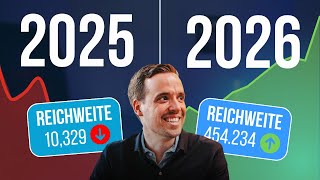
This is a YouTube presentation by Robert Heineke introducing a revised LinkedIn content strategy called the "Social Growth Flywheel." The speaker presents empirical results (≈900,000 impressions in 90 days; >1,000 leads in 30 days; ~€400,000 revenue in ~2.5 months) and explains four content categories—thought leader, growth, social, and promotional—that together drive reach, trust, leads, and conversions. He describes specific formats (deep-dive slides, quick-tip videos, lead magnets, polarizing posts, infographics), emphasizes picking one weekly growth format, and offers a free algorithm checklist plus an invitation to the Social Leads Academy.
Chapters
In the last few months, the LinkedIn algorithm has changed completely. And since then, we've tried absolutely everything to find the perfect LinkedIn strategy for Reach, leads and above all, paying customers. So I'm delighted to be able to present our new strategy in its entirety for the first time today. So let's jump right in. First, let's look at the numbers again. This new content strategy has led to over 900,000 impressions in the last 90 days alone. That means we've had an incredibly strong start to the year. And that proves once again how well this strategy works. What's even cooler is that it's led to over 1000 leads in the last 30 days alone. You can see those peaks down there at the beginning of March. I'll show you exactly how we did it later. And the whole thing has led to almost €400,000 in revenue in the first two and a half months alone. So what I'm going to show you today works well and works extremely well. So in that respect, you'll want to watch the episode until the end. The second advantage is that if you stay until the end, I'll show you exactly how you can get our new algorithm checklist completely free of charge, because it contains the most important hacks for achieving maximum reach on LinkedIn. You may remember that this was our Golden e strategy for LinkedIn in recent years. The idea behind it was that we use personal content to reach as many contacts from our own target audience as possible. Second and third degree, this means we use viral posts about personal anecdotes to simply build a huge number of followers. Then we demonstrate our professional expertise through so called expert content and convert people through converting content. And we've really been known for this golden E strategy over the past few years. People still celebrate this strategy, but we simply noticed that something had really changed in the algorithm in the last few months. So we really had to work on an intensive update of the strategy and wanted to show you what's working on the platform. Now. What's really important is that the new strategy didn't just fall from the sky. So when we do an update like this, we take a really close look and we've really seen that social content in particular has been pushed further and further into the background. And at this point we're working one on one with over 50 founders and still have hundreds of customers in our social leads academy. And of course we have a good feeling for what works and what doesn't. And then we've really looked at the data for months. What's currently working, what's no longer working and how we can turn that into a good strategy. That's why I'm excited to present our new social growth strategy for LinkedIn to you. We've called it the Social Growth Flywheel. Because content really does build up over time and gradually gives you more and more reach and also customers if you do it right. And that's what I find really charming about this presentation. Because you always have the goal in the middle of what you actually want to achieve with content so that you're always clear about that. You don't just want reach or customers, you want to have reach and customers and you need both. We'll start with the first part, so called thought leader content. You may have come across the term before. In many industries in particular, people are trying to achieve exactly that to really occupy a topic, become number one, and prove their competence, so to speak. What's behind this relatively simple a further development of expert content. Here we really try to demonstrate our expertise and provide an initial sample of our work. Through this thought leader content, you demonstrate your competence and give initial tips and tricks. People understand exactly what you do, you attract the right people and it's not about getting a lot of reach but but really showing your technical expertise and not just scratching the surface, but really going into depth so that people understand okay, awesome. This person really knows what they're doing in this area because that's the big opportunity on LinkedIn. The winner takes it. All right? That you really take up as much space as possible in your niche and become number one when it comes to content. I've brought you a few formats for so called thought leadership content because that's breaking down a bit. And we're always looking for formats in the content game that work well. For example, you can create deep dive slides which are carousel posts where you explain things in depth. I really like doing technical ones. Quick tip Videos, for example, have worked well for me. I give simple questions and tips in videos, so to speak. You can do case studies, which works well and doesn't give many impressions. But that's not the point here. It's about people understanding what you're doing. Statements and trends from your field. Analyses and infographics, or even expert interviews, for example, can work very well. And that's just a mix of the first category that we need for our social growth flywheel. Then we come to part number two, so called growth content. This is the new category that we didn't have in our old strategy and that we felt was gradually missing we tried to fill it with social content back then, but now it's about reaching as many contacts in your target group as possible and gaining new followers. What's the idea behind it? The idea is that I've shown in the last few months that completely new formats have achieved a lot of reach and that it's no longer necessarily social content, but that specialist posts in particular have regularly gone viral and that you simply have to get a feel for what works well on the platform, what gives a lot of reach. And then ideally, you have to play this format at least once a week. Yes. And I'll show you a few examples from me and from AC of what we did, what we found, and what other people use as a growth format. The cool thing is that you really only need one of these formats and that can be the key to growing very, very quickly on LinkedIn. And if you also have that perspective, I think it's something we definitely wanted to roll out because it helps every one of our clients to have that perspective. Okay, what could my growth format be? I've brought a few for you. For example, with ac, it's these quick tip videos. Her videos regularly go viral. So she said, I'll do a video every week. Then a bit of a win, win situation for her, it's thought leader content, but the deep dive slides also work extremely well for her in terms of reach. So she said, hey, I do thought leader content, but it has the nice side effect that it's actually also a growth format and I do one slide per week. What I've seen, for example, is that whenever I promote a lead magnet, I actually get the most reach and the most leads, and that also means the most leads. And then of course, I said, hey, hey, what if I push one of our lead magnets at least every two weeks? For example, I think we now have over eight lead magnets that I can promote regularly. So I said, this will be my growth format, that she really promotes one of our lead magnets every two weeks and you see over 20,000 views, over 500 comments, and that means I grow extremely quickly. Not only do I get a huge number of people from the platform, but I also gain a huge number of followers as a result. But then it can also be something like a bit more social content trends, polarizing posts, all that kind of thing. For example, I've been writing for three years in Spain, but I can still only order beer in Spanish. No, it can also be that you have polarizing posts. So a good example, I think is Eve, who You may also know from our case study who actually only writes these polarizing posts, technical polarizing posts. And they regularly go viral. Right. What I've seen internationally, for example, are learnings written down on a notepad. I found it really exciting that it's such a mad grace growth format that he found this so to speak format and now I think he runs it once a week. As a result, he's grown to, I don't know, 700,000 followers or something, completely crazy. And for example, Pierre Horubel, yes, he makes these crazy infographics, yes, really incredibly valuable infographics and does it not just once a week, but more often and has grown rapidly as a result. What I also want to show a bit is that growth content can come from different categories, but that you really have to think explicitly about what the one growth format could be that you can really play every week. And as I said, it could be one infographic per week, it could be a video, it could be a polarizing post. And of course not every post goes viral, but you do increase the chance of growth that way. And I think you have to find your own format a bit too. With let, for example, I find it relatively easy to come up with an idea, launch the funnel and create the post. Ac, for example, finds videos easy, but they are one of the most important categories for simply growing on LinkedIn. Let's move on to part number three. Social content is of course a must, because trust is more important than ever. You want to become incomparable and for that, social content must be posted more, even if it no longer gets the crazy reach. The background is relatively simple. Trust is more important for lead generation because more and more people want to know more about the team and the founder behind the offer. This is exactly why we use social content to build as much trust as possible. At the same time, interested parties can then resonate with you as a person and you attract more of your ideal customers. A really nice side effect, since I've shown more of my personality, our customers have somehow become cooler and social content still works best for engagement on the platform. It was also exciting, for example, that the posts aren't actually for the big reach, but I still get the most likes and the most comments on my social post. And that alone makes it worthwhile that you really interact with people, build a community, and social content is perfect for that. Here are a few examples of formats and I think these formats are really helpful because of the mistake that many people have made in the past. You've heard the term Social content. Okay, I'll post something personal and then it has to work. But underneath that, of course, there are very different formats. Of course there is a difference whether I post about a hobby of mine or for example, write a story about my team, right? Both are pretty personal topics. With a team story, you could perhaps say that it is something technical, but not exactly a leader topic, so it is still a personal topic. Or founder stories, for example. And I think that is actually one of my growth formats too. To bring in founder stories, for example, you can see the topic of productivity. Here you have to find your own taste for that. But here too you see a range of personal anecdotes about behind the scenes successes and failures. For me, it's more about building trust than reach. I don't know the one on the right of the post. My dreams were never laughed at. To resonate with people a bit, to build trust and that's it. Or my favorite place to work, the terrace, also resonates with people. Doesn't have a crazy reach, but it's worth it, right? And now comes the last category, and that is the original conversion content. But over time I've become more and more fond of the idea of promotion, because you're promoting things, right? So the goal is to convert people into reach, into leads and into appointments. And that's the cool thing. If you really do everything right at the beginning, build up growth content and so on, and get more and more reach, you can then have a lot of fun with promotion content. Why is this important in the end? How do you want to acquire leads and customers via LinkedIn if you never, for example, use a lead magnet? With regular promotional content, you can plan for lead inquiries and generate customer inquiries. This is the best way to really invite, request and collect a lot organically. And you don't need thousands of LED magnets like we do. One lead magnet is completely sufficient. You can see our algorithmic checklist. We've probably been doing it every two months for at least two years. It still works extremely well. We've gradually rolled out more and promoted it. What can you promote? There's nothing you can't do. You can promote events, you can promote webinars, which I do a lot and very actively. And of course, lead magnets. You can also promote phone calls, for example, so that people book an initial consultation with you. But that has worked less and less in the past. And that means those are the three categories with which we've achieved really good results. What happened after implementation? Firstly, our posts regularly went viral. Again, which became super important because we simply found the growth content, the right formats. Um, we cracked the algorithm again, which makes me incredibly happy, because we have now found the perfect LinkedIn strategy again through all this experimentation. We're almost at a million impressions in 90 days, which I think is a really cool milestone that we'll reach soon. And of course, that leads to people writing to us again, like Benjamin with LinkedIn. I have an SSI of 55, two leads. I'd like to get up to 10. Can you help me with that? Or, Marcus, do you have time soon for a quick get together? And that really led to over 1,000 leads in 30 days and almost €400,000 in sales in the first few months alone. That means if you implement this strategy properly, you'll be amazed. Um, I'm incredibly pleased, as I said, to be able to introduce them. AC and I have looked at everything really intensively over the last few months, examined all the data, and I'm very, very proud of the strategy we came up with in the end. Right. Um, if you want the new algorithm checklist, then, like the video and comment on the algorithm checklist, so to speak. If you'd like to implement this strategy together, then feel free to take a look at our Social Leads Academy. It really has everything you need to implement the content strategy that I showed you today with us. Feel free to book an appointment. Let's look at what you're already doing on LinkedIn, what works and what doesn't, and maybe we'll work together soon to implement this social growth strategy together for your offering on LinkedIn. See you in the next video. See you soon.