Viele LinkedIn-Posts, aber kaum Leads? Neuer Troubleshooting Guide
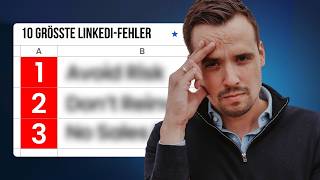
Robert Heineke presents a YouTube troubleshooting guide explaining why LinkedIn posts often fail to produce predictable inbound leads. He lists and explains ~10 common bottlenecks (e.g., too few contacts, unclear profile messaging, misunderstanding the algorithm, lack of outreach/messaging, missing call-to-action, no funnels/webinars, trust gaps for large deals, spreading across many platforms) and gives concrete solutions and resources (LinkedIn algorithm checklist, messaging systems, sales funnels, webinar funnels, Social Leads Academy, audits). The video mixes practical tips, case examples, and CTAs to services.
Chapters
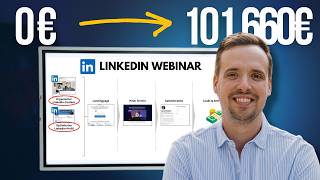
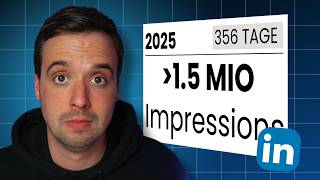
Every week, I talk to founders and freelancers who want to work with us because they've been posting LinkedIn content for months, sometimes for a year or two, and haven't generated any predictable inbound leads or customers through it. And we're going to change that in this new episode. Today is the big troubleshooting guide, where I'll show you why you might not be getting any inbound leads through your LinkedIn content. Hey, my name is Robert Heineke, and this channel is all about the big topic of inbound leads. You'll learn the latest strategies to generate so many inbound leads that you never have to worry about customers again, that you can really choose who you work with, and most importantly, that you can grow your business in a predictable way. Let's dive in. The first bottleneck is pretty obvious, but I see it again and again with founders and freelancers. They simply don't have enough LinkedIn contacts. One of the biggest advantages of LinkedIn is that you can find your target audience with just one click using the normal search, and then proactively add them. That was one of the main reasons why I was so enthusiastic about LinkedIn. I simply went to LinkedIn, typed in founder and Hamburg in the search, and the perfect list of people I could potentially work with came up. You can also enter the location here, say Hamburg, and then you have the people you want. You can not only enter founders here, I could of course, also enter something like founder. And now you have the perfect phonebook of the people I want. And of course, you want to network with these people week after week. That means that every week I have reached my limit. You can add around 100 new contacts per week until you get a message from LinkedIn that you have reached your limit, and then you can add more the following week. But you really want to reach this limit every week, because there is simply no reason not to m because the day will come when you can't add as many people as you can now. And that's one of the biggest advantages of this platform. Over Instagram, YouTube, Facebook and podcasts, you can find the people you want completely free of charge, even without Sales Navigator. If you put a bit of common sense into it and then simply add them, the goal really should be to have 5,000 or more LinkedIn contacts as quickly as possible. Of course, you can still gain inbound leads and customers via LinkedIn with fewer than 5,000. But the bigger the pot, the easier it is, right? And that's actually something I saw this week with a founder who was posting a lot, but somehow had 1200 LinkedIn contacts. I asked him, hey, what are you doing to build your network? And he was like, huh? What should I do? I thought people always come through content. And I was like, oh, of course you have to do that. And in this respect, you don't want to fall into this bottleneck, so to speak, into this problem of not having enough contact. Make the most of it every week. Let's go. The second bottleneck is, I think, actually one of the biggest bottlenecks I've seen in the last few months and weeks. I don't know if you've found our new YouTube format. There's a cool format I've recently created that I probably want to do regularly. It's our roasting format where I really look at the profiles of my LinkedIn followers and give honest feedback. The second episode should be out by now. And one thing that always strikes me is that when I look at a LinkedIn profile, I simply don't understand what the person is doing. And if I have difficulties as someone who really prepares thoroughly for potential customers and I look at profiles and take the time to do so, if I don't understand it, then the interested party will be even less likely to do it because they scan your profile in milliseconds. And if they don't understand what you do, how are they supposed to make an inquiry, so to speak? It means that it really takes a lot to develop a clear, attractive marketing message that resonates with the target audience and is immediately understood. So you have to say this is a bit of a champions league when it comes to copywriting and I think positioning, having a knack for making it sound so simple that everyone understands what you're doing. Maybe in our case too. If you go to my profile, we're turning LinkedIn into your best song channel. Right. I think everyone understands what we do. It's about us building song channels, so to speak. And underneath that, we've also included ones for whom, for founders and managing directors, and now also for self employed people in our social leads academy. I'm doing exactly the same thing with the profile slogan here, but it took, I don't want to say hundreds of iterations, but definitely 10 or 20 iterations to make this slogan so tangible. We did a huge amount of research. We analyzed a huge amount of inquiries that we received from customers in order to get these clear marketing messages. And that's really one of the biggest themes in working with us, working that out, because I feel like it makes a Night and day difference people then go to your profile and understand what you do best. Tips. For example, we've been releasing tricks like this on LinkedIn every week. Simple LinkedIn tricks that you can implement somehow. I'll get people from my consultancy and ask them what cool tricks they've picked up recently, and then I'll use them in my content. And that works really well. So that really means that your content can also be a bit thin. You have to be a bit more innovative, or above all, you have to integrate your team, so to speak, so that you can put out cool new content. Let's move on to the next bottleneck. And that's something I had to learn the hard way myself. Everyone's talking about the LinkedIn algorithm. I have the feeling that some people can't stand hearing the word anymore. But in my opinion, it's incredibly important to deal with it. Quite simply, I once posted on LinkedIn every day for 90 days because I thought more is better, right? And what happens, apart from a few sympathy likes and comments from my team? Absolutely nothing, right? No inquiries, no leads, no customers, nothing. And I was just really frustrated and really disappointed because I gave it my all for those 90 days and I didn't even have much reach at the end. And that's when I realized that posting a lot of content doesn't help. Sometimes we go back to two or three posts a week with clients, mostly just two posts a week, but we put a lot of time into them, and above all, we always find the formats with them that really work on LinkedIn. That means if you want to get inbound leads and customers via LinkedIn, and above all, inbound leads, you have to get at least 100,000 impressions in 90 days. 500,000 is better, right? And you have to understand that you have to reach a hell of a lot of people. Your profile has to have a clear marketing message, and then you'll get inbound leads. But most people have around 10, 20, 30,000 impressions in 90 days. And that's obviously not enough if you don't know where to find that number. It's relatively simple here under your profile, you can find that number here, so to speak. What we always like to look at is the last 90 days, because that's where you can kind of spot trends, etc. And you can see that in my case, it's almost 1 million. And that's, of course, funneling funnels, etcetera, into place. You get inbound leads every week and you don't really need to worry about customer acquisition, etc. Relatively simple. Exactly. To achieve this goal, you really have to know what's working on LinkedIn and what isn't. For the last three to six months, LinkedIn videos were all the hype and brought in an incredible amount of reach. Then, from one day to the next, LinkedIn scrapped the LinkedIn video feed, took it out, and now you can just forget about videos. I was just on the phone with a founder yesterday who said, hey, Robert, I've just hired a freelancer to prepare snippets and reels for LinkedIn for me. I'm shooting them now and want to post them. And I was like, hey, sorry to tell you, but LinkedIn videos aren't a thing anymore, right? It had just been shut down. And he said, I'm going to go through with it. But he knew that it wouldn't get much reach anymore. And on the other hand, you also need message market fit. That's what we always call it. In every target group, in every market, there are topics that work well and there are other topics that don't, and you just have to figure that out. We found a really cool methodology that lets us figure out within the first three months what works and what doesn't. A great example was someone we helped grow to over a million impressions in 90 days and they had relatively little activity in the first three months. And we tested this very message market fit, and now it really does regularly deliver viral posts and has particularly hit the 1 million impressions and has found a standard format that works really well. And it's just incredibly cool to see that when you have this message market fit, you hardly ever see a post with fewer than 100 likes. And I think it has things like this every two weeks or at least once or twice a month. And that's really cool to see when you have the message market fit, because it makes everything easier. You have your standard format, you know which topics etc work and that was another cool proof of how well it worked for us, so to speak. And for example, one of the customers who worked with us in founder mentoring was the Mystery Minds team and whom we got to the top. And now of course, we send people into funnels, etc. If you're just starting out and really want to know the basics, then grab our LinkedIn algorithm checklist. It's got 30 hacks in it, or rather everything you need to know about the LinkedIn algorithm, which is pretty general and most people make a lot of mistakes. So you want to get your hands on that thing exactly by the way I showed you, almost a million impressions, that's obviously still much, much better because we want to convert people somehow, and the more people you reach, the better. But it's really, really important to understand that you need reach. You have to know what works in the algorithm. And that's why you should always stay on top of these topics. I can recommend another resource to you. Exactly. I can include that too. Here I've put together 21 hacks for the LinkedIn algorithm. 21 LinkedIn algorithm hacks. You can watch the video again too. It really does contain the things we've learned over the last five years that I think are incredibly important if you want to gain reach on the platform. If you've hit 100,000, please let me know. Okay? Almost every week I get a message from someone who has somehow managed to create their first viral LinkedIn post using our instructions, sometimes just based on the YouTube videos or the algorithm checklist. And I always have people who have really hit 100,000 or 150,000 using our tips, which of course makes me happy. So feel free to shoot me a message when you've hit your cool milestone. I'm always really happy about it because that's exactly what I'm sharing with you today on YouTube or in the podcast is contributing towards Next bottleneck. Oh man. One of my favorites. Right? I think. Exactly. I think, where does it come from? I think that because of the hope or the goal of getting inbound lead. I don't want to say that I think a lot of people are too good for themselves, but I think they are more afraid of approaching LinkedIn for sales. Right. And it's a journey until you get a really stable supply of inbound leads. And that was also the reason why I always worked with direct messages, so to speak. And I think a lot of people fall into this mistake. We all get annoying direct messages on LinkedIn where the pitch is a clumsy one right in the first message, but that doesn't mean you have to do the same or shouldn't pitch at all. Right? Very important. Just because other people do something wrong, that doesn't mean you have to do it wrong to or shouldn't do it at all. It does mean that when pitching it always depends on the method and above all the timing. In my opinion, these things are immensely important. However, I see many founders and self employed people who never approach their potential customers and at least try to arrange appointments via message because they supposedly don't have the time. If everyone is honest with themselves, it's Always the fear of rejection. That explains why they don't do it. You get a few, I don't know, messages back that aren't so nice. That's part of the game. I once heard a nice saying in marketing. If you don't get someone upset about your marketing by 12 o', clock, right? And also on my newsletters and my advertisements, you don't want to see the kind of comments I sometimes get. Especially with metods or something like that. You could really put together a best of collection. It's part of it. Unfortunately, there's no way around it. But on the other hand, you have the chance to approach some of your really cool customers who simply haven't heard of you yet. And with the right messaging system, that works really well. That means that we don't try to pitch in our first message, but rather build up a conversation. Like at a trade fair or when you meet someone in person, you wouldn't just walk into a meeting room for a preliminary appointment and pitch your offer in the first sentence, but there is a preliminary conversation there too. You feel like you're gradually working your way up to it, so to speak. And of course, you do the same thing digitally. I'm very, very proud of this. We've now developed a really friendly messaging system where you use indirect pitches and above all, by building trust to see whether there's a need or not, and if so, you pitch an appointment. And that's the cool thing. Our messaging system gives you a feeling for whether the other person is actually looking for your offer or not. And if they're not looking for it, then you don't need to pitch an appointment. But if you're really looking for exactly what you're offering, then it's also a case of failure to provide assistance if you don't offer to help them with their problem. That's the cool thing about our founder mentoring. Um, we've put together 20 LinkedIn chats where we show all of our customers how to build trust, how to make a likable pitch at the end, and how to use that to book appointments every week. In the first three months of working together, we always roll it out pretty quickly because it's the quickest way to get appointments. The crazy thing is that most founders who work with us get appointments via LinkedIn in their first week once they finally start messaging and then with the right messages. Every week I get messages from my team saying, so and so just started messaging and already has their first three appointments. And I'm like, why did they Wait four months for that? Yes, because as I said, many people are really afraid of it, then they somehow claim that they don't have time for it. But if you do it with the right messaging system and the right messages, you can get appointments pretty quickly. One customer, for example, in the social leads academy, only rolled it out in the first week, just our welcome message, which follows a certain formula, and immediately had three appointments in her inbox. And that was cool to see. And I have the feeling that you have to experience it once. A, that the world won't end if you do the whole thing, and secondly, that you get appointments right and people are happy to talk to you if you go about it cleverly. For example, he really gets, what did he say, 30 to 50 appointments per month there. And really with big names, sometimes with board members of MDAX and DAX companies. And we do all of that via what's known as content rebound. We grab people who have already interacted with your content. We don't spend a lot of time messaging cold people, only warm people. But imagine having 30 to 50 additional appointments somehow via LinkedIn with the right messaging system. I think then you wouldn't have any more bottlenecks in acquisition and you could really choose who you work with or not. So it's an immensely important part. I can imagine that for many people, tackling this topic is a bit scary. If you need support, feel free to check out our social leads academy or our mentoring. Exactly. We can help with that sixth bottleneck. This point is a bit crazy for me because it's with the roasting format that I noticed it really hard. I'm always doing an experiment. When I Look at the LinkedIn profiles of founders and freelancers, I always try to approach them with this attitude. I'm now a prospective customer who really wants to buy. So it really looks like the profile has put me off a bit. But at least I have a rough idea of what the person does. And I want to buy something right or just book something right. And for most founders, I can't find any call to action at all. Right? So the profile is just a kind of dead end. You wouldn't know where to go. And for other people there's a whole salad of landing pages, appointment pitches, lead magnets, product pages and your like. Okay, should I download a book or should I download the lead mail? But where can I buy it? Yes, and that's actually one thing I can only pass on. Your entire LinkedIn profile should ideally be optimized for a call to action. If the first step to working with you is a no obligation conversation. Then put that everywhere and only that, right? So if you take a look at us, or me, for example, everything we do is aimed at the Social Leads Academy, because regardless of whether you're qualified for founder mentoring or the Academy, we'll find that out on the phone. At the same time, I want everyone to have heard the term our product and what we offer. And here too, there's Academy, so to speak. There are only two academies, so to speak. And I've only included the YouTube video here because it gives you a pretty good idea of what we do in the Academy. But if someone wants to book, they can click here and if the link works, they can say, yes, Robert, I want to work with you. They can request a place here and then they can book an appointment. A streamlined process. But yes, I can buy from us, right? And I have the feeling that a lot of people really do prevent their customers from being able to book anything. That means if you want to make a pitch for an appointment, and most people do that because it makes sense in the B2B sector, as it always starts with a conversation, you don't have to do anything additionally, like with us, I don't know. Not many people at our academy have anything like that. For example, with us, I don't know. If you want to get into mentoring, then the call to action here would be to request the audit. And that's one of the biggest points, especially during the conversation. You also have to work out what the interested party will get out of the conversation. Nobody wants to just chat with you. I'll have to learn that at some point. I always see all these profiles and websites and the like that say free conversation on them, but people don't want that. Right. You have to add value to the free conversation so that people notice it. That's why we called it a LinkedIn audit at some point, because we obviously look in great detail at what people are doing on LinkedIn, what works, what doesn't work, what bottlenecks we see, etc. And of course, both parties know that it's about collaboration. I don't think anyone goes to our website and books an appointment without knowing that it's potentially about collaboration, if we can help. But you have to create an incentive for people to book with you, so to speak. And that's one of the biggest bottlenecks. Put that on yourself. Imagine you're someone from your target group, the perfect candidate, and they want to book an appointment with you. Could they book an appointment with you, could they submit an inquiry and have you made it as easy as possible for them to do so via your LinkedIn profile? And above all, it's clear what added value they get when they book this phone call. Right, because what I'm doing here, going straight to the product, is a bit of an advanced strategy. The landing page really has to convert. Look, there's a VSL here, for example. Here you have a page with what feels like endless case studies here, with endless testimonials said to speak. And that is of course, something you have to have first so that you can really send people directly to the product. And that is why I would always start with the phone call, but also work out why people should book this call with you. Yes. Oh, that is a really big one. Let's move on to the seventh. Exactly. Nobody orders a large order via LinkedIn. Funnily enough, I always have anecdotes about people who have no idea but want to sell a heavy goods vehicle for a million via LinkedIn. It may not be the best example, but that is what comes to mind. And of course that is difficult. Well, of course, everyone can imagine that nobody writes you a direct message, but it is true. For example, for agencies, this applies to strategy consultancy, consultants or leadership coaches. But it also applies to, in our case, LinkedIn consulting. You just can't have projects of 20, 30, 40, 50,000 that someone will eventually write a message and say, hey, I'd like to book with you. Maybe they'll book a phone call. But even if they do, the biggest problem is still the lack of trust. Right. You can have the perfect offer for your prospect, but since they only know you from the Internet, there's usually a huge lack of trust, even with us. I don't know, many people have had bad experiences with all sorts of companies out there. Well, I don't want to say there are 1,000 out there, but there are a lot of people who just don't do a good job for their clients. And that leads to a lot of people being very skeptical, which is kind of understandable, which is of course always a shame when you're doing a good job. But that will happen to you in your industry too. And I don't know, I've picked out this example. I see it a lot with strategy consultants and leadership coaches in particular, because it's made very easy. There has to be a hell of a lot of trust before a managing director lets you in on their strategy or their team. Yeah. So if I thought I don't Know, someone wrote to me on LinkedIn asking if they could optimize my strategy. I'd be like, bro, what are your credentials? Right. What are your case studies? Who are you? How do we know each other? No, and until we've worked together for, I don't know, three, four, five, six months on a small test project, I would never let anyone in on my strategy. Same thing. I don't know. If a leadership coach contacted me and said, robert, I can really get the most out of your team, I'd be like, what are the case studies? Where are you even from? Right. And how long have you been doing this? Yes, but that just shows that there's an incredible lack of trust and that you have to earn it, so to speak. You know, we've found two cool options. First, you need a front end offer, right? That means a smaller entry level offer, ideally under 10k, so you can get your foot in the door and show off your expertise. With us, for example, the Social Leads Academy, the goal is really to show what we can do for under 10k. Yes, significantly under 10k, but for a good price. People work with us for the first six months and then realize, hey, okay, Robert and his team are doing a really good job. Um, maybe mentoring is something for me. Right? That's something to consider. Consulting firms, for example, do that. Agencies do that. For example, they do triage projects for three months. Consulting firms, for example, offer two day workshops. Agencies also offer one or two workshops. And that's always a good way to really get your foot in the door. What's key and what I haven't seen many people do yet. What I've done from the very beginning, for example, is to build your entire network regionally first and play with the idea that you can simply drop in on interested parties in person or meet in person. It sounds so banal, but many people are always like, Robert, I want to conquer the entire German region somehow. And I'm like, cool. But the likelihood of you getting someone to sell your heavy goods vehicle digitally via LinkedIn is difficult to. Right. And I have no idea. Especially with the agency founders we work with, who sometimes have retainers for three years, 4,000 are for projects with 30 to 50 degrees Celsius charge. Getting that digitally done and wrapping it up is really not that easy. But if you then drive past, somehow show up at the interested party a couple of times and show what you're capable of, then the deal will come, Right? And of course you can force that a bit. Both options work well if you use them Correctly, especially at the beginning, I would always go for option two. We also have several agencies that play a regional role and that achieve great results with it. And I would always recommend that. So in that respect, grab your region. You can enter everything in the search up here. Right. As I said, you can enter. I have no idea. Founders in Munich and I could. I have no idea. Could now enter something like E. Comm or something like that. And then I would somehow have the founders in Munich who do E. Com and I would have people who are active in that space. Right. That's not thousands of people. But especially in the B2B sector, you're not in the game of, I don't know, gaining 100 customers a month. Month, Right. And in that respect, it's working well. We actually had a customer, I think it was Holger on our side, who managed to go from initial contact to contract in 14 days and who actually met with the person in his city and then the contract was signed. And that really confirmed this regional strategy, so to speak, that you're simply closing a large trust gap, which is incredibly difficult to close digitally. I hope that makes sense. If you haven't implemented it yet, do it. Anchors number eight, My absolute favorite. Well, forget social selling. It's much better. So you really have to say, I think I can say with a clear conscience that we started the social selling trend on LinkedIn. I remember when we, I have no idea, typed social selling into LinkedIn. No, into Google over five years ago. And it was just a small, crappy Wikipedia entry, nothing more. And then we spent two years focusing everything on social selling, training thousands of people on how social selling works. But as is always the case with strategies, they always work for a while, usually two or three years, then everyone does it, and then it just doesn't work anymore. It's just part of, I have no idea, online marketing. But I think it's the same in many areas. Something always works for a while and then you unfortunately have to reinvent yourself. And that's what we did for two years. Post content, message, ping pong with interested parties, arrange appointments, close the deal, and that's it. You can do that, but at some point it just becomes too time consuming and you lose interest. Because as a founder, you naturally have a few other issues to deal with. Especially if you're self employed on your own, you also have a few other issues to deal with. And that was the moment when we delved deeper into the world of sales funnels and gained more and more knowledge of lead generation. Funnels, VSL funnels, webinar funnels, etc. And then we really started to build it up. The cool thing about it is once the sales funnel is in place, you get new inbound leads every week without having to send out any messages in completely independently of your own time. And that is, in my opinion, one of the biggest advantages. Two sales funnels have proven successful for us. Firstly, the LinkedIn lead magnet sales funnel, which I have made a big tutorial on here on 30 and 30 minutes. I'll show you step by step how to set it up. I'll show you straight away that there are a few nuances to it and webinar funnels, which are an absolute beast. That's what we implement with our customers. For example, no idea led to 100k in January this month with a webinar. So in 90 minutes we turned over 100k. That's really fun. If you really want to roll out this fan and be taken by the hand, then please get in touch with us. We're absolute professionals at it. I'll show you a cool example from Truts, for example, who we supported and not only helped Melites is also an absolutely cool case in point. Cool solution for software vendors and sellers. Cool software, a cool case. And we really, really got them to over 100,000 impressions. I've just seen the analysis from the marketing manager and you can see here that we launched a lead magnet funnel together with them. Of course you don't see the funnel here, you only see the post. You can see over 500 comments here. I think they collected over 250 leads that way and then they were sent into the funnel and booked appointments. And the cool thing is, the thing is, three weeks old and we're still getting inquiries every day from people who are interested in it. And we did everything together with Trutz and his team, from researching which topics might work and helping with the development of the content to the actual promotion. And now the next step for them will be to promote it further via LinkedIn ads, so called thought leader ads, and simply to get predictable recurring leads through them and send them into the funnel. Yes, exactly. I'll come to the webinar funnel in a minute. But really, if you don't have a LinkedIn sales funnel yet, you're making it unnecessarily difficult to get inbound leads via less. Exactly. I'll come to the webinar funnel in a minute. But really, if you don't have a LinkedIn sales funnel yet, you're making it Unnecessarily difficult to get inbound leads via LinkedIn because then the only option is for people to contact you directly via your content, which is extremely irregular even for us at our level. There are weeks when three people connect in because then the only option is for people to contact you directly via your content, which is extremely irregular even for us at our level. There are weeks when three people contact you, then there are two weeks when nobody contacts me. And for that I need a million pressures and everything has to mesh together so you have a long way to go to get there. And the second option is through messages. Those are the only two conversion points there are. Of course I don't know how to go through the profile and then people book an appointment, that can work. But as I said, you need insane reach. So in my view, if you don't have a sales funnel of any kind contact you, then there are two weeks when nobody contacts me. And for that I need a million pressures and everything has to mesh together so you have a long way to go to get there. And the second option is through messages. That's one of the biggest bottlenecks. And that's also the cool thing. When people have been posting on LinkedIn for months, for example, when they come to us, we sometimes crack it within the first three months. They get inbound leads and customers through that because they've already paid in a lot over the last few months and years and then we just have to convert them. So it's always the best situation when you come to us after you've already posted a bit because those are the only two conversion points there are. Of course I don't know how to go through the profile and then people book an appointment. That can work. But as I said, you need insane reach. So in my view, if you don't have a sales funnel of any kind is then we really only concentrate on the conversion side. Just roll out the funnels, so to speak, and then we're off and running. Lets move on to bottleneck number nine. And from my point of view I can really say straight away, no link in the webinar funnel. Right? Because we set up LinkedIn webinar funnels with all of our founder mentoring clients within three to six months and they all get inbound leads and customers from them via LinkedIn. I'm really immensely proud. That's one of the biggest bottlenecks. And that's also the cool thing. When people have been posting on LinkedIn for months. I'm proud of that because we've mastered the webinar formula so well that even if 10 or 15 people only attend the first webinar, they always get one or two bookings straight away that same appointment. Usually in the first run. It took me, I have no idea, six, seven, eight months before I received the first inquiry about my webinar. And I have held the thing at least 10 times, and now we've managed to get it pretty stable with each of our mentoring clients, which I'm really proud of. It's absolutely plannable every month. That means they just do the same thing every month with optimization things and then get more and more inbound leads and customers that way. And so I can say with a clear conscience. Exactly. If you don't have a webinar funnel yet, then that's an absolute bottleneck. With a proper webinar, you can not only demonstrate your expertise in the form of case studies, but also demonstrate a lot of trust through interaction and answering questions. Right. So Q and A interaction with people. People don't just want to experience. And here again, the key with webinars is building trust. Right. You can't achieve that with content, you can't achieve that with videos, you can't achieve that with a podcast. Right. A webinar is an incredibly charming way to demonstrate your expertise and convert people at the same time, if you know what the final pitch should look like. And the best thing about it is, from my point of view, in the B2B sector, you don't need crazy numbers. Most of our mentoring clients have 15 to 25 interested parties at the webinar, and this often results in two to five leads and one or two new projects and orders. Imagine you have that every month and you have to invest an hour plus two hours of promotion, and that's your entire acquisition for your business just to get a steady stream of inbound leads and customers. Right. And that's why I've always said that a webinar funnel, if done right, is kind of acquisition for lazy people. I think that's the main reason why I'm so invested in it and have been working with it for years. Because it has the greatest leverage for the time invested, right? Exactly. If you want to see or roll out our exact webinar funnel with us, then let's Talk. Go to leadersmedia.de if you want to see what kind of results it conjures up and what we've learned in five years, feel free to watch this YouTube video. I've documented everything I've learned in five years and over 100 live webinars. There's some really cool stuff in there and it's pretty advanced. So if you're up for it, feel free to watch. Exactly. Bottleneck. Let's get to the finish line. And that's actually something that I see again and again. And that's one of the biggest problems that I see that as founders or even as self employed people, I think it's difficult for us not to do exciting things. And that was also the reason why for a long time we didn't just use LinkedIn but also Instagram, podcasts and YouTube. And I can tell you how well that worked, doesn't it? It always sounds so banal. Yes. Then I just grabbed the post and post it again on Instagram. Then I take this video again and put it on Instagram and couldn't I somehow turn the little YouTube video into a podcast? But it takes up so much brain power and then every platform works completely differently that we really pulled the plug on everything. 3 years ago. I remember AC freaking out when I said we were stopping the podcast because she used to do regular episodes there and was just really sad that she couldn't do any more. Instagram wasn't that painful. But I also really enjoyed YouTube. We shut everything down and focused solely on LinkedIn. Suddenly, after six months, we were getting inbound leads every week via LinkedIn and we would never have achieved if we had continued to use these other channels. I know how difficult it is, but maybe that's the challenge you have to take to go all in on LinkedIn or to ultimately say, hey, if you really want to have inbound leads and customers, then focus on one channel and leave everything else alone. Right. It can be another channel, it can be Instagram, it can be YouTube. The big advantage of LinkedIn, which is what really convinced me, is that you can find your group with one click and add them proactively. Tens of thousands of CEOs, managing directors and decision makers from your dozens of groups are on LinkedIn every day. And the big question is, what do you do with that? You don't have that with Instagram. They may be online, but you just can't find them on Instagram, Facebook, I don't know. That's where you legally find business contacts. And with YouTube and podcasts, you really have to spend months building up reach for the whole thing to work to go back to the headline. If you're already posting on LinkedIn, yes, but no leads or customers are coming through, then it's due to one of the 10 bottlenecks I've presented to you here. If you already have an initial hypothesis as to what might be going wrong for you, perfect. That was my big goal to get this whole thing right. If you'd like us to take another look, then yes, Please go to leadersmedia.de and book a LinkedIn audit with me and my team. I conduct many of the team appointments myself and will take a really detailed look with you at what might already be working for you and more importantly, what's going wrong. I'll show you how we might be able to help you if we can really ensure results. If you're self employed and really want to be taken by the hand and have a clear LinkedIn strategy for reach and paying customers, then feel free to take a look at our Social Leads Academy Apply there. Same thing. I'd be happy to take a look at your LinkedIn profile if you'd like the document. Feel free to write LinkedIn troubleshooting guide in the comments and I'll send you the link free of charge. Then you can browse through the whole thing again at your leisure and take a deep breath and if you enjoyed the video, please give it a like we'll see you in the next episode. See you soon. Emergency.