Wie ich eine 5 Mio. Personal Brand aufgebaut habe
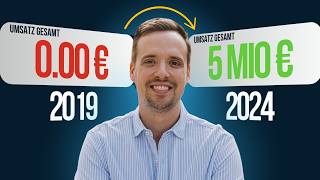
YouTube monologue by Robert Heineke explaining how he built a personal brand (claimed >€5M in sales) and practical steps to use LinkedIn and content to attract clients. He describes content volume (500+ podcasts, YouTube videos, LinkedIn posts), the limits of pure expertise, and a practical framework of content dimensions—expertise, values, dislikes/polarizing positions, lifestyle/status signals, backstory, failures and successes, team/case studies—to create commonality with prospects and generate warm leads.
Chapters
Let me be completely honest with you. Building a personal brand as a founder or managing director is one of the greatest opportunities there is currently. If you manage to build a personal brand, you will not only become incomparable, you can charge higher prices, but above all, you will receive consistently warm inquiries and leads. My personal brand has meant that in recent years we have been able to generate over 5 million in sales in an extremely competitive market. And we have become truly incomparable because people come to us and want to work with me and my team. And in that respect, I have learned a lot over the years. I have published over 500 podcast episodes, over 500 YouTube videos, over 500 LinkedIn posts. And in this video, I want to show you exactly how you can build your own personal brand, what really matters, and above all, what the pitfalls are when it comes to it. Let's jump right in. And with this video alone, you will be able to go out and build your own personal brand via LinkedIn in just a few weeks and months. Months. Before we jump into today's episode, two more things. Firstly, I would be incredibly happy if you would like the video straight away to give the YouTube algorithm a little boost. And secondly, if you haven't heard yet, at the end of February, we are holding our next Mastermind event in Hamburg. 30 founders and managing directors will gather there to discuss topics like those discussed here today. Above all, this event is aimed at founders who have big goals this year. If you want to know what's happening and how you can be involved, click on the link under this video and get in touch with us. Now, let's jump in and maybe just briefly explain the background. Before I really show you how you can build a personal brand, I really have to say that I've grown into it a lot and have never approached it as strategically as I'm going to show you today. What I'm showing you is really the shortcut. I wish I had had that seven to eight years ago when I started with content. But today I can really show you in a short space of time to explain the background again, why the topic is so interesting, as in our case, especially as LinkedIn consultants, five years ago, six years ago, there was hardly anything going on in that area, right? Since then, an incredible amount has happened. Anyone with a laptop is now a LinkedIn consultant from one day to the next and can show exactly how everything works, right? That means that more and more people are streaming into our market and have, so to speak, flooded into the market. And that means that interested parties today of course, look at my profile and say, if they don't know me yet, hey, another LinkedIn guy. Why should I trust him? Why should I book with him? And that's actually the case in most industries that you naturally have many providers, thousands of providers, whether it's in the recruiting sector or in the e commerce sector, you name it. I think there is hardly any industry where there isn't that much going on. And this is where the personal brand comes into play, because it is the chance that your prospects will actually say, hey, I've listened to two or three people, but I've been following you because I'd like to work with you. That means you really become incomparable. And above all, you can charge higher prices. It means you don't have to get into the price war because you become incomparable. Right? There's Robert Heinecke, there's leaders, media and everyone else might also do LinkedIn. But we have this personal touch, and that is absolutely crucial as to why it's worth starting with. Let's jump in. I've mapped the whole thing out. And let's jump into the part which is perhaps the first part, if you want to build a personal brand. Like this is the topic of expertise. And in this case, that's really just a small part that I'm presenting here. That doesn't mean that you only talk about it on a small level in your content, but the majority of your content should continue to be expertise. But what I want to show is that if you only give out content about your expertise, so to speak, then you are completely comparable. For example, if I were to give out content all day long with all the LinkedIn tips that we somehow have, there are 1,000 other consultants out there who might even do a better job than us. I wouldn't say that, but maybe there are some out there, uninterested people can really only compare us based on this expertise, so to speak. And that is incredibly difficult because it is a pure price war. People then say, hey, why should I work with you? You are somehow more expensive and will choose someone else. That means that expertise is still important, and at best, it is important to be innovative in this area. And that is the reason why we talk a lot about LinkedIn sales funnels, for example, because it is our work. I discovered it on the whiteboard with my team and tested it and brought it out into the world, so to speak. And now it will probably take, if we are lucky, one or two years until everyone is suddenly talking about LinkedIn sales funnels, right? We experienced the same thing with social selling five years ago. We were the first to talk about social selling. I remember when it wasn't even an issue. Everyone was talking about personal branding and copywriting on the platform. We went into social selling and two years later, everyone was suddenly talking about social selling. That means expertise is always comparable, and especially when you create content, especially on LinkedIn. Start with your expertise, so to speak, but be aware that you will always be comparable on the flank. Right? You can always try to use the latest strategies to keep coming up with new things, but nevertheless, a prospective customer I don't know to whom I present a sales funnel concept will find it relatively quickly, perhaps somewhere else, because people have taken over the video. And you have to understand that what was worthwhile for me was also to show expertise, to think a little in headlines. So that means I want to make sure that people know that they can get the best strategies for LinkedIn content from me. I don't know. LinkedIn can solve all your problems and I write about content, how people can get more reach, understand the algorithm better, etc. Yes, that's one dimension of my expertise. Then the second, and that's actually the big headline for my expertise that I want to stand for. The topic of LinkedIn sales funnel, and that's always helped me a lot to really grab a term that you want to stand for and which is ideally also a new opportunity. That's how it's spoken in English. So it's just a new method that people haven't heard of yet. Maybe another example, if you were to try to become the guy for SEO, you wouldn't get anyone out of it. So it means that sometimes old topics are needed too. In our case, it's not an old topic. Sales funnels have been around for a few days. But the combination with LinkedIn is new, right? Perhaps a good example was Perspective, who built funnels and turned them into mobile funnels, right? They also just put something in front of it, a new idea. Hey, funnels in themselves are cool on desktop, but now in the mobile age, everything has to be optimized for mobile. And people are like, okay, I need that. Then it's about song strategies and that's it, right? So the expertise part is the part where you will always be comparable. You can have the craziest and most innovative ideas. Let a few months go by and other people will grab them and that's it. One dimension that I'd like to start with with you is the topic of values, right? Because Values are actually something that is simply incomparable. And at some point I stumbled across a cool list of values here. It has all the values that there are, and there is also a large number of values that you can somehow get an overview of. And it's really, really cool that you can really fly through here and see what appeals to you and what doesn't. And that's exactly what I did. I don't know. Friendliness, optimism appealed to me, and I picked out 10 or 20 values and then started making posters based on them. So, for example, a big dimension for me is positivity, right? Numerous posts have come from that in the last few years, so to speak. And people should know about me, right? That I'm a very positive person. From angles such as why I never give bad reviews on Google, I consciously shield myself from negativity. And here it's perhaps not quite positivity, but what a handshake is worth today is more honesty and hanseatic values. Maybe down here, for example, down to earthness is a really good angle, right? That you can put in there. Exactly. I've only ever brought three examples here you can get a lot more involved. For example, one of them is fun for me too, right? Fun at work, Fun working together, no matter what it is. I like to laugh somehow, and not just in the basement. And it sounds so banal. And when you hear that, you might think to yourself, yes, I like to have fun too. Perfect. I assume if you watch my videos, that you have a bit of fun too, but that's not for everyone, so to speak. I'll never forget the story of how someone came to our office to work together and we had a mod. Maybe I'll dig it out again sometime. Aim high, move fast and have fun. Yes. So set your goals high, be fast and have fun. And an interested party came in and said, I'll go along with the first two things, but I'm not here to have fun, right? Can you imagine how the conversation ended? We didn't end up working together because we just didn't feel like it, right? In the end, I didn't offer her anything because I thought, hey, if you can't laugh when you're working together, what's the point? And that's how these pictures came about. I don't know, because I had this pocket bike in the office in Hamburg and then made a post like that. My work should be fun, right? Because we always used to do Instagram stories where we did the craziest things in the office and People were always like that. And you work at it. Right? Um, a really big dimension of me personally, so to speak. Of course, not everyone has to be there, so to speak. I think a bit of down to earthness is maybe the headline. Right? So you definitely won't see me in pictures with any Lambos and Porsches, etcetera, so to speak. I don't think that has anything to do with the fact that I couldn't afford it, but I could do it with a clear conscience, but just not a dimension of me, so to speak. Right. Maybe the underlying point is that I wouldn't get an incredible amount out of it. Yes, I think they are cool cars that are fun to drive, but at the same time I don't believe in lifestyle marketing or I'm not the type for it. Right. My approach is more to use my expertise to convince people in the end, so to speak. So to speak. So that people say, hey, I learned an incredible amount from Robert instead of saying, hey, I always see Robert in my car with his Lambo. That's why I work with him. Yes, but that's just something I value, right. I have enough friends of mine who all drive Porsches and like to show them off. Good for them all. Right? I have no problem with that at all. But for me personally, it's just nothing. Right? So that's exactly the kind of post that came out of it. If you're so successful, why don't you drive a Porsche? Right? My uncle once asked me, and maybe it's also a topic here. How much is a handshake worth today? Right? And funnily enough, we hear a lot on the phone when people talk to us that they find it very pleasant, right? That we are not the 37th ruly guy who somehow tells people in his Porsche, in his content, that we are scaling up tomorrow until everything somehow goes through the roof. Right? That is simply part of my values. What I think is important is that you really live up to the values that you are. Right? If you are the type of person, I don't know who likes watches and Porsches, then you should put that at the forefront. Then you attract exactly the people who tick the same way. And the best thing that can happen is that you achieve a resonance principle through a brand, so to speak. And that is exactly what we want to achieve, that you have more customers from those you want to have. Right? So from my point of view, that means values are one of the coolest dimensions, especially in the exercise that I did here. So I have broken this Book down to my personal brand, so to speak. Another dimension that I definitely want to play more into in my content, because it's one where you're so unassailable. And as I said, you attract the people you want. And that's the coolest thing you want to have. Another dimension that's not quite so obvious is the topic of dislike. Right? Because as a personal brand, you have to find things good and bad. I was always given this tip, which I somehow never really celebrated, that you have to polarize radically. I think I'm just too positive for that. And just let people live the way they are, right? I think people can always do what they do in their own world. And I don't think you have to force such incredibly harsh things on people. People should do it. It worked for me too, so you don't need to worry about that. But you can do really cool things. For example, I don't know, city life. At some point I said no to Hamburg Interstat. I think I lived there for five, eight years myself. And then posters were made. What else does the city have to offer? Because we noticed, funnily enough, that the people we work with now, the Greens, are all kind of country bumpkins, right? That came out in the comments. And it was kind of funny to see that there was something in common then, I don't know, a version, something like ghosting. So having certain values in sales, with the handshake here, for example. Ghosting in sales, since when is it normal? And it got an incredible amount of support. And that shows a certain value, but at the same time an aversion that. I just don't like it when people don't keep their word. Right? Relatively simple. And then, for example, I don't know how to declare alcohol a bit of an enemy since I stopped making money with my head, I don't drink alcohol anymore. Right? That also spreads things out, so to speak, or separates the target groups a little. Because I think my avatar, the people we work with say 100%. I don't drink a lot of alcohol. And I don't know, the average drunk isn't our customer, at least that's what I assume. And it's a really good polarizing topic where you can show your stuff really well. And these angles always work really well, right? As you can see, 44,000 impressions here. This topic works. And there's the topic too, which isn't technical, but something like alcohol, coffee, sport, or something like that obviously works if it's a dimension that you don't read about every day. I don't know. I would have written that I like to have a beer after work every day, but a lot of people would probably have agreed. But it wouldn't have been nearly as polarizing as this topic, right? We did. That means values and aversion from my point of view, two very basic dimensions. And what you also see is that the more posts like this you add and at best you put in at least one post of this dimension per week. For example, one post on values a week, a post on dislikes per week, the three more dimensionally I always call it. You do too, Right? So then you suddenly become a personality. Okay, I understand. Robert has an aversion to alcohol, right? I don't know. He has business values from Hamburg and it is important to him that you are not gossiped about. Yes. So that means that things like that are really important for those interested. And I don't know, I still remember when I made this Carne post that I somehow Carne Robert Heinecke. And that was the funniest example. Exactly that a few months ago, um, somehow. Yes. I think I lost almost 12kg now because I mostly only ate eggs and meat. Yes, Sounds crazy. It is relatively crazy. Erm, but funnily enough, someone came into the phone call a few days later and said, hey, are you still doing this carnivore thing? I did that a few years ago too. Right. And you can imagine the conversation was completely different afterwards. And he then became a customer. Yes. From an angle where you don't immediately think about how it will bring in a customer, but it brings a commonality. And that is always the hook of the personal brand that you always try to create commonalities. At best, that means that all people who are down to earth can somehow get infected with me and say, hey, I'm down to earth too. What Robert does sounds good. All people who somehow enjoy their work say to themselves, hey, sounds like a funny guy. I'll get in touch. Right? That means that you are actually in the game with the personal brand. To somehow create commonalities at the same time, so to speak. And at the best, of course also to get involved in. It's a cool idea that I picked up from Carl Weikeche at some point. It's this status delta idea that you live the life that your customers would like to live. That's why, for example, we'll come back to why I regularly talk about how I spent the whole winter in Spain, so to speak, and work remotely from here, because I Simply know that my avatar and my customer. And you might also want to work from Spain in the winter, I don't know. And talk about it. Exactly. Then we went through the three of them. Let's go over here. From my point of view, you can tell the backstory every now and then, once a quarter at best. And you can definitely do that regularly in a YouTube video and in a podcast. So why do you do what you do? Yes, because people are, of course, always super curious. How did the guy get there? No idea. Two weeks ago, Robert opened his laptop and decided that he was going to do some kind of LinkedIn consulting to explain to people, hey, we've been doing this for five years. We tested all the other online platforms and then stumbled upon LinkedIn. Yes. We simply typed in Managing Director Hamburg and had such a huge effect that we can reach our target group here really easily. Then we started with content. Nothing happened. Right. Then we sort of got to grips with the algorithm, built funnels, and then the first leads came and from there the whole thing grew so that people understand, ah, that's why he does what he does. Right. So having a backstory like that is usually the first part. If you've ever been to one of my LinkedIn workshops. The first part, I always tell you exactly that. This journey, how we actually got to where we are, because people are just naturally curious. Right. There are now so many bidders who, as I said, have created a website in one day and on the second day, are professionals in the subject, but have no backstory as to how they actually got there. And when people then say, yes, I just wanted to make money difficult. Right then, from my point of view, there is always a topic that a lot of people somehow don't dare to share. In the end, I always think a bit in terms of where you can reach people in order to create common ground again. Right. So that means that when I talk about jogging and running, I know that I'm reaching all the people who also run and jog. Yes. And that's the cool thing. And of course it should overlap with what you actually do. Right. But for example, I've recently started talking more about running again, because I'm just doing it a lot at the moment. This year I'm going to run my first marathon and my first ultramarathon. I wrote that down on the whiteboard next to me on the left. Yes. And then I take people along with me a bit. And of course, you always have to play the business angle a little bit. How does that somehow Relate to business, right? That's very, very important. But it's somehow become totally established on Fridays in particular to make a post like that because everything is a bit more tranylo anyway. Um, and to do that, I feel like the same game productivity, a bit of the headline. Um, for example, that's a topic that always works well, in my view. So you can see here, I don't know. Crazy. My cell phone is completely superfluous now. Who answers the phone these days? Please just don't call me. Two weeks without business and completely designed. Think I'm crazy, but I want to live to be 120 years old. That's just a dimension that I've identified in the content over time. That always works well, right? Because I don't think there are topics that interest founders and managing directors, right? And I just noticed that there are topics that interest me too. And that's why I keep playing this dimension. Right? Then the topic of remote work is, I think, also important. What do I have here? Everyone talks about vocation. I've made it my life. The most important thing I learned from Spanier also because I know that my avatar likes to work remotely, so to speak. And even people who work for us as consultants also like to work remotely. So you should include that in the topic as a whole. Works quite well on the platform in that you can play it over and over again. So in my view, this is a completely underestimated dimension. If you like skiing, then talk about going skiing. If you like running, marathons, then do marathons. If you like wrestling, talk about enjoying wrestling. So dare to play this dimension, because in my view, it is completely underestimated. And then people really have something with which they can relate to you in relationship. Especially if you really want to get leads via social platforms, right? That's why we call the Social Leads Academy. All about finding common ground, right? And the more you give people things they can find in common with you, the quicker they'll find you likable. And ideally, the quicker they'll become your customer. So you won't believe. I have no idea. When I hold a workshop and there are 500 or more people there, how many people get in touch with us afterwards simply because they say, hey, Robert, your workshop was incredibly nice. I have the feeling that you're doing a really good job. I want to work with you, right? And that's exactly what you can do with stories like that, that you tell people a little bit about who you are, right? It's not about building something that you're not right? I don't know, you could meet me somewhere on the street in Hamburg and I would be exactly the same as I'm explaining to you right now. But to tease out these stories, so to speak, and funnily enough, that might even be the framework. I had this crazy idea in the last few days to create 50 LinkedIn posts in one go, because I just think it's an art to tease stories out of people so that you have enough material. And I can imagine that this will even be the framework here for having such different areas in which you can, so to speak, extract stories from people from which you can then ultimately create content. Yes, maybe that makes sense. Exactly. Then a super. From my point of view, super nice dimension. Because, you know, even on a platform like, I don't know, on every platform, people are always talking about what great guys they are here and how well everything is going. And even among friends, I think that's always the case. I also have that feeling with some people I talk to. It's always just about how great they are this month. And that actually always shows you to do the opposite, Right? So really to go the opposite. And I have the feeling that either way, it's just really nice to say when you've made mistakes or had a low point. What I've learned over the years is that at best you do that half a year or a year later, right? Because I don't know, if I say this month things aren't going well for us at all, then that's not really a cool signal to the outside world, right? If interested parties talk to you and say, well, Robert, I've just heard that things are going pretty badly for you. Right? Will you still be around in three months? Well, and that question really comes up in these economic times. I'm happy that things are going better than ever for us, but I don't know. Everyone knows things that went badly six months ago. I don't know. My dreams were always laughed at, right? That's maybe a bit rough, but something like this, for example, failing a year and graduating high school in 30, Robert, what will become of you? Right? Really? I know when I stumbled across these reports and read what the teacher had written about me, and I thought to myself, how can you demotivate a child in such a professional and structured way as what was in the report? Right? And I wrote that in this post because I think it shows a bit of weakness to say, hey, you've got a 3.0 in your high school diploma, but you're super nice, right? Or, I don't know, my biggest mistake as a founder. This thing helps me when things are going really badly. Right. And to show that a bit with this game, yes, things are going well here, but things are going badly here too. Right. In my view, you shouldn't do it so much. You shouldn't overstretch it somehow. People sometimes only read the headlines and if you share two bad failures every month, that might be a really cool framework. But if someone reads it like that, they'll think, oh, man, things aren't going well for Robert. Right. Because you react much more to these negative headlines than to positive ones. So every now and then, throw in a cool story, maybe sort out the biggest mistakes of the last few years, because it just makes you a bit more approachable and gives you a bit of a feeling for where the market is or where LinkedIn is. I remember 222 or 32, all posted in January in their first post. I don't know how great the last year was and that they're really great guys. And then I brainstormed with Farina and said, hey, what can we do differently? And I went in with the headline. I missed all my goals in 222. Right. And I really did, I think, miss nine out of 10 goals in that it was an open one. I could have seen it as a success, of course, I achieved my big goal, but that's exactly what worked. And that led to, I don't know, absolutely viral posts, I think, over 70,000 views and always thinking, what are everyone saying? And how could I say the opposite? Very important in the content. Yes. Then of course, you have to tell the opposite. And I think that's a bit of a danger with my target group and maybe with you too, that were a bit too low. That's probably how I feel regularly anyway. I don't know. You can see these S's here with me, too. I still find it difficult to explain to people that we made, I don't know, over 3 million with sales funnels, because I always think, okay, I don't know, I don't want to force that on people, but there's always the danger that you're just too low and a bit of imposter syndrome, that you don't build up your successes and your authority while other people talk too much about what they've achieved. And that's usually not even really the reality. Um, I have the feeling that there are two dimensions. Something like team or something like. That is a cool dimension. Right. Erm, that's when you prove that in our case, I don't know, you're not a one man show or that you've achieved 30,000 LinkedIn followers. Exactly. That belongs here too. For me, that's a success that you can share. And there was also, for example, like, I don't know, some people say, yes, you shouldn't brag about the number of followers or something like that, but in the end I forced myself to do it a bit and even bought sexy balloons here. Because you can simply show people your expertise and say, Hey, 30,000 followers on LinkedIn is not something you can just do or achieve. And above all, I don't know, 3 million doll million with a penny is not something you can achieve either. But these are the things you have to do so that people understand, okay, this guy has a plan, right? He doesn't just talk. And that's why the title of this video is that we made 5 million with my personal brand, if not more now. Uhm, so that people understand, hey, this isn't someone who earns, I don't know, €10,000amonth and tells me something. Right? The much better angle, so to speak, that you can do is of course, case studies. Right? And I see that again and again with customers. I haven't picked out that many posts. We have a lot more on that. Um, of course, always telling what the customers achieve when they work with you. And I have the feeling that it's very, very thin on the ground with many providers. Right, but that's the ultimate proof that you have a plan that you can say, look, he worked with me, he worked with me, blah. And that people then go on a list like that. I have no idea. The shortest route is always with us. If you go to leaders media, where you somehow end up recognizing X number of people, like Daniel Bitmont, like Kevin, like Anais, who became top voice, Anna Maria Grausgruber, like Eve. And we have over 300 Google reviews, Christoph Nijischauswirtz, Ruben and so on. And the list is much longer. But let people. Okay, that's crazy. All of these people have worked with him before. Okay. He has to have a plan at the end of the day, Right? What I can recommend is that if you look at the whole picture, it's of course a bit overwhelming. I have no idea. Where do you start? When I look at it, I see an incredibly good framework for sitting down for two or three hours and really brainstorming. What kind of stories do you have in these areas? Yes. And funnily Enough. I'm going to take this from the exercise myself because we're having the next content call for LinkedIn in the next few days and I'm going to do exactly that in preparation. Right. What new stories do I have on the topic of positivity? I have no idea. I think everyone is aware of the election campaign. Right. I've turned off the news. Right. It drives you crazy. Yes. What stories, what funny stories have I experienced recently? Yes. What funny things have happened? Then down to earthness. How can I tell people. Yes. That Robert is a really relaxed guy. Right. And that you really go through all the things and just brainstorm ideas. And the cool thing is if you really take two or three hours, you'll notice that your picture is becoming more and more three dimensional and then you can create concrete headlines for LinkedIn posts from it. I really think that with this framework here, you need exactly the expert content, so to speak, that you have to do elsewhere at best. Right. Well, that doesn't really cover it, but if you do this, you'll probably have social content for the next six months. Right. And the cool thing is that you can then do a recap in six months or three months. What went down well with people and what can I reinforce in the next few months? I don't know. If things from school went down well, I'll talk more about school. Yes. If the team went down well, I'll talk more about the team. But you will notice that with every social post, you become more in confidence. Yes. Because people say, hey, I want to work with you in some way. You will be able to charge higher prices because people will then say in conversations, yes, I might listen to two or three other people, but then I'll come back and say, hey, what you said convinced me the most because I've been following your content for a long time. And thirdly, I think it's also a personal brand and I think I have to really sell that to myself this year. I think it's the only chance of not having to worry about your job and your business in the next few years because, I don't know, everything else is being replaced by ChatGPT. Yes. But this trust in you and your person, that you're doing a good job for people, that's not going to go away so quickly. And that's also the reason why I'm thinking a lot this year about how I can give my own personal brand a boost. But I also made this mind map for myself to some extent, because I simply saw what I actually stand for and how I can play it more, so to speak. Right. And in that respect, I hope you have a lot of fun with it. Right. Maybe take a screenshot and just go through it. Right. And if you've already made a video about thinking about a personal brand, feel free to write in the comments whether the video helped you. I would be incredibly happy. And then we'll see each other in the next video. See you soon.