Festival of work: It's time to claim your seat at the table - Nina Caroe and Robin Daniels
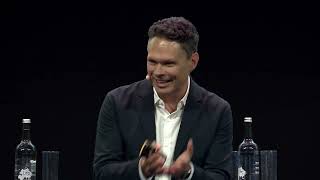
This is a live conference talk (Festival of Work) by Robin Daniels and Nina Caroe from Sensai about "human success": a people-centered approach that argues businesses should intentionally invest in employee growth, engagement and performance to drive organizational outcomes. Speakers define human success around providing the right skills, coaching and motivation, identify three core pillars (learning, performance, engagement), and describe HR operating changes (strategic HS partners, project/innovation teams, moving from administration to transformation). Sensai frames itself as a practitioner by hiring the world's first Chief Human Success Officer and applying these ideas internally.
Questions this video answers
The world's first Chief Human Success Officer (hired at Sensai; present on stage).
Chapters
Good afternoon, everyone. I hope everyone is doing well and enjoying the festival so far. Got a great session coming up, so I just want to quickly introduce you to Robin and Nina from Zenzia, and we'll go through today on the business transformation, but also the human success, success story. So I hope you find the session valuable. Without further ado, over to Robin and Nina.
Thank you, Steven. Thank you.
Thank you so much. Thank you.
All right, can you hear me? Can you hear me? Is this. Is this thing on?
Can you hear me? Okay, I think they can hear me.
Human success letters. How you all doing? You doing well? You're doing well? All right.
Okay, okay.
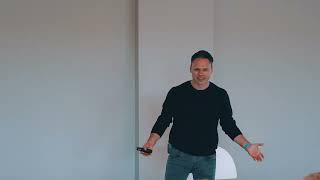
Okay. It's gonna get. You know, after lunch, we figured the energy needs to come up a little bit. So I used to live here in the UK for a few years. I always have a strong affinity to come back here. My son was born here. I love. I love being back in this country. I spent a lot of my career in the US But I actually am from Denmark, and I'm here with Nina. And we want to talk to you today about this idea of human success. But let me ask you a question, just to start. If you think about how you got to where you are today in your life, did you get there just because you worked hard and you were so brilliant and you just had something that nobody else had? Or did you get to where you are today because lots of people invested in you, gave you the opportunities that you needed, pushed you in the right direction? Maybe it was a parent or a sibling or a manager or a coach or somebody in your life. And we know how important it is to really give people the opportunities to grow and learn and develop every single day, to become the best version of themselves. And we're living in a time when too many people feel like that's not happening in their life. And we believe that we're in this moment in time where we need to really rethink and reevaluate how we think about people, how we invest in them, given the opportunities they need to be successful and happy every single day. And this is what we call human success. And we're going to talk all about this. We're going to talk all about what it is and how we are trying to lead the way by becoming our own best version of it, ourselves, in our company. So Nina is going to share with you what are we doing in our company to lead the way on human success. So I'm Robin Daniels. As I said, I spent a lot of my career in tech. I worked at Salesforce, at LinkedIn and other companies. And I've led hundreds, maybe even thousands of people throughout my career. And this is my passion. My passion is all about how do you create this magical alchemy that gets the best out of people so you can ultimately achieve the results that you need as an organization? That's all that people coming together really is all about. And when you think about it, I want to start with something that might seem a little trivial, but it's Fairly obvious that 100% of your customers are people and 100% of your employees are people. And as Simon Sinek says, hopefully most of you know who Simon Sinek is. If you don't understand people, you don't understand business. The art of management or leadership is all about how do you get the best out of people every single day so they can do the best work of their lives, which ultimately will have the net effect of impacting your growth, your profitability, and how you ultimately become successful as an organization. And when you see all the trends, every single day that most people are unhappy, they want to quit their jobs. You know, we see this here, actually, I just saw one that came out, I think it was last week or maybe two weeks ago, the number has gone up. Now it's 70% of people want to quit their jobs. And when you dig deep into the research of why that is, why are people so unhappy? It's because nobody's investing in them. They feel stuck in their lives and their careers. They don't know what this is all adding up to. They're just kind of treading water. It's very hard to be motivated and do great work if you don't know what it's all for. And at the same time, we also know that employees would stay longer at a company if those companies invested in the growth and development of those employees. We also know that effective managers, people who really get it, who lean into their employees development and growth, also, of course, see better results, better outcomes. And finally, we also know that employee development can increase outcomes and happiness by a long shot. I'm going through this really quickly because we all know this. We see these stats over and over and over again every single year. You could have shown stats from five years ago or 10 years ago and had it really changed that much. And so it's obvious that something needs to change, because we also know that the companies who have figured out how to solve this, they see huge benefits from it. And we've seen the statistics as well. You've seen all the Data, probably it says that engaged employees, they show up every day, different energy, different motivation, better ideas that will help solve the challenges that you have. And what is an organization? Let's just take a step back. An organization or a company, all it is, is a group of people trying to solve challenges every single day. Sometimes those challenges are small and they seem trivial, and sometimes they're big, existential challenges. But all a company is, all an organization is a group of people trying to solve challenges. And if you're not creating an environment where people feel motivated and inspired to do so, are those companies, those employees, bringing the best selves to work every day, their best ideas to work every day? Probably not. And finally, we also know, of course, that these organizations who have figured out how to solve this, they also see better outcomes, better profitability, better increases in growth and so on. And if you ask most CEOs, most CHROs, most chief people, officers, most CFOs, they would all nod along to go, yeah, yeah, of course, people are our most important thing, right? We've heard this over and over again. And then they go right back to doing the same thing, which is about chasing profits, chasing growth and so on. Because maybe we lack the environment, the leadership, the tools to actually be able to invest in our people, truly. And so the time to invest in people is absolutely now. We believe that it's not just about growth and efficiency and profitability, which are important. You're not going to be around as a business if you don't have growth, efficiency, profitability and so on. We all know that, especially the last couple of years. But these are also, in some ways, a little bit uncontrollable. It's about focusing on people's growth and development, productivity, happiness and success, because those are things that we can control. We can invest in our people. We can give them the right tools, the right motivation to succeed every single day. And one of the best entrepreneurs of our time, Richard Branson, said it better than anyone, I think, that it's not about clients. Clients do not come first. Employees come first. If you focus on your employees, they will take care of the clients. And it's something I think that we overlook often in the pursuit of growth and profits. And this is where this idea of human success really comes in, that we're living through this time where we need to solve this. Yes, you as an organization have a lot of challenges. We do too, as well at sensei. But if you then take a step back and think about us as a society, as a global human race, there's so many challenges that we need to solve. And if people are not showing up every day feeling like, motivated to solve those challenges, how are we ever going to get out of this situation that we're in? How are we going to provide an inspiring future for everybody around us? And so human success, this idea is really about how do you give people to right tools, the right skills, the right opportunities to become the best version of themselves every day. If you look at an employee timeline of what they go through normally, usually companies spend weeks, sometimes months, trying to hire the right people. Super important. There's a lot of great companies here at this event who focus on hiring. A lot of great innovation happening, a lot of great progress in terms of how we hire better people to fit this job space on skills and so on, and motivation. But in the grand scheme of things, that's actually a very small part of an employee journey. The part where somebody's in your company and they're working every single day, working hard, investing in their growth when they're inside a company oftentimes takes a backseat to the job that's at hand. And honestly, I've been guilty of this as well. And when I ask leaders out there, what have you done in the last two or three years to invest in your teams or in your growth? Oftentimes they get this blank stare. And so it's such a miss on our part as leaders to not really think about how do we take this serious, because we know the outcomes for our business if we do this well are immense. And this is really around how do we ensure that people have the right motivation, the right skills, the right knowledge, the right mentorship and coaching every single day so they can do a better and better job, so they feel like there's momentum and movement in their life towards whatever they want to achieve. And three core pillars around this are really around learning and performance and engagement. And the reason why these come together so beautifully is because at the intersection of these three things, these three pillars, you find something really interesting. Lots of great learning here. Many of you probably are using learning platforms to educate your employees and so on. Super important, continuous reskilling and upskilling of your employees is not going away anytime soon. And we need to do more of that and retude better in the flow of how people work. Performance management, making sure that people have clarity on the goals that they need to reach is super important. It's very hard to have satisfaction or motivation in your job if you don't know what you're aiming for. So performance management, having clarity on your goals is super important. And then finally, we know, all of us here, that engagement is so important to create the sense of belonging and being part of something greater than yourselves. Maybe it's the job you're working in, or the team you're working with, or the overall mission of the company, super important. And so on their own, they're super powerful, these three pillars. But we also know that when they come together, you see something even more special. So when you have employees who are learning a lot and they're crushing their performance all the time, you're optimizing outcomes every single day, both today and in the future. If employees are learning new skills to be ready for the future, you're optimizing those outcomes for the future as well. When I worked at LinkedIn many years ago, we also had a learning product. And if many of you might not know that because you think of it as a social network or recruiting platform and so on, but they actually a learning product as well. And one of the mind blowing stats that we had was that within five years, 90% of all your knowledge and skills are outdated. This is a couple of years ago, so it's probably accelerated even then. And so learning gets a key part of it if you want to optimize outcomes. So performance learning comes together beautifully. And we all have examples in our lives of coworkers or employees who are crushing their performance and learning for the future. They're great. We also know that if an employee is learning and they're deeply engaged in the work that they're doing, they're showing up with energy and excitement and conviction. It lifts everybody up around them. But they're also such a value add because it creates these great team members that everybody wants to work with. I'll tell you, as a leader of teams over the last couple years, these are always people you look to and go, wow, I want that person on my team. And we should put that person on that project because they create such a great net effect for everybody around them, they're invaluable. And then finally we have an employee who's performing really well and they're deeply engaged in the work that they're doing. They're crushing their goals, they're deeply engaged. The future potential of that person is insane. It's what leaders oftentimes look at and go, we should promote that person. We should give them more responsibility. Maybe we should put them in this part of the business that needs help. And so when they come together, it's really beautiful. Because the opposite is also true. If you have an employee who's learning and engaged, but they're not performing, is that success? No, of course it's not success because you're never going to reach your goals. And if you have an employee who's performing well and learning a lot, but they're not engaged in what they're doing, well, the moment a better job comes along, they're going to leave. And finally, if you have somebody who's performing well and deeply engaged, but they're not really learning, yeah, they might do well today, but are they really ready for the future? Think about how many changes are coming towards our organizations all the time. You need to be future ready all the time. So we posit that we are going through a people revolution. And we've really seen these kind of cycles of how we think about people and what the worth of people are and how we invest in the people. The first generation really was around ensuring that people's basic needs were taken care of. What I would call kind of classic hr. Then we make sure that people get paid, which is super important, that they take their vacation, super important, that they get their benefits, which is super important. All these different things. And this is not going away. It's been around for hundreds of years, thousands of years. It's not going away anytime soon. But we also know this is not enough to drive motivation of employees to do the best work of their lives. I think we can all recognize this. Then a couple of years ago, maybe a decade, two decades ago, we started thinking, well, maybe it's about the environment, maybe it's about these soulless offices that we have when people are coming in. Is this inspiring people to do better work? Probably not. So let's create an office that people want to come into every day and have fun. And there's foosball tables and ping pong tables and kombucha on tap and free lunch and all this kind of stuff. I was the chief marketing officer at a company called WeWork, so I know about this very well and it did help. This also helped because at least it gave people a sense that work doesn't have to be so boring every day. There's at least a sense of community, a tribe, a sense of belonging and so on. But nowadays with remote work and hybrid work and so on, the office is not a center point anymore. Right? So yeah, it might be some. For some companies we're still gathering people, but for a lot of people, is this enough to provide the motivation and inspiration that you need every single day to do great work.
No.
And so the next generation of this is all about human success. And this is the moment that we're in right now, here in 2024. We have to turn the tide on all this data that we see all the time about people not being motivated, people not feeling a sense of belonging and so on. This is about us as leaders, us as organizations leaning in and giving people the opportunity to succeed. The right knowledge, the right skills, the right mentorship, the right coaching, the right information to do the best job that they can every single day. And I know this is not just about one thing. It's not about a platform, it's not about a policy, it's not about leadership, it's not about the right environment and so on. It's about all of it. You need all to think through all these things if you really want to solve this. And don't take my word for it. I actually asked my LinkedIn community fairly recently, you can see here a few months ago, how often do you prefer to get feedback on your performance so you can reach your goals? And this idea of an annual performance review, that's heavy for the employee, that's heavy for the manager, it's just going on. But so many companies still do this. The next generation of workers coming into the workforce, they want much more real time feedback, real time coaching. They want to know if they're on the right track to achieve their goals every single day. And so this is why we're so passionate about this moment in time. We're in because we believe that if we want to solve all these challenges that we have, we need to unlock the full potential of the people who work for us and with us every single day. And to really make this happen, we figured to ourselves we need to lead the way. We need to be our own base use case of human success. And so we actually, a few months ago, hired the world's first chief human success officer and she's here with me today on stage. She's an incredible entrepreneur, she's an incredible human centered leader. And I'm excited to share this day with Nina Caro. Come up here, Nina, and take it away and talk about how we are doing it ourselves.
Thanks so much, Robin. Yeah. So I'm going to speak about how are we going to operate this internally in Sensai today. And when we prepared for this presentation, it made me think about what has changed for people since I started working with HR. I started working in HR 10, 15 years ago. And I think one of the recent Changes that is also causing some of the disengagement and the high attrition rates that we keep facing and we can't really figure out how to solve it derives from the fact that people today are under a different kind of pressure than they were 10, 15 years ago when I started working in HR. And I think that pressure derives from the fact that we are constantly online. We are being bombarded with information and news that we compare ourselves with, with. And we also. And we also are available all the time. It's not like we always asked to be available by our companies, but we tend to be available all the time. And I believe that that creates kind of a pressure that we didn't really figure out how to manage yet. So let me ask you, how many of you would like to add more pressure to your current life situation? If you want to raise your hand? Didn't think so. But then let me ask you, how many of you would like to take some of that pressure off, get some time back and to be able to focus or do what you love a little bit more? Raise your hand if you want to. Not all of you, apparently.
I'm in.
You're in? Yeah. Did you also raise your hand with adding more pressure? Because that could be so like you anyways. And why is this important, this sentiment? It's important because our employees feel the same way, too, and we need to recognize this in hr. So we say that for companies to succeed or businesses to succeed, we need humans to succeed. But what is human success today? And I like to keep it real simple. I use Accenture's model where they talk about being net better off. And net better off, some of you might know it already, of course, but net better off basically means that you're getting slightly more out of work than what you're putting in. So over time, you're achieving this balance. And that's an important point I think that we need to keep in mind. So when the employees ask themselves, why should I work for this company that is now offering me a job? We should be able to answer, because working here, you'll be net better off. What they will also ask us today after Corona, obviously, is that they'll want to ask you, from where can I work? And we have to tell them that that's up to you. Right? I would always choose a company that would allow me to work as it fit my life than I would for a company that told me to be in the office from. From 8 to 5 or 9 to 5. It's just more Competitive. And I know there's other challenges with being hybrid, but it's, it's a thing that we need to take in consideration. The last thing they'll ask is how will what we do here positively impact the world. We have climate problems, we have wars, we have a financial market that is not quite in a good place, not quite in a bad place. And we don't know what's going to happen. So for me personally, I'm thinking when I go to work, I would like to create a better future for my son and daughter at home. And I would always choose a company that is on a journey to do exactly that. Good. So that was the employee side of things. What about the company or the business side of things? Companies today are facing. New level of complexity and they are facing increased change. So everything is changing all the time and faster and faster. What does that require from a business? They need to be able to be agile and to innovate, to actually be competitive not only in the far future but in the near future because things are moving so quickly. And who's able to be agile and innovate our machines?
People.
You're ruined. My flow. People are able to be innovative and agile. So to that extent the table has already turned, my friends. We already have a seat at the table. Or perhaps we don't People. People doesn't yet. But the people and planet agenda do have a seat at the table. Companies cannot ignore that agenda anymore. So this is what it's like running a business today. It's not profit and product, it's planet people, profit and product. Good. So that was the people side, the business side. Now we need to understand what does that require from us. Because in HR or the people side of things, we are also facing of course different demands, requirements to deliver. And we also need to be more agile and innovative. We also need to make sure that we're strategically aligned and we also need to take advantage of the technical opportunity that we have to work smarter and not harder. I like to show this scope of what I do in my people teams. And what I often experience is when I come out and do consultancy work for companies is that they do operations and some of them do them well, do it well. They also do some employee contribution initiatives, but they rarely have true strategic alignment or guidance in what they choose to do and not do. And they also are not, they don't have the bandwidth and the capacity to actually solve the solve delivering ability for change to the organization. And it's not to say that operations isn't important because operations is so important and we need to invest in it. It's from the operational side that we'll get processes that will create amazing employee journeys. And it's from operation that we'll get data and insights that will help us navigate what to do next and what to change and improve. So that's the scope and how are we going to organize this? I'm inspired by this model that Gartner has made. I changed it a little bit, but I believe that it if we continue working with the old Acer business partner setup. I realize some are called Asar managers and some are called HR directors, but if we continue organizing ourselves like that, we won't be able to deliver to the new demands. We need to create space and time to focus. So that's not only for the employees, that's also for the HR people, for the people and culture people and for the human success people. We also need to have space to actually figure out what do we need to do going forward and have resource and capacity to deliver on it. So the idea with this model is that we still have what we did in the HR business partner setup. We have that in a ops and employee experience team. But we also have another side of the operational model where we have a strategic HS partner who's managing hcas innovation and project team. And this team could for instance, be focused on, well, we're a global company, we're spread all over the place. So even if we wanted, we couldn't get people together. And obviously that's going to affect our ability to be a great team. So how are we going to solve that in our company? How are we going to make sure that collaboration works, that we're in a good place with trust, that we don't face siloing as we grow and scale. So that could be an example of a project that they that this project team would solve. And that is an example also of a project or issue that there's no capacity normally to handle in a normal HR business partner setup. Yeah. So here's how to do it. Focus on, well, being over overload. Make sure to be data driven. Of course, we already know that, but that requires that you invest in your upside people is an integrated part of your business strategy. It's not only aligning it to the business strategy, it is a huge integrated part of this strategy that you're able to do. We need to move away from administration, move towards transformation. And we're not a cost center anymore. We're a growth center. When I put My son to bed at night, he is totally overloaded. He's been through a busy day with a lot of impressions, so he can't really relax. So what I do is I hold his arms and I strike them and I hold them a little bit tight so he feels himself and he calms down. And that makes me believe that the pressure we are facing now, the new pressure we are facing, we can solve that together if we make sure to create space and possibility to ground ourselves. Thank you.
Thank you, Robin. Thank you, Nina. Loving the passion it ties in, so it ties in so well with a lot of the CIPD research on the future of work is human. If you look on CIPD website around all the change and transformation stuff, particularly around technology, if you're implementing a technology solution, you've always got to consider the people aspect. So I just wondered if you wanted to pick up on that point because we always say internally, the future of work is human. What do you think about that statement.
You want to answer? I didn't understand the question. I'm sorry.
When I think about the human aspect of change management, really at implementing a new technology, I mean, at the core of it, I think that this is why my point, maybe I didn't make it as succinctly earlier, but during the last 10, 15, 20 years, it's not been a lack of technology that hasn't gotten us there. We have enough technology, but we have neglected the human side of this. And a lot of these technologies had just solved this alone in terms of driving, motivation and clarity and so on. I think the world would probably be in a very different state. The companies would probably be in a very different state. So it's a lot of it's about getting the people on board of making sure that based on how they're working. And again, it changes very rapidly now, especially since COVID it's been changing very rapidly the tools they use. And again, it's not just about the tools. That's not just kidding ourselves. It's about a tool will solve all this. It's about a lot of things, but the tools that you end up using have to be optimized for how people work. If it's this extra thing, like as I said earlier in my career, I've had access to learning and development tools and HR tools. And there's always this extra thing that I had to go do because I was not in HR like you've been. And so it was always this extra thing. And I rarely did it because it was part of my workflow. And we believe at Sensei that in order to be successful, whatever you have to give to your employees, it has to be how they work, optimized for how they work in the tools that they're already familiar with, the moment that they have to go do something else. You know, adoption is going to be low, the resistance to change is going to be low, all these things. So we have a fundamental stance that it has to be optimized for how people work every single day or else you fail and then we fail. That's correct.
That's, that's great. Thanks for a great session. I think you're in stand E20, which is somewhere over there in the back.
There's a Sensei big thing hanging over if you don't see us there. Thank you so much for listening and hopefully you're all part of our movement towards human success. Thank you so much.
And Keith.
More from Robin

Why Teams Struggle to Adopt AI in Microsoft 365 and How to Fix It with Robin Daniels
How to cultivate trust with teams to ensure alignment? | Robin Daniels, CBO, Zensai