Robin Daniels (former Wework): Lessons Learned Managing Hyper-Growth
Robin Daniels, former WeWork CMO, shares lessons from roles at Veritas, Salesforce, Box, LinkedIn, and WeWork. Back bold ideas, repeat launches to build adoption, favor speed over perfection early on, and remove toxic employees. Over-communicate and protect time for strategic work.
Chapters
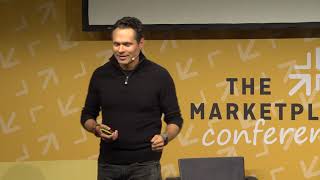
I thought about changing the title. The title says Lessons Learned Managing Hypergrowth. I thought maybe I should change it to Lessons Learned Managing Hypergrowth for your boss, because he exited pretty well, as you probably saw. I'm joking. I'm joking. So just to be clear, I'm not here in an official WeWork capacity. I don't work at WeWork anymore. I left a few a few weeks ago. So I am taking some time off and enjoying life. I am taking some time off and enjoying life. Yeah, I left a few weeks ago. Yes, that's a different story. I'll get into some of that, but not too much detail. But before I talk about some of the lessons I've learned in managing hyper growth throughout my career, I want to just tell you a little about who I am and where I'm from. Just so you know, kind of the experience that I have and in terms of just the insights, I've learned what to do and what not to do. So I'll also get to some of the things that you shouldn't do later on, but let me first start by some of the things that you should do. So, first of all, I'm from Copenhagen. I was born and raised in Denmark. Now, I don't sound Danish, I know that. And my last name is certainly not Danish, But I was born and raised in Denmark. But the Danes are very progressive. Is there anybody from Denmark here? Okay, there's a few. The Danes are very progressive. So when I got married in 2003 to my wife, I took her last name because why should the women always give up their names? So I took her last name as a good, modern, progressive Danish man does. And I also grew up in a country where all the TV is in English, pretty much. So I don't really have much of an accent. It comes out when I'm a little tired or slightly drunk. But mostly it's gone because I've been living abroad for a long time. But I was a nerd throughout my entire Life. So in 2000, I decided to move to California. Let me see if this moves along here with me. There you go. In 2000, I decided to move to California. It was right before the dot com bubble burst. I was so excited to move because I really wanted to go and be part of the revolution that was happening in technology. I still fundamentally believe that technology can have such an impact for good in the world, in all aspects of society. And I wanted to be part of this revolution. And back then, in 2000, there wasn't really much happening in Denmark. It was pretty barren. It was so depressing going to work every day. I actually worked for a CRM company for about a year or so and it was like working in a factory. I would come into work at 9 o' clock in the morning, you'd have 30 minutes for lunch and at 5 o' clock exactly, people would leave work. There was no passion, there was no excitement, there was no feeling that we were changing the world. So I really wanted to go to Silicon Valley where all that energy was happening. So one day I quit my job and I bought a one way ticket to California. And I didn't have a job, I didn't have a place to stay. I just knew that I didn't want to look back on my life when I was 50, 60, 70 years old and thought to myself I was too scared to go. And you know what, Denmark's very safe. If it didn't work out in Silicon Valley, I could always come back to Denmark. So I decided to move and just kind of follow my heart and just kind of really take a chance on something. And it's been just the journey of a lifetime. So I've been there for nearly 20 years now with a slight detour to the UK and in those 20 years I've worked at some pretty great companies. It's not all the companies I've worked for. I've also worked for some, for some that didn't make it. But Veritas, for those of you who remember was kind of an iconic company in the late 90s and early 2000s and they got acquired for 13 billion my Symantec in 2005. Then I joined Salesforce actually in the UK where I was based for quite a while. And I went back to the US with Salesforce at the end of 2009 to run one of their product lines called Chatter and that was at the time called. We marketed it as a Facebook for work, a way to connect and communicate with your employees and your teams much better than you could over email. And it just kind of took off like wildfire. And I'll share some of my learnings from then. Then I joined Box and kind of went through the growth hyper growth curve at Box to get him to an IPO which was really fun, going from about 200 people to just over 1,000 people getting to an IPO and everything else. Then I joined a battery ventures funded company, Vera, which is a cybersecurity company where I ran marketing for a few years. And then I joined LinkedIn and I was at LinkedIn for a few years. And if you had asked me a year and a half ago, two years ago, I would have probably said I was going to be at LinkedIn for a very long time. Because I think LinkedIn, to me, is a platform that's transformed my life. I connect with great people, I connect with great content, and it's just a very positive platform in a time when I think a lot of platforms have become tainted with negativity or a lot of bias, and they're influencing people in very, I think, harmful ways. But LinkedIn is still kind of, to me, a very pure platform. And I loved working at LinkedIn and I still love the platform to this day. And throughout my time, I've been sharing lessons learned, and I write a lot about these lessons learned from all these different companies on LinkedIn and other forums as well. And you can go read about some of these. But then this small company came to me about a year ago, just over a year ago, and they needed really to have somebody come into their company and lead them through the marketing conundrum that they were facing. They were doing some interesting marketing, but it was kind of scattered effort. They basically had marketing over five or six, I think, maybe even seven different teams. And there wasn't really any consistency or scale or leverage behind the marketing they were doing. And if you looked at how they were doing marketing in one region versus another, it was kind of all over the place. And so they kind of wanted me to join the company. And the reason why I ultimately joined is because of these three reasons. Number one is really around the purpose of the company. I know a lot of things have been written about WeWork, and I don't have to kind of go over all those things again about the good or bad about the business model, but the core purpose of getting people to have more satisfaction out of the work that they do is still something I fundamentally believe in. If you think about most office spaces today, they suck. They're soulless, they don't unleash your creativity or your community in any way. That's really fostering your soul. And for many of you who have probably been in it, we work. They're light, they're airy, they kind of bring people together in really interesting ways. So I really like that aspect of it. And to me, it was kind of a natural extension of what LinkedIn is all about, about creating community and getting people together in really positive ways. The community aspect of WeWork was also something that was really attractive. Yes, it's hard to create great office space. But it's not that hard. A lot of companies can go out and create great office spaces, but at the core of what WeWork was trying to do and is still trying to do is how do we bring people together. It's not just about coming work and doing work, but it's also about how do we bring people together when they're in work. So, for example, they purposefully design all the buildings and all the spaces in such a way that interactions are encouraged. So how many of you have been in a WeWork? Okay, quite a few of you. So, for example, the hallways in a WeWork are purposefully very narrow, so people run into each other and start conversations with each other. And it's not something you would naturally think of, but it's all behind the thought that we want to actually have community be at the core of what we do. And then finally, I really joined also because of the impact that a company like a WeWork could have on somebody's life. A lot of today has been talked about Uber and airbnb and a lot of great companies that are out there, and I love those companies. I use Airbnb all the time. I use Uber all the time. A lot of these food delivery services. But to me, I only think about these services when I need them. Well, contrast that with something like a WeWork. You're in a WeWork if you work in one, 40 hours a week, 50 hours a week. So the ability of a company like that to influence your life in a very positive way, I thought was very, very high. And that's really what lies at the core of the vision of WeWork. Now, you can argue, of course, that they might have gone out and done some things that were beyond that vision, and I wouldn't disagree with that. But that was really at the core of it, and that's what attracted me to the company. So that's a little bit of background about why I spent the last year at WeWork. And I left just over a month ago or just about a month ago. Obviously, you've read about what's going on at the company, going from extremely high valuation towards an IPO and then having it not be an ipo, and now going through some quite tough times. I left also because I'm based in San Francisco. I'm not moving to New York. It's not part of my life to uproot my life and move to New York or be on a plane every single week. And you know, it's going to be. I still believe that WeWork can turn this around. But it's going to be a bumpy road for the next couple of years, so I've just decided to opt out. And so now I'm taking some time off. So let me share with you some lessons learned from hypergrowth in these different companies. Not just about WeWork, but it's about Box Salesforce, others I've worked for as well. So, number one is this notion of crazy ideas. I always believe that the biggest opportunities for impact come from the craziest ideas. And I always tell my team when they come, present ideas to me, if it doesn't make me feel uncomfortable, if it doesn't make me squirm a little bit, it's probably not big enough. It's probably not revolutionary enough. It probably means that other people are thinking about these similar ideas as well. And so here's an example of an idea that we had back at Box. This is back in 2011, Box was in a really vicious battle with Dropbox, and the whole race was kind of a race to, well, how can we get people on the platform as quickly as possible, make it sticky, but also give them a reason to come back? But a lot of the equity was in the storage space. Back then, you were getting a gigabyte for free, maybe 2 gigabytes and so on. We had this radical idea that said, okay, well, what if we gave 50 gigabytes for free, not just for a month or a year, but for life. So anybody who signed up in this very short period of time, and when we first started floating that idea internally in the company, a lot of people thought, this is stupid or it can't be done, or there's no way that we can scale our service to meet the demands for something like that. There were so many reasons that came up all the time for why it couldn't be done that it started making us think that we're probably onto something and maybe we should push a little bit harder. Because the epic idea is that you have in a company are not going to be easy. If they're easy, everybody would be doing them. So over a period of time, we started working on this idea and finally we launched it. And we launched it in such a way that was really, you know, we launched it with a big press push. We launched it certainly with some advertising online and so on, but it was really around, how do we create a momentum around this in a very short period of time? And so we only offered it for also a very short period of time because we wanted to create some urgency around this this offer, and, you know, it sounds now trivial. 50 gigabytes for life for free in 2019 doesn't sound like a big deal, but back then it was a big deal. That's a lot of that. We thought about the cost it would have for us, the implications, the speed implications. What about the experience for other users who were paying or actually happy with it, all these downstream effects. But we went for it. And so we went all out. And in one week, we had over a million individual subscribers sign up, because word of mouth just started spreading. And my whole point is this was something I think it would have been very easy to shut down because it would have been too much of an engineering effort to scale our service to meet global demand. It would have been too costly. It might have been. We might have failed. What about our paint? All these things. But sometimes the biggest impact certainly comes from your crazy idea. So when you have that, it makes you feel a little bit uncomfortable. Somebody comes to you with a great idea, you should probably start listening to it a little bit more. The second thing I've learned in my career really comes from Salesforce. And so in 2009, at Dreamforce, which is one of the largest tech conferences in the world, it's actually happening right now in San Francisco with about 200,000 people, which is a little bit mind blowing. But back then in 2009, I think it was probably about 20,000 people, so it was much smaller. But we launched something called Chatter. And Chatter, we marketed it as a Facebook for work. Facebook was just taking off. I think it just hit a few hundred million users. And the notion that communication at work was so broken, why couldn't we have a Facebook inside the company, just like you have outside the company that you can connect to your co workers, your colleagues, and you can share knowledge, you can find things that you couldn't find otherwise and so on. Because email we just saw as a broken tool. But we also knew that if you want something to stick, you really have to repeat it over and over again. I think there's a big sentiment in the tech world that if you get an article in TechCrunch, or in Recode, or maybe even New York Times, Wall Street Journal and so on, that you've made it. But people's attention span is so short, and if you want something to truly stick and you want to really create a brand around something, you have to repeat it over and over and over again. So we went into this mode and at Salesforce, when we were launching this product of relaunching, every six weeks. It was a super exhausting effort for the whole team, and it required a lot of resources and it required just a lot of hard work. But the end result was that after about a year and a half to two years, it was the product that had the highest adoption of any Salesforce product we'd ever launched. It also meant that our stock price more than doubled, because at that point in time, nobody really wanted to write about CRM. Nobody cared about CRM that much. It's not that exciting of a product category. But the social aspect of chatter combined with the CRM system made it very interesting. Suddenly. Suddenly, if you had your CRM system be very social, that became really interesting to people. But the whole point of this here is that this notion of just repeating something over and over again, I think a lot of teams, they will do a lightning strike and do a big event, a big press push and so on, and then they'll kind of get back to normality. But in order for something to truly stick, you have to really push for it for, I would say, at least a year, maybe 18 months to two years. And if you're trying to create a category around something brand new, which I think there's a lot of merit in doing, oftentimes it's more like two to three years. So you just gotta map out what that looks like over a period of time. If you just do it once, I can guarantee you might have that sugar rush that you see from a big launch where everybody feels good and they high five each other, but it very rarely sticks. Number three is around clarity. This is a WeWork example. So very early on, this is from 2009, the founders of WeWork had a lot of clarity around what they wanted to create. It was never just about office space. It was about how do we put the human being at the center of our vision and then create an ecosystem around that. We don't just want to be an office space provider like a Regis and like everybody else that's out there. And so they'd already, back then, 10 years ago, had the clarity of vision that this had to be much bigger than that. Yes, we can start in something that desperately needs overhauling and desperately needs a revolution. Because most offices, as I said earlier, are soulless and they suck. And most companies and most employees are not happy with what they have today. They started with the office space area. And of course, you've just seen how that has grown. And no matter how you slice and dice what is happening to WeWork today, it's still one of the top five fastest growing companies in terms of revenue of all time and certainly in terms of the impact that they've had around the world. I mean, there's over 600 locations of them. And I still believe that they've changed the future of work forever for companies. I spent a lot of my time at WeWork speaking to customers, and they would always just rave about how much of a difference it's made in bringing culture and community to the teams that they have. HSBC, it's one of the largest customers that WeWork has and they hired an independent firm to come in and do a study of their employees happiness and productivity in a WeWork versus a non WeWork office. And it was twice as high in a WeWork. So I'm not saying that this is going to be the future for everyone, but I'm saying that no matter how you look at it, I think they've changed the future of work forever because we all now expect something different from our work, whether or not it's going to be WeWork or a different player in the market. But the future of work has changed. And it's because I think they had the clarity of vision that yes, we want to change the future of work for people, but we also want it to be more and more meaningful than just work. But clarity is also important to keep espousing and keep telling that inside your company. Especially if you're going through growth, especially if you're going through hyper growth, sometimes that clarity gets lost. And so, you know, as you get new people joining the company, the ability to tell that story succinctly, especially with your employees who are your best ambassadors, becomes absolutely critical. So repeating that internally is as important, if not more important, than repeating it externally. I always think Richard Branson said it really well. He always said, of course customers are important, but our employees are even more important. And driving the clarity of what we're trying to do is the most important thing we can do. You might just take it for granted that people in your company know this, but you have to repeat it over and over and over again. Which leads me to another point around speed over perfection. This is another WeWork example from the very early days. And this has actually been covered in fast company. I don't know if you've seen it, but in the very early days, it's also in 2009, 10, they actually created a vision board of what the future could look like. A lot of crazy ideas out there, and a lot of them obviously have not come True. And a lot of them probably shouldn't come true, but there's a lot of interesting ideas of how big this could be. And so I think there's a. I've been in a lot of companies where this notion of always trying to get as much data as you can is the most important thing before you make any decision. And I think if you're an entrepreneur and you're in the early stages and you're trying to just really make a big impact, I think speed is more important than perfection. And I've seen it so many times, especially as companies have gotten bigger and bigger and bigger, that the over reliance on data hides actually an inability to take action. I saw one of the most recent examples was at LinkedIn, which I think again, is a phenomenal company, but they had such an over reliance on being a data driven culture that I think sometimes that trumped actually just taking action. Sometimes it would take us 6 to 12 months debating something and trying to get the right data, even though we kind of knew what we had to do just to have the comfort that we could move ahead. And sometimes you just have to trust that, you know what, we're not going to have all the data. So the longer we wait, we're just prolonging the inevitable. So I firmly believe, especially in the early days, speed is more important than perfection. But I also want to come back to a different point. So I showed this just two slides ago around clarity is key, but keeping focus is also key. And this is why I think it's come back. To actually bite wework in the ass quite a bit now, as you've seen in the news, is, yes, it's really important that you have an incredible vision for your company. And your vision should be expansive and it should be inspiring and it should be huge. And to go and really change the world in ways that we never thought possible. But you should also start somewhere. And I think wework started with the notion of changing office space for everyone. And that's a really strong vision, making people's lives better at work. And I think one of the reasons why they're facing the situation that they are today is because they started getting too aggressive with other areas too quickly. There's nothing wrong with investing in new areas of opportunity and new side projects and so on. But once you've proven that the core model works, think about Google and think about Facebook and so on. They're investing in all kinds of crazy things because they've proven that their core model works. So they have a core model that is throwing off a lot of cash, which now gives them the freedom to go and invest in new things. And so I think one of the things that I've seen from other companies is when they try to do too many things too early, and they haven't proven that the core model works. I still think that the core model of WeWork could work, but they've gotten nearly too aggressive. That's why you're seeing them sell off businesses and do things that they maybe should not have been doing in the first place. So my advice to you is just really keep focused. It's so tempting because you, as the founders, have some really grand visions. And you might think, well, we should go into this adjacent area, which is this new opportunity. But keeping focus is a skill. Saying no is a really, really good skill to have. And then finally, one of the things I learned in doing marketing for many, many years is that humans are social. Human beings love getting together. There's a phenomenal turnout here at this event. And all the data that I have analyzed throughout my career at Salesforce, at LinkedIn, at Box, and certainly at WeWork, I saw it really, really starkly at WeWork. Is that the ROI from spending money, marketing dollars, on brand events, on human events, the ROI is much higher than just spending it on digital advertising. Of course, it's also expensive. Putting on events is an expensive thing. But the loyalty that you get to a brand once you actually get face to face with the people representing that brand is much higher than if you just see something online. And I don't know if you've been following the space, but in the last two, three years, there's been a lot of research out from very prominent sources, HBR and McKinsey and so on, that just says that people are getting numb to digital advertising. We don't even really pay attention anymore because we're just so overwhelmed with it. In our Facebook feed, on LinkedIn, on newspaper sites and so on, on news sites, it's just everywhere. And so we're becoming numb to it. So it's not as effective anymore. But what is really effective is getting people together. It's expensive, but the ROI is really high. Especially if you're trying to build a brand, if you're trying to build loyalty and love for what you do, and especially if you're in the category of actually trying to close B to B to C, like to other businesses, sometimes the deal sizes are much, much larger. When you actually get people face to face and convince them of the merits of what it is that you're trying to do. So I would highly recommend not just over investing in digital, but also investing in brand building, in social events and so on to really galvanize the community around what you're trying to do. So that was some lessons learned. Let me just quickly share some lessons of things that never worked. Number one, assholes. If it's not obvious already, nobody enjoys working with an asshole. And I've written about this a few times, it's one of my more controversial articles. But I think there's a notion, and I hope it doesn't come to Europe, but there's certainly a notion in the US that you have to be a little bit of a jerk in order to make it, you know, have sharp elbows and kind of, it's kind of a dog eat dog mentality. And I just fundamentally believe that nobody really wants to work with those kind of people. And the reason I put it here as a lesson learned is because once you spot these people in your company, the best thing you can do is root them out very quickly because they're very toxic for your culture. And one of the biggest regrets I have had in my entire career is when I've taken too long to take action on those people. You already kind of know, I bet every one of you know that there's probably somebody in your company that's kind of a jerk, doesn't treat other people very well, or is too self centered, too much in it for themselves, and they just have a way of influencing the culture in a very, very negative way that makes people, other people in the company, not show up and do their best and not give it their all and not be bought into the mission of what you're trying to do. And that's very dangerous for everyone. Number two is this. Again, I mentioned it earlier, but this over reliance of data. There's nothing wrong with data. It's great. And as a cmo, I have to rely on a lot of data to make a lot of decisions. It's part of my job. I have to. But I always think that people and companies operate at three different levels. There's the tactical level, the strategic level and the epic level. And epic is really hard. And I usually define doing epic things in one of two ways. Either you find something that's broken and you do it ten times better, or you try something that's never been done before. But it's not going to be easy. If EPIC was easy, everybody would do it. But the other thing about operating in the epic category is there's usually very little data to guide you. If you're just doing tactical shit all day long, there's a lot of data to tweak and optimize everything you're doing all the time. But once you move from tactical to strategic, the data becomes less. And once you move from strategic into the epic category, where the iconic moments in your career, in your life, in your company, in your brand becomes true, there's very little data to support you because if everybody else had the same data, they'd probably be doing it already. So that's where you have to combine maybe the little data that you have, but with the gut feel of what you think the future is going to look like. So just relying on data rarely in my mind just leads to epic outcomes. But that's a decision that you have to make. And then finally is this notion of loud silence. I wrote an article around the rules I live by at work. And one of the rules I live by is this notion of over communicating in the absence of information. People make up their own stories. And I've seen it time and time again. I certainly saw it in my last couple of weeks@weWork. With all this news swirling around, when you're not communicating to people, guess what? People will make up stories in their own head or they'll be influenced by stories that are not true. So I always think you need to communicate and over communicate, even if there's nothing new to communicate about. And it's easy to forget if your company is in growth mode or in hyper growth mode and you're adding new people and so on. It's easy to forget this point around just over communicating all the things that are there because you're going to make a lot of right decisions. You're also going to make a lot of wrong decisions. And communicating about the right decisions and the wrong ones are equally important because again, if you don't communicate about it, people will make up their own stories. And again, it's one of the things that I really try to be better at. I'm not perfect at it, but I always regret when I haven't communicated enough because I can see it eats away at people and then rumors start swirling and so on. So communication is absolutely key. So my final advice to you before I depart, it's really around this, this notion of hiring just great people. I think a lot of us here, me included, we think of ourselves as really high achieved. So we set the bar really high for ourselves and for other people. And so we go and hire really great people. But a lot of times we oftentimes think we can do their jobs better. And I've certainly seen it. Maybe it's not true in all disciplines, but in marketing, everyone always thinks they can do marketing really well. It's like, oh, interesting. I don't go over and try to do your job, but thank you for telling me how to do mine. But the best thing you can do as leaders is to hire great people and get out of their way and hire for aptitude and hunger. And if you find somebody who's really great, hire those people and get out of their way. Don't try to get in their way and micromanage them. And it's easier said than done. Especially in the early days when I joined Roger's company, he's on the board of this company, very small, it was like 10 employees. And you're trying to get into everything. I was a CMO and I was also running sales for a while. You're trying to get into everything. But the best is you can really hire great people and just let them do their job. And it's sometimes a hard lesson to learn, but I'm just trying to impart that to you, finally, is focus on getting shit done. I can't tell you how many times I get to Friday night and I felt like I had such a busy week, but I have no idea what I achieved because all I did was tactical work, answering emails, replying to urgent Slack messages, and so on. You have to give yourself time and set aside time to get shit done. It's the worst feeling. And we're all trying to make an impact. So if you only end the week by focusing on tactical stuff, you're never going to do anything great. You have to set aside time to do strategic and epic work. It doesn't happen automatically. If you don't set aside time to do it, other people will fill that time. So I always tell my team, spend 20% of your time on tactical things, 60% on strategic things, and give yourself time to focus on the epic things. Because if you don't give yourself time, they're never going to happen. It's not like it's just going to happen automatically. So get shit done. Put time aside on your calendar to get shit done. That's the best way to actually making something epic happen. And that's my final words of advice to you. Go out there, do something epic. Take some chances. You won't regret it, Trust me. Thank you.
More from Robin

Why Teams Struggle to Adopt AI in Microsoft 365 and How to Fix It with Robin Daniels

How to cultivate trust with teams to ensure alignment? | Robin Daniels, CBO, Zensai