40% of Marketing Budgets Are Moving to Creators | Here's Why

In this episode of the AI Marketing Companion, host Sandy Carter interviews creator‑entrepreneur Jeff Barrett, a Shorty Award‑winning creator and partnerships lead for Fortune‑500 brands. They explore why roughly 40% of marketers’ budgets are now allocated to creators, a shift that has moved from experimental to core spending as of fall 2026. The conversation centers on trust as the primary currency that makes creator collaborations effective, emphasizing long‑term relationships over short‑term KPI‑driven deals. Jeff explains how creators’ intimate, parasocial connections generate authentic influence that brands can’t replicate through traditional media. He advises marketers to look beyond follower counts, focusing instead on engagement, comment volume, and the creator’s ability to maintain authenticity when briefed. The pair discuss practical selection criteria, the importance of allowing creators creative freedom, and the risks of over‑scripted content. They also touch on the evolving creator ecosystem – from legislative advances like the Creator Bill of Rights to the rise of creator‑run creative departments, and the role of AI in content production. Examples such as Jenny Hoyos, MrBeast, and Jordan Howlett illustrate successful long‑term partnerships. Throughout, Jeff stresses the need for clear payoff narratives (hooks, climaxes, and endings) to capture attention, and warns that attention is not guaranteed but must be earned through novelty and genuine storytelling. The episode concludes with actionable advice for marketers to start building lasting creator relationships within the next three months.
Chapters
I think being the creator, and to give like an example, I spent 17 years in comms, and I think the idea in comms is usually that you need to be the person behind the scenes or in the basement of the New York Stock Exchange at the weird cafeteria they have while your client's on there, or you're like the blank black screen in the back, like, hey, I'm just taking notes. I think it's, you understand so much more when you have to go through the daily execution of having to build content. You nailed it with trust. Let's definitely dig into trust some more. What I think is the biggest key point here We sit in the fall of '26, is that the budget is not experimental anymore. This all comes down to you have to know that there's something at the end that you're building toward. There's a payoff, there's a climax, there's a finale, there is something you're going to learn or experience so I can make it better or I can do more of it. And, and I would say exactly the opposite, because if you run it through that filter, it's gonna make it look like a lot of people's stuff. And my fundamental understanding of the attention economy is that attention is not promised.
And it doesn't Doesn't scale automatically, right? Dollars are following that trust. Well, hello, hello, hello. We're back on the Marketing Companion, the AI Marketing Companion, I must say. My name is Sandy Carter and I'm your host today. And we are continuing our discussion about creators because creators today are making up almost 40% of a marketeer's budget. So I do want to welcome our guest and you are going to be Amazed, just like I was. He spent more than 15 years in advertising and media, and he's lived every side of the creator economy and a Shorty Award winner creator himself. So today he leads partnerships for Fortune 500 brands like Adobe and Oracle. He's been named one of Forbes' top 50 influencers in social media and Business Insider called him the number one, number one ad executive to follow on Twitter. He writes the It's No Fluke column on Yahoo Creators, and he serves as the board chair of the Creative Guild of America. Now, this one I'm really interested in. He calls himself marketing funny, not really funny, but I'll let you and myself be the judge of that today. Uh, Jeff, welcome to the show.
Thanks so much for having me. Yeah, I like to keep the bar low.
Well, let's start with just a couple of questions about you and who you are, and then we'll get into some of the advice for all the marketeers who listen to the show. Since you've been a creator, you rep creators, you buy creator content for brands, which of those 3 hats has taught you the most surprising lesson?
I think being the creator and to, to give like an extent, like I've spent 17 years in comms. And I think the idea in comms is usually that you need to be the person behind the scenes or in the basement of the New York Stock Exchange at the weird cafeteria they have while your client's on there. Or you're like the, the blank black screen in the back where you're like, hey, I'm just taking notes. I think it's, you understand so much more when you have to go through the daily execution of having to, um, build content, manage and maintain a parasocial relationship. You just understand. It's not that you can't empathize, but you just understand fully when you're having to go through all of those beats.
I think that's so true. You know, in my career, I've been a chief sales officer, chief marketing officer, chief strategy officer, chief product officer. And people are like, oh my God, you couldn't decide what you wanted to do. And I was like, no. This helps me to be a great leader no matter where I am, because now I can really understand what those people have to go through. And I think that's the same thing you're saying, right? I understand what it's like to be a creator. I understand what it's like to be a brand. I understand what it's like to rep a creator. And therefore I do all of those things kind of better. I'm kind of in that messy middle.
Love the way that you say messy middle. I think it's also a modern understanding of what value and leverage might be in being able to be like, hey, I can do this, I can do this, I'm able to do these things. But also, again, it's empathy, it's being able to understand what you're trying to accomplish. And let me find the best possible way to get you there. Because again, everything to me is relationships, whether that is me working on comms or me working with creators, I need to be able to make sure that I am putting you in the best possible spot so that we work together for 15 years and not 15 minutes.
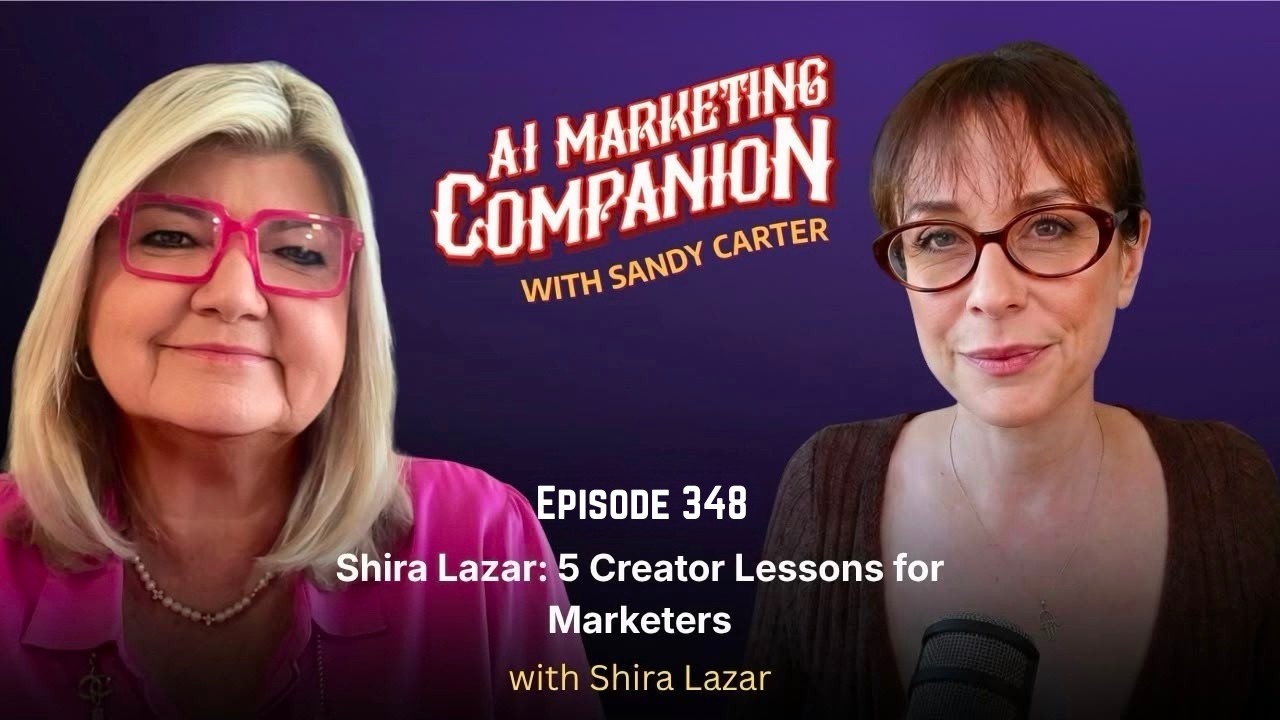
That's great. Now we just had Shira on, on our last, last episode. I'm kind of doing this feature on creators and you were just in DC with her. I think you're friends with her as well. And you've been watching this creator economy get a seat at the table with lawmakers. What did that room in DC tell you about where the industry is right now?
Well, Shira is incredible. I don't think, uh, I'll brag on Shira so she doesn't have to. The amount of work she's been doing behind the scenes, whether it be with the Creator Bill of Rights, with Ro Khanna, Creators for Mental Health, putting together that day and to see— feels weird that that was 6 weeks ago already. Yeah, the seat at the table is important. It was nice, I think, especially on that day, it was nice that the platforms are involved, that there are a lot of other entities that are involved that understand. By the way, a long way to go, but certainly inroads are being made. And again, when you have 11 million creators out there in the world, When you have over a trillion dollars worth of economic impact, you can get a little frustrated that things don't move as quickly, but you can also understand that, you know, everybody's running that relay race at a different point. Some people are on mile 1 and some people are mile 25, and you just have to, you know, take those wins. But it was, it was an encouraging day to be in that room and see that like, okay, some impact can be made. There's some recognition that, you know, this is, you know, clearly where people are focused.
And people are definitely focused there. I mean, one of the things that Shira quoted in the show was that 40% of marketing budgets today are moving to creators. And that really surprised me, Jeff. As I told you, I've been a CMO in the past. My, my creator budget was like 10% when I was CMO. So to have it go 4x was crazy. What is driving that? And, you know, like, is it attention? Is it trust? Is it something else?
Oh, you nailed it with trust. Let's definitely dig into trust. Some more. What I think is the biggest key point here as we sit in the fall of '26 is that the budget is not experimental anymore. When it was, and I, and I remember, I remember when it was 1%, um, you know, or if I was just having to advocate for, hey, can we get them there? And we're gonna offer them a free Yeti cup. You know, like, what can we do? It, the trust part of it is paramount because it's not, and I, I talk about this on my pod too. It's not that a brand can't create the same level of a parasocial relationship or trust that a creator does. It's just that they, their objectives are a KPI or something that's far more short-term or something that they have to do. And you understand this acutely, like there are just other factors at play, especially the higher up you go with a brand that you can't, you can't sell the idea of like, hey, what if we just build something for 15 months and don't ask for anything? It's like, well, that, that will never work. So creators sit in this great space right now where they're reaching out directly to your customer. The other thing too is they're not being considered a last-minute, you know, programmatic media buy at the end. It's not, oh, we should engage you only at the end to try and reach that audience. It's very much becoming something that it's from, you know, minute one, it's in the ideation phase. You know, a lot of advertising agencies will tell you too, they are starting that process with them and riding along with them. And I think that part is important. But again, this is, yes, you have audience, but you have trust because right now that feels like the best possible, you know, most direct way to influence or get someone to the purchasing decision. But there's probably a little foreshadowing in my voice there because it won't always be the case. Just right now we live in a great moment for trust when it comes to creators.
You know, I was at Amazon Web Services and for us, customer obsession was everything. That's when I brought in creators. Now I was at the 10% level, but we brought creators in at the beginning because we felt like they were part of the customer set too, right? Obsessing over what we were doing. So I noticed that you even said that creator content is becoming the creative itself. So if creators are now becoming the new creative department, what happens to the old one that I used to have?
Well, that's a, that's a It's an abundance versus scarcity kind of conversation, right? I'll give you an example. Like Jordan Howlett, who I've worked with before, is now kind of running creative for Blenders. It's more of an externally focused way of saying like, hey, we have a partnership with a creator, but there's like way more input on how that creative looks and having that involvement. I think you're going to see variations of that. You know, if I'm an advertising agency, adapt or die, you have to kind of— all things are cyclical. You have to make sure that you are— you still bring something to the table, but you have to be able to kind of implement this and incorporate this, the imperative really is that you are trying to work with someone who has the best pull with the audience. It's in— this is why we're not really even thinking about follower count. You know, we're not thinking about certain things. We're just thinking about— and I mean, this would be if you're a CMO anywhere, you're like, what's the fastest route to getting something to being effective and being able to influence somebody? And it doesn't You know, it doesn't matter if you have 10,000 or 10 million people, if you're impactful in moving the needle on that discussion, that's the most important point. But yeah, I mean, again, I don't think matter can be either created or destroyed. It's just, we're shifting our focus and that could be temporary. That could be permanent. It all just depends on how— I think the biggest thing I always think about too, when people are working with creators is Um, if you have the right expectations, you're going to want to keep doing this over and over and over again. If you have the wrong expectations, you might feel like you've touched a hot stove and don't want to do it again.
Okay. There's that marketing humor that's coming out for sure. And here's something that I want to dig into too. So it's quite funny, Jeff, you might find it interesting, but I was asked by T-Mobile to do a couple of influencer videos for them. They love my pink. I was like a pink ambassador for them because they're all about pink. And you know, the thing that I thought was interesting is I think creators are valued because they're intimate with an audience. They know that audience. But then a lot of brands come in and they then direct you and they provide you with the script. And so I'm curious, I get asked this question a lot, Sandy. You're paying for a creator. I mean, aren't you paying for them because they're honest and intimate, but yet they're, you're paying them. So can they, can I still trust them? It's like a paradox, right? Because I'm paying them to do something for me, but yet I'm paying them because their audience trusts them. You understand what I'm trying to get to?
Live it every day. And not to be reductive, it is, it comes back to trust, right? If the brief is extremely long, if the brief is arduous, it's because the brand doesn't necessarily, they know all the signals, they know all the data, but they don't necessarily fully trust the creator or they don't trust the process. Right. And I think one of the things that I've come back to a lot is have long-term relationships with creators because you won't have to do that again.
Yeah.
I understand on the first time why that might be necessary. The other thing too is, and I tell this to brand teams, and this is almost like I'm looking directly at a camera, I'm talking to brand teams. You, one piece of content fully controlled will look fine. 10 pieces of content, fully controlled, all looking the same, will be deleterious to what you're trying to accomplish. And so the more you try and constrict and constrain the content, the more it's inevitably going to give the audience the ick because they're going to be like, wait a minute, this is an ad because it has the same copy and it has the same tone. And so I just always try and Again, this may be just understanding all angles of it. As the brand marketer, think about how repetition can really hurt what you're trying to do when it's seen multiple times.
Mm-hmm. You know, uh, Shira also gave an example that she was being a creator for a brand. Yeah. And they let her go off and do something all by herself and she posted it and it just racked up all these hits and everything. And then they came back and said, okay, so now we want you to redo that same piece, but make sure that you talk about this. Talk about my 3 awards. Talk about this. Talk about this. And she said when they came back, of course, that more scripted version was like a quarter of what the original authentic version got. So I'm curious, Jeff, who's doing this well? Like what brands do you think do this really well? And also give me a creator who you think got big and then kept the connection with the brand.
There's so many creators. This is like trying to get me to like think of like You ask somebody their favorite band, they'll sell it. They'll tell you 100 different things depending on the day, right? Yeah. There's a lot of times when you look at that kind of content, you know that it's hard. The creator does this every day. They're going to know, they're going to tell you, they're going to push back on it because they know like that's going to flag something that doesn't. And I know we throw around authenticity all the time, but it's just going to throw something that doesn't feel right. Or it's going to be kind of that record scratch moment where it's like, And everything just kind of stops and you're like, wait a minute. There has to be some, there's a gut and there's data both with creators. I think the underestimated thing about creators is that they are all data analysts. They are all absolutely digging into what works. If you want me to give you a creator that I think has adapted, evolved, understood that system better than anyone, continues to be on the rise, I'd give you Jenny Hoyos.
Hmm.
Just did a really great TikTok collaboration with MrBeast. I think the first time we chatted might've been at like 5 or 6 million, is at 12 million now.
Oh, wow.
Continues to grow, evolve, understand audience, and most importantly, is able to take them in different directions. It's not one idea or one set thing. If I was a young creator, I would look at what Jenny Hoyos has done and use that as, you know, a blueprint. And she's also really generous and good at sharing things about, you know, what has worked, what hasn't worked. What the process is. And I think that's the kind of creator that you're seeing a lot of creators right now. We have these bigger, deeper discussions about like, hey, they started out as an individual creator. Now they have like a warehouse studio and they're, they're a TV channel essentially. That's amazing. But that's not the norm. That's the outlier. And there are so many good creators that, and it doesn't, again, does not, follower count doesn't matter. You can be influential in a Multitude of ways, right? Um, I've had some people on the podcast that talk to me about like, you can have 100 creators, they all have different monetization, you know, and that's again, one thing I keep trying to remember with creators, these are hundreds of thousands of separately operating small businesses. There is no one set standard. They're all kind of just figuring it out. But the thing I try and remember as marketers is like, these people put in the reps every day. This is, I mean, they live and die by making sure they get this right. So I, as much as possible, please try and trust them that they're gonna do this because, you know, they're mutually incentivized to make sure it works.
And that's an interesting question. I know I also asked Shira, but I'm also going to ask you. I'm a brand. I want a creator to come in and, you know, work with my next big launch. How do I select that person? Do I just look at the niches they cover? Do I look at their style? Like, how do I find that, that creator that's going to fit our brand, our culture? How do I do that correctly?
I am so glad you asked me this question because I, again, this continues to evolve. You're gonna get a different response from different people depending on what they're doing. If you're one of the tools that helps you find creators, they're gonna be like, use the tool. Absolutely. It will help you. It'll guide you. But ultimately you wanna have, there's something that you can't find in those numbers. And that's how motivated are they to work in your niche? How, how well do they communicate with that target niche? I'm not looking for someone, I don't need to know that you sold this widget before. That's not, that's not important to me. If you are reaching the same demos that I'm trying to reach, that's going to, that's going to help me. That's going to make me feel like that's going to work. I also, if I'm getting real data nerd on this, I want to know how much your sponsored content performs versus your non-sponsored, because that will give me a good idea of like, some people are just great at building the audience, but once they introduce that point of it, or that kind of transparent opportunism as Barbara Duffrick calls it. That, that's, that's part of it. I really need to know that. But to me, it's, can I build a long-term relationship with you? And most importantly, on the opposite end for me is how can I, as the brand, help you succeed? How can we be an earnest partner in making sure that you grow? Because if we do that, not only is that going to create the best long-term relationship, but that's also going to make us much easier to find the next few creators because That word travels.
Well, it's really interesting because I was working with, I'm friends with a creator and she was actually helping me on my last company. She has blue hair. She's pretty, I mean, and it looks beautiful on her. Actually, L'Oréal sponsors her hair color, which is super cool. But it was interesting because she had a brand that came up to her and said, we love your content. We hate your blue hair. For our content, would you dye your hair a different color or wear a wig? And she said, you know, Sandy, the blue hair is who I am. It's like part of my authenticity. I can't do that. And the brand was shocked that she had given up so much money because she wasn't willing to put on, you know, a blonde wig or a red wig for a day. Do you see a lot of brands asking creators to give up a little bit of who they are when they do these slots, or is that, you know, kind of the— The offlier.
No, I want, I want to tell you that's not, it's still that. And by the way, you can ask these questions. That's totally fine. But it's, it's more so that, that tells me that you don't really know the creator or that you really haven't had a conversation with them and you're not understanding what's, what's superfluous and what's core to them. If you, if you, you know, because— That's a great point. You know, some, for some people, hair's hair, whatever. They change it all the time. And for some people, you know, like, that's branding. You wouldn't go to a brand and say, hey, you know, for a few months, could you just change everything you were going to do? They would, of course, they would bristle. You're, yes, you would bristle at that as a brand. So to ask that question inverse, you know, you should have some kind of self-awareness on that. Again, this is where I think we're getting into a better evolving space in which when The creator is not thought of as just that end-run media buy, and they're thought of as a partner, these things will get better. They're never going to be perfect. Again, if you don't live all these ends of the spectrum, you're not going to understand. And that's okay. It's fine to ask. It's fine to have dialogue. But again, I try to remember every time I'm making an ask, is this going to— when I'm talking to a creator, is this going to help or harm your parasocial relationship? Is this going to build your brand or is this going to be a detraction? And if it's going to detract, how much money is that worth it for the creator? Those are individual equations, right? But if I can make it so that's always something that builds with your audience, um, it's going to be more cost-effective on my end and it's going to be better in the long run for everyone.
So I did a little video clip and, um, it was about the billion-dollar boy who found this counterintuitive Yeah. That said, the ending of the creator content grabs more than the opening hook. And I had a bunch of CMOs pinging me on this one. It was, I don't know, I think I probably had 30,000, 40,000 comments on this that I thought to grab attention, I need to go for the front end, the opening hook. Now you're telling me it's the back end. Well, it wasn't me, but what do you think this research say we got wrong about attention? Or do you, do you agree with it?
A few things. So yeah, I had Becky Owen on my pod talking about this and it was Was fascinating. Great research by Billion Dollar Boy. And it kind of, sometimes it's just like, you feel something at a gut level. You need the research to be able to kind of sell that up the C-suite and really make sure you, you hone in. This is something that creators have been understanding for a very long time. And it's not to say like, I've had people on who talk about thumbnails, right? And we're adjusting thumbnails now to make them a little bit more imperfect because in the AI of it all, You know, people are kind of, you know, finding, you know, discomfort in things that look too perfect. So now we're, you know, everything becomes full circle again. We're going through our grunge era of thumbnails. But, you know, I think of it this way. We've talked for a long time industry-wise that MrBeast basically perfected this thing that's like, you have to have, you know, in the first 3 seconds, you have to, you know, your eyes have to be big and you have to tell something what's going to happen.
Sure.
You don't want to intentionally, you don't want to lose somebody. The other, this kind of comes to a bigger discussion I have about attention span, which is it's not, Sandy, it's not like we're consuming less content. We're just consuming more things at random, but our actual time spent is still the same. Again, this kind of notion I keep coming back to, that matter is neither created or destroyed. So if we're consuming more content, it's not that we're losing our attention span, but we, this all comes down to You have to know that there's something at the end that you're building toward. There's a payoff, there is a climax, there's a finale, there is something you're going to learn or experience. And if you can tell people at the beginning, stick around, you know, like if you watched old Emeril episodes from the '90s, you'd know that by the end of it, you're going to see somebody make a dish. If you're watching, you know, a, uh, you know, more of a young kids creator who's like, I'm going to turn my parents' house into an amusement park, you're like, well, cool. At the end of this, You're gonna do exactly that. That's gonna be wild. Um, and this is why kids, like, then they say like, oh, kids don't wanna watch anything for 30 seconds. They're like, they'll watch 5 hours of that because there's a payoff. I think the core of this is that we are discovering, um, what our guts already tell us is that, don't get me wrong, get somebody's attention at the beginning, but the most important point is that you have to lead them somewhere. You have to give them something. And never lose sight of what that ending will be, because not only when you give somebody a good ending will they enjoy all that content all the way through. And we can talk about, you know, like the time spent with a creator leads to a greater bond, which leads to all of these monetary opportunities. But again, they're going to want to come back the 2nd, 3rd, and 10th time because they know they get something out of that experience.
And I think that's a great point for marketers regardless of content too, Jeff. Like my LinkedIn has been growing and growing and growing. And I was trying to figure out what am I doing differently? I'm getting so many more people to engage my content. And it was just that, like, I wasn't just focused on, let me give them the front. I was just kind of tired of that. So I took them on the front end all the way down to a journey to where the payoff was at the end. So I think that message that you have is a good one regardless of what you're doing, but especially with a creator or with something that you're doing that is creator-led. Now, uh, go ahead. Did you want to say something?
No, I was going to say like, I intentionally, when I do my pod, like it is a meander, but there's always a purpose at the end. I just try and, uh, I try and keep people a little like guessing in that middle. Yeah.
Yeah, that's, that's right. Absolutely. And then, yeah. And then give them something at the end that they can take away and that they can do. I found that my best podcast, you know, we always end with, okay, give us your 3 takeaways. And if you look at how many people watch, a lot of people will watch the beginning and then they'll go to the end because they want Those 3 takeaways, and then they'll go back and listen to the middle, which is interesting. Now, I want to do, you know, another interesting question that's also been touched on by Shira and a couple other folks, which is don't look at follower counts. And on that pod— I mean, on that podcast we did with Shira, I had so many people write in and said, okay, oh my God, if I can't look at follower counts, what am I looking at? Like, What, what, what do I look at now? What's my metric? If it's not size of audience.
It's engagement. It's the comment section. Um, and that's where you're seeing a lot of, a lot of brands are moving there too. You have, you know, whole entities like ManyChat and other places that are really good at doing that. My best way of explaining why we're heading there is, uh, I think people have seen vague posting, but if not, I'll give the quick primer. The idea that you, you put something out there, whether in written form or video, but it's intentionally confusing. To get people to write a comment that says, what, why did you not explain this? What's going on? Did I miss something? If you have something where the incentive is to confuse people, so they write a comment, then clearly we are now in an age where that's the thing that matters. And so that's what, again, creators in real time are adjusting for the algo. And that's one, like, yes, it's kind of akin to the BuzzFeed slideshow where it's like, you know, oh, I have to click through 30 pictures to figure out where all these former Disney stars are. Um, eventually you're gonna get, you know, annoyed with the experience, but you do understand, like, in that case, like, yeah, well, now I get, if I'm the publisher, I get to look at 31 pages instead of 1. Hello, ad dollars. In this case, like, people are doing even inconvenient bad things to get you to be in the comments section. So that's clearly where we are. Again, because there's more of a brand interest and dependence on creators, that's part of why we're looking in the comments section to see, like, there's a good one-to-one of if you're gonna comment on something, or if you're going to engage with something, you probably will get to the purchasing decision behavior. So that's part of it. But again, follower account can give you something. It can certainly give you a, you know, a benchmark. Uh, Ant McCormick's doing a really interesting thing where he's never introducing a creator by their follower account anymore. I thought that was an interesting post and I agree wholeheartedly. Yes, it can be helpful. But I think the second and more important thing is like, well, how much are people engaging with this content? Because that will tell you the true pull of that audience.
Yeah, it was fascinating. I just became a LinkedIn top voice for AI. And so I have this concierge that, that gives me advice. And I did a post, which I thought was awesome. I did get 150 comments, but I didn't get as many likes as I thought. And he was, he said to me, he goes, do you know that your post with 150 comments, like people are really engaging with you, that actually registers higher with the LinkedIn algorithm Than someone who gets 100,000 likes because there's no engagement there. So I, I think your points are, you know, really, really right on. And, uh, you know, kind of going off that AI, since I do cover AI, AI now has this unlimited content, right? You can just create content. What happens to the value of a human with taste and a real audience versus the constant flow of content? Which one do you think ends up winning?
I'm gonna try to answer that.
Yeah, go ahead.
I was going to say, I'm trying to give you the long story medium on this because I think there's so many things converging. I look at like Josh Kushner and Bob Iger buying the Lakers or Ari Emanuel buying a lot of different Broadway venues. This desire for people to look into IRL spaces because again, there's some experience to And this is, I will land the plane on this, I promise. But like, there are, we're looking to those things, right? We're looking to offline group chats. We're looking to all of these things that are more experiential because AI is wonderful, but it is kind of creating this funnel to mid when it comes to content. So we're looking for the things that connect. The other thing too is, um, I had somebody on the pod that talked about like when to use and when not to use AI. I thought it was an interesting thing. Anthony Cousins.
Yeah.
Where he was like, if you're good at it, use it because you'll know how to identify if it's doing things correctly for you. If you're bad at something, don't have AI do it for you because you won't know if it's good or bad. I think if that's just your general primer, that will help. So, you know, I understand the, the urge right now, like for someone to look at their content and be like, hey, let me run this through AI so I can make it better. Or I can do more of it. And And I would say exactly the opposite, because if you run it through that filter, it's going to make it look like a lot of people's stuff. And my fundamental understanding of the attention economy is that attention is not promised. It's quite the inverse. It's that you're going to— there's so many things out there competing for attention that you have to do something super interesting, different, and novel to get that attention. And so that means I have to do something different. So my own original thoughts, maybe thought through a little bit, you can ask AI questions, you can do some things, but My own original thought, even if that content is shorter, if it's imperfect, if it's not dropped at 9 AM like everybody else's stuff, will be better and will outperform. You know, again, it's just fundamentally changing when and where and how we use AI to me is going to be the, the 2.0 or the 3.0 with people using it as a consumer product.
Yeah, I completely agree with that. And I read an article about You know, in real life events, I try to go to enough and still get my job done because it's really not the, not the people on stage. It's the, you know, the conversation I had over coffee, the conversation I had at lunch. It's those conversations to me that are the standout conversations. And you can't get that when you're sitting on a Zoom call or a Riverside chat.
Yeah.
You really need to You know, you really need to be there. Well, Jeff, this has been pretty amazing. Can you tell me where people should find you and what's one thing you want every marketer listening to us today to do differently this week?
It's No Fluke is the podcast that I host for the Shorty Awards. Easiest place to find me, anywhere you find podcasts. I'm Jeff Barrett on most channels. I'm happy to connect and be a resource. Fundamentally, it's building long-term relationships. With creators. It's, you know, again, it doesn't take a lot to be involved in the ecosystem, but it's not looking at this as a spreadsheet or as a way to meet an end for a KPI that's in September. It's what can I build? You know, if I'm listening to this in this timeframe, I'm like, what relationships can I build tangibly in the next 3 months so that in January I have the right relationships and the right things to absolutely crush it in the creator economy. That's how I'd be looking at it.
That's great advice. And I think I'm going to do that too for my new company, Equus. So thank you, Jeff. The things that I took away from you were a couple. So one, I took away the category is going to disappear. And I think that's a sign that it's one, that pretty soon we're not going to say creator marketing because it's just going to go bigger and bigger and bigger. 2, throw out that old scoreboard. We're not looking at follower counts anymore. And I know that Got a lot of CMOs really upset on the last call. But I think what Jeff said, which is looking at engagement is going to be stronger than looking at, oh, I have 4 million followers. And then the one that I really want to end on is trust is the currency and it doesn't scale automatically, right? Dollars are following that trust. But you showed us that paradox. The bigger a creator gets, the harder that trust is to keep. And winners are going to be those who treat intimacy As an asset to protect, not as a byproduct. Jeff, thank you so much for being on my podcast. I really appreciate it. And to everybody out there, hopefully you learned a couple of things and keep those comments flowing because that's how I know what you guys like, what you want to hear more of. And again, Sandy Carter, host for the AI Marketing Companion. Thank you.