Shira Lazar: 5 Creator Lessons for Marketers
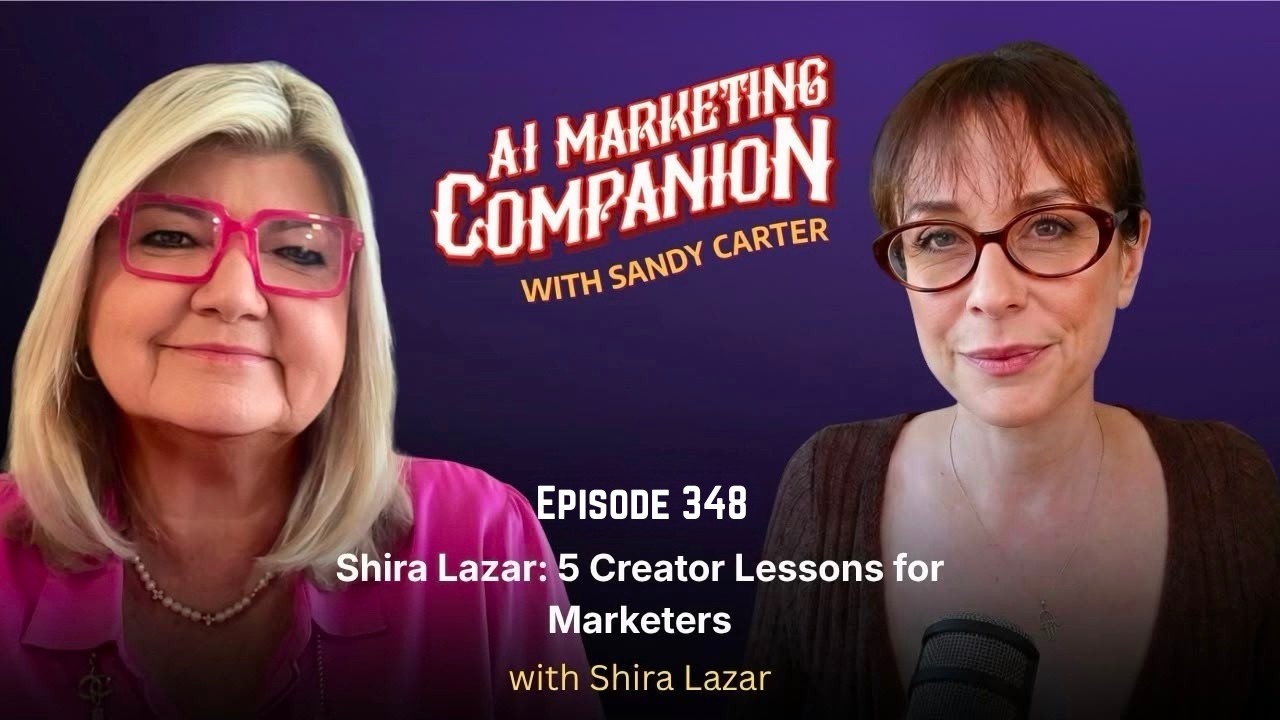
Shira Lazar, a Time 100 creator, shares five lessons for marketers working with creators: lead with curiosity, look beyond follower counts to authentic expertise, build long-term partnerships with fair pay, protect creator rights through frameworks like the Creator Bill of Rights, and create content yourself to understand what creators face.
Chapters
And then you're wondering why a video didn't do as well because you didn't let them just go with it and do what they do. That's all.
I think that's great advice.
And you'll start to see consistent things. And you, when you start seeing everyone talking about it, it's popping up in your feed, but you need to follow the right people and be looking at the right things for that. Or else you might see it months later. Like I know at this point that I see things 6 months to a year before a lot of people.
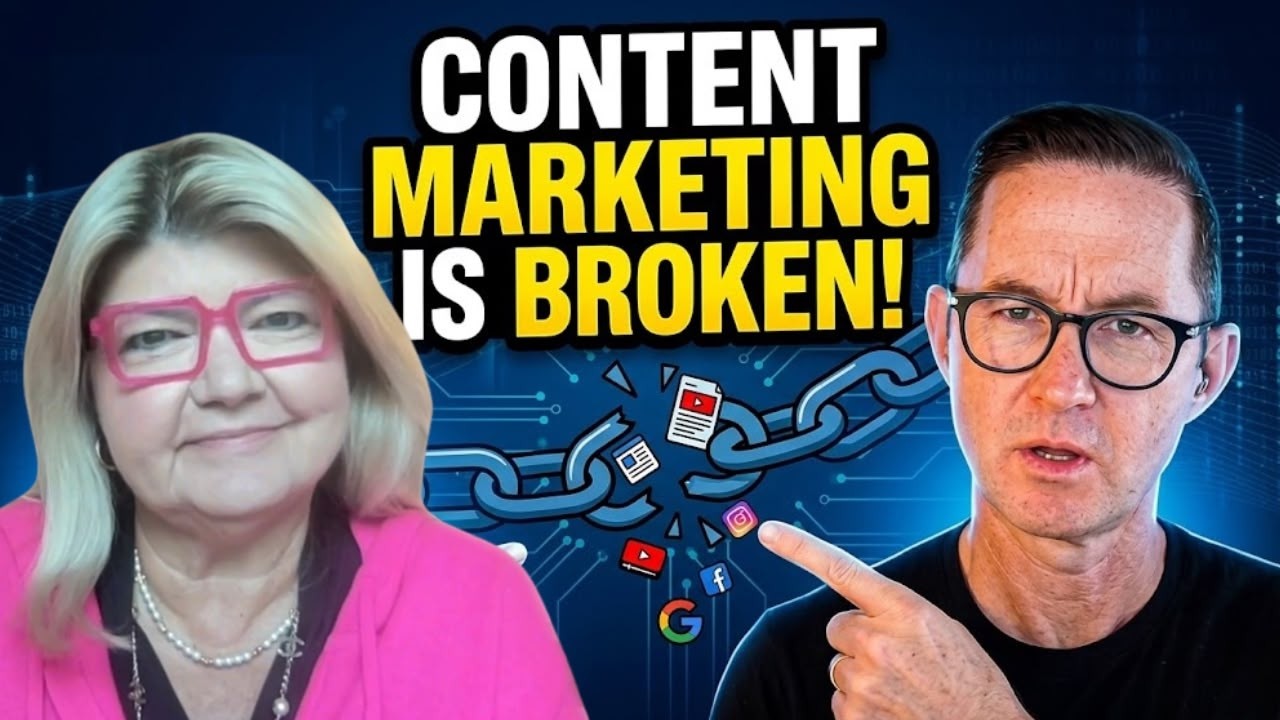
We're gonna be talking to Shara Lazar. Who is just an amazing creator. In fact, she was a creator before creator was a term or even a job title. She launched What's Trending in 2011 as a live web host show on CBSNews.com. And this year, drum roll please, she has been named Time's one of the top 100 most influential creators in the world. Welcome, welcome, welcome. This is Sandy Carter. Welcome to the AI Marketing Companion Podcast. We are so happy to have you here today. And have we got a treat on the show for you. We're gonna be talking to Shira Lazar, who is just an amazing creator. In fact, she was a creator before creator was a term or even a job title. She launched What's Trending in 2011 as a live web host show on CBS. And this year, drum roll please, she has been named Time's one of the top 100 most influential creators in the world. Now what she's gonna do today is teach all of you, all of you marketers, the playbook that she's refined over, over the, I'll just say over the years as she's watched trends rise and fall and really focused in on this creator. So Shira, thank you so much for joining us. I'm so excited to have you here.
Yes, I'm so happy to be here. You've been on my podcast. So it's great to be on yours. Always impressed by what you do. And it's funny because when you said in the world, it was like, whoa, that's intense. Like a lot of people have been saying, oh, congrats on Time 100. I'm like, yeah, thanks. But the way you said it really hit me. So thank you for that. And a lot of, you know, high pressure, high stakes right now. Everything she's learned to be a Time 100 creator in the world.
That's right. You've got it. So, you know, again, I'm just amazed. I mean, I shouldn't be amazed. I should expect it, but I'm just curious. What is one principle that you've learned, no matter what the platforms look like, no matter how things change, that you've learned to become that Time 100 most influential creator in the world?
I mean, one, I'm always so bad at the one because I would say right off the bat, Curiosity, because that has led me into these places that I would never have ended up in, especially when my back was up against the wall and either I lost a job, an opportunity, I found like I was in a noisy, busy space and trying to find the white space again. Curiosity was always a huge part of what led me to that next thing that made that next chapter, right? And a lot of the Time 100 stuff was based, of course, around what's trending and having started very early, being in here for 20 years, still surviving and thriving. But it was also that my curiosity led me and led me to figuring out my own experience because my personal growth, mental health journey led me to starting Creators for Mental Health, which is the first organization to support creators and the economy around our wellbeing and to prioritize that. And then also the Creator Bill of Rights, which we'll talk about. So, so many of those firsts that have become really historic was simply because I was curious enough to try to find the open spaces that no one else was looking into and acting on.
That is really cool. You know, when I was at Amazon, we had a leadership principle around be curious, constantly curious, and you really just nailed it. That curiosity has really led to your Success. In fact, right before this, I was on with another gentleman who's really big in the creator world. And I said, yeah, I'm going to go see Cher. And he goes, oh, you mean the What's Trending chick? And I was like, yeah, that's right. I mean, your brand is really what's trending, one of your brands. So I'm just curious, when you see something kind of bubbling up, what are the signals that tell you, wow, this is real versus This is just a fad.
Totally. I think that I follow a lot of early adopters and I'm fortunate about that. You, you're an early adopter. I would say Gary Vaynerchuk is an early adopter. There's folks like from my early days that we all kind of paid attention to similar things. And I started to see that consistently from being on, you know, Twitter at the time to Instagram to getting into the Web3 space and blockchain's not going anywhere, but you know, RIP NFTs in the way that it was. You know, we were in that space to then I, uh, to then B2B knowledge creator to, I'm sure, quantum. And there's just people that you always know are on the edge and they are really seamless in bringing that to people in their content and also then investing in it and building businesses around it. And so I surround myself by those people, hopefully IRL in my community, and if not, you know, following them and you'll start to see consistent things and you, when you start seeing everyone talking about it, it's popping up in your feed, but you need to follow the right people and be looking at the right things for that. Or else you might see it months later. Like, I know at this point that I see things 6 months to a year before a lot of people. And so once you see that pattern, it's really up to you whether you're ready or you want to jump into it. And then it becomes a choice because you understand the pattern. And how you play in the game. So that's really one. And then you, you need to be also physically in these spaces. So being at events where, you know, these conversations are happening, like I would say South by Southwest, right? Like sometimes, I mean, CES, even at that point, it's consumer facing, but like, like the right rooms at CES or being at maybe like, there's like Possible now. There's any, there's so many things. But being at those spaces, you'll start to see certain themes pop up again and again and again. And then the early adopters speaking, kind of seeing what they're talking about again and again and again. And that for me is the signal. But I take a lot of calls, like sometimes too many calls with people from important people to, not to say like non-important people, but people that I don't know that will hit me up. And even from those, I'll start to see certain ideas pop up and energies pop up. And that's why I still take calls with people I don't know that don't have this like huge thing. Maybe they don't have a lot of money. They're not like a huge name yet because also that's where I, I get to figure out where the signal is. Or they bring up something I didn't see because they're not in this bubble. They're seeing it from another perspective.
Yeah.
So not sure if that helps. But that's kind of it. And sometimes the other advice is to slow down and to kind of in the slowdown, see what is popping up, whether it be just ideas and interests. And it could be just things that you wouldn't even understand or know about, but then it leads to something that is not there yet, if that makes sense.
Mm-hmm.
I mean, the slowdown is when you kind of listen then to yourself and like The messages you need to hear because only you're meant to hear them to execute on them.
Yeah. You just did that retreat, right? Where you just went and kind of being alone really slowed down yourself.
Oh, it was a 24-hour retreat, Sandy, but thank you.
24 hours. Sorry, I thought it was a week, but anyway, 24 hours is cool.
Here's the thing. I, I started a company with trainings, as you can imagine. I kind of signed up for having to stay on top of everything. And I do love that naturally. Like that, you know, that's why I'm here. But a lot of times I did hit walls. Like there were points where I was burning out on my own idea or I just wasn't inspired by it anymore. And it was always in moments that either I got like sick, like I got COVID and it was a month long. This was like early days. And in that month is when I started playing around with blockchain and NFTs because I wasn't in my day-to-day grind. And so I stepped out of it to kind of start poking around and seeing what was around that I wasn't paying attention to that It wasn't about my day-to-day anymore. It was just about where my curiosity was going. And it, and it wasn't even about me. Someone hit me up at that point and I had the energy and the space to respond to them about a project and they needed some help with it. Now, I, in a typical time or day, I wouldn't have had the time to do that, but because I had a moment, some space, I decided to, hey, lean in. So you do need to take advantage of moments that are slower. And that could be because of health, unfortunately, or it could be because you got fired or let go, or because it's a slow season. Typically, that's also a signal for when your next thing is going to come, and it could come during that time or right after. But I will bet you, if you look back at moments in your life, you will kind of see that there were things popping up and bubbling that if you were open enough to respond to, Could have led you to the next thing or did.
Yeah, I think that's true. You know, this podcast really caters to marketeers. So I actually just got off a call with my, my new company, Equus.ai, about which creators should we bring in? Like, who should we select? Yeah.
You know, I'm around.
Yeah. How do marketers evaluate or how should they evaluate? Like what? You know, as you're scrolling through profiles, do you look at follower count? What are the metrics? What are the signals that you think predict whether a partnership with a creator will actually work?
Yeah, I think a lot of people are looking at beyond followers to engagement and what spaces they're in and how they're existing in those spaces, because I think we're in a time of the expert creator. You know, there's a ton of stories around how the influencer is dead. But we are moving into a time where your expertise is not dead and how you share that and add value to the space. And so I think especially for marketers, but AI marketers in particular, you really need to pinpoint who is naturally obviously talking about these things and who already has an audience engaged around those things, not just being performative about it and presenting it, but like deeply embedded in those communities.
Mm-hmm.
Day-to-day talking about personal experience, hovering the stories at events with those communities. These are all those types of signals around creators you should be working with. Who are they following? Who's following them, right?
And being authentic, right? Looking at it not just for the pay, but generally interested.
I, yes, I will say though, you know, I'm all about just because it is a transaction doesn't mean Makes it less valuable or less authentic. And I really think we need marketers to think that way because there is a danger and it's super problematic actually when people or brands have this assumption just because it's a payment or a contract that it means like you're gonna care less or the audience will care less because we do need to normalize creators getting paid because it's work, it's labor, and the only way to make it sustainable. Is to do that. And like, and I think creators are better partners when they feel respected and valued. And then the hope is that it's not just a one-off, but it's long-term. And as a brand, you're saying, well, here's what we're trying to hit, whether it be campaign or beats throughout the year and our, and what we need ROI. And then you could also hear from a creator like, what are you looking to do? How can we support you and how can you support us? And, and that becomes more of a partnership.
Hmm.
So that's what I'm really encouraging from the brand side. And I think we saw with OpenAI a kerfuffle recently with their retreat, actually speaking of retreats, they did this creator retreat and they got totally called out for it because in the midst of, of course, OpenAI getting called out for data centers and ruining the planet and all this stuff, all those headlines and all the controversy, they take all these creators to a retreat in the middle of nature in Hudson Valley. And they specifically also, and this is where what we could learn, they picked creators that don't necessarily cover AI. And I understand why they did that because we're at a point where we want other people to be talking about it, right? To normalize it, lifestyle creators. But then when you get a lifestyle creator going to a really beautiful $2,000 a night hotel, what's the first thing they're going to talk about when they get there? Are they going to talk about what they learned from OpenAI and ChatGPT and like all these cool, you know, approaches or models or tips and tricks. No, the first thing they're gonna talk about is the beautiful room they're in and all the luxury things they got. And so that became the story versus that it was really cool that they brought creators together to learn from them and have conversations about the future of AI. That was not the first part of the story, right? And so, you know, that's what happens when there's a bit of a disconnect between the goal and the community, and you're kind of thinking about goal first versus building with community.
Interesting. That's a good thought. That's something all brands should be thinking about as they, as they march forward. Now, today, it's interesting when I was looking at some of these creators that this company brought into me, several of them were AI creators or AI influencers. That I didn't, it didn't sit well with me. And I love AI. I love technology.
Like, are you talking about a synthetic? Influencer. Yeah, actually I agree. I think we are in a place of, listen, there's always gonna be that one type of creator, like Lil Miquela, Miquela, that was the first kind of synthetic creator. They were, she, it was first. So it seems like there wasn't as much controversy around her. I think now if you were gonna do that, I think that one, already audiences, there's so much pushback and also there's pushback from creators. So you have a double whammy.
Yeah.
of people hating you. That's not a good thing.
I agree.
So yes, you had a good instinct there. Find creators who cover AI or who use AI and are really empowered by it. But then let's take it another level. There's creators who have other people in the industry that just follow them, which yes, depends on what your goal is and maybe that's important. But then there's creators that are covering it that start to have other branches of communities follow them. So maybe they have venture people following them outside of AI or parents that follow them, or maybe they have pop culture people that follow them like me. Like I'm actually known as a kind of creator that covers AI, but that has almost like is, um, on the lifestyle side because, and culture side, because I have people from media and culture that follow me and I cover it in a more of like a culture way versus talking about it as a cybersecurity expert or an IT expert. Do you know what I mean? Or someone that used to work in those positions and now is a creator.
Yep. That's, that's an interesting take. So I'm curious how, I mean, do you use AI to create anything like on your podcast, in your posts? Do you use AI? And if so, how do you use it so that you don't lose your own voice, your own uniqueness?
Yeah, this is a big also controversy right now amongst the creator community. Like Hank Green, very known creator, got called out for using AI in his scripts. He used a phrase that his audience said, oh, that sounds AI. And then he admitted that he'd been using AI. He was reliant on it, and he had to make this whole statement about the fact that he's never gonna use AI now again or something like that, and to hold him accountable, which is real. And I do think for, in his case, it's different cuz he's known as an educator and a science creator, and there's this fear when you're over-reliant that maybe you're gonna be spreading misinformation in a way, right? That's a whole other thing. And that people follow him for his perspective and for a well-researched perspective that possibly there's an assumption you can't get from AI. That said, I think for me, I, I use AI a lot. Like I talk to AI, so I use ChatGPT and Claude a lot and I'll just talk to it around my captions. And so it'll almost act like an assistant or copy editor. So after I speak to it, it'll kind of bring together the thoughts and I'll say, optimize this for Instagram, optimize this for TikTok, optimize this for like for LinkedIn. And that's for my social posts. Same with emails, and I might even email just from the platform right there, right? So for me, that's helpful because I'm the type of person that I, I process and think out loud. And so that is helpful for me because of course I'm also sitting constantly on meetings and all that, and my brain and creativity don't work just by sitting. I need to walk around, I need to think, I need to do. So that's how I use it in the writing side, and similarly with scripts. I do find that sometimes my videos are sometimes, depending on my mood, a bit better when I just look at the camera and talk. I've been trying to kind of gauge the difference. Sometimes I do feel like I could sense like, is this too AI? And then I just lose track of what sounds human and what's not. And so I'm starting to become more and more aware of that and how maybe I can rely on my own voice and myself and like, where do I need it? And so these are constant self-reflection questions. That I have as I create. And then of course, for me, because I don't do really scripted content, I'll sometimes use, you know, those tools for video, but it's so short. So it's not like I'm going into Google Veo or Artlist to do more heavy duty video necessarily. And sometimes images through those platforms as well. I do love Opus sometimes for cutdowns. I've played around with that. And then of course now every tool from Adobe to Canva uses AI. It's just like embedded.
I know.
So, you know, and then there's automations. I'm still, to be honest, I'm still figuring out the automations. Like Beehive also has something where you connect it to, you know, Claude to optimize your newsletter to make sure you're writing the best newsletter for opens and all that. And I'm just starting to use that from them. So that's where I am on my AI journey, although I cover it a lot. Like, that's how I use it within my content.
I don't know if you caught the latest news, but Anthropic has started adhering to an EU law that they're doing invisible watermarks on all their content. And the thing that I've seen, Shira, is, um, you know, they're showing that watermark. If you just like, I'm like you, I run around and I do, I speak to my Claude, I speak all the ideas and everything, and it will just type them up. Now those ideas that I had that were typed up. Now have this watermark.
Here's what's gonna happen.
Yeah, I'm sorry.
I think I, I, I like, I get why they're doing this. They needed to respond to this and like, what are AI companies doing to help platforms that are on AI slop? Also for students that are just using Claude, like all this helps, but then you're, we're also using these platforms to optimize our work. So what's the balance between using it for slop? And just mindless content that is not ours versus actually using it to support us. And that's like, I think the biggest tension and issue right now. I think people are gonna find a workaround. I think there's gonna be a tool that you can then plop in your Claude that takes out the watermark.
There's already one. We just had the first one. Yeah.
Like people, that's gonna happen or people are just gonna stop using Claude and then— And like they'll use ChatGPT. Another thing popped up around Canva where people are now saying When you use the tool that takes out the backgrounds, the background remover, and you export it, it will also show up as AI. So all of your things, and if Instagram or any of them, the platforms are basically putting, bringing down content that has AI detection in it, and so they won't surface it to your community. But that, that it's like, this is the wrong reason to use these tools. Like, I think that when all of us were up in arms around AI slop and fear of AI on the platform. I don't think we were talking about someone using a background remover.
Right. I know.
No, you could program—
Or dictation, right? Or for dictation. So stupid.
Yeah. It bothers me so much. I'm about to do a video about it and I'm probably gonna do my newsletter this week about it. I'm like, this is not what we were talking about. And this is what happens when AI rules on platforms and tools are created without the people using them.
Yeah.
Period. This is what happens. So create a committee with creators and super users and build with the people using these things and the people calling you out. Like, it's not that complicated. This bothers me so much because it's creating chaos and a messy narrative that is not helpful to anyone right now.
I agree.
Yeah.
I just had someone who I know they dictate a lot because they don't, they just don't like to type. And one of her other goals—
What about people with disabilities?
I know, right? Yeah, it's crazy. I agree. I think Claude, I think Anthropic could do better than this. And I know marketers are concerned about it because they're doing what you're doing with their marketing content. They're saying optimize for this, optimize for that. And if you use Claude for that, now it's going to be invisibly watermarked. And there is a new tool. It just came out. It came out 24 hours after Claude's announcement, which is crazy because now everybody can undo the tool. But anyway, we digress. So another, another thing for marketeers, how, how they create a healthy creator partnership? Like, what would you say a great creator partnership would look like for a brand or for a marketing professional? What would that look like?
Get to know creators before you need them. So build those relationships. And you could do that through showing up at events, through having calls and brainstorms with creators, through seeing how you could support them along with how they could support you with Your campaign. Also figure out long-term relationships. I know it, it's like very hard for marketers, I feel, because they're like, let's just see how this campaign goes. There's a fear, but it's also hard when you, it's like when you start the relationship up with on that foot, are you gonna get the best thing? And also there's something about learning and iterating together. It's like hiring a consultant. Imagine you hire a consultant that is actually known, has a background. is very famous for that. And then you're like, can we just have one meeting with you, but then have all your ideas for all the 6 months of meetings? And like, it's very extractive. And I, I think that it's creating a lot of disconnect between marketers and creators, and it's feeling like there's a lack of understanding of how we work and how we wanna work. And yeah, so I think that's the hardest part. So figure out a way that you can sell into it, if you're the boss or you have a boss, more of a long-term partnership, which means sometimes you, maybe you do a few videos, like once, one a month, and you learn from those and then you tweak them. Maybe they're showing up at events too. Maybe they're also giving you tips and intel on, like they're a focus group for your tool and they give you advice. So, I think we're also moving into this era beyond just like campaigns and video content integrations. Into creators can be also in, in front of the camera for you, consumer-facing or B2B-facing, but also behind the scenes for you. So think about how you can use the creator holistically and then also ask them how they best work and then see how that fits in. A lot of times it's like, I wanna hear how you best work, but ultimately you don't, cuz you only have one idea. You have the thing you want. And so that's also it. Be transparent. If you just do have one campaign. And it's this, just be honest about that. Don't act like you want all these ideas when you know that you can't do that right now. Right? So transparency is so important and pay creators, pay creators money. This, like, it's not about press that does not pay the bills, right? Or exposure doesn't pay the bills. And so you need to have an honest conversation, I would say, with your team and build a budget around what creators get. Or how creators get paid.
Mm-hmm.
And you need to do research. It might mean talking to creators of different sizes to see like their menu of like, okay, if, if for these platforms, what do you typically get paid and what's the usage? And see across the board, you know, put it into AI and look at the averages and then use that to inform your budget. A lot of times you create fake budgets with fake numbers and then you try to slide us in there and like, Or not slide us, like squeeze us in. And we're the ones who have to sacrifice something. You don't, you're like asking for all these things. And then we basically, you're, you're like haggling with us. Like we're, um, merchants at a market. Not like, do not do that. And also the last thing, oh my God, I have a lot to say about this. You are the champion. You are the bridge between us and your team if you're the one negotiating. So you, while you're looking out for your company, you do need to look out for the creator too. So many times I work with agencies or companies and I'm like, you're my, you're the only person I'm talking to. So if you're, you know, not looking out for me, who is? And they'll ask for things that are even like sometimes like, oh, disclosures. Oh, we don't need this. Like, you're gonna get me in trouble. You're gonna get you in trouble. Like, you need to think about both sides and how you play that balance.
Yeah.
Including if you wanna build a long-term career doing it. Word gets around, people talk, and you wanna be the, the good part of the good talking, not the—
Not the bad talking.
Exactly.
Shira, we're gonna, we're running outta time.
I mean, are we— I know, sorry, that was very like long-winded.
No, no, no, it go, it goes so fast. I did wanna give you a chance to talk about the Creator Bill of Rights and why marketers should care about that.
Well, because the future of the space exists with all of us working together, and if You know, more marketing spend, like what now at least 60% of marketing spend is going to creators. You should care about how they work.
Is that, is that a true stat?
That was off the road. Did a presentation on creator media. You have, I'll send it to you. It was a great presentation. And they said they're seeing a trend towards average 60%, like they're hearing from their end of where they are in the business that they're being asked 60%, it's moving towards creator media.
Wow.
Let's double check, but we'll put links.
Yeah.
But basically the trends are going more towards that. So the idea is if you need to work with creators, it's just like working with anyone. Uh, you should care about those relationships, wanna build sustainable ones, which means if you see that there's exploitation happening, predatory behavior, burnout, that you should care because it will impact your campaigns and how we're able to execute against them and be successful. So just like How if I saw on your end, and I know my work isn't possible without marketers doing well and getting paid and being able to build sustainable careers and lives. Like if I saw that on my end, I'd be like, this isn't right. I can't do my job without you. Like we all need to work together on what the future looks like, especially if we want results. And so the Creator Bill of Rights looks at protections and regulations. It protects, you know, creators around AI, um, customer service, which is important because if we can't access our accounts or data to give back to you after a campaign because a platform decided one day it would take away access to something that impacts you, right?
Yeah.
Or if a creator posted your video and then something happens and they've no one to talk to because of that, that impacts you. So, um, that, I mean, pathways towards monetization right now, I think there's a lot of pressure on brands and marketers because Creators are having a really difficult time monetizing on these platforms. And so all the focus is on brand partnerships. That puts a lot of pressure on marketers to, you know, be the be-all end-all for creators. So, you know, you should care about our ability to make money there because it allows us to approach your campaigns in a, in a better way too, and not feel like we're dying for the money because we gotta pay rent, right? Like if I don't get this deal with you, Or if you don't pay me enough, then I can't pay my bills this month. Right. Um, and then also health insurance and benefits. Again, that goes back to caring about us as a workforce in a workplace because you're working with us and, and just as people, right?
I mean, just as a human, right?
The workforce is like, creators are part of the marketing workforce. You're, marketers are in the creator economy. We make up a huge part of it. Marketers and platforms are building on our backs. So you should care about, we're, we're a huge part of the pie. And if that part of the pie is rotting, or, you know, it's going to impact the rest of the pie. So, you know, don't, you should care about it before it's too late. Let's just put it that way.
Okay. So Shira, we're going to close out. I want to close out with one question. I know, man, you've shared so many great ideas with us and You know, you talked to us about how to spot a real trend. You talked to us about how to pick a right creator partner, how to use AI without losing your voice, how to build a healthy partnership and why this stuff matters. What would be the, and again, I know you said you don't like one, but if you had to give one assignment to the marketers listening today, something that they could do this week to work better with creators, what would that one thing be?
I always say, try to be a creator, spend a week, spend a month trying to do it yourself, and maybe you'll have a bit more understanding and compassion.
It's true.
It's real. Because I know marketers who now, a lot of marketers are becoming creators, right?
Yeah.
They're on LinkedIn, they're doing it. And those are some of the best people to work with because they now understand the other side.
Yeah. I just, uh, I actually just, when was it? I guess I was going to Davos and a creator reached out and said, hey, I'm sorry, a brand reached out and said, hey, could you be a creator? I was like, really? For, okay. I was like, this sounds really cool.
It was not cool.
Like I had to do 50 Changes to my video. I'm saying it was hard, but it helped me to understand, wow, if they had just told me upfront they wanted me to say this versus me doing 50 takes of the video, it would've been much easier. So I think you're right. You know, drinking your own champagne, if you would, right? Trying it out for yourself. Well, Shira, thank you again for being on my podcast. Thanks for educating all these marketers and Sincerely, congrats on the Time Top 100 Creators in the World. I just, you must be amazed because I'm like, that is, that's like you've made it. Like, that's really cool. So big congratulations on that.
Thank you so much. I so appreciate it. I'm feeling the love.
Thank you.
Okay.
Thank you. Bye-bye.