#150 — Scott Anthony: Disruptions and the Patterns That Shape Innovation

In this 150th episode of the Outthinkers Podcast, host Kyan Krippendorff interviews Scott D. Anthony, senior lecturer at Dartmouth’s Tuck School of Business and author of Epic Disruptions: 11 Innovations That Shaped Our Modern World. The conversation weaves together a definition of disruptive innovation, common misconceptions, and a historical tour of eleven transformative technologies—from gunpowder and the printing press to the iPhone and AI. Anthony explains Clayton Christensen’s theory, clarifies that disruption is a process that changes market dynamics through new trade‑offs (simplicity, affordability, convenience), and distinguishes it from sustaining innovation. He introduces the “ghosts” that incumbents must overcome (past, present, future) and shows how the hero’s‑journey narrative maps onto innovators’ paths. The interview also surfaces practical signals for spotting emerging disruptions (unhappy customer segments, new trade‑off‑focused entrants, and supportive funding or business models) and highlights current frontier technologies (electric vehicles, AI, additive manufacturing, mixed reality). Throughout, Anthony shares personal anecdotes, research methods, and advice on how leaders can use history as a catalyst rather than an anchor. The episode ends with resources for listeners to follow Anthony’s work.
Chapters
TranscriptAuto-generated · 41 min
Welcome to the Outthinkers Podcast. Plug into fascinating minds and breakthrough ideas that are transforming industries and the world. I'm your host, Kyan Krippendorff, founder of Outthinker, a global think tank comprised of corporate strategists and innovators that are shaping the future of business. If this describes you, join us at outthinker.com. Now let's dive into this week's episode with Scott Anthony.
You take things that were complicated and expensive, you make them simple and affordable, you drive growth, you change the world. The misconceptions— we can spend a long time talking about this. The biggest misconception is the word disruption is used to describe anything that is big. When Apple goes and puts a completely new camera in this or makes it really thin, That's an improvement on what exists. That is what Clay Christensen would call a sustaining innovation that doesn't dramatically change market dynamics, that doesn't dramatically drive explosive growth. They're good things to do, of course, but a disruption is something that makes those new trade-offs, that changes dynamics, that drives the big growth. It's different and distinct from what you see in the dictionary.
In this episode, I am thrilled to welcome back our first ever guest, on the Outthinkers Podcast, a conversation that feels both nostalgic and incredibly timely. Scott Anthony, now a senior lecturer at Dartmouth's Tuck School of Business, helped shape the spirit of this show when it first launched, and today he returns 150 episodes later with fresh insights from his new book, Epic Disruptions: 11 Innovations That Shaped Our Modern World. When you hear the word disruption, you might think of tech startups or Silicon Valley breakthroughs. You might think the term was invented in 1990 when Clayton Christensen first introduced us to it. But Scott reminds us that disruption has been part of human progress for millennia. From the cannon fire that toppled ancient walls to the printing press that democratized knowledge, the same forces that once transformed empires are still at work reshaping industries today, from AI to electric vehicles and beyond. We unpack what it really means to lead through these moments of change, how to recognize disruptions before they arrive, overcome the ghosts that keep organizations stuck and use history not as an anchor, but as fuel for reinvention. It's a full circle moment for me and this podcast and a conversation that will leave you seeing the future and your role in shaping it a little differently. Let's dive in with Scott Anthony. Scott, thank you so much for being here. It has been 150 episodes since we've had you here. You were the first guest on this podcast and By a few number of people, we have become one of the highest regarded podcasts on strategy and innovation, and that is in no small part thanks to you agreeing to be our first guest. So thank you so much for coming back to us.
Kinda is my pleasure to be here. I certainly hope I will not be your last guest. Being the first guest is good and it's a pleasure to be back here. It's always fun to chat with you.
Awesome. And where are you joining us from today?
I am in my office at the Tuck School of Business at Dartmouth College in Hanover, New Hampshire on a gray fall day.
Nice. And you were in Singapore for a long time, I believe, right?
12 years. That is correct. I'll be going back actually in a couple months. I'll be escorting a group of students on a market immersion for 2 weeks, which is gonna be a lot of fun. I've not looked at Singapore through that lens before, and it's always nice when you go to, you know, kind of what is old stomping grounds with new lenses.
That sounds great. And how long ago did you come back?
3 years now. And, you know, I— it's something I reflect on, I guess. You know, 3 years ago, I also transitioned from consulting to teaching. And, you know, 3 years ago, I'm like, okay, well, you know, 20 years of hand-to-hand combat every day with clients and problems and colleagues and all that. I'm gonna go to higher education. It'll be safe and boring. Not much will happen there. And then ChatGPT drops. You know, there you go. No safe spaces.
That's great. And that's a big part of the lesson of your book. I'm so excited to dive in. We won't have enough time to dive into all of it. We're gonna encourage our listeners to listen to it. Honestly, I would say, I've read many innovation books, many of your innovation books. This is one of my favorites because I think that Clayton Christensen introduces this term disruptive innovation around 1990. Maybe it's exactly 1990, and it was almost as if disruptive innovation was now a new discovery. And what I love about your book, and my 2 favorite books on innovation also similarly go back in time to like 7,000 BC and like the original innovations. The patterns of disruption have been with us all the time. So first, my first question, I, I, there are 2 standard questions that I'm gonna ask you in a moment, but just to open up, why did you decide to go this way? I mean, it's a beautifully written storytelling book.
Well, I can give you a made-up answer, which was, it was a very consciously crafted strategy. The reality is it was a suggestion from my editor. So I actually had proposed a very different book. I had just come off teaching this class I designed called Leading Disruptive Change. It was all new material about how to you lead through big disruptive shifts. And I proposed writing a book about it, and Kevin Evers at Harvard Business Review Press said, that sounds great, but we have a different idea for you. They had just named disruption one of 4 ideas in history that had shaped modern business, and they said, what about a very different kind of book? And once I heard it, I couldn't unhear it because it sounded like such an interesting thing to do. I've been obsessed with disruption for more than 2 decades. I still had a bunch of questions. The world still has unanswered questions. What if I thought I did this and took a really different lens on it? I am so glad I did because I learned so much through the research and writing journey.
But the research must have been kind of really a lot of work because I, I think in your other books, a lot of the, what you wrote about, you had collected through practice and then you put it down on paper. But I mean, here you were reading about the history of McDonald's. or the history of Julia Child, who I imagine is not— that's not content that you developed through your work. Just tell us a little bit about what it was like to take on this, because I imagine it was significant.
It was significant, and it was really different. By my count, I read close to 40 books and about 400 pages of academic articles. And if you've read academic articles, each page of an academic article kind of counts as 5 pages of normal text. I'm not a historian, so I'm sure that there are holes in the historical analysis. tells the story, and it tells the story I want to tell. But I did do my homework, and it was a lot of homework. But, you know, the thing about it, it was really fun and interesting. You know, when you're going to look at Julia Child's history, you begin to see how rich it is and how she wasn't a great chef when she started. Lots of things we can get into. You just see these things that are really interesting. And I find whenever you've got a good question on your head, or a good question in your head, not on your head, a good question in your head, When you start looking at a wide range of sources, all of a sudden you see these connections, you see these patterns, you see these unexpected things, and it's just joy. Yes, it's work, but it's joy going through that process. Yes.
Yes. That's awesome. I mean, it was so entertaining that I imagine reading it must have been entertaining as well. And we thank you for doing all that work and distilling it into something that we can consume more quickly than I'm sure it took you to gather. All right. I wanna jump into the 2 questions that I always ask all of our guests. The first question is, and you're the first person that was ever asked this question is on this podcast, is please complete this sentence for me. If you really know me, you know that.
The answer I will give right now, I love, love live music. There's a footnote in the book that says this. I've seen Pearl Jam live 24 times, and that's not enough. I'd love to see them again and again.
Are they touring?
They're not right at this second. So yeah, I did see them. I did not see them in the most recent leg of their tour, but I saw them 4 times in 2024, 2 times in 2023. I saw Eddie Vedder solo 2 times in 2022. This was paused because of the little pandemic thing before that. But yeah, they're my favorite group live. I just saw Ed Sheeran the other week and he was phenomenal. I love live music.
That's awesome. That's awesome. I will tell you what you said last time was that you once built a spreadsheet in real time on your phone to calculate the odds of your 4-year-old filing your scary bingo card. That was your answer.
Yeah, that is true too. They, I, I remember that sadly. I don't still have that spreadsheet, but I remember it.
And your 4-year-old, I think now has built a bus or something that, a touring bus or something like that.
Very good. Yeah. Boys with the Bus. So, you know, they went viral on TikTok and Instagram last summer and Charlie, who is now 19. Now 19, maybe. We'll go in one direction. He was on Good Morning America twice. The democratization and disruption of media continues at pace.
Amazing. Amazing. It's like, that's what's so great. The patterns repeat, but the experience of them are entirely different. They can break through new walls, but the patterns are consistent. Second question, what is your definition of strategy?
A set of choices to achieve a designed aim. That's how I define strategy.
Great set of choices to achieve a design end. Very clear. Excellent. So I want to dive in. I think in order to set this up, I think that we need to clarify what disruption is. And there are very few people who have the authority who are living today to be able to really set the record straight. Disruption is a term that has been adopted and morphed and in many ways misused by many people who use it to describe innovation. So could you just explain to us what Clayton Christensen's disruptive innovation theory is, you know, in your opinion, and what are some of the misconceptions or misuses of it today?
So let me start by just explaining what it is, and I will explain it with a story. So a disruptive innovation changes market dynamics and drives explosive growth. So the story, my father was born in 1947. In 1947, there was one computer in the world. I was born in 1975. There were now tens of thousands of computers in the world. They are still expensive and located inside very large corporations who can afford them. When my daughter Holly was born in 2007, there are hundreds of millions of desktop and laptop computers that many people are enjoying. And of course, in that year, Apple introduced the first version of its iPhone. Today, There are billions of computers in our pockets, in our hands, all over the world. This is disruptive innovation. You take things that were complicated and expensive, you make them simple and affordable, you drive growth, you change the world. The misconceptions— we can spend a long time talking about this. The biggest misconception is the word disruption is used to describe anything that is big. When Apple goes and puts a completely new camera in this or makes it really thin, that's an improvement on what exists. That is what Clay Christensen would call a sustaining innovation. That doesn't dramatically change market dynamics. That doesn't dramatically drive explosive growth. They're good things to do, of course, but a disruption is something that makes those new trade-offs, that changes dynamics, that drives the big growth. It's different and distinct from what you see in the dictionary.
Yes. Can you define a disruptive innovation before it disrupts, or does the definition include the disruption of or the resulting impact on the marketplace? And therefore, is, is that why it's difficult to predict whether something is disruptive?
That's a great question. And we start getting into some of the subtleties, challenges, and opportunities of using disruptive innovation theory. You know, what Clay would always say is disruption is a process rather than an event. And people will often say, well, company X got disrupted. That can be the end of the journey, but it isn't necessarily the end of the journey. Again, this is where it gets tricky. So when I see something that brings new benefits to a market around simplicity, affordability, or convenience trading off against raw performance, I say, okay, we've begun to move the disruptometer up a little bit. The potential is there. When I see it then finding a foothold, among a market segment that is screaming for those trade-offs, the disruptive meter goes up even more. When I see it then develop a business model where it creates, captures, and delivers value in unique ways, I say, okay, we've got something that really has the potential. When I see the incumbent then choosing not to allocate resources in the disruptive innovation because it runs counter to what it historically has done, I say, okay, I know how this movie will play out. Now again, Things have changed since Clay first did his research. This is not preordained. Microsoft invested in cloud computing, invested in artificial intelligence. Facebook invested in messaging and Instagram. So people have learned how to defend and turn disruption from a threat to an opportunity. So it's complicated and there are nuances in it, but if you look at it the right way, you can begin to understand things in new ways.
I love it. Yeah, I think that's the power of the concept. Part of the power of the concept is, and I have no authority to say this, I'm just basing off what I've never worked— never got to meet or work with Clay, but I feel like he is describing a phenomenon, not a law, in that it's a phenomenon that then Microsoft and incumbents can learn and can start seeing the markings of, as you're describing. And can then address as opposed to, okay, incumbents necessarily, their resource allocation policies are such that they will choose to avoid investing in disruptive technology.
Absolutely right. Absolutely right. And I think the thing that's really important, and this is what I try to do in the book, if you understand the patterns of disruption, what feels like something that can be threatening and scary can be something that is really empowering and exciting because what disruption does is it drives new growth. It opens up constrained markets. It allows people to reach new customers. Of course, the transition from one world to another always has bumps and always has downsides to it. But if you look at the world in the right way, disruption's not a dirty word. It's a really exciting word. You have to train yourself to do that. And it is, as you say, it's all about the choices you make.
Yeah, it's almost like a doctor being able to name a condition allows you to treat it. I, I love it. And when we talk about disruption, I mean, typically we talk, we start with the mini mills, which was, you know, Clayton's original kind of research. And then we'll talk about Netflix and we'll talk about Uber. But I love that you went back. I'm just gonna read these to our audience. We go back to gunpowder, the printing press, the scientific revolution, Um, Florence Nightingale, the Model T, the transistor, Julia Child, McDonald's. I love that you have so much food in there. My, my next, uh, career will be something in food. Disposable diapers, Procter& Gamble, then steel mills, and then the iPhone. First of all, why did you choose these? Because I know, you know, one thing that you said is that it has to do with you're looking for a story that has a conclusion.
Yeah. So for that, it explains why the iPhone's the last one. So, you know, the iPhone was introduced in 2007, and while of course the iPhone still exists, We can kind of draw or close the chapter on it launching and the first impact it had. So that was one criteria, and I wanted everything to have a beginning and ending. Then in terms of the 11 that I picked, I started by looking at the book that Clay wrote with Michael Rayner, The Innovator's Solution, that had a compendium in the first chapter, all the disruptions they could identify. And I said, which of these look like they would be interesting stories that would help to illuminate something about the idea of disruption? That got me about 2/3 of the way there. And then I said, okay, what else would be fun and something that really hasn't been looked at in depth? That added in Florence Nightingale, that added in Julia Child. And then I thought, where could there be places where you twist things? Steel Mini Mills, as you say, probably Clay's absolutely favorite story. So can we take that chapter and flip it, look at it through the eyes of the incumbent? That was actually a suggestion from someone who read an early version of the book, my friend Thomas Weddle Weddlesburg. Whose name I just like to say. The first version, I actually just told a longer version of Clay Steel Minimill's story, and Thomas said, that's kind of boring. Will we see something different if we look at it through the eyes of Bethlehem Steel? And oh boy, do you see something different when you look at it through the eyes of the incumbent. You realize that Clay put his finger on such a juicy problem as, of course, the thing that he researched and wrote about is the challenge of resource allocation. What the Bethlehem Steel story allows us to explore is the emotional part of going through disruptive change. I talk in the chapter about the ghosts that you have to overcome if you're a market leader trying to grapple with disruption. They're real and they're really challenging.
So tell us about the ghosts. We were gonna get to that later, but
yeah. So there are 3 categories of ghosts. This is an homage to Charles Dickens, of course. There's ghosts of the past where there's historical trauma that you haven't gotten over. In the case of Bethlehem Steel, They had a long history of disputes with unions. The steel mini mills used non-unionized labor. Even bringing up something like that would lead people to say, well, let's not go there. You have the ghosts of the present, recurrent patterns that you follow without being aware of them, often things that trace back to the organization's founding. So Andrew Carnegie played a role in the early days of Bethlehem Steel. Then Eugene Grace was the leader for 40 years. They had slogans around always running the mills full, slowly slogans around pioneering, not paying. That led to a dominant viewpoint that we just execute with discipline. That's what we do. Ghosts of the future. These are hidden fears of identity change that can invalidate the soul of the organization. So if you look at it objectively, Bethlehem Steel should have shut down its biggest plant in Bethlehem. But it was Bethlehem Steel. It was rooted in the city. It was connected to the city. You try to come up with a rational reason to do it. People will come up with all sorts of reasons that they think are rational, but are actually because this is who we are. The automotive manufacturers, by the way, are dealing with the exact same ghost today. It plays out a little bit differently, but they are mechanical engineers that now have to deal with the world that is about software and about electricity. And that feels actually very threatening in a very deep way. Those ghosts are real and hard to overcome.
Yeah, that's brilliant. I mean, I guess, you know, Peter Drucker said strategy is the answer to the question, what business are we in? So you gotta kind of have this identity. And then you have the fact, as you pointed out, that the predictability of the pattern of disruption is easy to argue against. So, you know, you know, to do— these incumbents are put in this can be put on this horns of this dilemma, which is, you know, the innovator's dilemma of do we give up who we are in order to embrace this thing that may or may not become true that we can't really say is gonna happen? That's a very complicated dilemma, Tom.
It, it is. And we start to wander a little bit into the territory of that book I proposed to Kevin Evers that will be the next book. The punchline, how do you handle this? This is a case that I researched, the Japanese cosmetics company Shiseido. You have to— wait for it, it's a good phrase— you have to change to remain unchanged. So what the leader of Shiseido did was literally change everything and change nothing at the same time. So he changed the structure and the brand portfolio, even the language of the organization, but he rooted it all in deep company history. We have always been—
Yes.
A company where East meets West. We have always been a company where science meets beauty. I'm going to moor the effort in something so it does not feel discombobulating. But while doing that, I'm gonna literally change everything.
I love that. Yes, I love that. That way, yeah, we're go— we're going back to our roots or we're, we've always been this. That's—
History can be an anchor. It can be something that pulls you backwards, but it can be a catalyst if you use it the right way. It's a choice.
Yeah. Which I think, yeah, that's great. I mean, this is triggering on 3 different dimensions. This next question I wanna ask. I love that you started with gunpowder. That is a Chinese, originally a Chinese invention, although the usage of it maybe was not Chinese. The ultimate usage of it was not kind of like the Chinese invention. I think there's a theme here about there's this kind of anomaly that is useful for something, and then later the innovator kind of puts it together with other things and then finds a new use for it. And I think that is sort of story of gunpowder. Also, a kind of thing I want to pull out of here, and I don't know if I'm being politically correct or not, but so many innovations have come from China, right? We have woodblock printing, papermaking, the compass, the iron plow, pasta, the wheelbarrow, seismograph, mechanical clocks, abacus, paper currency. Obviously, I had these written down. And, you know, when I wrote my first book, there was this kind of debate of like that Well, the scientific method was developed in the West, and the scientific method kind of was adopted later in the East. You've spent a lot of time in the East. Any thoughts on that? Because there's the kind of— the scientific method would say we have a hypothesis and then we go test the hypothesis. But the another approach, maybe a Darwinian approach, is something happens and then we see what we use it for.
And the thing that I think is really interesting right now is, you mentioned I spent a lot of time in the East. I lived in Singapore from 2010 to 2022, and when I arrived in Singapore, China was still the place that was known for fast replication, but not a place that was known for true boundary-pushing innovation. And by the time I left, that was beginning to change. And now, particularly as you look at electric vehicles and climate tech and artificial intelligence and other spaces, China is leading in some and pretty close second in others. So, you know, in a generation we've seen a real change there. And as you suggest, a lot of this is going back to history and you say, well, the missing ingredient really was commercialization for a period of time. You know, so a lot of great invention, but invention is the early stage. You have to then go and create value and find ways to distribute. You can argue that many of the things that happened during the Scientific Revolution, the Renaissance, and so on, About questioning the status quo, questioning authority, learning through experimentation gave the West a good 500-year run where it was really good at application and then driving improvement in things. And China has, you could argue, reawoken and said, yeah, we still have the ability to invent. We've always had that. And we also have learned now how to really commercialize things, sometimes too much. You know, you look at electrical vehicles now. A bunch of people will say there's too much competition in China. It is destructive. So, you know, still interesting things to be written. Epic Disruptions 2, I am sure we'll have a chapter about electric vehicles. It's just a really fascinating space taking place right in front of us.
Yeah, no, I think it's fascinating. I think you go to Mexico City today and almost every Uber is a BYD. And but, you know, 5 years ago or 7 years ago, that wasn't the case. Great. I've got so much to cover, but we have limited time with you, so I'm just gonna, I'm gonna dive into the printing press. So we go from gunpowder. Well, first of all, what's your lesson from your gunpowder chapter? What do you want members, readers to take away from that?
The great thing about history is you can take multiple lessons from it. I think one of the big ones from the gunpowder, you know, I start in 1453 when an army is at the gates of Constantinople. Walls that had stood for 1,000 years, the Theodosian Walls, crumble in the face of a cannonball flung from a cannon a mile away, half-ton cannonball. But the, the kind of punchline from that, if you're a business leader, is what is the defense, the moat that you have today that you built yesterday that is powerless against the disruptions that are coming at you right now? And I think it's a really important question for many leaders to contemplate because you feel safe until you don't. That's kind of what disruption does to you.
That's power. I didn't get that metaphor until you said that, the moat. Which the cannonball flies right over. Exactly.
There's a literal moat there. A literal moat. Ocean walls. It's 2 sets of walls. They're, you know, 20 feet thick. There's 96 towers around them, and there's a literal moat.
That's a brilliant metaphor. Wow.
Until it doesn't. And, of course, you know, in the strategy world, you know, we look for moats. Right?
Yes.
And what happens when, not if, what happens when a new innovation obviates the moat? It happens everywhere.
Brilliant. Brilliant. Oh, I love that metaphor. Thank you. Thank you for raising that. All right, let's go to the next. I think another insight, big insight for me from reading the book, and I think you pull it out mostly in the printing press, is, you know, for the printing press to actually have an impact, we needed to be able to mold metal into letters. We needed paper that was of sufficient quality. We needed to be able to store and apply ink. There were like a number of innovations If you don't mind talking to us about, then also I think that in that story you also have this early adopter, the church, who wants to ensure the consistency of missals and, and distribute Bibles. Kind of what are the lessons that we can draw for today from the printing press?
Yeah, so 2 main things I'd highlight that touch exactly on what you're talking about here. The first, a very persistent theme in the field of innovation, magic happens at intersections. So Gutenberg and team It isn't that they just did this thing all on their own. They took all these existing technologies and did some new things too, but combined them together in a really powerful way. The place where they were doing the work, Strasbourg in Germany, was really important too because there's a bell engraving industry. So you've got people who know how to work with metals. There is a big wine industry. So Konrad Saspach has this unique press. So those intersections are what allowed magic to happen. That's lesson 1. Lesson 2, sometimes those that help to spur a new innovation ultimately regret it. The question I'm asking groups now is, who's today's Catholic Church? So the Catholic Church was super excited about the printing press until Martin Luther got his hands on it and started printing those theses and all the books that said, hey, maybe there is another way to do this. And if Part of what gives you strength is having knowledge contained and constrained, and it's democratized. That's not a great thing. So again, today, is it the consulting companies that are helping to spread AI that will ultimately regret it because they're enabling their clients to do what they used to do?
Yeah. And how much control do you have of that? Is the innovation, disruptive innovation, an inevitability that the system will just embrace, or to what extent does the incumbent have power to slow it down?
And, you know, think about where I sit right now. You know, again, educational institutions are facing the very same set of discussions and choices. And how do we teach? How do we assess learning? What new models, inevitably new models will emerge that are AI first. What does that mean for us? Is it good? Is it bad? Who knows?
Yeah. Staying with the printing press a little bit longer, like today, We understand Gutenberg to be the hero of the printing press, but you point out that for many, for 200 years, he wasn't even known. It was, there were other people. And it kind of speaks to, I think, like the stories that we tell about innovation and that we have this hero. And you talk later on about the hero journey. So just explain to us who Gutenberg was and why he was not credited until later and what implications that has for us in terms of us learning about, you know, from past innovations.
This was a really fun thing I was blissfully unaware of until I did my research. So, you know, the reason why Gutenberg was unknown for a couple hundred years is, you know, he had this idea, this idea for the printing press. It wasn't just him. There's a team of people that are working on it. They need money. You always need money to do things. So he found a backer, Johann Fust, in the local area who gave him some guilders to go and launch the business. He comes up with the first version of the Bible off the printing press, and Johann Fust sues him and says, you violated the terms of the contract, blah, blah, blah. Ultimately, Johann Fust wins the lawsuit and gets control over the technology. He decides to let Gutenberg continue to have one operating press. So Gutenberg is still operating, but it's really Fust who goes and takes the technology and begins to scale it. So for 200 years, he is the person that everybody focuses on. Until a historian goes back and says, wait a second, this is a person who kind of stole to a degree. Didn't steal because, I mean, it was his money that he put into it, but he wasn't the person who originated the idea. That really was Johannes Gutenberg and his team. The thing that I learned from this is history is written by the victors. I guess that's always been true. And there are stories that become fables, become parables. You dig deeper into them. Often there are nuances. That's one. And two, you know, I would always tell the story of Gutenberg before I researched it. It's a story of this one guy kind of doing his thing, making these magical things happen. And then you realize there's Conrad Sasbach and his press, and there's Johann Fust and the funding. There's Nicholas of Cusa, which is one of the first customers that Gutenberg— there's a bunch of people. There's always a bunch of people. There's no lone genius. Never a lone genius. Of course, there is a person who plays an outsized role in Anything, but for anything to succeed, there are dozens, hundreds, thousands of people who will be involved in it. That's the way it works. If you're a leader, don't think about getting that one person to come in. Think about how you're going to really create a culture where it's the norm to do this, not the exception.
Fascinating. So like, if we double-click on that, we say, hey, you know, the easy story to tell is of the lone hero, but actually there are multiple characters. And if you want to create the fodder for innovation. We need all of these characters. You need the early adopter, you need the funder, you need the inventor. I don't know, on and on. Yeah, on— do you— you may not have an answer to this, but do you have a cast of characters?
I— it's a great question. I've never been asked that before, and I've never really thought about it before. It'd be a fun thing to play around with, because there are— you know, I think about like Dungeons and Dragons and the different attributes that people had and all that, and I'm sure they're— the same thing is true. And you name-checked a bunch of them, and you you need the skeptic who's going to go and point out flaws. You know, as an example, the last story in the book, Steve Jobs and the Apple iPhone. I mean, it's the Steve Jobs story, right? Steve Jobs was so wrong about some parts of the iPhone when it was launched in 2007. He was asked, what is the killer app? And he said, the killer app is, wait for it, the ability to make phone calls. And that's not what people wanted to do with a supercomputer in their pocket. The early days of the iPhone were kind of commercially disappointing. Because it was limited and there was no app store because Jobs liked to control things. He needed healthy skeptics on his team that were willing to say, Steve, we need to open this up. And he, to his credit, agreed to do that. And of course, the rest is history.
Yeah. And I think that he also kind of created a culture that allowed people to push back on him. And even though he was this outsized personality, obviously there was— he allowed skeptics. For
sure. And, you know, there's this kind of reputation that he didn't, you know, it was all him and all that. You look at any story and that's not true. Of course, he could be, and I didn't know him personally, so this is just reading other accounts. He could be acerbic, he could be tough, he could be, you know, there's other words you could use to describe it. But he also would listen and he would change his mind. So the history is very clear that he was open to people who dissented to his point of view and was willing to do different things when he heard and saw evidence that a different path was more viable.
So I love it. So, so, you know, the stories of innovation often are anchored around this hero, and you explicitly link the journey of innovation to Joseph Campbell's Hero's Journey. So I was wondering if you could like briefly kind of describe what are the key turning points of the Hero's Journey that maybe an innovator is not thinking about, or, you know, that would help them inform. And then my second question, is that the right helpful story, or should there be a different one? Yeah, so I think it's a great question. Storyline.
Second one first. I, I think any story's gonna have its limitations, but this monomyth, I, I think has a lot of value. And Joseph Campbell's research shows many of the stories in history, whether it's biblical or Star Wars or whatever, have the same basic arc. And you go look at innovation, it's the same basic thing. I use Julia Child to go and illustrate it. I'll give the slightly simplified version. It starts with the call to adventure. This is the innovator having the moment where they say, why are we doing it this way? Why might, or how might we do it differently? For Julia Child, it was the first meal that she had in France that opened up her senses and said, I wanna dedicate my life to food. So the call to adventure. You then have the moment where things go wrong. You have the entrance into the abyss. In Julia Child's case, she's working on a book with 2 co-authors, Simca Beck and Louisette Berthold. They're in year 8 of what was supposed to be a 3-year journey.
Of writing the book.
Of writing the book, Mastering the Art of French Cooking. They're on their second publisher. And they think they have it and their publisher says, no, we are not going to and can't publish this book because it doesn't have an audience. So this is in 1959. Hope would seem to be lost, but then 3, you've got somebody who is providing help to you. It can be a mythical guide or whatever. In the case of Julia Child, it was her friend Avis DeVoto who happened to have a connection to a young editor at Alfred Knopf that was looking specifically for books that had a French-American connection. Judy Jones was the editor. And who loved what became Mastering the Art of French Cooking. And then the hero emerges triumphant. So I, I think it's a very useful metaphor because it reminds us we have to start with something. And in the case of a great innovator, it's questioning the status quo. It reminds us that disruption rewards patience and perseverance. It's not gonna be a straight line to success. There's gonna be fumbles and false starts along the way, and we need help. We're not gonna do it on our own. It's not necessarily going to be a mythical spiritual from above that helps us. It might just be a good old-fashioned friend that gives us counsel when we need it. It might be someone that makes connections. It might be someone that lets us see possibilities we didn't see. All of those things, back to the cast of characters we talked about before, all of those things are critically important. Should not be a lonely journey.
I love it. Yeah. Yeah. So what I'm taking away is, yeah, the hero's journey is a Useful storyline. But what many people forget is the hero's not alone in that story. Love it. Again, I have so many more questions to cover, but we're reaching the top of our time with you. So let me— I loved your conclude— your concluding chapter, and you talked about some of the technologies that are disruptive, that are gonna be changing the nature of the system that maybe we are not Recognizing as such. And so my first question is, having looked across the 11 over these hundreds of years, what are some of the indicators that we should be looking for to identify that this is a trend that is disruptive? And what are some of the technologies that a strategist or innovator should have on their radar?
So a couple things. So first, how do we know? So I always tell people to look for 3 things. Number one, Do you see signs that a customer segment is unhappy? They're looking for something different too. Do you see someone coming in with something that is making those different trade-offs that we talked about, taking complicated, expensive things, making them simple and affordable? 3, do you see fuel for that person who's doing things differently to go and serve more demanding marketeers and go and do new things? That can be funding, that can be a business model that's really profitable. You see those 3 things, it's a good sign that change is coming. And you look at the stories in the book, you see lots of echoes of things that are taking place right now. Gunpowder echoes into clean tech. The printing press echoes into artificial intelligence. Henry Ford's Model T echoes into autonomous vehicles. You look at the steel mini mills, you can think about robotics. You look at Pampers, you can think about additive manufacturing. You look at McDonald's, you think about new food, lab-grown meat, and so on. You look at Florence Nightingale, you can think about smart health. You look at the iPhone, you can think about mixed and augmented reality. The world right now is swimming in disruption. The last thing I would tell people then is this is great news. Yes, disruption creates dilemmas. Christensen identified it in his first book, The Innovator's Dilemma, when new technologies cause— wait for it— Great firms to fail. The natural tendency inside organizations is to struggle with disruptive change, but that's not an inevitability. If we look at the world through the right lenses, and I think theories, models, and history can be very powerful ones, we can see and make amazing things happen.
I love it. I love it. Is that is that going to be one of your next textbooks would be laying out these these disruptive technologies because I think that. For example, 3D printing is something that is unfairly on the other side of the hype cycle.
No, you know, 3D printing, like many things, you know, I, and I think this is a very persistent lesson throughout history. It takes longer than people think, you know, artificial intelligence. If you don't know the history, you're like, this is a brand spanking new thing. You understand the history, 1956, the first conference on artificial intelligence is held right here. I mean, not like in this room, but held at Dartmouth College. So, you know, it's really 56 years before before you get— 66 years, sorry— until you get commercialization of the technology in a way that we see it in mass market applications. Additive manufacturing is from the mid-1980s, so still got a few decades to go before it catches up to artificial intelligence. But now, you know, I wrote a book in 2017 that's behind me, Dual Transformation. The next, an updated version of that book will say, okay, how are we now seeing the transformative power of some of the things we've talked about here?
Yeah, I love it. I think that at the end of your book, you use a term— I'm not getting it exactly right, but it's like the snapshot versus the something.
Yeah, snapshot versus the movie. You know, you look at one moment of time. Even if you look at— we talked about the Apple iPhone. You snapshot 3 months after launch, you can have leaders of big organizations like Nokia be comfortable being on the COVID of Forbes magazine with the headline, 1 billion customers, can anyone catch the cell phone king? Well, Yes. In the snapshot, it looks fine. You play the movie, it's like, I, there's gonna be a twist. There's a shower curtain and there's someone with a knife and they're right there and you know it's coming.
Yeah. Well, thank you for writing the movie for us. Honestly, as I said, I've read lots and lots of innovation books and this now is one of my 3 favorites and they all go back hundreds of years because I think that we kind of live in this snapshot era. When we talk about innovation, and there are such powerful lessons about persistence and being able to see the broader time-based patterns that make us better innovators. So thank you for doing that work for us and for sharing it with us.
Yeah, thank you for the discussion. Great as always.
It's great having you here. And how can people continue connecting with you, learning from you? We're gonna certainly encourage them to buy your book and your other books. What, what are other ways that people connect with you? Yeah.
So I live my life socially on, well, my, my digital life socially on LinkedIn. So if you go to LinkedIn and you look for Scott Anthony Tuck, cuz there's more than one Scott Anthony out there, you will find me.
Sure. Okay.
And there's the website for the book, epicdisruptions.com, that has all the great companion material, the podcasts like this one and other interviews and stuff like that.
Great. All right. We'll put that in the short show notes and encourage people to join you there. Thank you, Scott. For writing the book and for taking some time to talk to us about it.
Thank you, Caine.
Thank you. Thank you to our guest, Scott Anthony. Thank you to our executive producer, Zach Ness, our editor, James Pearce, and the rest of the team. If you like what you heard, please follow, download, and subscribe. I'm your host, Caine Krippendorff. Thank you for listening. We'll catch you next time with another episode of Outfitters.
More from Scott

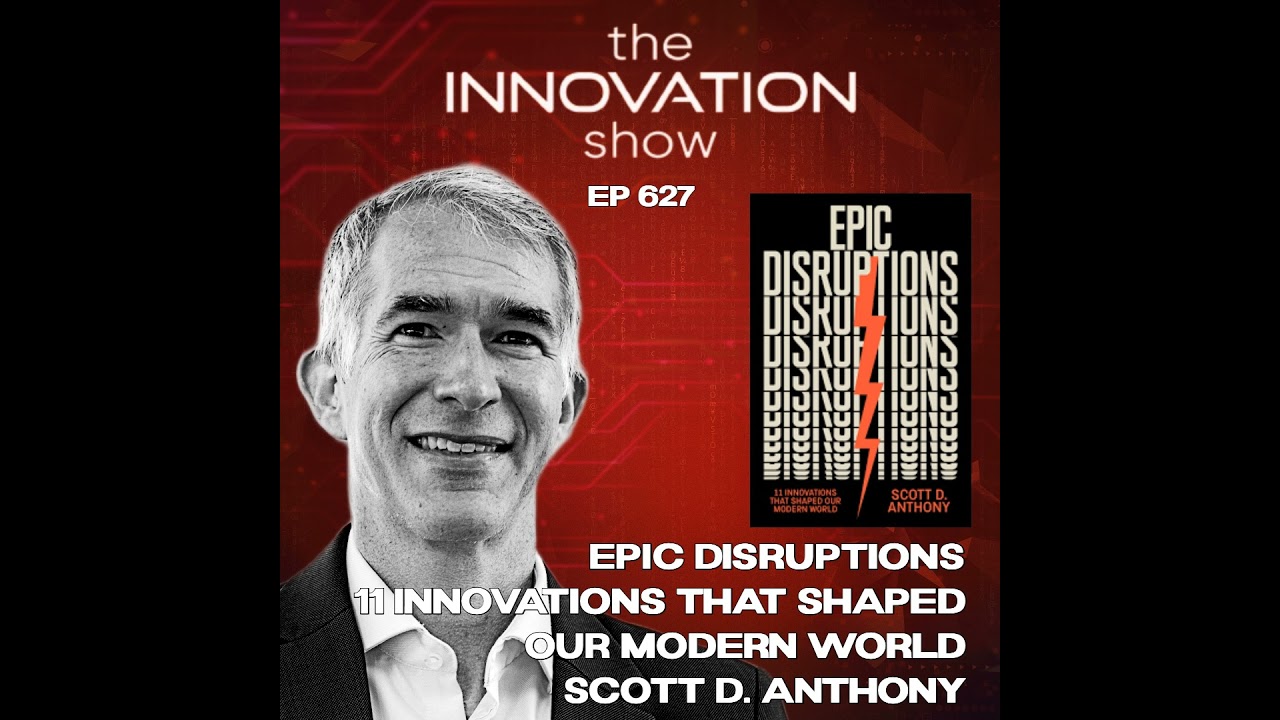


What the Printing Press Really Teaches Us About Innovation with Scott D. Anthony


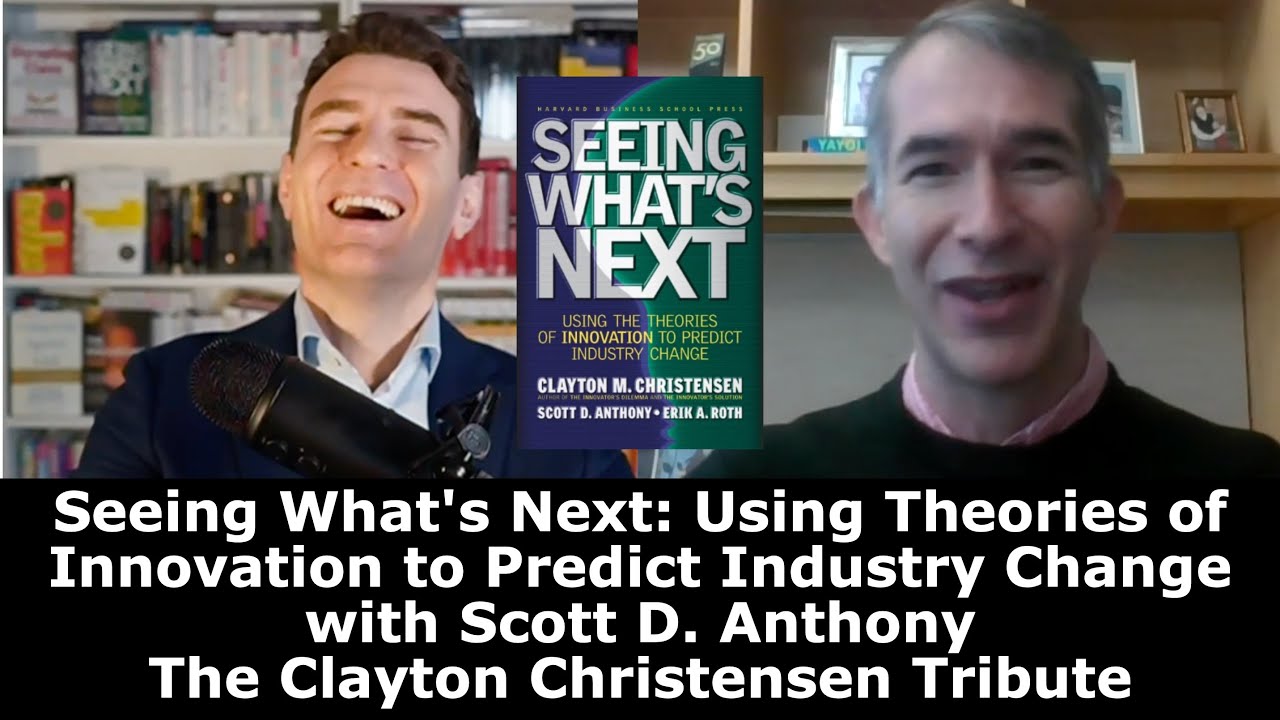

Scott Anthony at Creative Innovation 2013 Asia Pacific (Ci2013) - "The Empire Strikes Back"