#292 Epic Disruptions | Scott D Anthony, Dartmouth Tuck School of Business
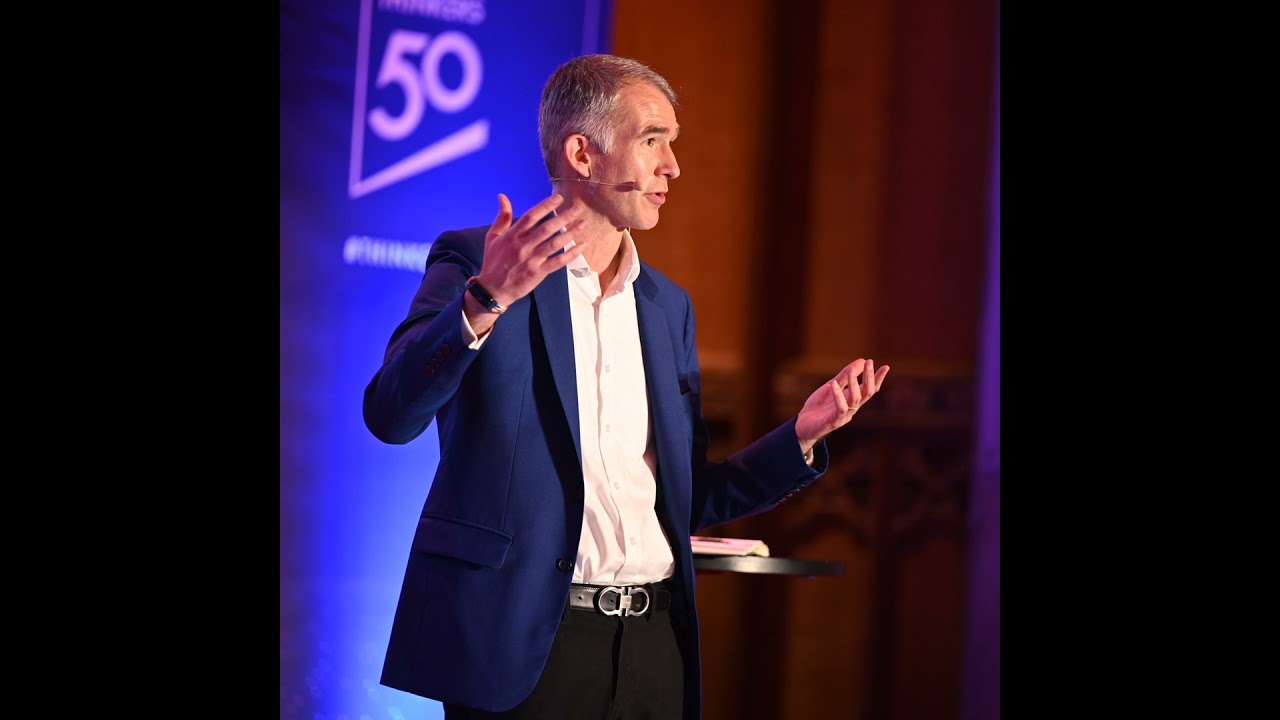
In this Super Psyched episode, host Dr. Adam Dorsey interviews Scott D. Anthony, professor at Dartmouth Tuck and author of Epic Disruptions: 11 Innovations That Shaped Our Modern World. The conversation moves from Anthony’s personal journey—early mentorship by Clay Christensen, a formative year in Singapore, and a recent career pivot from consulting to teaching—to the broader themes of his book. Anthony explains his definition of innovation ("something different that creates value") and positions disruption as a subset of innovation that makes complex, expensive technologies simple and affordable. He shares how he cultivates and maintains high‑quality relationships, using anecdotes about Carl Ronn, crossword‑puzzle curiosity, and the importance of a personal “board of directors.” The dialogue delves into the mechanics of feedback, the iterative editing process behind his book, and the value of asking good questions, referencing Kurt Lewin’s unfreezing model. Anthony also discusses parenting in an era of rapid change, emphasizing a possibility mindset, growth mindset, and the role of play. The conversation concludes with a candid look at the downsides of disruption—winners and losers, societal friction, and identity threats—and a final wish for humanity: a realistic optimism and a possibility mindset. Throughout, Anthony blends personal stories, historical examples (Gutenberg, Julia Child), and practical advice for leaders navigating uncertainty.
Chapters
TranscriptAuto-generated · 35 min
Hello and welcome. I'm Dr. Adam Dorsey, a psychologist in Silicon Valley and the host of Super Psyched, a podcast dedicated to supercharging your life. Each episode contains fun, high-quality interviews with experts looking at psychology from all angles. Super Psyched is your tool to get more of what you want in your life, And less of what you don't. It seems like so much has changed and so quickly in the last 25 years. Remember DVD players? How about phones that didn't have cameras on them? Those were vogue and the standard just 25 years ago, but they seem quaint now. Innovations in technology drive so many other changes in business, society, and even our personal lives. The changes, which are often called disruptions, can feel overwhelming. Yet, as you'll hear, these disruptions are nothing new. Dartmouth Tuck School of Business professor and top 50 thinker Scott D. Anthony wrote a new book that I loved called Epic Disruptions: 11 Innovations That Shaped Our Modern World. He unpacks historical and current disruptions and gives tips on how to handle these. I love the book, and I'm not alone. Harvard Business School professor and recent Super Psyched guest Dr. Amy Edmondson said, what connects gunpowder, the printing press, Pampers, and iPhones? Scott Anthony's engaging new book reveals powerful lessons for today's business leaders from these world-shaping disruptions. So listen in as Scott and I talk about epic disruptions, why he doesn't love the word disruptions, and as I share my hope that it will ease some of the overwhelm. Scott D. Anthony, welcome to Super Psyched.
Adam, I am super psyched to be here. I'm sure I'm the first person who has ever told that joke.
Welcome. I'm so glad to have you here. I loved your book. As soon as you reached out to me saying you wanted in, I said you were right in my geek zone. Before we get into Epic Disruptions and the content of the book and what some of my listeners will benefit from, let's just hear a little bit about you. You mentioned in the book and to me personally that you did not become one of the top thinkers just on your own. You have benefited from a lot of really smart people who you have intentionally surrounded yourself with and experiences that might be similar to a cold plunge that you put yourself in. Can you just describe some of the people who've helped you get where you are now? as well as some of the foundational experiences that you've had that have challenged you and allowed you to be where you are and have a book from Harvard Business Review.
So people, it has to start with Clay Christensen professionally. I met Clay Christensen when I was 25 years old. I was in my second year at the Harvard Business School. Before Harvard Business School, I'd been a consultant at McKinsey and Company for a couple years. I was at a startup that blew through a billion dollars for a year, different Story for a different day. And, you know, like many second-year students, I didn't know what I wanted to do with my life. And then I took Clay's class and he had written this book a few years prior called The Innovator's Dilemma. I read the book when I was flying out to Phoenix, Arizona to go and see the band Pearl Jam with my friend Chris Cal. And the book just literally changed my life. I read the book and I'm like, I can see things I couldn't see before. I can understand projects that I worked on. I've got new lenses for it. All the classes I'm taking, I see them differently. It just connected with me. And then Clay said a couple weeks after that, I've got some funding from the dean to hire a researcher. Whoever I hire will materially drag down the average salary of the graduating class, but it'll be an interesting experience. And again, I was 25. I didn't know what I wanted to do with my life. I said, why not? I ended up doing a couple years of research with him. We wrote my first book together. Joined the consulting company that he founded and off to the races we were. And he's just one of many great thought leaders who have been generous with their time, who have been willing to engage in discussions, clients that I, back in my old days as a consultant, that essentially were my research and development lab. My best clients became my best friends. Carl Ronn at Procter& Gamble, for example, I've now been friends with for more than 20 years. So great privilege of having tremendous people that I can learn from all throughout my journey. I could talk about experiences too, but I realize it's actually— I've already gone on for long enough that I might pause there before I talk about the cold plunge.
No, just one or two of them, because I know you spent time in— at 12 years in Singapore, for example. And what are some of the kind of tantamount to a cold plunge or anything that might be a little scary? I really do believe in the axiom that everything we want is on the other side of fear. What are some of the things that have scared you that have grown you?
Well, for sure, Singapore. I briefly mentioned this guy, Carl Rahn from P&G. He was actually hugely influential in this. So I consultant to P&G, started doing that in probably 2005 and worked with them for the next few years. Carl Ronn was a senior person there, vice president in charge of R&D for fabric and home care. So if you've used a Swiffer or Febreze or Mr. Clean Magic Eraser, you, you can thank Carl. And I just remember a conversation with Carl where he said, you know, at P&G, we are a global company, which means you cannot get promoted unless you spent at least 5 years overseas. He did his time in Venezuela. And I had spent a year in London when I was 22. That didn't quite count. So through a kind of random set of things, an opportunity opened up to go to Singapore through InnoCite. And my wife and I, and at the time our 2 young kids, they were 2 and 4 when we did it, made the jump. And we thought, well, this'll be 2 years or so and then we'll come back. And it ended up being 12. We had 2 more kids while we were there and just truly a life-changing experience. And then on the way back, cold plunge number 2. 2022, decided I was going to do not one big change, but two. I was going to move back from Singapore to the US and then change from being a consultant, which I'd been for now more than 20 years across InnoCite and McKinsey, to being a teacher at the Tuck School of Business. I had some preparation for it just because I spoke a lot in client settings and at conferences and so on. But teaching and preaching, I learned very quickly, are very different things, and I am still learning. 3 and a half years in what it takes to be a teacher and just very different and incredibly invigorating experience that every day, every day makes me a little bit scared. When you get in front of a group of students and you open your mouth, it's always just a pregnant pause. Who knows what's going to happen next?
And I believe Adam Grant actually literally shreds all of his teaching materials every 2 years so that he has to start anew and keep it fresh. I don't know if that's the exact amount, but I just think it's fantastic that you're challenging yourself in front of really smart people and it's constantly upping your game. I want to talk a little bit about friendship maintenance before we get into the book. You have friends, and one of the things that men struggle to do is maintain those friendships. And I'm wondering, and of course different friendships require different schedules of maintenance, but I'm just wondering, you seem to be a master at procuring and choosing really good people to surround yourself with, as well as maintaining those friendships. Can you talk about how you choose the people you surround yourself with and how you maintain those friendships?
Let me stick with Carl Rodd for a minute, just because, you know, he's on my mind. I once was talking to Carl about, you know, how does he get the right people for his team, particularly for the more disruptive work when you're going to go and pioneer and launch a new category, et cetera. And he said, one of the things that he would look for are people who like to do crossword puzzles. Why? Because there's no intrinsic reason why you would do a crossword puzzle. There's no reward in doing it. You just do it because it's an interesting thing to do. And I don't actually do crossword puzzles, so I'm not a perfect fit for this, but there are plenty of things I do just because they're kind of interesting and fun things to do. And I think when I see someone like that, like Carl, who just is intellectually curious and likes to explore and is a good human being, it's like, okay, I've met you in whatever context I've met you in. It might be another parent of a kid, it might be a client, it might be another professor, whatever. But I just want to have a conversation. And then if the conversation's a good conversation, you have another conversation and you kind of go from there. And you recognize, as you said, it takes work to do it. So, you know, whenever I'm in San Francisco, it's where Carl and his wife Elizabeth live. So anytime I'm in San Francisco, I always make sure that I meet up with them because that's what you do. And He's one of these people, kind of like my friend Chris Cow, who I went to the Pearl Jam concert with. It can be 3 years in between meetings, but it's like the sentence just picks up from the last time. And I don't know exactly what's behind that, but it's something that I like and enjoy.
My friend and colleague Britt Frank, who's been on the podcast a few times, said that we have different feeding schedules for friendship. Some of us need to hang out all the time and they eat like hummingbirds, need to eat frequently. And then there are others who eat more on the schedule, not comporting themselves like this animal, but a scorpion, which eats apparently once a month. I forget the exact— but it's very important for us to know that. And the reason I asked you that question is I work with men primarily, and friendship is a challenging area. I gave my second TEDx talk on friendship in adulthood because it is so crucial, not just to our physical and mental health. I mean, we know from a study that transpired right near you in Cambridge, Mass., about Harvard and South Boston. But we know that the quality of our connections do determine the qualities of our lives in terms of our health. And I'm talking both physical and mental, which I do not differentiate.
I think it's such an important— it's not my area of expertise. So there's a limit to what I can add to the conversation, but I completely associate with what you're talking about. And if I connect it to my area of expertise, because this is what you do, One of the common themes that you see in the innovation literature is that magic happens at intersections when different mindsets and backgrounds collide. The more you've got a diverse set of relationships, the more you've got people you can talk to about things. Of course, it helps to sustain you emotionally, and that is critically important. And it also can be something that has some real business benefits as well. Carl is one of 6 or 7 people that when I've got a, a big thing I'm wrestling with, Should I make this career decision or that career decision? It's kind of the kitchen cabinet or the personal board of directors or whatever. You bounce ideas off them and you just never know where you're going to get a fragment to say, I thought my choice was this or that. Actually, there's a third thing I just have not seen that now has opened up to me. I think what you talk about is so incredibly important along lots of different dimensions.
And we think about the iPhone as being the byproduct of just brilliant technological thought. And yet it's the byproduct, as you just said, of so many relationships that have come together and created this game-changing piece of technology. For the sake of taxonomy, let's talk about what innovation is and what disruption is. Toward the end of your book, you even very, I think, appropriately said that your mentor Clay thought the word disruption might have been misused. And there might've been a better word for it, but I'd love for you just to say to my listeners what innovation is and what disruptions are.
Great. So let me do innovation first. So the definition I use for innovation is something different that creates value. You can break that phrase into 2 parts. Something different is very intentionally vague. It leaves room for great big things like hypersonic planes and everyday things that make life just a little bit better. The vagueness reminds us that both of those count, and innovation is not the job of the few. It's the responsibility of the many. Creates value separates innovation from precursors like invention and creativity, essential ingredients, of course. But until you turn the spark into whatever kind of value you're trying to create— revenues, profits, more satisfied employees, a happier self— you have not truly innovated. The creation of value is the critical component of innovation. Disruption then is a subset of innovation. And I think the easiest way to explain this is just tell you a brief story. So my father was born in 1947. At that time, there was exactly one computer in the world. It weighed about 20 tons. There was no way my father would ever see it. I was born in 1975. Now there are tens of thousands of computers. They're smaller, but they're still really expensive and really centralized. Only big companies have them. When my daughter Holly is born in 2007, now there are hundreds of millions of computers. They're in laptops and desktops. And of course, that was the year you mentioned it before, Steve Jobs and team introduced the iPhone. Today, there are billions of computers in our pockets and in our palms. That's disruptive innovation. Take things that once were complicated and expensive, Make them simple and affordable, change market dynamics, drive explosive growth.
And you describe that in every possible industry. I mean, industries that feel as far afield as the origins of gunpowder, the origins of the printing press, all the way up to Bethlehem Steel, its rise and fall. And Epic Disruptions, you wouldn't imagine it to be a funny or perhaps even a story-like book, but it's both in addition to being a very important business contribution in this age where you even say so funnily that we're living in unprecedented times. And one of the speakers laments that we're not living in more precedented times, but this is a really important book for this time. And it's very, very edifying and enjoyable read. So good on you for creating this book as a contribution and a byproduct of your consideration of how you would invest your heartbeats and this opportunity cost known as time. Really big deal. I'm sorry, just one last thing before I even get to my next question. It made me smile when you cited Stephen King as someone who said, write initially with the door closed and then with the door open. And you even revealed to the listener, in my case, because I listened to it on Audible, with the reader how your book is so much better for having received the input from others. And so I think that's really important.
You know, fun fact, my daughter, who is a senior in high school, is taking a creative writing class, and the first book the teacher had them read was the Stephen King book on writing. So I thought that was a nice full circle moment. But, you know, you heard it in the extra content that is in the audio-only book. Every book, it's the third version where I feel like I'm beginning to get it. Sometimes even then, I don't feel like I've fully got it. Epic Disruptions, I think I had it in the third version, but that's what it takes. It takes editing and it takes feedback and it takes confidence and humility at the same time. The confidence to say, I've got something to say, the humility to say it's not quite right and it can be better.
So good. Lest we suffer the emperor in his new clothes phenomenon, which none of us wants, but many of us are really afraid to receive feedback. Let's actually go there. They say not euphemistically, or sometimes euphemistically, that feedback is a gift. How do you solicit feedback and how do you receive it when it's given, especially when perhaps it contradicts what you would want to hear?
Well, I will first say it is really hard. I, like many people who followed the career path that I did and spent a lot of time in consulting, the phrase insecure overachiever could be applied to me and insecure overachievers I remember a former colleague saying the worst thing you can say to them is you did a pretty good job. It's kind of like a B+. Good feedback is always a B+ max. It's always, uh, here's some things that are good, here's some things that you can work on, et cetera.
Wow.
So, you know, there is a little bit where it's not easy to receive. Where I have mentally conditioned myself to is recognition that my goal always is to make things as good as they can possibly be. And a person who is giving feedback in that spirit, in a goal of making things as good as they can possibly be. is with me on a journey to a better place. So, you know, sometimes I will get feedback and it's just, I really don't like this, that, you, whatever. This happens in class too. I have a little flash poll that I ask after every single class that I take, and then I get official feedback at the end of the term. Sometimes you just hit somebody's nerve and they don't like it and you get something that's not very helpful, which is just, you know, I don't like this, that, you, that joke, that line, whatever. And I'm like, okay, noted. I can't do anything with that. You probably have your own stuff going on. Fine. But when someone says, you might not realize it, but— or Thomas Weddle Weddlesburg, who is another person who became a friend in the most unlikely of ways because I peer-reviewed his book, then he peer-reviewed my book, then we met at some point. That was 10 years ago. Now we're good buddies. But Thomas Weddle Weddlesburg is incredibly generous with feedback. When he read the first version of the book, he said, this chapter you have on steel, it does not work. It's boring. It's just the same story Clay has told bigger. He said, what if you flip the chapter and tell it through the eyes of Bethlehem Steel? I said, huh, I just hadn't even thought about that. And that's what great feedback is. It wasn't just, this is bad, make it better. It's, this isn't working. And here's something that you could do to actually go and make it better. Last thing I'd say, intentionally, I get feedback from 60 students in a given class. The people that I sent the manuscript to is 5 or 6 people. And there'd be some people who had just wildly divergent opinions about things. And then it's up to you. It's up to you as the author to say, do I listen to Carl? Do I listen to Thomas? Do I listen to somebody else? Some things you might feel that you have right, but everyone disagrees with. This is what happened to my conclusion. I loved my conclusion. It was speculative fiction about my family's life in 2050. Everybody hated it. Every single reviewer said, I know you like it. I can tell from the writing, but it just does not work. So I scrapped it again, having multiple people provide input, I think helps with it. But I think going back to where we started, recognize it's not natural or easy, I think, for any of us. And sometimes it requires a nice cold beer before I open up the feedback. And that helps me process it a little bit, depending on the day of the week.
One of the things that you, what made me feel like you were from my tribe is that you cited the importance of asking really good questions. I've often said that the quality of our questions determines the quality of our life. One of the things you say is that you can't get a good answer without good questions. And during these very ambiguous times, I think that that's probably one of the most important skills that we have as humans, as non-LLMs or AI. What do you propose are some good questions that people can ask? during these times that might give them more clarity as they try to venture forward in the face of so many disruptions?
A fantastic question. I might say, I really do believe this is the unlock for innovation in general. If you look at what innovators do, they question the status quo. Innovation is something different that creates value. So you have to say at a basic level, why are we doing it this way? How might we do it differently? How can I think about this problem in a new way? Those are general things things that innovators do. The way that I've been talking about this moment goes back to some work done by Kurt Lewin about 80 years ago, kind of the father of social theory and organizational behavior. And he had this model that was called the unfreezing model that says any given moment an organization is frozen, it can't change. Something precipitates an unfreezing, a crisis, a charismatic leader, whatever. In that moment, change is possible, but that moment is finite. Because an organization refreezes and again, change is very difficult. So arguably we're in the great unfreezing where things that we took as rock-solid facts are being revealed as assumptions and choices, which is really disconcerting, discombobulating, hard, et cetera. The question is, what is the upside of uncertainty? What is the possibility that has now opened up? If we truly do have a blank slate to start over, How might we do it differently this time? And let me make this real. So, you know, I teach at the Tuck School of Business at Dartmouth College. We were one of 9 US schools that back in September received the Compact on Excellence in Higher Education from the administration saying, if you agree to these points, we will give you all the goodies. It was an unsignable document. There's just no way you could sign it for a bunch of reasons. So our president, Sian Beilock, didn't sign it. So there's a lot of distress about this saying we've got pressure from the administration who's got points of view, et cetera. Those things are true. We also have an opportunity. The trust in higher education has been declining for 50 years. Education has gotten too expensive for most people. There is one viewpoint that dominates on university campuses. These things are, are all almost inarguable. So what are you gonna do about it? So to me, that is the question. In the great unfreezing, what is the possibility? What is the thing that you could do to drive forward? A lot you could talk about, about how you keep your boring, how you make sure that you stay sane in a world that seems on the brink of insanity all the time, but finding the possibility. What is the possibility? That's what I keep coming back to.
That was the concluding question on Netflix's Big Mouth. If you've ever seen that cartoon, it's, what are you going to do? And it's not, what are you going to do passively? What are you going to do? What is within your locus of control? What are you willing to sacrifice to the gods to do what needs to be done? And I'm just going to ask you if you're comfortable answering this question. In the face of so much uncertainty, what are you doing with your children in terms of trying to get them to thrive in these unprecedented times?
And just context-wise, I have 4. So they are now 20, 17, 14, and 9, Charlie, Holly, Harry and Teddy, and I love them all very dearly. You know, it really is that it's trying to prepare them for it. So, you know, my kids have been a laboratory for everything that is in both the book here and the things that I teach in my classes around how do you lead through uncertainty? How do you find opportunity in ambiguity? How do you stand calm in chaos? And so on. I think above all else, the thing that I try to stress with them is there is no right answer. There is no one path to greatness. There are lots of ways that people find success, find happiness in the world. The way that I define it might be different than the way that you ultimately define it. And that's great. That's what makes us so deliciously amazing as a species, because we are all each individual people. And I really try to push and encourage that. I, we, my wife and I really try to push and encourage that with the kids. Again, it's their path, not our path. We're here to support and nurture and We have trampoline, you know, literally we have trampoline outside and metaphorically, you know, if they get down, they can bounce up using us as a springboard to go higher. That idea of providing them the safety and support and the enforcement that they need, but letting them know it, it's up to them and they have agency and they've got the ability to make their own wonderful futures. That's the thing I try as much as I can. And also growth mindset, paradox mindset, those two would be the recover from failure. My 14-year-old has probably seen the— Roger Federer was the graduation speaker at Dartmouth last year. My 14-year-old has probably seen the 2-minute clip, It's Just a Point. I probably have shown it to him about 20 times. It's like many young people, he has perfectionist tendencies. And like Harry, the best tennis player of all time only won 54% of his points. So what Federer said in that is what separates the best from the rest is not that they win every point. It's that they know they're going to lose and lose and lose again, and they've learned how to deal with it and move on. So life lessons from Dad and Roger Federer.
I'm just taking a second to take that one in. That is one of the most— I've not seen this speech, but I will. That is brilliant. And that is absolutely the mindset I try to help my high achievers take on. It's much easier said than done, especially with these perfectionistic tendencies that got us there. But what got us here won't get us there, so to speak. And we've heard that expression so many times.
I went to watch Harry, the 14-year-old, at the end of one of his basketball camps over the summer. And the coach there said something that really stuck with me. He said, you know, we're going to give out prizes to the kids who won the free throw shooting contest and all that. He said, but I don't actually know if they're the best kids because the problem is Those that are really good get so nervous about being good that they might not do their best, or they might intentionally miss. Because if they intentionally miss and they finish second or third, oh, okay, no problem. I finished second or third. If they gave everything and they fell short, then they feel like they've disappointed you as parents. I thought, gosh, that's just so sad. I've told Harry, look, I want you to be as successful as— but it's not me, it's you. And I want you to play to win. I don't want you to play not to lose. It's much more fun when you play to win. So much more fun.
I remember in 1998 when Michelle Kwan was predicted to win the gold medal and she was on Jay Leno after she won the silver and he said, you lost the gold. And she said, no, I won the silver. And I know she was probably in the former category of thought because it must have felt like she lost to Tara Lipinski, but at the same time, she was able to articulate that and hopefully Hopefully she was able to walk with her head high because it is— silver medalists are notoriously the saddest people on the podium.
I cited that research. It was a silly moment. I was at a conference a couple of weeks ago and they had some little competition as just an energy creator, you know, answer some trivia questions about the presentation. And I finished second. I lost to Brian Evergreen by 2 tenths of a second or whatever. And I was speaking later that day and I quoted that research and I said, Brian Evergreen, I'm coming for you.
Wow. And what a last name.
Yes.
What a last name. That seems daunting and even ominous to try to come for someone who's Evergreen.
Exactly.
Boy, of the great vignettes that you share, whether it's Florence Nightingale or Henry Ford, which was the one that you found the most edifying?
Really, it's the Julia Child story. Julia Child was the last one I wrote and the one that was both an unlock in the writing, and I found it so helpful since the book came out just to illustrate a bunch of things. It really helps to highlight 3 points. One, it shows just something you discussed earlier, how disruptive innovation comes in lots of forms. People are like, what did she disrupt? I'm like, well, in the 1950s, if you wanted to eat French food, what did you do? You got on a plane and you went to France if you lived in the US. When she and her co-authors, Simca Beck and Louisette Berthold, wrote Mastering the Art of French Cooking, anyone can do it in their own home. It is classic disruptive innovation. Her going on TV, exact same thing. Make it simple and affordable to do what once was complex and expensive. That's number one. Number 2, it highlights that this isn't done by superheroes. Julia Child was not born a great chef. Nobody is, but she was actually a notoriously bad chef. The joke was she couldn't boil water. The first meal she cooked for her husband, Paul Child, was brains simmered in red wine sauce. She failed the test at Le Cordon Bleu. So this idea that work is involved in it, good fortune's involved in it, it isn't something that God gives you a certain gift. I mean, obviously there are gifts in everybody and that helps, but at the end of the day, these are normal people who are doing extraordinary things by following certain behaviors. And then finally, Julia Child shows very clearly the rewards to patience and persistence. She's had the first book deal in 1951. The book was supposed to come out in 1954. It took 2 publisher switches, including a near-death in 1959 before the book came out in 1961, 7 years late. And this version of a story could replicate for anything. It's not a straight line. There are false steps, there are fumbles, there are failures on the way to success. That's just the way it is. What makes the disruptive innovators successful is they go and learn, adjust, they get knocked down and they get up again and they keep going.
I call it running up the muddy hill with wind and rain in your face. In every single disruptor or person who was an innovator, you described that they had to do that. None of them made it through without incredible amounts of determination, Discouragement and all the other forms.
Well, and as you were talking about before, friends, I mean, again, this is a really important, and this is a thing that I really learned for the book. I had an article I wrote, I don't know, 12, 13 years ago where I said, you know, there's prehistoric age where we don't have names. And then there's the era of the lone inventor, people like Johannes Gutenberg that are doing work on their own. And when I got into the details, I'm like, that's just not true. So it never has been true. Johannes Gutenberg, who helps to create the movable type printing press, helps to create it because he's got a business partner that he's working with first on mirrors to capture the Holy Spirit during a pilgrimage in 1439. The plague broke out. That ultimate vision didn't come true. The team pivoted. Then Konrad Sasspach shows up. He's got the actual press. You've got Nicholas of Cusa, who's a customer, Johann Fust, who's providing funding. There are heroes in the story, and that's plural, and that's really important. So, you know, Julia Child had her co-authors, had friends who made connections. Friends really matter. They don't just matter again for your health and wellbeing. They matter if you want to have success in life, you can't do it on your own.
Yeah. I believe you even cited it in your book, but it's certainly worth repeating. One of the things that made us more successful than the Neanderthals as Homo sapiens was our ability to do exactly that. The African proverb of, if you want to go fast, go alone. If you want to go far, go together. And you're nodding. You've obviously heard this many times. is reflected throughout your book, and I'm so glad you did. Is there anything that I should have asked but haven't yet asked?
Always a tough question because we've had such a delightful, wide-ranging discussion.
Good.
I think the main points we've hit, you know, so disruption changes the world generally. That's for good, but I think it is important to note, and we haven't talked about this actually, the downside of disruption. And this I think is worth pausing on for a second. So I'm a true believer. I'm a proselytizer. I've spent my career focusing on disruption. But the deeper I got into the book, the more I realized that there is a downside to it. And some of it is obvious. When market dynamics change, there are winners and losers. Some of it's a little bit more subtle. When society adjusts, when a disruption strikes, that can be really hard. So in the 1920s, in major cities, cities are built for horses and for people, not for cars. So there's chaos and carnage on the street as a disruptive force comes and changes an industry. It takes time to work through that. And then finally, disruption can threaten our sense of self. It could be something that can threaten our identity. In the case of artificial intelligence, can even threaten our humanity. And when we feel those threats as individuals, you know very well, all sorts of defense mechanisms kick in where we give rational reasons to not do things where in reality we're trying to protect ourselves from something. So the book left me with a, a much greater sense that yes, On balance, disruption is good, but understand these shadows because if you don't see them, they can really swallow you up. That's, I guess, one area we didn't explore.
Yeah. So, if you were just to give just a little bit of insight on that, just even for a minute, what might it sound like? What's the least we need to know?
So, I think the least we need to know is, as individuals, recognize we all suffer from the status quo bias. I write about it in the book. The first time I went into a Waymo robotaxi, My hands got sweaty. I got nervous because I'm a human and new things, despite this being my life, new things are still a little bit scary to me. Recognize it, overcome it. Keep putting yourself out there. Keep trying new things. The pace of change only increases. There are no precedented times anymore. This is a world of unprecedented times. So we need to keep going and keep trying things. The antidote to fear, in my view, is fun. The more you view it as an adventure, as a game, as play, the easier it is to do. It is one of the great gifts of having children. When the kids are playing with new technologies, I just play alongside of them, and there's no fear in that. It's just the enjoyment of being with your kids doing a new thing.
What wise advice. Well, I'm going to ask you the final question that I ask all of my guests, and that is, if you had the power magically to confer upon all humanity one insight or skill that would dramatically improve the lives of the individual. And since we're all connected, the people around that individual as well, what would that skill or insight be?
I don't know if I count this as a skill or insight, but I guess I'll count it as an insight. I'm an optimist by nature. I am a realistic optimist. I recognize all the things that are going on in the world, but I wish for the world more optimism and for people more optimism and more of a, not even a growth mindset, but a possibility mindset. That says that I can do things to make the world a better place. I have a role to play in it. I can see ways to, even in the darkest moments, to go and do something beautiful. And that might be a small thing that is beautiful, but it's still a thing that is beautiful for me, for my friends, for my family, for my coworkers, for my children, for whatever. That would be my wish.
Scott, so good. I have enjoyed getting to speak with you. I knew I would. And I'm so grateful to you for having written the book and for sharing your wisdom with my listeners.
Thank you, Adam. It's been great.
Right on. This is Dr. Adam Dorsey thanking you for listening to Super Psyched. If you know anyone who might like it or who might benefit from listening, share it. And if you like the episode, please hit subscribe.
More from Scott

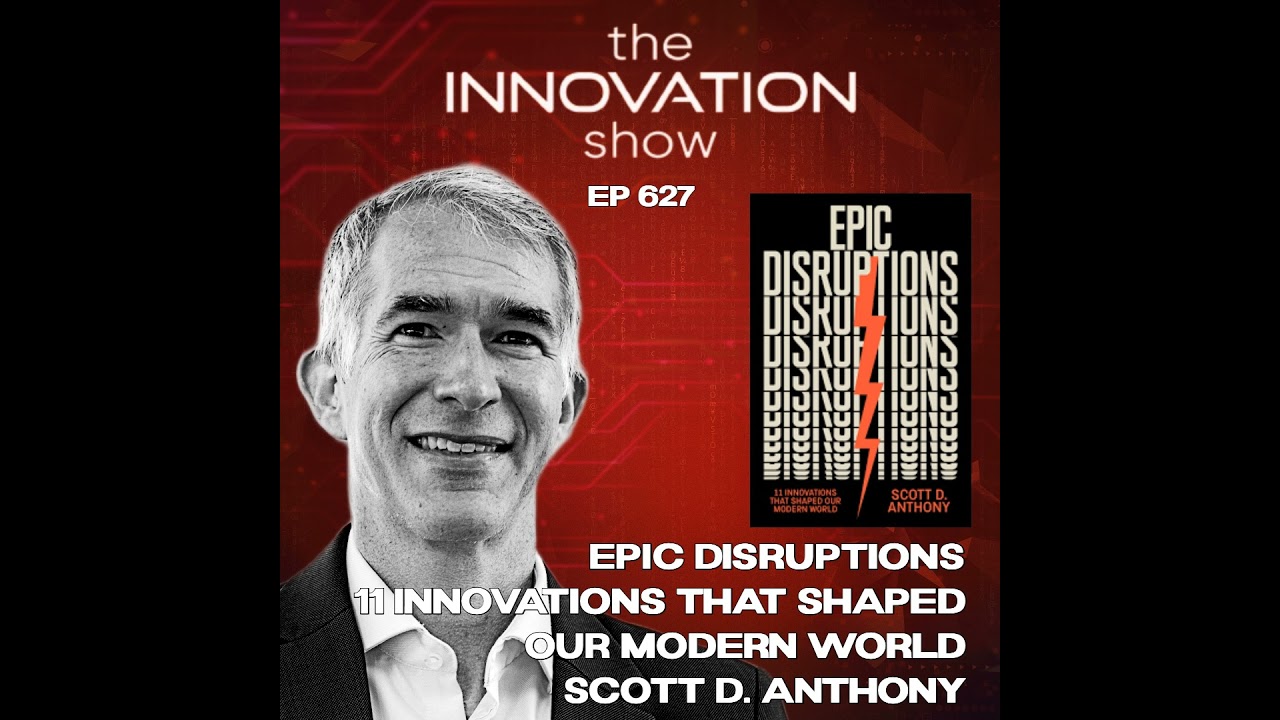


What the Printing Press Really Teaches Us About Innovation with Scott D. Anthony





Scott Anthony at Creative Innovation 2013 Asia Pacific (Ci2013) - "The Empire Strikes Back"