Epic Disruptions with Scott D. Anthony | The Innovation Show @ HBS
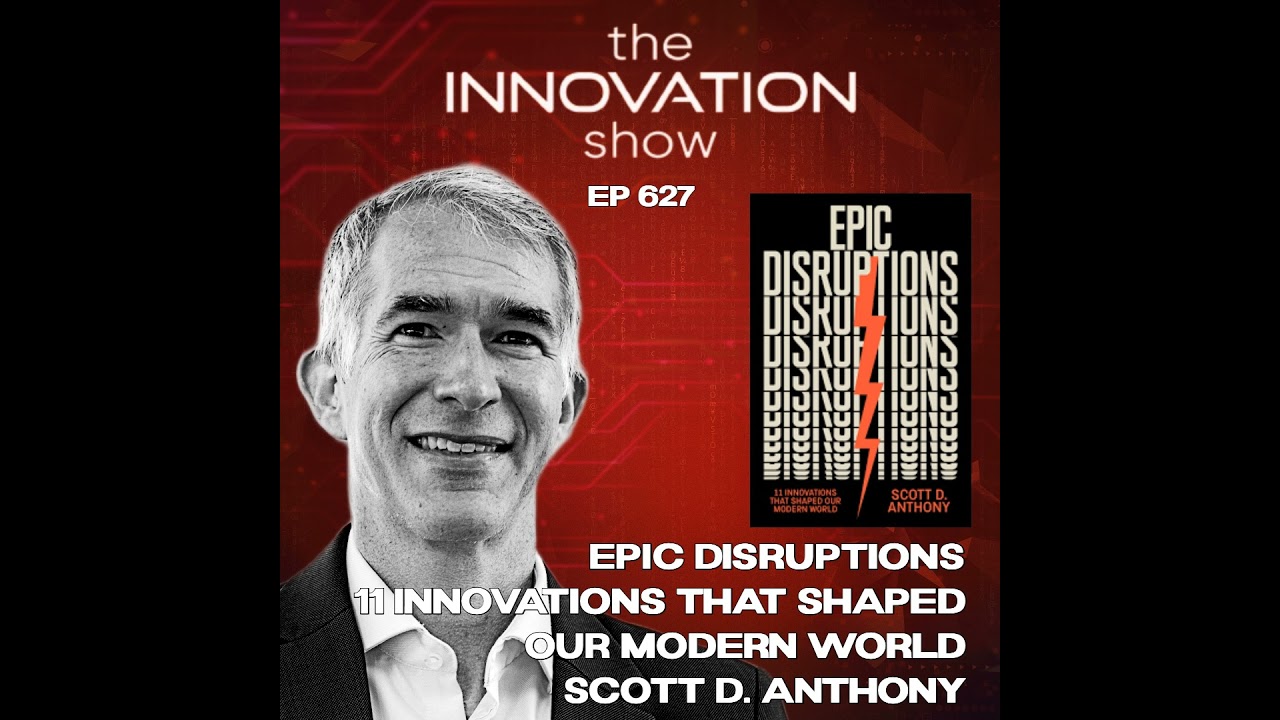
In this hour‑long Harvard Business School interview, host Aidan converses with innovation strategist Scott D. Anthony about his new book Epic Disruptions. The dialogue walks through the core vocabulary of disruptive innovation – innovation, disruptive innovation, sustaining innovation, overshoot, value networks, non‑consumers, and market‑creating innovation – and explains why mis‑alignment on these terms fuels resistance to change. Anthony illustrates each concept with historic and contemporary case studies: the personal computer to iPhone evolution, Netflix vs. Blockbuster, the Honda Super Cub, gunpowder, the Gutenberg printing press, Nokia’s fall, Kodak’s digital camera saga, McDonald’s franchising model, and Henry Ford’s Model T. The conversation also explores strategic levers such as emergent vs. deliberate strategy, “cramming” a disruption into an existing business model, and the ABC framework of Dual Transformation (Transform A, Transform B, Capabilities link). Throughout, Anthony stresses the importance of emergent strategy, diverse perspectives at the intersections of knowledge, and the role of age‑related intelligence (fluid vs. crystallized) in spotting disruption. The interview ends with practical advice on where to learn more (LinkedIn, epicdisruptions.com) and a reflection on the emotional difficulty of letting go of legacy assets.
Chapters
TranscriptAuto-generated · 71 min
Welcome back to this special series of The Innovation Show here in Harvard Business School. I want to thank, before we start, the HBS publishing team, Dave, Ellie, and Simona down the back there as well, and Kyndryl, our sponsor of The Innovation Show. You can find out more about Kyndryl, K-Y-N-D-R-Y-L, and don't forget, you can download the Kyndryl Institute app where there's a plethora of amazing content available for you. Today's guest has a special place in my brain. I wasn't going to say in my heart, but in my brain, because At a time when I was struggling to understand innovation, I stumbled across a book that he co-authored with the great Clayton Christensen, which was Seeing What's Next. And he has a brand new book out. It's called Epic Disruptions. And we're joined by Scott D. Anthony.
Aidan, it is my pleasure to be here.
Great to have you back again.
Just sad it wasn't a special place in your heart. I mean, special place in your brain is great, but heart would be even better.
You're getting there, man. You're getting there. Well, I have something which might give me a better place in your heart at the moment. So a little gift from Ireland. This is a special Whiskey you can't get in the States. That's for you, man. You can use it for the Christmas cake if you want. There's also a pin. You know the way I wear a pin as a practice? This one is, the future is intersectional. Not quite innovation happens at the intersections, which we'll talk about in this series today. And then the last thing is, I know you're a huge Pearl Jam fan, so a book of Pearl Jam song lyrics as well. So that's another little Christmas gift for you for under the tree, man.
One of the running family jokes is that I have lyricosis. I do not actually know the lyrics of any song that I like. I just kind of mutter. So this will be great help. Thank you very much for all of these great gifts.
A pleasure, man. It's great to have you. We're here to celebrate this book today, Epic Disruptions. But I thought one of the things you call out in the book is a lot of what we consider is resistance from people in any kind of transformation efforts is actually a misunderstanding or misalignment on terms that you're even using, like the term innovation in the first place. But you call out these terms like innovation, disruption, and disruptive innovation. And I thought we'd be on the same page for these 2 shows by getting your definition of those terms.
So let me start at the top with innovation. So innovation I define as something different that creates value. It's a very simple and intentionally broad definition that you can break into 2 parts. Something different is vague. It creates space for big bang things like hypersonic and day-to-day things that make the world a better place. Both are forms of innovation. Creates value reminds people that innovation is different than invention and creativity. Those are ingredients into, but until you are producing revenues, profits, have more satisfied employees, whatever, in my mind, you have not innovated. So that's the baseline of innovation. Disruption or disruptive innovation then is a category of that. Let me illustrate that with a short little story. So my father was born in 1947. In 1947, there was one— count them— one computer in the world. It weighed 20 tons. My father would never hope to see it. I was born in 1975. Now there are tens of thousands of computers in the world, many computers largely in large corporations. They're still complicated and expensive, so I would never see one. My daughter Holly was born 18 years to the date in 2007. Happy
birthday, Holly.
Happy birthday, Holly, indeed, in 2007. Now there are hundreds of millions of personal computers and laptops. And of course, that's the year where Steve Jobs and team introduced this, the first version of the iPhone. Now there are billions of computers in our pockets, in our palms. That's disruptive innovation. Take things that were Complicated and expensive, make them simple and affordable, change market dynamics, drive explosive growth. So those are the terms of reference for the conversation.
Brilliant. And they're so important for the book. They echo the whole way through the book where Scott gives us an example of an epic disruption and then applies it to the modern world and applies it to those themes as well. In Clay's research, he highlighted 2 types of innovation, sustaining innovation and then disruptive innovation as well. I thought we'd just give the contrast of those things because again, a lot of executives even in organizations think they're talking about the same thing when they're going, we are being innovative. And you're kind of going, you are, but that's a different type of innovation.
No, exactly right. And what you said, it just hits the nail on the head. The executives are correct, but they're limited. They are doing one thing well, but they're missing something else. So Clay had this very famous line diagram that first appeared in the mass markets in 1995 in a Harvard Business review article co-authored by Joe Bower, who you of course interviewed many times and was the thesis advisor to Clay and the co-author of the first article. And that line diagram showed the 2 forms of innovation. One moves you along an established trajectory in a marketplace. Clay and Joe call this a sustaining innovation because it takes that which exists and makes it better along dimensions that historically mattered to someone. So if you go back to the Apple iPhone, when version 17, 18, 19, 20 of the phone comes out, each time, it sustains the foundation that Apple built. It's better performance along the improvement trajectory that Apple established. A disruptive innovation disrupts and redefines performance. In the diagram, it actually has lower performance along the dimension that historically mattered in the mainstream. So if you look at the original Apple iPhone, if you compare it to a computer, a lot less processing power. If you compare it to other phones, a lot lower battery life, a lot worse ability to interact because it didn't have a physical keyboard. So it lowers performance on one dimension to give new benefits along other dimensions. And that's what makes it disruptive. Number one, it redefines performance. Number two, to the market leader, at first it looks inferior because it's offering worse performance along the dimensions that they care about. That's why Clay called his first book The Innovator's Dilemma. Those disruptive innovations don't make sense to the market leaders. They don't invest in them. They ultimately get better and they cause all sorts
So let's bring that a little bit more to life. The idea of the sustaining innovation versus the disruptive innovation, it's really a context change. And the best way I read about it actually was in another one of your books, Dual Transformation with Clark Gilbert. And Clark talks about that as well, that you're successful, but it's now the context that has changed because of this new technology, for example. I think that That's a nice lens to be able to see it differently and kind of going, okay, now I understand that they're, they're not existing on the same plane anymore.
No, that's exactly right. And you can look at any of the classic disruptive innovations and you can see it. Let's look at, at one that people like to talk about a lot. Netflix versus Blockbuster competing in completely different ways. Blockbuster did a very certain job and did it very well. It was Friday night, you didn't know what to do. You went to a store, there are lots of things you browse, et cetera. Netflix does not give you instant gratification when it starts. Of course, ultimately it gets streaming and it can do that. But in the early days, you had to wait to get a movie sent to you through the mail, but you had infinite selection and you could then look at things in different sorts of ways. So very different contexts competing in different ways, competing along different dimensions that at first doesn't make sense to the market leader, but makes a ton of sense to the consumer who says, I actually really like this new dimension of performance that's being introduced.
One of the terms again, and this is going back to Innovator's Dilemma, was the idea of a value network. So for example, I as Blockbuster don't see any value in Netflix and I'm kind of going, there's very little margin there. There's very little market there. Michael Rayner said, for example, sometimes as a bank, say for example, you're a challenger bank and you take these lower-end customers that are of no value to me or the ones that I go, I'll send you 12 red roses to take them off my hands. Thanks very much. And by doing that, I hand you a cohort and then you build the capability and you get better and better over time. And I think it's a dynamic I'd love you to share because you wrote about this again in a previous book, and this is our focus, Epic Disruptions, but in Eat Sleep Innovate, when you talked about DBS, for example.
No. So there's a couple things that we can unpack here. So first of all, I'll comment, Aidan, one of the great things about talking with you, it's like all my friends are in the room because you've talked to just about everybody. So you bring them into the conversation in different parts, which is a lot of fun. But I And this idea of a value network, this is another reason why it's really hard for market leaders to respond to disruptive change because they have what my colleague at Tuck, Ron Adner, would call an ecosystem around them. They've got all these reinforcing things. They've got suppliers, distribution networks, and so on, all of which work really well to deliver today, but don't do really well when you're trying to deliver tomorrow. So you have to fight not against yourself only, but against all the people that you're working with if you're trying to do something different. Yeah. And then you have, you've hit on something really important that Ron also identified in his doctoral research, this kind of ugly word called asymmetry, where a market leader doesn't want to do the exact thing that an entrant wants to do. So when Michael Rainer is saying, hey, you get the challenger bank going after the underbelly of the industry, they're motivated to serve that market tier. The market leader is motivated to exit that market tier. And the problem, and this is what Clay identified in his research, is technology develops faster than people's lives can change to utilize the advancements they provide. So something that's not very good in the beginning and can only serve those worst customers gets better, gets better, gets better, gets better to the point where like Netflix, it can provide both infinite content and immediate consumption, which it couldn't do in the beginning. But as it went up its own improvement trajectory, it was a better solution than the market leader. So that asymmetry makes it really hard because it appears to be pretty rational. The market leader says, I'm gonna leave my worst customers behind. People who invest say, great, your market, your profitability is going up. It looks like you're a better business. We like all of that. You go to the next act and it still looks good until it doesn't. And that again is the essence of the innovator's dilemma.
You mentioned there about iPhone 17, 18, 19, 20. And the point again, you talked about in this book, but also talked about with Clay, which was overshoot. So when does it come to a point where like, oh, you know what? It was okay when it was 17, or the fact that it's 17 and the fact that say Holly turns 18, she has a new iPhone. You go, well, actually we'll give her like a cheaper phone because she's going to break it. You know, that challenge that you go through as a parent and you're kind of going, I'll just give them a cheaper phone because I don't have to change the screen or whatever it is. Overshoot plays a role there, and it's another term that as a strategist, you have to really understand.
Absolutely. And as you described, it is one of the big drivers of the innovator's dilemma because you do what you're supposed to do, which is you listen to your most demanding customers, you innovate to meet their needs, you push the pedal on performance improvements, you make it better and better. Everyone applauds until they don't. And I really do think we're getting there in the smartphone space. I can't really tell the difference in the camera between this version that I've got in my pocket and the version before And Holly's not the one I worry about breaking her phone. It's her 14-year-old brother Harry that is the one we worry about. Although he has demonstrated to me how tough the phones are.
Yes.
Because it has fallen and cracked so many times you can actually see through the back of it, but it still somehow functions. But that's a different topic. But, you know, so as you get to the point where people no longer will pay premiums for improved performance, it creates the possibility that maybe someone comes up with a completely different value proposition for a phone. Or maybe there's a 5th wave of disruption coming in computing. We've gone from mainframes to minis to personals to phones. Is there a 5th? If you watch Black Mirror, the AI device ends up being the thing that we put on our forehead. Jony Ive and OpenAI, who knows what the heck they're going to come up with? We'll see.
To finish the terminology and get us all on the same page, there was also 2 other terms and they showed their face in some, in a lot of the books. One of them you talked about before was the idea of a non-consumer. And if there's a disruptive innovation that may kill a market, creative destruction, Joseph Schumpeter, but also creates a brand new market and kills a market. So in Prosperity Paradox with Afosa Ojomo, Clay wrote about this where it's market creating disruptions as well. So maybe those 2 terms, non-consumer and market creation.
The 2 are 2 sides of a coin. So the idea of a market creating innovation is that you are going and breaking a barrier to non-consumption to allow a broader population to enjoy something. And I remember back in the days when I was a consultant, we would use the acronym SWOT. There are other ones that are out there, but SWOT is skills, wealth, access, and time. Those are barriers that can sometimes make it hard for people to consume. You need expert skills, you have to have a lot of money, you have to go somewhere to access something, or it takes a lot of time to consume. I think one way to visualize this today is a very popular use for things like ChatGPT is for therapy. Because many people either don't have access to, can't afford, or maybe don't want the social stigma that can sometimes come from seeing a therapist. You're doing something in your pocket with your phone. It's a very different sort of thing. Or you're in a market that doesn't have a developed healthcare system. All of a sudden, through artificial intelligence, you have access to someone who can provide health advice. It's pretty classic non-consumption driving growth in very different contexts.
And non-consumer, like if we keep it in the phone example where say I'm Xiaomi or one of these competitors that I come up with a phone and to Apple, they look at it and they go, that's not anywhere near as good as our ecosystem. But actually Xiaomi aren't competing with that. They're competing to be just good enough. And I think I love this where you taught me this and it really stuck with me was the idea that Well, that's actually your biggest opportunity. If you can actually go after that marketplace, that's good enough. I think about this, for example, in Ireland. I don't see them quite so much here in Boston, but you see a lot of people on those ramped-up bikes, those scooters with the motor on them. And you often see a lot of immigrants in Ireland who have work because of that, because now they can be cleaners, now they can be au pairs, they can travel places that they couldn't get to perhaps on public transport. But that is a competitor to a car, even though the automobile industry might not see it. But it's a different context once again.
I'm smiling for a range of reasons. One is you see a lot of those scooters where I teach up in the great north in Hanover, New Hampshire, because it solves a very important problem. How do I cut a 25-minute walk across campus, which in the middle of winter when it can be -20 Celsius, you know, that, that's actually a big deal. How do you cut that time down to 2 minutes? And it solves the problem very nicely except for when there's big snow. So I was smiling about it for that reason. And also, if you go back to the innovator's dilemma, the Appendix of The Innovator's Dilemma talked about electrification and how that might take root with a stripped-down, simplified vehicle that people would use in neighborhoods. Clay didn't quite get it right because the world works the way the world works, but you certainly see echoes of that story in the way that people are using mobile devices today.
And you did see, I mean, Tata would've read that, for example, and they tried something like that. I know it didn't quite work out, but we are seeing the echoes of that happen across the industry.
Right. You know, you— we can spend hours talking about automobiles, but, you know, if you look at what many of the Chinese auto manufacturers are doing, driving massive disruptive growth that we are largely blissfully unaware of here in the United States, a lot of it is this play. How do we come up with something that isn't a car that you're going to take on 100-mile commutes every day, but something that allows you to get around town in different ways? And if we can make it affordable enough The continent of Africa is ours. And that's something that the world, I think, doesn't fully recognize, but will be a huge change in the automobile industry in the next 10 or 20 years.
One of the examples of that that I read in both your work and across Clay's is the Honda Super Cub. Maybe we'll share that with an audience. It's a great example.
A great example too of the idea that I do talk about in the book of emergent strategy. So the idea is sometimes you do deliberate strategy where you study, plan, and act, But when you're dealing with disruption, you're dealing with nascent markets, it's test, learn, and adjust. And the Honda Super Cub emerged from people in the United States going and using it on weekends. And then this whole idea for you meet the nicest people on a Honda emerges and it becomes this very powerful growth business, not competing against Harley-Davidson for high-end motorcycles, but as something that's fun, enjoyable that you can use on the side, which was not the plan at all. It emerged almost accidentally because people had nothing else to do over the weekend. And this story that unanticipated things uncover opportunities to build big disruptive platforms is a really consistent one throughout history.
And it's important, Lance, again, to read your book because you see in the examples that you give, like we're going to get into gunpowder now, for example, that the people who were playing with it were literally exploring with it. They were trying things out and they might stumble upon a use. But if you're a company locked into your trajectory of exploiting the current curve that you have or overshooting the curve that you have, you miss those opportunities. You're not doing emergent strategy anymore. And that's kind of that dismembering of the curve you're on, exploiting that one and exploring a current one is broken in a lot of companies. So therefore they don't come across things and they may reject it. Like we'll find out now with Gunpowder. So maybe that's just a little introduction for Gunpowder. I also loved the story of Joan of Arc in this story because the fact that she wasn't a seasoned professional in that field, and because of that, she had a beginner's mindset and she was open to emergent strategy as well.
And because of that, she then said, how do I use this new technology in the way that it should be used versus people who were trained in using horses and swords and all the things that characterize warfare up until then? It's hard to unlearn things. That was true in the 13th century, the 15th century, whatever. And it's even more true today. The beginner's mindset, the willingness to look at things through very fresh eyes is really critical. I was thinking as you were going through that, one of my good friends, Carl Rahn, he was a senior leader at Procter& Gamble, gave birth to a number of disruptive businesses. He taught me something really important. He said, when I was doing market research, the most exciting moments for me was when I saw a point off the line. I'm like, what's that? He's like, well, a point on the line. It confirms what we already expected. It's another data point that confirms it. When I saw that, I'd always get depressed because why'd I run the research? I already knew that. But if I see a point off the line, what Clay would call an anomaly, that suggests maybe there's a completely different plane out there, a completely different possibility. And that's what you see in gunpowder. Gunpowder, 142 AD, is the first reference to someone mixing together sulfur, saltpeter, and charcoal in the right proportions and creating this explosive concoction. But it wasn't warfare where it started. It was alchemists and philosophers who were looking to elongate life. Then it goes to magicians who are like, ooh, smoke bombs, that's kind of cool. Finally, in the 12th century, people say if you put it into a container and you've got a projectile and you do things in the right way, you have what we would now call a gun of some form. And warfare changes. But it requires people like Joan of Arc who will say, I'm going to look at this in a completely new way and I'm going to rewrite the rules. Classic disruptive change.
So let's bring in there as well, because you're after sparking cramming for me, the term cramming, another important term from your previous work, but works here. For example, an incumbent stumbles upon an invention like this and then tries to use it for the exact mental or business model that they have already at play.
And you see it, if you look at some of the early things people were doing with now what we now call guns, you try to jam them onto knives and you create these hybrids that don't really work because you really need the ability to think about it from a blank piece of paper. But cramming, the idea is we'll take the disruption and we'll try to force fit it into the market that we already know and we already understand. And that's not what the disruption wants. The disruption wants the space to go and take on the form that it should take on. You create these ugly hybrids that don't work very well when you try to force fit them in. The innovator's dilemma. It's the natural tendency for the large organization that keeps looking for ways to sustain, whether it's an organization or a general on a battlefield. This is our first instinct. We need to turn that instinct off and look at the world through fresh eyes to go and create the future.
It's very difficult. I was talking to Gary Hamel. He studied the structure of paradigm shifts, but also the history of military strategy. And with military strategy, another term, the generals fighting the last battle, that he gave this example of, for example, when there was a shift in technology from bow and arrow to muskets, that they still followed the same formation, which is one behind the other. So I'm standing behind you and I'm shooting my arrow in the air, but this time I have a musket and it's like, Scott, just turn to the left there a little bit. I need to take my shot. And they kept the same structures. And it wasn't out of people dying on the field for the lack of a proper structure that changed it. It was the death of the generals. So, It was that whole idea of Planck's principle that the former generation dies out before the cramming disappears. So I used that as a way to think about gunpowder and how the Byzantines dismissed the opportunity. So back to what you said earlier on, the incumbent misses the opportunity. They often turn it away even though they have a huge opportunity with it. And you see this time and time again. So sets us up nice for the Byzantines, the wall, It's
a great story, and it's where I begin the chapter. So, you know, I set it in 1453, and I've got this army approaching Constantinople. And the people inside the city, they say, are feeling pretty safe because the Theodosian Walls had protected them for 1,000 years. Let's get the walls visualized. There's a moat that goes around them, a literal moat. In strategy today, we talk about moats defending our business. This was a real moat. 2 sets of walls, Each are 15 feet thick. 96 towers buttress the walls. Those walls had stood, again, for 1,000 years, repelling attacker after attacker, but that was before. As you mentioned, this gunner named Orban appears the year before, and he goes to the Byzantine Empire that's inside the walls and says, I can build for you a cannon to defend your city. They pass on the technology. He then goes and brings the very same technology to the Ottomans that have been trying for 100 years to sack the city. They say yes. So imagine how it feels. You're inside this city, the walls had stood for 1,000 years. You now have a half-ton cannonball flung over a distance of a mile crashing into the walls. The walls collapse in 47 days. The city falls. Disruption changes everything. That was true in 1453. It is still true today. The question I then ask audiences when I tell this story is, What's your equivalent to the Theodosian Walls? The defenses that you built that worked brilliantly in the past, but are now no longer effective against the disruptive onslaught you are now facing. And every organization has a parallel to that.
I opened today with saying how reading your work, and it was the first book I really read on disruptive innovation, my first understanding. I read it before even The Innovator's Dilemma. And what it gave me was a way to actually think about it in a framework. And when you think about the Byzantines and Orbán coming up and offering this thing, there was no literature to go, wait, let me just check what the literature says on this. There's no podcasts, there's no data in the world. And you say, well, you would have somewhat a bit of empathy for them turning it down because there was no precedent to lean on. But if you're a business today, there's precedent after precedent after precedent, and we see the disruption happening over and over again. But yet it's very hard to read the label when you're inside the jar. An example you give in the book is Nokia. I love the way you set this up with the endorsement on the jacket of The Innovator's Solution with Michael Rayner and Clayton Christensen.
It's a kind of sad story, right? Because Nokia, I try and tell this to my MBA students, they have no idea what I'm talking about now. That's, time marches on. But at the time, 2005, '06, '07, '08, they are a titan. Everyone's looking at them as this fantastic innovative company. Which is why they were one of the endorsers of the Innovator's Solution in 2003, because they're a market leader that had pioneered the mobile phone and had dominant market share, who totally blew it when Apple and Google and others came in and changed the paradigm in the mobile phone industry. And, you know, as you said, I certainly have lots of empathy for what happens in 1453. Who knows? But at this point, people should know better. And I think Nokia is an interesting story. You, I know, have talked to Qui Hoi from— Yeah. Coming
soon. It hasn't been aired yet. Yeah.
So, this is— I won't give it away.
No, no, it's okay.
I won't give it away.
Tee it up, man. Tee it up.
He has done really fantastic work to explain what's going on. And what you see there as you go deeper into it is culture matters a lot. And the way organizations share information and make decisions based on that information is really important. When his research, Clay, in The Innovator's Dilemma said the enemy is the resource allocation process, naturally it allocates to today better, not tomorrow different. People are the ones who drive the resource allocation process, and people can be weird, very weird. And the things that they do can be unpredictable. And Nokia, I think, is an excellent case study for how things can go horribly wrong.
One of the things I learned through that work with Qui Hui and Antti Furhi was that there wasn't much diversity in Nokia. So you were Finnish, you were usually a man if you were in a position. So there was no innovation happens at the intersections neurodiversity-wise. And that's why I love that pin. And you talked about that actually as an advantage that you can take advantage of if you collaborate with different people from different parts of the organization. And that was totally absent from Nokia.
No, for sure. And you had that and you also had a culture where bad news did not spread. So bad news was kept. So Amy Edmondson would talk about psychological safety. It does not appear that there was Psychological safety at Nokia. So the good news in all of this is as we continue to advance, we could understand at deeper levels what drives something like the innovator's dilemma. Yeah, I remember back when I was considering getting a doctoral degree, which I ultimately decided not to do, Clay's advice to me is make sure you go in with a good question. You go in with a good question, it's very easy to do. Clay went in with probably the mother of all questions, which is why is it that smart, well-run companies fail. That's interesting. Why bad, poorly run companies fail, uninteresting. They fail because they're bad and poorly run. But why smart, well-run companies fail, we're still trying to understand that. So Clay gave us part of the answer, but not all of it. So we're continuing to unpack it and the great work that you and all the people that you bring their ideas to life and help share it. We still have work to do to collectively solve the dilemmas of disruption. Getting closer, But still haven't fully cracked it.
The thing I find is, like you said here, so I have actually what this guy, Pekka Ala-Piirtola, I'm butchering his name there.
I'm glad you were pronouncing it other than me. I wouldn't even try. I'd say that Nokia person.
You know who you're talking about. So this is on the jacket. So he says here, Clay Christensen and Michael Rayner have done a superb job of creating a framework for helping to understand industry dynamics and for planning your own growth alternatives. So that was in 2003 by this guy, the chairman, and he went on to be president of Nokia. And we see that time and time again. There's that quote that history doesn't repeat, but it often rhymes or echoes into the future that these patterns are very, very clear. They happen all the time. Yet so many listeners of the show, so many people who don't have time to listen or read books are the ones who are going to be leading companies as they get disrupted. And that just, I understand how busy people are, but if when there's a shift in your knowledge gap and you can actually use new ways of thinking, like I said, that your work helped me with, it's like a new lens. And I look through that lens and I see something totally different that's been staring me in the face all the time. And that work is so powerful.
It is something that drives one a little bit crazy. I remember there was a moment, it's probably 2005 or thereabouts, So I was doing some work for, back in my old days as a consultant working with the newspaper company, and we were gonna present the results of our project. And we're in the boardroom and there's a guy who is going to present right after us, just getting ready. And he's clicking through his slides and I just stand watching it. And afterwards I say, that's not gonna work. And he says, why? I said, it won't. Trust me. Never has, never will. And you can see it. It's the lenses. You can see it. It's so obvious and apparent to you that the way he was gonna structure their new growth business was not gonna work and it was gonna to get destroyed. And it did. I was right. The challenge is when you can see it and other people can't, it becomes really hard. This is one of the things Clay would always preach. You need a common language to be able to get through things like this. You need to be able to give people models, tools, frameworks, theories so they can have conversations. It takes time because, you know, this person was a very successful executive, but they went to business school 30 years before. They learned Michael Porter's forces of strategy, but they didn't learn what happened when things changed in those forces of strategy. My hope, Aidan, for the future is people now who are starting to get into senior positions all have taken a version of Clay's course. So we will have a generation that understands it. And look, you are seeing some examples of this. You know, if you go back 20 years ago, the safe bet would be Microsoft done. Facebook is going to miss what happens on the mobile phone and messaging. Apple, there's no way it can continue to grow. Google search advertising is good, but, you know, forget it. And in all cases, those organizations have seemingly fought against pieces of the innovator's dilemma and emerged as much stronger organizations. So that's interesting. That might even be an anomaly to Clay's original research, one that's worth continuing to unpack and understand.
Yeah. And shout out to your co-author as well with Eat Sleep Innovate, Paul Cobban as well. And the example of DBS, which is in Singapore as well. I'll I'll leave you to read that or listen back to that episode. You mentioned about the magicians using the gunpowder or trying to figure out saltpeter and all these basically ingredients for how to actually work with gunpowder or to create it in the first place. Excrement and everything was in there. Not pretty. I'll let people read it to find out more about that. But there was early books on it as well. And the book is a segue for the next epic disruption. Yeah. which was the printing press.
The printing press. Yeah, there's a lot that one could talk about, about the printing press. But let me tell you a couple things I learned from going into the research around it. So one thing I learned that just really changed the way that I think about things, I had this article I wrote probably about, I don't know, 15 years ago, The New Corporate Garage, where I said, okay, basically there have been 3 types or 3 eras in innovation. There was era number 1, the lone inventor, era number 2, big corporate lab, era number 3, the venture capital-backed startup. Error number 1, the lone inventor. So it's just a dude, Gutenberg, working on his own. That— not true. Never has been true. Innovation cannot be done by an individual. It's too hard. Gutenberg shows up in modern-day Strasbourg in 1434. He forms a team. The team is working on a venture, not the printing press. They're working on this mirror that will capture the essence of the Holy Spirit during a planned pilgrimage. The plague breaks out. The pilgrimage is called off. The venture is gone. What do they do? They go back to Strasbourg. They pivot. They say, what else can we do? They find this guy, Konrad Sassbach, that's working on this new technology, a press. They bring that together with a bunch of other things. They create the printing press. The rest is history. It's not one person. It's not a lone inventor. There's Nikolaus of Cusa, who's the early customer. There's Johann Fust, who provides the funding and, by the way, sues Gutenberg and takes the technology over. It's a fun story. But it's a whole bunch of people that are coming together. That's one thing I learned. A second thing is it is a reminder of something that runs through epic disruptions. There's a lot of positives when disruption happens. I believe, I preach, I promote, I really believe disruption makes the world a better place. There's a shadow that disruption casts. When you make it easier for people to go and reproduce information, you also make it easier for people to spread misinformation. There's a downside to that technology. The person who helped to sponsor the printing press the Catholic Church, at first is super happy about it. We can standardize religious services. A Bible would take 3 years to hand copy. Now we got it like that. Problem. Martin Luther can also go and print his 95 Theses. He can go and print his books and spread his books. The Reformation comes, the church splinters. The church helps to sponsor an innovation that leads to not its demise, obviously it's still a strong institution, but leads to a lot of trouble in the centuries ahead. If I fast forward all the way to today, I wonder if we might in a few years say the same thing about consulting companies and artificial intelligence. Right now, it's a great time to be a McKinsey, Accenture, whatever, because clients are asking and investing a lot in using AI. But what happens when they realize, hey, we're really good at this, we might not need the consultants anymore? Is it going to be the parallel of the story? I don't know, but it's worth watching.
Yeah, I always thought about that, you know, with the CAPTCHA that you have to do, the squiggly lines that you have to fill out for security, that in a way you're digging your own grave because you're teaching the AI how to do this.
100%.
And it's the exact same echo of at a bigger scale as a consulting company. Let me teach you how to use this thing that will possibly replace me. But that pattern of, you mentioned, for example, Gutenberg, going back to what you said about SWOT and the importance of skill because this thing about early disruptive innovations usually take great skill to use and they're dismissed not just by the incumbent, but often by the public or the customer in the first place. Because it's like, yeah, it's cool and all that, but it takes a lot of learning to be able to do it. Like the first car, the Model T, for example, when we talk about Ford. But the same thing happened with the printing So the diffusion of that as an innovation was quite slow as a result because you needed these teams to be able to pull together all these multiple technologies. That's another pattern that happens.
Absolutely. So, and in the early days, it's very messy. In the early days, there is the equivalent of black art where you have to figure out exactly how are we going to create these molds that we're going to put into the movable type printing press. And there is a learning curve you have to go down, which of course no one has language for learning curves in those days, but we understand what that means now. And it therefore is really hard, which makes it even easier if you're the market leader. Going back to our previous conversation to say this is never going to be a big deal, but that which is hard becomes easier. Standards begin to emerge. People learn what works and what doesn't work. And then you get things really begin to take off. The printing press— I actually was surprised as I went deeper into the research that it was faster than I thought. So, you know, the printing press itself begins to be commercially available in the 1450s, and it very quickly spreads in the decades ahead to a bunch of places in Italy and France and so on. So it's not hundreds of years like gunpowder was. Gunpowder, 142 is the first reference. It's almost 1,000 years until you get to military uses. For the printing press, it's really a couple of decades and you see a big impact. Now, in today's terms, a couple of decades is— who could possibly wait that long? Exactly. But, you know, in the 15th century, that's maybe faster than than many people would've thought. But still, you have to go through that messy part in the beginning before you can get to the elegant simplicity on the other side, for sure.
And the irony of the printing press is it enabled quicker diffusion going forward because now you had books as a result of the printing press as well. But the echo you use there, so in each of the chapters in the book, Scott gives an example of an epic disruption and then a company that echoes that in some way. You mentioned a guy we had on the show as well, Steve Sassen, who was in Kodak and developed the digital camera for Kodak. And again, it reminds you of this story of inside the Catholic Church are kind of going, yeah, yeah, we'll fund this disruption that just might be a double-edged sword for us in the future.
Yeah, for sure. And the Kodak story is such an interesting story. And Steve Sassen, I mean, he's the protagonist in the early days where he creates the first prototype of a digital camera and said management's response is, that's cute, please don't do anything about it. But the thing that I think people miss about is Kodak actually did something about it. They invested a bunch in the technology and had a pretty good line of digital cameras. Wave 1 of digitalization didn't get Kodak. Wave 2, when it disappeared into mobile phones through social networking, Facebook, and then Instagram and so on, that's what got Kodak. And the thing that makes that even more interesting is Kodak was there. 2000, 4 years before Facebook exists, it buys Ofoto, a photo sharing site. In Multiverse, one of the other ones out there, Kodak figures it out. They say, what do we do? We help people share memories and share life. We're going to create what we now would call a social network. And I wonder a lot what the world would look like if that happened, where you had adults running social media and had good policies on it. I don't know. You can't argue counterfactuals, but I don't see that world as being worse than today's world. In fact, I'd see it being better, but who knows?
Another multiverse that hopefully we'll find. Let's focus on it.
Maybe, maybe.
But one of the things that brings up then is again, and why I'm so passionate about this work, and again, I've learned so much is when you understand it, you realize it was a lack of a business model or an understanding of what a possible business model could be for the internet. That's one thing. But also then the difficulty of, well, if I'm selling film, I can never compete with the curve getting to a point where the camera's essentially free or a marketing feature on a phone. I can never compete with that. So I have to actually look for a total reuse of my assets that I have available to me.
Which, you know, you could argue Fuji is an excellent example of a company that started in the same position as Kodak, which, you know, you could argue Fuji is an excellent example of a company that started in the same position as Kodak and said, actually, my ability to work with chemicals I can use to get into everything from other chemicals to pharmaceuticals and has been very successful. doing that. You know, the, the point too, I, I remember I was on a, a panel with the president of Eastman Kodak in, I think it was 2008, and he said the fundamental problem we had is that our business wouldn't stop growing. So we all knew that digital was the future, but 2001, 2002, 2003, 2004, people kept buying film, which I find kind of crazy, but whatever, people were. So the data only became conclusive when it was too late to act on its conclusions. Now, a good model or theory would say it's very obvious how this is going to end, but in the middle of it, business still feels pretty good until it doesn't. Yeah, it's the line from The Sun Also Rises by Ernest Hemingway. How did you go bankrupt? 2 ways. First slowly, then suddenly. And that's what disruption feels like.
I wanna double-click on that one 'cause it, it was a paper you wrote with Clay, and I quote it quite often. Where you talked about, well, often with a disruptive innovation, when there's a crash coming, there's a spike before the crash in revenue and people go great as others exit the market.
Now, and this is another thing that makes it hard because the data, the signals, I mean, take an example back to mobile phones. I will play, I stole this from Rita McGrath because she did it on a course that we were doing for a company in Singapore. There's this great video clip of Jim Balsillie, the co-CEO of Research in Motion, from April 2008, which is 7, 8 months after the iPhone launches, where he's smug and dismissive and says, yes, we're a very poorly diversified portfolio. Yes, we either go to the moon or we crash to Earth, but we're going to the moon pretty well, so we'll keep doing what we're doing. Everyone laughs at it and dismisses him. Revenues had tripled in the year, in the fiscal results that were just announced. In the next 3 years, Revenues would triple again. So it was clear how it was gonna end. But until then, revenues kept shooting up 'cause there was still a lot of life left in the sustaining curve until they fell off a cliff. So, you know, that, that pattern is really persistent and makes it doubly difficult because if you're an executive and people on the one hand are saying you're getting disrupted and you say, yeah, but look at the numbers, it's, it's hard to square those two. Yeah. And by the time you get to here, then you gotta make the big investments, but it's too late because you needed to make the big investments here, not here.
And that speaks to then capability building as well. It's not just the revenue or the resource allocation, it's actually the resource into building new skill sets to carry the next curve.
That's correct. And those, that next curve, there, if you go back to dual transformation, there are some capabilities that you could absolutely use but most of the capabilities you need if you're gonna do something different, take Kodak, if it really were to go into social media, its ability to manufacture at scale, its ability to do retail distribution, wholly irrelevant. You have to do completely different things when you're working on a new business model. And the hard thing for an incumbent is they want to take their old capabilities and port them to the new. But not only are they irrelevant, they will hold you back in many places. So you have to forget a lot. My colleague at Tuck VJ, Govindarajan, would talk about this. You have to forget a lot. You have to learn a lot of new things and be very selective in what you borrow from the current business.
While you said it, I'd love you to share the ABC of Dual Transformation.
So we're doing all the greatest hits here, but the—
The greatest hits of Scott Anthony.
Yeah. No lyrics, no lyricosis in this one. So the ABC of Dual Transformation. So Dual Transformation book that I wrote in 2017 with Clark Gilbert and Mark Johnson. And it's the answer to, what do I do if I'm a large incumbent and disruption strikes? The answer, thankfully, is in the book's title, Transformation: Fundamental Change in Form or Substance. Dual, not one effort, but 2. A, Transformation A, reinvent today's business to make it more resilient in the face of the change. This is Microsoft going onto the cloud, making sure that all of its software is available on any place that you could access it. Transformation B, B, getting on the new curve, going to create tomorrow's growth engine. This is Microsoft getting into artificial intelligence and lots of new spaces. C, the capabilities link. Transformation B is not unrelated diversification where the only thing you're bringing to the table is cash. It is strategically related diversification where you say, hey, we're Microsoft. We understand the customer, we understand the buyer, we understand how coding works, and so We've got some unique things that can allow us to incorporate something like OpenAI into our solution better than anybody else. So you find smart ways to link those capabilities and do things that few startups could do. So A, transformation A, reinvent today. Transformation B, create tomorrow. C, the capabilities link, very thoughtfully sharing selective assets between those two.
Nicely done, man. And this is—
Done it a couple times before.
This is like play, play Go, play There you go. One of the— It's
the equivalent of even flow, but yes.
I was wondering what the Pearl Jam equivalent was. But to see also, one of the things I picked up from that book was it's not just capabilities linked between A and B, but it's also communication as a leader.
Incredibly important. I think one of the things that people will miss in transformations that you need to have, and Mark Bertolini from his days in Aetna, I think explained it better than anyone else. You have a very clear vision of what you're trying to And you have to be able to convincingly communicate that in the right way to all the people you need to communicate that to. And it will be different when you're communicating to your shareholders than it will be to when you're communicating to your call center employees. And the thing that Mark Bertolini would say is you'll get tired of talking about it. You'll feel like you're saying the same thing over and over again, but you have to, because Clay would say this, people don't learn when you want to teach They learn when they're ready to learn. So, you have to make sure you meet them in the moment and relentlessly repeat something that is simple enough that they can remember, but powerful enough that they want to follow.
Yeah. And you have to not be embarrassed, don't you? I think sometimes leaders are embarrassed. They're kind of going, oh, I'm saying this ad nauseam. You're kind of going, you are maybe to the leadership team, but the rest of the organization don't know that story.
I totally agree. And I shake my head because one of the things that we were driving around '16, '17 was was coming up with the statement of purpose for InnoCite. And we came up with something and I thought it was really awesome. And then I'm like, okay, we all got it, let's go and do it. It did not soak into the culture and power forward-thinking organizations to navigate disruptive change and own the future because they didn't feel it as much. And I felt like I said it at the town hall meeting, so everybody should understand it. That was not enough. It needed to be repeated, repeated, repeated again. My colleague Natalie Painchaud, who was one of the co-authors, as you know, of Eat Sleep Innovate, did then phenomenal to go and do what we should have done in the first place, which is repeat, repeat, reinforce. Then people begin to get it, but it took an extra 3 years.
Yeah. You win or you learn. I like that as a motto. One of the last things on Gutenberg, which is really interesting. So I loved, I'd say it was great fun actually understanding these disruptions going into the historical side. So you balance really nicely that historical, don't go too deep in the historical side, but pull out some threads that are interesting. One of the ones that was interesting was a pattern that repeats time and time again, which is when the founder either gets shafted by the investor. I don't know what a better way to say that is.
You nailed it.
But this happened with Foust and with Gutenberg because Foust's name was on it as the inventor in the early days.
Yeah. I had no idea. This is something I discovered in the research. So every innovation needs So these, these things require funding. They required funding from the very early days. So Gutenberg goes and finds this merchant, Johann Fust, and Fust makes an investment in the business. Gutenberg maybe gets a bit distracted in a couple of places, slips a couple of deadlines, and right as he's about to have the first Bible come off the press, like the big moment, Fust sues him and says, you didn't meet the terms of the contract. I should take ownership of this. and he wins. So he is kind of not that much of a mercenary. He lets Gutenberg keep one press so he can produce the Bibles, but then Fust is the one that scales the technology. And for centuries, he is the name people associate with the printing press. It's a couple centuries later that people go way back in history and say, wait a second, this was the funder but not actually the creator, which is why today we remember and celebrate Gutenberg and not Fust. But this is something that does repeat throughout history. If we look at a reasonably controversial figure, Elon Musk, he was not the creator of Tesla. He came in a little bit late and then rewrites history to a degree where people make him the creator of Tesla. History is written by the victors. Always been true.
Absolutely. And one of the nice segues that one is for Bacon, because a lot of Shakespeare plays we believe were possibly written by Francis Bacon. Bacon is one of your next epic disruption elements along with Boyle.
So this was a very different chapter. And there was one version of the book where I did a couple products and then would do ideas, couple products and ideas, couple products and ideas, and that ended up getting overweighted. So we scrapped that version of the book. So we had one chapter in the end that's really not a product, not a service, but an idea, and that's the scientific revolution. And you know the way I start the chapter, it starts with probably my favorite historical find for the book. I'm sure you like this one: the 1548 proclamation by King Edward VI.
Couldn't read it
though, but yeah, yeah, yeah, it's illegible. The Old English. Yeah, yeah, indeed. But you know, it's a really cool thing. Fifteen well, not cool, really interesting. 1548, King Edward VI issues a proclamation, and the proclamation is against those that doeth in. innovate. And at first it's like, why would the king care about innovation? At the time, innovation was not a desirable thing. Innovators from day one do one thing: they question the status quo. And in 1548, if you're questioning the status quo, who are you questioning? The king or God above. And the proclamation says God does not like disorder. God likes order. This is bad, bad, bad. So, you know, we have what we call the Dark Ages, where people who are advancing knowledge are burnt at the stake. And now some That gets overblown. And of course, universities are being formed, and in Islamic countries, amazing things are happening with mathematics. So knowledge is advancing, but not very fast. So Bacon comes along in 1620. He writes his big book, Novum Organum, where he says basically we reveal the glory of God when we understand how things really work. And the way that we understand how things really work is what we now would call the scientific method, which is we will go and form a hypothesis and go and run an experiment, and we will learn. And do something based on the learning. We take all of this for granted today, but that thing, the scientific method, which Bacon helped to develop the underpinnings of, Boyle helped to demonstrate a few decades later when he showed how to run a whole bunch of experiments and learn what happened to atmospheric pressure at altitudes through this crazy device he came up with. That changed everything. That made the pursuit of knowledge a good, not bad thing. that made innovation not a heretical act, but a heroical act. Heroical?
Take it. We'll take it.
We'll go with it. Don't stop him, he's on a roll. So it made innovation something that really made the world a better place. You then have all the things that happened afterwards, the Renaissance, the Industrial Revolution, and so on, that leads to the modern age. And that idea, that disruptive idea that we can reframe the way that we think about the search for knowledge, is the beginning of all of that.
Beautiful. And I really love this because it was the start of emergent strategy, really, and taking a record of that emergent strategy. You talked about for Boyle, for example, that it was almost a religious act. He would do it on a Sunday almost to celebrate. This is a celebration of creativity, which is in service. And I love that part, but also that you lead it up to a point to go, Well, let's bring it to the modern day. If being an innovator was a defiant act or you were a deviant because you were innovating, they shall not innovate, is that you talked about Benoit Godin then, the Canadian guy who had done deep research on the history of anybody who innovated. People were burned at the stake for being innovators. And we wonder why that epigenetic element has been brought into organizations
No. And, you know, of course, we don't issue proclamations like that in organizations, but many organizations act like they are still in force. And this is something, you know, we talked about Eat, Sleep, Innovate, where the big barrier that you have to face in many organizations is the status quo. It's that innovation is not actually something that people are seeking. You know, you have the quote that I have in that book and I've had in a couple other books from— I can reveal it now— Mark Pritchard from Procter& Gamble a generation ago, where he said, we are organized to deliver predictable, reliable results. And that's That's exactly the problem.
I was wondering who it was.
That's exactly, you know, he said it long ago. I don't mind saying it. And P&G has done many great things for innovation. So, you know, I don't think I get in any trouble doing this. But, you know, why would that be a problem to organize to do predictable, reliable results? Because the innovation is the anomaly. It's the thing you don't expect. And if you're trying to have everything be perfectly predictable, you never get the point off the line that I was talking about before. You never get the unexpected. You never get the disruptive. So back to dual transformation, you need both. You need an organization that is firing on all cylinders, that's delivering what it's supposed to deliver. And you need an organization that's a little crazy and chaotic and does weird things. You need to proctor, you need to gamble. You need both of those things in your organization.
You mentioned earlier on Netflix, and I was gonna go there earlier. I wasn't gonna break the chronological order of the book, but I am. So I'm gonna go to the end. And towards the end, you talked about McDonald's. And McDonald's really, like the way you mentioned Netflix, was a business model change. McDonald's was a business model change, and it was perfecting a business model, and it was iterating with a business model as well. And I love the way you told this chapter because it tees you up then to actually think about things differently again, like I mentioned from the work that I've read from you in the start. So whatever way you'd like to tee us up for McDonald's.
How about we lay out the basics of the McDonald's story, and then maybe I'll tell you something that I learned after the book came out, which I think is always a fun thing to do. So the basics of the McDonald's story: 1938, 2 brothers in San Bernardino, California open a restaurant. Not interesting. There's lots of restaurants. 1948, the story begins to get interesting. The brothers are frustrated, Dick and Mac McDonald. They're frustrated because their restaurant has service where cars would drive in and they'd have people deliver the food to cars. Teenagers were absconding with their utensils. They were loitering. It was taking too long. They couldn't keep So they said, let's try something different. They shut the restaurant down. They simplified the menu down to 9 items: hamburger, cheeseburger, French fries, milkshake, and 5 other drinks. And they implemented what they called the Speedee Service System. We're gonna simplify and standardize how we produce food. This changed everything. They now had something that looks like what we now would call fast food. The story's still not that interesting 'cause it's one hamburger stand in San Bernardino, California. 1954, Ray Kroc shows up. He is a salesperson. He's selling milkshake equipment. He'd heard this store was booming. He had milkshake sales in his eyes. He goes in and he sees so much more than that. He says the brothers are sitting on a gold mine. He leaves not only with some milkshake equipment sold, but with a deal to be the master franchisor for McDonald's. The story's starting to get interesting. Now he does something interesting with Before Ray Kroc, people had approached franchising, which had existed. He wasn't the pioneer of that. A&W was already at 2,500 stores at this point. But people approached franchising as something where the franchisor would win, the franchisee would lose. So we're gonna take everything we can from them. Maybe we'll give them a big geography, but we'll demand they pay a lot, or we'll lock them into buying food equipment from us and so on. So they struggled. They struggled. Kroc and team embraced what today we would call mutuality. How do we make it something where everyone wins together? That was a reframe of franchising. Things begin to take off. Problem. By the end of the decade, the 1950s, McDonald's are popping up everywhere. The franchise owners are doing well. The master franchisor, McDonald's Corporation, is not. $159,000 in profits for the whole decade. They had to figure out how they were gonna capture the value that they were It wasn't through hamburgers, it was through real estate. Henry Sonnenborn, who ultimately became McDonald's CEO, didn't care at all about hamburgers. He cared a lot about making money. He said, we can get really good at finding the best plots of land in a city, leasing them, and then subleasing them to our franchise owners, still in a mutual way where we win when they win. That was the unlock. The real estate model is what allowed the flywheel to begin and McDonald's to take over the fast food space. world. The thing that I found so interesting about this is it shows very clearly, as you said, what we now would call a business model, creating value through the Speedee Service System, delivering that value through a franchise model that embraced mutuality, capturing that value through a real estate model. Burger Chef, later renamed Burger King, might be able to cook a hamburger as well as McDonald's. Yeah. thing, but that end-to-end business model, that end-to-end system is next to impossible to replicate even today. That is the special sauce of disruptive innovation.
It reminded me a little bit of the theories of modularity as well, where they'd created a system and the system meant that you could actually change parts of the system. Like for example, a burger, one of the great ones you mentioned in here was a Friday. There wasn't many people eating meat on a Friday. So what do you do about that? And all of a sudden you're like, oh, well, Filet-O-Fish works nicely here. And in my head I was like going, oh, I'd say he's going to use now Amazon as the example where Amazon maybe perfect the shipping of a book and then are able to ship other things, but they've built the system behind it. But you went to Netflix here, but I'd love you to share if you zoomed out and you went, how is that applicable to me and my business? How would you, how would you tell an audience that?
Yeah, so 2 things I would say. So the first thing I would say is, as you're thinking about your business, if you're an entrepreneur, think about how you're going to not just have a whiz-bang technology, but how you're gonna really come up with a way to create, capture, and deliver value. How will you really come up with a business model? If you're an incumbent company, what is your business model? My former Intersight colleague Mark Johnson, in his book Reinventing Your Business Model, model, gave very good language for how to describe it. Alex Osterwalder has the Business Model Canvas. Those things exist now, but most organizations still cannot explain exactly how they create, deliver, and capture value. You need to understand it because your business model can be a source of strength. It can also be a source of weakness because it's the thing that can make it hard to change. A technology, a piece, a component you can change. A business model is very resistant to change. That's the first thing I would say. say. The second thing I would say, and this is the thing I learned since the book came out, is just pause at that moment in 1954 when Ray Kroc showed up. So the thing that was hiding in plain sight in the book, I was talking to my publicist about doing an article for AARP. I don't know if you know AARP. I don't know if it's come to Ireland, but this is formerly known as the American Association of Retired People that now is a society for anyone who is 50 or And a lot of people in AARP buy books. So my publicist is like, you should do an article. Do you have any protagonists in your book that are older than 50? I'm like, I don't know. I hadn't thought about that. Probably Julia Child. So it turns out she was 50 when she did her first television show. And then as I looked deeper, almost every chapter has someone who is older than 50. Gutenberg was 54 when the first— this is in the 15th century.
Wow. Great
question. 1954 is 52 years old. A theory, I don't know if this is right or not, but a theory. There is a pattern here that you can explain by talking about the 2 types of intelligence that exist. Fluid intelligence, your ability to quickly process and learn new things, that peaks very young and declines pretty quickly. In your 20s or 30s is when you're at peak fluid intelligence. Crystallized intelligence, where you're relying on wisdom that accumulates that can keep going up until you're in your 70s. The fact that Ray Kroc had been around the block, that he knew how businesses worked, allowed him to see what others might not see. And that's a lot of what disruption is. So my theory is that disruption begins at 50. Now, I turned 50 this year, so this is incredibly self-serving. But I think there's at least some data to suggest it's true. Steve Jobs, of course, of course, illustrates what most people believe. He founded Apple when, along with Steve Wozniak, when he's young, and also shows this pattern. He was 52 when the Apple iPhone came out. It wasn't just the technology, we know this, it's the whole ecosystem he built. And maybe he needed the extra couple decades of experience to be able to really do that. Disruption begins at 50.
And also you have the compounding of the information or the knowledge that And I think this term, innovation happens at the intersections, is important that sometimes these diverse experiences or different groups of people to come together, that's actually the magic sauce.
Or even you take the chapter on the transistor. So you've got 3 researchers who are working in Bell Labs, Brattain, Bardeen, and Shockley, and they're making progress on the transistor. World War II breaks out. They have to stop working on the transistor. They go to work in other areas. One lens says it's a distraction because they're not working on the transistor. Another lens says it's an enabler because the work notably that Shockley did on radar systems and so on gives a different frame to help to solve a really tough problem. So the takeaway I have from it is if you're a leader and you're trying to build the capacity in your organization to cope with never-ending change, don't have a war break out, but find ways to give people diversifying experiences where they've got different lenses to draw on. Maybe it's new functions, new geography, Have people not get promoted to bigger opportunities, but smaller ones where they can be entrepreneurial because it gives them the lens to be able to reframe and reimagine things.
I'm going to come finally to Ford, and I think it's a nice segue to Ford. You mentioned that one of the things that changed from McDonald's was now people had cars, so they had to use those cars somewhere, and this was the opportunity, a drive-through restaurant, but the car had to come. And the car goes back to what you talked about SWAT earlier on about the skill. It took great skill at the start to be able to drive a car. You talk, for example, about the Oldsmobile guy driving his automobile up to New York or wherever he was going and everybody kind of going, hey, get out of the way, get a horse.
Yeah. The Henry Ford story, the Model T story, there's so many avenues to explore in it, but a good one to start with is a very persistent pattern in the book is disruption rewards patience and perseverance. And Henry Ford really shows That. So he had a vision. I'm gonna create a car for the great multitudes. It required 3 companies. So the first company he formed, he was fired from. The second company he formed, he quit. The Ford Motor Company's number 3. His breakthrough car was the Model T. He liked his letters. So there was an A, B, C, D, et cetera, et cetera, before there was a Model T. So it wasn't like this idea emerged fully sprung from his head. Emergent strategy, as we've talked about, it took a lot of trial and error before you get there. The Model T came out in 1908. It is a technological marvel. It's a lot simpler than anything that exists. It uses this amazing steel. One problem, the car for the multitudes at the time cost $30,000 in today's terms. It was priced out of the market. It required all the things that we know, the assembly line in 1913, Henry Ford dramatically increasing wages to decrease turnover at his factories in 1914 before prices get brought down to the level of $5,000 in today's terms at the beginning of the '20s. So this reminds us that it doesn't happen like this. It's a theme of everything we've talked about. There's the persistence, there's the patience. We've gotta try a bunch of things. It's gonna be ugly before it's beautiful. And that's just to get to the price point. Then you need adoption. And there's a whole nother thing we could talk about, about what happened in the '20s and how you really get to the mass marketization of the It's a great story.
There's a couple of things in here as well, because Ford is celebrated as a great innovator, which he was, but he also fell into the traps of the innovator's dilemma in ways where, for example, he had vertical integration. He grew the wood that came into the Model T. He was trying to drive the price down. We had Peter Campo on the show talking about emergent strategy, but he said there was like this overarching strategy, which was you can have it in any color as long as it's black as this kind of mental model to everybody to go, I don't want your crazy ideas. Tell me about different colors or different styles, et cetera. We're doing this car. We're driving the price down as much. So you think about that and you kind of go, in many ways, going back to Clay's point about why do good companies and good leaders fail? He was doing everything right to perfect and absolutely create this perfect system for this automobile. But in doing so, allows somebody else into the market. And in this case, it was General Motors. And later on,
Exactly right. And, and the thing that this reminds us of, success is fleeting. If we stick to one model forever, yeah, there are exceptions to this. You know, you've got sake companies that have been having the same formula of sake for 1,000 years. That's not what most businesses are. Most businesses require that we throw away the old. I, I think a modern example of this is the software company Intuit. Scott Cook is the co-founder of it, very active board member for long periods of time. Quicken is its claim to fame product. A few years ago, Intuit sold off Quicken while Scott Cook was still on the board. Imagine emotionally what's that like. That's your baby and you're saying no more. But that's the right thing to do if you're trying to create an organization that will sustain from generation to generation. You gotta be willing to say goodbye to the past. You gotta be willing to say, you know what, it was right for a period of time to have the car only be black, but that was yesterday and today is a new day. Emotionally, that's incredibly hard. In the chapter on Bethlehem Steel, I talk about how organizations are haunted by ghosts. Those ghosts of the present, the patterns that you follow in your organization that you're not aware of, make it really hard for you to do this. The ghosts of the future where you worry that change will invalidate your identity. We are the company that created the industry by focusing in simplification. If we do something different. Is that who we really are? Those are really hard things to overcome. So I have lots of sympathy, empathy, other thees for the people who have to deal with it because it's a really, really hard problem. But if you want to create a thriving enterprise through disruptive change, you got to be willing to tackle those things head on.
And you do such a great job in this book of doing that because the book brings you on lots of journeys. What you do brilliantly is you give the kind of pattern, and then you see the pattern and you go, well, this is just like what happens in this company. So each element has an echo in today's modern world as well. For people who want to find out more about you and the book, where's the best place?
So social media-wise, I live on LinkedIn, so you can find me on LinkedIn. There is a companion website to the book, epicdisruptions.com, that has all sorts of information about the book and where to find it and all that. And of course they could find me on your show since I think this is the— how many times have I done this now? I think it's— we're 5. Yeah, number 5.
We're doing a whole— we're going to do a series at some stage. We'll go and we'll do them chronologically at some stage, and we'll be very fluent. Probably I should be able to do it in one show.
I think we should have some of this for that show. I think that will help a lot. But Aidan, it is a true pleasure. I always enjoy our conversations.
It's a pleasure for me. And I want to thank the team here, HBS Publishing. So we have Ellie, we have Dave, and we have Simona down the back as well. Thank you guys for your efforts. Kindle, our sponsor, thanks for all your efforts for the show as well. And to Our guest, the great Scott D. Anthony, author of Epic Disruptions. Thank you for joining us.
Thank you very much.
More from Scott


What the Printing Press Really Teaches Us About Innovation with Scott D. Anthony

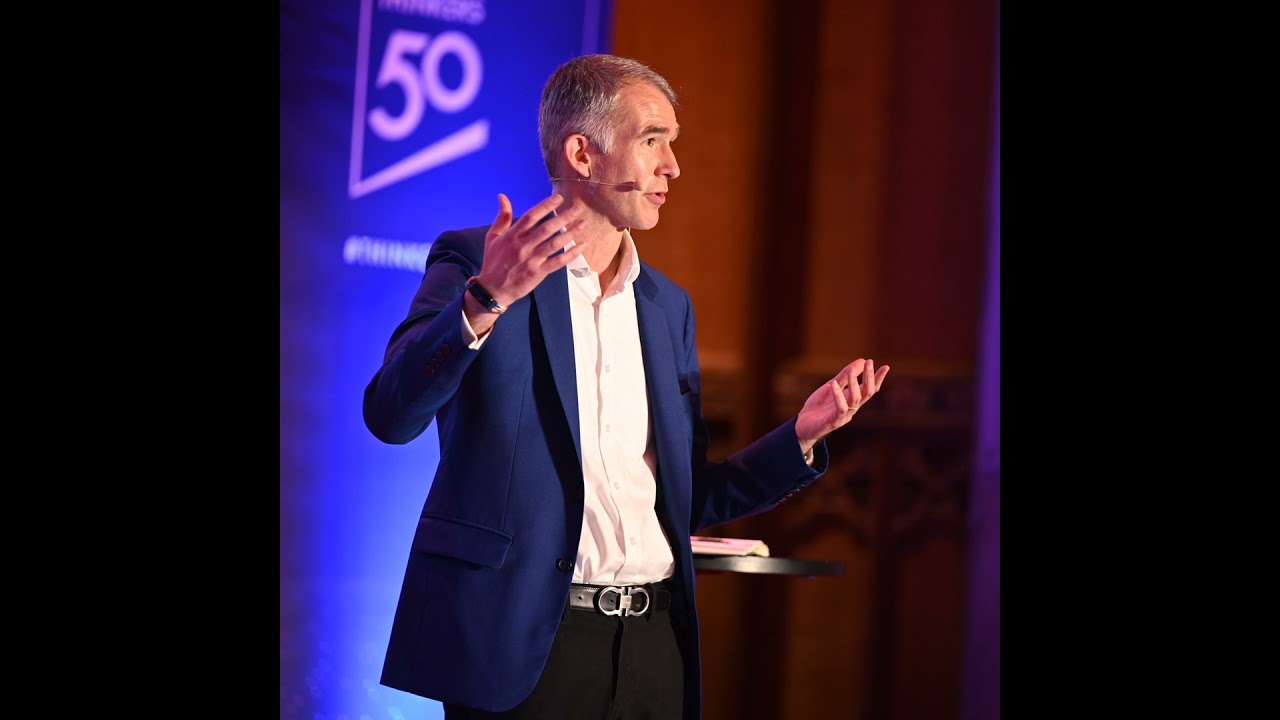




Scott Anthony at Creative Innovation 2013 Asia Pacific (Ci2013) - "The Empire Strikes Back"