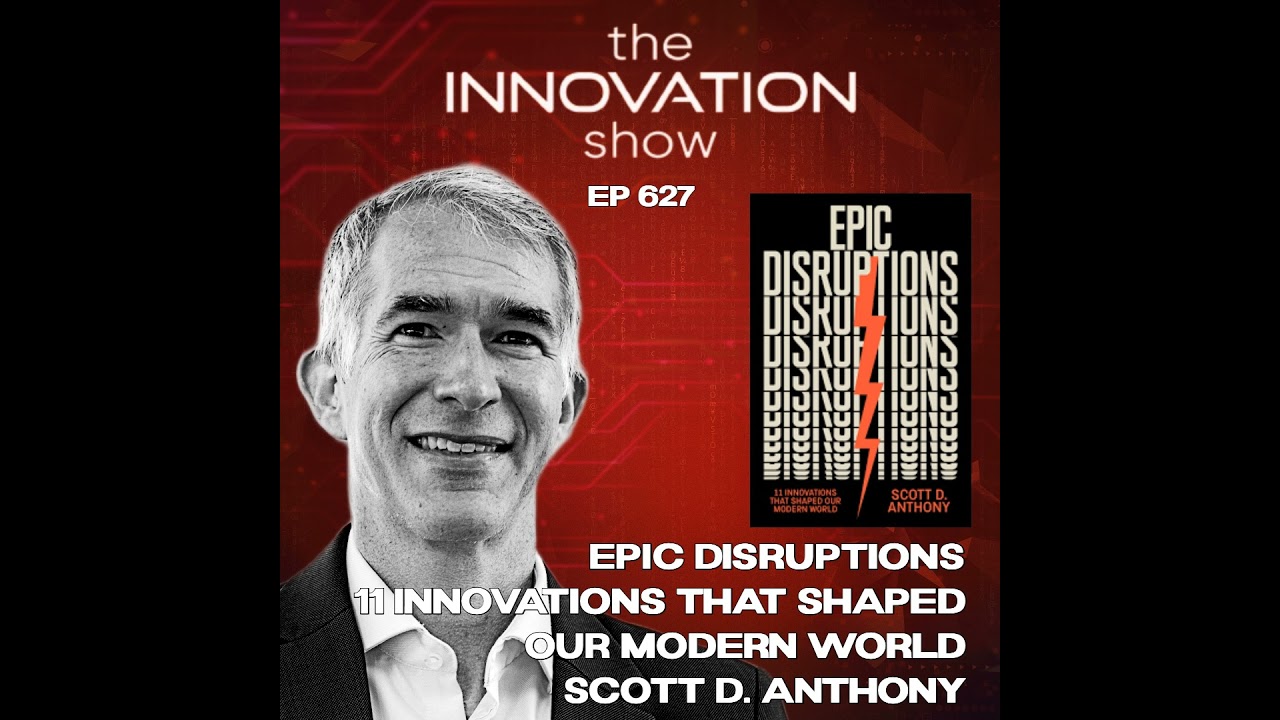
In this short interview segment, Scott D. Anthony reflects on the evolution and misinterpretation of Clayton Christensen’s concept of “disruption.” He recounts a memorable Harvard Business School moment when Christensen appeared on a Fortune cover with Intel’s Andy Grove, illustrating how early adopters like Intel used Christensen’s framework to defend against threats and create growth. Anthony explains Christensen’s original definition—innovation that simplifies costly, complex products, making them affordable and hard for incumbents to address—and contrasts it with the broader, often inaccurate ways the term is now applied. He highlights a paradox: over the past decade, many incumbents (Apple, Facebook, Amazon, Google) have successfully harnessed disruptive change, contrary to Christensen’s expectation that incumbents would be displaced. Anthony argues that misuse of the term dilutes its meaning, frustrating Christensen, and emphasizes that business leaders have agency to apply these patterns, frameworks, and metaphors to uncover hidden opportunities. The clip ends with a sponsor message from the Templeton Religion Trust.
Chapters
TranscriptAuto-generated · 3 min
The idea really blew up. So, you know, when I was a student at the Harvard Business School, Clay ended up getting on the COVID of Fortune magazine with Andy Grove from Intel. It said Intel's Big Thinker on the COVID Clay was 6'8 and Andy Grove was more than a foot shorter than that. So, you know, it was, uh, Pretty iconic picture and a tongue-in-cheek headline. But, you know, Intel was a company that took the ideas in Clay's book and used it to defend against threats and create new growth opportunities. And that's what Clay really was trying to do with his research. He was saying, look, there's a pattern out there. If we understand the pattern, we can use it to our advantage. And that's what his life work was, really trying to distill patterns, turn them into frameworks, models, tools, theories, use metaphors and stories to communicate them to people and help them see what they would otherwise miss. And that was what turned into my life's work as well, really helping people see what would otherwise be invisible. The underlying view is that you have agency as a business leader. You are not powerless against these forces. You think and act in the right way, you can seize opportunities, you can drive growth that otherwise would elude you. In fact, if you look Over the past decade, what is the big anomaly to Clay's research? The incumbents are winning. People like Apple and Facebook and Amazon and Google are grabbing hold of disruptive change and driving growth with it. Now, back to the question about the regret. The challenge that Clay had is he had a very specific meaning in mind when he used the word disruption. Innovation that takes complicated, expensive things, makes them simple and affordable, Hard for incumbents to grapple with because they don't naturally allocate resources towards them. But disruption means other things to other people. You crack open the dictionary, you see other things ascribed to the word, and people just put the disruption sticker on everything. The more popular it got, the more people said, I'm disruptive, I'm doing this, I'm doing that. And sometimes it was dictionary disruption. Sometimes it was Christensen-style disruption. The difference actually matters. And it would drive Clay more than a little bonkers because people would misuse his research.
Beauty at Work is brought to you by Templeton Religion Trust. If you enjoyed this clip, go check out the full episode. And please take a moment to subscribe and leave us a review. It really helps get the word out about the show. Thanks, and see you next time. Thanks for listening.