Scott Anthony on Thriving in A World of Accelerating Change
In this 2013 keynote, Scott D. Anthony walks the audience through a practical, seven‑step framework for thriving amid unprecedented business volatility. He opens with a personal anecdote about a failed newspaper‑to‑web transition, then illustrates how most firms die because they cling to legacy models. He shows data that the average lifespan of S&P 500 companies has collapsed from ~60 years in the 1960s to ~12 years today, underscoring the urgency of innovation. The core of his talk is organized around seven visual metaphors: 1. Get busy living or get busy dying – acknowledge business mortality and the need for new growth. 2. Mind the gap – quantify the difference between a company’s growth target and its current investment in new businesses; most firms vastly underestimate this gap. 3. Kill the zombies – free capacity by terminating long‑running, low‑impact projects that drain resources. 4. Hold two opposing ideas – manage the paradox of optimizing the core while building the future; the rules for each must differ. 5. Create a wind‑tunnel – run cheap, fast experiments (minimum viable offerings, simple tests, thought‑experiments) to validate assumptions before large bets. 6. Reward the right behaviors – focus on externally‑oriented, opportunity‑driven, action‑biased, dual‑mindset innovators (illustrated with a blackjack metaphor). 7. Get on your bike – treat innovation as a discipline that requires repeated practice, learning from failure, and building skill over time. He then fields audience questions, covering topics such as the role of individual “hero” innovators versus teams, centralized versus decentralized innovation structures (citing Procter & Gamble), the pressure of quarterly financial markets, and the distinction between invention and innovation (value‑creation vs. idea generation). Throughout, Anthony stresses that innovation is a repeatable discipline, not magic, and that organizations can deliberately shape processes, metrics, and culture to sustain it.
Chapters
TranscriptAuto-generated · 46 min
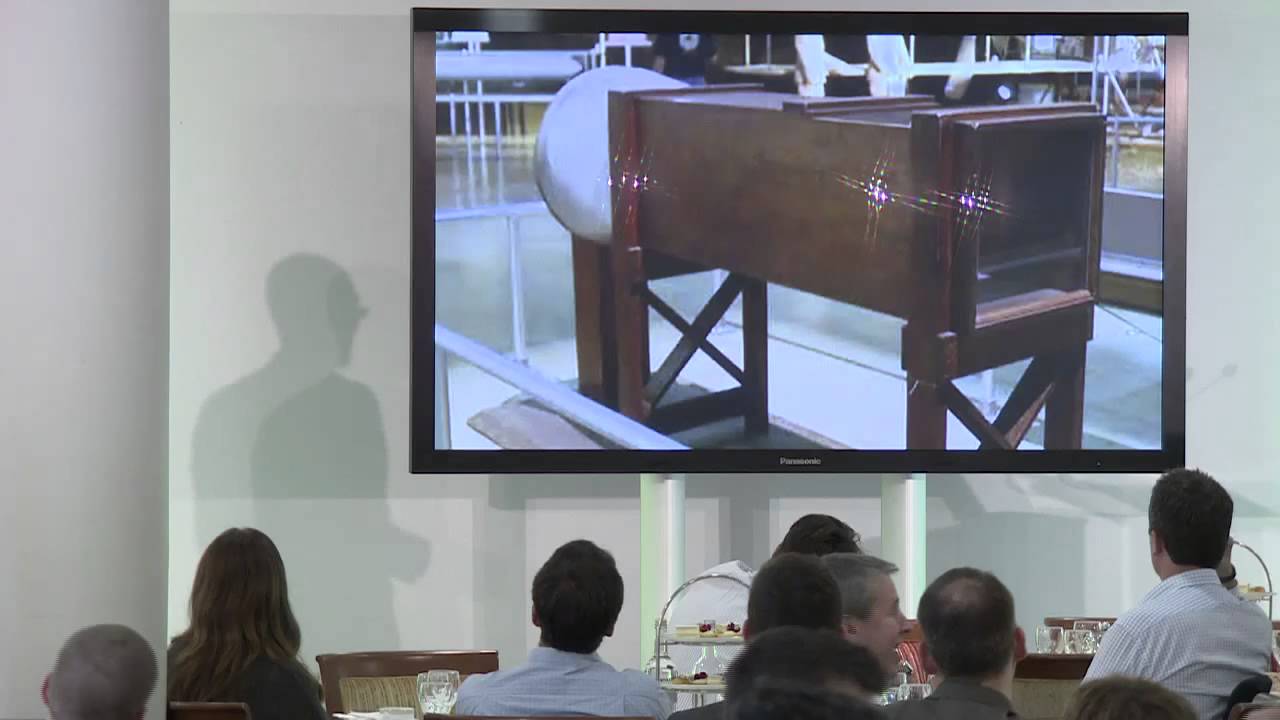
Thank you very much and good afternoon. I have to say, my 7-year-old son thinks that is the greatest thing he has ever seen in his life. He watched that video when Carolyn sent it to me the other week and he said, Dad, you're really famous. I said, unfortunately, that is not true, but he thought highly of me for at least a little bit. So I'm very pleased to be with you today. I've learned I should not stand right there or else I get an echo sound. We'll try to avoid that. I'm gonna try to provide a few thoughts as you go through your lunch. I'm hopeful that I'll leave a little bit of time for discussion as well. We'll see how it goes. But I wanted to talk about this theme, Thriving in a World of Accelerating Change, Innovating Every Day. And as I was getting ready— it's nice piano music too— as I was getting ready for this discussion and reflecting on this audience, I thought about what I consider to be my first experience with innovation. This goes back about 20 years ago. Here's me at the time. At the time, I was the managing editor of a daily newspaper. You can probably guess from the picture that this was not the New York Times or the Boston Globe, but this was my college newspaper. I went to a very small school called Dartmouth College, nestled in the state of New Hampshire. It's in the tiny town of Hanover that has about 5,000 people when school isn't in session, about 9,000 when school is in session. Yet we managed every day to put out a small paper, 8, 12, 16-page mini-tab. About 20 years ago, I was the managing editor of that paper. Netscape had just introduced its browser. The World Wide Web was on everyone's lips. And we had to decide what we should do in the face of this potentially seismic shift to our business. We did what came naturally to us, which was nothing. We were one of the last newspapers in our peer group to put our newspaper on the web. There was a story about it in our paper in 1995 where I was quoted saying, we've got a relatively small team and it wasn't high on our list of priorities. That was one reason we didn't do it. We also were pretty scared. The quote went on to say, the newspaper makes a lot of revenues from subscriptions. We didn't know what business model would work online. People are still trying to figure that out. And in face of uncertainty, we did what so many executives did, which is freeze. Then what did we do when we went onto the web? College students have changed the world. Your company, Google, the company represented here, of course, founded by people in a university. Zuckerberg gives the world Facebook. Gates drops out of Harvard to create Microsoft. What did we do? What almost every media company did, a word-for-word, pixel-for-pixel replication of the print version online. Not thinking what we can do differently, our strategic intent was to find people going through the web and convince them to subscribe to the print version of the newspaper. This is what you naturally do in the face of a disruptive change to an industry. You hesitate, you worry, You replicate. You don't innovate. You don't recreate. I experienced this firsthand when I began to consult to the newspaper industry in the United States. Fast forward now to the mid part of the last decade. We were hired by the American Press Institute, a leading trade industry, to save the US newspaper industry. You can see that didn't quite work out. This is a telltale quote as we started this project. I don't know what to do, but I am ready to do it. This was the sentiment in the industry around 2005. So we did the best we could. We gave people a blueprint for transformation. We gave them the tools and the techniques and thoughts about how they might drive change. But we know how this story ended. The US newspaper industry has essentially been eviscerated. In the last 5 years, 70 years of economic growth have just been wiped out. I truly experienced this firsthand over the past few years. In 2009, I was asked to join the board of directors of a regional media company called Media General. Back in 2005, this is what the company looked like. About $1 billion in revenue, 25 newspapers, 20 broadcast stations, 7,000 employees, $1.4 billion market capitalization. Like many media industries, it struggled particularly with the newspaper side of its business. Last year, it sold its last newspaper, completely exiting the business. By the time you got to the beginning of this year, it was a very different and much smaller organization. $360 million in revenue, zero newspapers, ending a string of 140 years of continued operations. Many fewer employees and a much smaller market capitalization. This transformation was brutal. This was a smart leadership team that was doing everything it could to adapt to the forces at work. This is one of the realities we all have to face in today's era. Change happens, it happens punishingly fast, and it has punishing repercussions. Here's one simple way to frame up this pace of change. The chart here shows the average lifespan of a company on the Standard& Poor's Index of the 500 largest publicly traded companies on US equity markets. You go back to about 1960, the average lifespan is about 60 years, which means if you worked for one of these companies, your parents might have worked there, your kids might work there as well. Today, that number is heading down to about 12 years, which means you certainly are not going to spend your entire career at one of these, let alone your parents or kids. In fact, at this rate, 75% of the companies on the Standard& Poor's 500 Index, the largest, most powerful companies in the world, will not be on that index in 15 years. 75%. This is what we have to deal with today, a pace of change that we have never seen before. So I've tried lots of different ways to arm people with the tools to respond to this change, but I thought today I'd try something a little different. As they say, a picture is worth a thousand words, so I'm going to try to give you about 7,000 words of guidance By going through the seven pictures that are up here, there will be a few more PowerPoint slides behind them. But these will be the seven images that will guide my tips to you today. After I go through each of them, I'll again, assuming I haven't babbled too much, give you time to ask me a few questions. So first picture here: Anyone recognize what movie this is from? Shawshank Redemption. One of my favorite movies. Does anyone know the line that is being? Get Busy Living or Get Busy Dying. Get Busy Living or Get Busy Dying. How about a round of applause for the gentleman in the back? Not only did you get it correct, we could all hear you in this room, which is impressive. Get Busy Living or Get Busy Dying. The first thing you have to come to grips with if you are to deal with innovation in today's tough times is the mortality of your business, the mortality of your brands, the mortality of your business model. Every business is dying. Every business will die. You have to wake up every morning and recognize this. We are in an era where competitive advantage disappears in the blink of an eye. If all you do is try to maintain today's business, I guarantee, just like Nokia, just like BlackBerry, just like Eastman Kodak, just like on and on and on, you are sowing the seeds of your own destruction. You want to get busy living, right? So you need to think about innovation to bring you to new markets and new spaces. Let's get to our second image then. Mind the gap. If you're trying to think as a leader, how are we going to drive innovation and growth in our business, the first thing you need to understand is the nature of the problem you're trying to solve. What does innovation really need to deliver for your enterprise? The reality is, in most companies, if you look at your future target, what you hope to achieve in your organization, and you look at the investments that you're making in growth today, there is a big gap between those 2 numbers. This is the way it usually plays out. I can pretty much predict what a company's growth rate and what a company's growth characteristics look like if I just get a few variables. So every company's got some kind of vision statement. It ends in the year YY, which typically has a 5 or 0 at the end of it. 2020, 2025. X is the size of today's business. Most people pick a nice round number saying let's double today's business. They say what percent of our business will be new businesses we're not in today? Well, it's pretty hard, so we're not going to have it be too high, but if it's too low, it's not very empowering. So we'll make that 20%. And then Y is the growth rate in the core business. It's simple math to solve for it. I bet you if you look at your company, you're within plus or minus 2 points here. So one simple example of this, Vision 2020, if you're going to double any company and have 20% be new growth, your core business has to grow at 7% a year. Seems like a pretty mundane number, but Rita McGrath from Columbia has done research on this. She looked at a sample of all companies with above $1 billion US in revenue and found only 7% of them could maintain a growth rate of above 6% a year for 5 consecutive years. Even these seemingly mundane figures are incredibly hard in today's fiercely competitive world. When you start putting real numbers around this, it can get pretty scary. If you're a couple and a half billion dollar company, if you want to get to a $5 billion company, not only do you need $1.5 billion more in your core, you need an extra billion in growth that you don't have. That's an incredibly difficult thing to do. If you're honest about it, what we see inside most companies is something like this. You will fight like crazy to keep your core business where it is. If you can get anything in the next few years for new growth, that's pretty good. So you're happy with a 1% or 2% growth rate. Now this is okay as long as you know that this is the problem that you've got to solve. Every time we have done this with a company where we've tried to look at that gap between the target and the— what they're currently investing in, there are 4 truths that we've found. Leadership is never aligned. They might have vague alignment around the target, but you get them all in a room together and ask them specifics, and they all give different answers. The risk in the core business is higher than people thought. Growth investments are insufficient, and the gap between the present and future is almost always larger. Once you recognize your mortality, once you recognize the growth gap is larger than you thought, you then can begin to think about the third area. What do we do? Well, the first thing you gotta think about doing is creating the capacity to go and innovate and grow. There are very few organizations today that have a lot of people sitting around not doing anything. Most organizations will tell you, I just don't have the people, I just don't have the money to invest in these things. The reality is the people and money are there, but they've been sucked up by what I call zombie projects. This is the walking undead. These are the projects that have been going on for years. Everyone keeps trying to kill them, but somehow they keep going on and on and on. Some of these have been officially shut down, but they keep coming back. Anyone remember the movie Office Space? Yes. This is Milton and his red Swingline stapler. They never go away. If you want to create new capacity for innovation, the simplest advice I can give you is to find and kill the zombies. Not the people working on the projects, they're good, but the zombie projects, the ones that won't materially impact the business. Those are the ones that you have to address if you're gonna free up the capacity to innovate. This happens at a corporate level, this happens at an individual level as well. We get so busy with the tasks that feel urgent that they crowd out the space to work on the things that truly matter. Put the zombies down. Once you put the zombies down, you begin to have capacity to invest and grow. Our 4th picture is this gentleman here. Anyone know who this is? We don't have any shouts from the table back there. Any guesses? It's an American author. F. Scott Fitzgerald. F. Scott Fitzgerald is correct. So F. Scott Fitzgerald is here for his line in the 1935 Vanity Fair article he wrote, the test of a first-rate intelligence is the ability to hold 2 opposed ideas in the mind at the same time and still retain the ability to function. This is the fundamental challenge of innovation and growth, because what you have to do inside a company is manage a tension between doing 2 very different things. If you simplify the world, a leader inside a company trying to create new growth has to do 2 things. They have to take today's business and make it as good as it can possibly be. While doing that, they have to invest to create tomorrow's business. Any company that you look at that has had some innovation success will follow this pattern. You can look at Nestlé's coffee business. They made their core brands better, and they created a multibillion-dollar business model under the Nespresso brand. Apple, of course, would be a clear example of this, making its core computing business better as it unleashed 4 separate multibillion-dollar disruptions over the past decade. The challenge is the rules, metrics, and approaches that you use to manage these 2 very different tasks are often in conflict with each other. Here's one way to frame this up. The gentleman pictured here, Steve Blank, is one of the smartest people I know on the topic of running or creating startup businesses. What he has been trying to do, along with his protégé Eric Ries, the author of The Lean Startup, is distill down the science of starting a business up. Blank teaches at Stanford and the University of California at Berkeley, but he is not a traditional academic. He's a serial entrepreneur. In his career, participated in about a dozen different startups. In his most recent book, he put it in very blunt but eloquent terms. After a half century of practice, we know the traditional curriculum for running large businesses does not work in startups. In fact, It is toxic. The reason why, Blank says, is a startup is not what you think. It's not a small version of a big business, no. A startup is something special. A startup is a temporary organization that is searching for a scalable and repeatable business model. That search requires different rules, roadmaps, skill sets, and tools in order to minimize risk and optimize chances for success. Let me show you at least a few of what these rules are. The 2 Pizza Rule. This is one of Jeff Bezos from Amazon's guiding views about what it takes to create new disruptive businesses. If you have a team that requires more than 2 pizzas to feed it, you have created too big a team. You need to keep teams small and nimble so they can go and search for new models. The second picture here shows steel being forged. If you want to make steel strong, you have to heat it to a temperature of about 2,000 degrees Fahrenheit. If you want to make a business strong, you have to heat it in the white-hot heat of the marketplace. You have to get out and go and execute and test and learn. Too many businesses are formed in the languid glow of the conference room lights. They're very brittle. You have to get out of the building, in Blank's words, and go and test. Recognizing that your first idea is almost guaranteed to be wrong. If you look at any business that has succeeded and you look at its original business plan, you will see a huge gap from the beginning and the end. This is a challenge inside large companies because they want to go and execute, but the reality is you have to go and discover. The best guidance that I've heard on this topic is from the great American philosopher, actor, and occasional boxer, Mike Tyson, who once said, everybody's got a plan until they get punched in the face. The difference between success and failure isn't the beauty of the plan, it's how people take their punches. Now, that doesn't mean you've gotta be a thug like Tyson. You can be very scientific about this. In fact, The best people at managing risks are like scientists. They have hypotheses for their strategic assumptions. They have objectives for any test they're going to run. They are very diligent in making predictions, and they have a specific plan for how they're going to execute. The final thing that's different when you're in search mode are the people who are making decisions. Inside many companies, the basic rule is the top managers, the most senior people in the organization, they make decisions, right? And this is done usually in consensus-based processes where everyone agrees on what the right course of action is. But when you're going into new markets, new models, new spaces, the top management has often no intuition around that. You might need different decision makers, you might need to have individual champions like venture capital companies. The rules have got to be different if you're trying to go and create new growth. That's the 4th image, F. Scott Fitzgerald. recognizing that if we take one approach and apply it both to running today's business and creating tomorrow's business, it simply will not work. 5th image then. Anyone know what this is? Any guesses? Camera. Camera is incorrect. It's a good guess though. It's about the right time. It's almost the same year, in fact, that Eastman Kodak introduced the Brownie camera. Give you a hint. So this is a device that was used to test something. So what this is used to test is some of the science behind aviation. This is the first wind tunnel created by the Wright brothers. Now the way that most people tested some of their assumptions about flight was one of two ways. The first is what this poor caveman is doing here. You think that if you just flap your wings or put something on your arms it'll work, so you climb to the top of a tall building or tall cliff and you jump. Or you do whatever the heck is going on over here, you build these overly complicated contraptions, spend a lot of time and money to find out they don't work. Piloting, prototyping, testing, these are all very good things, but if you're going to create new growth, you also have to think creatively about how you remove some of the key assumptions. The Wright brothers traced their success back to this wind tunnel. They were able to, in a 2-month period of time, test hundreds of different models. It turned out as they did this, the data that most people were using, it was completely wrong. They say they would not have cracked the problem without doing this and say sometimes it's the non-glamorous lab work that allows you to succeed. So something you always have to be asking yourself is, what is my wind tunnel? What is a mechanism that I can experiment, that I can learn, that I can try things without dealing with the repercussions of jumping off of tall buildings or investing years following an approach. It can be as simple as doing basic desk research. We were working with one company that was trying to target the U.S. university market. They predicted that it would take 3 months to get their first sale to a university. We asked them, can you please, please, please, please call somebody who has successfully sold to a university and just ask them, How long does it take? Turns out it's not 3 months, it's 3 years. One phone call dramatically changed their business plan. Sometimes the best test can be run in your head. A few years ago, McDonald's was contemplating introducing a salad that had shrimp in it. The consumers loved the salad, it fit McDonald's supply chain, health trends supported it, everything looked good. Then a person on the team asked a very innocent question. What happens if we succeed? What happens if this scales all around the world? How much shrimp will we require? What is the global population of shrimp? It turns out McDonald's would essentially have cornered the world market on shrimp, making it untenable. This simple thought experiment led them to follow a very different strategy. Sometimes you can run very focused tests that address one key assumption in your business model. The gentleman here is Reed Hastings, the founder and chairman of a U.S. company called Netflix, one of the pioneers of DVD-based mail-delivered subscription rentals that disrupted the traditional video store. Now, when Hastings first came up with his idea about 20 years ago now, there were a lot of uncertainties behind it. One of it was, will we be able to actually send a DVD through the mail? Will that work? Now he could have built a big complicated system and invested millions of dollars to do that, but instead he did the simplest thing you could imagine. He took a CD, he put it in an envelope, he mailed it to himself. The cost was about $2. 2 days later he opens up the envelope, the CD hasn't been damaged. Now you shouldn't go invest billions of dollars based on this, but you're that much more confident that your idea is viable. Finally, you can get yourself into a transaction environment. Try and come up with something that is as quick and as cheap as possible, but still addresses a customer problem, what's known as a minimum viable offering. The picture here is a US-based gaming company that had an idea to create a kiosk. Now this doesn't look like a kiosk, and if I showed you the full picture, you'd see even more parts that make clear this is not a traditional kiosk, but what the company was able to do was in just a few weeks for just a few thousand dollars essentially simulate the idea that they had. Get customers to pay for things or not, and they learned that the idea was not viable. But they did that quickly and they did that cheaply. So the 5th thing you want to think about as you begin innovating and moving into new spaces is to think about creating your wind tunnel. Think about running experiments. Think about finding simple and quick ways to test your assumption. The 6th image I have here is of blackjack. This goes a little bit to what you need to look for and what you need to do to succeed with innovation. Now blackjack contrasts to a couple other games that I'll show up here, roulette and chess. Let's talk about roulette for a second. What would you look for to indicate that somebody is a skilled roulette player? That he doesn't do it. That he doesn't do it. That is the correct answer. There is no such thing as a skilled roulette player. Roulette is a game of pure chance. The house always wins. The way you could identify a game as a game of pure chance is ask yourself the question, can you intentionally lose the game? You can't in roulette. You can be trying to lose and you can still win. Let's contrast this to chess. What do you need to look for to identify whether or not someone is a skilled chess player? Whether he's Russian. Whether he's Russian. So you might look at ethnicity. That might be one thing you look at. What would you want to look at beyond whether he's Russian? His evidence. So you might want to look at how he's done in previous— or how she's done in previous games. You might want to look at an ELO rating. You don't have to watch the person play. Chess is a game of almost pure skill. The result determines who is the better player. Yes, at the extreme, lucky things can happen. You could suffer a stroke or something like that. But the reality is all you need to look at is the results. Blackjack, like investing in a stock, like hitting a baseball, mixes the 2 elements. There's a degree of luck and there's a degree of skill. Let me give you one simple example. Imagine you go to a casino. You've got a pile of money in your pocket. You don't want to gamble it yourself, you want to find someone to invest in. You see this woman sitting at a table. She's surrounded by chips, that's a really good sign. You watch her play a hand. She draws an 18, the dealer's showing a 6. Confidently, without hesitating, she says, hit me. She draws a 3, a 21. The crowd erupts in cheers. The dealer gets the rest of his cards. He would have gotten a 19. Had she not taken that bold risk, she would not have won. Question, should you invest in this player? No. Unless she's got x-ray vision, in which case you might wonder what she's doing there. Unless she has x-ray vision, the answer is absolutely no. She got the right outcome, but she followed the wrong behavior. Games that mix luck and skill are like this. You can't always tell whether someone is good based on the outcome they achieve. Instead, you have to think more about the process that they follow, the behaviors that they follow. So what are successful innovation behaviors? Let me highlight 6 that are from my own experience and academic research on the topic. Great innovators are incredibly externally focused. They have a mindset like A.G. Lafley from Procter& Gamble, that the consumer is boss. They live the market, they spend time with customers, they understand the things that customers want and need, even if they cannot readily articulate them. They camp out at intersections. If you ever want to come up with a great idea and you're stuck, the simplest thing you can do is find an intersection. Find somebody who's different from you, find someone from a different industry, find someone from a different company. Any study about where great ideas come from has one common conclusion. The magic happens at intersections, when different skills and mindsets collide. Great innovators know how to do this. Third thing innovators are, they are driven by the opportunities they see, not the resources they have. Jeff Bezos, again from Amazon, puts this pretty well. If you want to continually reinvent the service you offer customers, You cannot stop at what are we good at. Instead, you have to ask what does the customer need and want? And no matter how hard it is, you have to get good at those things. A bias towards action. They'll do things even if they have an imperfect solution. They'll be very happy with something that is just good enough. They have a degree of bipolarity. I don't just say this because both of my parents are psychiatrists. It's true they are. But the reality is innovators can take 2 minds. On the one hand, they can tell you how they're going to change the world. In the next breath, they can honestly tell you the 3 biggest risks that stand in the way of success. Finally, they're willing to say no, not now, and stop, recognizing that for anything you do, there are 2 good outcomes. One is you have a commercial success. The other is you get learning that leads to the next commercial success. The word failure is not part of that. There's no such thing as failure because every step discarded gives you new insight that helps you get to So the blackjack image reminds us that we want to watch for or role model these behaviors. So finally, I need to lead up to this one a little bit. I want to show you the greatest gift that I ever received from a project team. This gift is what we call SCOTA. It's a bobblehead. It has my head on the body of Yoda. And it has on the bottom here one of Yoda's famous sayings, do or do not, there is no try. I define innovation very simply, something different that creates value. The different reminds us that we want to not just follow the status quo. The creating value reminds us that this isn't just invention, it isn't just creativity. We need to apply it. We need to have impact before we have succeeded. But the reality is, the most important word in this definition is the first one, something. This gets to the 7th image. A few years ago, my oldest son Charlie, who loved that video that we saw in the beginning, proudly announced that he wanted to learn to ride a bike. Now, we could have found lots of different ways to teach him. We could have read books on the theory of bike riding, we could have watched YouTube videos, we could have created a PowerPoint presentation that described how we were going to learn how to ride a bike. But until Charlie got on the bike and started to pedal and fell down and got up again and tried again, he knew nothing about riding a bike. Today, Charlie is a competent bike rider. Mm-hmm. He can get from point A to point B without too much difficulty. And with enough practice, he could be a proficient bike rider. If he uses performance-enhancing drugs, he might even win the Tour de France. Who knows? But the lesson in this is if you want to get good at innovation, if you believe what I said at the beginning, that your business is dying, that your business model is dying, that your source of competitive advantage is dying, you have to get on your bike. You have to figure out how you can begin to practice experimenting and observing and being with customers and all the things we've talked about over the last 40 minutes. because it is the only way you will develop the skills necessary to succeed. So I wanted to sum up here, then I'll open it up. I think I've got a few minutes for questions, open up for questions, then I got a couple parting thoughts. Let me walk through the 7 things we talked about, and while I'm doing this, listen to me, but also think about the best question you can throw at me, and then we'll get a few questions from the audience, and then I'll send you on your way. So here's what we talked about. The first point is that you need to get busy living or get busy dying. Your business is dying. Your business is mortal. Do not pretend that it is not. Mind the gap. Make sure that you and your team have a clear view of the problem you're trying to solve. And I'm willing to bet if you're like most companies, it's a bigger problem than you realized. Kill the zombies. There's more capacity in yourself and in your organization than you think. Stop wasting time doing the wrong things. Build the disciplines. We want to be able to have those 2 opposed ideas in our mind at the same time. This is an and problem, not an or problem. Create your wind tunnel. Simple, quick ways to test some of your key assumptions. Reward and role model the behavior. Act like an innovator. Remember that blackjack metaphor. It's not just success, and it certainly isn't just chance. Get on your bike. Innovation is a discipline. We've been studying this field for 40 years now. Not me, I have not been alive for 40 years. Other people have been studying this field for 40 years now. We know what it takes to succeed. Yes, there's always mysteries, there are parts of it that are difficult, but we know the patterns of success. And if we're going to put them to work, we have to be just like Charlie and get on our bike and begin to pedal. So with this, I do have a few slides that I'll use as a hopefully up note to end the discussion on, but I wanted to open it up to you and see what questions, comments, concerns, stones you want to throw. Whatever. I will not sing that song for you. That's the one thing I promise I will not do. We got a hand here. So we're going to run the mic up to you just so I could hear you, but we want to make sure the rest of the room could hear you too.
I don't need the microphone. It's a very simple question. Do you have this presentation for us?
Do I— the question was, do I have this presentation for you? I will certainly make sure that it gets to everybody here.
Thank you very much.
You're very welcome. That is the easiest question I have ever received at a conference, so I thank you for that question.
I have a question. Question. What about personification of innovation? Like, you have like Steve Jobs, you have Larry Page, and Sergey, you have like Bezos. Like, do you think that innovation comes from one or two brilliant minds, or in large corporations you are often speaking of teams and it's hard for them to retain this kind of guy? How do you organize kind of this innovation in like large corporation or organization?
Great. So the beginning of the question, which you might not have heard in the back, what about the personification of innovation? You know, we think of the Page and Brin, or we think of the Jobs, or we think of the Zucks or whatever. What about the balance between that and doing it in teams? I'll say a couple of things. Number one, many great things are done not by individuals but by at least pairs if not bigger than that. So Steve Jobs, is not Steve Jobs without Steve Wozniak and then Jony Ive and all the other people who are— Page requires Brin, and then they require Schmidt to really make the company what it is. Bezos doesn't really seem to have a foil, but he's just a crazy guy, so I don't know. But in most cases, the heroic individual isn't true anyway. There's more people involved than people think. Inside large companies, I think in most cases what you wanna do ideally is develop the systems and structures that can make innovation a repeatable act and does not require the singular creative genius, because it's really hard to scale the singular creative genius, and the genius is going to go one way or another. And the thing that is interesting to me are companies like Procter& Gamble and IBM and 3M, old-line companies that have really found distinct processes and structures to make this repeatable. The last point I'll make on this is a lot of people wonder, if I'm going to do this inside an organization, should I do what Google has done, which is to say, engineers, you get 20% of your time to work on new things or whatever, The reality is, in my mind, that works in very special circumstances and doesn't work in most of the rest of the world. I think in most cases you are far better served having a small number of people fully dedicated to the task over having a bunch of people partially allocated to it. The thing I suggest people do, and I apologize in advance for any vegetarians in the room, is to make sure that they have innovation pigs. This goes back to the old line about the role the 2 animals played in a breakfast that's got eggs and bacon on it. The chicken participates, the pig is committed. Most startup companies fail, and this is with an entrepreneur pouring everything into the business, spending 100% of their time on it. When we're inside a company and we ask a team of partially allocated people to innovate, their chance of success is close to zero. So overly long answer, but those are some of my thoughts on the topic. Got a hand here. We also have a hand in the back. So let's get the gentleman here and then the gentleman with the nice haircut all the way in the back there.
What's wrong with my hair?
Your hair is beautiful too, sir.
One thing you didn't touch on is the role of the financial markets in this and how difficult it can be for a large company to innovate with the quarterly results, with the expectations market asking for that, you know, 2x, even though you know you're going to get to 7% or whatever. If you're a large publicly traded corporation, particularly in America, how do you get over that and try to disrupt yourself without killing your career as a top executive whose objectives are tied to that?
It's a really rich question, so I'll offer a few thoughts around it, but it's more than I can possibly answer in the few minutes up here. Certainly financial markets and the pressure those markets place on companies make some of this stuff exceedingly hard because it leads to short-termism, leads to narrow thinking, and so on. So that I think you have to accept as a fact. The second thing, which is not an easy thing to do overnight, but there's been research by Michael Mauboussin and others around this, is you can change the expectations of your shareholders, and you can change their tolerance for you to take risk. If you first deliver results over time, and number 2, even change the way you communicate with them, change the way you provide guidance, change the things you say to them, and so on. That's not an overnight fix at all, but you can shape this over time. The 3rd thing I would say is when people ask, what do I do to disrupt myself, I'd say that's the last thing I'd want to do. What I would much rather do is go and disrupt somebody else, because it is legitimately difficult to go and disrupt your own business. There's a lot of fights you've got to fight to do it. But if you're going and disrupting somebody else using assets that you have, it's a much more powerful way to grow. So that would be the third point that I would make. And the fourth point and final point I'd make is recognize whether you like it or not, some of these things are going to happen. Some of these forces are at work in the business. So either you end up like Nokia or BlackBerry or you don't. So it's not that you can stop it from happening by not doing it and not taking the risk. And I think It's also something you've got to condition financial markets for. I guess I'm going to add a 5th point, sorry, 5th bonus point. You don't have to do it all organically, of course. You can also identify somebody who's hit that disruptive vein, that's in the beginning days of driving disruption. I think you might see some examples with Google and some of the acquisitions it has made here that might have some of those characteristics. So I think that's certainly a viable option as well, although we could also have a long conversation about acquisitions, most destroy value and all that. But it's a complicated subject, but those are at least hopefully a few helpful thoughts. Thank you. All the way in the back.
Yeah, how do you draw a distinction between invention and innovation? Because a lot of the people you mentioned, Zuckerberg didn't invent the social network, Larry and Sergey didn't invent the search engine, Steve Jobs didn't invent the computer, and so forth. Does this apply to what Is it one or the other or both?
It's a really important question, and I have a very simple way to define the difference, and this comes back to the definition. I'll have to go back 1, 2, 3 pages here. The creating value portion of it, invention and the creativity that comes before invention, that's an input. The innovator takes that invention and does something with it. And I'd argue that Google, what it did actually go and invent was the winning business model in its space. It certainly didn't invent search. It wasn't the first, fifth, tenth, or even fifteenth search company. But it was the one who figured out how to create value better than anybody else. Jobs figured out how to create value better than anybody else. And this is important because it reminds us that the most powerful innovations aren't necessarily the technologies. Rather, they're the business models, the way in which you take that technology and use it to create, capture, or deliver value in distinct ways. And Amazon would be another good example of this, a company that has used technology for sure, but has driven business model change through the e-reader, through Amazon Web Services, and on and on and on. So that would be the way that I would frame it up. Any other questions? Yes. I am going to send you the slides, don't worry. Yeah, I know, we know.
Just to reward you that you answered this very simple question, also a more difficult question. Do you know any examples of a centralized approach of innovation?
So say more about centralized approach, a top-down approach where—
Top-down approach, yes.
Yeah, I think while it is imperfect like all companies are, I think Procter& Gamble would be an example of a company that is trying to have primarily a centralized approach to innovation, though it's not purely centralized. It's rare that you see that. But the basic notion that Procter& Gamble has is it strongly believes that innovation is a process. Innovation is a discipline. It can master it. It can manage it. And the reason why this became important to P&G is back in around 2000, when it measured its massive investment in innovation, it saw that it was just wasting a ton of money. P&G, every year, $2 billion in R&D, about $1 billion in market research, $3+ billion in this. Yet, in 2000, only 15% of their efforts were succeeding. And the ones that succeeded were the safe, pretty small ones. So they said, we're going to approach this problem with much more discipline. We're going to define the types of innovation we're going to follow. We're going to put in place systems. We're going to have portfolio mechanisms to track. We're going to have resources, blah, blah, blah, blah, blah. By about 2010, the results were in. The success rate had gone from 15% to 45%. The average size of an initiative had doubled, which meant a sixfold increase on the investment they were making in innovation, which had actually declined a little bit in that time. So they have plenty of things that they do wrong, no doubt about that. But to me, it's a very powerful proof point that if you are strategic about it and you set up the right systems, you can make meaningful progress. I will say, though, that P&G, which is a very top-down driven place, they still are smart in allowing a lot of room for serendipity, where they have invested in their so-called open innovation program to connect with individual scientists and small companies to make sure that they don't fall into the trap of thinking only the people on the 10th floor of their general office in Cincinnati can think of good ideas. They do make sure that they've got that balance as well. I think I can take one more question. Do we have any last questions? That was a good question. Thank you. Now he's really gonna get the slides. Any last question? Okay, well, let me then end by coming back to that figure that I cited before. It's a little scary, I guess, in the beginning of this conversation if you're inside a big company. We're talking about the rate of big companies declining sharply. We're talking about businesses dying. I talked about Media General, 90% of its stock market capitalization wiped away. Here's the reality. Life is not any more rosy for the startup company. So we have an example here of a successful startup, Facebook. 10 years ago, the company didn't exist. Today, it's a $100 billion market cap company. This is something that is incredibly powerful and incredibly unique. 75%, that's the percent of venture capital-backed startups that fail to return a single cent to their investor, 75%. It has never been easier to start a company than today, but it's never been harder to grow a company. Here's the challenge. The second a startup company gets a taste of success, well, the race is on. All the copycats come in. We're beginning to see something interesting happen, where we're increasingly seeing the innovation magic happen not purely among startups, but actually among pretty large companies. You have companies like Medtronic, which has come up with a phenomenal way to bring its pacemaking technology to lower-income consumers in India. You've got Syngenta, a massive agrochemical company that's finding ways to get crop productivity tools to smallholders in Kenya and other markets in Africa. You have IBM that's built a $20 billion business making cities smarter. These companies are doing something very interesting. They're combining the might of the multinational with just enough of the SaaS of the startup, and combining those together in a way that's unleashing massive impact in markets that matter to them. Archimedes once said, if you give me a lever long enough and a platform on which to stand, I can move the world. Media General, who I started with, went through some bad times, but today is a thriving cable— a thriving television broadcast company. Its market capitalization, since the figure I showed you at the beginning of this year, has quadrupled. It's merged with another player in the industry. It has transformed itself. It was painful, but it got there. Innovation can be your tool to do this. If you're inside a reasonably sized company, that can be your platform. There are massive problems in today's world. We gotta feed 7 billion people. We gotta deal with climate change. We gotta bring healthcare and education to parts of the world that desperately need it. And I have a strong belief that people at organizations like the ones that you represent here today can play a big role in driving that change and like Archimedes said, in moving the world. I can't hope in an hour to give you all the answers about innovation. Here is how you find me if you want to learn more. This is my Twitter feed @ScottDAnthony. This is my email address. That's the blog that I have at Harvard Business Review. Those are a few things that I have written over the course of the past couple of years. I hope if nothing else you remember from this conversation that innovation isn't magic, it isn't mysterious. It's something that can be a predictable discipline, and I hope at least a few of you go bike riding after this talk. Thank you very much. Thanks, Scott.
30 seconds. Thank you so much for coming. I hope it's been useful for you. I hope it's been thought-provoking. So on behalf of every Googler here, it's our personal thanks for taking 2 days out of your lives to join us, give us your feedback. As Scott said, get busy living. And have safe travels home to all of you. OK? Thank you very much.
More from Scott



What the Printing Press Really Teaches Us About Innovation with Scott D. Anthony