Wealth, Happiness, and Freedom: 3 Secret Lessons from Naval Ravikant
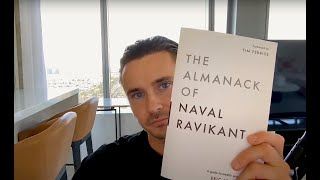
Video talk by James Blackwell presenting five life lessons influenced by Naval Ravikant on creating wealth, happiness, and freedom. Covers: seek wealth (own scalable assets rather than trading time), happiness as a skill (meditation, gratitude), build specific knowledge (niche expertise and passion), leverage (people, capital, code/media), and playing long-term games with long-term people (compounding relationships and businesses).
Chapters
Hello, ladies and gentlemen, James Blackwell here. I'm going to share the top five lessons that I've learned for creating wealth, happiness and true freedom. And one of the mentors I'm going to share with you today is someone that had a big impact on my life. I haven't managed to meet them in person just yet, but a lot of their core principles and their methodology on how they got successful have really instilled in myself as well to helping me become a multimillionaire. So if in this session I'm going to go through the top five life lessons I've learned and I hope you'll like it. Now you might be thinking, who is it? So the guy is Naval Ravikant. Now some of you might have read his book before. Highly recommend it by Erik Jorge Jorgensen, I think it is. And it really distilled things down really well. So I've got a few copies of this book. Always when I'm reading a book as well, I always like, like marking in the, in the page I like, and I like highlighting underneath. So I'm going to share some of these values that I learned with Neval on this. Now lesson number one is seeking wealth, not money or status. So Naval talks about you're not getting, you're not going to get rich renting out your time. So you must own equity in a piece of business to really gain financial freedom. Now there's different ways of renting out your time, but you don't really want to be trading time for money. So dollars for money, if that makes sense. Now sometimes you might be offering one on one services, sometimes I've done that in the past as well. But a lot of the time you want to have more leverage. So how. And one thing that I definitely learned over definitely, probably the last two years in particular is wealth comes from owning assets that generate value over time. So that could be things like businesses, investments. So whether it's in your crypto portfolio, stock portfolio, maybe property, intellectual property, and like the money is a tool for transferring that value. So that's like the main thing that you want to take away from creating wealth is you, you need assets. So how I applied that in my life was I was really obsessed with building what I call scalable assets. So that was where I wasn't really trading time for money. So assets could have been employees. So when I started my recruitment agency, for example, I knew I didn't want to be the one constantly having to do all of the work. So it was building up some cash, building up Some clients. And then I could hire a team that can do the fulfillment and then start to do the sales. Okay. And then that business started becoming a cash flow for me that I could invest in other things. And then I created the Agency Blueprint, which is my consulting and mentorship program to help skill agencies. Exactly how I got it from six to seven figures. I teach other agency owners to do the same. But then I created video trainings, webinars, workshops. We have like daily coaching calls, for example. At the start, I did all of it, and then I started passing that off to some of my new team members. And then I brought in expert coaches. And that again made that business a scalable asset. And then now I have remote assistance AI where we actually place operations, integrated VAs or marketing VAs in companies so they can help scale up. And again, I built it in a scalable way that it's an asset that doesn't rely on my time. We have a team to do that. So that's the key thing that you want to have, is build scalable assets. Okay. So, so you need to ask yourself, are you like building assets or are you trading time for money? So the first thing is to build a scalable asset, which is a business, but a business that doesn't depend on you over time. And then you're going to use that wealth to invest in more assets. The second lesson I learned from Naval was happiness is a skill. So yes, money doesn't make you happy, as it were, but it gives you more choice. And the same with happiness is a choice and it's a skill you develop. So it's about being satisfied with what you have, maybe trying to eliminate some desires and really mastering your thoughts. Like, that's the basic principle of this. So how I applied that was trying to simplify my life. Okay. And I definitely went through that over the last probably 18 months. I inquired a lot, acquired a lot of materialism, all of the best cars, the best watches, the best hotels, like, experiences, and lots of like, unnecessary things. But I sort of had to get that on my system. And then I focused on what truly mattered, which was freedom, health, relationships, so you could do things like daily practices, which I've mentioned in other videos before. So gratitude journaling. So every day I'm always writing down things I'm grateful for or might be thinking about, things I'm grateful for when I'm going for a walk and really having that mindset from scarcity to abundance. So a lot of that comes from meditation. So I think I've Shared before the meditation app I use, which is this one here called Insight Timer. And I was actually looking at this the other day, funny enough, and just seeing like how many minutes I've actually meditated for, which was. Which is quite crazy. So, like all time you can see I've done like 187 hours of meditation. I think a total of over 11,000 minutes. And that's just in this app. Sometimes I meditate without the app and you can see the progress that I've had over time, over the years as well. And yeah, that was like a big takeaway for me was meditations really helped me quiet my mind and stay present. So, yeah, one of the key things I know, and I can talk about this firsthand, once you get the Lamborghini or you get the Ferrari or the Rolls Royce, all these things, or the nice watches and everything else, I get more gratification from buying for others, whether it's family members, partner, these type of things. But you need to find joy in the journey because your level of happiness isn't really going to increase after a certain period. So you need to make sure you're always keeping yourself grounded and being happy in the now. Lesson number three is building specific knowledge. So specific knowledge is knowledge that you can't be trained for. So it feels like play to you and it's really natural, but it looks like work to others. So for instance, for my journey, I've been very knowledgeable in the recruitment sector and how you scale a player teams, how you scale agencies and that knowledge. I've really stayed in that niche over the last, what, 15 years now. Now I'm going a little bit more broader in my entrepreneurial journey because I love business. Business is an art and it's a game. And once you start winning at the game and making more and you get more into starts to become effortless and it's more a passion. But you need to make sure you've got a specific knowledge that's unique to you and that comes from like pursuing something that you generously, genuinely curious about and have a passion for. So whether it's like reading something every single day, whether it's about business. So if you want to make money, you need to be a master at business, basically, unless you're going to work for someone else, that you've got an opportunity vehicle that you can grow in as well. But it needs to be a skill that is hard to teach but invaluable in the right context. So that's what naval talks around. So in terms of finding a niche. Like I said, for me it was recruitment and scaling businesses, and that solved a unique problem in that field. And then I paired passion with expertise. So my love for like systemizing businesses and scaling it with team members, so my experience in recruitment and systemizing business and business itself, these were all key takeaways for me. So you need to think, like, what skills or passions that you have that you feel effortlessly towards and you've got some sort of experience in and what we call maybe an unfair advantage. And Naval actually talks about this, which I've just found in here. So did your motivation to earn money drop off after you became financially independent? Yes and no. It did in the sense the desperation was gone. But if anything, creating businesses and making money on now more of an art. So you can see that here. So he talked about that as well in terms of like, it is an art and it's, it's a part of the game. So the winners of any game are the people who are so addicted, they continue playing even as the marginal utility from winning declines. Because once you've achieved a certain amount, amount of wealth, whether it's a few million in the bank, the rest of it's just a game because you've taken care of yourself for the rest of your life. I shared a video on my Instagram the other day about like, once you've created like £5 million or dollars, liquid net cash in your bank account, your life changes forever because you will never, ever have to work a day in your life. And yeah, it was this one here. The first $5 million is pretty much impossible. And then once you get the next five, it's almost impossible. But after that it gets really easy and it's just part of the game. And like I was saying here, you've just got to enjoy the game that you're playing. So lesson number four is leverage is the key to wealth. Okay? So when you get a lever in whether it's in your business for long enough, Naval talks about you can move the world. So leverage is how you multiply your effort without increasing your time. Okay, so without time input from you, but you get the end result here, that is like the gap for leverage. So you've got different types of leverage. You've got people leverage. So that's going to be hiring other people to do tasks. You've got capital leverage. So that's where you're using your money to make money. That is like investments. You've got code or media leverage. So these are things like creating a scalable content like I did with my online platform or products that can work for you even when you're not present. Okay, so how I did that in my businesses was I use people for leverage. So we hire remote assistants from around the world for a lower cost. So it gives us optional gain in terms of profitability and gp, but it can handle all the repetitive tasks in our businesses. So it frees up my time and some of the rest of the team's time in order to scale as well. So that's like a key thing. And then you've got technology. So I built a software called Kobe AI, which is like, to automate video outreach and client attraction, for example. So that gave me scalability without additional effort. But for me to build that software, I had to use capital. So I invested, I think over $150,000 in a tech team to build the software. And that's another beast in itself. I mean, that was probably a big wake up call for me in terms of the focus of, like, you make sure that you can, you can only focus on the few, not the money. And I say this all of the time, and I was guilty of that in terms of getting into technology as well. Like, you need a good CTO that's going to help you with that. But you need to think about where you can use leverage in your life. So whether it's people, capital, technology. So you start with one form of leverage. You might hire a virtual assistant to help automate some of the processes in your business that can help you free your time up so you can scale. And that brings me on to a part of the book that I really like. This diagram about the easy choices, hard life. Hard choices, easy life. And that is so true in business and the journey. And he talks about saving yourself. So doctors won't make you healthy, Nutritionists won't make you slim. Teachers won't make you smart. Gurus won't make you calm. Mentors won't make you rich. Trainers won't make you fit. Ultimately, you have to take responsibility. So you need to save yourself first. And that is true. Like I've never met, he says I've never met my greatest mentor. I wanted to so much to be like him, but his message was the opposite. Be yourself with passionate intensity. So we all need to be our authentic self. And I've learned that as well from many mentors. I was trying to take bits from everyone else, but in essence, you've got in your core, your, your soul. And there's things that are unique to you. And everyone is playing this game, whether it's in business and life or your entrepreneurial journey. And everyone's got a different story that they can write. And you need to see yourself as you're living your own movie and you're writing your own script. So you need to see it from a game dimension or holistic view above of like what game you want to play. Because that brings me on nicely to my lesson number five is you need to learn to play long term games with long term people. So, so all returns in life, whether it is in wealth, relationships, knowledge, they come from compound interest. So when you see people that are successful now, you're not really seeing the years of hard work in the past. Okay, so it took me many years to get to where I've got to and that is through compound interest. So that is through compounding in terms of just putting in the raw work, the hard work, learning and been obsessed with learning. Every single day I'm reading, every single day I'm learning, I'm listening to podcasts, I'm going to mentor, see mentors, I'm going to events, all of these things. I'm building valuable relationships. So I'm networking all of the time with other like minded people or people that are ahead of me. So success comes from that compounding and that's sticking with valuable relationships, the correct businesses. Alex and Morse talks about this as well. Don't get in the shiny object syndrome of starting new businesses all the time. Stick with your business and it's just sometimes a time effect until you get the hockey stick curve that you've seen. Okay, it might be year five. Your business really takes off and gets highly profitable because it's the habits over the long term. So build long term relationships and play the long game in business. So instead of chasing quick wins, I focus on building systems in the business, the brand relationships that compound over time. Now don't take that in the wrong way that you still need to chase money at the start because you need at least 100k net cash reserves in your bank, then you need 500k, then you need a million. Once you got a million, things change a lot for you because you've got less stress. Then once you get 5 million it changes a whale off because you just really see it as a game and then you're just going to acquire more wealth anyway, regardless, just through compound interest because that 5 million over 20 years at a 9% return is going to be I think around about 20 million or something even more. Okay, there's a cool tool you can use called Compound Interest Calculator. You can check that on Google. Start with your fund and what you're going to invest every single month. And it's amazing how money compounds. So you need to think, are you investing in the right type of relationships and just making sure you're committing to your business more long term. Okay, so you want to seek wealth, not money or status. If I could teach you one thing, it would be just investing in your money earlier or in yourself as opposed to buying flashy things. You're probably going to have to go through it anyway, but just go through it quicker than maybe even what I did. Okay, Happiness is a skill. You're not always going to be happy as well. Some days you're going to have down days. That's fine, that's normal. Build specific knowledge that gives you an unfair advantage in the market because leverage is the key to wealth. And then play long term games or long term people so I hope you enjoyed this video. If you have checked out Naval, let me know what you learned from Naval over the time that you've you've read his book. One of the key things you talked about is meditation. Naval is very big on meditation, which is another reason why I was really attracted to him. He talks about meditation as intimate, intermittent fasting for the mind. So too much sugar leads to heavy body and too many distractions lead to a heavy mind. Time spent undistracted and alone is self examination. Journaling meditation resolves the unresolved and takes us from mentally fat to mentally fit. So make sure you've got a current meditation practice and I've talked about this a lot so hope you enjoyed the video. Let me know what you'd like to learn next. I know I try and respond to every single comment and YouTube. I do these just organically. I try and do one a week and always just trying to distill what I've learned and some of the wisdom that I can pass on to the rest of you. So hope you enjoyed the video and I'll catch you soon.








