Agency Success Interview with Gabe Fletcher
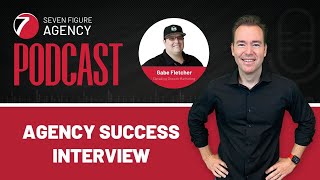
In this 7 Figure Agency Podcast interview, host Joshua Nelson talks with Gabe Fletcher, founder of a 7‑figure digital marketing agency that serves high‑end auto‑detailing shops. Gabe shares his personal journey from operating a $1.5 M detailing shop to creating an agency that now generates $1.3 M in annual revenue serving 55‑75 high‑paying clients. He explains how he leveraged his shop as a case study to attract clients, focusing initially on organic SEO and website work before expanding into full‑stack services (web design, long‑term SEO, ad management, CRM, and business consulting). Gabe describes his “anti‑agency” approach, providing deep business support and SOPs rather than just marketing deliverables. The conversation covers his content strategy, including a weekly podcast that mixes solo, duo, and interview formats, distributed across all major platforms (YouTube, Facebook, TikTok, Instagram, podcast directories). He details his production setup (microphones, cameras, lighting, Elgato capture) and post‑production workflow using Descript and Opus Pro. Gabe also outlines client retention tactics—high‑touch weekly client‑success calls, structured deliverables, and a focus on honesty and consulting. Finally, he shares productivity hacks, notably the Motion AI calendar for time‑blocking, Slack for communication, and a physical countdown timer to enforce focused work. The interview provides actionable insights on niche agency growth, client acquisition, service packaging, content creation, tech stack, retention, and personal productivity.
Chapters
What is up everybody? Welcome to the 7 Figure Agency Podcast. Uh, we're part of, we're doing our agency success interview series where we're interviewing highly successful digital marketing agencies from across the country on how they've grown their agencies, how they land clients, how they deliver world-class results. And, um, really, really excited today to have Gabe Fletcher with us who's grown to 7 figures serving the auto detailing niche. Very specific market. Gabe's an awesome guy, amazing with content. So if you're excited for this, give me a yes, give me a like if you happen to be watching this on YouTube. And Gabe, thanks so much for being here.
Absolutely. Thank you for having me. What, what platforms are we streaming on right now? All of them?
We are on YouTube. We are in the Facebook group. Those are the two main.
Okay, that's awesome. So we're, we're, we're hitting all the points here. That's, that's great to hear. So that way we'll be able to reach as many of the 7-figure guys as we can.
100%. For the sake of the, of the listeners or watchers, tell us a little bit about your agency, kind of how it sits today, how many clients, how much revenue, what's the lay of the land?
So right now we, uh, hover in that like 55 to 75 high-paying client range, and it goes up and down, you know, client attrition out, market shift. Um, right now we are currently slated to be— I think we're going to be right around 1.3 this year after all said and done, which is, which is I never expected the agency to grow to this point. That's for, that's for sure. It's, it's been, it's been a great time and a lot of our success we attribute to the tools provided to us from 7 Figure Agency. And dare I say, 7FA has been our secret weapon for growth. Is— I think that's— that might be an understatement. But, um, uh, but yeah, we serve the auto detailing, uh, niche, and underneath of that is, you know, high-end ceramic coating, paint protection film, window tint shops. We call them Big Three shops. Um, most of our— most of our clients are— are focusing on those higher-end, uh, higher-end tickets for their businesses, and— and that's who we focus a lot of our energy on.
Amazing. And congratulations on your success. Amazing what you've accomplished. I also think it's a testament to this idea that there are riches in the niches, right? You would think automotive is a niche, auto painting and body shops is a niche, and this auto detailing is like a subset within that subset. And you guys have just crushed it in that space. Um, I know you haven't always been there. I definitely want to get to the backstory and the journey But before that, tell us a little bit about why auto detailing, because I know you've got a cool story around your success in this space prior and currently.
So I have always been interested in cars, ever since The Fast and the Furious came out. That's been me and how I've kind of grown through into my adult life, right? Getting into the detailing sector was something that I hadn't previously imagined because I come from an IT support background and like web dev and marketing hustle. Uh, I came from doing level 1 and level 2 IT support, and to ultimately end up now, uh, running my own shop— that's the other part of this, is that I run an automotive high-end detail shop in Pottstown, Pennsylvania called Ceramic Pro Pottstown. That shop does $1.5 million a year in ceramic coatings, paint protection film, window tint. So we've been able to take my existing marketing background and the tools and, and strategies that we use for our shop as proof of concept to show the rest of our industry that we know what we're doing and that we're aware of what works and what doesn't work. And that's, that's been a really unique opportunity afforded to me because I was, I was, I had the opportunity to be in a kind of an influencer position inside of our sector. And, uh, I got that opportunity early on in my, in my auto detailing business growth and The, the way the agency grew is an entirely, uh, is a whole backstory that we could talk on all day. Um, but as a whole, I'm coming from operating a shop at a high, high caliber, high tier, and there are tons of other shops like mine doing the exact same thing. And these guys want to know that they can work with somebody who knows exactly what they're dealing with. They know the types of objections that they're gonna get in their business. They know the type of people and clientele that they're gonna get. We know the avatar for these guys. We know it because I, I have to— I've had to know it and, and shape our own shop and how we operate around it. And just the truth is, is that a lot of our industry is very blue collar. They don't have a ton of marketing background, and that's okay because there's plenty of guys that are capable of doing great work, but they need the marketing guidance to get them there.
Love it. I think anytime that you can parlay your success in a niche to an agency serving that niche, that's just a— it's a win-win relationship for you because you really understand the inside lingo. Um, so very, very cool story on how you built your agency off the back of your own shop. I think there's two journeys there, right? Your journey to starting the shop and growing it to seven figures, and then your journey taking that experience and building an agency around it. In the Cliff Notes version, can you kind of walk us through those two journeys?
So growing into detailing itself, you know, in September 2019, I'm a big guy, I weigh 550 pounds, I'm a big heavy dude. I was very, very sick, checking off all the boxes that you think of when you hear of somebody that weight. And come, uh, later that, that, that, at that time I had had weight loss surgery. And, uh, while I was in the hospital, I ended up with some complications that put me on bed rest for an extended period of time. And ultimately I'm out the other end and I, I made positive track and positive change. There's still more work to do, but it was positive. And one day I'm hanging around in bed and, uh, I get served a video that says, this is how much money you can make operating a detailing business. And I was like, I keep my car clean. I could, I could do this. And I made a decision to get into an industry where I wanted to stay active. So my wife empties her 401. I buy all the equipment and I build it. Uh, I build my Chevy, my 2002 rot box, rusted, uh, Chevy Suburban out with, uh, some supplies, all the tools, generator, power, water, all of that and grew that business by doing exactly what we do for our clients. And that is examining the market, seeing where the holes are, exploiting them to the maximum capability that I had at the time, going above and beyond, embracing media and putting out media that nobody else was doing in the area ever before, and then growing that and putting that directly back into the business. So in one year's time, I go from the back of my truck to my trailer, outgrow the trailer and the truck into a single bay shop, outgrow that single bay shop into a 5,000 square foot shop. And now we've dissolved like 3 other competitors and some of them now work for us. So that's how we grew to being this massive operation in our specific industry. Wow. The, the the transition from that into the agency is, is a little different. So through my, my growth in the industry as an influencer and being available for people to, to help them, uh, I would've loved to have done websites for people, but, and I'm more than capable of, but at the time I didn't have that and I didn't have the time for that cause I was running my shop and I had my partner Tyler who I had met beforehand. And ultimately I referred them to Tyler and this, this particular friend of mine running another shop. Since then, this particular friend of mine ended up working with another agency. And you know how it goes— clients agency hop. We call them agency jumping. And ultimately the new agency wrecked all the SEO that we— that Tyler had done for him, tanked his business for 7 months. Tyler came back to me and told me and we ended up fixing it. And then I said to Tyler, I was like, I, I guess I'm getting in the game here because I'm not willing to let any of the other people that I care about get taken advantage of, and I'm not willing to let them get hurt, and I'm not willing to have them have their businesses and livelihoods abused for their lack of knowledge. And jumping in and partnering with Tyler and growing and building a whole new level of, of agency and, and beliefs around what an agency could be for a business in our sector and truly embracing it top to bottom. That's what's gotten us to where we are now. And we just do it different than everybody else. Just like everybody else in that we know inside of 7FA is truly doing everything that they can to establish themselves as the expert. Well, we went and did that exact thing.
Love it. So it sounds like you started kind of referring business, then you recognized, hey, there's a bigger need in this industry, I need to get involved, and then you partnered up and now you guys, you know, have a really successful agency going. If you had to go back to like the first handful of clients, I think in your case you already had a successful shop, so people looked at you like, man, this guy's running a million-dollar detailing shop, how did he do it? And you could say, look, we did this marketing and this is what worked for us. So So naturally they were attracted to you, but like the first 5 clients or so, what was the play? What was the approach to get them on board?
The big— what we started with was just, we don't want to do ads. We just want to do websites and SEO. And that was our big focus, massive push in organics. And it's very— it's to this day, Uh, very rarely do we come up against one of the agencies in our sector that we don't beat in with our strategies that we employ for customers and clients. But back then we, we just focused on providing web services and providing them to the best of our capabilities. Eventually it's grown into a full service provider and business solution. Like now we do all three. We do web, website design. We do long-term SEO, we do ad management, we do CRM, uh, uh, provided to clients. And the, the, the biggest thing that makes us different is how we came to the plate and put together a program that nobody else had and nobody else can really provide, and that's a real business support platform. And meaning that these guys can come on board as a client now and get help in their business. How do I, how do I put SOPs together? Uh, how should I handle this particular employee? Uh, how should I, uh, uh, how do, how do I handle this particular problem that I have with a clu— with a customer? How should I respond to this sales lead? I've had people send me screenshots and I'm like, here, say this to them. And bam, deal closed. Like, I've done that for people that are just like, hey man, I need to nail this now so we can get things moving. And I was like, okay, I'm gonna come to the plate for you and I'm gonna do this. So it's, it's gone from being just a great agency service provider now to being what we've embodied as being the anti-agency. That's our, that's our thing. We're the anti-agency in our sector, meaning that it's more, we do more than just provide agency services at a top-tier level. We're a true business support system designed to penetrate these shops and businesses and rip them apart from the inside out and tell them where they can make improvements and fixes. I— we've gone into businesses that are doing $1 million a year, and I'm like, you have a massive hole in your ship right here. You're just leaking cash onto the table. And that's what's made us really effective, is going in as a partner and to become a nuclear weapon for these shops. And how they scale and grow. That's what we've embodied.
I love it. So it's almost like they're getting true consulting services as a function of hiring you as the agency. So yes, you're gonna get them ranked. Yes, you're gonna get the phone ringing, but you also running the shop know what the profit margin should be, what the supplier should be, why they aren't answering the phone, converting those leads, how to close those deals so you can fill in those gaps. And not only generate marketing results, but actual business growth results as a function of your knowledge and consulting.
That's exactly, exactly what we do, because you've heard me say it before, is, you know, our job as agency operators is to educate clients and tell them the right way to do things. And you know what? Clients and other people, they don't know what they don't know, and they don't know that they don't know it until you tell them. Yeah, right. And, and that's what— that's where we and our system comes into play. Sometimes these guys, they don't see it, and our goal is to help them see it and give them the opportunity to fix it.
Love it, love it. So then going back to that first handful of clients, um, can you talk about like what worked to get the appointment and get the sale? Like what, like what is it that attracted that first base of, let's call it, 5 to 10 clients in this space?
Just, um, providing results from my own shop and just being super honest. And I burned a few bridges this way too. Um, some of the other businesses that I outrank in my particular, uh, area, since I, since I put that information out there how I was stomping them, they, they don't like me anymore. And I guess, you know, it is what it is. Um, but I took my own ranking and, and web growth and put it out there to show how much we were growing and at what rate and on what platforms and avenues that we were, we were using. And, you know, I just, I did, I put it out there as my own case study. I used my shop and my business as a case study to show people that there is a level above what you're currently paying for that we know how to do. And that's really what started— what it started with. And a lot of 7FA is built on, you know, showing that you know what you're doing, using the case study, showing that you're an authority, that you can be trusted. That is your biggest— that's the biggest weapon that you have at your disposal for people, for, for agency owners. And you have to capitalize on that. And that's ultimately what brought on our first 5 clients was just showing businesses in our niche by being connected to them. From— and I imagine for most, uh, business owners and niche operators, niche agency operators, that's going to be connecting through Facebook community groups and just like putting helpful information out there, putting guides out there, creating a little bit of, of inbound interest, and then sharing case studies. It doesn't need to be, I'm going to cold DM you. All you need to do is just put it out there for people to see.
Love it. So, so in your case, it was, look, here's what we did, here's the results we're getting, Here's what we'll re-rank. Here's what our website looks like. If you want us to do it for you, we can help, right? And then they just kind of gravitated to that. And I see like the content you put out today, it's a lot of it is you talking to clients, you hearing them share their results. Tell us a little bit about what's working today, like at the 7-figure level. Obviously you're still very attraction-based marketing. Just talk to us about that a little bit.
So staying active in our industry and showing that we're continuing to push the envelope and continuing to innovate and creating opportunities for businesses that work with us is, of course, a great way to show. And you said attraction-based marketing is great. The, the biggest thing that we've done is taking on the podcast and taking on what you see here. Like, this is not— this isn't just a couple of lights in here. This is like a professional DSLR camera, a professional recording microphone and mixer that's been tuned properly. It's 4 different lights. Here, I'll show you what it looks like. It's now dark in here and you can't see me and I can turn them all back on like this is— this is all tied to like a switch on my desk. The camera alone between the lens and the body is cinema grade. It's designed to run and shoot movies on. So like, not everybody needs to do this level, right? But it's, it's having that podcast has allowed me to put myself into a thought leadership position. And that's allowed me to make content and get my message out there. Because at the end of the day, people are working with you. They're working with your agency and they're buying your message and your support. And having an opportunity to capture information or capture content and interaction from, A, other people that are trusted in our sector and B, with clients that we can dissect and put together with various tools and put out there. Having, having that type of content has allowed us to stay top of mind. And because truthfully, I focus on— I don't focus on what most agencies focus on in terms of like, uh, this is how many leads we can get you. This is, or, you know, we're going to guarantee you this amount of work. That's not what we do, because you and I both know that there's plenty of scam agencies out there that do those types of things, and that's not what we're about, and that's not what 7FA is about. 7FA is about helping you And then this is what we've embodied, helping people to, to really see that there is, there are other, other ways to approach problems and that you are a, a solution provider to those problems. And that's what the podcast and, and content push has allowed us to do.
I love it. So we're very excited to have you join the team as our, as our content coach here at 7 Figure Agency to help the members get that content strategy going. Um, talk to us a little bit about the format of your, your podcast, how frequently, uh, what's— is it interview style? Is it you talking? Just walk us through that a little bit.
So the format for the podcast can be— I feel as though it should be a well-rounded mix because, you know, recording solo content is great and you can deliver great information with it, But having an engaged podcast guest that is somebody you can have a real industry ground-level conversation with is always going to be more fun. It's always going to be easier to have those energetic and interactive moments. And so I would, I would say that we're a bit of a mix. I find myself grab it excuse me, I find myself gravitating towards doing more, doing more duo and, and triple style content with multiple people. I enjoy the solo content because it allows me a platform to create inform— direct information that I know that can help people. My favorite is creating frameworks, uh, that are super high level, uh, uh, in terms of like Um, you— we, we reference Alex Hormozi a lot in our sector here because he's, he's like Thor of creating offers, this guy. And I, I love taking the things that he puts out there and I'm like, okay, I want to rework this for our sector. And like allowing in using those types of things and putting it into the podcast as a deliverable piece of information that somebody can get. Sometimes it's just that one thing is enough to change them. And that's what makes it so exciting for me. And it makes it so easy for me to put my time and energy into it. And I'm lucky to have the structure that I am, that I have in the business. But the podcast itself is, is the format that you choose. I'm not necessarily sure is a particular focus of mine as much as it is about making sure that I'm delivering real tactical actionable information for people. And that's why I love it so much. And I got a bit off track on a tangent because I get so excited about content and creating that inform— that, that opportunity for people to learn. And I love everything technical about it because I'm a nerd and I love anything camera and audio related, even though 90% of the people that are going to listen to this podcast won't tell the difference between me using this and a $30 Walmart microphone. So that's kind of where I'm at. That's where I'm at with the podcast. That's my favorite part of the whole business, if I'm really honest.
Love it. So it sounds like it's, it's a mix of you straight to camera information, you bringing on an influencer potentially, or supplier, you bringing on a client or somebody doing really well in the detailing space and unpacking insights, unpacking information. Um, is there a frequency that you shoot for in terms of how often you publish, uh, and or what channels you publish on?
So what we, what I try and do is I try and get at least an episode a week out. Sometimes it doesn't work that way. Um, and with my workload, it ends up being like once every 3 weeks. And I think that's a pretty solid frequency to start with. And, and truthfully, I would imagine most people are going to start with once a month. Right. And a podcast can be, that could be created from anything. But, uh, ultimately I think if I'm in your, if I'm in somebody's shoes who's thinking about getting their podcast going once a month, and then you can kind of strap your work and work your way into doing more than that as you continue to scale and grow and put systems in place.
Love it. Yeah. And as good as you are, I'm sure it's hard not to do more. But typically in the Growth System, we recommend one podcast per month at a minimum, one syndicated webinar per month, and you'll be prolific, right? You're gonna be putting out more content than anybody else in your industry if you can just do that consistently. Now obviously, if you do more, all the better. Can you talk a little bit about the channels you tend to hit? Do you have just one channel that you like best, or do you go on YouTube and Facebook and all of these different places as well?
So I love the— I mean, truthfully, you should be hitting all of them because the tools that are available now that make it super easy. I know that we currently, you know, between Podbean and then our buddies over at SaaS Pod, SaaS Pod, those guys, you can hit every platform with, with one, one audio file, one, and hit every single major platform out there. And it, it's not inherently difficult beyond the time you spent to set that up. So I personally hit all of them and I syndicate additionally through Facebook, Instagram, TikTok, and YouTube. So I hit all the major podcast distribution points because, uh, it's super affordable to do and it's super easy. And then I hit all the major video platforms too.
Love it. Yeah, I think you do, like, you do it at a world-class level with the technical setup, with the audio sound, with all of the logistics. And I like to get into some of those, you know, cool tools kind of as we go. But before we get there, you know, your niche is very niche. You're talking about, um, auto, you know, auto detailing shops. And these—
it's almost double or triple drill down. Yeah.
How do you get them to actually hear this? Like, what are your methods to to get this in front of your ideal audience? It doesn't have to be just to that. Like, how would an agency working with window replacement companies— how do you get that in front of that audience?
Oh, I mean, Facebook. Easy. Facebook, YouTube. Those are the two biggest ones. Most of your business owners aren't going to be hanging out on Instagram. The truth is, is your own profile, as long as you're being active in your industry community, You're connected personally with all these people, right? Correct. So your own personal profile with Reels, you know, bite-sized pieces. Your, your Facebook business profile with Reels, posts, regular video posts, you know, squares, uh, you know, you can do the squares, then you can do the wide format ones, uh, places, places like that. YouTube, of course. Truthfully, I think that if I wanted to be the most effective and I had podcasts or content to share in general, I would say my own personal profile shared— like, if I'm, if I'm on ground level and I need to start producing and creating inbound opportunity, my own personal profile set to public, shared into industry-related groups, or posted directly in industry-related groups is a way that you can make that, that content actionable immediately.
Love it. So assuming you've set up your profile, you know, and if we look you up, it's very clear I specialize in helping detailing companies grow, right? If that's kind of inherent in your profile and you've connected, friend requested with these people as you post organically, they're going to see it, right? And you can bring people into the funnel that way. Do you do any email, like in terms of like emailing out the content as you shoot it, or is it all kind of being discovered organically in your, in your world?
Most, most of our sector, uh, our content discovery is through organics. We have a great email list from people that have opted in and various opportunities that we've built over time. And the big pieces like full episodes and full webinars, we're not emailing for every single little piece. And we're not, you know, we're not hammering emails 2 or 3 times a day. Uh, The goal is to grow to that and have actionable content to get out there in that type of frequency. But truthfully, we take the big pieces, important pieces, important tools, and we hit— we absolutely do utilize email, but it's never our primary delivery vector as much as it is always about getting out there and growing and putting it out there in front of new people because ultimately, You know, the more— what's the saying? The more hands you shake, the more money you make, right? And that's, that's exactly how I've approached content in making sure that we're always getting it out there and pushing new stuff out there for new people to see. And ultimately, social media, I would say, is probably our biggest discovery vector. And if I want to— if I'm producing full pieces of content full episodes, full webinars, you know, that's definitely getting sent via email to my list as well.
Got it. So the long-form stuff you'll, you'll send out, the short-form stuff you'll just, you know, load it up in the appropriate place in the appropriate format, um, and it will get discovered and that, that following grows over time.
Exactly.
Even in a micro niche as specific as yours.
I add, I add 100 people a week to my profile. Uh, easy, easily 100 people. Most of what I do is organic. We've spent almost no dollars on advertising in, in terms of, uh, in terms of actual revenue dollars, um, besides like, uh, partnership opportunities with various organizations. And, and it almost all of it's been organic, uh, in even in the micro niche, double and triple drill down underneath of automotive. Like, you can do this in any sector. Any, any one of them is— it's possible because there's a group out there for every single niche, every single one. There's— there are people that you're looking for in every single one of these places.
So, so good. Now, I know you're a big student of the tech, right? The, the, the mics and the cameras and the lighting. Like, this is your happy place. What, what, like What are the big mistakes you see agencies making when it comes to them creating their content and/or their podcasting?
Not focusing on audio enough. Easy. Because if you can't hear somebody, you can't deliver the message. And if it hurts somebody and sets off their whatever it is about your audio, it could be room echo. Uh, it could be, uh, It could be just poor quality in general of, you know, electronic modulation. Just having a poor quality audio setup is the number one mistake I see people make because you can create content from anything. Every single Zoom call that I have is content, and all my clients know that. And, you know, like, if you— if I had a bad mic, What good would that be? What good would that be for me to put that out there? And granted, there's software tools like Descript and Resound, and there's plenty of ways you can clean up audio. But if your audio sounds like trash because you're in a room that's got hardwood floors and you've just got reverb bouncing everywhere, just the little— the littlest bit of energy focused on purchasing some halfway decent audio equipment And it doesn't necessarily need to be like me. It doesn't need to be an XLR mic. It doesn't need to be a crazy mixer. It doesn't need to be this crazy production. Granted, this is— it's a lot of fun and it produces results as long as you're consistent. But sometimes it's just that one or two pieces, those one or two pieces that make the biggest difference. And it's audio first and then video and just having a halfway decent webcam.
Is there a minimum quality that you like, a minimum product you'd recommend on mic or camera? Like, hey, if you're not gonna— you're not gonna use the built-in webcam on your MacBook Pro, right? You should—
don't do that. Don't do that. So I'm gonna reach down and grab something and show you.
Oh, excellent.
This right here is from HyperX. This is like $150, this thing. It's— you can put it on a boom arm. This is— I think it's their HyperX Quadcast or RGBcast, whatever. It like glows different colors and does all kinds of cool stuff. There's software you can use with it. This is USB. Um, it's volume adjustable. It's— and it's multi-pattern adjustable, right? So the type of of capturing that you're doing and the, the microphone you choose for that capture makes a big difference. This is universal in terms of I can capture it so I can speak into it. I can capture it so that I can have a conversation with somebody next to me. I can change it and adjust it so I can have a conversation with somebody across the table from me. Like, this is something you can get it at— these are carried at Walmart, by the way. They're super easy to get your hands on. This is the easiest quality piece of equipment that you can get your hands on. So either this or the Blue— something like the Blue Yeti. The Yeti is a great example of another piece. I personally like this one just because it's multi-patterned in terms of its capture orientation, and it has a super easy volume knob to adjust the volume output on the microphone. So between the Blue Yeti and the HyperX mic, you can get those anywhere for between $100 and $130. As far as webcams go, the Logitech Brio is kind of the gold standard. That's a 4K cam, it's a 4K webcam, it does 30 frames a second. You can drop it and get 60 frames, so you can create super smooth content. Both of these, you can have a halfway decent audio setup for, and video setup As long as you've got good lighting, that's another point. It's always lighting. Uh, you could spend less than $350 and have something to put together a podcast. Like I could take that and produce something that's very watchable, very listenable.
So that's kind of the minimum threshold. And, and listen, if you just had that, you're gonna sound and look better than most, and you're gonna stand out. Um, high tech, going high tech now. I like looking at what you have currently. I see a, a Shure mic. Talk us through some of the recommended, you know, standard stuff.
So if you can get into high-end audio, that's great. This is a Shure MV7, which is the baby microphone to the super popular Shure mic you see all the podcasters using, which is the Shure SM7B, right? That's the one you see on Joe Rogan and all the other popular podcasts. So something from Shure. This is really cool because it is also USB. It has a USB port here. So you can run this with— through your mixer, right? And get the audio tuned, or you can skip the mixer altogether and just run it and do software tuning instead of having to require a mixer to do the adjustments for you. So I have this. This is a floor mic. Stand because if I use my desk stand, I end up bumping the table and then the microphone moves around and introduced all kinds of like vibration in the audio. So I do a floor mic stand now into a Rode Podcaster 2. It has 4 different channels on it, so you can ultimately run your own local podcast and get 4 people with high-end audio in a room. And I have the— so I've got the Shure MV7 floor mic run into a Rode Podcaster II. My camera setup is ridiculous. You should probably not spend this much money unless you are ready to just— you're committed. So this is a Sony FX3 cine-grade DSLR body. There's no photo capability in this. It's strictly for video. And it's run by a, uh, 2.8-24mm, uh, lens. So it, you, it can take advantage of any of the Sony lenses that are out there. And, um, I have a Sony A7S III, and then I have a Sony, um, AR2 at the shop as well. So I'm, I'm a big fan of the Sony DSLR cameras. Um, you know, when you get into higher-end video you need to make sure that you're looking into the cooling for video, because if you're running a camera all day— because listen, this is my webcam all day long, this is my webcam, so it stays on from in the morning when I turn it on all the way till I'm done at the end of the day. And DSLR cameras produce a ton of heat and they can overheat. So make sure that you look into cooling, or you only use it for podcast production and you use it for that and then you shut it off. You don't just run it all day.
Toggle to like a regular webcam for normal stuff and then that, you know, for when you're high-end video, right?
And this is— and there's levels to this. Like, you can step below this because, like, just, just to put it out there so people understand, the body alone for the camera is like $4,000, and then the lens can be another grand depending on which one you choose. You don't need to spend that money to get a super high-quality production. Right? If you're just getting it for high-end content and, and podcast material, video podcast, you can step down from there. You don't need to spend that kind of money. You can, and you can still have a really amazing top-tier production setup. And in addition to all that, I've got, um, newer lights. These are all tied to, um, the newer computer software. They're RGB, they're temperature selectable, so they have brightness control. And then they're tied to an Elgato Stream Deck. Here on my desk so I can turn them on and off super quick because they get bright, they get hot. Sometimes I want to turn them off so I'm not like under the spotlights. But I— they— when I have meetings all day, they're on all day long.
Love it. Super cool setup. Do you run the webcam through like an Elgato 4K? Yeah. A lot of people get stuck on that piece of tech. They get the DSLR and they're like, I can't use it as a USB. It doesn't recognize it. Right.
So the, the biggest thing is that it really just depends upon the type of output that you're looking for. The Elgato Cam Link, 4K Cam Link, is fine. I have a ridiculous computer here and I want to capture as high, uh, high-quality content as I can, so I have the embedded Elgato 4K Pro. I have the one that runs on one of your PCI slots on your computer.
Okay.
And, uh, that's connected through a full-size HDMI port into the camera body that runs into the capture card, and then the computer picks that up there. So there's like, there's levels to it, right? So, and there's even more ways that you can do this with, uh, using other capture software, running a double machine capture for live streaming. It just really just depends upon the level of, of effort you want to go to. And the alternative option to all this is that if you truly don't want to spend that money and you don't want that level of time and energy, search for a podcast studio. They're everywhere, and you can rent them for $100 to $200 an hour and get fully produced, shipped, and edited video given to you. At bare minimum, you can be given the raw files and you can edit it yourself in something like Descript, or you can run it through a sound tool to clean it up, like The— there are ways to get this level of, of, of quality. And if you don't have the technical know-how to learn it, look up a podcast studio. They're everywhere and they take care of it for you. That's the hack.
There you go. You know, if you don't want to invest in it yourself and have it always turned on, find a place and then you've got a dedicated day and time to go and create your content. We talked about some of the tech stuff. Hopefully you guys are getting good insights and value here. Could go high tech, as high tech as what he said there, $5,000, $6,000 on cameras, and as low tech as a Logitech, you know, a Logitech cam and a nice, a nice cam, a nice mic, microphone.
Yep.
Post, post-production, and I know you're big on this part of the equation as well. What are some of the tools you like to use once it's shot? Like you say, you're on a Zoom meeting with a client, and something magic happened. And it sounds like you've, you've got pre-release from the client to say, hey, I'm gonna use this for marketing purposes. What's the, what's the flow look like after?
So my big favorite is using Descript. Descript, uh, and you've heard, uh, Brady talk about this before from Church Candy. Um, Descript is a great tool. It has the ability to edit video by text, like you're editing a text document, and it has the ability to do clean up audio. It handles multitrack video. You can generate AI outputs from the context of the transcript. It'll do show notes, it'll do YouTube descriptions, it'll find certain bits inside of the audio, inside of the transcript. I can create a trailer just by telling the software to create a trailer. I can say find 6— I can use the AI feature internally and say, find 6 clips that are highly engaging and thought-provoking to use in the creation of a trailer no longer than 2 minutes. I can give it that. It'll find every single one of them in the transcript, and I'll say select, and I'll say create new composition, and then bam, it's already been assembled in another composition. All I have to do is put music over it. Like, it's— it's— that tool is by far the best tool that I have found for people that want a super high-quality looking production but don't have a ton of time to learn everything, right? So let's just— and the alternative to that is something like Opus Pro. Opus Pro is by far probably the best choice. You can feed a whole meeting into it, a local recording, and then it'll pick out the good pieces of content and give you a, uh, uh, an engagement score on which ones are probably going to be the best pieces out of it. So feeding content, uh, into Opus Pro is good, but ultimately you can get pro-level production from Descript in not a ton of time because it's just like everything else. The more reps you put in, the, the faster and easier it gets. Descript is the go-to tool. That's the one that I would recommend for the most people. And ultimately the more time you and energy you put into that, you'll be producing at a scale that that, that you no longer have time to do Descript anymore. And then you can move into podcast management. And there's a bunch of companies that do that as well. There again, there's levels to this. But right now, if I'm a person that wants to get into this and get a little bit more hands-on in post-production, Descript is the way to go.
Love it. And you did an amazing ninja hack for the Mastermind on how you use it and the SOP. It's amazing stuff there. Probably could have won, you know, but it was, it was amazing.
Austin was good, he was super good, he beat me.
So we talked, we talked about the, you know, the, the content, we talked about how you slice it up. Um, I like Opus Pro as well, okay, you know, just as a very easy button to load a video and you've got these little short clips and it'll even schedule it out for you. Very easy way to get this done. Obviously you get much higher quality, um, with, with you know, building it in, into script. Um, let's shift gears a little bit. You talked about what you do for clients and kind of what the program looks like. You said you do web, you do SEO, and then you do paid search. Can you talk a little bit about like kind of what you're bringing to the market that the average detailing company is buying from you guys?
So, I guess you're gonna have to help guide me on that. Um, are you talking about more like, um, how we're packaging it and delivering it?
How you package for your clients?
Yeah, got you. Okay, so we bring, we bring it to them in 3 ways. So we offer, number 1, it's always easiest to get them on, we call it full, our full stack, full marketing package, web build, long-term SEO, Google Business Profile management, ad management, CRM. That's the full stack. It covers everything. We can syndicate everything. We can control it front to back and Bam! That's, that's when, that's when we can really just create that, that energy and synergy for a business. But sometimes they come to the table and then they've already got a really nice looking website. It's been built on Divi or Elementor and like there's no reason for us to gut it. You know, we can kind of come in and do our thing behind it if it's built on that. And sometimes we'll just do, we'll just do optimization. We'll do a one-time optimization. We can put them on a long-term plan. Um, so, you know, there's— that's, that's two ways you can kind of skin it. Sometimes we'll get guys who have nothing. They have the Wix site, they have the Squarespace site, whatever, you know, there's no— and it's com— it's a dumpster fire, and we need to get like— get them something solid. So we'll nuke that and then put them on a low-cost web plan. Like, we'll do the build-out with foundational SEO only, and we'll put them on that for like 12 months. At a lower cost option. So that way, you know, we're still, we're still getting paid, the client's being supported. And then from there, we'll do just ad management, where if they just want Facebook and Instagram, or they can do Google and Facebook, Instagram, in addition to our CRM. So that's kind of how we slice it up. We don't offer— we don't— it's very rare we offer just SEO, because most of the time these guys come to the table and they don't have something that's viable for that. I would say that most of what we do is our full marketing program, and the average client is with us for 12 months or more. It just, you know, listen, our sector churns more than others because it's a luxury-based service. Right now we're experiencing some churn, and that's okay because we just shift gears a little bit. But that's kind of what our offerings look like. To just kind of keep it fluid and there's an option for everybody that works with us.
Love it. So it sounds like you lead with, hey, where are you at right now? What's the goal? This is what we're seeing is wrong. This is what you need, right? Exactly.
Boom. That's exactly it.
Search marketing automation. And then you can drop sell into, well, if you don't wanna do that, we could just do ads or we could just do Google. Yep. In your industry, what do you find the juice is? Is it Facebook ads? Is it Google ads? Is there some, pay-per-lead service that works really well, or is it a combination, like that you really need to kind of do 2 or 3 of these in tandem to get the best result for the client?
Most of the time, it's the full-stack package that does the most for them. However, there's also— a client could come to us with really bad SEO and a bad website that's doing halfway decent, but they've got things that are broken in their business in other places. And I can usually tell what the problem is based upon how the client answers the questions. Most of it revolves around their sales process. And I could truly come into a business and they could benefit from my services, but they could also be in a position where they're cash flow positive and they're operating in a manner where they're profitable and they may not, that may not need to be a requirement for them. But they may have money on the table somewhere else. And I think that the, the best thing for us first and foremost is to come into every meeting to, to without trying to sell them anything. That's the biggest piece and takeaway is that I'm coming to this meeting because I want to hear what's going on, where you were at, what's your monthly minimums, how big is your crew, what you're currently doing, and what you think your problem is. Most of the time they're wrong because I can hear it and I can, I can see it just in how they answer. And sometimes it might be they're waiting too long to get back to leads. Sometimes it might be they're spread too thin. That's more often than not, believe it or not. Uh, they're doing too much, or they're looking in the wrong places, or they're misinterpreting data. It could be one of a dozen things. And, and A lot of what we do is we either provide the solution to fix that problem, or we tell them where their process is broken. And you know what that does? Providing just the progress, or just providing these people with the piece of information that can help them, creates more positive return than if I were to shove ads down their throat. And I would rather just not take the work than sell somebody something that they they may not necessarily need. I'd rather put the goodwill in because you know what, the— everybody's industry is small. It's big, but it's small at the same time. And rest assured, people talk and they talk to one another. And you know what? All it takes is just saying to somebody one time, listen, I don't think you need anything, but this is what I see that does need working on. This is what I see that is broken in your process. And if you address it this way, it's going to be a night and day difference for you. I have had clients that were massive operations that I could have sold whatever I wanted to, but I didn't need to because they didn't need it. And then the next thing you know, I get a referral from them that is from another business who's doing more. And that's the way we've kind of approached this in terms of, of, of how we— what works for us. And that is That's the— our biggest seller is honesty. That's the truth.
I love it. I think, you know, what you're doing that a lot of agencies should be doing, uh, and the ones that are most successful do, is they, they come in as a true consultant, right? And like, if your goal is to help your client grow in terms of revenue, in terms of profitability, as an agency owner, just kind of expand your mind out of just, I'm going to get you ranked, I'm going to get you leads, to I'm going to generate sales. And if you can go to the level of Gabe here where he understands the economics of the business and I can help improve your profitability, then you become very unique in your niche.
Exactly. The level of Gabe. Is that what I heard you say?
Yes.
I love that. That's good. That's a good way to speak about it. Yeah, I would agree that ultimately if you can come in as somebody who can— you're just— you hear, like, we're going to use Alex here, we're going to use Alex from Mosey again. Give it all away. Just give them the information. Give it to them. If they need a piece of information and it's easy enough for you to deliver that information, give it to them. Don't gatekeep it. Give it to them. Because you know what? That usually leads to, okay, this person isn't trying to rip me off. They, they're somebody I can trust. And then they'll be willing to look towards the future. And, and when you can build a relationship with clients based upon future instead of fix it now, fix because it's broken, that's always the best position, best position to be in is to approach a client from how can we help you grow your business and really grow it to a How can you grow it into a bigger, more sustainable operation versus how can you fix my business right now? Because that's never where you want to be as an agency, being the fixer. That's never a position of winning because it's almost never, ever good enough.
Love it. Lots of great insights here. I just want to check in on the, on the chat. We've got a bunch of positive comments. Arthur saying awesome that you have firsthand experience in this business. You want to grow. There's no substitute for experience. Green Frog says, great content, Josh. Somebody on Facebook says, Josh, this interview is your best yet. Thanks, Gabe, for all the great tips. So this is fantastic information, lots of great feedback from the, from the viewers. Guys, if you have questions, we're about to wrap up, so make sure you drop your questions in. We'll do our best to answer them. I do want to shift gears a little bit to retention right now. You've got a 7-figure agency. You got lots of clients. Talk to us about what you do to retain the clients and create great experience. Like, what are some of the strategies that other agencies can learn on this front?
High-touch point, high-touch contact client success. That's always— that is the path because the more clients you take on, the less time you can give everybody individually. And ultimately, you're going to need to offload those clients into a client success manager. And that's really what you're— an agency needs once you reach capacity operation. And having somebody that— don't get me wrong, we still make contact. I personally still make contact and reach out with everybody. But if there isn't somebody who's got a pulse on the business, and I can't do that for every business and continue to grow at a larger, a larger pace, right? So if I, if I have somebody to assist me with that and who can follow my directive in terms of, of like what information you need to be able to support them the best, if somebody else can do that alongside of me, now we can start doubling and tripling how much we can do for them. Because the more information we have and the more plugged in we are to their business, which me as an operator from the top down, my my, my focus is on creating the, creating the synergy and creating the, the, the, the overall message, right? I can't do that effectively if I need to touch every single client every day. And that's not because I don't want to. It's because the physics of time do not allow me to. So client success and making sure that we're plugged into their business and having a high-frequency touch, because without that, the, the— eventually everybody just feels backburnered.
Love it. So high-touch points, recognizing as the entrepreneur you can't be the front line forever, right? Probably for the first 15, 16 clients, maybe you can handle those conversations, but eventually you got to get good at success management and building that account management team. Um, how often is frequent for you? Are you like— how frequently do you look to connect with your clients and go the reports and kind of have those review calls?
So we have a 4— we touch base with each client. Our client success team touches base once a week.
Okay.
And they have different things that they go over each week. And some of our clients are now in a rhythm because they know what to expect and what they need to give and what they're expected to give during these timeframes. And having that broken down, each, uh, uh, each week is extremely important. And one week it could be, uh, what the lead count is, and it could be how many missed calls there are. Another week it could be, uh, you know, what the action items are. What do you need help with? How can we help you reach your goal? The next one is, okay, well, we put action items in place. How are they currently performing? And then the end, and then the end of the month can be a Loom video. overall overview and then survey delivery in terms of how things are going, reporting revenues and, uh, ensuring lead tracking is correct. Um, uh, ensuring all those types of things throughout the month. Uh, essentially you take a workload for your client success manager and you say, instead of saying, okay, all this is due at the end of the month, you break it down into smaller goals for them and smaller pieces of things, smaller, smaller deliverables that they need to meet. And that ultimately makes this much, much easier.
Love it. I, I mean, frequent touches, weekly, um, strategic conversations, not just regurgitating the report, but really showing value and also getting into the, the business consulting side, which is one of your unique positioning, is like, what's What's the problem? How can we help you troubleshoot that? All great strategies to maximize retention. My last question for you, kind of as we move to wrap up, you know, this has been awesome. Lots of great insights on how you land clients, how you deliver results, how you retain your clients, how you create amazing content that positions you as the go-to expert. One question I have is kind of a productivity and efficiency question. You run two 7-figure businesses, right? You've got your detailing shop you've got your agency that takes really running as a CEO and not getting too into the weeds. How do you carve out your day? How do you remain productive? Any tips for the listeners on that front?
Motion, the Motion calendar, AI calendar app, Motion. And I don't know those guys. I don't know who they are. I just know that I tell it what I do most frequently and it finds time in my day to put my most frequently touched items in my open available time. And it will adjust all the way out to my Calendly calendar availability. It'll adjust out to my GoHighLevel calendar, calendar availability, and it's constantly moving and changing based upon events that are moved, or, or if I've completed a task early. Like, Motion is by far the best tool that I have, and it's the easiest, the easiest one for me to use. So between that, utilizing communication tools like Slack, uh, and having, you know, both of my businesses have two individual, uh, communications, uh, you know, they're not adjoined. Like, the agency doesn't talk to the shop, the shop doesn't talk to the agency.
Separate run organizations, right?
And I bounce between the two of them as needed. And, um, putting the right people in the right position has been the biggest one for me. The shop pretty well runs itself 'cause I have an amazing manager that runs the business and he does a great job. But at the end of the day, calendar management is always the plus for me and making sure that if I need to spend time on a task, if I need to actually do it and like if I need to write a blog myself because it's something that I have an idea about, I schedule that time. So between that and this, this right here.
Okay. Countdown time block.
Time block timer. And this is like just a round kitchen timer and like I twist it and like I can count the minutes and if I twist it slow, it makes small adjustments. So this is like $11 on Amazon. Just search like circle ADD countdown timer. And utilizing this, it's big enough to where it's just in your face on your desk. You can see it and you can just kind of like glance at it and you're like, oh, okay, I got, I got 20 minutes left. Oh, I got 10. And, and it's just having something like this will be one of the biggest things that you can do. So it started with this and then it moved to full calendar, calendar integration with Motion. And I think it's usemotion.com.
Love it. So the power of time blocking, guys, is— yep, can't constantly be switching from one thing to the next. Productivity happens in a focused space. And so right now you're just checking emails, responding to Facebook, um, trying to work on stuff. Your efficiency is so low, and especially as entrepreneurs, we tend to be high quick start, low follow-through. Something like that, we say, I'm going to spend 30 minutes and all I'm going to do is this one thing, and you force yourself just to do that one thing. That's where that timer can come into play and have a massive impact on your productivity.
We see that in businesses that work with us too, just to go full circle here. So, when businesses in our sector take on too much work, And that's, that's a common issue is they stuff their shop full of jobs and don't utilize their schedule properly, properly. And they don't have enough hands to do that volume of work in that short amount of time. What we tell them is, is that the more, the more work you stuff into the shop, the smaller your margin for error gets until a point here when you're this— when, when it's this much and you mess up and you got to fix something on a car, Well, guess what happens to the rest of the shop and the workflow? It all falls apart because there's no room for margin for error. And time management is the same thing.
Love it. Powerful, powerful insight. Get the timer. Resist the temptation to use your phone because you'll be like, oh, my phone's got a countdown timer, but it also is going to alert you every time an email and you're going to be doing this and that. That's why that dedicated device that just counts down the time is so useful. And then I've seen the ads for Motion. I have not tried it. So, this is— I'm definitely going to check it out. Do you feed it your task list for the day or just—
You essentially fill it out in terms of your tasks that you do on a regular basis in terms of like maybe you feed— you start with feeding it your top 10, your top 10 things that you typically do in your open available times, right? And if, uh, uh, it moves that around based upon what you're currently doing and how much available time you have. Like, if you've got calls all day long and then you've got another call after about an hour, and you say that you need 15 minutes after every call before you'll take the next task, and that's not available, it'll find another slot to move it into so that way you're not jammed up against the time clock all day long. So it can get that efficient. Like, it's, it's more about just, uh, it follows the rules that you tell it, right? You say, I'm willing to do another task during this time if I've got a 10-minute window, if I've got a 10-minute buffer after, uh, my most recent task and before my next upcoming meeting. If there's a 10-minute buffer between each end, I can fit in whatever you want me to do. And it goes that deep. And my guess is somebody for you, you'd probably have somebody on your team learn it and manage it and then fill your schedule into there. Motion has been by far the best thing that I've ever done. And I certainly wouldn't be able to do anything without it.
Love it. Some really cool productivity, time management tactics here at the end. Okay, this has been awesome. Congratulations on your success in your detailing shop, in your agency. Thanks for sharing so many great insights with our viewers and listeners. Thanks for joining the team as a content coach. Guys, if you're excited about this, you should be. We've now got an expert that can help you dial this stuff in and kind of elevate the game. If you had one piece of wisdom for that agency owner, that's wherever they're at, they're at $10K, $30K, $70K, trying to get to the next level, what would that be?
Hit the record button. Just hit the record button. Just, uh, just one time, hit that button. And speak of the devil, here's my shop manager calling me. So I got a jet.
This has been great, Gabe. Thanks so much, guys. If people want to connect with you, Gabe, what's the best way?
Uh, the best way to reach out to me is to get on— if you want to get on a content call, 7figureagency.com/gabe, or find me on Facebook in one of the groups, and I'll get right back to you.
Awesome. You're the man, Gabe. Thanks so much for your time.
More from Joshua


From 26 Years in Business to Nearly Doubling Recurring Revenue | Sandy Waggett




How Luke Truetken Scaled His Agency to $110K MRR by Going All In on One Niche



Website Production at Scale - The AI Tool Stack for Modern Agencies with Marcel Knopf

