Agency Success Interview with John Henao
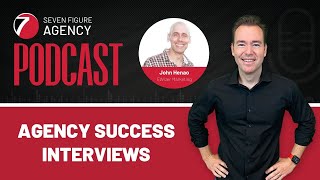
In this live episode of the 7 Figure Agency Podcast, host Joshua Nelson interviews John Henao, founder of a digital marketing agency that serves primarily law firms. John recounts his journey from a 2008 print‑broker to a $87,000‑per‑month recurring revenue agency, highlighting the pivotal decision to focus on the legal niche. He explains how he acquired clients through cold email outreach, joint‑venture (JV) partnerships, and direct‑message (DM) campaigns on Instagram, LinkedIn, and Facebook, emphasizing the importance of pain‑point‑driven messaging. The conversation dives deep into his positioning strategy, which relies heavily on short‑form video content created with tools like CapCut, Descript, and Adobe Premiere, scheduled via Metricool, and amplified through a syndication system. John describes building an international team of 13+ staff in Colombia, the recruitment process, cultural advantages, and the use of an operational hub. Operational frameworks such as ClickUp, Time Doctor, EOS‑style meeting rhythms, SOPs, and a “buy‑back‑your‑time” mindset are discussed as mechanisms for scaling and freeing the founder from day‑to‑day tasks. Retention tactics include over‑communication, Loom video updates, welcome boxes, and offering ancillary services (e.g., graphic design, staffing). He also shares hiring priorities (operations, marketing assistant, account manager), attitude assessment methods, and personal wisdom about focusing on the “why,” delegating, and following the 7‑Figure Model. The interview provides a practical, tactical roadmap for agency owners seeking to grow, specialize, and operate with an international team.
Chapters
I'm so excited for today's episode of the 7 Figure Agency Podcast. Um, we are doing our agency success interviews where we're interviewing highly successful digital marketing agency owners from across the country on how they're growing, scaling, managing their clients, delivering world-class results. Um, and as you can see today, we are live in studio at the Miami home office studio, and we've got John with us. Uh, John has been a, a longtime member of the 7 Figure Agency, uh, has built a really successful business. I can't wait for you to hear his story. Uh, we'll be talking about how he lands clients, how he delivers results, how he retains, um, and really on his side, uh, how he also delivers with an international team. He's got an operational center in Latin America. So if you're excited, if you're excited, give me a yes in the comments and please have your questions ready to roll because we'll be looking for your questions as we go. So without further ado, John, thanks so much for being here.
No, it's great. Excited to pack in and give, you know, so much value into what we're doing. Super excited to be here and just want to be like a value bomb to you guys, as much value as you can give.
Value bomb, let's do it. So John, I guess the best place to start is tell us a little bit about the agency. I kind of gave you a little bit of an intro, but who do you serve? How many clients? What's the current lay of the land?
Yeah, so we have about 60, 65 clients 30 are in the legal niche. We're about at $87K per month recurring revenue. And yeah, and we service pretty much the legal niche.
So good, man. Congratulations on growing to 7 figures. I know it's been a journey over the years. I think it's always important to spend a little bit of time talking about that journey, like not in long form, but kind of what was the story? How did you get into running an agency in the first place? Let's just start with that.
Yeah, so I was a print broker back in 2008. So we were selling business cards, postcards, and we were into the print marketing scene. And we started realizing that our clients were asking, you know, they wanted a website. And we said, no, we don't build websites. But they kept on asking, we build websites. And then we, you know, decided to just say, you know, let's build a website for them. We started learning WordPress with them. And then, you know, from that point we started like evolving into the digital marketing space. And then we started offering Facebook ads. We started offering, um, social media, email marketing, and that's pretty much how I got into the space, into digital marketing. Started as a print broker and then, you know, that evolved.
Excellent. So I guess right now you're serving some local market, you're serving some attorneys. You've also got GoStaffy, which is to help agencies staff, um, you know, creative team in, uh, out of Colombia, South America, which we'll talk more about. Um, but 7 figures today, obviously, you know, kind of tell us the journey over the last couple of years to get to that point. Um, and kind of the, the, the milestones along the way.
Yeah, no, for sure. So we were, we were pretty much in a bottleneck, like when we were a print broker from 2008 all the way to 2015, we were not selling no recurring revenue or nothing like that. We started selling recurring revenue. In about like from 2015 to 2019, we started offering, you know, the regular website with SEO and we were charging a premium for that. You know, and we were charging pretty much like $900 per month at that time, $500 to $900 per month. But we were stuck. We were stuck at that bottleneck because, you know, we were around, you know, $15 to $19K per month. But then one day, like I was at a Walmart and, you know, I received like a Facebook ad and it said, Joshua Nelson live event in Miami. And I said, well, it's a live event, it's free and it's local, right? So I decided to go and the rest is history after that. We signed up and I joined the mastery, that was in December of 2019. And from 2019, December to now we've tripled. I mean, no, I mean more than that. I mean, we started out around 20,000, it came, and now we're, pretty much $87K per month. So that's pretty much what happened. And then we started learning all the techniques that you teach in the program. You know, we found the niche, we decided to go with legal because we had, you know, 5 legal clients at the time. So we thought it was, you know, pretty much easier to just, you know, pivot to that niche. But yeah, it's been amazing. It's been an amazing journey.
So yeah, I remember you came to the Roadmap Live, at the end of the Roadmap Live, we usually go to dinner and we hang out and we were sitting next to you and kind of hearing, You know, you had this agency and you were ready to go to the next level. And it sounds like the big thing was to choose the niche. That's where a lot of people struggle at the beginning. It's like, I think it's gonna be more efficient. Can you talk about some of the benefits that you had in just focusing on legal versus trying to serve everybody in the business space?
[Speaker:JOSHUA NELSON] No, totally. I mean, we actually started first with dental, but then when we hit, you know, COVID happened, Then I had a conversation with you and then you said, hey, I think legal would be the better route. And thank God I did that, right? So, you know, the benefits of serving the legal niche is that you know what their pain points are. You can pretty much streamline what you're doing already, like in operations, by running the right ads. Social media, it's easier because you know what they're looking for, right? You know, if you service, let's say we service PIs, we service family attorneys, and we know what their pain points are. So, you know, just the whole process makes it easy when you're trying to fulfill, I would say.
Excellent. So you said you had about 5 clients in the legal niche when you did decide to make that pivot. Like, what was the play that helps you get the next 5? Because that's usually the next big challenge. Like, okay, I'm going to go after this niche. How do I get my first one? Right. And you already had 5 to play with. So that is a tip for you. If you run an agency that's general right now, try and find the path of least resistance, right? Where you already have some clients, where you already have some success, and then part parlay that into everybody else within that space. So how did you, how did you kind of expand the market share?
Yeah, so what we did was we started with cold outreach. Like many of you guys, we started with cold outreach. We purchased a list and then we started just shooting out emails and we got a couple clients from there. But I think the biggest momentum was that we started looking for JV partners, but that happened probably a year after, like a year and a half after. But in the beginning, it was pretty much cold outreach. We were also hitting some local bars, you know, just attending, you know, some local events.
Not the drinking bar, but the—
Yeah, yeah, exactly. Yeah. Legal, local, exactly. For legal attorneys, right? Yeah. So pretty much like what got us more momentum was definitely the JV partners that we acquired. And then, you know, pretty much from there, we started offering as well You know, we do DMing too. That's a big play for us. We have a marketing assistant that reaches out to the attorneys and we try to get just them to raise their hand. And then we have a sales assistant that follows up, but that's a whole story in itself. But yeah, that's pretty much in a nutshell. It started out with cold outreach, then, you know, pivoted to having a JV partner.
I love that. I think that's a path that most agencies kind of go down. We've gotta start to get some results. And so doing the cold outreach, doing the DMing, ultimately transitioning more to attraction-based marketing, which in your case you landed on a JV and you're only one JV away from a 7-figure agency. I, I truly believe that. I've seen it happen again and again. So look for those influencers that already have relationships with the clients you want to work with. Um, I think for the, for the sake of the listeners, they would all love to hear, because attorneys, notoriously hard to get their attention, notoriously hard to land as clients. Uh, obviously easier when you've got joint ventures. What were some of the messaging that worked either from the DM side, if you could share a little bit of the secret sauce there, or from your cold outreach?
Yeah, so for the DMing, I would say that that's been a big play because attorneys don't like to be sold, right? So what we do is we create a lot of videos, like I'm a video guy, so you guys have probably seen my videos, right? So videos is a huge play because we're just giving a lot of value on the videos. So what, What my Facebook Ads person would do is he would just do like retargeting ads to attorneys and we would just take them from the top of the funnel all the way down and nurture them, right? So I would say doing that and then looking, looking for what their hurts are, like their bottlenecks, and try to get your foot in the door like that. And I feel that that has helped us in regards to just getting them to raise your hand, right? And then at that point, we get that sales call, and then, you know, and then from there we close it.
Love it. So practically speaking, when we say DMing, are we talking Facebook? Are we talking LinkedIn? Are we talking Instagram?
Yeah, so it's Instagram, LinkedIn, and what we're doing as well is just, you know, using some videos that we have used before, and we're just trying to get a conversation from the attorney. That's all. I'm just trying to get some some lead way so that we can get to that call. Because like I said, it's really hard if you're running ads, even if they're targeted, that they're gonna sign up right away or they're gonna get into that strategy call. And there's a lot of follow-up too, 'cause we want them to raise your hand and then you have the follow-up sequence, sharing testimonials too. We have a couple testimonials. So having that DM is important to just get them to raise their hand. And we do strategies on stories too, which is very, What we do is it's pretty much Messenger ads. So we create Messenger ads where we just want them to say a comment to what it is, right? The titles are different titles. I don't have them right now with me, but we're just trying to talk to their pain points pretty much.
Love it. Some great tips. Some great tips there. On the very front of the DMing, right? So you connect with this attorney, you start putting out content that they're seeing, what would that first message be? Like, well, how do you start that conversation in their LinkedIn? Like, is it just like, hey, Attorney Jones, or like, talk us through at least like the first couple messages.
Yeah, I would just say like, you know, talking about their brand, like, hey, we noticed that your reviews are not so good, you know, we can get you on a quick strategy call where we can help you get more reviews, you know? So it does have some type of direct response, but you're pinpointing something that they're lacking in, which is probably their website. Their website looks terrible, right? And you say, hey, we just saw your website and you don't have a chat feature. Like you're losing so much business, right? You don't have anything shown, right? And so we try to find those pain points and start the conversation with the pain points.
[Speaker] Love it. Practical example there for you guys to sink your teeth into. Connect with these people, put out good content, Start a conversation, start it with a, hey, we found this issue, we found this problem. Would you be open to me kind of either jumping on a call to show you or maybe—
And I wanna share something else too. It's hard to cut you, but the other issue is that it's important that if you're trying to get them to, you know, to get a sale, like let's say you're trying to get them to do Facebook ads or trying to get them to build a website, you wanna make sure that your website looks good and your social profiles because they're gonna look at that too. So you have to be like, eat your own dog food before as well, because they're gonna look at it.
Good stuff.
Makes sense?
Yeah, no doubt. So if you could talk a little bit about what you deliver, you know, because I think we all come to this with a different suite of services— websites, SEO, pay-per-click, Facebook ads, marketing automation, who knows what else. What is it that you're typically doing for the attorneys that you serve?
Yeah, so we typically serve them with a full suite of you know, like SEO, website, Facebook ads or PPC depending on their budget. And we also give them the software, you know, which is HighLevel, which of course we white label it as well. And we, we try to talk to them that this is the growth plan they need. Right. And, you know, that's pretty much it. Yeah. And then from there, we, we try to find like what, what they're hurting into. Like we're going in there and figuring out like on the sales call, what is it, you know, what is it that is gonna make them better? 'Cause a lot of times we wanna sell them the highest package, right? But maybe they don't need it. Maybe they just need a good follow-up sequence and you can sell 'em what they need. So I think that's important.
So a very consultative approach. Hey, meet with the attorney, find out what their goals are, find out what's missing, what they perceive to be an issue, and then slot in what it is that makes sense.
Exactly, exactly. Yep, totally. Yep.
Love it. Alicia asked, what's a JV partner? So for the sake of Alicia and maybe the others that aren't familiar with the terminology, what does that mean?
Yeah, so a JV is a joint venture, which you're creating like an agreement with someone that has your ideal client. So with us, we have a local bar, which is not a drinking bar, once again. It's a local bar with attorneys. And it's a Hispanic, you know, it's pretty much Hispanic. And we knew someone that knew the main president of that local bar. So what I did was is that I offered them free marketing for them, you know, not expecting anything in return. And that got me in the door. And then once we started working with them, then that president liked what we did for them. Then they started recommending us like other attorneys within the space. And we do give him some type of kickback. So, you know, you can give them 10% one time or, you know, sometimes you don't have to give them anything because they're not expecting anything in return.
Powerful. Yes. I mean, I like what you said there. And this is kind of the main play right now that's driving the deal flow is find someone that's already got the clients you want and then add value in advance.
Right.
Don't just go in and say, hey, can you refer me to your client base?
Right.
That's the recipe for them being like, get out of here. Right. They're approached by people all the time. They're only going to refer to you if they trust you, they believe you can help their customer base. And so what John did was he put his hand way out and he said, hey, look, let me do this for you and ask for nothing in return. And when you do that, the power of reciprocity starts to come into play, especially if you do it right. They're like, hey, you're helping me. How can I help you?
100%. 100%. Yeah, the more you give, I believe that the more value you give, You know, the more relationships you get, the more income you get, and it's about value. So that's— yeah, like, I'm a big proponent of that.
Excellent. So we've talked a little bit about how you got the first couple of clients, what's kind of working right now from a client acquisition perspective, kind of what your, what your program looks like and what you're selling on a consistent basis. Like, do you do anything from a positioning perspective? I know you do great with videos, but what else are you doing to position yourself in that niche to become magnetically attractive? Yeah.
So we haven't written our book yet. So shame on me on that. I should have written it. So definitely we're almost done with the book, but I say presently besides the videos is what we try to do is attend, you know, we're attending our first legal show and we're trying to get a speaking gig. We haven't gotten it yet, but I would say the biggest thing is, would be the podcast, but we haven't started it yet. So that's another play to position yourself. But I would say the biggest thing for us has been the videos. The videos, just marketing ourselves. And some of the videos are general videos and we target it, you know, you know, you know, for the niche. Um, so I would say video is huge for us. It's been huge, like a positioning. Love it.
So don't feel like you have to do it all, right? There's a lot of different assets you could use to position yourself. You mentioned a book, you mentioned a podcast, you mentioned webinars for, for John specifically is built to 7 figures in his niche, predominantly focused on the JV. But if you look John up on Instagram, He's got constant great video content. So I think it would be really cool if you talk a little bit about how you come up with the topics for that. They always look really polished and professional, like what tools are you using to create those videos? If you don't mind kind of unpacking that. Yeah, give me a yes if you'd like to hear that in the, in the comments.
Yeah, sure. Yeah. So we, um, you know, the type of videos are pretty much, some of them are general, some of them are talking like the hook story offers or, you know, starting with a hook first. And just finding that pinpoint that the attorneys are looking for, right? Some of them are super general because remember, people, you know, people are going to do business with other people and people that they're common, you know, with. So for example, there are some attorneys that do business with us because I'm a Heat fan. I mean, it's ridiculous, but because they saw me with a video talking about the Miami Heat, right? So the more videos I would say, um, you know, just put yourself out there. Have a hook, story, offer. Make the video short. Like I would say like a minute, like a minute and a half. The softwares, I mean, we use, uh, CapCut. We use CapCut, we use Descript, and you know, some of the guys use, um, like Adobe Premiere. Like I'm not so much in tune with what they use, but I have a marketing assistant that does it. And that's one thing, like don't, don't overthink it when you're doing the videos. Like Just start doing it and you're going to see a lot of things are going to happen with that.
Love it. So I'm just curious, on your end, do you schedule this in advance? Do you have a certain frequency? Do you try and do a video a week, a video a month, or is it just kind of as you're inspired you'll take out the phone and shoot something?
Yeah, so we, we have tried blocking days and that's the best thing if you're trying to start. Block your day, like have one day where you record, you know, 50 videos or 20 videos right? And one, once you finish, then you schedule it. Like we use, um, this system called Metricool, which schedules all of our social media and everything. And we follow the syndication process, you know, process, which Josh taught, which is pretty much we syndicated, you know, to the email list, to LinkedIn, Instagram, Facebook, you know, everywhere. Like even on the website, we, we put the right meta tags, like on the title tags. We wanna make sure that we're coming out. Yeah, that's pretty much it.
Awesome. So some great takeaways there. Short form content does work. A lot of times you think, oh, you know what, this short form content, no one's gonna watch it. Obviously it's, it's working. Time block. You like, don't try and do it every day. Do it, do a, a week in advance or a month in advance if you can, and then take your hands off of it, right? You, you should not be, you know, all day on your cell phone shooting videos. Like we're gonna shoot a video right now and then, hey, hey John, hold on for a second. Spending half your day scheduling this stuff out, right? You want a team that can do it. Can you talk a little bit about how you built your team to take those videos and implement them or kind of roll them out for you?
Yeah, the other tip I wanted to share before that question is, you know, a great way would be to also have someone interview you like today, right? Josh is interviewing me and he can cut that up into different pieces if you wanted to, right? The same thing is you can do that, or if you start a podcast, you can also you can also cut the pieces, right? Um, the other thing too is if you're doing webinars, which I didn't mention, we have done a couple webinars which have worked. So webinars are amazing because you can grab the content and just, you know, pretty much break it up into pieces. Um, when it comes to the team, you know, what was the question? Sorry, the previous question about the team.
How do you get a team in place that, that can take your video content, edit it, put the right captions so you're not personally loading it and scheduling it?
All up? Yeah, you can hire somebody locally that has some type of Photoshop skills, graphic design. Nowadays people are born into social media. My 16-year-old girl knows how to do it already. So get someone that loves to be on social media, that has some type of knowledge when it comes to Photoshop. And then when it comes to the team, we have a marketing assistant, that comes up with all the titles with, you know, ChatGPT coming up with slogans, with pain points. And then she does it all. I mean, she edits the video, she comes up with the titles, and she schedules it. I mean, that's simple. And then you need someone else to actually record the video if you're going to do it with someone else. But if not, start on your own, like block 2 hours and get in front of a camera. And start, you know, start producing video.
Love it. Yeah, I think that's, I think that's great. If you can have someone else come up with a topic, all you have to do is say, okay, bam, take out the phone and record.
Absolutely.
I think you do a lot of different, um, locations. Like, you know, for me, I do a lot of videos in this type of environment, but I see you, you're out walking at the park, you're in your car. I think for social short-form videos, there's a, there's a big reason to do that. Can you talk a little bit about why you do those types of videos?
Yeah, no, for sure. So I believe that people are going to do business with you because they like you, right? That's part of it. It's that like factor. And I've heard that from many people, right? They're like, John, man, I like doing business with you because I just love your videos, right? And some of it might attract, you know, others in the niche that you don't want, but I believe it will attract your niche if you target them. So doing them in different areas, that motivates me because, you know, that creates a better environment as well for you to be motivated instead of just doing it always in an office you can do it at the soccer field and, and then people can relate to you when they see you there, that you're human, right? The goal here is to be human and to put yourself out there. So, you know, that's why I do it.
Yeah. And, and I think just being conscious that there's a difference between long-form content that you would do like a webinar or like a 10-minute explanation, and that usually is gonna be horizontal versus short-form, which is like kind of close up to your face and you're having a personal conversation while you walk at the park, while you go down to the beach or whatever it is. Why do you feel like a vertical video resonates a little bit differently on Instagram or TikTok than a horizontal stuff?
Well, that's what's in right now. That's what's in right now. And people, they're on their phone, their attention span is super, super short. I mean, I see my kids just— So that's pretty much it. Now, I do believe in long form too. I believe that there is a place for that. I'm not trying to to take that out. But what you could do too is that when you record long form, which is horizontal, make sure that you record it in 4K because you can actually grab content from there and then cut it out, have someone cut it out for you in vertical. But I believe vertical's important because it fits right on your phone. Your phone is vertical when you're actually scrolling. And yeah, I guess that's the main advantage point with what you're doing in vertical.
Excellent. There's a question here, which is how big is the team? Running a 7-figure agency now, Obviously doing a lot of your own marketing. What does the team look like?
Yeah, so we have 13 people in-house, okay? They're all in Colombia. My parents are from there. We have 2 people here. My son helps me, my wife, and we have one other person here that helps us, which does a lot of our local videos because we sent out a team as well, you know, as a retention strategy to do that. But yeah, it's pretty much 13 and then plus like 2 or 3 here in Miami.
Fantastic. And I think it's really interesting that the lion's share of your team is in Colombia. And I know a lot of our listeners or viewers would love to have an international team and they'd love to get the talent maybe that they couldn't access here in the United States for a price that's a little bit better. Can you talk about why Colombia for you, how you recruit in Colombia?
Yeah, totally. So from that country, my parents are from there. So we started, you know, we started from there because my parents have a, you know, like a different business and they already had a team there. So that's how I started getting into Colombia, you know, started with 1 and then 2, then 3. And the advantages would be, of course, there's a cost effect, you know, advantage as well. There is certain areas or certain roles that people from Colombia may not be the right fit, but the majority of what we do, it's been working out. And I would say the biggest benefit is the time zone, same time zone. You know, I recommend if you are thinking of getting like an international team is look for that one person that sees your whole vision, right? And then start building your team from that person. You know, it's kind of like the LeBron James. Look for that LeBron James, like that operations manager or maybe that marketing assistant and build your team like around that person, because it's very important if you're gonna have the majority of your team there, you want someone that sees it like an integrator or— Right.
Love it. So your team internationally, there's an actual operational center, like there's an office they go to, at least some of them.
Yes.
Which is, I think, unique to you. A lot of times when we think international, we think a lot of people just working from their homes, cranking away there. What's the benefit of having an actual facility that they go into and work from versus working from home internationally?
Yeah, so I love culture. Like I'm an operations person, I love it. And I like when I go to Colombia, 'cause I go there 4 or 5 times a year, you know, I love hanging around with my team. I'm just, it's just part of who I am, right? And I envy them because I wish I had it here. I don't. And they, you know, my, you know, the advantage is that you're building stickiness retention because You know, people, you know, they're going in, they're seeing each other. Um, there's my opinion, there's more accountability when you're rubbing shoulders and you're next to each other. But there is, of course, there's other people like we, we have two people that are not in our office and it's been working out fine. So I think each one has a disadvantage and advantage, but I would say for us has been the accountability. Um, and then, and then of course the culture. I think when, when you have an in-house team, you can build like an easier culture. Not, you know, not to say that you can't build a culture with people working remotely because, you know, that can be done as well.
So any, any tips on how to, how to manage? Because you're, you're in Miami, the team works in Colombia. It's great to have that uniform time zone, but how to keep them productive, how to keep them on, on task?
Yeah. So we, we use Time Doctor, we use ClickUp, um, when it comes to management, we, um, We have meetings, you know, we have, you know, the leadership meeting where we are self, you know, self-implementing EOS. So we do have an operations person that leads it there. So I would say the biggest thing is having that accountability person that sees the vision. Like in other words, he's the John that's here, you know, and he sees what needs to get done over there. And I would say that's the biggest thing, just making sure that they're meeting their tasks. And I can just look at it to myself here because we do have meetings. Of course, it's not like I'm just here and they're over there. We do have regular meetings that I'm involved in, like the leadership team. We even have games within the actual Zoom. So I feel like I'm there. I have cameras that I can see them if I want to, which, you know, it's part of, yeah, pretty much what it is, right? But yeah, overall I would say just having the right person there to oversee and make sure that the tasks are getting done and just having a good system.
Excellent. I think, yeah, one of the things he said that's really important is whether your team is in office in the United States, is international, is virtual, having a good meeting rhythm where you know everyone's going to get together and there's something like EOS or at least some other agenda-based meeting where the whole company can align around similar values and have clear objectives that they're working towards. I think for us, when we went from in-office to virtual, if we didn't have that, it would have been catastrophic. So I think that's a great share.
Yeah. And I want to share another tip is that we have been doing learning meetings. Learning meetings is just where we educate self-development for the team. And that's been huge, huge. I mean, we do it every single week for 30 minutes and we do it on Fridays. And that has been amazing because the team member sees that we're pouring into them. You know, and what we do pretty much is we just go through an audiobook. We go through an audiobook on, on self-development and we choose a book and we even give them to teach it too. So we've seen, you know, stickiness. I mean, we've had, you know, some team members with us for more than 4 or 5 years, right? So, you know, that's been a big play as well.
I think that's a great tip. And if you want your team to step up, the very best thing you can do is not to teach them, but to let them teach the group.
Absolutely.
Because the way you truly master a skill is when you, you have to teach it, right? Mastery comes from teaching. So I think that's a really important and valuable, valuable share. So let's shift gears a little bit. We talked about the team and the operation and, you know, things being run out of Colombia from an operations perspective. Let's talk a little bit about retention because attorneys are notoriously hard to get, they're hard to deliver for, and then they're super hard to retain, right? Because everybody's going after them. What are some of the things you put in place to create a great experience and to retain the client base?
You know, so get ready, like get your notebooks. I'm gonna tell you something that you're gonna love.
I love that.
All right. So the biggest thing that I learned last year was when Josh had a panel with the fastest growing, you know, the Inc. 5000, you had a panel.
Right, yes.
Right, and I remember one of the persons said that if you wanna grow your agency, you need to become a partner, you need to become a consultant to your clients, right? And then he started talking about what that meant, you know, and, you know, pretty much what that means is that you want to find out what they're hurting in, right? So even though you're selling them SEO and PPC, what are they hurting in? Like when your account manager is speaking to them, what do they need? Like maybe they need a good follow-up system and you can offer them, you know, HighLevel. Maybe, maybe for us, like what has been working for us is that we, we give them access to, like our creative team. So most of them go to trade shows. So we do their graphic design for them. Some of them had trouble with even like employing, like they were letting go of people because they were trying to minimize their expense. And we told them, hey, we can get you somebody from Colombia. And that was, you know, part of our service. So we were looking at them as more of a, like, you know, finding out what their pain points are. And they were looking at us not just as the marketing agency, but as a resource that, you know, you know, you know, if they need something from us, we, we can deliver on it as well. I mean, not to spread yourself too much either, but, you know, that's a great share, right?
Really understanding their pain points, not just looking at singularly like, here's what we do, but really solving their issues and being a partner with them. Very cool.
Yeah.
Any other cool, uh, client retention tips?
Um, communication is big. I mean, you know, big. Um, we We communicate, like over-communicate like crazy. Like we have 2 account managers where we communicate every month with them, make sure we send them the reporting, you know, making sure that their Facebook ads, you know, pretty much is, you know, doing well. If we're not getting a hold like of the attorneys, what we do is we create a Loom video and we just wanna make sure that we're over-communicating. So, you know, that would be another play that we're good at. You know, making sure that we're over-communicating. So good.
So good. So let's, let's talk operationally. Um, obviously now you've got these, I think you said 13 full-time employees dedicated to the company. You didn't start there. Like, what's the journey been as you've built the team and removed yourself from certain processes? Like, what were the first 3 positions you hired for, if you can recall?
Yeah, I was, I was blessed to hire— the first person that I hired was He was a graphic designer, I mean, but he had a lot of operational experience and he saw the vision. But if I had to redo it again, I will look for that operations person and then that marketing assistant because the marketing assistant is what's going to drive it. And then from there, like an account manager, those would be my 3. But for us, it started with someone that saw the vision, saw the vision and started learning and he had some type of operational background. Then from there, we were just hiring what we needed at the time. From that time, I think we were more into graphics and stuff, so we kept on hiring more graphic designers, but then we started pivoting into more like SEO person. Then we started offering Facebook ads, so we hired the Facebook ads person. Then we had all these clients, we needed an account manager, so we hired an account manager. I think it's a process that every agency goes. I think it's It's really hard just to say, hey, just hire these 3 or 4 and you're gonna be fine. So I think it's having that person that sees the vision is key.
Love it. Great tips there. I guess the other relevant question would be recruitment. You've recruited this team for yourself. You also have GoStaffing now, which is a staffing service for agencies. A struggle a lot of the 7-figure agency community was having is like, How do we find the right people? How do we get them placed? And so since John's done so good with that, he started GoStaffy, and he'll be sponsoring our upcoming intensive. So if you happen to be coming, definitely come see John for that, or if you need help hiring creative, web development, these guys are doing a great job for the members in the community. But like, what are some of your recruitment tips? How do you find quality international talent and kind of sort the the cream from the chaff.
Yeah. So we, how we find them is pretty much, you know, we have different sources. Like we actually have a company, you know, in Colombia that we partner with and they give us good source from there. But if you wanted to do it, you know, is pretty much on your own. What you can do is run ads on LinkedIn. You can, you know, you know, run ads on Facebook, on Instagram. And what we do is, what we try to do is just dialogue with them. Like we have specific ads going out to the specific role that we're looking for. And we have another marketing assistant that just asks the right question to make sure that they're the right fit, that they speak good English, that they're good with follow-through. Um, and then we, we take them down through a form that we give them and they fill it out. And then we understand like what their strengths are, if it's a good fit or not. And that's how we select them. And then of course we run them through a rigid interview process where we take them. And yeah, the biggest thing for us too is not just finding good talent, is you want to make sure that you're giving them the right assessment tests, making sure that they have a good character. Because we have seen people in our agency, because we build agencies, I mean, that, you know, if they didn't have the right attitude, we don't hire them. I mean, no matter how good you are, I mean, attitude you can't fix, right? So we take them down to make sure that their attitude is good. Making sure that they're good, of course, with what they're doing, that's important as well. So we have just different tests we give them and different like interview process in order to fulfill that.
Love it. So how do you— so if you could, like, how do you test for attitude? Like, how do you— is it a gut check thing? Or like, how do you gauge that?
Yeah, so I mean, we have a recruiter that works for us in-house and We give her, we give them questions like, for example, like, hey, if we hire, let's say we hire a web designer, we ask them, hey, are you okay to wear multiple hats? Like if we needed you to learn Facebook ads or to learn, and you know, by the way that they respond, if they say no, no, I just want to do websites. I mean, we, we have like certain questions we ask them to make sure. The other question we ask them too is, is for long-term because we're hiring for long-term. We don't want to hire anyone that is thinking. So we ask them questions like, hey, what, you know, how do you see yourself in 2 or 3 years from now? Right. And if they tell us like, well, you know, I'm thinking about just working here for 6 months and see, and see how it works. And so we have certain questions we ask them. I would say that's the biggest. I mean, we do give them a DISC assessment test too that lets us know what type of personality they are. And yeah, I would say like that, just try to give, you know, try to interview them more than once. And find out if there's anything. I mean, if your gut is telling you like, hey, this guy's not the right fit, then, you know, listen to your gut.
Love it. Great tips there. Great, great takes and takeaways. If you have any questions for John while we're still live, put them in the comments. One question I'll have for you is, is kind of thinking back on your journey, I think we were talking before this at lunch about like when you came to the first Roadmap, you were somewhere between $15,000 or $20,000 in monthly recurring revenue. And there were a lot of things you needed to change, a lot of decisions you needed to make. If you could point to like 3 key things that you implemented from the 7 Figure Agency that had the biggest impact, what would those be?
No, definitely the biggest one I say would be the JV. You know, of course, having a good JV partner. The other things that I've implemented were like, even though they're not to get clients, but it was more on the retention side. We created a lot of SOPs because SOPs, you know, that was new to us too. So the SOPs we implemented and that helped us so much creating like the experience with a welcome box, you know, the gift basket. But I would say for to get new clients, I would just say finding the list, making sure you're doing the webinars, which we did a couple of webinars and, and just putting yourself out there. Like Josh is everywhere, right? I mean, he's everywhere in videos, you know, in podcasts. Making sure that you're positioning yourself out there. So I would say those have been the biggest things, and then the JV, of course, you know, having a great JV partner.
So good. So you've grown to 7 figures. Obviously that's just a milestone to even bigger and better things. Um, if you had to share one piece of wisdom with, uh, the listener or the viewer that's wherever they are, maybe they're at $10K, maybe they're at $50K in monthly recurring, maybe they're at 7 figures, like What wisdom would that be that could help kind of inspire them or move them forward?
Yeah, I would just say like, um, try to remove yourself from the operations as much as you can, as quick as you can. And I'm reading a book now, uh, Dan Martell, you know, Buy Back Your Time, which is huge. Great book, right? So one tip I give you is don't hire too much on the roles, hire to free yourself up. So I think if that's one, you know, take that you take from this is try to free yourself up so that you can focus on sales and business development. And I mean, for us it was just trying to, you know, create SOPs for everything so that it frees me up so that I can focus on getting more business and being the video guy that comes out. And that's the, you know, that's the most, you know, the most important thing I think.
Love that. Free yourself up, get yourself out of the day-to-day operations, And for yourself, maybe not just even do what you like to do or like kind of what you excel at. Also, you've got 3 kids now. Seems like you get to spend time with them. You travel. How are you able to like create more mental freedom for yourself as you grew the business?
Oh yeah, it's huge. It's huge. I mean, like if I take you back to my story, I mean, I got like in 2016, I got sick, which I'm not going to talk about it whole, but like I had a mold issue that affected my body and my business went down all the way to the— I mean, we had one account in 2016, right? And you know, in 2017 I started doing Uber, which was crazy.
Is that right?
For like 3 months. I mean, no one knows about it. This is live. I'm being transparent here. And sometimes I kind of hold myself in tears because where I'm at now, it's incredible. And I think— sorry, what was the question? I'm losing my train of thought here.
No, it's an awful share, right? And there's people in that place right now.
So yeah, so, you know, it's been amazing. Like right now I can, you know, travel, you know, pretty much have a team in place. You know, I have a lot of SOPs, you know, structure. And the goal here is that you want to empower your team. You want to make sure you have the right people that believe in you, believe in your vision, and make sure that you're empowering them, you know, empowering them and just create those SOPs that you need to create so that you can be freed up.
Awesome. I think the genesis of the question was around how did you change your mindset from feeling like you needed to do it because you're good with websites, you're good with graphics to mentally free yourself up?
Yeah. So mentally was that I would say what caused me to switch was that I read a book, I forgot the book what it's called, but you have to stop being the the person creating, you know, like in order for you to grow, you need to let go of the things. And it's hurtful because I love to create websites. I love to create, you know, and you have to see the bigger picture. So you need to put the why in front. So I think mentally was that I had a vision board and I said, okay, I want to get there. This is my why, you know, I want to spend more time with my kids. I want to travel more. And that was one of the things that I regretted back when I was sick. And I was like, man, I didn't travel enough with my, you know, with my wife. And, you know, I regretted a lot of things. So I would say the biggest thing was just making sure you're focusing on your why. Focus on your why, and that's gonna drive you. Love it, man.
Well, hey, congratulations on growing to 7 figures. Thank you so much for coming on and sharing your story with the 7 Figure Agency listeners. Thanks for everything you do in the 7 Figure Agency community, and now serving the members and helping them recruit high-quality talent internationally. Guys, if you got value from today's interview, please reach out to John for his generosity of spirit, his abundance mindset to come on and share what's worked for him and how he's grown. If you have one last tip or insight to share before we wrap up, share that out there.
I mean, just follow the 7 Figure Model. That's it. I mean, just follow the model and do the things that you need to do like create the book, get the podcast. You know, that's more than one thing, but just follow the 7 Figure Model and you're gonna go far.
Thanks, man. Appreciate you. Congratulations. Thanks for listening, guys. And we'll talk to everybody again real soon.
Alright, thanks.
More from Joshua


From 26 Years in Business to Nearly Doubling Recurring Revenue | Sandy Waggett




How Luke Truetken Scaled His Agency to $110K MRR by Going All In on One Niche



Website Production at Scale - The AI Tool Stack for Modern Agencies with Marcel Knopf

