Agency Success Interview with Nate & Troy from TaxProMarketer - Seven Figure Agency Podcast
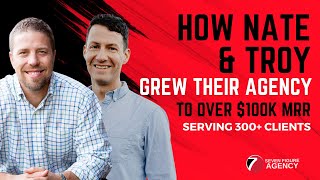
In this episode of the 7 Figure Agency Podcast, host Joshua Nelson interviews Nate Haggerty and Troy Lakely, co‑founders of Tax Pro Marketer, a niche digital‑marketing agency serving tax and accounting firms. They discuss how they built the business from 2007 to a 7‑figure, recurring‑revenue model with over 300 clients and $100K+ monthly revenue. Key growth drivers include joint‑venture partnerships, industry trade‑show booths with a low‑cost book lead‑magnet, CPE webinars, and Facebook ads that lead with value. They explain their shift from a self‑serve enrollment funnel to a consultative phone‑sales process, and how they re‑packaged services into starter, mid‑level, and premium tiers that bundle PPC, local listings, SEO, email marketing, and website builds. Operationally, they highlight hiring a complementary partner (Troy), building a culture that prioritises family, boundaries, and a sabbatical rhythm, and leveraging a largely remote team of stay‑at‑home moms and part‑timers. They describe their tech stack (Infusionsoft, custom dashboards, Basecamp) that enables them to service 300+ clients with a 12‑person team. Throughout they share lessons about the profitability of culture, intentional growth limits, using proven shortcuts (JV, Kolbe assessments), and the importance of positioning and niche expertise.
Chapters
This is the 7 Figure Agency Podcast. Discover the strategies and techniques to grow a highly successful and profitable digital marketing agency with your host, Joshua Nelson.
Welcome, thank you so much for joining us on today's session of Agency Success, the 7 Figure Agency Podcast. Uh, today I'm super excited. We've got two hyper-successful digital marketing agency owners, uh, Nate Haggerty and Troy Lakely from Tax Pro Marketer. Um, thank you guys so much for joining us today.
It's our pleasure.
Thank you.
Yeah, I heard a chuckle. Did I, did I say the name wrong?
Sorry, man. Yeah, it's Lakey.
I said Lakely after we did all of that. All right, my bad. I apologize. Glad to have you. So I guess before we dive in, if you guys don't mind, just tell us a little bit high level about your agency, kind of number of clients, approximate revenue. The fun details.
Yeah, so we've been in business since 2007 and we've been serving the tax and accounting industry that entire time. And we do about a little over $100,000 per month in recurring revenue. We built everything on a recurring revenue model. And I know that a lot of agency folks don't have that model in place. And it's one of the great things that Josh, you bring to the table, which I'm grateful that we sort of stumbled into that model, not in a very, I think, intentional way. It's just that that's the model that I knew would set us up for the right margin and kind of lifestyle that we wanted from the very beginning. So we have about 300 clients that we serve. Over the course of 12 years, we've served, gosh, about 1,500, clients in the industry, almost 2,000. Yeah, and we provide, you know, basic digital marketing services, social media completely handled, email marketing, that's been sort of our sweet spot, we could talk about that at some point, you know, custom-built websites and SEO services built in, and then we just recently started doing pay-per-click. We have been almost exclusively an inbound agency for 11 years, and we finally found a great partner that could execute on some of the pay-per-click things. And we were doing some of that in-house to test it a year ago, and we decided to just shift it to, to an expert. And we're bundling all of what we do together now in some basic service packages and shifting a lot of our model, honestly, thanks to you, Josh. And we've heard you speak a couple of times. We've known you for a few years in Digital Marketing War Room and other contexts. But honestly, I didn't realize how amazing you were until I listened to your talk at Traffic and Conversion. And Troy and I both had multiple head-slapping moments, like, what the fat? Why were we not doing this?
Actually, physical head-slapping.
Physical head-slaps. And we, you know, we were kind of sitting a few rows apart and we were like, why haven't we been doing this?
Yeah.
And yeah, just your resources and your ongoing assistance. We've shifted our model a little bit, which I'm glad to talk about at some point, away from kind of like enroll now online with these various services to more of a consultative sales process. And that's been really fruitful.
So anyway, so you're serving— so you guys are serving the tax and accounting market. You've got 300+ clients, over $100,000 a month in recurring revenue. Um, the first question everybody wants to know probably is, how did you wind up in the accounting space? And that's a niche that people probably think, well, that's, you know, they don't spend money, they don't have a propensity to advertise. I'd love to hear a little bit about that.
So I have never prepared a tax return in my life. And I worked for a guy 15-odd years ago, gosh, longer, 16 years ago. And I was coming out of youth ministry. I worked for Young Life and they were gonna transfer me to some other area. My wife and I felt rooted in the community where we were. And so I just got a job. And it was a guy who was an info marketer and I had no idea. His name is Chauncey Hutter Jr., amazing dude. When he hired me, he told me, look, I don't want you working for me 3 or 4 years from now. And I was like, bro, I just want a job. And, uh, I took the job and I kind of dove into the marketing. I became kind of his marketing assistant. He had two businesses, his tax business and the coaching business, both of which were seven-figure businesses. And so he threw me into the water, took me to all the marketing conferences, and I got hooked. I fell in love with marketing, with, um, kind of the, the environment of the info business sort of model. And true to his word, 3 or 4 years in, I did some coaching, consulting, he threw me onto the platform to start speaking at his events. 'Cause I put my hands to, I was managing a marketing budget of $400,000 plus every year for his tax business. And I was bringing a lot of that to the stage, doing consulting. And one of the big issues for his coaching clients was implementation. And so he, we, I started the business kind of with his blessing and we've done joint ventures throughout the years for that. So in a sense, I have a different story than a lot of agency owners who kind of learn marketing on their own, pick a niche and go after it. I sort of stumbled into the niche, stumbled into marketing, and here I am.
Entrepreneurship.
Yeah, and entrepreneurship. And so Troy is now my business partner. He started out as my first key employee. And that, that was probably the smartest decision I ever made, hiring him. But I, I had a choice when I hired him between kind of a clone of me who is really good at sales, really good at, um, kind of like just some of the upfront type things, um, and a guy who, um, was a little bit more complimentary and gifting. Troy is one of the best communicators I've ever seen, but he is extremely thoughtful and detail-oriented, which I needed. And I didn't realize it at the time, but it was the smartest decision I made. Um, that's awesome.
I think a lot of people miss that, that, you know, especially when you're looking for a partner or when you're looking for an operations director, you think you want that person that matches your personality and matches your style. Really, probably what you want is something the polar opposite of you. That way they can pick up where you're weak and you can be strong in the areas you're strong at. That sounds like that's what you guys have experienced.
Yeah, and so Troy dove in right away. I mean, I threw him into the water a little bit more than I probably should have in the beginning, but, um, yeah, and he, uh, he, he on his own kind of became a nerd on all kinds of platforms, and our tech stack is, uh, I— it's the best that I've ever seen. I mean, we, we continue to innovate, and that's a big— that's a big testament to him. There's 12 employees now in the company, and Um, we are, uh, we're rocking and rolling.
So that's amazing. So, so good partnership in place. It sounds like you started back in 2000, so this is your— this is your year 12. Okay, phenomenal. Congratulations.
Yeah.
All right, so, so you, you kind of stumbled into this niche. You were working for somebody that was in the space. You kind of got put on a platform. Probably a question that I have is How did you make that transition from working there to being on your own? Was it something that he kind of gave you the blessing, but did you already have some base clients before you left your steady income? Or can you talk about that just for a quick sec?
Yeah, so I think the best skill that I ever learned for what I do now, and what I would advise any, any person who wants to lead an agency-oriented business within a niche, uh, is speaking and selling from the stage. And, um, my mentor Chauncey put me onto the stage before I was ready. I mean, I— my very first talk, I, I will distinctly remember this, we were using overhead projectors with transparencies. Do you remember those days? Yeah, pre-PowerPoint. Okay, um, PowerPoint might have existed, but Chauncey was old school. But anyway, uh, I was using transparencies, and I had so many ums and ahs. I remember getting a note from somebody in the audience who I think apparently was a Toastmaster or something like it. And he said, nice talk, but you really need to get rid of all the ums and ahs. It was the very first time I'd ever spoken from the stage. But, but in that very first time, Chauncey gave me something to sell and I actually sold like $30,000 worth of services on that very bad, very poorly executed talk.
Nice.
And, um, he just kept putting me in front of buying audiences. And because of that, when I started the business in 2007, I had a lot of experience under my belt in teaching and speaking from the stage just from working with him. And so the very first time, it was a room of like 200 people. There were probably 150 buying units, and I enrolled 50 clients before having not ever created the service that we were— that I was selling. I literally— it was conceptual. And so I started off with, um, you know, 50 deposits of either $500, $1,000, or $1,500 for all of our, um, for the work that we were going to do for the folks. And we just started from there. And I didn't have a lot of money, I didn't have a lot of capital, or, or like even a lot of great strategy for it, but I knew that I could do certain things and we executed on it. Um, so that's kind of how we started, and it was, it was the first— it continues to be the, the most important skill is, uh, selling from the platform, many-to-one selling. It's something you're really good at and you teach people how to do. Um, and I continue figuring out new ways to, to do that.
So powerful. So for you, it was just leveraging your speaking talent, leveraging your, your confidence, because not everybody has the confidence to go on stage and do that. But that's been a big proponent of your early success and continued success.
And also, I do, I do want to highlight the importance of partnerships. I mean, I, we've got multiple other partners, you know, over the years that have been even more lucrative than Chauncey. That's been a massive lever of our success, is finding and building good relationships with influencers in our, in our industry, whether they're software companies or other coaches who, who aren't doing implementation but who want a partner who can execute. Building those strong relationships with those folks and being invited to speak on a regular basis, having the skill to be able to do a revenue split, a generous revenue split, with the people who, who bring you in to speak to their crowd, those have been massive drivers of our growth.
Awesome. Yeah, I, I think it's, um, I can't remember if it was Dan Kennedy or somebody else, says you're just one joint venture away from a million-dollar business.
It's really true. We've built this business through joint ventures.
And, you know, when it comes to JVs, most people are like, okay, is it a reciprocal JV or a rev share JV? It sounds like you've gotten really good at developing the win-win from a rev share perspective. Look, you introduce me, you get a piece of the action, I get the client base, and of course, I keep my piece. Is that most of the times the situation that you've worked in, these JVs?
Yeah, they've been mostly rev share. People who want to just monetize further their herd. But also, they know that we do a good job. We've been doing this long enough now. We have a reputation in the industry that serves us well. We've not left any burning bridges behind us.
Nice.
Yeah, smart.
And he just shared one of the biggest shortcuts, you know, the agencies that can find those JVs and kind of work with the relationship with someone that's already the expert or already has relationship with those clients that you want. You can really shortcut your sales process. Doesn't sound like you guys had to do a lot of cold outreach, cold emails, or any of that stuff.
We've never done any of that, which we're excited to, to do more of. Yeah, we're like chomping at the bit, but our lead flow is is kind of like almost overwhelming as it is. We're looking at scaling our sales team now just because we're making that transition away from people just enrolling like on the website and self-selecting their service level and self-selecting what they need, realizing it doesn't serve our clients very well to have them make the choice without the consultation. And obviously when that would happen, we would always give people a call and figure out if there's a better solution for what they were wanting to do after the fact, but we found that the consultative sales process serves everybody far, far better.
So no doubt, no doubt. Well, kudos and congratulations on growing this to the level that it's at now.
Troy wanted to add something there.
Oh, absolutely. I'm sorry, listen, go ahead.
I mean, in the early days we did do some cold, some cold stuff. We just had so much more success with partnerships that we focused our energies more there.
There.
Now I think we've hit enough critical mass where it makes sense to dive back into that.
Yeah, but I'd say the 3 drivers for, for us now, um, and even over the last 5 years as we've versioned, you know, come into the 7-figure level a couple years ago, um, have been industry association trade shows, um, Facebook advertising with kind of a lead magnet approach and a tripwire original purchase approach and speaking from the stage/webinars. So those, those take either the form of the joint, the classic joint venture, or the one that I almost prefer now is the CPE webinar.
Talk to me, talk to us about what the CPE webinar is.
So there's, in our, in our industry there, because we deal with certified professionals, they are looking to meet a particular hourly requirement every year, whether it's CPAs or EAs, the various certifications within our industry. And there's multiple companies in the industry that— and Will, I'll address your question in a little bit— there's multiple CPA— there's multiple companies in the industry that do free CPE for their participants, and they charge the the speaker a per attendee fee, flat fee. And so they don't disallow you from pitching your services at the end of it as long as you do a good job teaching. And that's been our greatest methodology for selling from the stage in general has been teach, teach, teach, teach. Oh, by the way, you don't want to do all that hard work that I've told you that you need to do that works really well if you actually do it. You know, hi, we're here. That's been like the breakthrough for us. So the CPE webinar is awesome because you just pay that one-time fee and then, you know, you're rolling. Because with our joint venture folks, we do pay a recurring, you know, kind of rev share with them simply because I want to cover their palms with gold. Those folks are so valuable. I want to treat them really, really well. So we do.
And because we do that, you know, a lot of those same partners will invite us back year after year to their events and to do webinars with them, you know, maybe multiple times per year because we treat them well.
Yeah, right. It's a win-win. They're actually getting great content for their member base, which is valuable, and they're also creating a new stream of income and revenue to cover the event and to pay for all the coaching and stuff that they do.
So, yeah, it's not just problem, agitate, solve. Like, it's not just this classic sales pitch formula that can get so repetitive and we're all a little bit tired of where it's just agitate, agitate, agitate and then solve with, you know, use us. Like, you've got to actually do real teaching. And when you do that, it sets you up as the expert, of course. But you've— but it also like starts the relationship with value, which is so important.
No doubt. Powerful insights. Will, Will Hanks asking, what tripwire do you guys offer since you're doing some safe Facebook ads and you come from the Digital Marketer Certified Partner world?
Sure. What we did is we started out with a $200 kind of info kit that was probably more expensive than it should have been from a tripwire standpoint. And then it would lead people into various upsells into implementation. And it was all just information-oriented. We've since reduced the price on that and kind of moved away from that a little bit, like from pushing it too much. We use it as sort of a downsell when, when we're dealing with prospects that maybe aren't quite ready because our lead flow hasn't accelerated and because Again, we've shifted to this model where we want to get people onto the phone rather than just have them like do a one-click upsell into enrolling in our $97 a month program or $200 a month program. We would do a one-click upsell into a $500 a month program and get like 30% take rate on that. Unfortunately, it wouldn't always stick as well as we would have liked.
Because they didn't know what they bought, right? They just started getting started.
And we would do everything to call them and make, you know, explain everything and take them through the process. But they were never as good of a client as the ones that came through, you know, having a conversation with people.
I think that works well for one-time purchase e-commerce stuff, but it's a little different for an agency recurring model.
Look, it can work. And I don't discourage people from trying it, but The other shift we've made is away from like just service-based, like almost SaaS-style packages that are like, have your social media done for you, have your email done for you. We were a part of Perry Marshall's roundtable, and one of the big ahas that we got from him just even in this last year has been, you're selling drills when your clients just want holes. We, like, again, another head smacker. We've been enrolling people into these services because they know they need their social media covered. They know they need good email marketing. They know they need a good website, but really they just want clients. They really, they just want leads that they can close, and we can do that, but we've just not been positioning it in that way. So shifting that positioning has helped a ton.
So it sounds like there was a long time where you did like the e-commerce pipe sale and you've moved to this like phone-based sale. And the whole, like the big thing for like improvement aspect of it wasn't necessarily a higher close rate, but it's really a better stick rate and a better retention rate because the people understand what they're buying, why they're buying it. And so they're in for the long term. Is that right?
That's right. And it also allows us to bundle in higher level services and basically raise our prices. Mark, yeah.
Got it. It's hard to move someone that bought a one-click upsell for $500 to several thousand dollars a month where—
We didn't have the capacity until 6 months ago to have a $3,000 a month client or a $6,000 a month client. We have both of those now because of this process. Thanks to you, Josh, in great measure. I mean, the lead flow acceleration session model that you helped us implement That's been a huge breakthrough for us. The prequalification process that you know that I pestered you about when we were building it some months ago, that's been awesome.
Yeah, fantastic. Well, that, that's great. So going back to these 3 key pillars, we've got trade associations, Facebook ads, speaking from the stage, all in conjunction with, with JVs. Um, when you say trade associations, Do you actually get a booth at all? Or are you more just— okay, good. Can you talk a little bit about that, how you structure that, how you get people to come by and monetize it?
We're, again, we're shifting things again, but we've done this very successfully for 7 years, 6 years, 7 years. And we start with a lead magnet. And for us, the best lead magnet we found is a book that is, demonstrating our expertise. And it costs us $1.50 a book to print. And, you know, it's like 100, 120 pages. And I basically took a lot of the content that I've done over years and like shoehorned it into a book and had to do some editing. But it took me about a week to put it together because of the content we'd already had. And it's not a glorified sales letter. It really is real content. And there's plenty of like testimonials and whatnot. But more than anything else, it's something that stands you apart in the crowd at the trade show because there's, you know, 150, 200 booths there. They're all giving away tchotchke and candy and they're all like, you know, just exactly one of these guys, right?
Just something to say, hey, look, we're the authors of this book. There's some great insights here.
So we give it away. For free in return for a scan, basically. And then we moved people towards a deeper conversation once. So it's a conversation starter is what it is. And the reality is the vast majority of people don't read it. They get it, they're like, yay, nice, I got a book, yeehaw. They see it as valuable though, and they will start the conversation. That's the name of the game on trade show.
Those who do read it are people that typically come back to the booth and want to sign up and are great.
They're ready to rock, right? They come to you super, super hot and ready.
Yeah, so ready, like just sign me up right now kind of thing.
How many, how many of these types of events do you guys attend on a typical year?
5 to 7.
Okay. Yeah, it's within— are these national groups or more like state, state regional type groups?
National. We try to go national. Um, just because of the, the quantity of people there. We, we really try to keep it 1,000 participants or more, um, is sort of our threshold. Yeah, yeah. We're fortunate because, uh, in the tax and accounting industry, there's—
the IRS actually puts on shows for tax professionals, so they get together all the time for continuing education and all the things that change, and it gives you an opportunity to get them in a room where you've got their undivided attention.
Yeah, they're killer because they're cheap, because it's a government thing. They're not— I mean, I don't— whatever. But there's a couple thousand people at each event. There's a lot of bad prospects there, but there's a lot of really good prospects there. And we'll walk away with, you know— well, we're doing a different model now where we're actually trying to like have like mini sessions at the booth, breakout, like we'll do a breakout at 3 o'clock or whatever, come by the booth and we'll teach you. But in the past, we've sold trials to our services, okay, uh, like a $7 trial, and we'd walk away with 40, 50 clients, um, who enrolled at the trial, and we'd keep half of them for our lowest level service. And there would be a few diamonds in the, in that rough. That would turn into higher-level clients.
Nice. I remember Perry Belcher talking a lot about that, selling some type of really low entry-level thing at the trade show and getting them to buy something while they're there.
Right. Will asked how many books that we typically give away at the trade show. It's anywhere from 150 to 300.
It's typically about 10% of the attendees.
Yeah.
So if there's like 3,000 attendees, we usually give out 300 or 400.
Yeah.
That's fantastic.
We've lowered that a little bit because we are looking more for—
we're looking for a little more quality now.
Yeah, yeah. But historically that's been the case.
Yeah.
So I want to pause. I'd love to hear from you guys in comments. Those of you watching on Facebook and, and here on live on Zoom, what's— what insights have you taken from this that, you know, you can implement in your business, or aha moments that you've had so far? I want to hear from you guys in comments. What I'll say is this you know, dealing with so many agencies at this point, everybody wants to take the shortcut. They want to do the cold outreach only. They want to sit behind their desk and just kind of be anonymous, where the agencies that are making good money, that are growing, that are like having the kind of success that these guys are, are out in, in real world, right? They're speaking in front of groups, they're at these events, and then their follow-up really is what drives their lead flow from, from that type of activity. I think for For me, that's a salient point, and the JVs being the ultimate shortcut that all of you should be thinking about. You just need a handful of quality people that can introduce you to their client base, and it can have a huge ramification on your, on your growth in your agency.
Yeah, and about that, a lot of people don't have those relationships. Maybe they've just chosen their niche. They're really, they're a really good technician, um, from a marketing standpoint, but don't have like an affinity in a particular niche. If you exhibit at a trade show and do it right, and you, and you like make a nice booth, um, don't look cheesy but look pro, and, and you come with a book especially— if you have those two things, you look pro and you have a book, you will find relationships with other vendors. That's the ancillary reason to do these shows, is I've got relationships within the industry now. Shoot, the IRS itself was talking about bringing me in to speak on email marketing to the IRS staff. That's a relationship that I, that I formed with the IRS Digital Services booth, which happened to be next to ours at one of the events. Now that petered out for— because the person kind of moved to a different role. But like we were in travel conversations. But that's obviously that— who cares about that? It would have been cool from like, hey, I trained the IRS.
But, um, from an authority standpoint, like CPE webinars, some of those come through that.
Yep.
Yeah.
Software companies. There's tons of great— yeah, yeah.
I would say, um, I would say, yeah, I mean, what you said there is a really salient point, right? Sometimes you, you look at the expense, and in your niche it may be less, but like in, in our space, it's $2,500 to $5,000 to get the booth, like to get the, the sponsors. And then you gotta fly out there, you gotta get a hotel. You're like, man, I'm dropping like 5 to 10 grand on this thing. Am I gonna get enough clients to cover it? And maybe the first bat, you don't, but you plant yourself as an expert. You start to develop relationships. I mean, usually what we found is we get at least enough clients to more than pay for the expense out of the gates, but it's the relationships, like you said, with the other people, right? You don't ignore the other people exhibiting there. Because those are the ones that are your potential JV partners. The people that are running the trade show, you know, when they see you there and you look professional like they said, then the next time they're thinking, oh, maybe these guys can come back and do a presentation on this topic. So I'm really glad you made that point. I think that was really, really powerful insight.
And we've been to shows that were busts. And so it's kind of nice too, with the relationships you make at some of these shows, you can kind of ask some of those guys like, hey, have you ever been to this other show? What was your experience there? So we don't go to some show that's not going to do well for us. And it also pushes us— the high expense pushes us when we get there to not only save on costs where we can, you know, because some, some of the things they charge for some things are just outrageous.
So stupid.
We kind of go in guerrilla style and we hustle the whole time. I mean, we are like the other booths. A lot of times they're sitting around, they're, they're just abandoning their booth, you know, they've got stuff out and they just walk away. We're working hard the whole time. If the attendees are in the expo hall, we're all of us are working hard. Yeah, we're We don't sit back and hope somebody will come by.
Yeah.
And that's a big key.
That's a big key. It's not just sitting behind your booth like, "Hi world!" Yeah, come talk to us.
Hopefully you'll come ask me for a book, right?
Right. But we move the table not between us and we move it to the side. We're out handing out books. Now for me as a business owner, I mean, it's a whole other topic in terms of positioning. I'm the author of the book. I'm the face of the business. Even though like Troy contributes just as much, if not more, into like the daily. But I'm the face, and so, and I don't actually talk to clients. That was a decision that I made kind of early on in the business, that I wasn't gonna really dive in. Like when I hired an assistant and when I hired Troy, I like pulled myself away from like talking to a lot of clients as early as possible, even before it might have been justified, just from a positioning standpoint and from a like, mental clarity standpoint. And so at the shows, I will hang back a little bit just 'cause I'm like the guru, you know, even though let's be frank, Troy's the guru. I'm the pretty, I'm the not as pretty, pretty face. But like, I just from positioning is important. And so like, I didn't want to just like be the—
You're not standing at the booth being the sales guy, right? You're like, you're kind of above it and letting the team do that stuff. Strategically, from a positioning perspective.
Yeah, and I'll talk to people, I'll sell people, I'll enroll people, but it's like, I don't not do that, but like, I've always tried to like, from the beginning of our business, kind of kept the distance from being always on, always available. And which helps because I have 6 kids and a 7th on the way. So it's brought margin. That's a big thing in our company is, like family and margin. And like, you know, I don't make Troy work 70-hour weeks because, you know, or our team even. That's, that's really important for us. But just keeping clients a little bit of a distance but willing to serve them as hard as possible within the boundaries that we set.
All around, that's, that's been a culture setup for our company because, you know, if you don't model self-care and prioritizing family and, uh, having boundaries with clients, then your staff's not going to either. And we have this culture throughout our, our team that we continue to reinforce and, and, uh, that is self-perpetuating at this point, where there are boundaries with clients and there are boundaries with family and life. And, um, it kind of gives us the ability to be sustainable in the way that we approach our work. And I feel like we run a lot faster as a team because of it.
Yeah, that's powerful. And I know, I know you, like you said, 7 kids plus Can you talk a little bit about how you manage that with— if you look them up on Facebook, you'll see more about—
Yeah, well, so we adopted 4, so those who are really worried about my wife. But yeah, we— from the beginning, we've kind of— I have like really tried to have a sustainable existence. There would be weeks where I would work 70, 80 hours. In kind of earlier days of the business, but not as much now. We're, you know, you could probably speak to this even more because it is not just for me. Like, I, we've really tried to, as Troy mentioned earlier, try to set this as a value for our entire, like, staff. We do, we do something we've implemented this year. We do an 8-week every 8 weeks sabbatical rhythm where we work 7 weeks on sprints and development projects to better our, our what we're doing for clients and for ourselves. And then everybody, part-timers, full-timers, gets a paid week off. And so nobody is ever more than 7 weeks away from a vacation. And we have our team split into 2 teams so that like during that time we still have client-facing people who are available. Um, so we're never like shut down as a company, but we do have like a 2-week period every 2 months. It's like we're not firing at all cylinders as we could be, but we've made that decision to not grow as fast as we possibly could have for the sake of our joy and our health. And ironically, I think we've grown faster because of it.
Yeah, and yeah, it's counterintuitive, right? But that's just the way it works. Your body needs like a a little bit of breath of fresh air, right?
And our team freaking loves it. Like, we've got millennials working for us who, like, you know, I'm not sure they'd ever leave because, because, like, what company does that?
You can't get that anywhere else, right? 7 weeks of hard work and then a week of vacation. It's a beautiful, beautiful thing to look forward to.
Yeah.
So yeah, and it's true. I mean, in the early days, it was consistent 60+ 70-80 hour weeks. Trying to get things off the ground. And it would have been tough to pull this off initially. But we do have friends with smaller companies that are experimenting with things similar to this, and really has been life-giving. And I mean, we just finished up one, and I came back in with so much fire in my belly this week, and we're just getting after it. And it feels like that's been a consistent— nobody's in burnout mode this year. Everybody's just got like juice to run on, and it really has been— a great difference maker this year.
I love that. That's really cool. So, one of the things probably people would love to get your advice on, when you were smaller, before you had the big team and before you had all the employees, at what point did you decide it was time to bring someone like Troy into the mix to help with the operations? Was it right out of the gates or was it—
Right out of the gates.
Okay. So, you did that right at the beginning.
So, I paid him not a great hourly rate. He was kind of young and hungry. He had been in ministry also and was just wanting a transition that would work within his lifestyle, work at home, maybe had some upside to it down the line. But he really just thought of it as, I think, a temporary role for a year or two. But it turned into something—
Side hustle that can pay off.
Yeah.
Yeah.
Side hustle that paid off. Love when that works out, right?
Yeah. And now, like, we've— you know, struck paperwork to, to be full partners, um, in, in a variety of different businesses now. But, um, but, uh, from the beginning it was like I knew that I needed somebody to be a buffer between me and the clients. Yeah. And even if it wasn't like a super high great rate for him at the time, because it really, it wasn't.
I mean, I know, um, until we blew up and then it was, yeah, breaking your pocketbook.
Yeah, yeah.
Because the amount of hours I'd put in to keep up with things.
Yeah. But, you know, I was happy to do it, so Awesome.
So that, so that, that's some cool insights on that. So we talked about trade shows, the fact that you get out to these trade shows, you put the face-to-face. Can you talk a little bit about the Facebook ads and how in the world you would target a specific vertical like CPAs and accountants and how you kind of make that work in your business?
So, um, we have actually stopped running our Facebook ads now because we have enough lead flow with other sources, um, that, uh Again, I need to scale my sales team now in ways that I didn't know that I needed to, like, until like 3 months ago. Anyway, and so, but when we did do that, we would have like a value, leading with value and then retargeting to those who engage with it to a more grab you by the throat CTA.
Got it.
Especially Facebook, it's an interrupter medium. You've got to lead with value. And then you can come behind with the CTA. I see a lot of people go right for the jugular with like a free consultation or a work with me type thing. And I just don't think that that's the best model. It can work with a certain slice, and if it's profitable, yeehaw, go for it, you know. But I like to lead with value, then come behind with the retargeted approach.
And that lead magnet that we used to leverage a lot more, um, while it was high for a tripwire, I guess, while that, while that, uh, tripwire was maybe overpriced for a typical tripwire, we put way— I mean, just way more value into it than what we were charging. I mean, like 20 times more value into it than what we were charging for it, which is part of—
talking about the, um, the info kit, the $200 info kit filled with letters and resources.
Yeah, which was Similar to stuff that people were charging $2,000 for. You know, I mean, it was—
We had people pay us for like 4 figures for them.
Yes.
For each of them.
Yes.
Wow.
Yeah.
Okay, so that was the play. At this point, you kind of got the database, you've got the kind of the relationships and the leads coming in. It's not as much of a push button right now. Can you talk a little bit about the services that you provide your clients? They're all on retainer. Sounds like there's 300+ of them. What does the typical service mix look like for these guys?
So we still have a significant percentage, probably 75% of our clients are on our old, like, plans. And we're not like grandfather— we're not like pushing them like automatically into these new packages, raising their prices unilaterally. We're letting them stay with it. It was still profitable. We're still happy to serve them in that way. They're happy, we're happy. Just new clients moving forward, we're bundling in the pay-per-click and we're bundling our services in a different way. And so currently we have like a starter, a mid-level, and a premium, and that's our premier. That's what we call it. The starter services are basically pay-per-click ads and local listings, like optimization up the yin yang and like working those two together. And so we, our profit margins are mostly on the account fees, which is just the, like the local listings management stuff. And, you know, from the ad spend standpoint, like we outsource that. We have very little, very tight margins on that. And so we don't get like big profit boosts if they spend more at that level. We make our, our bread and butter on the, the, uh, the account fee, which is the monthly fee, right?
And then it's like whatever else we can do to maximize the lead gen and the results from that, the better they're going to like us and the more likely they're going to stay, right?
And that's a $297 a month, um, account fee, and that's our starter. Um, and then, um, plus whatever they spend on ads, so it ends up being minimum of $600 a month. That's our starter level.
Okay.
And then our most popular service is our mid-level, and that's $997 a month with a minimum ad spend of $500 per month. Even that's a little bit low, but for our folks, it's worked well, and we do everything for them with, like, without some bells and whistles that are in the premier package. But the— that level, we hand-build a website, we do SEO, we do local listings. We do conversational email marketing that's got nurture campaigns that we actually write on a weekly basis. We're writing weekly emails that they send out to their list. We build all the lead magnets and the lead follow-up sequences. It's like our bread and butter, kind of social media. We're posting every day, handling all replies. We're—
it's Frank Client Newsletter.
Yeah, it's totally hands-free for for our clients. All they need to do is log into our website, approve the email content, which we then turn into blog content, and it's off to the races. We actually built that system to manage— somebody asked about how we manage all these clients. We built this software system that back in the day wasn't even API connected because we didn't have the wherewithal, and API stuff wasn't even really very advanced at that point. We've been using— I've been using Infusionsoft since 2006, back when it was Infusionsoft, and it had like the red and black logo, and it was very different. But we would— we create— we hired a guy, a programmer, to create like a dashboard for our website where we'd post content and it would go into all of our clients' accounts, but it would be like merged with their information within the content. They go in, make any changes, and then back in the day, we would literally cut and paste. We'd grab it from our website, go into Infusionsoft, pull up their list, paste it, make sure it looked right, send. Now we've connected that, but what we were doing— but having that dashboard, having that software was a huge scalability breakthrough for us because we could write similar content for a couple hundred clients, make a few like localized keyword shifts for blog content, and it, it's worked.
Gotta push out to all of the places you needed it to push out.
Yeah, yeah. I think fundamentally we've sort of just had productized approach to services, uh, from the very beginning, which a lot of agencies are trying to move into more of a model like that. So they're not trading hours for dollars as much. For us, we're actually kind of— and this goes back to having the sales consultation thing a little bit— we've been working this year actually to humanize our process a little bit more, um, you know, and, and kind of have it be less automated and, uh, cookie cutter, um, actually have it be a little more customized, raise our prices accordingly. So we're trying to find that middle ground, like I think a lot of agency owners are, just maybe from a different perspective, just because of how things worked out for us.
Well, mostly just— I mean, not mostly, but in order to deliver better services to bundle in the pay-per-click and essentially raise our pricing.
Which, that's a big part of why, I mean, that's the other part of why we're bundling in the PPC now, is just that we see that our clients are gonna see even better results by adding that. It's just kind of the missing piece to giving them, delivering them the success that we're trying to deliver them, is to bundle that in. So we're just kind of trying to—
Quick wins, tangible, measurable return on investment.
Yeah.
Solves a lot of problems, right?
But Troy could talk, I mean, I saw somebody asking about managing 300 clients. I mean, that's a real thing. Troy could talk for a whole seminar on that, 'cause we have built out so many systems. We've built out an internal communication protocol using Basecamp and other softwares for how we communicate with one another. Even the ways that we escalate things towards each other. We've got values, we're driven by values and how we communicate, like forgiveness before permission, find a way before escalating it to your superior. And we, whenever we intake staff, we go through the vision and values and we teach them how to communicate with us, with each other, with clients. But we've got a tech stack that like enables us to do that. We could scale, we could triple in client size with maybe adding 1 or 2 staff people, and I think we'd be fine.
Yeah, that's all because I think you mentioned it was 12 employees serving 300+ clients, right? Is that the right number? Yeah, and is there a lot of, um, like virtual staff as well, or is it those, those are just the— that's the full breadth of the, of the team?
Stay-at-home moms, man, they freaking rock. Um, like we, we have like 3 stay-at-home part-time moms that, um, uh, 4, um, 4 stay-at-home part-time moms that Actually, one of them is mostly full-time, but 6 depending on how you count things.
Sure, but some are local, some are remote.
Yeah, so we have a mix of local and remote, but we, we get together, um, like in person every year, uh, for like a dinner. Um, but we, we do Google Meet meetings, and like there's a real sense of joy and family together with the team. Uh, we, we make sure that we reserve a weekly time to laugh with each other, joke about, you know, different things. And like, we use GIFs a lot in our internal chats and just have a lot of fun with each other. And it creates an atmosphere where people are really willing to go to bat for each other.
That's, that's a big deal because especially in the earlier days, uh, honestly it was hard to hire. And, and we kind of stumbled into that. It was kind of hard to hire and hard to keep, uh, guys that were maybe a little more career-oriented. This is not It's just sort of how things are, right? We put the job offerings out there. The people that would show up typically would be stay-at-home moms. They were kind of in a place in their parenting where they had a little more availability. These are women with like great career backgrounds, great education, great skills. Like they have a lot to offer, but they're just in a dynamic that's kind of tricky in terms of like being at home. And by enabling them to have a job where they can kind of work remotely, work flexibly, you know, and work online, they're delivering a lot to us. And they're getting something in return where they're getting, getting to, to use their skills, this sense of dignity while they're changing diapers, you know.
Yeah. And the flexibility though to be there with the kids, right?
Yeah.
Now we've got the full-time employees that have that flexibility, but back when we didn't have as much of a budget when we were getting started, um, we really stumbled into that being a great, great pool.
Yeah.
So we had like a social media coordinator, we had an email coordinator, we had, um, like a website build coordinator, and all those were part-time roles in the beginning. Now it's a little different how we split things up, but—
How do you recruit for that? Were you guys specifically going to, like, I know there's job boards for that. Were you going to those types of boards or were you just locally attracting somehow that kind of person?
Just locally through church communities and—
Church community.
Craigslist.
We did do Craigslist.
Hit or miss, but a lot of hits.
We did have an awesome hit on Craigslist who actually turned out to be somebody that went to our church that we didn't know.
That's great.
Like, we didn't figure out till after we'd hired her. Like, it was completely weird.
But that's a small world, right?
Yeah.
It has gotten better to hire from, like—
Friends of employees.
Yeah, friends of employees. And that's enabled us to kind of keep a certain culture going, you know, with people with a great work ethic and some trust there and honesty. No doubt. Very cool.
I think BG, BG's asking, uh, for your paid management, do you outsource or do you have a freelancer for that?
We outsource to another white label agency.
Cool. Yeah, I think you had mentioned that earlier. Um, excellent. So then, okay, so you guys have made this transition to, you know, to a nice size 7-figure business. What would you say are 3 big lessons that you've learned that other agencies can can learn from or kind of shortcut their process from?
You want to take one?
I've said a few.
Yeah, go ahead.
You know, we've spoken to this a little bit, but something that we've really just discovered that we've been talking about in the last year or so is just that, you know, sometimes it can feel sort of fluffy for companies to talk about culture and stuff and how much does that really pan out. We touched on that a few times in different ways in this already, but that's something last year that has has been a discovery that we've really talked about, that we just have kind of said that culture can be profitable, you know, which was something maybe we didn't expect. We just sort of from the beginning tried to craft an internal culture that we wanted to be a part of. Like, if we're gonna build our own company, like, let's work with people we wanna work with in a way that we wanna work with them and try to avoid some of those toxic corporate things that we don't really wanna have be a part of what we deal with from day to day. And so we work—
That's amazing. And the way that you've done it with, predominantly virtual staff and create those water cooler moments in your virtual meetings. It's really powerful insight. You wouldn't think it's possible to create that kind of culture in a, in a non-in-office environment, and evidently it is.
It's worked really well.
It takes a lot of intention at first, but then it starts becoming self-perpetuating. Yeah, over time.
That's awesome.
My hero was Dan Kennedy, who used to say, I hate employees, you know, and I, I drank that Kool-Aid for years. And like, I hired Troy from the get-go like thinking he'd be my only hire. And like, we would like scale out with Philippines virtual assistants and, you know, keep it as cheap as possible and high profits. And Troy's exactly right. Like when we made the shift to investing in our culture and in our team more and like doing things to like letting our weird millennials do pour-overs in the office, you know, like things like that that are just, yeah, like, It's just made a world of difference. And so that's been huge. I'd say another thing is just being intentional from the beginning about boundaries and about like with clients, with yourself, and intentionally limiting your growth for the sake of lifestyle. I mean, it's one of the only, it's one of the things that Tim Ferriss would talk a lot about, like live like a millionaire before you're a millionaire, because a lot of people are, you know, chasing after that brass ring of becoming a millionaire. And really what they would want when they get those millions is the thing that a lot of us already have access to have— flexibility, more time with family. It's just a choice that a lot of people aren't making. And so make that choice from the beginning. Obviously, there's going to be times and exceptions, but that can become like its own excuse after a while. And there's lots of workaholics in the marketing world. Who needs to just freaking chill out.
Chill, chill out.
Like, no, for serious, because we have a sustainable life and a sustainable business that we could do for 30 more years and be content. And obviously there's gonna be a lot of change, and we want to blow the top off this thing and build a 9-figure business eventually. But, um, but where we are, we're happy, but we, we're still hungry. So that, that would be another big thing. And then—
I wanna see some thumbs up on Facebook here and some comments on this. This is powerful stuff, right? Setting those boundaries and being intentional about it, you know, straight from a 7-figure business owner, that's a great insight.
Well, we did that when we were $200K. You know, we did that when we were small and I never regretted a moment of it. My wife never regretted a moment of it and she sends me off with the blessing to the office and is happy about, because I've communicated the value of like her. And so our marriage hasn't suffered because of it. It's been huge.
We worked really hard, but whenever it came down to like work versus life or family needs, life and family always came first.
Yeah.
Family first.
We do that for our employees too. So, I mean, it's not just us.
Yeah, it's one thing to just to do it for yourself and be like, well, I'm gonna put the minions to work, right? And they're gonna crank away all day. But you guys actually create that flexibility for them as well.
Yeah, we have employees that have been with us for 6, 7 years because of it.
So, and that's where the profitability comes in sometimes with culture, is just that now we have people asking to work for us because they've heard about the culture from their friends and they want to be a part of this. We're able to kind of pick and choose great talent, able to keep people who are happy, who work hard, who can take some lumps because it's worth it, um, like from clients or just like fires that happen, you know, just the day in, day out of business. Business. I would say another thing that's been great that you've done since the very beginning is just finding those shortcuts of proven approaches, proven tactics and wisdom in business that it really— I mean, it's like why we've gotten connected to you, Josh, just like, and why we're working with Perry Marshall and just finding— instead of trying to test out everything and—
I think that I'm so smart that I already figure it out or know it all.
Reinvent the wheel. Start at least with something that somebody has already, you know, they've already tried a thousand things and found a couple things that work. Try those things first and test with those. And, um, you know, if you can find something, you can sort of take a template and swipe and deploy, um, and improve on it from there. You just save so much time and headache. And I think we've been a lot more successful. Oh gosh, yeah, that's been one of the hugest things.
Yeah, yeah, finding you is awesome. And there's been multiple others that we found over the years, um, But yeah, no doubt.
I think that's, that's a critical insight. And if you listen to all of the interviews we do on this podcast, you know, the people doing 7 figures and beyond, all of them are avid learners and they're looking for shortcuts. They're not thinking, I'm going to do it myself. They're joining the world-class organizations. They're joining War Room. They're joining Certified Partners. They've tried to get around people that are a couple steps ahead of them that can show them how how to shortcut, how to be better, how to get there quicker. And so, absolutely.
Yeah, I mean, I dropped like $20 grand with Dan Kennedy's organization, you know, a decade ago when we were doing like $200K, $300K.
And it made financial sense to do so, right? I mean, right.
And I was so glad that I did. Relationships I still have because I made that investment, but I made those kinds of investments as Troy points out, 4 years. And so it's— that has been a huge kickstart for us from the very beginning.
No doubt. So we're coming, we're coming to the close of the, of the hour. I mean, this has been awesome. If you guys are getting great value, please post in comments. I've got a couple more questions for them before we wrap up, but I want to give you guys the opportunity to ask some questions too. So if you have any burning questions for these guys? Post it in comments. We'll try and jump in here and answer them.
A few in the Zoom chat too, Josh.
Let's see. Uh, I'll pull this one up. Patricia says, love how you value culture. Truly the most important part of a successful company. Two companies whose culture is magnificent are Airbnb and GoDaddy. I always know when deals by these companies, or my experience, are going Nothing short of amazing. Okay, Patricia, absolutely. Yeah, great examples of company values, um, and culture.
So BG, let me, let me point it out. Josh, yeah, I'm having a hard time reading this one. Um, could you speak to the idea of developing multiple niches from a parent agency setup? Yes, so we're beginning that process. We have another company, Estate Pro Marketer, that we, um, have started. And, uh, that— the genesis of that was we got approached by somebody who was a coach in another industry, seeing what we were doing from the email side and thought it was really innovative. This was 2009, okay? So we built out all this content. Long story short, that JV went kaplooey. I mean, the coach kind of went crazy and I'm not gonna go into details, but it was loco land. But we had like enrolled 25 clients of these, of this particular estate planning, um, and they stuck with us for like 4 years. Not, not all of them, but a lot of them. And we've like stopped trying, um, but they liked what we were doing. I mean, we were still serving and putting out content, but we weren't really active. So, but then eventually they quit like a couple years ago, and we were like, I guess we have all that content, we have all these former clients, we could start this thing. And so that was like a really easy no-brainer for us to test this scaling-out process. We're still in the midst of it. I don't have a lot of insights from it, but I do know that what we are doing is scalable to other industries and we're going to keep it within kind of the professional services world. So it's not so disparate from what we're already doing. And I think that that might be a key, that it's not like we're not going to like leap to chiropractors or HVAC companies or anything like that. You know, even though what The principles of what we do would work, and we'd probably serve them well. We want to keep our brand, our overall brand, kind of unified, um, pro, pro marketers.
So that's the key of going back to how we're able to serve so many clients with such a smaller crew. Um, that's how we're able to be scalable, is that we are— we're not learning a new industry every time we take on a client. Where, you know, it's the niche thing that you preach, Josh. But Josh, because we've got this niche, we know the industry, we don't have to create new content for every single new person that comes in. And that's part of why we chose this. But another thing, going back to the relationships and the JV stuff, I definitely would say that so far we've already found that, you know, not having as many relationships in that industry, it is— it's harder, more difficult than it was for us to get started in the tax industry because you already have relationships there.
Yeah. So we're testing another sister company that we launched that does more coaching as kind of a front end for other industries. That we have some other partners that are kind of leading the charge on that. We're kind of coming behind as implementation people. Um, so we'll see how that goes and we can report another time. But, um, yeah, awesome.
So good stuff here. Great. I see a couple other people. Robert's asking if you guys help tax preparers. Yeah, CPAs.
Yeah, yeah, for sure.
Okay, that was our initial—
that was our initial main market. We've shifted to the year-round business. The tax preparation Niche, uh, has really changed a ton in the last 15 years with the, the way that software, but also even tax code itself, with the increased standard deduction. Uh, the, the real money for accounting and tax preparation is with higher net worth individuals, business owners, um, people who, who it makes sense to not take the standard deduction. And so that, that's a different kind of firm. Um, and so we're making that pivot We have been making that pivot for the last 5 years, even before the tax code changed, mostly because they're higher-level clients and we want to serve firms that are a little bit more— a little less seasonal. Like, there would be guys that would work 3 months and then go sit margaritas for the year, you know, right?
Just take it easy the rest of the time.
Yeah, and we— that's fine, but we want people who would pay us on a monthly basis.
So yeah, good stuff. A lot of love pouring in. John says awesome, you know, Nate and Troy, thanks so much. Patricia, this is incredible. Thank you guys so much for sharing.
It was incredible. This is incredible.
You guys are rock stars. You guys are awesome.
Totally rock stars.
So I guess in wrapping up here, again, thank you so much for sharing. This has been great. Any final nuggets of wisdom you would share for that agency owner that's just trying to get to the next level?
Could you repeat that? I'm sorry, I was distracted by our guy Anthony popped in here and said hey.
So hey, Anthony. Final nuggets, um, is what he's asking for the struggling agency owner. I would say like act now the way that you think that you should act when you're successful.
It's really good.
Set up the— we've already talked about the boundaries, the culture, the hiring, the how you relate with clients, even like building the systems. It's the Michael Gerber E-Myth stuff. We, um, we, we've always wanted to build this business so that it would be sustainable at double the size, um, even when it wasn't double the size. You know, when we had 100 clients, we wanted to be able to handle 300 clients. And so we would try to build systems from the very beginning, duplicatable processes, knowledge bases for our internal use. Um, and honestly, Troy is the one who really drove the ship on that. I like believed in it conceptually but didn't have the patience for it.
And you're not the high follow-through guy that's actually going to put that into place, right? You can—
right. He is. Um, I mean, we both work hard, but it's just in a different manner. Um, so like having somebody— if you're not that person, then have somebody who is that person, even if like it's 10, 10 hours a week. Um, like just set, set up those systems from the very beginning.
That's kind of where my mind went to, just in terms of like finding that complementary person who maybe would be open to doing this as a side hustle or is in a transitional stage or whatever, where you can find somebody who is talented but willing to not maybe have to be paid a huge salary to help you out in the areas where by offloading those things that are delegable, you can focus on what you did in the beginning and have to this day. But you were able to focus your energies on sales and marketing and working on the business, not just in the business, because you, you did that so early on and didn't try to do it all yourself from the very beginning.
I wasn't really hardly doing any client work from the very beginning except writing the content, um, and that would take me a couple hours a week. And in terms of execution, I always had people doing it for me.
That's smart. I mean, it freed you up in two areas. It freed you up to be able to focus on growing the business and doing what you do best. And it also, like you said, for you, the reason you started the business was to create wealth and freedom to do things with your family and put family first. So it freed you up to do, to do that.
Yeah.
From a tactical perspective on that, the best way I found to find that person that can kind of do that part of it for you is the Kolbe assessment. You know, usually an entrepreneur, the person running the company, is high quick start, low follow-through. And, you know, when you try to hire that side hustle person, whoever your operations manager is going to be, or who the Troy is going to be in your business, I would bet 10 to 1 Troy's a high follow-through, low quick starter, kind of medium quick start. And that at least will help you make sure you're finding the right kind of personality profile to step in and be that person for you in your agency.
Yeah, I was fortunate. I mean, God blessed me.
You got blessed, right? Without a doubt.
I'm his friend in the world now. And he's been my employee. It was this weird friendship that eventually became a friendship of equals. But in the beginning, it was like I was training him, and now he kicks my butt left and right, and it's the greatest. So yeah.
I love that. Yeah, well, this has been, this has been a lot of fun. Thank you guys so much for taking the time. Thanks for sharing the value bombs throughout. I believe this is a tweetable comment right here. Act now the way you think you should act when you're successful, right? That's a tweetable comment, and we'll attribute that back to you, Nate. Thanks so much for sharing. Um, any final thoughts before we wrap up today?
No, thank you, Josh, for all of your, um, your energy, your enthusiasm, your follow-through, and like, you are remarkable. And I love the Facebook group, I love the community of people that you've gathered. I'm eager to dive in more deeply with your crew. There's a lot of agency success people cropping up, but I feel like you are really helping and you've got an attitude to serve. And I am absolutely just blown away by you, Josh.
Senior execution is inspiring to us too, constantly.
Yeah, indeed.
Thank you, thank you, I appreciate that. Yeah, all right, well, thank you again, appreciate your time. Thanks for all the great insights, guys. Be sure, if you're listening to this live, or even if you're listening to it recorded, uh, you know, days from now, weeks from now, tag Nate, tag Troy. Thank them for sharing, thank them for sharing their insights, and we'll catch you guys on a future episode of the 7 Figure Agency Podcast.
Alright, rock on. Yeah, thanks.
Well, I hope you got value from this session. If you'd like more ideas, strategies, and techniques on how to more effectively grow and scale your digital marketing agency, I'd like to invite you to go to 7figureagency.com. There you'll find a training series completely free of charge that walks you through how we were able to grow our agency from zero to over $300,000 per month, uh, in less in less than 7 years and how we're adding clients on a consistent basis. So we walk you through, you know, the quickest way to position yourself as the expert in a particular market and proven models to get customers coming to you prepositioned to buy. So if you got value from this and you would like more, you can go to 7figureagency.com. There's a free video series for you there. Just get there, you'll enter your name, your email address, and you'll get access the next couple of minutes. So thanks for joining us. Go to 7figureagency.com now and we'll talk to you soon.
More from Joshua


From 26 Years in Business to Nearly Doubling Recurring Revenue | Sandy Waggett




How Luke Truetken Scaled His Agency to $110K MRR by Going All In on One Niche



Website Production at Scale - The AI Tool Stack for Modern Agencies with Marcel Knopf

