How Ashley Grew Her Agency to 7 Figures by Serving the Cleaning & Lighting Niche
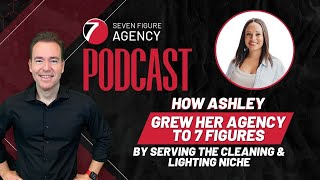
In this Agency Podcast episode, host Joshua Nelson interviews Ashley Bissing, founder of One Love Social, a digital‑marketing agency that serves trash‑can cleaning and holiday‑lighting businesses. Ashley shares how she stumbled into her niche during COVID, built her client base through Facebook groups, referrals, and creative free content, and later expanded with targeted Facebook ads for her own agency. She explains her tiered service packages (Good, Better, Best) and an off‑season package designed to smooth revenue for seasonal clients, detailing pricing from $850 to $2,000 per month. The conversation covers how she measures success (lead‑cost, monthly reports, Google Business Profile heat maps), her sales process (inbound leads, short discovery calls, non‑salesy close), and delivery infrastructure (Slack, ClickUp, 2‑day turnaround, virtual team of 6‑7 full‑timers). Ashley also discusses hiring via recruiters, team culture (daily Slack check‑ins, weekly Zoom, money‑based spiffs), retention tactics (regular communication, small ad tweaks, showing care), and personal productivity habits (time‑blocking in a calendar, working from anywhere). The episode ends with Ashley’s core advice: genuinely care about client results and niche passion.
Chapters
Agency Podcast, where we're interviewing highly successful digital marketing agencies from across the country. And as you can see, we are live in studio here in Miami with Ashley Bissing. Ashley, thanks so much for being here.
Oh my gosh, thank you so much for having me.
So tell us a little bit about the agency, kind of what, like, niche you serve, size of the agency, where you're at in business.
Okay, so I serve, like, the cleaning industry and lighting industry. I know it's funny, I have, you know, two niches. Right now, the size of my— is that— was that the other question? Okay, size of my business. We have about, uh, 6, 7 full-timers. And what else? Approximate, approximate MRR, um, right now we're around like $110K.
Amazing. So solid 7-figure agency. We celebrated you several months ago, um, and it's always fun to have people like yourself on to kind of share their experience, share their journey. Obviously, you're running a 7-figure agency today and that's wonderful, but you didn't start there. Take us back to like, you know, why you got into the digital marketing space and kind of your journey.
So, first of all, I've loved marketing since I was a kid. I just didn't always know that it was marketing. And I went to school, I went to school like a lot later, but I ended up getting my business degree. I minored in entrepreneurship and business law. And I got my first digital marketing job at a physical therapy company and I was in charge of all of the Facebook ads, which at that time nobody was really doing. And I fell in love. And I, at that moment, I kind of realized that I could probably do this, like what I was doing for this particular company that I was working for, I could probably do it for a lot more people. And then I was like, like probably make a lot more money too if I did that. And so that's where pretty much all started. I did end up having a couple more jobs within digital marketing and one day I just said, "You know what? This is it. I have to do this. I have to do this on my own." And I did.
Amazing. So you made the leap. Now the niche is home services, lighting companies. How did you land on that vertical? You were running Facebook ads for an organization. How did you get into the niche that you serve?
It's so, I like to say that I didn't choose the niche, unfortunately it chose me. And it was during COVID So up until like COVID, I was kind of a generalist type of agency. I was taking any local client and like, yes, I could do that. Yes, I could do that. And it was a headache. COVID hit and I was spending a lot of time outside and outside of my garage and I'm in Florida. And so there was an iguana that somebody ran over right in front of my house. It was pretty gross. And I just, I picked that iguana up and put it in a Publix shopping bag and threw it in the trash can. And I wasn't really thinking anything of it. And, you know, 2 days later when I went to take the trash out, all these flies like flew into my face because there was a dead lizard in my trash can. And so I was looking to throw away my trash can or find somebody to clean it. That's kind of how I ended up getting started because I called somebody over and hired them to clean my trash can. And it turned out that he needed more help and he needed to get more customers because he had this trash can cleaning business. And I said, well, what do you know? I do this for a living. Maybe I can help you. And you know, you do a good job, which I did. He told his friends, his friends told his friends, and then before I knew it, You know, we're the— I'm the trash can queen now. And so like it did happen. I wish I could say it was intentional, but unfortunately it wasn't. But I was intentional about getting more trash can cleaning clients because I understood what I stumbled upon.
I love that. I think it's important for all of you guys to hear. Sometimes we think we're going to choose the niche, right? And sometimes you choose the niche, you go out and you think you're going to get it, doesn't happen. Oftentimes the niche chooses you. You get a couple of opportunities, you start to find a groundswell, and it sounds like that's what happened for you.
Yes. Yeah. And we're also in lighting as well. And that's how that happened as well. I had a trash can cleaning guy who was like, "Hey, I do this lighting thing too, and could you run our ads?" And I was like, "Yeah, let's do it." And so then that catapulted, he tells all of his friends who do Christmas lights and It's, it's how it goes. At least that's how it worked for me. I, I, you know, now both of these, the niches that, um, that I'm in, they are kind of seasonal, so I wouldn't have intentionally chosen that. But maybe we'll get into it too in this. I'm working on ways to make it not seasonal and try to get it into everyone's mind. Hey, just because it's not season doesn't mean you need to stop advertising or marketing.
I love that. Try to figure out those problems, solve those problems for the niche and for the industry. So it sounds like chose kind of the niche, chose you, got a couple of clients in there. In your case, you hired somebody, they had a problem, you had a great conversation, that became the first client. If you had to reverse engineer your first 5 clients within that niche, what was it that worked? Was it all referral? Was there any other strategies that helped to kind of get to the critical mass of 5+ within the vertical?
You know, it's so— yeah, I would say it was a lot of it was referrals, but I think Facebook every day because it was Facebook groups. Um, you know, there was a group that had maybe 2,000. I don't— I think at the time I don't even know if there was 2,000. It wasn't like a huge group, but it was a, it was a group of guys that cleaned trash cans and You know, every once in a while I'd go in the group and I'd, you know, maybe give them some free advice and just not ask for anything. But I do, you know, a big part of it was Facebook groups, referrals. And yeah, I mean, I, that's actually, yeah, that's how we got our first 5 niche clients. Love it.
Love it. So look for those verticals that have Facebook groups that you can plug into You know, don't just go in there and promote yourself. I doubt that you were doing it. Talk to us about what you did in the group that got people to know who you were and kind of express some level of interest.
So my agency does Facebook ads and organic social media, which is kind of unique. And we're funny when it comes— like, if you ever look at some of the stuff we do for our clients, it's cute. It's— we do like funny memes, we have reels. And so what I started doing was I would just like put like, I'd go in the group and be like, oh my gosh, we made this like really fun post. You guys are welcome to steal it. Here's a good caption for you. And you know, people were really grateful because you know, every business owner, they're like, oh, what do I post? You know, so that's to me, I was just like, it's easy to get my name out there. It's actually going to be used. And I, I would put like a watermark of my business name on there. So I would put One Love Social, lightly, right? So it was free advertising too. It was great. So I mean, that's, that's— and I still do that to this day.
So good. So go into the group and add value. In your case, you gave creative value, like they would have probably had to pay to come up with that content. You're saying, hey, you'll go use this, right? And you've kind of tapped into the power of reciprocity. You're like, oh wow, I used that post and it made me feel good. Maybe I got some likes and some comments. Maybe I should hire her to help create this content on an ongoing basis.
Absolutely. Plant it. I'm planting seeds. So, so good.
So we've talked a little bit about how you wound up in the, in the niche. Let's talk a little bit about the program. Like, what is it that you do and how do you package it for your industry?
So we now have a Good, Better, Invest package, which I learned from you.
Excellent.
Um, and you know, obviously we want to push everybody into the middle one But we're, you know, basically most people do end up going to the middle one. And, uh, the good package, the basic package is, you know, lead gen. Everybody needs lead gen. So, you know, then the middle one is organic social media, and the best one is, I think right now it's like with Google Business Profile optimization. Um, I think we throw in a couple like of engagement campaigns and stuff in there too.
Okay, so lead generation is running Facebook ads and posting on their organic social profiles. Can you give us an idea what the charge range is for those services?
Yeah, good package starts at $850, better package $1,100, best package is $1,500. And then we do have like add-on services too. So, you know, if a client really went all in, they said, we want everything, they would be probably around like $2,000 a month.
Excellent. Awesome. Great breakdown of kind of how you package the program. And, you know, a lot of times we think there's a very specific thing we have to do, like either like we're gonna have to do Facebook or we have to do websites or we have to do SEO. Uh, it sounds like you've kind of leaned into your strengths in the area where you have expertise and crafted a custom program that matches. Um, how do you, how do you quantify the results for clients and how are you tracking that on the back end?
So with the lead gen with like Facebook ads, that's You know, we, we track it by how many leads come in and what the cost per lead is, and we report that to the clients. And we don't, we don't jump on calls with them because we're not charging them an arm and a leg, you know. So we can't really do that. But what we do is, you know, every month we, we say, hey, look, guess what, this is how many leads that have come in, this is the cost per lead, this is what we did to get you there, this is what we're going to do to make sure you stay there. Or maybe if there was a dip, hey, we're aware that there was a dip, this is what we're doing. Or maybe there's a win, like 'Look, we did this and now you're here,' just to make sure that they understand that we are working for them. So that's typically what we do, um, for like the Facebook set, the Facebook ad side. The organic side, at this moment, we really don't get results. The organic side, the clients, our clients are just, just so happy to have it done and looking good. Um, and that, that's so— honestly, the organic part is like the easiest. Yeah, you know, because it's all vanity metrics for the most part, and we're not— our clients are not influencers.
Our clients are, you know, they're home service companies with a very small following, right?
Yeah, yeah. Again, most of the time the organic stuff really is for the business owners so that they feel happy and pride when they look, you know. Um, but yeah, the organic side we don't really track. Sometimes we'll talk about, oh look, there's— look at all these new followers you, you've got. And then the Google Business Profile optimization, we started utilizing heat maps, and that is such a beautiful visual. And that, I mean, we show them like once a month, you know, hey, look, look, look, you're green here, you were red, now you're yellow. And that's really it.
Yeah, love it. So tangible, measurable results, right? She's one loves social, but she's not just, hey, I'm gonna, you know, just post on your behalf. Like, that's a big part of what she does, but She's driving tangible, measurable leads that turn into sales. She's tracking that through the conversion metrics and being able to show them that data. I think that's huge to land clients, but also to retain the clients. Amazing. So we've got an idea kind of what your program looks like. You mentioned trying to figure out how to not be seasonal. I'm sure the listeners would love to know kind of how you're approaching that, especially for those of you that are seasonal businesses.
So, I cry every year because like, you know, we'll have, you know, right now we had $135K month, which is huge. Wow. Um, but then, you know, January it's like, um, so I decided this year, you know, we're not, we're not going to play this game. Let's not let history repeat itself. And so what we're doing is we're modifying our packages a little bit, and I've just called it an off-season package.
Okay.
And because that's how my clients talk, they talk about, well, it's not on-season, off-season. Yeah, yeah. So I said, all right, well, guess what, we've got a solution for that too, because you don't want to just stop. And that's— so I think by me just saying, hey, you don't want to just want to cold turkey and like not do any advertising for like 4 or 5 months, you can't, you can't do that, right? Because your competitors aren't doing that. You need to, you know, And so I kind of position it that way. And but it is true because there is, it is, it is, there is some seasonality. So they're not going to be getting the type of— the Christmas light guys, for example, they're not going to get leads in January. Yeah, right.
It literally is on and off, like it's done.
You're just not. But, but we can keep up with the organic social, right? We can keep up with a Google Business Profile because that's— we need that to be optimized all year round. And so what we do is we kind of We do, we do lower, um, the package a little bit. So we do have them paying probably like a couple hundred dollars less than what they normally are for management, but they're— we're also saving them a lot of money on that ad budget. So they're just, you know, they're, they're very happy. So, you know, like an average client, if they stay with us off-season, they're gonna save probably like $1,500. Okay. And that's a big savings for them. And we're still making, you know, we're still doing pretty good over here. And now we've retained them and have made the lifetime value much better.
So much better, right? So be creative. If you're in an off-season business, maybe, you know, snow plowing or landscaping, a lot of these industries, they're on and they're off, like be creative on how you can stretch it out throughout the course of the year. Really, really great insights there. So you got the first handful of clients within the niche, you've grown it to over $100,000 monthly recurring, which is phenomenal. Like what's worked best to land clients and to continue to get clients in today's environment for you?
You know, like the networking part. And I've always been a big like trade show type of person. So not only do we have everything kind of working online, you know, in these Facebook groups and we're getting the referrals, but it pays dividends by going to these events because I, first of all, now we know a lot of people there. Our clients are there, they get excited to see us. So I would say like that's a big part of that. And also this year we started running Facebook ads for our agency, which is also kind of funny because that's really like our bread and butter and we never did—
Apply it to yourself, right?
We never did it for us. So what do you know, we did. And I know that's, you know, some of you agency owners out there have like different experiences with Facebook ads, but I gotta tell you, like, the quality of the leads that we had in, that we got in, were amazing. Yeah, amazing. It was like, like, especially for like the cleaning side of the business, we all of a sudden got people who are really serious about scaling their businesses. And I raised my prices because of it. I was like, wait a second, these guys are willing to pay this? What was I thinking? How would— I mean, at one point I was charging $650. Don't tell anybody, but, um, But yeah, I would say that Facebook ads were amazing and we did it for about 5 months. We brought in, gosh, I should probably have it dialed in exactly how much, but I wanna say that we brought in probably close to like $65,000, $70,000.
Wow. From your Facebook advertising. So, so good. So even in a very specialized niche, I get this question from agencies all the time, like how do I market myself other than just sending cold emails? And it doesn't sound like that's a big play for you. It's about getting into the industry, becoming known, being good enough that somebody wants to refer you and say good things about you, putting out relevant content and videos, and then running solid ads. Can you share any insights, like, not necessarily specific to your niche, but just in a micro niche like that, how do you get the targeting on point so that your advertising isn't, you know, hitting everybody, but it's hitting that specific audience?
Okay, so, with Facebook, It's— the algorithm is very similar right now to like TikTok, and it's very visual. So because I have— okay, so here's an example. I'm in trash can cleaning, so I get in a trash can. That, that stands out. So whatever micro niche you're in, think of something that represents the niche that you're in.
You know, if it's snow plowing, I, I don't know, have a shovel or something, or get on one of those snowplow machines, and that's going to catch their attention.
Yes, it's going to catch attention. And the algorithm also says, oh, okay, that's a snowplow, or that's a trash can. And it's— it will attract. And I, to be honest, my mind was blown too, because I was— when I started running these, I was like, oh my gosh, I'm gonna get all these different home service people that I don't want. And it was just not the case.
I—
it was almost, almost 100% all trash can cleaning people.
Wow.
So that would be my advice, is just make the visual what your actual niche is. Obviously, and maybe not so obvious, you should also call out the niche. So, hey, snow plowing business owners, you know, so Facebook picks up on that and they're like, okay, we're going to try to find people who are, you know, snow plowing business owners.
Yeah.
So visual, copy, all of that, you really just want to tailor it to whatever niche you're in and just say the niche. That would be like my —my advice.
So let the creative call out the audience, right? If you've got it in the text and you've got it in the visual, whether it's a video or an image, don't be you in a studio talking, go out into the market. So if I was like applying that to our agency, I would wanna get into a plumbing truck or like get underneath the water heater and that would really like really resonate with that audience. I think for two parts, right? Like first of all, it signals Facebook's algorithm but it also signals the person looking at it on their phone or on Facebook as they're browsing. Everyone else is gonna ignore it, but if you're a trash cleaning company and Ashley jumps out of a little trash can, you're like, what in the world is that? Like, oh, that's for me, right?
Yes, yeah. Love that. And you know, lookalike audiences are pretty special too, and probably most of you listening to this, you have an email list. If you've been doing the cold emails or you just have one from clients, you know, if you have at least 1,000, you should also upload that into your Facebook Ads Manager because that, I think that helped a lot too.
Love it. All right, so networking in groups, Facebook Ads. It sounds like when you say networking in groups, you're talking about industry association type of gatherings. Are they getting together? Like even in a micro niche like that, is there gatherings that are happening where you can exhibit or you can hang out?
Well, So the micro niches don't— at least the ones that, you know, that I'm in, they don't have their own association. It's not, it's not yet. Um, but they go to the bigger ones. So, you know, one that we go to is in Nashville every year, and it's like all— it kind of is like an all-home service, but we make our booth look like the people we want to attract. Okay. And I mean, you grab the—
you grab those people that are at that bigger audience and they're like, wow, everyone else is just general, but you're very specific to us. Yes, I love that. Yeah, so good. And so like, as a digital marketing agency owner watching this, you know, the tendency is I'm gonna send emails, I'm gonna run ads potentially, I'm gonna hide behind the screen. But there's massive power in getting live and in person at these events, at these conferences. And so living example of that being a big driver of your growth.
It's huge. Now, and I will say this though, you don't see it at the very beginning because when I was— It takes a while. Yes, it takes a while. And it wasn't really until year 3 of doing this that I was like, oh, this is, yeah, yeah, yeah, I should definitely keep doing this. Because what we were trying to do, and we still do this when we're at these trade shows and little masterminds, is we do try to sell. You know, it is very rare when anybody signs up. Maybe we get 2 or 3. We always have show specials and it's like, oh, womp womp, nobody took it. But you know what happens 2 weeks later, a month later, sometimes it's a year later? You know, somebody will come in to talk and I always ask, how'd you hear about us? And I'm telling you, I get a lot of people now to say, I saw you at this convention, remember when we met and that's how I know, you know, obviously pays off. So like, don't get— like, if you're doing this, don't be mad at me and say, oh, I only got a couple of clients. But just give it— this is one of those like slow burns. You just trust me on this. Like, you will— if you do it and you keep up with it, you're going to do really well.
Super powerful share, right? There's a gestation period, just like when you plant a seed into the ground and you put some water. It's not like the tree pops out and starts to bear fruit. [FOREIGN] It takes time, right? That the roots have to go down, the sun has to hit, tree has to grow up. And so a couple of takeaways on that. Yes, you should go. Yes, you want to be aggressive and plant seeds and have conversations and try and get people to appointments. But if you just go once and think that's gonna have the outcome that you want, it's not. It's like you going and then reattending the next year, going to the next one, they want people that are going to be consistent. Like, there's a lot of fly-by-nights in any vertical where it's like, oh, they got a booth and they showed up that one time and I haven't seen them again since. They have to see you 2 or 3 times live in person, and that's where it doesn't just start to come in, it really starts to multiply, I think. Oh, absolutely.
Yeah. And then, you know, some— something else happens. Your brand, you're branding yourself, you know, and you're in your agency, people recognize you. Um, you, you get this a lot, Joshua Nelson Nelson, with people want to take pictures with you. Well, guess what? I do too. They're like, oh wow, you're the trash can girl. That's me. That's awesome.
Love that. So hopefully some of my insights there on how you can develop your brand within the niche, even in a very micro niche. Get out in person, right? Run ads, put out great content, position yourself. I'd love to talk a little bit about your sales process. So one of these companies raised their hand, they say, okay, let's chat. Talk us through what a typical sales process looks like in your agency.
So ours is pretty simple and we're lucky in the sense that we're getting inbound leads. Yeah, we're not chasing anybody down. Yeah, we're not. So people who wanna, they wanna talk to us, which is wonderful. And we do like one call closes, it's a discovery call. I do have them fill out, you know, to even book the call, I gotta know they're serious. So I, you know, I ask questions like, hey, you know, what's your budget? And why do you wanna talk to me now? Like, what's the deal? What do you want your business to look like? I do, you know, and there's a couple of non-negotiables now, like with my agency, like if you wanna work with us, or you want, yeah, if you wanna work with us, we need assets, we're not using stock images. So I gotta make that clear up front. So they gotta say yes to a whole bunch of things And then once they're in, they book the call. The calls are usually 15 minutes. Okay. And yeah, I just kind of go over the program like I did. And I don't know, I don't do this on purpose, but I am not a salesperson. So I usually never say, "So do you want to sign up?" It's usually them saying, "Okay, I've heard enough. Like, what do I do? What's the next steps?" Like, every person on the phone asks, "What are the next steps?" And I go, oh, well, you know, yeah, the next steps are I could send you an onboarding email and it's gonna have everything you need, your invoice, your contract, and yeah, we'll get you going. And that's usually how it goes. Love it. We have a, you know, there are people who like to have a follow-up email, so we'll send those too.
Excellent. So imagine if you're in a case right now in your agency where you're chasing prospects down, you have to hard sell everybody, you know, you're sending 5, 6 emails after the fact and things aren't converting. Um, contrast that to Ashley's position, the way she structured her agency. She's positioned herself as the expert. Prospects come to her pre-positioned to buy, and she's got it very like, like, you tell me if this is a good fit, right? And they're like asking what the next steps are. That is a magnetic sales process versus a chase sales process. Yes. And I think that's what we all should aspire to in our agencies. So thanks for sharing that. I think that's a powerful insight. Let's talk a little bit about delivery, right? So now you've got, you know, $110,000 in monthly recurring, a bunch of clients, you know, prices ranging from $600 to $1,500 per month. How do you get the work done? What does the team look like? Let's talk a little bit about the delivery side of the equation.
Well, this is, you know, one of those things that we're always evolving, but the fulfillment's pretty tight and You know, as soon as a client says yes and they pay their first invoice, the team is like, all right, let's go. Uh, we have, you know, our video people and our creative side. They're starting to create, you know, 4 or 5 different ads. We have the social media side, you know, we already— we have a lot of these things templated as well. Nice. So it's— but it still feels very custom, right? Um, and so then the social media team gets— they prepare the first 2 weeks of social And our promise to our— most of our clients, like most, is we'll do like a 2-day turnaround. Wow. And so we have to have a very tight operation to be able to fulfill and to do that. But we have it. I mean, and that's, that's pretty much what it is. It's like we, we utilize Slack. We started this last year and it's been amazing. So we have like an onboarding specialist As soon as a new client comes in, there's a workflow that we click on and we say, okay, I fill out, I fill out all the information. This is a client's name, this is their business, this is the package, this is the promise. And then it goes straight to her and she does her thing. As soon as she onboards them, she opens up another workflow and she assigns everything to the ads manager, to the social. And it's just, it's this beautiful system that we have. And then everything is also in ClickUp. Love that.
Lots of great insights here. So first of all, you know, as you're building and scaling your agency, if you want to be able to scale to 7 figures and ultimately 7, multiple 7 figures, you have to systematize the delivery in advance, right? If you're reinventing the wheel for every client, making it up as you go, it's going to be catastrophic, right? Because in order to retain clients in today's marketplace, you have to be able to get the results, but you also have to be quick. Yes, quick to implement, quick quick to get them that first hit. Otherwise, they're starting to say, hey, I don't know if this is the right move, I don't know if I'm in the right place. And so the fact that you're within the first 2 days getting the onboard form, kicking the thing off, they're starting to see the fruits of their investment, um, is super powerful.
Yes. And I don't know why I decided it was 2 days, but one day I did. And I do pull my hair out a lot. Thank you.
Why didn't I just say a week?
Why I just, uh, but that's the promise. And I think that's what's special is that we can promise something because every— at least, you know, maybe some of you can relate, but I feel like every client of mine that comes in, they're like, well, how fast can we get started? And I'm like, 2 days, 48 hours. How does that sound?
Sounds great, right?
Yeah, everybody's happy. Meanwhile, the team's like, uh, what? Yeah, but systems systems help.
So you said this is in Slack. Is there some kind of project management system on the back end? Can you talk to us a little bit about like the infrastructure of that?
Yes. So all— most, most of the team's internal conversation is in Slack, um, and that's where we're all getting notified. But the project management system is ClickUp. Okay. We're newer to ClickUp right now, and I wish I could elaborate more. The team is very much so on ClickUp. Yeah. I need to get more in it, but I'm able to keep up and add tasks from Slack to ClickUp. And that's really the most important thing for me as the business owner. But the team is thriving on top of it, thriving with ClickUp. It is like, it's like what they needed. And I would say, you know, we, we like really dialed in our fulfillment, which has been a struggle for a long time. as soon as we adapted ClickUp. Nice. Love that.
So hopefully that relieves some pressure for you if you're running an agency and you feel like I need to know how to use ClickUp or Basecamp or all these project management systems. Typically, as the entrepreneur or the owner, we're quick starts with low follow-through. And I'm not saying that's Ashley, but maybe that's you. Me personally, at Plumbing and HVAC SEO, I was terrible with project management. And when I tried to set up the tools, they were never set up right. I never checked the right boxes. And recognizing that's not my strength, and that's probably not your strength if you're a type A, you know, looking to grow your agency person. You gotta find an operations team that is high follow-through, that loves those tools, that will nerd out on ClickUp and know how that stuff works, and make sure that the boxes are checked. Because that's the first position you wanna remove yourself from in the agency, right? Is the actual doing of the work, the managing of the team. So I'm glad you shared that. That way you don't feel like you have to know how to do it all in the agency. No.
Oh my goodness, no. And the reason that I'm able to not really be that involved in ClickUp, I hired somebody to build it out. And now this person was wonderful because she has worked with us before and she knows our business. We're unique. I don't think that we're like every agency. And the person I hired to build out our ClickUp understood that. And so it's very custom to us. And she trained the team how to use it. And, you know, I have somebody holding everybody responsible to the things in ClickUp so I can kind of just sit back and be like, okay, this is great. Everything's working.
They've got it. The system's in place. Yes. You're obviously driving the innovation on like the creative on the ads and how to modify it, but not necessarily in the day to day of doing that type of work. Would love to talk a little bit about how you think about your team. Either virtual, in-office, types of roles, accountability chart, like how do you think about the philosophy of the team that does the work?
Well, we're all virtual and we all have a great relationship. I mean, we're small, you know, and I like to say that we're small and mighty. We have weekly team meetings. Maybe it's not every week. We will, we're gonna get better with that. But I personally, like I think for, my, the lifestyle that I want, the type of entrepreneur and business owner that I am, the virtual thing really is perfect for me. I am not, I've never really been much of a corporate person, even though I was in the corporate world at one point, I left. It's very hard for me, I can't really, I don't actually, this is a, nobody knows this, I don't have a desk. Is that right? Yeah, like it's something in my head, like I was just like, I don't, I don't want a desk. I don't wanna work from a computer. I mean, I have a laptop. I'm on my laptop often, but maybe I'm on a lounge chair. Maybe I'm sitting outside. I might be on my couch. I might be at my kitchen table, but that's how I like it because I like to be informal and I don't wanna feel like I have to be somewhere. So for me, that's why virtual is better. And I think for my, you know, I've attracted those people very similar to me on my team who can work really well virtually. Now they all have desks, but—
They have desks.
They have desks, they have desks.
That's great, and as the entrepreneur in your business, you get to choose, right? You get to choose whether you want a team that comes in or whether you want a virtual team, whether you want that team in the United States or international, whether you wanna sit at a desk or have the autonomy to do it anywhere or like from your laptop. It sounds like that's what's worked for Ashley. I've seen agencies go to 7 figures in all of those different models. So you gotta find what works best and what like is natural for you that's gonna, really, you know, create your own business lifestyle, create your own dream for how you want the organization to operate. Would love to hear about kind of how you think about hiring and onboarding that virtual team and how you keep that team engaged.
So I do actually, for quite a few of my team members, especially some of the newer ones, I have used like recruiters to help. Smart. Because that's another thing, I mean, If you present me with the best options, I can interview them and I can say, this is the person, but to actually get them and to do the thing, the JD on Indeed or wherever, that is also something I used to be very embarrassed and I felt ashamed that I just, I mean, I couldn't get myself to do it. But as a virtual agency, we do have a little bit more disposable, income coming in, right? So I, it's okay for me to hire a recruiter. Absolutely. To get, you know, to get me 90% of what I need, and then I take it from there and, you know, actually make the hires. Love that.
So lean on people that specialize in recruitment of these types of roles. Talk to me about team culture. You said that you guys all work together really well. You've got weekly meetings. What are some of the things you do in order to create a culture people are engaged, they're bought in, and they're generating the outcomes?
Well, in Slack, we have a chat that everybody checks into every morning, and it's just like a simple, hey, good morning, how's it going? We talk about personal wins. What else do we do? We have a culture, I promise. I'm just trying to think what else.
Gosh, Josh. Weekly meetings. You guys get on Zoom?
We do Zooms. You know what helped? My team is very motivated by money, so we, you know, I'll do spiffs sometimes. So I really wanted to hit 100% all client satisfaction, and we were so close, so I said, all right, so I'll do this every once in a while. I'm like, $500 for every team member if this, this, this happens by next week, and if it doesn't Okay, but you won't get $500. And so I try to keep it fun doing that with them. They all have like a really good relationship with each other too. Like I see them chatting in the groups and teasing each other. And when I do these funny fun spiffs, like Jeff will message Mia, Mia, don't mess up, you better get on that account today. And it's just, it's really cute. It just kind of works. And so I would say like bonuses and like little spiffs like that help the team when it's virtual. Having fun, engaging questions when you're doing the meeting. So we always do a personal win and we also do a business win, a professional win, and we talk about it every week.
Love it. So, so good. So let's shift gears. We've talked about how you land clients, we've talked about what the program looks like and how you deliver results. Let's talk about retention, right? And then in your niche, it's, you know, that's a tough niche to retain in. What are some of the things you do to create the ideally that retention level so that you continue to grow?
Well, I think it does come down to like making sure that they're getting stats, they're getting, you know, we're telling them everything that we're doing. So we'll, we purposely sometimes we'll just make small adjustments, even, even just the smallest adjustment on an ad. What's great is the owner gets a notification that, oh, an ad's been published. Because sometimes, you know, I think they feel like, oh, what are they really doing? And I think that's very important to make sure that you're going, you know, that's what we do. We go into the accounts at least 2 to 3 times a month, sometimes more, but really to make sure that the business owner knows. And so if you were to ask any of our clients, does One Love Social Care, do you think that they're doing what, you know, they said? Oh yes. Oh, and they're ecstatic. So I think little things like that have helped. Now that we have those off-season packages, that helps. They're like, wow, they really care. They care so much that they made a special package. They're thinking about me, and I know that that's working.
I love that. And she said two things there. Number one is results, right? All other things being equal, if you're not getting results for the client and they don't perceive those results, you're gonna, you're gonna get churned. But the other thing is, is care. The number one reason a client leaves is perceived indifference. And so, you know, caring, showing that you care, bringing them up to speed, and, you know, showing that will make the big difference in whether they stick around with you long term or whether they churn out a couple months in.
And churn does, you know what I mean, it does happen. But I would, I sometimes I let it, I'll purposely like just I don't like to fight anybody. So if they don't want to stay, I go, you know what, I think you should go then. And what happens a lot is they come back a couple months later, maybe it's 5 months later. I've had some come back a year later. They could look, the grass was not greener. Turns out, you know, you guys are actually the best. I always act surprised to go, really? And then they never leave again.
Love that, love that. It sounds like that's like your philosophy is more the let them come to you, let them see the value versus trying to chase them and that attracts clients into your world on the way in and on the way back in, it sounds like. Yes. So let's talk about productivity. It sounds like you like to have more of a not at the desk environment. You like the flexibility to travel and kind of work wherever you want. How do you structure your day? Any thoughts you can share with the group on remaining productive in a virtual environment?
I keep everything in my calendar. So I, I may work from the pool, I may work from the beach or from the couch, but I do have everything in my calendar. So I do know, okay, well, at 10 o'clock every Monday, this is our meeting, that's done. You know, 11 o'clock, I've got to watch something that Josh is going to be producing. And, but no, so I, I have like, just, it's, it's all in my calendar. And if it's not, then then it will get done. And I have an executive assistant now that helps me a lot with this, a lot. And so she makes, you know, she makes sure everything's there. Um, and I have, you know, team— not even just like individual meetings, like maybe once or twice a week with, with people on the team. So I think, yeah, just like keeping it in the calendar has helped. And then, you know, then there's— I do work out, I make sure that I go on a midday walk. To like clear my mind and yeah.
Excellent, so time blocking, right? Especially if you're non-productive and you're kind of like all over the place, set into the calendar, follow the calendar. That's one of the keys to productivity and efficiency. It sounds like it's working really well for you. Yes. Amazing. Well, Ashley, thanks so much for sharing today. Congratulations on growing to 7 figures. I have no doubt you're gonna continue to grow and scale. Thanks for your wisdom that you've shared with the group today. If you have one piece of advice, one final piece of advice for, for our listeners, maybe an agency at $10,000 or $20,000 a month that's trying to get to the next level, uh, what would that be?
You said it earlier, I think it's care. Like, really care about whatever niche you're in. Um, so like, if you're not already super passionate about it, like, figure out a way, just figure out a way to like be really passionate about it and be passionate about the results that you get your clients. Because I, I do know that the way that we operate is a little special, but it all comes from we just care a lot. And so I would really encourage you to, to really, really care about the results that you're getting your clients. Do whatever you can because, you know, a year from now you're gonna be very happy that you did. And you could just have a very— you'll have a good reputation out there and Yeah, just do the best you can with your clients.
So good. Care, care about the results, care about the client, care about the relationship. It's going to come back to you in dividends. Um, actually, if someone wanted to connect with you further, learn more about you and your services, what would be the best way?
Probably go find me on Facebook, and in my little bio you can schedule, uh, a call with me, or you can just jump into the DMs, slide into the DMs.
Yes. Excellent. Well, thanks so much for sharing. Guys, if you got value today, be sure to reach out to Ashley, thank her for sharing, and we'll see you on a future episode of the 7 Figure Agency Podcast.
More from Joshua


From 26 Years in Business to Nearly Doubling Recurring Revenue | Sandy Waggett




How Luke Truetken Scaled His Agency to $110K MRR by Going All In on One Niche



Website Production at Scale - The AI Tool Stack for Modern Agencies with Marcel Knopf

