How Brayden Scaled to Multiple 7 Figures at 24 in the Tree Service Niche (Full Interview)
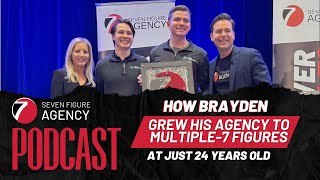
Braden Fielding built Tree Traction to $7 figures by age 24, selling direct-mail lead generation to tree-service companies instead of chasing a generalist agency model. He uses Outscraper to find prospects, Kixie for cold calls, and a two-step sales process that closes around 50% of appointments. His distributed team runs on ClickUp, Airtable, and AI automation to handle 150 calls daily per rep.
Chapters
Hello and welcome to the 7 Figure Agency Podcast, where we're interviewing highly successful digital marketing agency owners from across the country. Today I'm super excited. We have a 7-figure agency standout with us. His name is Braden Fielding. He's gonna tell his story, but really, I'm really blown away by what he's accomplished. He has grown his agency to multiple 7 figures at 24 while working full-time in school, like being in school full-time at BYU, If you're excited for this, hit the like button, type Braydon with a Y in the comments if you're excited. Braydon, thanks so much for being here, man.
Josh, thanks so much for having me. I'm stoked.
So everybody wants to know, like, how do you go from, you know, like startup in college to multiple seven figures? I tried and failed. My first agency I tried to build in college was a total fail and it took me, you know, another decade before I started to get any type of traction. Traction. So tell us, I guess, tell us a little bit about your background, why you decided to get into the agency game in the first place.
Yeah, well, the agency wasn't my first business. I think that everyone's first business probably does crash and burn. My first business, actually, I tried starting an agency a couple years actually before I started this one with the partner. The partner was wrong and I ended up getting like lawyers and accountants involved to basically audited everything and we had legal issues and we broke it before we could even make hardly any money. And so that was my first experience in the agency.
How old must you have been there? How old were you when that business started and failed?
Probably 21. I was just finishing my freshman year at BYU and I had a friend that we did some, he kind of taught me some advertising at the beginning. He focused on SEO and stuff. I was doing video production at the time. I had a video production company. Doing some projects and stuff. And so we're like, hey, let's do this together. You'll do kind of the web and SEO side of things. I'll do the content side of things. And we're like, let's just start a business. There's a lot of hard questions you have to ask when it comes to business that we didn't understand. And honestly, we were babies. I'm still a baby. And yeah, it did not go well.
So that was one little takeaway. Start early, right? Start early, fail early, and hopefully you figure things out. All right, so first foray didn't work out, end up in legal battles.
Yeah. And just like going back to what you just said there, I think that's so important that people like wait till they have like the perfect, the perfect offer, the perfect business, the perfect model. I wanna do it perfectly how that guy did it, whatever it is. And I'm such a big proponent of like failing early. I failed so many times that I think people are like, oh my gosh, you just magically stumbled upon a multi-seven-figure company. And that's, that's not the case. I've been running a company since I was 15 and selling pictures of people's houses back to them on an iPad. Like, I don't really know how like that was hap— that happened, or it was probably kind of creepy. Um, but I was trying to hustle, you know, back then. But, uh, yeah, back in college, I, uh, freshman year tried to start an agency. It failed. And so I thought, okay, well, and this partner told me that I was not fit to be a business owner. He's like, you don't, you don't understand the big picture of things. And this is like, you can't do this. And I was like, well, screw you. I'm gonna figure this out. And so, uh, that summer I started a film production company. And ended up working my way into working with like AT&T as a client. And I faked it till I made it because I should not have gotten that client if they're watching this. But you know, like I was able to pitch myself really well, I was able to solve real business problems, which is what advertising and business really is, is helping someone get from point A to point B. And I understood what that journey was and they, I knew they needed to hire and knew they were struggling to hire. And so I'm like, let's use video production to do that. Let's specifically run some Facebook ads, right? Cause I knew that video in and of itself doesn't do anything. And so that's where I got into the advertising game. Um, and I basically promised them we can decrease your, your cost per hire. And I guaranteed that we'd be able to decrease it through Facebook ads. Otherwise I'd keep working until I did. And shockingly, we started working with them and it shot up and it was way more expensive than what they were doing. And shockingly, I wasn't able to beat their marketing team at the very beginning, but I kept working and I had a year to do it. I signed a year contract with them. And after about 5 months, finally that was able to dip down and I had it about half what it was by the end of the year. So, um, yeah, started with, with, uh, AT&T over there. Eventually realized that I really liked Facebook advertising. Um, love content creation, realized that there's a lot of strategy played into real business results. Um, and so I kind of switched from video production to the marketing side of things too. Um, and then that got me into a lot of like the remarketing. So text message marketing, email marketing, kind of building that funnel all the way down. 'cause I didn't like trusting them to handle the leads. So then look, let's design an entire system so you don't have to worry about your advertising. And basically took what I learned with AT&T and started doing that for other companies as well and learned a ton during the process. And eventually was super burnt out. I was in college, we had maybe 5 clients, we were doing maybe $15,000 a month in MRR, and I was doing everything. I was doing content production, I was doing, Facebook ads, we were doing website redesigns, we were doing text message marketing, we were doing everything for like 5 or 6 different types of clients. Um, and it was unsustainable. And I would realize, okay, I need to hire somebody to help me do this, but I didn't know how to hire someone because I had 5 people doing 5 different things. And like, I was like a master of all, like I kind of figured everything out, but hiring for that was super difficult. So I realized like we need to niche down into one, one specific thing. And that's where Tree Traction started.
So you kind of, you had this video production thing that was helping with recruitment, you got into advertising, then you started Tree Traction, which obviously focuses on tree services with a unique set of services, which we'll talk about here in a minute. Currently, lay of the land, like what's the approximate MRR, what's the size of the team, and then we'll get into the kind of the journey.
Yeah, so right now we're at $171,000 in monthly recurring revenue. With about 62 clients across the country.
So good, so good. So, um, multiple 7 figures, which is phenomenal. I know you've been pushing towards that, that Titan status. You're like, okay, let's, let's, let's go get it. Um, what— why trees, right? Why tree service companies? Like, what was the foray into that? I know you, like, you recognized it's unscalable to be a general agency, but you know, one of the hard things almost agencies face is, what vertical should I focus on?
Yeah, and honestly, I don't think I did a big, like, market analysis to figure that out. Um, we just happened to have one tree service client that we were working with that was doing pretty well, and so we started working more on that, on that client, and realized, hey, we just spent, I mean, 8 months building out all these different systems and automations and processes and Facebook ads and things for this client, and I realized, wait a second, we could duplicate what we just did for them in a day where it took us 8 months to get to this point. And so we can provide a better experience for a client faster, which again, clients want, um, without all the work to try and figure it out, right? And that's what clients come to you for, right? Is they want someone that's an expert in the field and has already done it. And a lot of generalist agencies are willing to figure it out. They're going to tell you all the things and they understand general advertising principles, but they don't understand that market. Anyways, and so we just basically said, okay, I can't keep doing this. And we were, I mean, we were at $15K a month, so like $180,000-ish a year. Like it was not anything crazy. I'm like, this is not gonna be enough to support my lifestyle that I'm eventually gonna want. And so we have to change something. So I'm like, okay, let's just try and duplicate it. And so I basically went on and I came into the office one day. I had one employee at the time who was helping me out, who's also a college student. We were both working kind of part-time in between classes. And I said, okay, we're going to switch completely to tree service. And he was like, okay. And I was like, I'm going to give us 6 months. We got enough like leeway from AT&T to pay our salaries for 6 months. That's about all the savings I've got. If for some reason we fail, we're going to beg our clients to take us back. But I'm going to go all in on this. And I looked in the tree service industry. Nothing crazy was happening. I mean, it's a home service industry. Whereas with AT&T, there's huge brands that want to compete for that business. Um, with these small home service companies, I mean, it was just the basics that were being done, right? And there weren't a lot of people that were specializing in tree service at the time. And so I'm like, let's, let's send it.
So good. So you kind of like, you had that one client that you got great results for. I think like, if you're in that early phase of trying to choose your niche, this is a big takeaway, right? Try and find where you already have some experience, where you already have proven results. And then operationalize that, right? It gives you the opportunity to go super deep, deeper than you would for one client, 'cause you know you could probably replicate it for 5, 10, 15, 20, 100 clients ideally down the path, which sounds like exactly what Braydon did. Talk to us about, first of all, how you got that first one, like that first tree service client.
Yeah, so the very first one that we got was actually a friend of my parents, and they said, "Hey, we need a video for our website." And so while I was visiting my family back home, I brought my film gear. Again, I'm in college, my family lives in Texas. And so I filmed a video for them and then pitched them on advertising later. I said, hey, we already filmed this thing, we could post it on Facebook, get you some traction. And that's kind of what started that. Um, so completely referral-based. And then after that, um, when I decided to go all in on tree service, the first thing that I did was actually I picked up the phone and I started calling tree service companies. And I used the pitch of, hey, I'm a BYU student, I'm studying marketing. Do you have like 5 minutes? I could just ask you questions about your marketing. And people were like, and because especially it was local, I was calling local people, they're like, oh, we've all heard of BYU. We all know what that is. For sure, ask me questions. Right? And they get to feel high and mighty about themselves and they get to feel good. And I started asking all these questions and I started to realize where the pain points were and what the language was that they spoke. And I started writing things down. I probably took like, probably made like 80 calls, probably talked to 80 different business owners, um, and started to write down these different pain points that they had about following up with leads or about outbound. And a lot of them were doing just referral and word-of-mouth stuff, but it wasn't able to scale them up. Um, and so eventually I started pitching them at the end and said, hey, if, if I could solve— again, I probably can't, but let's say hypothetically I could solve these problems for you— would you be down to pay me for that? And there were like 7 or 8 people that said yes. And 2 weeks later, by the time that I had like a company and kind of something put together to offer them, um, I went back to those 8 people and I think 1 or 2 of them actually paid me. And I was like, okay, let's, let's start this up. And it was during that time actually that I was selling those 2 people that I was in my bedroom, um, my dorm room at BYU, um, in a shared bedroom. I mean, I was close enough that I could like reach out and touch my roommate sleeping. Like, we, we lived so close together. And so I'm literally on a sales call and he's waking up in the bed next to me. I'm in the bedroom taking a sales call and he's listening to my sales skills. And he had done door-to-door sales. And so after the meeting was over, he's like, hey, you didn't pitch this right, and I think you could improve here, this better. And, um, he started giving all these sales tips and I was like, well, do you want to do it? And he's like, okay. I mean, it's like during the school year, I'm not doing door-to-door right now. So he kind of started selling for me. I offered to give him commission and that's how we started doing sales after that was actually calling companies and selling them directly.
So good. I love what you said. I just wanna come back to, you know, the definition of entrepreneurship is solving problems for profit, right? And instead of trying to puff yourself up and be like, "Hey, I've got an agency, I'm gonna sell you my thing," you came in hat in hand, you know, and just be authentic. Some people when they're young, they don't have experience, they don't have case studies, they're like, "Oh, I'm gonna make it up," or, "I'm gonna try and like trick people into thinking I know what I'm doing." He just came hat in hand and said, "Look, I'm a BYU student. I'd like to learn about your business. You mind if I ask you some questions?" And that totally disarmed the prospects, right? They were like, "Sure, yeah, absolutely. I'm happy to help out a student. Like, you know, ask me the questions." And he asked questions that identified problems, that identified weaknesses, and that turned into opportunity, which I think is just a beautiful way to approach it, especially when you're young and you don't have a lot of expertise.
Yeah. I wasn't trying to sell them like at the beginning, right? I was just trying to better understand. Which I think people can tell when you're genuine. And if you don't know how to do something at the beginning, you wanna start an agency, use that opportunity to learn, right? Especially people in your industry, they probably have done some marketing. I talked to some big companies and they told me exactly what they do for their marketing and they told me what works. And so instead of trying to narrow down, you know, 500 different ways to advertise, I started to learn the different things that were already working in the industry.
Love it. So you landed that one first client from a referral, you made a bunch of calls, you asked a bunch of questions, couple of them express some level of interest. Talk to us a little bit about what the, what the offering, like what is it that you do for these tree service companies today?
Yeah, and that's changed over time. So initially when I was calling these tree service companies, I said, hey, we'll run Facebook ads for you. In fact, if you just cover the ad cost, we'll do the first month free. And so I think we were charging $1,500 in ad spend for the first month. Our services were free. And so we were just basically using as a learning opportunity to try and figure out, hey, can we build something that's replicatable? Um, over the first couple, couple months we were doing that. Um, and so we probably sold maybe 10 companies on Facebook ads over the first 4 months. I mean, it, it, it's not like it like shot off, right? Like it was slow, slow moving. There were a lot of problems, systems problems, hiring. I mean, there was, there was all sorts of issues. Um, but then eventually we We were running these Facebook ads and it was in like February of 2023 and we realized this is not working well. And what we didn't realize is that tree service is extremely seasonal. And so we are banging our heads against the wall in February. Our clients are pissed. They're not getting the leads and the results that they want. And so all of a sudden I was like, okay, well we gotta change something big, right? We're changing Facebook ad copy. We're changing hooks. We're changing like the small things. I'm like, look, we need to like get 'em double the results that they're seeing right now. Not just like 10 or 15% better. And so again, I picked up the phone and started calling tree service companies. I'm like, what are you doing to get leads during this time? And a couple of the big ones, they didn't really wanna talk about it. They're like, hey, like we actually use mail. And I'm like, mail? Like I'm 24 years old. I haven't sent something in the mail like ever. Like, what do you mean? Like you're sending postcards? And they're like, oh yeah, we sometimes we send postcards, sometimes we send letters. Or like, I think I talked to one of them who's like, hey, we send a letter out. And I'm like, okay. He's like, and we make more money on that than we do anything else. We send out thousands and thousands and thousands of these letters. And so I'm like, huh, interesting. Do you want to send me like a picture of what that letter looks like? And they wouldn't. And so I started contacting printers and I found a printer who did letters for HRE Service Company and they sent me the letter and I was like, whoa, this is super cool. Um, can we put a spin on that? And so, um, we basically took the kind of the letter postcard design that they had and, uh, tried to basically disarm people by making it not seem like advertising. And so I think the secret to our current letter design is it doesn't feel like someone is marketing to you. So everything I learned in Facebook ads where it needs to be catchy, it needs to be colorful, it needs to be flashy, like we went the opposite and made it plain and boring. And we don't let people put color like in their logos, like And people want it to look nice and fancy and stuff, but we made it super basic and super personal, um, and started sending out these direct letters to homeowners in their areas. And we got better results in the first 3 months— or sorry, in the first month than the past 3 months combined, uh, for some of our clients. And we're like, okay, this is amazing. And I'm a very impulsive person. I'm trying to work on that right now. Maybe it's what's gotten me so, uh, so far to this point.
Like, call it like you take fast action, right? Not just impulsive, like, like you take fast.
Yeah, let's That's a better way to put that. Fast action. I like that. My parents might say otherwise. They might say I'm impulsive, but fast action is a better way to put that. And so I literally called up like seriously every single one of our clients and I was like, hey, we're switching to mail and I promise you this will work better. And it was a hard pitch because again, we just pitched everybody on why Facebook ads are going to save their whole business. Right. And so trying to pitch them on something different was super hard. But a lot of them were willing to give us a shot. I put my own money on the line and said, hey, if it doesn't work for you, I'll refund you everything. And they're like, okay, well, let's give it a shot.
The printing and mailing cost?
Printing, mailing, everything. Yeah. Um, and so we did it. Um, we, we switched everybody over and immediately saw significantly better results. Um, also a big like operations person, and so anything that can scale easier, um, I'm big into. So like right now I'm really big into AI and looking at how we can improve our agency using AI and some of our systems and processes and things. And as I think not just like how get from $2 million to $5 million, but how can we get to like $30 million, right? Again, operations are what's in my brain. And so back then I was thinking, okay, it's way easier to send out thousands and thousands of letters than to up Facebook ad spend high enough, um, and changing out all the ad creative. And now I need video editors and content creators and all these different things. Um, I was like, this is a way better offer. So that's kind of what we switched to, um, back then. And again, we didn't see like crazy traction At the beginning.
I'm gonna interject real quick because I wanna emphasize, I love your resourcefulness, right? Trying to figure out like, this isn't working, like let me call some people, let me try and figure out what's working. Oh, they're doing mailing and oh, let me figure out like what letter would work and actually contacting printers and finding the source material. But I also think for all agency owners, young and old, can't fall in love with the method, right? If your method right now is you're an SEO agency or you're a Facebook Ads agency, don't fall in love with the method, fall in love with the result, right? And that's what Braydon has done, and this is, I think, why he's so successful. He didn't just like say, "Hey, I'm gonna do the Facebook ads regardless if it works or not." Like, I need to make sure this client who's trusting me to grow their business, that what I do works, right? And then I can provide a tangible, measurable return on investment. And if that means going old school, Dan Kennedy style mailers, and if that works, I don't care about the method. So a beautiful, beautiful illustration of that. And you started proving results. And I also like the fact that you said you put your own skin in the game. Even from the beginning when it was the Facebook ad strategy, you were willing to say, hey, look, I'm gonna front the ad spend. If it doesn't work, I'll eat that. Not at the perpetuity, but just until you proved that you were gonna be able to take a dollar and turn it into $5 or $10. I think that that's amazing. So talk to us then, as you just kind of shifted the offer to, it sounds like direct mail, Talk to us about what that looks like today.
Yeah, so right now, um, we are the direct mail people in the tree service industry. We realized that people were doing direct mail, but there was no good way to do it. There are certain websites that you can go to and you can send stuff out, but there's no good way to track it. There's no good way to see, um, where the results are coming from. And so we realized, hey, every single blast that we send out of this mail, let's put a new phone number on it. And we can now track it to the location. And we built a pretty serious data, uh, center and backend so we can understand exactly which areas are performing. Um, because otherwise it was kind of just the shotgun approach of, hey, let's send out as many letters as we can and just blanket the areas that we're hitting. And we realized, hey, if we can be smarter about where we're sending to, our lead cost is less, the homeowner quality that we're hitting is higher. Um, and that's a big thing to me. I think there's 3 things in advertising Um, that was 2, 3 things, um, in advertising that I think are super important. It's hitting the right person at the right time at the right place. And so, like, hey, if we can hit a more mature homeowner when they're outside at their mailbox, right, because they are looking at their house, they're looking at their trees, you also know that they've slowed down enough in life, um, to actually go to their mailbox. Because when you're super busy, you're not going to your mailbox, right? You're going home, you're cooking dinner, you're doing whatever. But as soon as you have time, you walk out to your mailbox you grab your mail, and then our mail goes on top of everything. It's not folded, it's not in an envelope, which means that when you're walking back home, you see that letter while you're literally outside looking at your trees. And it's curious because it's not colorful, it's not flashy. It feels like someone maybe put something in your, um, your mailbox, which is illegal. You can't actually do that, but again, it looks like that. Um, and then people call you directly because again, it's such a simple call to, uh, it's called action as well. Um, and so that's kind of what our offer looks like right now. We'll send out thousands to homeowners in your area. And we realized that it fixed a lot of the problems that our clients were having before. We were running Facebook ads and they were getting leads all over the place, right? And when you have a high enough budget and you want enough leads, you have to really broaden the scope of where you're advertising to, right? So all of a sudden you're getting a lead over here and you're getting a lead over here, and you're now driving 45 minutes in between appointments when you're paying a crew. Like, that's expensive. You're you're wasting thousands of dollars a month, um, driving. And so the fact that we could send out and get them the same amount of leads but in like a quarter of a neighborhood where they're all in the same streets was really big, especially when they could choose those areas and say, hey, look, we've already got some big projects going on over here, can we hit other neighbors over there? And then what we like to call the neighborhood effect, where they're now going around and they're saying, hey, I was at your neighbor's house next door, I sent you a letter, I'm just doing work around here. Now you get that second touchpoint of actually stopping by, and then it works extremely well for those clients.
So good. So, like, you've got this dialed-in method. We're not gonna try and take any of the secret sauce, but you've got this dialed-in method using direct mail. Have you decided, like, that's it? Like, there's no website, SEO, Facebook ads, to keep it simple? Or, like, where are you at in terms of other services that may or may not come into play?
Yeah, I think there's two different ways that, that people run agencies, and they do it very successfully, right? There's people that offer all the services, which increases retention. I know that's kind of what we teach here too, but I also know scalability also gets harder, and you have to scale your team size. Like, everything gets much harder the more that you offer, right, too. And so as of right now, we are sticking to just direct mail, and we believe that if we do it better than anybody else, um, that people will want that. And maybe they'll also want Facebook ads. And, you know, we've got other amazing agency owners that I know from this group now that will literally refer people over to for other aspects of their advertising. But we believe if we do this absolutely to the max, that people will continue to want that. I mean, there's already companies spending, I mean, tens of thousands of dollars on their mail each month and they're just shotgunning it and they don't know what's happening to it. And because we now have like an integrated supply chain and we work directly with a national printer, we get really good rates on our printing, which means that we can offer printing costs and mailing costs to our clients. For almost the same price as they'd be paying themselves to another printer. And so all of our margin is kind of built in there where we can make good margins. Um, almost— I think our margins at the end of the day, I think, are almost the same as every other agency in here doing well, um, while building in, um, the cost for the printing and the shipping and everything else. And so it's kind of a no-brainer offer for them right now. And I think there's a really large market that's already doing it themselves, already doing inefficiently, that we can take over before we start adding other stuff.
So good, love it. Simplify to multiply, get really good at the one thing. So if you're listening to this, don't feel like we're trying to say, you know, stop, stop doing digital marketing and go do print mail. Like this is what's worked for Braydon. I think really the underlying theme, the underlying message though is figure out what's gonna work, right? Double down on what's gonna generate a tangible measurable result that you can do at scale. So let's shift gears. We've talked a little bit about the niche and how you landed on it. We talked a little bit about how, what your program is and how you package it. Let's talk a little bit about what it looks like to get clients today. So you've gone from, you know, $15K to, I think when we first started talking, it was like $65K to like over $170,000 a month recurring. What's working for you right now in order to get appointments and in order to get sales?
Yeah, so right now I've got 9 team members on my team and 3 of those are sales. And so from the very beginning, even when it was 3 of us, it was me doing all client, communication, uh, one kind of intern at the time that was helping me do some of the manual processes and stuff. Um, and then it was a sales guy. And so we've continued to basically hire salespeople, um, on our team. And that's been really big for us, um, up until this day. And so I'd say a majority of our sales come from cold calling. So what we did is we actually scraped Google Maps across the entire United States. I mean, I'll like literally tell you exactly what we're doing, guys. Copy it.
Let's hear it, guys. If you're excited, type yes because this is the blueprint on how he's doing this. This is amazing.
Um, so we use a tool called Outscraper. I'm gonna tell you guys exactly how we did it. Use a tool called Outscraper to scrape all of the businesses in the United States for tree service. We then filtered those down by review counts because you don't want the people that don't have any Google reviews because we realize they suck to work with. They're really hard because they don't have the rest of their business figured out. So we narrow it down by by, uh, by reviews. And then we'd actually cold call them. And so I have a team of 2 cold callers that are constantly cold calling businesses and telling them what we do. And the cool thing is, because we're different and everyone has heard of mail, they know what their competitors are doing mail, they've tried doing mail themselves. And if you do mail yourself, you're literally printing stuff out, counting every 100 pieces, putting a rubber band around it, putting a facing slip, and like, it's the worst time-consuming process ever. Um, And so when we call and say, hey, look, we're doing a letter design, they're like, oh yeah, we've actually heard of that. Um, we get them onto a— it's basically like a two-part close. We have a setter, and then we have them, um, schedule an appointment with, um, our closer. So Tyson, the guy that initially started with me, he's the one that's been closing all of our deals. Um, and then we use follow-ups, both texts and emails, in between appointments and stuff to try and keep them warm. So that's a really big important thing too. And then just recently Um, we've been using AI text messaging actually to engage the prospects after we call them. So we actually call them, if they don't answer, we leave them a voicemail. And we've actually had like more people, um, call us back from voicemail than anything else. Because over voicemail you have like 30 seconds to basically pitch them on what you're doing, and they feel comfortable enough because they're not being pitched live, right? They're not in the middle of something, they're listening to it, and sometimes they think about that throughout the day and they can re-listen to that voicemail. What was it that he was talking about again? So voicemails actually have been huge for us, calling to voicemail. Then they text us back, they're like, hey, I got your voicemail, what's this about? Then we use an AI, um, bot that's trained on our entire business model basically to text them back, re-engage them, and then it actually will book, um, an appointment for a call, um, as well. So that's kind of the, the funnel that we use. It's working really well right now. We also started Facebook ads a couple months ago We're still getting that dialed. There's guys in the group that are so good and we are trying to learn from them. But that other system is really what's been working well for us right now.
So good. So scraped all of them, filtered by reviews, because we know if they have reviews, they've been in business, they're probably a quality organization. Or is it just based on positivity or are you looking for volume of reviews as well as one of those filters?
Yeah, so both. Really volume just shows us that they've been around for a while, even if things are a bit. I mean, we aren't granular enough to go check to see like, hey, are the recent ones positive or negative? Like, we're calling— I mean, each person on our team is calling 150 to 200 businesses a day. Um, and so when we're calling 400 businesses a day, like, we don't really have enough.
Yeah, it's not like you're drilling super down. It's like, we got this list, we know that like they're a tree service owner, they're not like completely terrible. Can you talk a little bit about like— if this is proprietary, by all means, like Nope, that's my secret sauce. But like kind of what the talk track is to get somebody from, you know, a cold call to, yeah, I'll see your demo on this letter thing.
Yeah, and 100%, I think the big thing also that I learned like in your group too is like there's room for everybody. I mean, by all means, come into my market, come into someone else's market, right? Like figure out what you're good at. Like there's space. And even if we're both doing the exact same thing, like I promise you right now we're going to be better than you are. But, um, you know, like I'm not worried, right? Like some of my— the competitors in the tree service space have been so amazing to me. And have welcomed me in. And it's like, I'm totally fine giving it all away.
Right. I love that.
So yeah. And honestly, Josh, you're the one that like taught us that, like, it's super cool. Like this, this group is really unique with how you guys do that. So basically the call is, and again, I'm not the one making the calls anymore, but, and actually I wonder if I even still remember what the pitch is now.
Just the gist. Just the basic gist.
Yeah. The gist is, hey, are you guys able to take on more clients right now? Or, you know, hey, this is Braden from Tree Traction. Hey, just want to see if you guys are able to take on more clients right now. Because in the tree service industry, they either have no clients or they have like way too many clients. We're trying to find those people in the middle. So we start by filtering them out at the very beginning. If you're booked out 3 months, probably not the right client for us, right?
No problem to solve for you, right? Let's talk to somebody else.
Exactly. And trying to sell people on something that they don't need is pointless. And I see agency owners do that all the time. Someone does not need your services, stop selling them. Because you are there to benefit that business. So we're trying to figure out that problem first. Do you have the problem of needing more work? Could you take on more work? And if so, could you take on 10 more jobs, 20 more jobs, 30 more jobs? Typically at this point they know they're— you're selling something. And so we say, okay, look, yeah, you know, here's what we offer. We're very transparent about it. Um, yes, I'm from a company, and honestly, if this doesn't benefit you, you can hang up at any point. But my goal is to make you a lot of money, and here's how we do it. And we tell them basically pretty transparently, we use a letter design, we send them out to homeowners and we know their language. And so we hit those specific problems that they're facing that I talked about earlier, right? Are you spending a lot of time driving? Are your crews inefficient? If you could add another 30% profit margin to your bottom line each month, like, would you do that, right? Because better leads and better sales that you're making will increase that bottom line. Um, so I have a lot of questions, and if that's interesting to you, I'd love to set up a phone call to chat with you. Um, and then we set that up for our closer who under— better understands the business. And so people that are setting appointments for us actually don't know a ton about what we do. They know the basics, but sometimes if you know too much when you're cold calling, then you get too deep into it. Right. And so it's almost good to like limit things a little bit. So then they genuinely have to say, you know what? I don't know the answer to that question, but Tyson could totally help you out. Is this something that you're at least willing to hop on another call to talk about? And if they're like, no, probably not the right person, but if you've hit the pain point, if that's what they're facing right now, they're gonna wanna hop on that next call if you pitch that right.
So good. Yeah, it's just like, first of all, like just emphasizing the notion that in agency sales, if there's not a problem, there's not a sale, right? And the fact that you guys lead with, let's identify if there's a problem or not, super important. And then I think this kind of goes back to the research you did at the very beginning, right? You're able to understand the industry, you're able to understand the goals, you're able to understand the pain points, And, you know, ask the right questions in the right order to lead to yes/no opportunity that leads to a sale on the other end. A couple of just like follow-up logistic questions, and thank you guys, if you got value from that, just type script, because I think that was beautiful on how he shared exactly, it's a very basic script, but most of you would try that and fail 9 times out of 10, right? How do you get the cell phone number and know that you're actually talking to the owner? That's one question. The other question is, you know, you said 400 calls a day. That's a massive metric. Uh, what platform are you using? Is there like a dialer or is there a spreadsheet? Just talk to us about those two logistics.
Yeah, so every industry is different, right? If we're calling doctors, there's a good chance I'm not going to be calling the doctor initially, right? I'm probably going to talk to the receptionist. Um, a good thing about tree service is that a lot of these guys are, are smaller to the point where there's maybe one person between you and the business owner. And I'd say 50% of the time you're calling the business owner, right? We— and we do filter it actually. So when we go through and we're actually filtering down by reviews, we actually filter out those that have too many reviews too, right? Because we know it's going to take us too long to get through to the business owner.
Yeah.
And then those better— and those bigger clients are going to come at the expos, they're going to come by referral. Typically cold calling is not gonna be the best way to get those bigger companies. And so typically we end up having the best conversations with those that are either in charge of marketing— typically like either you're the business owner and you're picking up the phone because you're exhausted and you're still managing everything yourself, or you have a receptionist that's kind of like this all-in-one admin that manages your marketing, manages like your phone calls, manages everything— and we'll talk to them about it, um, first. So that's kind of the answer to the first question. We try and get to the business owner and try and set something up. Um, typically it doesn't work as well if we have to kind of play this phone tag. And because we've played the volume game, it's like we'll just call the next company as well. So I think that's different though if you're calling, you know, I've got a friend who, um, is in the skydiving industry and there's only a couple hundred skydiving companies. And so you can't just play that shotgun approach, right? Because you're going to blow through that list today. Um, and so you have to be more specific with kind of who you're calling. We have the numbers, we have about 30,000 ish tree service companies, we estimate. And so we have the volume to be able to go through there. Um, and then your second question was, how do we manage all of those phone calls every day? And so we use a power dialer called Kixie, and that's K-I-X-I-E. Um, and we use a power dialer to be able to call— I think we call 3 people at once. It can call like 5 people at once. And basically what it does is it calls 5 different phone numbers on your list, and then the first person that picks up um, you'll connect with that person. And I think it drops the other phone calls and maybe leaves a voicemail at that point. I'm not sure. Um, but it allows you to basically talk more because a lot of times when you're calling, you spend a lot of time just ringing. And what's also crazy is you talk to clients and you're calling these businesses and you're like, oh my gosh, you're not picking up. Like, sometimes we'll call through and we'll have sets of 5 and we'll go, I don't know, I'm not a customer, right? Like, and so you know it's a problem. You're like, oh my gosh, dude, you are already losing out on revenue. Um, which we actually just recently have started helping our clients to figure out, hey, we can get you calls, but if you're not answering, if you're not saying the right things, we kind of help them with the rest of the funnel a little bit after we get them the leads, then you're not gonna be able to be closing deals. So we manage it all in Kixee. We use GoHighLevel, um, as well to do some of the texting. Um, we use software called CloseBot, which I highly recommend, um, for all of our text message marketing. We love that. We'd love to get into AI voice. We tried at one point to try and build that out. I don't think we have it dialed yet. Um, but yeah, those are our softwares, I think.
Beautiful. So we scraped it without Scraper, we loaded it into HighLevel, and Kixie— Kixie is, is cranking out these calls so that you can get the volume. And then we're using CloseBot to do some of the AI follow-up. I think you mentioned the, the AI text messaging in between appointments. Uh, beautiful technology stack, and thanks for sharing that. Um, Metrics. You're doing this at scale. Obviously, you've been really successful. You're very, you know, down to the numbers. What are some of the metrics you would shoot for, uh, on a daily, weekly, monthly basis? How many calls to how many appointments to how many closes? Like, do you monitor that data?
Yeah, so my head of marketing does, um, at this point. And I think as you scale, you have to get out of certain operations. And so I don't have that. I know our inputs, so I know that for each BDR, every person that we have calling make a minimum of 150 calls a day. And a lot of people have come from other jobs where it's like, oh, your minimum is like 80 calls a day, right? And we know like how easy it is to get to those numbers. And so, um, we set pretty, pretty aggressive KPIs. And so we can—
like, do you have like a benchmark, like how many of those should turn into a soft appointment for the closer? Or like, like, don't know that data, that's in somebody else's field?
Yeah, so I think if you make 150 calls a day Um, I think our goal is like, like 3 to 5 appointments set. Okay. So demo setup, conversations had, they're on your calendar for later, which basically means that our closer has 3 to 5 calls or appointments per day set from each individual setter.
So good. And is there a close metric that you're shooting for from demo to close?
So what's interesting, and the hard part is, is actually getting them on the phone call.
When you talk to home service business owners, they schedule and they're not there, right? Then the no-show level from a cold call, right?
Exactly. And it's hard. It's one thing if they reach out to you, which was why inbound's always better. Um, and some of our referral partners are awesome and like their show up rate is fantastic. But when you're cold calling, your show up rate is not great. Um, I think our show up rate is about, uh, 35, 40%, um, right now. But for those that actually hop on a call with us, our close rate's almost 50% right now. Like our closer is very good. Our product is very good. Our offer is very good. The way that we were able to communicate with clients is very good. So we can get them on a phone call. We're closing about 50%.
So good. Yeah, I think it's one of the hardest mechanisms that you've dialed in, like just straight up cold outreach, which you've got a great offer, you've got great scripting, you've got like the right technology and the metrics that are being monitored on an ongoing basis. Um, and that's kind of the play. It sounds like though, now as you're getting more and more clients, you're starting to get more referrals, right? Which is easy. It sounds like you're tapping into referral partners and joint ventures. Now, what are some other positioning strategies you're maybe evaluating as you grow?
Yeah, so we go to some expos, like some industry expos, a couple times a year. We find that we get a much higher quality clients, a lot larger clients, because a lot of the smaller companies don't— can't afford to go to these expos. And a lot of like these experts have big gear, so they're like hundreds of thousands of dollars in purchases that they're looking to make. And so they have the budget to go spend on something, right? And we'll have a lot of clients, you know, typically our, our average ticket price is about $3,000 a month. You know, we've got clients that we'll get from Expos that are spending $10,000, $15,000 per month. They're just much larger, right? They're like, oh yeah, we could take on another 100 jobs next month. Whereas some clients come to us and like, oh yeah, we'd love another 5 jobs next month. And it's like, we're probably not the right fit. Um, so Expos are probably the first one. Um, again, Facebook ads, we're trying to build that out because again, scalability is really important to me. And cold calling is not the most scalable. Um, actually, another cool software that we use for both sales and internal teams is called SellMeThisPen.ai. Have you used it? I have.
It's like, okay, so it's an AI-based role-playing, right?
Exactly. So it's AI-based role-play. So you can load in sales conversations, you can load in even just customer conversations. So we actually have our client success team role-play tough conversation. It's good.
Well, you're seeing that for client services.
That's an interesting application as well, because how often do you have a client that's, you know, pissed about results, right? And now you have this flustered client success manager who doesn't really know how to talk through that. And so we train all of our client success team to know how to handle those conversations too before they ever come up, um, because hopefully they're not coming up super often. Um, and so when they do, we need to make sure we handle those correctly, because that's the difference between retaining and losing, you know, uh, $36,000 a year client.
So good. So that system is called Sell Me This Pen, and it's— you train it on a script, and then you can actually have your sales team call in and have a conversation with AI, and they should be following the script, the flow, asking the right questions, and the AI will like throw curveballs at them and then grade them at the end. Like, did they ask the right questions? Did they show value? And it's a great way to train up without you personally having to spend as much time with the appointment centers. But I love the idea of also putting your account management team on there and practicing some of those tough scenarios that come up every now and then.
And the cool thing is that you set the objections, you set the scenario, you set all the things ahead of time. And so you, if you have a client success director or somebody, or you can use AI to make transcripts of your phone calls and ask it, hey, what are the questions that we've been asked and how did this person respond? And you start to build it out that way. Then you can load all of that in to use real questions and real scenarios and real things that have come up. Because in our training for our client success team, they go through and they watch different videos and different scenarios, um, of real client phone calls happening. And what's cool is once they're done watching that, we now are building out the opportunity for them to actually role play like that exact situation. Um, and like Josh said, at the end it grades you and there's a scorecard at the end that says, hey, did you ask the right Hey, did you, um, I mean, X, Y, or Z across the entire deal? And so we can visually go in and we can see our team, say, look, are they performing well, right? What are they actually scoring? Um, because training is inherently not super scalable if you're doing it one-on-one. And that's a big thing we've realized recently, especially with our business development reps, is outbound phone sales is not super scalable unless you figure out a scalable way to hire train and get kind of them rolling on that.
So good. Lots of great insights now on how you've landed the clients and how you've grown and kind of how you're gonna be continuing to grow to the next iteration of the company. Let's talk, now let's shift gears a little bit to operations. You know, there's like a lot of moving parts that you're managing here with, I think you said about a team of 10. Talk to us about operationally, like how you're getting the work done, what that looks like within your organization.
Josh, that's my favorite question. I'm such an operations person. Right now I'm sitting in like the visionary and CEO seat, but I probably step on my, my integrator's toes too much because I love operations, and that's huge for me, right? If I have a business that caps out at $1 million a year, like, I am so limited on what I can, what I can earn. And so making things efficient is super important to me. So everything starts with employee onboarding for us as far as making things efficient. We use— we just switched to a tool called ClickUp, which we are obsessed with for all of our employee onboarding. And so we have a list of all of our standard operating procedures, or SOPs, for each different department. And so as we standardize something, we create a Loom video and then use the AI from Loom to build out a step-by-step list of how to do that task or whatever it is, and then we add it to an SOP inside of ClickUp. And we use— and for those using ClickUp, we actually use tasks instead of docs because as soon as a new employee comes and starts with us, we can then just grab all of those SOPs for that department and create a new list and actually assign it to them. And they all have time frames on them so we know how long it takes to watch that video. And so we say, okay, look, you know, day 1 you're gonna do 5 hours of trainings, day 2 you're gonna do 3 hours of trainings, day 4 you're gonna X, Y, or Z, and we can build out that training plan. Where we don't have to be the ones going in there and actually training them at the beginning.
Um, that makes it so that you can see that they actually did it and that they've accomplished that training. They didn't just like, oh yeah, I watched those videos, or I was like that.
Yeah, and that's one big thing. Like, we started creating all these docs and things, but then you couldn't see when they were updated. You couldn't really see anything past that. So I think it's a fantastic way to organize everything, right? And you can watch— ClickUp will embed the, the Loom video right there inside of the task so they can watch it, they can take notes on the side. If they have questions, there's even comments and the kind of a thread they can ask questions to, to their trainers as they're going through it. And so it's a great way to train people. And then when we are hiring, we use Indeed to hire all of our team members overseas. We've got about 4 people here in the US, especially on our sales team, And then all of our ops team is actually in South Africa and we love, love, love South Africa. That's a whole nother conversation. Hello, South Africa. Yeah. And then internally we use tools like Airtable, which is a relational database tool to actually store all of our client data. 'Cause we realize internally this is not gonna work unless we have a really automated way to track all the packages. 'Cause I mean, we're, it's a whole process, right? To have a printer, print something and then ship it to the right location for our client success people to know, has the package got there, when's it supposed to get there, and to put that into a table where they can view it when they're calling clients and stuff like that. So we use Airtable for that. Um, we also use Zapier a lot to automate as much as we can. So I actually just got out of a meeting yesterday with my integrator, um, and we were talking about how there should not be any manual repetitive processes here in 6 months. So we plan on using AI to try and automate as much as we possibly can so we don't have people just doing stuff over and over because people get tired and they make mistakes, and then those mistakes hurt clients, and then those clients get pissed and they leave, and that causes churn. And so if we can make something that works every single time, that's big for us. So, um, for example, a really cool thing that we do is every single time one of our client success, um, uh, associates calls a client— and each person manages 25 to 30 clients, um, in our case— Um, we have a form inside of Airtable that they have to fill out. It has exactly which questions we want them to ask, what things we want them to ask about. And as they're talking to them on the phone in HighLevel, um, they're actually asking those specific questions. Then as soon as they're done, they drag— they download that audio clip of that call, they drop it into Airtable, and then we use Zapier to build a transcript of it and then summarize it based off of those questions. Did they ask this question? If so, what was the answer? Did they ask this question? If so, what was the answer? And actually goes back into Airtable and puts notes, objective notes from the client call into Airtable. So we know, was the client upset? Were they frustrated? What questions did they ask? And it uses quotes and stuff. Um, because when your clients— because people are tired, they're not going to ask the questions they should be. They're going to start rushing through their phone calls and they're going to write subjective notes where they're like, oh yeah, the client's happy, because I don't want my supervisor to get mad at me. And so it's a very cool way for us to be able to keep track of how everything's going. And then we can see, you know, red, yellow, green, how is every single client doing, how much of our revenue is at risk versus happy, how much of our revenue is at different stages. Yeah.
So you're taking a true transcript of the meeting and getting a sentiment analysis from AI. So they're downloading the recording, which automatically happens, let's say, on Zoom, or you said they're calling from HighLevel, so it's actually a phone call. and then that recording is dropped into Airtable for transcri— and so that it like creates the table and then Zapier grabs the file and transcribes it. And then what's the AI that you're feeding it into to get the sentiment analysis to get it fed back in to either a HighLevel or Airtable or wherever it sits next?
Yeah. So for that automation, we use ChatGPT. So OpenAI, and we do that all within Zapier. So Zapier grabs the transcript It has the prompt that we've given it. So we're very good at prompting AI to say, hey, look, you are an expert level client success director. Here's the things that you focus on. We took, we did some deep research to figure out what the best client success directors do and then kind of trained it on that. And we trained it to be very objective, to give specific quotes. So if a client said, hey, I want to target this zip code, instead of saying, oh, they like something general like AI does, it's going to give you the exact quote instead in there. And then we use code to basically parse that data. So AI spits it out into a format— sorry, I'm getting a little techie.
This is awesome. Keep going.
Spits it out into a format where we have specific headings for each question. So, um, and it spits it all out in one format, and then we use code to basically parse that and say, okay, like, after this heading Whatever's after that, grab that and put it into this field in Airtable, right? So whether it's like, um, our first question we ask is, is personally, like, how are clients doing, right? Are we asking personal questions? What do we learn about the client? Did they go on a trip? Is there something that we can connect with them personally next time, um, to ask them about, to build relationships, right? And the second one is an overall temperature check, right? So how do they feel like everything is going? Because sometimes we're looking at the numbers and we're saying, oh my gosh, they're down 30% from last time.
Right.
But in their head, they're like, oh my gosh, we're busier than we've ever been and things are good. So we kind of start by allowing them to speak. And so we basically parse these different questions and put the information back in Airtable. So every time that a client then calls a client— or sorry, one of our team members calls a client— they can look at the past couple calls and see like, okay, were they happy? Were they whatever?
So good. Yeah, this would be an amazing ninja hack, by the way, for our intensive, if you're willing to kind of unpack the pieces of that puzzle, because I know that's a problem a lot of agencies at scale are looking to solve for. So that's amazing, super cool share. So we've talked a little bit about, you know, how you land clients, how you've operationalized the operation. Let's talk a little bit about scale. Like, you know, what are the rhythms and things you put in place to check in with the team, to keep people engaged? And I know you've got big ambitions for this. You said $30 million. How are you thinking about scaling the organization?
Yeah, um, so I'm learning a lot about management. You know, as an entrepreneur where you're doing everything, it is hard to get to the point where you're now willing to trust somebody else to do things. And so we've realized that it's super important, um, for as much to be automated as possible, especially the essential tasks. So client check-ins, orders going out on time, etc. And then we've built systems around that to flag us if that's not happening. So for example, every single client, um, we can see in a dashboard on Airtable, we can see a list of all of those, and we can see the last time that they had a check-in. And basically we pull that number and it's automatic. It basically shows us the amount of days since that check-in. And we have a standard where we have to call every client at least every 14 days. And Client Success, uh, Associates can actually change that if they say, okay, actually we need to check in every 7 days or every 4 days, right, if they're unhappy. Um, but at minimum every 14 days. Um, so basically the client success associates have a dashboard that shows them any client that they haven't checked in with like 10 to 14 days, right? Um, so they have a list every day. They come in, they look at their dashboard, it shows them who they need to check in with. And then as management, we can see how many check-ins are overdue. And that's actually one of our EOS scorecard metrics is how many, um, check-ins are overdue. And then after, at the end of every single call, for them to finish filling out that form, they have to mark the sentiment. So are they happy, at risk, or unhappy? And at the end of that check-in, basically every single client will pull the most recent check-in and pull the most recent sentiment to say, is this client happy or unhappy? And so if a client said something and they're like, hey, I'm frustrated because the mailer used misspelled my name, blah, blah, blah, and they're at risk, That now shows up on our dashboard and we can see a list as management to say, okay, look, we've got $171,000 worth of clients, 130,000 of those are happy, 100x or however many thousands, uh, are at risk, etc. We can see a list of those people and then we'll discuss those people as well. I think as we scale, that'll be more important because if I'm just trusting my people to make calls and I don't know if they're actually doing it or not, that's what's going to fall apart first. as you scale. And if I'm not checking, like, what are they actually saying? Are they actually filling out each one of these pieces? Um, that's what'll break. And creating checks and balances to say, look, if they don't do that, is it going to flag something, right? Is it only going to count the client check-in if they fill out every single field, right? That's how you scale things, because I don't want to spend time, and I don't want my managers to spend time having to check in on those things. And when your team members know that they're accountable that's when they also do the best work.
So good, man. I love the way that you think. I love that you're willing to get into the weeds. Sometimes we kind of get high-level, general, "Yeah, I grew my agency, this is what we did," but like you're really willing to kind of share what you did, how you did it, how you're thinking about AI, how you're thinking about operations. Two last questions and then we're gonna wrap up. And Brendan, you're brilliant, man. This has been an amazing interview. I see exactly why you've gone to multiple seven figures Well, I have no doubt you're gonna go to 8 figures and beyond in the next couple of years. First question would be for the young entrepreneur, like, and we've had agencies, maybe, you know, your age, maybe a little bit younger, and they're like, you know, people don't wanna do business 'cause I'm too young. You know, how did you, it sounds like you, that has not been an issue for you at all. Like, what would you say to that agency that's saying, oh, I'm too young, I can't grow the business?
Yeah, I mean, so I hit, 7 figures at 23. Um, I am now 24. We just hit multi-7 figures a couple months ago. So even within a couple months, we're able to grow that. Um, I've been running companies kind of before that too, and I think confidence is the most important thing, right? If you're lacking confidence because you're young, then your prospect's gonna feel that as well, right? And a lot of people don't know how old I am, right? So a lot of people, like, are not gonna know how old you are. They're gonna see that you're young, but they're gonna see that you're Right. And again, people don't care how old you are. They want to know, can you solve my problems? Like, that's the biggest thing. If you can speak that language, no one cares what you are selling, right? People always focus on what they're selling. You got to understand the prospect and understand their specific problem first to be able to sell them something. It's why I was able to get a $75,000 contract as a 21-year-old in college, right? Um, because I understood that problem, and I was able to offer the perfect solution that, that ticks all their boxes. So I think that's really important, um, and just willing to put in the work. I mean, I had spent— there were a lot of days that I'd be at the office at 2 AM, um, working, or in my bedroom working in between classes, working. Um, I feel bad because my entire college experience was like me in classes answering Slack messages to clients or the team members or whatever. And there's maybe some client classes that I got a lot out of and some that I— most that I didn't. But it's just doing it. Start building, start learning. I learn as much as I possibly can.
Right?
I think education is so important. And so I'd listen to podcasts in the morning from other entrepreneurs. I'd join groups. So actually I joined Joshua Nelson's group in October. And again, we went from $65,000 to $171,000 in 8 months. Um, use that as a soundbite, Josh. Um, but before that, I joined a group of filmmakers who were selling their projects. And never in a million years would I have enough confidence to sell a $75,000 project except that I was surrounded by other people that were also doing that. And so I'd say educate yourself and join a mastermind, or join a group of people that are doing exactly what you're doing. Because to expect to go to a marketing class in college and learn how to run an agency, like that's so different, right? Um, and so it's so important to learn exactly from the people that you want to emulate, right? Um, and do exactly what they're doing right now, right? Because a lot of what you're learning even in school and stuff is outdated. And again, I finished my degree, so I'm not telling you to drop out, but I'm not not wanting you to drop out. Um, but yeah, education is important.
So good, man. So many great insights and takeaways there around like focusing on solving the problem, focus on delivering oversized results, become a student of the game, not just books on, on whatever, but actually student of the game, and then get around people that have accomplished what you're looking to accomplish. That changes your mindset in terms of what you think is possible. Uh, final question, and this is kind of a bonus question because I'm curious, um, AI is shifting the game. Things have changed. How are you thinking about AI? I know you've talked about some of the tools, but, and how it's going to disrupt and/or, you know, accelerate your agency over the next 3 to 5 years?
Yeah, so especially when you're an agency owner and you're younger and you're aware of everything that's going on with AI, it seems like this big thing that's happening right now. Um, but a lot of people who are older and that have spending money right now are scared of AI, right? They don't necessarily love those buzzwords, and everyone's focusing on, um, you know, getting ranked on, you know, for artificial intelligence, stuff like that. But a majority of a lot of the older homeowners, especially in my industry, are, are scared of, of AI. Um, and so I think that our industry will actually pick up as people trust less of what they see online. Sometimes I think handwritten letters might be even better, honestly, because we're relating back to those people. Now, I don't think this is an industry that I'm going to run for the next 100 years because I'm sure my generation is not going to care about letters. And a lot of people I talk to are like, I don't think that would work, especially younger business owners are like, no, no one, no one reads the mail anymore. It's like, yeah, you're not your target customer. Um, so I think that part of AI I think will help us. I think also internally, I think you can work so much faster. Um, I think we're probably the leanest agency, uh, doing $2 million a year at 9 people.
That's really impressive. Yeah.
Um, and we plan on also replacing some of what we're doing manually right now with AI as well. And so I think we could even get that down and scale that, um, up instead. And so I think just forcing your team also to use AI— we, we talked about this yesterday on our team meeting— is how are you using AI to improve your processes? And if you had to do 3 times the amount of work, what would you have to use AI to do, right? And making sure that my team understands some of those pieces, because people don't naturally— I mean, you think as a business owner, like, you're going to lean into AI, you're going to use all the new tools, but your team probably isn't, right? They're used to doing things manually. They're used to things the way that they're doing it. And people don't like change. I know as business owners we love change, um, but most people don't. And so kind of forcing them, pushing them into that, I think is, is important because— and I've told my team, if you don't learn how to use AI, not only will you not have a job here, but you won't have a job anywhere. Like, most likely your skill set will be taken. And so I want to help you ride that wave so we go up together. So I will pay for the AI, I'll pay for the training, I'll pay for whatever, 'cause I want us to grow together. But you have to install just a little bit of fear because like if you don't ride that, like other things, other people, other teams will, so.
So good. Braydon, congratulations on your growth. Thank you so much for your abundance mindset, willing to come on here and share exactly how you've grown your agency and how you've made it happen. You've made so many great decisions, you've taken so much massive action. If somebody wanted to connect with you further and kind of get to know you, further, what would be the best channel?
Yeah, LinkedIn or Facebook. Um, Braden Fielding on both, probably the best way.
Fantastic. And if you're a tree service company and/or work in tree services, great person to, to connect with and/or refer business to. Um, guys, I hope you got value from today's session. A lot of great comments coming in, people saying so great, thank you so much for sharing. Be sure to reach out to Braden and just thank him because You know, this is just an abundance play for him. He's sharing what's working. Be sure to like thank him for his willingness to come on and share. Um, if you got value, please like this wherever you happen to be watching. If you're watching on YouTube or you're watching maybe on Facebook or listening on one of the podcast channels, like and drop a review, right? The best thing you can do is write a review about this podcast so that we can get the word out to others. Uh, and we're gonna, we're gonna wrap it up there. If you have follow-up questions drop them in the, in the comments, and I'll be— I'll do my best to kind of float it past Brayden to get his feedback. So that's all for today. Thank everyone for, for listening. Thanks for watching, and, uh, we'll talk to everybody again real soon.
More from Joshua


From 26 Years in Business to Nearly Doubling Recurring Revenue | Sandy Waggett




How Luke Truetken Scaled His Agency to $110K MRR by Going All In on One Niche



Website Production at Scale - The AI Tool Stack for Modern Agencies with Marcel Knopf

