How Hawke Media Scaled to $600M Per Year - Erik Huberman on Ambition, Team and AI
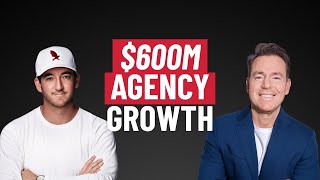
In this episode of the 7 Figure Agency Podcast, host Speaker A interviews Erik Huberman, founder and CEO of Hawke Media, about how the agency grew to over $600 million in gross revenue with a 220‑person team. Huberman explains Hawke’s business model as an outsourced, fractional CMO that assembles custom marketing teams for clients across the full funnel – from paid media to branding, influencer, affiliate, and web development. He attributes the company’s rapid growth to relentless ambition, a clear financial framework (30 % growth, 35 % service delivery, 15 % overhead, ~20 % EBITDA), and a culture that rewards high‑commitment, high‑ambition talent. The conversation covers the evolution from a fully remote operation to a centralized 12,000 sq ft office in Santa Monica, the rebuilt leadership team, and the role of in‑office collaboration in boosting productivity. Huberman details the agency’s go‑to‑market process: free audits, data‑driven AI analysis (Hawk AI), consultative planning, and a focus on trust‑building through case studies and third‑party validation. He discusses acquisition strategy (targeting $1‑$5 M revenue agencies with ambitious founders), partnership philosophy (avoiding rev‑share models in favor of equity or fee‑based deals), and the strategic use of AI to surface performance benchmarks across a proprietary data set of thousands of client accounts. Throughout, Huberman critiques common agency myths (service businesses aren’t scalable, rev‑share is a trap), emphasizes the importance of culture, and offers advice for mid‑size agencies on building world‑class teams, maintaining high integrity, and scaling sustainably.
Chapters
All right, hello and welcome to the 7 Figure Agency Podcast where we're interviewing highly successful digital marketing agencies from across the country. And today we have the GOAT, literally, I think, uh, the one of the largest, if not the largest, and definitely the fastest growing digital marketing agency in existence. Uh, today we're joined by Eric Huberman of Hawk Media. Eric, man, thanks so much for being here.
Yeah, thank you for having me.
Good. So, um, if you've got questions while we go, not every day you get to hear from somebody at this level. Drop them into the chat. We're live on YouTube, we're live here, um, in the studio. So, um, Eric, before we get in, like, just tell us the lay of the land at Hawk Media. Like, like, tell us about the agency, this— the size, the scope, kind of big picture.
Uh, I mean, we're like 220 people, uh, gross revenue last year I think was $621 million. Running marketing for about 600 brands actively right now. Over the past 12 years, it's been over 6,000. Running a venture fund as well, invested in over 100 companies, mostly marketing technology and e-commerce tech. Run our own AI software called Hawk AI that's growing and building. And yeah, a bunch of other things. Owner in LA women's soccer team Angel City and a bunch of other fun stuff.
So great successful agency, highly invested, but also live a great life. Talk to us about like what the deliverables are. Like you're not just a standard digital marketing agency, but like talk to us about what you guys deliver to your client base.
So we tout ourselves as your outsourced CMO and marketing team. So we go in, identify where the holes are in a marketing org in a company, and then spin up exactly what the needs are when they're needed and ebb and flows and needs change. Could be a CMO, could be a Meta marketer, a Google marketer, a web designer, a, I'm trying to think what else. Influencer marketer, affiliate marketer. We do traditional advertising, we do branding, we do personal branding. We— it's really super— we— it's soup to nuts at this point.
Got it. So you're like kind of fractional CMO, chief marketing officer, come in and figure out what you need, bring the team together to deploy those services on behalf of the clients. I know from the other interviews I've seen, it's like a lot of it is e-commerce-centric, but it sounds like also influencers and, and, you know, big name brands as well. Like, would you put it into any specific container? Is it like any business that's looking to grow and scale?
Any business looking to grow and scale. I mean, the real mission of Hawk is there's 90,000 marketing agencies in the US, and I would say that about 99% of them are full of shit. And so the few that are good tend to go upmarket and want to work with only the Fortune 2000. And I just find that what's crazy to me is that there's not a name brand go-to agency to serve the lower and middle market. And so that's what I'm trying to create.
Super cool. So, kind of counterintuitive to like, obviously, at $600 million, you haven't gone niche, you've gone, you know, let's serve the entire market, let's serve the entire spectrum. What would you say is the key driver of your accelerated growth if you had to kind of break it down over the last couple of years?
Ambition. And I mean that sincerely. I actually, one of the best pieces of advice that I got from the investing side was to invest in the ambition of a founder. I think businesses rise to the ambition of the leadership. You know, if they're comfortable, it stops growing. If they're not, they're going to keep pushing and pushing and pushing. And so ambition has to come with reality, has to come with strategy. It's not just ambition itself. But I think this company would be a lot smaller if I didn't want it to be bigger. Like, it is that simple. And so I push, I hire, I push our team. You know, if we have, you know, if last year we were tracking for $400 million, a lot of people would have been happy. And I was like, no, no, no, we got to break $600K. It's like that's part of it is you have to lean in that way.
So, like you didn't set out to build a 7-figure agency or an 8-figure agency. It was like you want a billion-dollar agency and that's when you see ambition, it's like massive impact, not just revenue targets.
Yeah, people used to ask me like, "What's the goal, to sell?" I'm like, "No, it's to dominate the marketing world." And I used to say it as a joke and then I actually was like, "No, that's actually the legitimate goal though is to dominate the marketing world." Like that, I don't know what that number is. It's not a number. Thankfully, I made enough money a long time ago that I'm not doing this for my own personal finances. I'm doing this to build something world-class and massive. So good.
Love it. I actually, I'm trying to think about the exact date, but I sat in one of your sessions at Traffic and Conversion Summit.
I think it must have been at least 10 years ago. Yeah, that's a long time ago.
You had a financial framework at the time, and I think you were at $100 million, which was already like, wow, next level success in terms of what you've accomplished. But you had a very specific framework that you were running with. Like, Here's how much you go to overhead. Here's how much you go to deployed growth. Can you walk us through that if you have like those numbers handy or if that has changed?
Yeah, it's honestly stayed the same. It's 30% to growth, 35% to servicing, 15% to overhead, 20% EBITDA. That's how that plays out.
And like those are the financial metrics.
It's a moving target because things move all the time, but that's about where we try to put, you know, I'd say we're actually closer to like 22%, 23% EBITDA, but That's kind of where we try to hold to.
Phenomenal. So for anybody that thinks you can't grow an agency to 8 figures or to even like $100 million plus, you've proven that is not paying attention to the world.
Like they're just spitting clichés from other idiots because like Accenture, Deloitte, EY, PwC, Bain, McKinsey, like BCG, like the whole idea that service businesses aren't scalable is just the dumbest thing. Actually, similar to like one of the best investments I've made over the past couple of years, a company called Telly, free Telly. It's, and it's just telly.com, but it's a free television. And when I invested, the founder is a good friend. He built Pluto TV and had a great exit there. And I've known him for a long time. And when he went to start this, I'm like, God, I hate hardware because that's the cliché. Hardware is hard to build. But, you know, you're a rock star. I'd be dumb not to jump in. He invited me to come and invest in his new company. It's like you're betting on a rockstar. I'll bet on it. So we bet on it, and then it skyrocketed. It's crushing it. And there's some more news coming out soon, but it's like, it is crushing it. And I told them, like, when I originally looked at Invest, I was hesitant to invest in hardware because it's so hard to build new hardware. It's like, new hardware? I built a fucking flat-screen TV. Like, it's not complicated. It's like, is it hard to build a t-shirt? Because we have about the same blueprint for a TV now. It's like, I didn't invent a new piece of hardware. I invented a new business model around that hardware. But like, it's a television. And so the, the irony of all these clichés that people throw out, and then you actually look into it, you go, oh, like, it's hard to build a brand new, invent new hardware that's never been done before. Yeah, that can be difficult. But to take an existing piece of hardware, change the business model around it, and then maybe spruce it up a bit, not that hard. So same thing with service businesses. There are reasons people say they're not scalable. But then again, some of the biggest companies in the world are service businesses.
Yeah, powerful, powerful. If anything, all of you guys listening to this, think bigger, right? Ambition is going to be the limit to which you can grow.
I would say, but ambition also, like, if you push too hard, that's where burnout comes in. So, like, you have to actually want it because it's not just like it comes because you want it. Meaning, like, just because I want to be a billionaire, like it's the Bruno Mars song, doesn't mean I'm going to be a billionaire. You've got to take all the costs of that. You know, most billionaires I know sacrifice a lot of other things in personal life to make that happen and got really lucky. And so you've got to, you've got to decide at some point, what is it worth to you to hit that level of ambition? I was joking. I just was interviewing someone in the office earlier, like a job interview, and we were talking about kids too. And I was laughing. My daughter asked me now every morning, is it red or green? Referring to the stock market, because I watch the market, not because I'm heavily invested into it, because I watch it for our clients and for our business to see like how is the market sentiment right now, and how is that going to affect consumer behavior? How's that going to affect our clients', uh, confidence in investing in the future? All those kind of things. And I, I— it's one little habit I have in the morning that now my 3-year-old has adopted with me, that she's like, is it red or green, Daddy? And then she'll say, how's crypto? Which, that's a whole nother funny story. But it's— these are the things that are so ingrained in my life that my kids are watching it. Like, that's I don't want to say it's a cost. It's not that big of a deal. A lot of people watch the market, but like that, taking calls constantly. My daughter, you know, understands what Zoom is and did it at 2 years old. And like, I use her as the example because even when they're not comprehending much, I was doing so much of these things. She goes, you know, she goes, shh, every time I'm on the phone now, because she knows like I might be on a work call and not to yell at me something crazy. But Daddy, I need to go poop while I'm in the middle of a work call. But this is, this is part of the, you know, I'd say I fall somewhere in the middle where I actually do believe I have a great balance of it and harmony between, you know, my personal life and work. And I try to find ways it all works together. And I definitely work harder than most people.
Yeah, no doubt. So ambition, but like kind of, you know, with what you actually want to accomplish and what your life goals are and the lifestyle you want to live. Uh, technically speaking, so like you've got $600 million in revenue, hundreds and hundreds of employees. Like, is that out of one office? Is it virtual? Is it scattered? Talk to us about how that's—
Yeah. So we were completely virtual until 2 and a half years ago. Then I got what I call our training wheels off. Well, sorry, we were virtual all through COVID. Before COVID we were all in office. Then COVID hit, we went virtual. We had a couple of virtual employees, but not many. A year, 2 and a half years ago, I got a little, what I call their training wheels office in Santa Monica, 3,000 square feet. I had like 10 people working in there. My goal was to start building back an office. The interesting thing there, and I'll share this because it was a lesson for me, was I knew to get like a real hearty amount of people back in office would take me 2, 3, 4 years. And so the idea back then was like, I don't know what I'm doing in 3 or 4 years. So like, why would I even start? And then you realize like, no, I probably, like, I probably will be doing this. Like, there's— I'm probably not changing. So like, I might as well start now. A lot of people like punt things that are more long-term focused and you realize like that it's been almost 12 years since I started Hawk. Like that time comes really fast. And so you might as well start building towards a future vision of what you want it to be now because it will catch up. And so I went, you know, let's start doing it. And so for the first year it was a tiny shitty little office. We didn't make that many hires. And so we kind of, you know, we started to require people in like 1 or 2 days a week that were local to LA, but newer hires on the sales and marketing side had to be in office, which within the first year we had our entire marketing team was in office except for one person and we had a lot of new sellers working in office and we started to see, oh, this is actually a much more productive team than it used to be. Okay. Then I got hit up by a friend that had access to this beautiful big office that was 4 times the size of what we were in then and way nicer, etc. And he goes, come check, check this out. I'm like, I don't need 12,000 feet. He's like, just come look at it. Like, all right, fine. I drive down. It was 4 blocks away, drive down the street. I walk in and I don't know, are we on— we are on screen, but I want to unplug all my cameras and stuff. But we walk into this office and I'm like, yeah, it's beautiful. It was Headspace's office. It was a billion-dollar meditation app's office, fully furnished and everything you think it would be. And I'm like, but I don't need it. He's like, make an offer. And I'm like, okay, but I'm going to offer what I would pay for like 5,000 feet. Like, what would you do that? I told him the price. He's like, that's cheap. And I'm like, but you know, I can get it. I come from real estate. I invest in real estate. Like, I'll find an office for that. I don't give a shit. And he's like, all right, make the offer. I made the offer. They slightly countered but offered a bunch of other concessions. And I went, yeah, done. And so we got a 5-year lease on a beautiful office that we're paying way below market for. And yeah, so we're back in 12,000 feet. And then when we got in here, then it was like, okay, now we're ramping up to being back in this office. So we started to hire people in office. We started making a lot of hires. We started requiring everybody in LA to be back in office. Which also caused some people both in LA and outside of LA to leave for multiple reasons. But I realize like people that aren't willing to make the— like, first off, I get commuting sucks, but people that aren't prioritizing their career are not the people I want to work at my company. I have no problem. Like, I have nothing against them. I think it's their prerogative. Back to the ambition thing. If their ambition is to work a job, get a check, and go, you know, you know, emphasize life and the work-life— like, we're not work-life balance, it's life and then work comes second.
That—
I totally understand that. I understand why people are gravitating towards that. It's not the people I want working for me. I'm trying to build something world-class here. That's the wrong type of person. And so by bringing people back in, we actually alienated a lot of people that were more looking for that, and they self-selected out in a lot of ways, which is— has been a godsend because now we have a team of people that are just all about it. Fully committed, you know, really trying to build something here. And we've seen the productivity go through the roof. Uh, we closed probably our biggest deal ever today. I don't want to say that too soon, but I think it's our biggest deal we've ever done. We closed today. So yeah, it must be pretty big. It's a big one. Um, it's really big and has— and it's a 3-month start to something that should be much bigger. It's like a trial. The trial is bigger than any deal we've ever done, and it's one of the biggest companies in the world, to be clear. So like makes sense that it is. Um, and so, uh, I don't know what our ability to disclose that yet is. I don't know what the press opportunity is there, but, um, that we've just seen like this model, like doing this, being in office is so much more productive. And again, back to the ambition of the founder, my ambition is to dominate the marketing, uh, world. So if that's my ambition, I have to be better than everyone else. This is something that needs to happen. For someone that's like, no, I just want to make a living and be able to be in marketing and enjoy my life and let have other people that have a lot of balance, then hire remote and work half a day and go walk your dog and swim in a lake, whatever you want to do. That's not what I'm trying to build. And so, that's not how I'm building my company.
So, you decided, look, forget this, I'm setting up the office, I'm bringing the people back in. You've seen the benefits of that, that you can get world-class people, you can keep them engaged, the teamwork that happens with that. What percentage of the team is in an office? I'd imagine you still have some.
Yeah. So, we've scaled from— there are about 10 people in that little office. We moved in here with, let's say, 13 people. People in 12,000 square feet. So that was fun. Um, and now we're probably, I think, close to 60 in here, and we've got again like 220 total. So it's ramping quick. A year and a half later, we're that many people in here.
So is there, is there a type of like role that you find is better in person, like the sales team, the account management team, versus maybe some of the technical work that gets done maybe doesn't come into the office?
Or— no, it's— to me, you're coming in like— I, I have I haven't seen a business case for letting people work remote other than you might be able to attract better, you know, talent in other places that wouldn't move to LA. But to me, that's— then they're not fully committed to my company. Like, if they're not willing to move, I've had that a couple of times now where I've interviewed people that are like, yeah, I don't really want to relocate. I'm like, then this isn't important enough to you. That's okay. It's not— that's, that's an objective statement, not an emotional statement. It's like, if this was really the most important thing to you, you would move. Especially like, I understand if people have kids and they're locked down somewhere, etc. I understand that. Like, I don't expect to be the priority, to be clear, but I also would like people that make us one of their top priorities. Like, I, as someone that like, kids are most important thing in my life by far, like, Hawk absolutely comes second to my wife and kids. Other than that, it's my business for sure.
Yeah. So there's a question of Trent saying, to clarify, he He's not doing $600 million in revenue, is that correct? No, it's over $600 million in revenue.
Yeah, we are doing that.
Which is insane.
So I didn't know this, we had chat till just now.
Can you share a little bit about team structure? Like what are the, like what's the org chart look like in terms of the key roles and functions in the way you're structured today?
Yeah, what's cool is we also rebuilt a lot of our leadership team this year because of the in-office. Like a lot of our leaders had both gone, remote and move different places as well as one thing I saw was a lot of like, remember the good old days, like in 2021, it was so easy to get clients and to grow and everybody was crushing it. Yeah, it's like, yeah, because we printed 40% more money in this country. And it just was a crazy rush. That was fun. It's no longer the case. So when we were looking at how do we adjust the business and pivot and make changes, a lot of people were not willing to make those changes and were just like burnt out. And so I've now got a new head of sales, new head of partnerships, new head of— we actually just sent the job offer. I think it's being sent right now to a new head of client services. We promoted a new head of growth. We, yeah, we're hiring across the board, but basically how this functions, like how it ends up being set up is from— there's me and then I've got head of finance, head of HR, head of operations, head of growth. Head of services. I think that's in terms of the core agency business. And then from there, we have the departments under services, our, you know, social advertising department, our influencer and affiliate department, our web department, our creative department, et cetera, et cetera. So those are broken up into a few different parts too. On the growth side, we have partnerships, sales, and marketing, and corp dev. We do a lot of M&A and buy a lot of other agencies. We've acquired 23 other agencies at this point and are working on a few right now. And then we have Hawk AI as a separate entity to that, or not entity, but a separate department to that, which is our AI tool that we've built. And then obviously Hawk Ventures is separate as well.
Got it. All right. So that's like a good high-level overview of the structure. Really, really cool breakdown there. When you go back, like, so like you're at $600 million now, which is incredible over less than 20 years, it sounds like, you know, like what was the first $10 million like? What was the target market? What was the program structure? Talk us through like if you can think back that far.
Yeah, yeah, it was, I mean, so, and to be clear, we're talking gross revenue on the revenue side. So wanna clarify that the first $10 million came in months, not years. Like that was a quick jump. And it was really, I had built and sold two e-commerce companies, had a network of people, brought in a small SWAT team to help a few. And, you know, within, I'm trying to think of like, you know, that I think probably the first year we did that, if not partway through that. And it was really just me running around meeting people and saying, I'm your outsourced CMO, and I've got a team behind me and we can do this and then throwing them in. And at the time I had brought in my business partner. And as he put it, which I think was eloquent, was I made promises and he delivered on them. So I'd be like, hey, this guy wants to hire us for marketing, these are things we're gonna do to him, go figure it out. And then we had the team to execute and they went and figured it out. And that was the beginning, was really scrappy. It was just me running around. I— my first marketing expense, I don't know if I have any. Yeah, I do. This is my first marketing expense.
Awesome. Custom glasses. Nice.
Buck apiece. Handing them out everywhere and just want what you know. And again, remember, the timing is a big part of this. Like when I started at Red Bull called me and said, we don't understand this digital stuff. Can you help us figure this out? Like it was a weird time in the industry in a good way where it's like nobody really got what was going on and I like, they needed a navigator. That's changed a lot now. People really seem to understand it for the most part and it's more they need executors. And so, you know, the way even we've positioned ourselves has changed because of that. But in the beginning it was just like, oh, this kid, because I was 26, this kid has built and sold a couple of e-com brands. He must know his shit. We should hire him and let him figure it out for us. And that was you know, took us through the first probably 3.5 years of sales before I started building a sales team and scaling past that.
So good. So, I mean, it sounds like the clients you attracted early were some really large, massive clients.
It was both. It was, you know, my first client was I sold my company, Ellie, to Bally Total Fitness, and they tried to hire me and I said, no, I'll consult. And that was my first consulting client. Then the second one was a company called Weider Supplements that we still work with. 12 and a half years later, um, that, uh, they got introduced to me by a friend and they're like, we need someone to help us figure out this digital thing. And I was like, cool. Third client was— or no, that was my third client. My second client was a company called Open.me, which is a greeting card company that ended up— the guy that started Pluto and Telly was running that company, and then he left it to go start Pluto TV. And I— he ended up having me take equity to keep running it for a while, and then we sold it to a little holding company. So it was those smaller ones and then it was started to be, uh, and then I met the Red Bull director of marketing and then I got introduced to, uh, a company called EdgeCast that just got, had, was in the middle of getting acquired by Verizon. So Verizon hired me to, to help them with how that implementation would go and how they would market that. And so Verizon became a client and then yeah, it kept going from there, but it was both massive, massive brands, like not your typical small, medium-sized business. I know you're talking about tiny. Weeder was tiny, honestly. It's a, it's well known, but it's a family-owned brand. And so it was both. And like my biggest client in the beginning, I remember there was a client, a company called 1015 Store that we signed for like $30,000 a month in fees in the first month. But then I brought in an old business partner to help manage it and he burned the whole relationship and blew it up in a month. And I thought like I was like Honestly, not sure I could pay all the people I just hired. And I hired, and then I just hit the ground running. I was working 3 days a week out of a Starbucks and 2 days a week out of an incubator in LA called Amplify that was just nice to me and let me work at a desk there. And they heard me on the call, on my calls all the time, like hustling and talking to my clients and trying to talk to other people and networking. And the guy goes, what do you do? One of the guys, the guy running the incubator, a guy named Jeff Solomon. And I'm like, oh, I'm like an outsourced CMO. He's like, oh, I got a friend's company. Like my, uh, I grew up with this girl. It's growing really well. You should talk to her. I went and talked to her and they ended up replacing that business and becoming my first really big client from a fee perspective. And, uh, it's called, uh, Lulu and Georgia. If you guys have heard of it, they've crushed it. And so it's furniture site, like great company. Now they're doing, they're, they're massive, massive. Now they've, COVID was very good to them. But they were my first big client. We scaled with them for years and still friends with her. We're actually in the same YPO chapter now, so she's awesome. Sarah Sugarman's the founder. And then we also signed a company. It was a sunglass company. This guy owned a bunch of nightclubs and hotels and he wanted to launch a sunglass brand. But in the old school, they're free sunglasses. You just pay shipping, but the shipping covered the cost of the sunglasses basically. But we launched that and it did well. And so we— that turned into our second big client. These were all in like— I started in January of 2014. We signed these in like January and February and then it was just like, here we go.
To the races.
Yeah. But the point being, neither of those were big brand, they were just starting when we started with them. Right.
You caught them early and you grew them to massive proportions. Can you talk about what a typical engagement looks like? I know it's kind of like CMO strategy and then deployment, but like what does a typical arrangement look like in physical terms?
There's no typical. I mean, that's the thing is we're à la carte, so we'll just jump in and take over. Your Meta ads, or we'll jump in and build your website or personal branding or do your PR or whatever, or put it all together. It's, there isn't typical. It's something we talked about yesterday for a couple hours was the lack of typical engagement is a hard thing to build structure around, but we have done it for 12 years. And we've, you know, my, another metaphor from my business partner that I think is really prudent is this whole thing has felt like guiding an elephant down a narrow path. We're just like, whoa, whoa, all the time, like trying to like keep it on the trail, like Jesus Christ. But. That is a— it really hits home with how this thing is to run. But it's working. Like, you know, it's one of those things like in the early days you have these fears of like, oh God, what if, you know, everything just falls apart and our clients leave us next month? After you're 12 years in and you've been through COVID and you've been through 2022 and you've been through tariffs and you've been through— you're kind of like, it's not really how the world works. Like, you can get over the, like, irrational, catastrophic fear and just focus on like, yes, there will be ebbs and flows. How do you deal with that? But build— you can build something solid.
So it's different in every scenario. Like, walk us through the sales framework. Like, so prospect says— big company says they want some help with marketing. Like, how does that conversation go? How does that lead to— is it original sale of like a, a plan and then execution? Or if you could talk high level about that, even would be super helpful.
Yeah, it's— we basically do an audit of the company, figure out what their needs are and what they put together. It's funny, Trenton, I'm trying to explain to you that's gross revenue.
Um, break that down for us. Like, so gross revenue being like, that's your budget plus, plus client budgets and all that, and the whole nine yards. So that's, that's including spend, guys. So just, you know, do like, do the math on that. It's not total like service fees.
And if— yeah, and by the way, I wish it was, you know, just straight fees.
Yeah.
And by the way, I used to not like to talk to gross revenue because I thought it was like, oh, it's inflated, because it is. but the problem is in our industry, that's what people talk to. So if you're comparing apples to apples, that's why we report those numbers and everything. It's like, okay, if we're going to be compared on these numbers, let's be compared on these numbers. Um, and so, and that number has gone way up. I'm still trying to get a final report for this year, but it's in the billions this year, which is crazy. But, uh, the, uh, the— I forgot my train of thought. What was the last question?
We were talking about the sales, like, like the flow from an initial—
all right, we're consultative. We go in, we'll run a full audit. We'll use our AI system to see what's working. What's not for that company. And we'll, uh, we'll basically put together a plan based on what we know is going to work, what we think are the best places to put that money. And that's the nice thing is because we are full service, we're not biased to like, oh, you got to run Meta ads because that's what we do. It's like, we're going to tell you exactly where we think the best places to attack are and go from there. And so that's where it's very consultative, again, very prescriptive. And that's why there's not really a one size fits all. Though there's obviously a pretty common thing. No, we do not charge for the audit. It's free.
No charge for audit. You guys are going to go deep, going to build a plan and then say, look, this is like—
and they want to spend through you guys. If it's a company that can— like, we have it in our back pocket to charge if it feels like they're kicking the tires and they— and the audit's going to be more in-depth, we will charge sometimes.
Got it. Okay.
But we are sorry, but we let them apply that towards their management fees if they sign with us. Okay, so that we might— it says tool for a sales team to get people to actually show they're committed versus just like, yeah, you want to do a bunch of free work, go for it.
Excellent. So that's kind of like how the sales process flows. Let's talk a little bit about how you're landing clients because you're landing these large whale clients. Like, what's the, what's the marketing approach working best for you guys right now?
Uh, I mean, it's a lot of things. Honestly, the biggest driver for business for us right now— and by the way, we're not all about whale clients, our You know, we like small and medium businesses. That's— we're trying to capture that market. Um, the biggest driver for us right now is doing our own marketing. Like, again, this is where it's kind of fun to point at is like, thankfully we are good at what we do. We, we, we know what we're doing. So when we do it ourselves to ourselves, it works. Our best channel, our, our own performance marketing is the biggest driver of business for Hawk Media. And it is crushing it for us. Um, after that, relationships are always going to be a big thing. So getting to events, talking to people, meeting people. Referral partnerships are a big one. And I'd say after all that, outbound. We are getting some business from it, but cold calling, cold emailing is such a bitch. Like it's not, never been that lucrative, but it's a good way to get some reps for your younger guys while they start building their networks and everything.
How much does acquisition play into the growth of the agency versus, you know, direct to client selling? Like the acquisition of other agencies and folding them into Hot.
Yeah, yeah, I'm trying to think the best way to put that. So it's not been— it's been a piece of our growth, but it's been— what's it— so here's what's interesting. The client I mentioned, that's the probably the biggest deal we've ever done, was because we— it's an acquired founder that just did that deal. Our second biggest client is from an acquired founder because we play a role for sure, play a role for sure. But when I say that, like, the biggest client we currently have is maybe 3% of our revenue, so it's not— may have 4 It's not like this massive piece, but it's impactful. And so, but when we acquire those companies, I'd say we probably acquired them and they ended up making up, let's say, 20% of our business. So it's a piece, but it's not the majority. And then, you know, we're getting some growth and some shrinkage. That's the thing is with the M&A side, some just like anything else, some work out and some don't. And so I'd say overall it's probably maintained about that. But we are, we just hired a new head of corp dev. We are leaning into that more. Again, we've got a few deals we're working on right now that we're hoping to like really start to build that up some more because we're seeing that similar to those two clients, when we do find a good one, it goes really well.
So good. So we've got the book, obviously The Hawk Method, which all of you guys listening should go out and check out. We've got being at events and like participating referral networks. Um, is there any kind of structured content strategy. I know you guys put out a ton of content. Like, I know you lean heavily on case studies. Talk to us a little bit about that.
Well, it's, I mean, again, I'm happy anyone wants to reach out, I'm happy to give you a copy of the book, but we talk about, it's sitting right here too, awareness, nurturing, and trust are the 3 pillars of marketing. Like, you gotta create awareness that you actually exist. You gotta nurture that awareness to actually get them to convert. And then you gotta build trust or third-party validation because 75% of people aren't gonna buy from a company they don't inherently trust. They wanna see some sort of validation. And so knowing that all the things you just mentioned, it's not just about like, they're not just different funnels. Like the reason we have case studies, it's all part of a holistic process. Exactly. It's the third part. Like that's why partnerships are great. It might not just be because they're going to introduce me to new potential clients, but they can validate us when we do co-marketing and they go, oh wait, you're hosting an event with Shopify and Klaviyo. Obviously you have a little bit of credibility, like things like that. And so where I'm always like, my main focus as a CEO on the company has traditionally been that trust factor because we have a sales team, we have a marketing team. They're helping with awareness. They're helping nurture that, especially the nurturing piece. That's my sales team for the most part with some content and all that. But for me personally, I'm like, I need to make sure that like when someone's making a decision on whether they're going to hire Hawk or someone else, that it'd be a stupid decision to hire someone else. Objectively, I want them to be embarrassed to have that conversation that they didn't hire Hawk Media. And so I am always looking for how do we create more and more credibility and validation. Case studies are a great way to do that. Obviously testimonials, reviews, um, you know, the book helps with that. Having that taught, our book is now taught at Columbia and NYU. So I get to tell people, we wrote the book on marketing. Who else are you looking at? Because as I tell my sales team, my job is not to convince someone that they need marketing or not. If they don't understand the value of marketing, I don't wanna talk to 'em. That's not my job. My job is to convince you that we're the best option once you know you need help from someone, whether it's hiring in-house, a different agency, doing it yourself, you're friend's nephew coming out of college that has a TikTok that's going to take over yours. I want you to understand that like I am the best option and that's my job.
So yeah, yeah, super good. So we like kind of talked a little bit about that, that attraction method and kind of how you convert those opportunities. You mentioned two things I just want to drill down a little bit further. Joint venture, you know, relationships and acquisitions. When it comes to the joint ventures, is that usually just win-win I'm going to support you, you're going to support me. Are you doing rev share type of deals typically? Just talk to us a little about partnerships.
That's fees and a percentage of spend. Like the rev share side of it is someone loses, either the client overpays or the agency doesn't make enough. And so when the client overpays, they're fucking pissed at you. Don't let them tell you otherwise. Like I've been through that. And when the agency doesn't make enough, great. Congratulations, you're bankrupt. So I've basically only seen it work one of two ways. One, the agency goes bankrupt, which most of the big rev share agencies out there have gone bankrupt. Or two, they're conning their clients and finding ways to squeeze money out of them. And a lot of times it's both. And so I don't believe the rev share is actually good. I get on the surface why people ask for it, but the real value you're creating in a business when you grow it is enterprise value, the value of the business, the valuation, not revenue. So revenue is important. The other thing is revenue takes time. It ramps like hopefully they have a lifetime value of a customer. So if you're doing customer acquisition, like they should be making money off that customer for years depending on the company. And to give you just a first purchase rev share, well, that's undercutting what your value is, which again means you can't perform as well. It's, it's which means you're not aligned with them and actually what they're trying to create and it's not mutually aligned. So once in a while we might do a discount for equity, which we've done and it's worked out really well. So we're owners in like Cowie Water from that. We actually sold Sweat Tailor, which was a company we took equity in. We, we have ownership in FabFitFun from that, like some really good companies that we've done that with. But it's not a common thing either because we still have to pay our people. We got to make money, right?
So most of those joint ventures is like, hey, let's find the win-win for both of us. And it's not going to be me stroking your check or you stroking me a check. It's this is going to serve our community at a higher level. And that's why this makes a lot of sense. I love that distinction.
Well, it's like you wouldn't do that to an employee. Treat us like an employee. Like, it's like you're not going to say, hey, we're not going to pay you a salary. We're just going to give you a piece of revenue. It's like, you know, you know that that would be a stupid thing to do for you as an owner, as well as that employee shouldn't take that. So that's why they don't— people don't do that. And I think, you know, I've learned the lesson of like thinking I'm smarter than everyone else doing everything. And like, even with starting Hawk, we had all these ways of like, oh, I don't know why the fuck agencies do it that way. And agencies are stupid for doing it this way. And we're not going to do it like other agencies that way. And then you start to get in and you go, oh, I see why they all do this. I get why now. Like, you think we thought we were so smart.
60% of the income is kind of important, right?
Correct.
Pay the team and grow the company.
Yeah.
So the other thing was acquisitions. And I'm just curious, like, as you acquire these smaller agencies, is it typically to get capabilities, expertise? Is it to enter a different vertical? Is it to pick up the revenue? All of the above?
Like, all of the above. It's, it's, it's great leaders, great executives, great services, great geographies, great just books of business, great clients, all of it. It's just every, every, every agency we look at, we have a different thesis around how it's going to work. And we, you know, try to play out like, how do we make this one a win? It's not like we're just doing it this way.
Yeah. And I'm not sure if this is a big, uh, a big, you know, thing you're interested in more of, but like for the, like probably a couple thousand agencies that will see this, typically on the smaller side, What would you be looking for like as an agency that might be a good fit for you to have a conversation around acquisition?
Yeah, I'd say the quick answer is probably $1 to $5 million revenue range, hyper-ambitious CEO that wants to free it up to grow the thing. That's our sweet spot. All right.
If they wanted to have that chat, like would they reach out to someone in your team?
Yeah, shoot me an email, just e@hawkmedia.com.
Send them an email, have the conversation.
Funny enough, Eric, who runs our corp dev, and we'll dive in and can lay out how we do deals and what that would look like, understand your business. We're pretty straight to the point because for us, we don't really— here, I'll just type it. Pretty easy though. e@hawkmedia.com.
e@hawkmedia.com.
Yeah. And yeah, quick note, because I like what Cody said there about don't like being paid in lottery tickets. I— that one of my first clients, couldn't afford to pay me anymore and asked me to take equity to continue to run it. And I called a friend of mine that had Picasa, the like photo partner to Google, if you remember that. He had built that and sold it to Google. And I called him and said, hey, this is a cool company. I need a product guy that's going to help me run it. Do you want to come in with me? And they're willing to give us equity. And he goes, equity? Eric, I have enough stock certificates to wallpaper my fucking bathroom. And I was like, at the time, back to like, I don't know why you wouldn't take equity. And then I spent 3 years doing tons of work for equity. And you realize people that willing to give you equity don't actually value their own fucking business. And so like, you don't— you want to make that— you want to feel like you're prying equity out of their hands is the only time you want to do that. And so in hindsight, I ended up in the same position where we had done a ton of sweat equity deals and one of them sold, but it wasn't a lot to show for it. So now we'll do like a discount for equity, but we'll never waive our fees for equity. So the company has to be capitalized. It has to be more about alignment than it is about just like, oh, we can't afford this, so take our ownership because we don't think it's worth much either. Like, that's the issue.
So good. Makes a lot of sense. So we've talked about kind of how you attract clients and kind of what that looks like. When it comes to the deliverables, today it sounds like CMO, you build a plan and then you're touching every aspect of it from the website to paid search to SEO and everything in between. I wanna hear about how you structure that, but I also wanna hear, 'cause Josh just asked this, I know you're big on AI, but how do you feel like AI is disrupting that service delivery model and how you play into that?
AI to me is an army of 17-year-old interns. And like, it has been that way for a couple of years. Like ChatGPT came out 3 years ago Sunday, I think. And so in terms of hopes and fears, I think it is so overdone at this point as someone that is fully bought in and has built my own AI software and has invested in a bunch of AI companies like I'm not saying it's all bullshit, but the overemphasis on this being like— when you see everyone, including your Uber driver, talking about their AI tools and AI, you know it's a bubble. And so when I say bubble, I don't know about the financial markets and where that's going to end up, because it probably will drop because people get scared, and then it'll come back because I think there are practical uses for it. But watching Sora videos and thinking that that's going to replace all production companies— it's the same thing happened when Adobe Photoshop came out and they said there's going to be no more art directors. The The theory that this replaces marketers, as an example, versus it just gives marketers the ability to be more efficient is stupid. Like no CEO— I don't want to say no CEO, that's too extreme, but almost no CEO is going to be sitting in an office by themselves with all their AI servants and just running a company by themselves. So like that's not a thing. But the idea that like my people can now be 8 times as effective are 5 times as effective or 4 times as effective?
Totally.
Like, there's so much efficiency created by this between all the analytical work you would have to do and an analyst's worth. I really worry about entry-level positions because a lot of the grunt work you used to have people do can now be done by AI. That's all real. But the idea that industry itself is going to go collapse and we won't have capitalism, we're a long ways from that, in my opinion. And I think you've got, you know, these tech nerds like Elon Musk and Jeff Bezos and you know, Sam Altman, who, by the way, all due respect, they are fucking massively successful and brilliant. They're also in an echo chamber where it's like they adopt this shit really quickly. The rest of the world does not. There are still VHS players out there. Like, it's not that quick. So I don't even know when was that? When did the DVD come out? '94. Like, and people are still watching VHS just to give an idea.
There's a long— yeah, there's a long tail behind what it actually be like.
When did the DVD first come out? I got to find this out.
Now he's got to get the answer.
'96. Jumped the gun. Yeah. So 1996. And here we are. People are still not— haven't adopted DVDs. I don't have any DVD players anymore. So it's just a factor of like human adoption is really slow. And a lot of what's happening in AI right now is more of the smoke and mirrors of AI where it looks really cool, but it's not actually useful, that useful, like, yeah, it's interesting, but not like replacing, like, good work. Correct. And so, but again, army of 17-year-old interns. So if I just bought TV, good for you, Alex. I like living in that, like, that analog. I guess it's not even analog, it is digital, but like living in that past of like, I miss Blockbuster, but, uh, I'm 30, I just turned 39.
Walking around the aisles. Yeah, the good old days.
Yeah, exactly. The smell of popcorn. But that's the thing is like, I, we are fully leaned into it. We are not— I'm not afraid of change. Just a little side note, how I look at AI, going back to like, am I scared of it? Anytime there's a massive hit to the industry, let's say it's AI, let's say it's a disaster, let's say it's the war in Ukraine, let's say it's COVID. I look at this— my, one of my favorite anecdotes is that joke about like two guys are in the woods and a bear comes charging at them and one guy bends down to tie his shoes. The other guy says, what are you doing? You cannot outrun a bear. And the guy goes, I don't have to outrun a bear, I have to outrun you. That's how I look at all these disasters is like, I'm not worried about it because at the end of the day, marketing isn't going away. I just have to adapt and change faster than all the other guys and be better than the new guys that come up during that so that I can continue to grab market share. To me, that's all opportunity. It's like, I know people like to rest on their laurels. So every time I see a shakeup in the industry, I don't care about resting on my laurels. That's just my nature is I like change. I like trying something new. I get bored too easily. And so the moment I see things going crazy, I'm like, fucking great. You know, I'm going to watch 25% of my competitors fall off and now I'm going to have to deal with some new, probably new incomers, but I'm going to grab even more solid ground for my own business. And so exactly, Cody. And so I saw that with COVID I saw that in 2022. I watch it right now. Like, you know, this whole, like the iOS change in 2021 that really didn't hit till end of '21, early '22. Like all that changed was tracking abilities. The performance of ads on Meta didn't really change much. You just— the, the, the— what changed was the ability to have no idea how marketing worked but put in a dollar and make 5 and see the report go, see, I made us money. Like that went away. So all that did was weed out a ton of my idiot competitors and basically honed a bunch of solid agencies. And then what I watched is right after that, so many of my competitors were burned out because of that shakeup. You know, you've got Power Digital, WPromote, Mute6, Tenuity. Who else is big in our space that are like deep? And by the way, all their founders, great friends, love those guys. Talking to Grayson tomorrow who started Power Digital. No, today, today or tomorrow, I can't remember. And I hang— I talked to Steve Weiss from Mute6 on Sunday night. But anyways, point being, they all sold and got out. So now they're all run by like hired executives that are kind of chugging along. But we're not. We're still hard charging. And so, you know, in terms of talent acquisition, in terms of client acquisition, we still have our soul where these are all PE-backed trying to grind it. And so it, it really has made it like we celebrate every time one of our competitors sell, like, perfect.
We know what's going to happen then because you still have that entrepreneurial spark driving things forward versus—
and a lot of what drives that is they don't want to go— like, businesses stop for two reasons. They get underwater financially, which, you know, in agency world, don't take on fucking debt. Like, just run your business profitably. It's an agency. You don't need CapEx. Like, don't take on debt. Don't raise money. That's one reason businesses fail. So don't do that. And number two, the founding team decides to give up. That's it. Because if you don't get underwater financially, then you can shrink as much as you want or grow. Just don't get underwater. And that includes signing a crazy lease that you can't afford to keep. Like, be careful how you manage your money and what you commit to. And then you can ebb and flow as much as you want to. And then it's just a function of are you going to stick with it? And so when these things get shaken up and everything goes crazy, like AI, everyone's watching too much fucking social media about like, that's it, next, next year we're going to have no more employees and everyone's going to need, you know, universal basic income. It's like that might come. I don't want to shrug it off, but like stop, turn off your fucking social media and just run your business and watch this stuff more as what opportunity it creates, not what risk it creates.
So don't be afraid of AI, but at the same time, don't sleep on AI. I know you've got a whole AI part of your company where you're using it. Talk to us a little bit about Hawkeye and how that plays into your agency.
Yeah. So, I mean, this was something I was introduced to a decade ago. I was on the board of a nonprofit called XPRIZE. That's a longer story, but a really cool nonprofit. It was introduced to a guy named Ray Kurzweil, who became the head of AI at Google. And it was one of the first, like, early predictors of how AI would play out. I had nothing else to base my knowledge off of. So I just said, let's assume you're right and started building for it. And so we, I realized that if, if we're going to truly have artificial intelligence, the most important thing to be able to do in a competitive landscape like that is to be able to teach that something unique. And so I went, well, what can I teach AI uniquely? Well, I have more clients than most agencies. We sign 50 clients a month and, you know, I just found out, like, we just went through the numbers. We've had over 1,000 different companies work with Hawk Media this year, which I didn't even know that number till yesterday. And I was like, that's actually fucking insane. All that is our data because of the way our contracts are written. So for the past 10 years, we've collected all the data in real time and kept the pipes in there, kept API calls. So now we have 7,000 companies' marketing, media, and revenue data running through our pipes in real time. And now this AI thing comes around. We called it Hawk AI, by the way, before, like, in like March of '22, before ChatGPT came out. So it's a big thing, right?
Yeah.
And now we look like we're on, uh, we're on the bandwagon, but we now have this data pool that we're continuing as AI advances to be able to use that as a way to teach AI, this is what great marketing looks like. And this is what the benchmarks are. And this is how things perform. And these are the execution items, et cetera. So that now we're able to basically identify what's working, what's not in an individual company and do a SWOT analysis instantly on their performance marketing based on how the markets move. So the quick example is, let's say your Facebook ads are down 10% month over month on an ROI standpoint. You might go, well, shit, we got to fix this, change our ads, change this, change that. Well, what if Facebook overall is down 20%? If everybody's down double what you are, it's kind of like the S&P 500 to the market where it's like knowing where the benchmarks are really important in judging your own performance because it might just be the overall market sucks. As one simple example of what we're able to derive from that. So now we're using AI to read that quickly, give us that answer so we don't have to spend days figuring it out. It's just like, here's the problem.
So good. And like you got in early on that. That's one of your competitive advantages, right, in the marketplace for another agency that's trying to figure out how can I leverage AI to make those types of predictions.
We actually let other agencies use it because for us, more data, better. So we charge $250 per brand per month and you can pass that through to your clients. So, okay. Okay. Actually, we have tons of agencies using it.
So if you don't want to try and build it, that's a great option, right? Jump in on Hawke AI and, you know, shortcut the process.
Yep. And that's great.
I know we're getting short on time. I want to be respectful of your time. There's a question here. Before we go that, Hawke AI, like where would they learn more about that?
Hawke.ai, H-A-W-K-E.ai. Yeah. And feel free to reach out to me. I can introduce you guys to the CTO of it if you want to. Fantastic.
All right. I think this is a really good question from Danny. Danny's asking, knowing what you know now, Eric, What do you see most agencies, numbers at $10 million, that aren't doing to serve their clients and provide results from a service offering perspective?
Yeah, it's— the problem with agencies in general is there's no barrier to entry. And like, you have to be real with yourself. Are you truly one of the better people to take over the marketing for your clients? Because if not, you're conning them. Like, if it's just like if you're a home builder and you don't know how to build a great house, And you, someone, you build a house for someone and it collapses, you'd be considered a con man. Same thing in marketing. Just, it doesn't actually legally bite you in the ass, but ethically it does. And so I, most of the small agencies I look at, which is why we talk to hundreds and don't buy hundreds, is they just aren't that good at marketing. They're good at sales. They're good at convincing people and conning people. And, you know, when I'm like, and the irony is You don't build a great business that way. Most of those companies, the reason we're even talking about selling is because you build a hamster wheel for yourself where you're constantly churning through clients because they're not—
lose, lose, lose, burn.
Exactly. 100%. And so you end up on this hamster wheel where, by the way, that's not that profitable of a business then. So you might be making $50K, $100K a year. You'd be better off getting a fucking job with how much you're working and how much is riding on you and the risk you're taking. But you, you know, maybe whether it's ego or a sense of what you think is freedom, because let's be real, you're working a lot more than 40 hours a week if you're running an agency. Agency, you end up, you know, churning through this. So like the end of the day, how do you get past that? If you're great at what you do, that's how you get scale in an agency because reputation is the biggest thing in this. And like, you will have naysayers, you will have people talk shit about you. And one thing that was like a really nice milestone sort of qualitatively for us was when we'd get an angry client now and then, and then a bunch of people would tell them to shut the fuck up. Like, because they're like, you know, like I had a client that we tried to work with for a year. And he wouldn't like— we were doing great, but like they wouldn't— the founder was just volatile. He would like cuss us out about things we had nothing to do with. Like we did not manage their website. Their website was down one day and he's telling my team they're all fucking idiots. And I got on, I was like, you can't swear at my team. Like, that's not okay. You're not doing that. Next time he did it, I was like, we're done. And he went to another— he went to like some brand meetup. This is a pretty well-known brand and was talking shit about me. And someone goes, at the time, I think we had built— we had built to— I think at that point we're probably $100 million. And so he was like, the guy's like, these guys are bullshit. And they're like, they've built $100 million business and you're doing like $10 million. Who's bullshit? Like, shut the fuck up. And so I heard from a third person that watched it happen, like, you're going to love this one. And so knowing that we did such great work and had such a great reputation that other people were willing to defend us when we weren't there, that, that was huge. But that comes from doing good work and high integrity. Like, if you— you're not going to always be— you're going to get accusations. Yeah, exactly, Cody. We're, you're— we're on the same page here, Cody. I talk about that with— I have a trainer and I'm like, I want a trainer that looks like I want to work with. What the hell are you—
right?
Yeah. And so shout out to Andreas. I gotta give him shit today. The— but at the end of the day, like, you— if you hold high integrity and you know thoroughly that you are doing the right things and doing good work, it is actually pretty easy to grow an agency because then you're gonna keep your clients, they're gonna stick with you, they're gonna trust you, and then it's just how hard do you wanna push to go find more? Back to the question about how do I onboard 50 clients a month? You build a process and you fucking push.
Yeah, I think that's awesome. So being world-class at what you do, delivering tangible, measurable results, kind of a baseline to run an agency. Otherwise you're not going anywhere fast. Then it's like building this team, right? You've had to build a world-class team to deliver on your behalf. I know we're almost out of time, but just give us a couple of pieces of wisdom on kind of how you build the team, how you thought about placing those appropriate leaders in those areas.
I just try to— and it's changed over the years. I've learned a lot. The two big things. One, I've really focused on building the culture I want to work in because again, the only reason it's going to fail is if I give up. So, you know, in some ways it's kind of like putting your oxygen mask on first. If I give up, nobody has a job here. So I might as well hire people I want to work with, which also has come to a point where I'm like, I try to scare people off. I said something that my leadership team came in to me on Friday. I had our all hands on Friday and I usually do once a month. I don't know how often I do it, but I do a whole all hands like once every 2 months or something. And we do it every other week, but I'm the one that leads it. And I said to people, I was going through all the stuff that I felt about the business and where I'm focused on and The last one I did, not this past Friday, I said to them, like, I had a— I watched a quote. I'm not a big football guy, but when Baker Mayfield took over for Tom Brady in Tampa, he was being interviewed by, I think it was SportsCenter. And he's like, you know, I got here and there was a lot of stress in the locker room post-Brady. So I had to bring joy back to the locker room. And so they, of course, to, you know, stoke the fire, went to Brady and said, what do you think of that? He's like, I thought stress wasn't winning a fucking Super Bowl. If I wanted happiness, I'd go to Disneyland with my kids. There you go. And I was like, and I said that to my team here. I was like, just to be clear, I want you to know who you're working for. I think that's fucking awesome. And not because I don't think that it's fun to do marketing and it can be— you can have fun here. He's playing fucking football. Like, let's just call a spade a spade here. He's not curing cancer. He's playing football. So it can be fun, but I'm here to win. And if that doesn't— and it's— that means it's going to be hard. Because I'm going to push and I'm going to never rest on our laurels and we're going to constantly pivot. There's going to be new initiatives and it's going to feel hectic and you're going to feel overwhelmed at times. And if that doesn't resonate, you're not excited about that, you should leave. And that's okay. And I'm okay with that. And I was direct with the team about that. All I got was praise from that because I've spent a long time now really pushing the team to be those people and saying we are great, not good.
We're—
there's no good enough. We are great, great at what we do. Our people are great at what we do. If you're not feeling— if that doesn't motivate you, get out. And so I've gotten to the point now where I've honed that over years that now the people that are still here, the people that that doesn't resonate with already quit, thankfully. And maybe there's a few that weren't, but most of the people are like, fuck yeah, let's go. So in our interview process, I scare the shit out of them. You're going to be overwhelmed. You're going to work 90 hours a week. I don't think anyone's ever worked here 90 hours a week other than me. Like, It's not a thing, but I say that you're here to grind. Ethos is work like most won't so you can live like most can't. And if that doesn't resonate, there's a door.
Go find another place.
And we've had people recently, we've had 7 people accept the job and then rescind after a week and say, never mind, I'm not coming. Think about it and go, nope, I'm out. I'm like, do you know how lucky we are that they rescinded now and not later? Like, this is fucking perfect. We had one guy literally walk out of the interview mid-interview and go, I'm not fucking slaving away for you fucking guys. Fuck you. And walk out the door. It was like, perfect. Get that crazy person out of here. Like, that's because, again, I totally understand that. While most people, by the way, we don't have enough time, but just to give a general stat, 98.2% of people would rather work 25 hours a week and make $125,000 a year than work 70 hours a week and make $300,000 a year. 98.2%. To me, quick math. 1.8% of people actually want to put in as much work as possible to make as much as possible. I want those people working with me, not the rest. The rest can go enjoy their balance. Not my thing. So good.
Like big ambition, right? Think bigger than— then like think bigger, right? Much bigger. There's more out there. And then attract the people that are willing to put in the work and have to share that core value.
Don't be afraid to scare them off like that. I've seen a lot of people afraid to have those conversations and it's— and including myself at times. And I'm like, nope. Wait, like I just interviewed someone today that, you know, probably won't hire just because I'm like, not the fire. Like, I need that role. We are like, the role I'm hiring for is fucking— we're desperate for it. We've been— because I've said no for months, but I'm waiting till I like— it's the hire slow, fire fast thing. You— we all hear the cliché. Once you start living it, you realize how amazing it is when you just have a little patience on that stuff.
So good. Well, Eric, this has been amazing. Thanks for sharing your insights with us. Congratulations on building a $600 million agency, which is just mind-boggling. If people want to connect with you further, what's the best way? I know you mentioned a few times, but like, just like, what's the best way to do it?
Shoot me an email, uh, is probably the best, but, or you can social @erikhuberman.
It's pretty easy. And guys, grab a copy of his book, The Hawk Method. Um, great insights and great things you can implement. We're gonna let Erik get on with this day. If you have follow-up questions, post them in the comments, and we'll talk to you guys all again real soon.
Thank you guys for having me.
Thanks, Erik.
Thank you, Josh.
More from Joshua


From 26 Years in Business to Nearly Doubling Recurring Revenue | Sandy Waggett




How Luke Truetken Scaled His Agency to $110K MRR by Going All In on One Niche



Website Production at Scale - The AI Tool Stack for Modern Agencies with Marcel Knopf

